Eating eggs five or more times a week is linked to a 27 percent lower risk of Alzheimer’s disease in older adults. A major 2026 study tracked nearly 40,000 seniors for over 15 years to uncover this relationship.
The findings point to key brain nutrients found in egg yolks, such as choline and lutein. These compounds may help protect your memory and thinking skills as you grow older.
While eggs are not a cure, adding them to a balanced diet offers a simple tool for cognitive decline prevention. Here is what the science shows and how you can benefit.
What the 2026 Brain Health Study Found
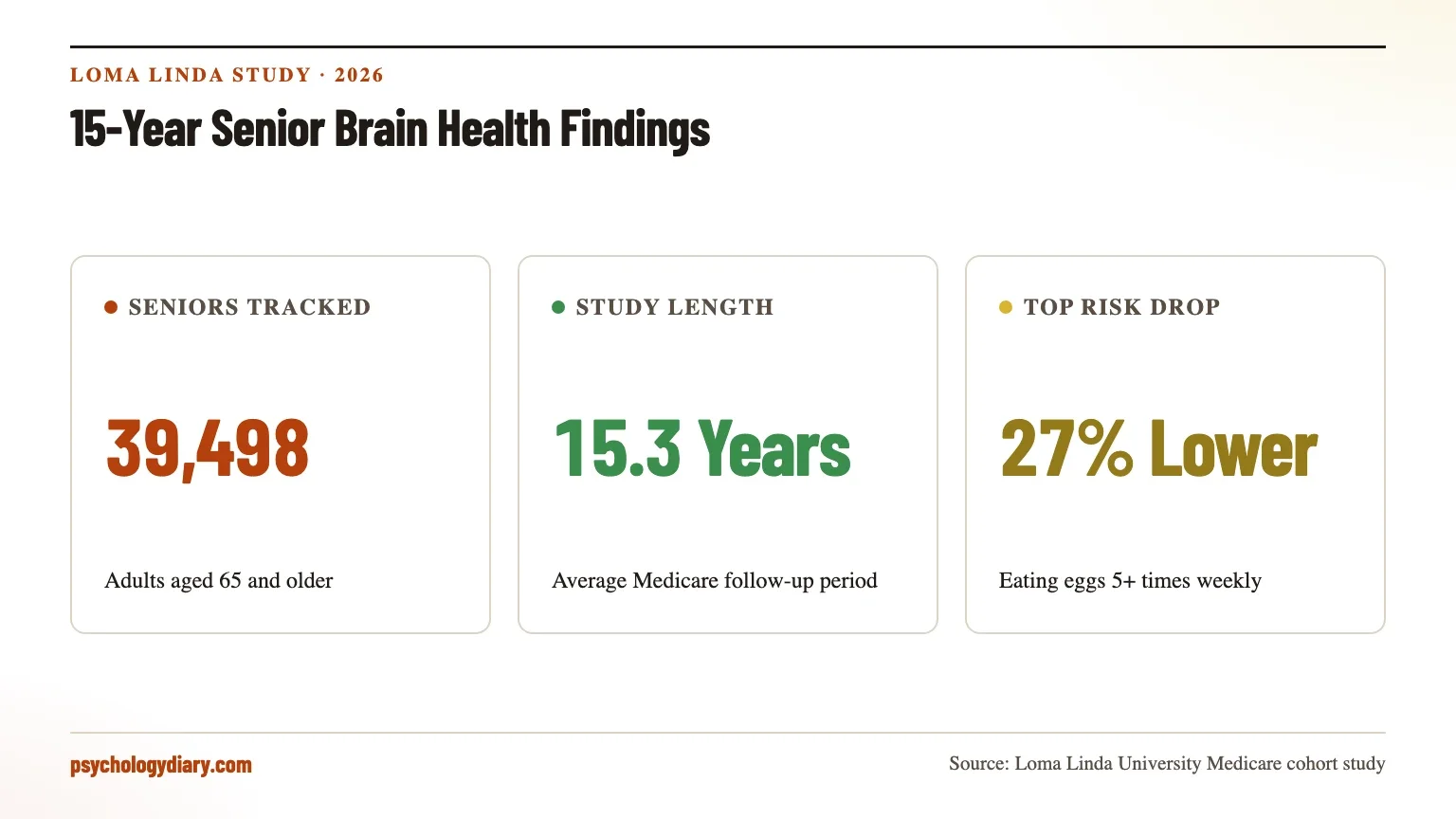
Researchers at Loma Linda University evaluated 39,498 adults aged 65 and older. They followed participants for an average of 15.3 years by tracking Medicare health records.
During the study, 2,858 participants received an Alzheimer’s diagnosis. The team looked at how often participants ate eggs, from never to several times weekly.
People who ate eggs five or more times each week showed a 27 percent lower alzheimers risk than non-eaters.
Eating eggs two to four times a week was tied to a 20 percent risk drop. Even eating one egg weekly linked to a 17 percent reduction.
On the other hand, people who ate zero eggs faced a 22 percent higher risk. In fact, 32 percent of all Alzheimer’s cases appeared in non-egg eaters.
According to the National Institutes of Health (NIH), daily lifestyle habits play a major role in how our brains age over time.
Key Nutrients: Egg Nutrition and Memory
This brain health study was observational, which means it shows a link rather than direct proof. Still, scientists point to several vital nutrients inside egg yolks that support brain cells.
Egg yolks provide a rich supply of choline. Your body uses choline to produce acetylcholine, a brain chemical essential for memory, learning, and mood regulation.
One large egg delivers about 147 milligrams of choline. That amount meets roughly 27 percent of your daily recommended intake.
Federal health data shows that only about 8 percent of American adults get enough choline each day. This common gap makes eggs a simple way to fill dietary shortages.
Whole eggs also provide lutein and zeaxanthin. These two antioxidants travel directly to brain tissue to help protect cells against daily wear and tear.
In addition, eggs supply vitamin B12, phospholipids, and omega-3 fatty acids like DHA. All of these compounds help maintain healthy brain cell walls.
Comparing Egg Intake and Brain Health Benefits
Recent studies from the Rush Memory and Aging Project confirm this pattern. Their researchers found that eating more than one egg weekly cut dementia risk by 47 percent.
That team determined that choline alone drove nearly 40 percent of the total cognitive benefit.
Here is how different intake levels compared in the 2026 Loma Linda University study:
| Egg Intake Frequency | Alzheimer’s Risk Change | Study Observations |
|---|---|---|
| 5 or more times per week | 27% lower risk | Showed the strongest protective link across the 15-year follow-up. |
| 2 to 4 times per week | 20% lower risk | Offered steady cognitive benefits for regular eaters. |
| 1 time per week | 17% lower risk | Demonstrated that even modest intake supports brain health. |
| Zero egg intake | 22% higher risk | Accounted for nearly one-third of all Alzheimer’s diagnoses in the cohort. |
The researchers also noted that replacing eggs with plant proteins like beans gave similar protective benefits.
Myths Worth Debunking
Myth: Eating eggs ruins your cholesterol levels.
Fact: Dietary cholesterol has less impact on blood cholesterol for most people than saturated fat does. One large egg contains just 1.6 grams of saturated fat.
According to Harvard Health, current dietary guidelines no longer set a strict daily cap on dietary cholesterol.
Myth: You only need egg whites for healthy eating.
Fact: Egg whites provide lean protein, but the yolk contains almost all the choline and lutein. Skipping the yolk strips away the primary nutrients linked to cognitive decline prevention.
Myth: Eggs work like medicine to stop Alzheimer’s.
Fact: Eggs are not a cure or guaranteed shield. They represent one small, helpful part of a broader lifestyle that supports long-term brain health.
Making thoughtful daily choices to support your body takes steady practice and self-compassion.
“The good life is a process, not a state of being. It is a direction, not a destination.” — Carl Rogers, Psychologist
Protecting your brain does not require perfection. It starts with small, realistic steps that you can keep up over time.

How to Add Brain-Healthy Choline to Your Routine
The American Heart Association notes that healthy adults can safely eat up to one whole egg per day. Older adults with normal cholesterol can enjoy up to two eggs daily.
If you have high LDL cholesterol or diabetes, speak with your healthcare provider first. Dietitians often suggest limiting yolks to about four per week for those conditions.
You can easily incorporate eggs into simple, balanced meals each week:
- Boil a batch of eggs on Sunday for quick weekday breakfasts.
- Scramble two eggs with leafy greens like spinach for extra brain-protecting antioxidants.
- Add sliced hard-boiled eggs to vegetable salads to boost nutrient absorption.
- Combine eggs with whole grains, such as whole-wheat toast or oatmeal, for lasting energy.
Always check in with your primary doctor or registered dietitian to tailor choices to your medical history.

When to Talk to a Doctor About Memory Loss
Normal aging causes occasional forgetfulness, like misplacing your keys. In contrast, Alzheimer’s disease causes progressive changes that disrupt daily life and routines.
Per the American Psychological Association and the Alzheimer’s Association, about 7.4 million older Americans live with dementia today.
You should schedule an evaluation with a medical professional if you notice these signs:
- Struggling to complete familiar tasks at home or work.
- Asking the same questions repeatedly or forgetting recent conversations.
- Getting lost in familiar neighborhoods while walking or driving.
- Experiencing sudden changes in mood, personality, or social withdrawal.
Getting an early medical assessment helps rule out reversible issues like vitamin deficiencies or thyroid problems.
You can also consult Mayo Clinic resources to understand how doctors diagnose memory conditions.
Frequently Asked Questions
How many eggs a week should I eat for brain health?
The 2026 study linked eating eggs five or more times weekly to the lowest risk. Most healthy adults can safely eat up to one whole egg daily.
Does egg yolk or egg white contain more choline?
The yolk contains almost all the choline. One large egg yolk provides roughly 147 milligrams of choline, while the white contains almost none.
Can plant foods provide the same benefits as eggs?
Yes. Researchers found replacing eggs with plant proteins like beans and lentils offered similar brain health benefits and reduced dementia risk.
Supporting your cognitive health involves daily habits like eating nourishing foods, staying active, and staying socially connected. Small additions like eggs can provide valuable fuel for your brain.
This article provides general educational information about psychology and relationships. It is not a substitute for professional therapy or medical advice. Everyone’s situation is unique—if you’re struggling, please reach out to a licensed mental health professional.
Last updated: November 2026. Psychology research evolves continuously—verify current findings with professional sources.