After twenty or thirty years of marriage, grand romantic gestures rarely hold a relationship together. What keeps long-married couples close is how they adapt the daily ways they give and receive care.
You may have taken a love languages quiz years ago expecting a permanent blueprint for your marriage. Yet recent relationship science shows that lasting partnerships require something far more flexible than a single communication label.
Understanding how emotional needs evolve across decades helps you spot quiet moments of connection you might otherwise miss. You can build deeper trust and warmth right where your marriage stands today.
Why Long Marriages Outgrow the Classic Five Love Languages
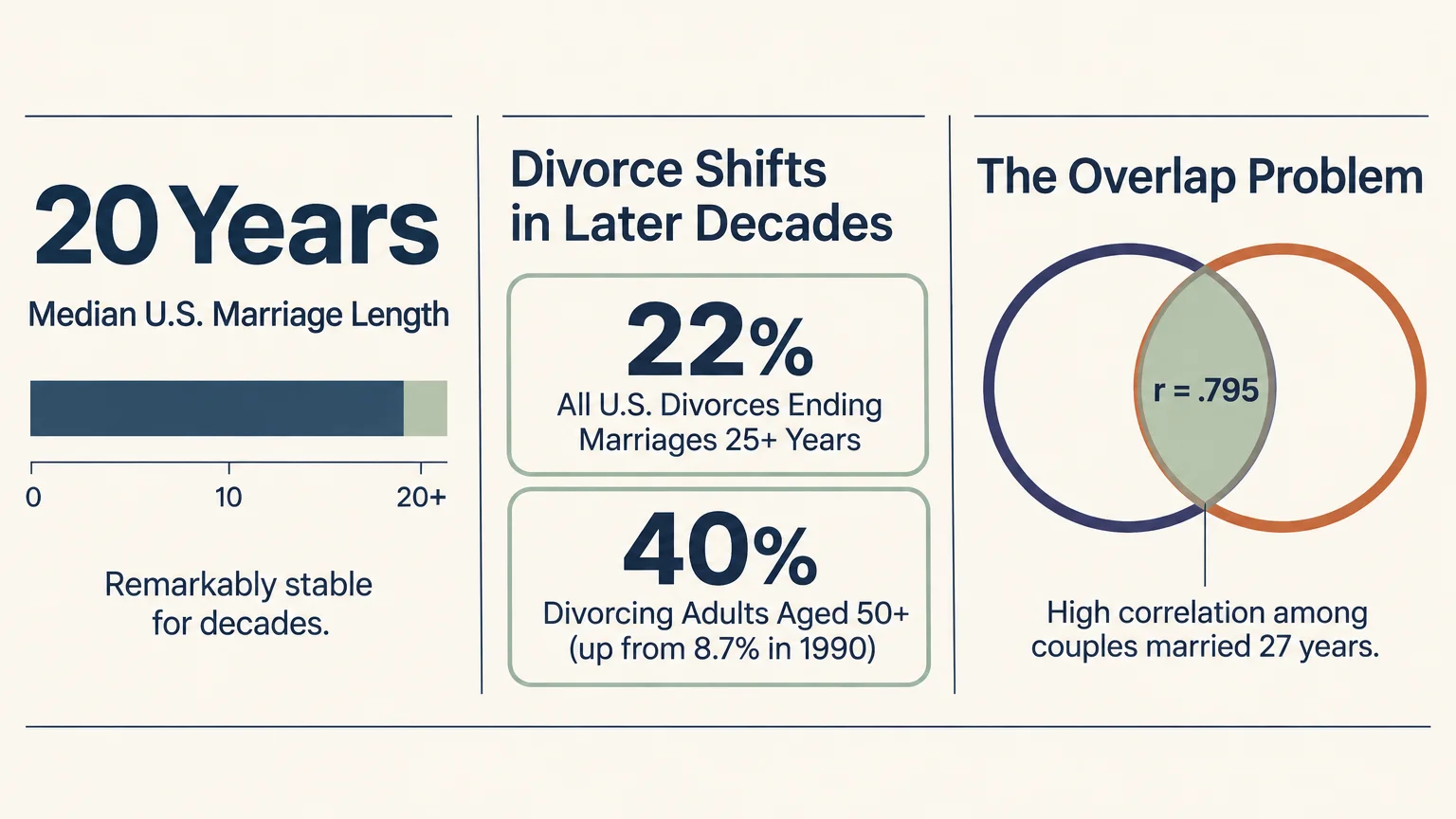
Long-term marriage in the United States looks very different from the early years of dating. According to the U.S. Census Bureau (2024 American Community Survey), current American marriages last a median of 20 years.
Overall marriage stability is actually stronger than the outdated claim that half of marriages fail. Only one-third of ever-married Americans report having had a first marriage end in divorce, according to Pew Research Center (October 2025, analyzing 2023 data).
At the same time, long marriages face their own distinct pressures as couples age. Pew Research Center (October 2025) found that 22% of all U.S. divorces in 2023 ended marriages lasting 25 years or longer.
Nearly 40% of people divorcing are now aged 50 or older, compared with 8.7% in 1990. Among adults 50 and older experiencing a first divorce in 2022, the median marriage length was 29 years, according to the National Center for Family and Marriage Research (2024).
When couples drift apart after decades together, the problem rarely stems from forgetting a partner’s favorite gift or compliment style. Long marriages falter when couples stop noticing how each other’s emotional needs change through parenting, career shifts, aging parents, and retirement.
Baptist pastor and counselor Gary Chapman introduced the five love languages framework—words of affirmation, quality time, acts of service, physical touch, and receiving gifts—in his 1992 book. The book has sold over 20 million copies, and its online quiz has been taken over 133 million times as of 2025.
Many couples still treat that quiz result like a static personality trait. Yet when you lock your marriage into one preferred love language, you risk ignoring the broader ways your partner asks for reassurance in midlife and beyond.
A 2025 study of 954 couples—whose average age was 55 and who had been together an average of 27 years—tested this exact assumption. Presented in Innovation in Aging (Chopik et al., 2025), the study found virtually no evidence that matching on love languages explained relationship outcomes.
Once researchers accounted for personality traits and attachment styles, partner matching on a primary language lost predictive power. In fact, the five languages overlapped heavily among these long-married couples, correlating up to r = .795.
What Recent Science Says About a Balanced Diet of Affection
Psychologists have scrutinized the love languages model closely over the past few years. Rather than finding one magic key for each spouse, researchers uncovered a much richer picture of couples communication.
In April 2024, psychologists at the University of Toronto and York University published a landmark review in Current Directions in Psychological Science (Impett, Park, and Muise). They found no strong empirical support for the idea that each person has one primary love language, that there are exactly five, or that matching a primary language drives happiness.
Instead, those researchers proposed a balanced diet model for lasting relationships. Just as your body needs a mix of nutrients rather than one favorite food, your marriage needs steady doses of multiple caring behaviors.
A preregistered study of 499 adults in long-term cohabiting relationships reinforced that conclusion in September 2025 (Flicker, Sancier-Barbosa, and Impett, Journal of Marital and Family Therapy). Fewer than half of participants even had an identifiable primary love language.
Even more telling, feeling satisfied with how a partner expressed that supposed primary language did not predict relationship quality any better than satisfaction with other loving behaviors. Long-term partners thrive on overall responsiveness, not narrow specialization.
Across three U.S. samples of adults in long-term relationships (N = 696, 500, and 499), the same research team tested whether five categories were enough. They found that models with 7 to 10 love languages fit real couples better and predicted relationship satisfaction more strongly.
Those expanded relationship needs capture what long-married couples actually lean on during stressful decades:
- Encouragement for individual pursuits: Cheering on your spouse’s hobbies, friendships, health goals, and late-career or retirement interests without feeling threatened by their independence.
- Support during difficult times: Showing up calmly and reliably during medical scares, grief, caregiving duties, or financial uncertainty.
- Constructive accountability: Offering honest, respectful feedback and holding shared standards for health, household fairness, and emotional safety.
Still, paying attention to your partner’s preferences across the classic modes continues to matter. A June 2022 PLOS ONE study of 100 heterosexual couples together up to 24 years (Mostova, Stolarski, and Matthews) showed that alignment across all five modes predicted higher relationship and sexual satisfaction.
In that study, empathy also predicted how well men tuned into their partner’s preferred expressions of affection. Good relationship advice therefore combines two habits: learn what delights your spouse today, and keep all caring channels open.
How Love Language Priorities Shift Across Decades Together
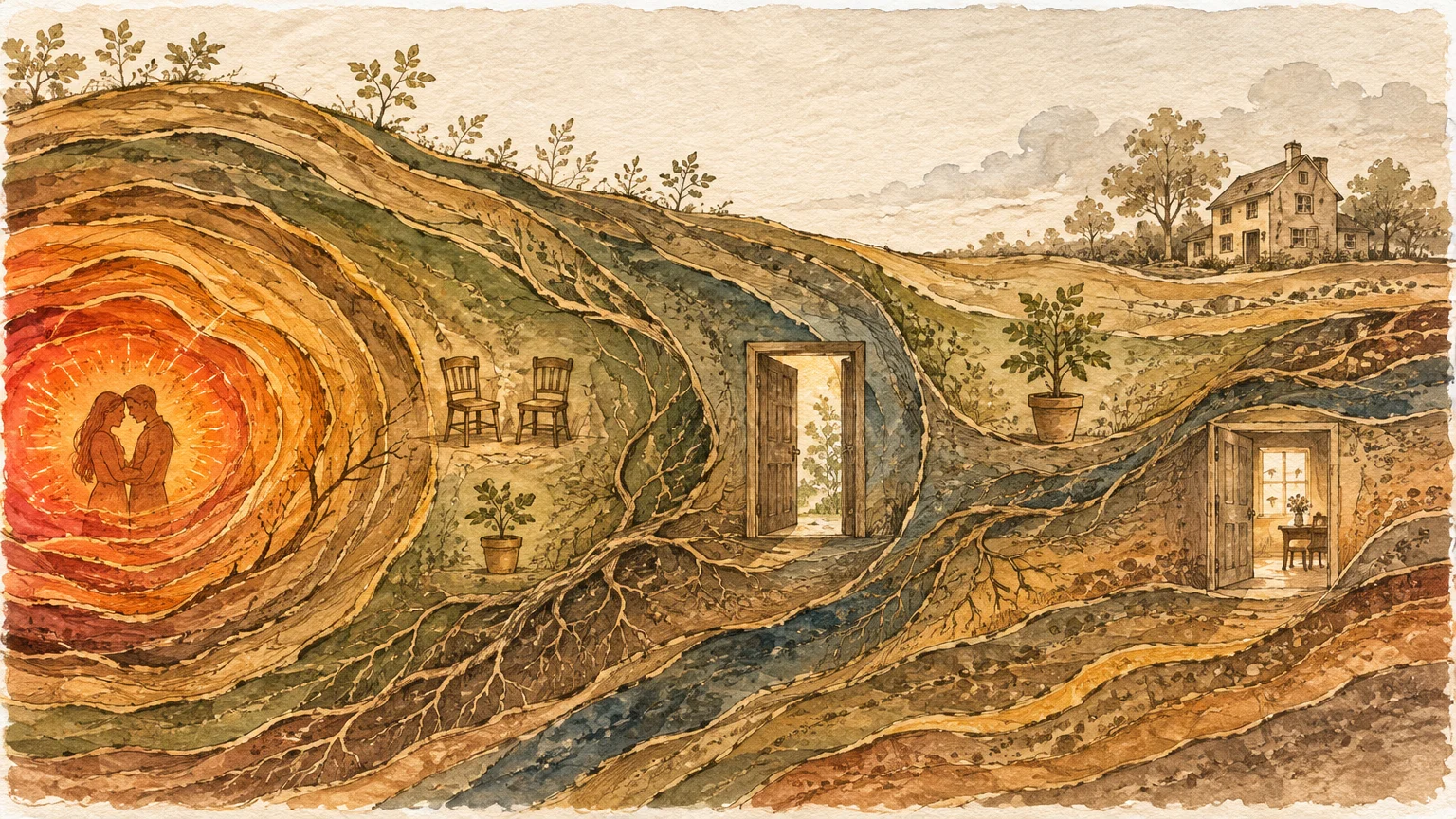
Your preferred way of feeling loved at age 28 rarely stays identical at age 58 or 78. Health changes, altered daily routines, and changing life roles reshape what feels most meaningful to you and your spouse.
Survey data highlights clear differences in how adults rank emotional connection. In a February 2025 YouGov survey of 4,023 U.S. adults, respondents named quality time (38%) and physical touch (20%) as their top preferred ways to receive love.
Words of affirmation followed at 11%, acts of service at 9%, and gifts at 7%, while 16% were unsure. A separate February 2025 Hims survey showed a similar pattern, with quality time (31.5%) and physical touch (27.5%) leading ahead of acts of service (15%), words (15%), and gifts (11%).
Notice also that many long-married adults never grew up using love-language vocabulary at all. In a 2022 YouGov poll (N = 1,000), only 30% of U.S. adults had heard of the five love languages; awareness among adults 45 and older dropped to 26% of women and 15% of men.
That generational gap matters when you talk with a spouse who avoids relationship labels. Someone who never heard the term acts of service may still speak it fluently every morning by starting the coffee, managing prescriptions, or clearing snow from your car.
As couples move past the twenty-year mark, foundational traits often eclipse flashy romance. A July 2026 YouGov survey of 1,882 Britons—nearly half in relationships lasting 20 years or more—found that trust (46%) and feeling loved and appreciated (38%) ranked highest across all age groups.
However, adults aged 60 and older were significantly more likely than 20- to 30-somethings to prioritize mutual respect (32% vs. 20%) and reliability or dependability (24% vs. 13%). Long marriages run on predictability, kindness, and knowing your partner keeps their word.
Physical affection also takes on quiet protective value in aging partnerships. A June 2020 study of 184 couples in the Journal of Social and Personal Relationships, reported by Harvard Health Publishing (August 2020), linked routine nonsexual touch—hugging, holding hands, and cuddling—to significantly higher relationship satisfaction.
Emotional closeness in midlife even shapes physical resilience decades later. Directed by Dr. Robert Waldinger and Dr. Marc Schulz, the Harvard Study of Adult Development—begun in 1938 with 724 original participants—found that marital satisfaction at age 50 predicted physical health and happiness at age 80 better than cholesterol or blood pressure.
In a companion eight-day diary study of 47 married octogenarian couples, Waldinger and Schulz found that higher marital satisfaction buffered older adults’ daily happiness against dips in perceived physical health. Feeling deeply cared for literally softens the burden of aging.
| Channel of Connection | Early Marriage Focus | Long-Marriage Evolution (20+ Years) |
|---|---|---|
| Quality Time | Date nights, travel, shared weekend adventures | Uninterrupted morning coffee, daily walks, screen-free evening check-ins |
| Physical Touch | High-energy passion and frequent sexual initiation | Routine nonsexual touch—hand-holding, hugs, back rubs—plus adaptable intimacy |
| Acts of Service | Splitting early chores and helping with big moves | Sharing caregiving, tracking medical appointments, easing daily fatigue |
| Words of Affirmation | Romantic compliments and playful flirtation | Specific gratitude for decades of effort, vocalizing respect during conflict |
| Thoughtful Gifts | Anniversary surprises and milestone jewelry | Small items showing you noticed a comfort, hobby, or craving |
| Expanded Needs (Support & Growth) | Encouraging early career leaps and social identity | Backing solo retirement pursuits, standing steady in crises, gentle accountability |
Everyday Habits That Speak Louder Than Quiz Scores
If matching quiz labels does not guarantee a happy marriage, what actually predicts whether couples thrive after decades together? Decades of observational research from The Gottman Institute point to small, repeatable daily interactions.
Dr. John Gottman and Dr. Robert Levenson studied couples in their observation lab and tracked them over time, predicting divorce versus stability with over 90% accuracy in nine-year follow-ups. Stable, happy marriages maintained at least a 5:1 ratio of positive-to-negative interactions during conflict.
During ordinary, non-conflict moments, happy couples maintained roughly a 20:1 ratio of positive-to-negative exchanges. That means your marriage tips toward warmth or resentment during routine Tuesday evenings, not just during major anniversary celebrations.
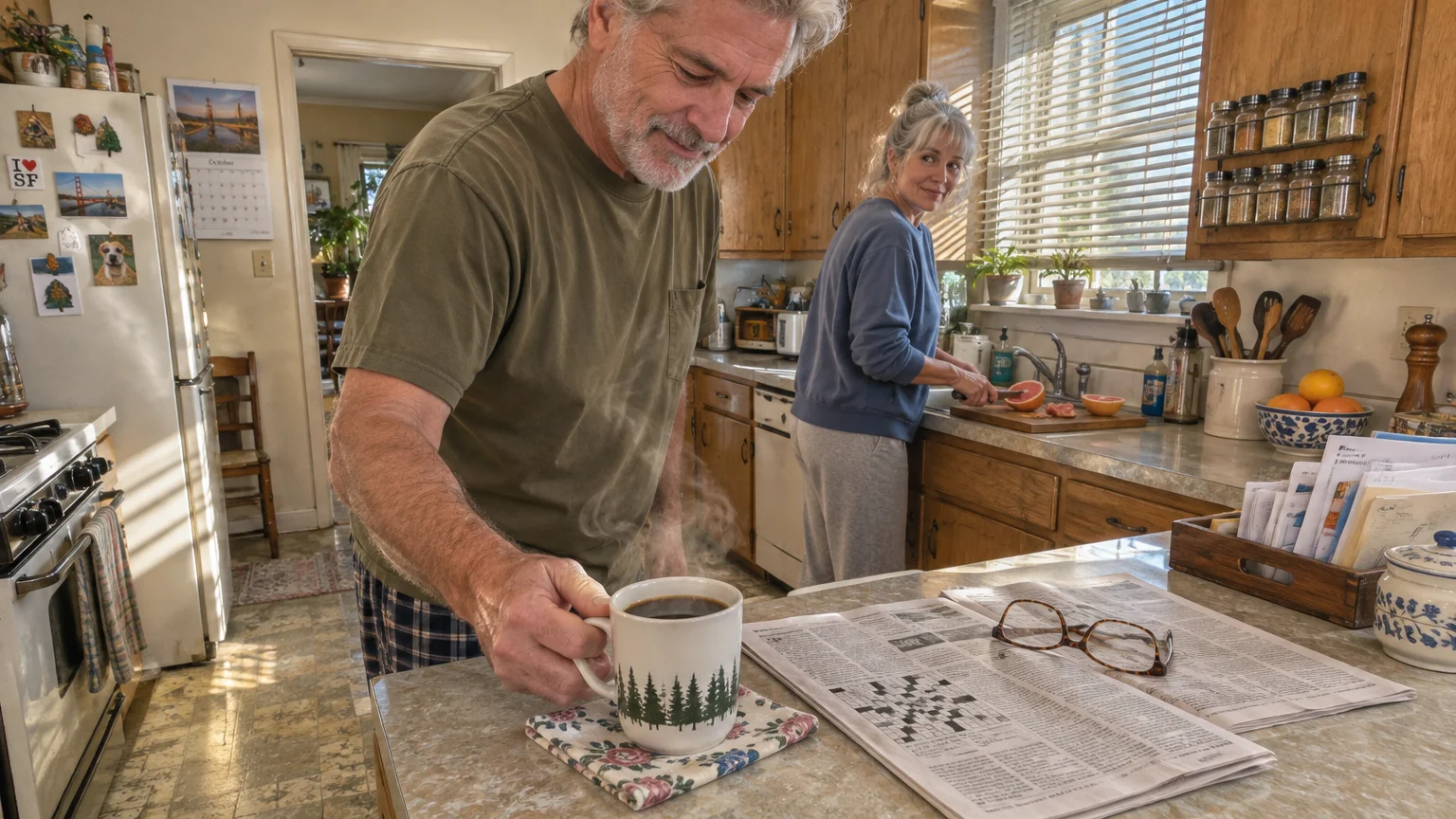
One of the most practical marriage tips from Gottman’s six-year longitudinal study of newlyweds involves how you respond to bids for connection. A bid is any small gesture—a sigh, a comment about the news, a hand reaching out—asking for your attention.
Couples who stayed married turned toward their partner’s everyday bids 86% of the time, compared with just 33% among couples who later divorced. Turning toward your spouse’s bid translates into every love language at once.
Lasting marriages rarely run on one signature gesture; they thrive on a balanced daily diet of small responses, genuine respect, and reliable presence when life gets hard.
To strengthen couples communication in a long marriage, build these six habits into your weekly routine:
- Answer small bids within five seconds: Look up from your phone or laptop when your spouse comments on the weather, a pet, or a family text. Brief acknowledgment builds far more trust than an occasional expensive dinner.
- Translate quiet acts into visible appreciation: When your spouse handles groceries, repairs, or bills, name the effort out loud instead of treating it as background routine. Specific thanks blends acts of service with words of affirmation.
- Schedule routine nonsexual touch: Share a six-second hug when one of you leaves the house, or hold hands on a neighborhood walk. Consistent physical warmth lowers daily stress without pressuring either partner.
- Protect both shared time and solo growth: Sit together for twenty minutes of distraction-free conversation each evening, and actively encourage each other’s separate hobbies or friendships.
- Lead with respect during disagreements: Keep criticism focused on a specific problem rather than your spouse’s character, aiming to protect that 5:1 warmth ratio even when you disagree.
- Update your curiosity every year: Ask your partner what feels most supportive right now—especially after health changes, job transitions, or shifts in family caregiving.
Small shifts feel surprisingly awkward at first if you and your spouse have fallen into predictable habits. Stick with one or two behaviors for a month so your partner experiences your consistency as real rather than temporary.
Common Misconceptions
Because the five love languages framework is so popular, several myths quietly create unnecessary friction in long marriages. Clearing up these misunderstandings helps you focus on what actually builds closeness.
Misconception 1: You have one fixed love language for life. Needs shift with age, stress, illness, and parenting stages. Someone who craved quality time while raising young children may deeply value physical comfort or reliable crisis support twenty years later.
Misconception 2: Mismatched love languages doom a marriage. Remember the 2025 study of 954 couples together an average of 27 years: matching love languages did not explain marital happiness. Empathy, attachment security, and steady responsiveness matter far more than identical preferences.
Misconception 3: Practical help and dependability lack romance. Younger couples sometimes dismiss reliability as unexciting, yet older adults rank trust, mutual respect, and dependability near the very top of relationship priorities. Keeping your promises is deeply romantic after two decades together.
Misconception 4: Long-married couples already know everything about each other. Assuming you know how your spouse feels loved stops you from asking fresh questions. Staying curious protects your marriage against the quiet drift that fuels late-life separation.
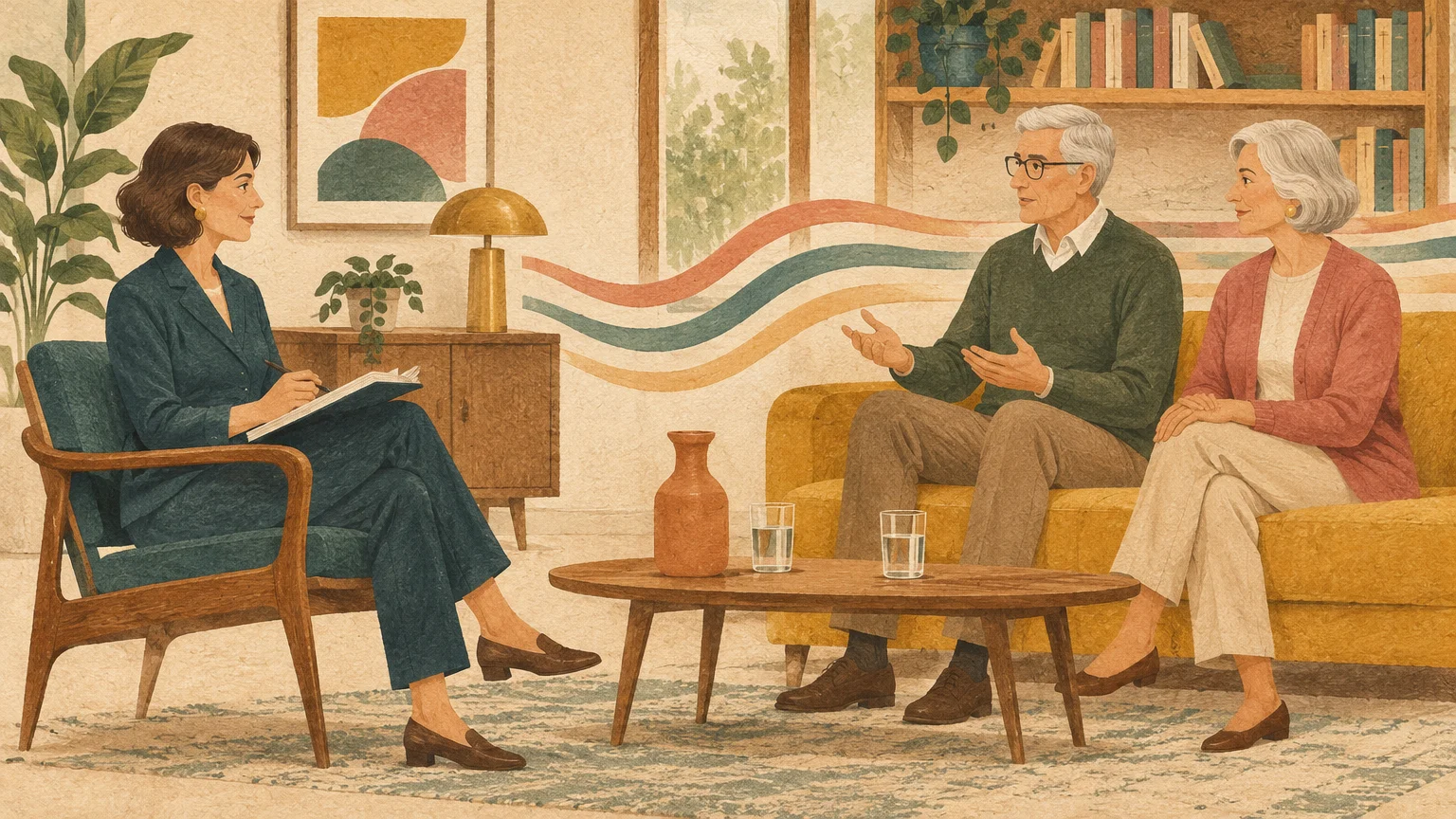
Finding the Right Professional Help
Many couples married 20 or 30 years hesitate to seek therapy because they feel they should have everything figured out by now. In reality, seeking guidance from a licensed couples therapist is a proactive investment in the next chapter of your marriage.
Evidence-based approaches such as Gottman Method Couples Therapy or Emotionally Focused Therapy help long-term partners break entrenched communication loops. You can explore therapist directories and relationship guidance through the American Psychological Association or browse licensed specialists on Psychology Today.
Consider reaching out to a licensed marriage and family therapist or psychologist if you recognize any of these scenarios:
- Chronic scorekeeping and resentment: You and your spouse keep tally of who does more chores, initiates affection, or sacrifices more, leaving both of you feeling unappreciated.
- Painful life transitions: Retirement, an empty nest, chronic illness, or caring for aging parents has disrupted your daily rhythm and exposed quiet distance between you.
- Repeatedly missing each other’s bids: One or both of you routinely shut down, stonewall, or feel emotionally invisible when trying to talk about needs or intimacy.
- Unresolved betrayal or thoughts of late-life divorce: A breach of trust, hidden financial stress, or growing doubts about staying together feel too heavy to untangle without a neutral professional.
Note that therapy works best when both partners feel safe to speak honestly. If your marriage involves emotional abuse, coercive control, or physical danger, seek individual safety planning and specialized clinical support rather than standard couples counseling.
Frequently Asked Questions
Do love languages actually work for couples married 20 years or more?
They work well as a conversation starter to notice how you and your spouse express care differently. However, research shows long-married couples thrive most when they practice a balanced diet of affection, trust, mutual respect, and everyday responsiveness rather than relying on one single language.
Can your love language change as you get older?
Yes, your emotional priorities naturally shift as your body, responsibilities, and daily routines evolve. Studies show adults 60 and older place higher value on reliability and mutual respect compared with younger adults.
What are the extra love languages identified in recent research?
A September 2025 study in the Journal of Marital and Family Therapy found that 7 to 10 categories predicted relationship quality better than five. Beyond the original list, long-term partners strongly value encouragement for individual pursuits, steady support during tough times, and constructive accountability.
How can you show love if your partner dislikes talking about feelings?
Focus on turning toward small everyday bids, offering reliable practical help, and keeping shared routines warm and respectful. Many partners who avoid emotional vocabulary respond deeply to calm presence, routine hand-holding, and specific appreciation for what they do.

Moving Forward Together
You do not need a quiz score to prove you care for your spouse after decades together. Pick one small habit this week—answer a daily bid with full attention, offer a six-second hug, or voice specific thanks for a quiet act of service.
When you stay curious about how your partner’s needs evolve, your marriage keeps growing richer with age. This is educational content based on psychological research and general principles. Individual experiences vary significantly. For personalized guidance, consult a licensed therapist, psychologist, or counselor.
Last updated: November 2026. Psychology research evolves continuously—verify current findings with professional sources.