
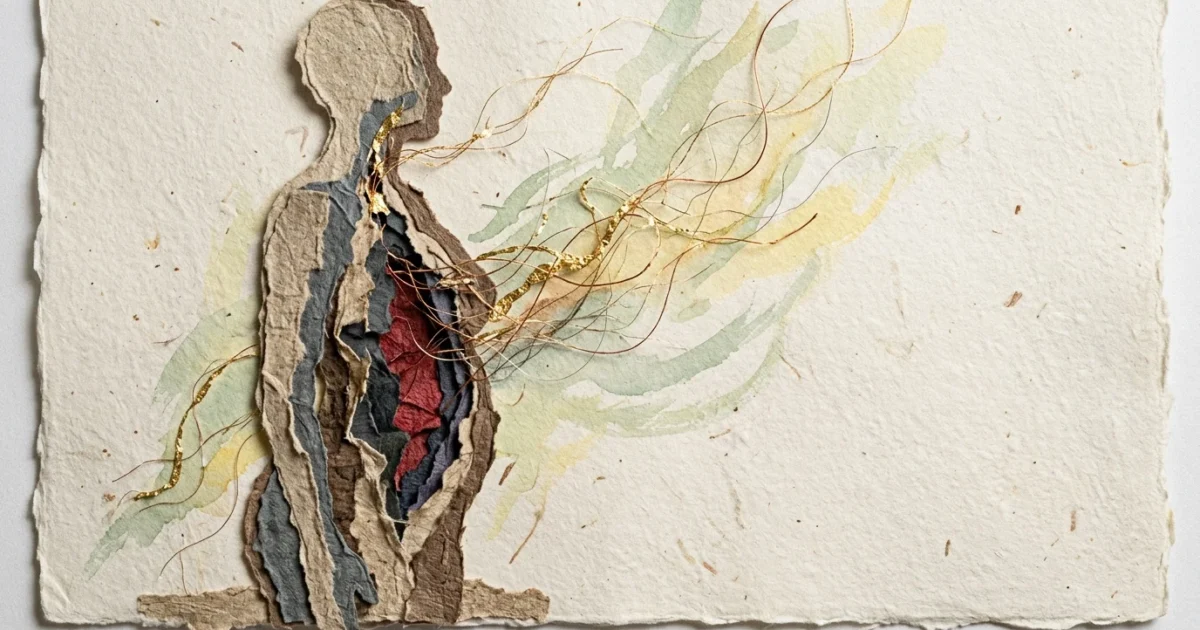
Unresolved trauma rarely stays confined to your mind; it quietly relocates to your body. When an overwhelming experience exceeds your nervous system’s capacity to process it, your body traps that survival energy in your muscles, gut, and nervous system. You might spend years treating chronic fatigue, unexplainable jaw tension, or digestive issues without realizing these physical symptoms are the lingering echoes of past emotional distress. Neuroscience confirms that the body holds the score, keeping you in a state of high alert long after a threat has passed. By learning how your physical discomfort connects to unprocessed emotional pain, you can finally decode what your body is trying to tell you and begin true healing.
The Science of Somatic Memory
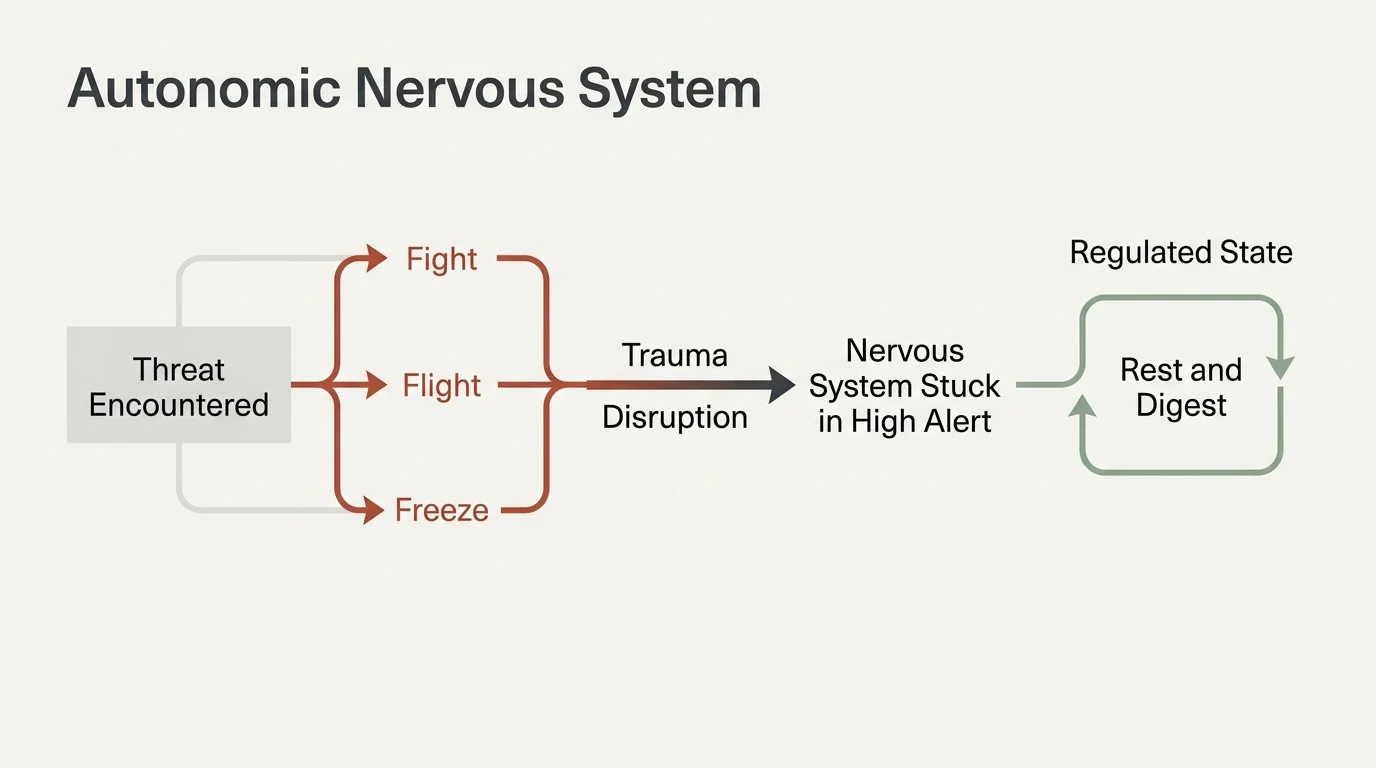
To understand why the body clings to painful experiences, you must first look at the autonomic nervous system. When you encounter a threat, your brain initiates a survival response—the familiar fight, flight, or freeze mechanisms. Adrenaline surges, your heart rate spikes, and blood rushes to your extremities to prepare you for action. In a regulated nervous system, this response recedes once the danger passes, allowing your body to return to a baseline state of rest and digest.
Trauma disrupts this natural reset cycle. When an experience is too overwhelming to process, the nervous system becomes stuck in an activated state. According to the National Institute of Mental Health (NIMH), approximately half of all U.S. adults will experience a traumatic stressor in their lifetime, and roughly 6% will develop post-traumatic stress disorder (PTSD). However, you do not need a formal PTSD diagnosis to experience the somatic—or physical—effects of trauma.
The toll of prolonged nervous system activation is immense. A 2023 Stress in America report by the American Psychological Association (APA) highlighted the severe physical impact of collective trauma, revealing that chronic illnesses among adults aged 35 to 44 surged from 48% to 58% in just four years. This indicates that psychological distress directly translates into long-term physiological burdens. Your physical symptoms are not arbitrary; they are the language your body uses to communicate that it still feels unsafe.
“An abnormal reaction to an abnormal situation is normal behavior.” — Viktor Frankl, Psychiatrist and Holocaust Survivor

10 Physical Signs Your Body is Holding Trauma
Trauma manifests uniquely in every individual, but certain somatic patterns frequently emerge when the nervous system remains on high alert. If you recognize several of these signs in yourself, approach the realization with self-compassion rather than judgment.
1. Chronic Muscle Tension and “Armoring”
Do you frequently catch yourself with your shoulders pulled up toward your ears, your jaw tightly clenched, or your fists balled? This phenomenon is known as “muscular armoring”—a term originally coined by psychoanalyst Wilhelm Reich to describe how the body builds physical walls to defend against emotional pain. The nervous system continuously instructs the muscles to brace for an anticipated impact. Over time, this sustained contraction leads to severe muscle stiffness, tension headaches, and structural imbalances.
2. Unexplained Gastrointestinal Issues
The gut and the brain maintain constant communication through the vagus nerve. When your body enters fight-or-flight mode, it diverts energy away from non-essential functions like digestion to prioritize survival. Consequently, unresolved trauma frequently masquerades as persistent stomach pain, nausea, bloating, or irritable bowel syndrome (IBS). If you have pursued medical treatment for digestive distress but tests consistently return normal, your gut may be reflecting chronic nervous system dysregulation.
3. Persistent Fatigue and Exhaustion
Holding onto trauma requires an extraordinary amount of biological energy. Your nervous system is constantly running a background program, scanning your environment for potential threats. This hypervigilance drains your reserves, leaving you with a profound, bone-deep exhaustion that sleep does not cure. Viewing this fatigue through a trauma-informed lens allows you to recognize it not as laziness, but as the byproduct of a nervous system working overtime.
4. Exaggerated Startle Response
If the sound of a dropped book, a sudden notification on your phone, or an unexpected tap on the shoulder sends a jolt of panic through your chest, your amygdala—the brain’s threat detection center—is hyper-reactive. An exaggerated startle response indicates that your threshold for perceiving danger is drastically lowered. Your body reacts to minor surprises as though they are life-threatening emergencies.
5. Shallow, Restricted Breathing
Pay attention to your breath right now. Are you breathing deeply into your belly, or is your breath shallow and confined to the upper chest? Many trauma survivors unconsciously hold their breath or breathe shallowly as an adaptive freeze response. Restricting breath minimizes physical movement, a primal instinct designed to avoid detection by predators. Unfortunately, chronic chest breathing signals to the brain that you are in danger, trapping you in a cycle of anxiety.
6. Temperature Fluctuations and Sweating
Sudden hot flashes, cold sweats, or clammy hands that occur independently of environmental temperature or hormonal changes often point to autonomic nervous system dysregulation. When trauma triggers the sympathetic nervous system, it alters your blood flow and sweat gland activity, leaving you shivering or sweating without a clear physiological cause.
7. Sleep Disturbances and Night Sweats
Sleep requires vulnerability. To achieve deep, restorative rest, the nervous system must power down. For someone carrying unresolved trauma, relinquishing that control feels inherently unsafe. This dynamic often results in chronic insomnia, frequent night awakenings, night sweats, or vivid nightmares. Your body refuses to lower its guard, resulting in a relentless cycle of sleep deprivation and heightened daytime anxiety.
8. Feeling Disconnected or Numb (Dissociation)
Not all trauma responses involve panic; some involve shutting down entirely. If you frequently feel entirely disconnected from your body, as though you are observing yourself from a distance, you are experiencing dissociation. This is a dorsal vagal shutdown response—the body’s ultimate defense mechanism when a threat feels inescapable. By numbing physical sensation, the brain attempts to protect you from overwhelming emotional and physical pain.
9. Unexplained Chronic Pain
The brain does not clearly distinguish between physical and emotional agony. Both are processed through overlapping neural pathways. When emotional trauma remains unprocessed, the brain may interpret that distress as physical pain. This neuroplastic pain often migrates around the body, defying structural or medical explanations. The Mayo Clinic identifies this pattern in somatic symptom disorder, noting that the distress surrounding the physical symptoms significantly impairs daily functioning.
10. Rapid Heart Rate and Chest Tightness
A sudden, racing heartbeat or a feeling of a heavy weight sitting on your chest can mimic the sensation of a cardiac event. When triggered, your sympathetic nervous system continuously signals the heart to pump blood rapidly to prepare for action. In the context of relationships, this somatic reaction is particularly disruptive. According to The Gottman Institute, when your heart rate exceeds 100 beats per minute during an argument, your body experiences emotional flooding, making productive communication physiologically impossible.
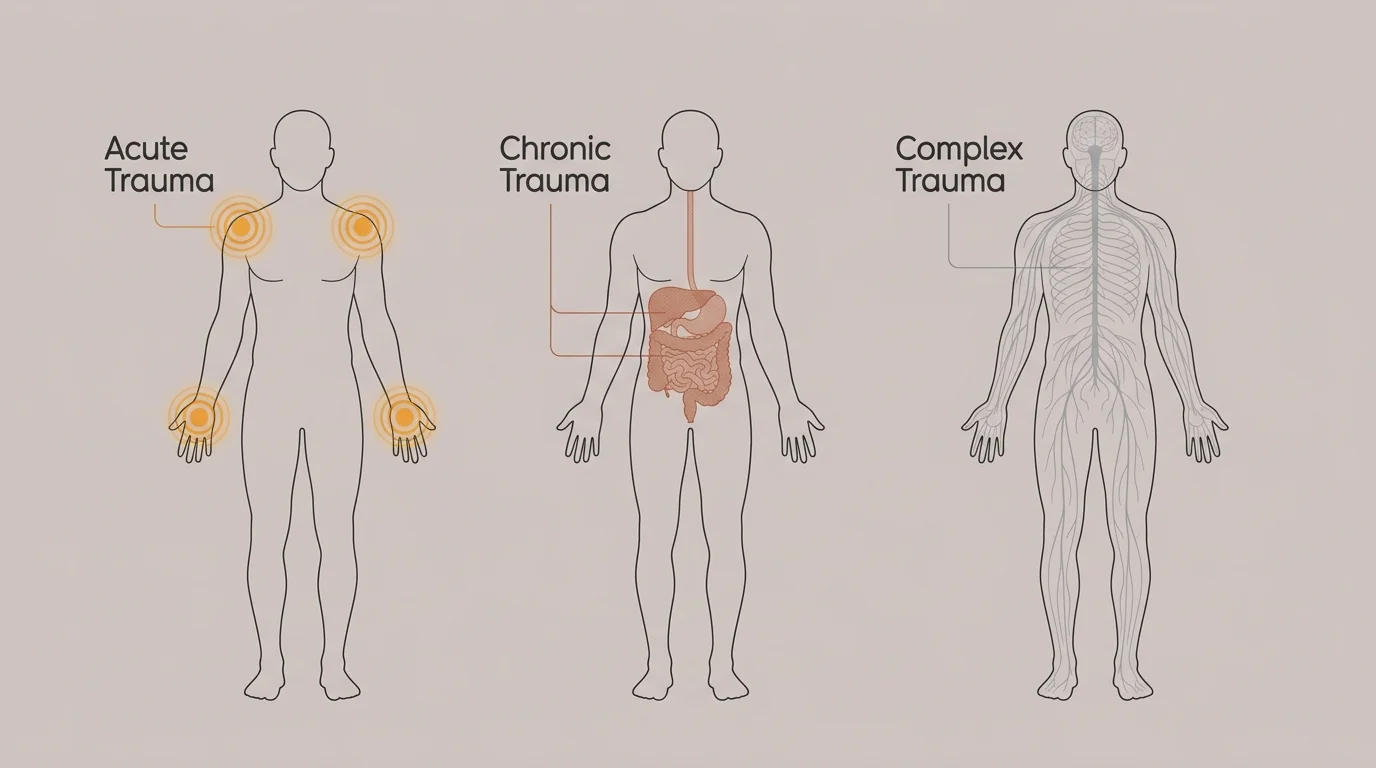
How Different Types of Trauma Show Up in the Body
While the physical symptoms of trauma share common underlying mechanisms, the specific manifestations can shift depending on the nature of the traumatic experience. Understanding these nuances helps contextualize your physical responses.
| Trauma Type | Context & Origin | Common Physical Manifestations |
|---|---|---|
| Acute Trauma | A single, isolated incident such as a severe car accident, natural disaster, or physical assault. | Exaggerated startle response, racing heart, sweating, acute insomnia, and panic attacks linked to specific environmental triggers. |
| Chronic/Complex Trauma (C-PTSD) | Repeated, prolonged exposure to high stress, such as domestic abuse, childhood neglect, or long-term systemic oppression. | Severe muscular armoring, autoimmune flare-ups, chronic fatigue, deep-seated digestive issues, and emotional numbness/dissociation. |
| Attachment/Relational Trauma | Betrayal, abandonment, or emotional neglect experienced within primary relationships or caregiving dynamics. | Chest tightness, physical withdrawal from touch, somatic anxiety during intimate moments, and vocal constriction (throat tightness). |

Approaches to Release Stored Trauma
Because trauma resides in the nervous system, cognitive approaches—like talking through the event—are often insufficient on their own. You must communicate with the body in a language it understands: sensation and movement. The goal is not to force the trauma out, but to gently expand the nervous system’s capacity to process it.
- Somatic Experiencing (SE): Developed by Dr. Peter Levine, this body-focused therapy helps patients track physical sensations in real-time. Instead of reliving the trauma narrative, SE guides you to safely release trapped survival energy through subtle movements, crying, or trembling.
- Eye Movement Desensitization and Reprocessing (EMDR): EMDR utilizes bilateral stimulation—typically guided eye movements—to help the brain reprocess traumatic memories. This allows the memory to be stored properly in the brain, untangling it from the physical panic response.
- Vagus Nerve Regulation: Simple, daily practices can stimulate the vagus nerve to promote a state of calm. Techniques such as prolonged exhales (breathing out longer than you breathe in), cold water exposure on the face, or gentle humming send immediate signals of safety to the brain.
- Trauma-Informed Yoga: Traditional fitness classes can sometimes push the body into further stress. Trauma-informed yoga focuses purely on bodily autonomy and present-moment awareness, helping you slowly rebuild a safe relationship with your physical sensations.

Myths Worth Debunking
The journey toward somatic healing is frequently derailed by cultural misconceptions surrounding how pain and memory operate. Clearing away these falsehoods is a necessary step toward validating your experience.
Myth: Physical symptoms are “all in your head.”
When medical tests fail to identify a structural issue, well-meaning practitioners might suggest your pain is imagined. This is factually incorrect. The pain, nausea, and tension are genuine physiological responses driven by measurable shifts in cortisol, adrenaline, and nervous system activation. The origin is neurological, but the suffering is entirely physical.
Myth: You must vividly remember a trauma for it to affect your body.
The brain utilizes distinct memory systems. Implicit memory stores sensory and emotional data independently of conscious, narrative memory. Your body can react intensely to a specific sound, smell, or tone of voice without your conscious mind recalling the original event that made that trigger dangerous.
Myth: Talk therapy alone will cure trauma.
While cognitive behavioral therapy (CBT) and traditional talk therapy offer immense value for understanding your behavioral patterns, they engage the prefrontal cortex—the logical brain. Trauma lives in the subcortical regions and the nervous system. Healing requires bridging the gap between top-down approaches (talking) and bottom-up approaches (somatic processing).

Signs It’s Time to Talk to a Therapist
While self-directed grounding exercises are beneficial, navigating deep-seated trauma often requires professional support. Consider reaching out to a trauma-informed therapist if you resonate with the following scenarios:
- Your physical symptoms persist and severely disrupt your daily life, despite receiving clearance from medical doctors.
- You experience intense emotional flooding or physical panic attacks that feel entirely disconnected from your present reality.
- You find yourself relying on alcohol, substances, or compulsive behaviors to numb chronic physical discomfort and tension.
- Attempts to relax or meditate trigger sudden spikes in anxiety rather than relief—a common response when the body fears letting its guard down.
Frequently Asked Questions
Can your body hold onto trauma you do not remember?
Yes. The nervous system utilizes implicit memory, which stores sensory and emotional information prior to the cognitive brain fully processing an event. This mechanism explains why you might experience severe physical symptoms or an intense emotional reaction to a trigger without a conscious narrative memory of the original trauma.
How long does it take for the body to release stored trauma?
There is no universal timeline. The process depends on the severity of the trauma, the duration of exposure, and the therapeutic approaches utilized. Healing is non-linear; it involves gradually increasing your nervous system’s window of tolerance over months or years, rather than achieving a sudden, overnight cure.
Can massage therapy help release trauma?
Massage therapy can be highly effective in addressing muscular armoring, but it must be approached with care. Deep tissue work can sometimes release trapped emotions, leading to sudden crying or shivering on the table. Working with a practitioner trained in somatic release ensures you have a safe container to process those unexpected emotional shifts.
You do not have to live permanently at war with your own nervous system. Recognizing that your physical pain is a deeply ingrained survival response—not a personal failing or a medical mystery—is the first, most vital step toward reclaiming your body. Begin by practicing self-compassion, meeting your physical sensations with curiosity rather than fear, and seeking out trauma-informed support to guide your recovery.
This is educational content based on psychological research and general principles. Individual experiences vary significantly. For personalized guidance, consult a licensed therapist, psychologist, or counselor.
Last updated: July 2026. Psychology research evolves continuously—verify current findings with professional sources.









Leave a Reply