
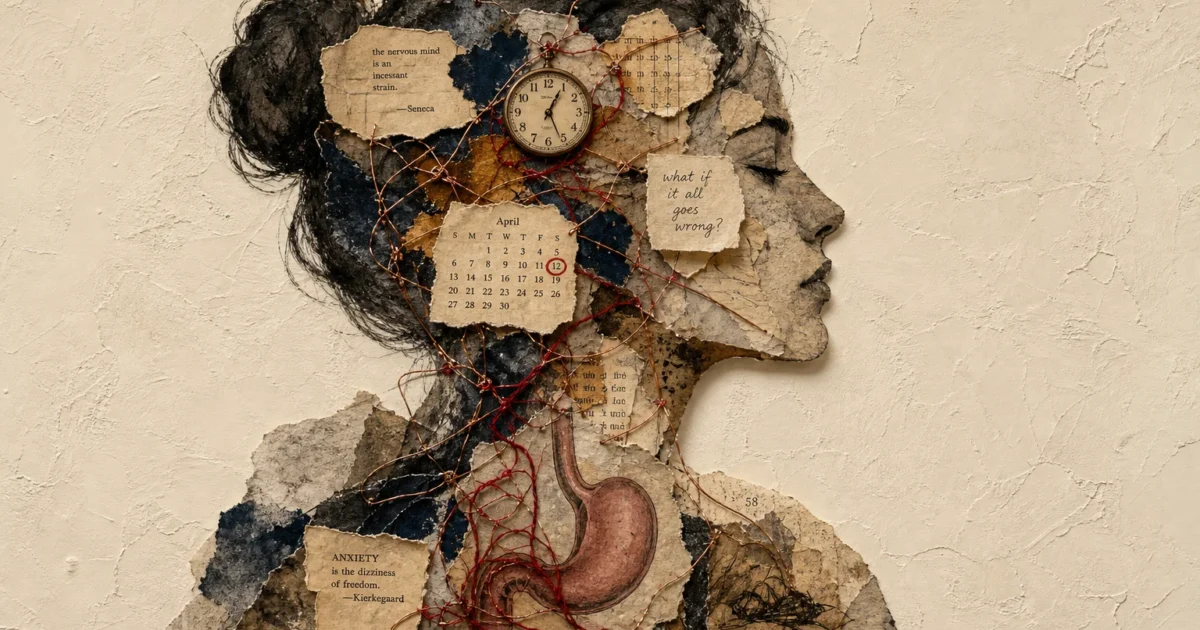
Anxiety doesn’t always show up as a racing heart or a full-blown panic attack. Often, it hides in plain sight, masking itself as ordinary habits, physical quirks, or minor frustrations you dismiss as just part of a busy life. If you constantly feel drained, struggle to make decisions, or notice unexplained aches, your body might be trying to tell you something deeper. Recognizing these subtle signs is the first step toward reclaiming your peace of mind. By understanding how anxiety operates behind the scenes, you can stop blaming yourself for what feels like a personal failing and start addressing the root cause with compassion and effective strategies.
The Hidden Pervasiveness of Anxiety
When you think of anxiety, you likely picture someone hyperventilating or pacing nervously. While those are certainly valid and distressing experiences, they represent only a fraction of how an overloaded nervous system behaves. Clinical anxiety is a master of disguise. It weaves itself into your daily routines, altering how you process information, interact with your loved ones, and physically carry yourself.
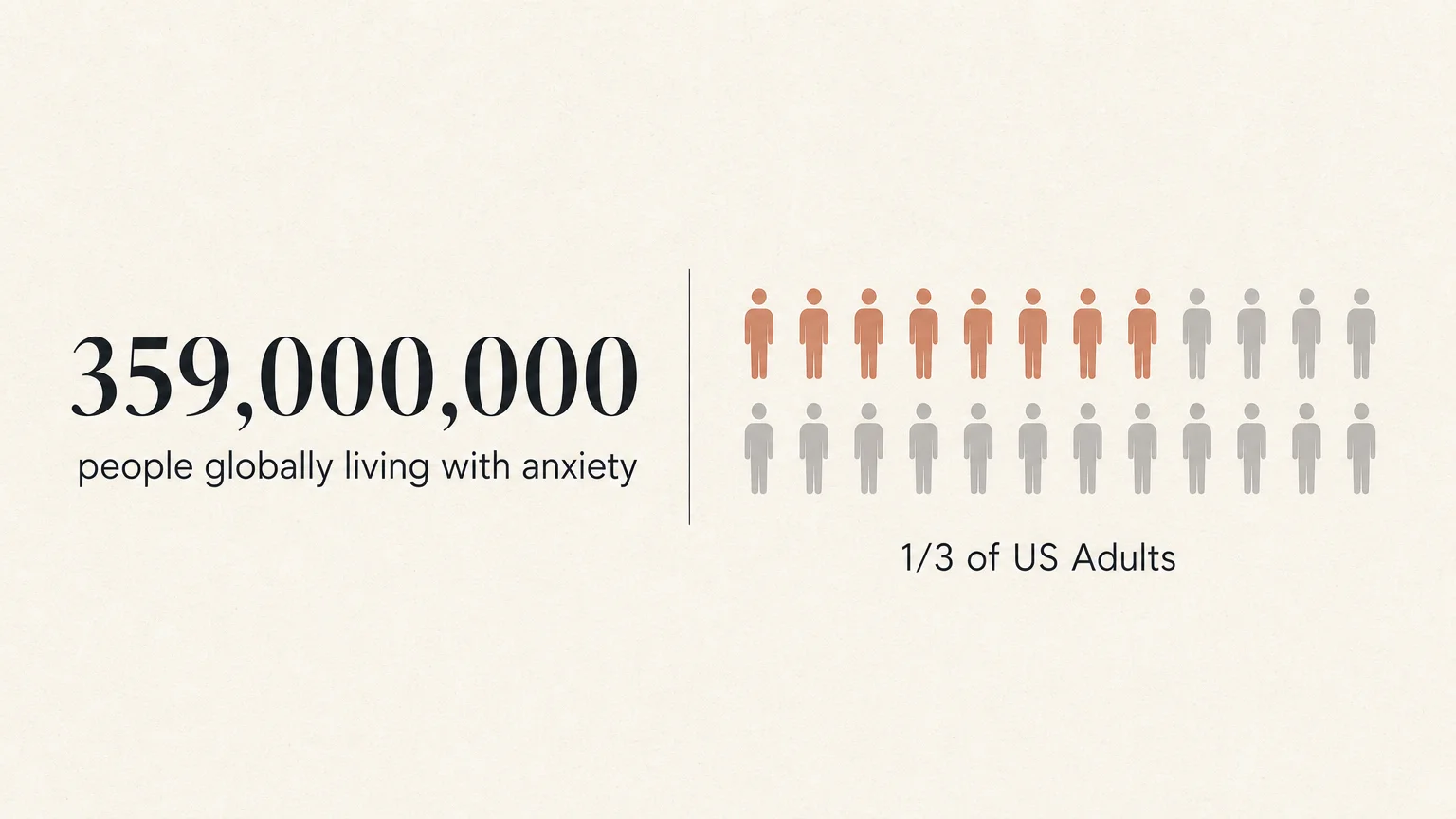
According to data reported by the World Health Organization, anxiety disorders are the most common mental health condition globally, affecting an estimated 359 million people. The National Institute of Mental Health (NIMH) adds that nearly one-third of adults in the United States will experience an anxiety disorder at some point in their lives. Despite these staggering numbers, a significant portion of individuals live with untreated anxiety because their symptoms do not align with the stereotypical media portrayals of panic.
You might spend years trying to fix a stomach issue, overcome chronic fatigue, or read self-help books on time management, completely unaware that a dysregulated nervous system is the common denominator. Your body acts as a scorecard for your emotional health. When you push uncomfortable emotions aside, they eventually manifest as physical or behavioral symptoms that demand your attention.
9 Everyday Symptoms That Might Be Linked to Anxiety
1. Chronic Procrastination
Procrastination often looks like laziness or poor time management, but it frequently stems from underlying anxiety. When a task feels overwhelming or carries the weight of potential failure, your brain interprets it as an active threat. To protect you from this intense discomfort, your mind pushes you to avoid the task entirely. You might find yourself organizing your desk, scrolling through your phone, or tackling minor chores while a crucial deadline looms.
This avoidance provides temporary relief from emotional distress, but it ultimately feeds a vicious cycle. The longer you put off the task, the more your anxiety grows. To combat this, try breaking tasks down into incredibly small, non-threatening steps. If writing a report feels impossible, commit to opening a blank document and writing just one sentence. Lowering the barrier to entry reduces the threat level, allowing you to bypass your anxiety and build momentum.
2. Gastrointestinal Distress
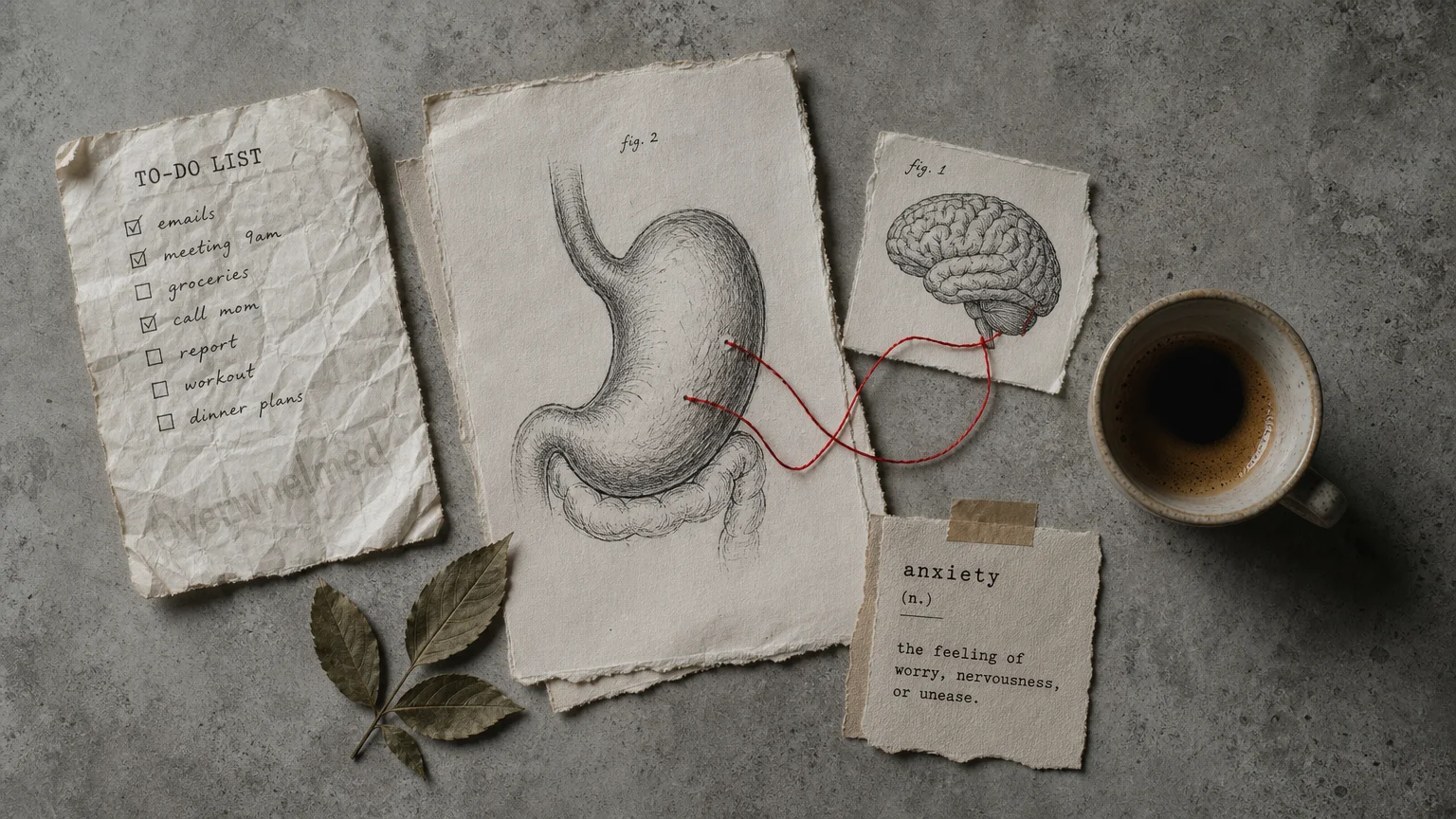
Your brain and your digestive system communicate constantly through an intricate network known as the gut-brain axis. The Harvard Medical School reports that your enteric nervous system—the nervous system of your gut—contains approximately 100 million nerve cells. Furthermore, an estimated 90% of your body’s serotonin, a critical mood-regulating neurotransmitter, is manufactured in your digestive tract.
When anxiety triggers your central nervous system, it alters your digestion. You might experience unexplained nausea, bloating, constipation, or frequent trips to the bathroom before a stressful event. Many people spend years seeking treatment for stomach issues, completely unaware that their physical discomfort originates from chronic stress. To support your gut-brain axis, practice slow, deep breathing before meals. This activates your parasympathetic nervous system, signaling to your gut that it is safe to digest.
3. Perfectionism
Striving for excellence is a healthy pursuit, but perfectionism is a defense mechanism driven entirely by fear. You might obsess over tiny details, rewrite emails a dozen times, or abandon projects completely because they do not meet impossible standards. This behavior is a desperate attempt to control your environment and shield yourself from criticism, judgment, or failure.
“Research shows that perfectionism hampers success. In fact, it’s often the path to depression, anxiety, addiction, and life paralysis.” — Brené Brown, PhD, MSW
Perfectionism convinces you that if you just do everything flawlessly, you will finally feel secure. However, this relentless pursuit drains your energy and keeps your nervous system in a state of high alert. You can challenge perfectionism by practicing “good enough” behavior. Set a strict time limit for a task and force yourself to submit it when the timer goes off, even if it feels incomplete. Over time, this exposure teaches your brain that minor imperfections do not result in catastrophe.
4. Jaw Clenching and Muscle Tension
Anxiety prepares your body for action by flooding your system with adrenaline and cortisol. This fight-or-flight response causes your muscles to contract and brace for impact. You might not notice this physical holding until you experience tension headaches, sharp neck stiffness, or a sore jaw. Many people clench their teeth during the day or grind them intensely at night—a condition known as bruxism.
If you frequently catch yourself holding your shoulders up by your ears or pressing your tongue hard against the roof of your mouth, your body is physically holding onto unspoken anxiety. Set a recurring alarm on your phone every two hours. When it rings, do a quick body scan: drop your shoulders, unclench your teeth, and let your tongue rest softly on the floor of your mouth.
5. Constant Fatigue and Exhaustion
Living with anxiety feels like running a marathon in your mind. Your brain constantly scans your environment for threats, analyzes past conversations, and attempts to predict future catastrophes. This chronic hyperarousal demands massive amounts of metabolic energy. Even if you sleep for a full eight hours, you might wake up feeling completely drained.
Furthermore, anxiety disrupts your restorative sleep phases, meaning your body never truly powers down at night. When your internal alarm system rings constantly, profound exhaustion is the natural biological consequence. Combat this deep fatigue by scheduling intentional “nervous system resets” throughout your day. Five minutes of deliberate, slow breathing or a short walk without your phone can lower cortisol levels and provide your brain with the micro-rest it desperately needs.
6. Cold Hands and Feet
If you constantly reach for a sweater or wear thick socks even in warm weather, an anxious nervous system could be the culprit. When your brain detects a threat, it activates your sympathetic nervous system, which redirects blood flow away from your extremities and pushes it toward your vital organs and large muscle groups.
This evolutionary mechanism prepares you to run from danger or fight for your life. While you no longer need to escape physical predators in your daily routine, modern psychological stressors trigger the exact same biological response. This blood vessel constriction leaves your hands and feet feeling noticeably icy. Running your hands under warm water or doing a quick set of physical exercises can restore circulation and signal to your brain that you are no longer in immediate danger.
7. Brain Fog and Forgetfulness
Anxiety overloads your working memory. When you devote significant cognitive resources to worrying and scanning for danger, you have very little mental bandwidth left for everyday tasks. You might walk into a room and forget why you are there, struggle to recall specific words during a conversation, or find it entirely impossible to concentrate on a single spreadsheet at work.
Chronic anxiety also floods the brain with stress hormones, which can temporarily impair the hippocampus—the brain region responsible for forming new memories. Your forgetfulness is not a sign of early cognitive decline; it is a clear symptom of an overwhelmed nervous system. If you struggle with brain fog, aggressively avoid multitasking. Focus on one single activity at a time, and rely heavily on external memory aids like lists and digital calendars to reduce the cognitive load on your working memory.
8. Irritability and Short Temper
People almost universally associate anxiety with fear, but it frequently masquerades as anger. When anxiety pushes you to the absolute edge of your emotional capacity—often referred to as your window of tolerance—even minor inconveniences feel insurmountable. A slow driver, a loud television, or an unexpected question can trigger a disproportionate outburst of anger.
You snap at the people you love and immediately feel guilty afterward. This irritability occurs because your nervous system is already red-lining; it has no extra space to process additional frustration. When you notice your anger spiking, step away from the situation. A splash of cold water on your face can trigger the mammalian dive reflex, which instantly lowers your heart rate and forces your nervous system to physically reset.
9. Skin Picking and Nail Biting
Body-focused repetitive behaviors (BFRBs), such as biting your nails, chronically picking at your skin, or pulling your hair, often serve as physical outlets for intense nervous energy. These actions provide a brief, physical distraction from overwhelming emotional distress. You might engage in these behaviors entirely unconsciously while driving, watching television, or thinking through a complex problem.
While they offer a momentary sense of relief or grounding, they often lead to profound feelings of shame, which only fuels the underlying anxiety loop. Keep your hands occupied with alternative sensory inputs, such as a subtle fidget ring, a smooth stone, or a piece of textured fabric. Identifying the specific emotional triggers that precede the picking is essential for long-term behavioral change.

Common Misconceptions About Anxiety
Misunderstandings about mental health often prevent people from seeking the support they deserve. When you view anxiety through a lens of outdated myths, you are more likely to internalize your struggles.
Misconception: Anxiety is just overthinking.
While rumination is a key feature, anxiety is a full-body experience. It alters your neurochemistry, shifts your digestion, constricts your blood vessels, and changes your breathing patterns. You cannot simply out-think a biological stress response.
Misconception: You can just choose to relax.
Telling an anxious person to “just relax” is as ineffective as telling someone with poor eyesight to simply see better. Chronic anxiety alters the baseline functioning of the nervous system. Relaxation requires deliberate, learned techniques to signal safety to the brain over time.
Misconception: Avoiding your triggers solves the problem.
Avoidance actually reinforces and strengthens anxiety. When you avoid a feared situation, your brain registers relief, which confirms its false belief that the situation was genuinely dangerous. Gradual, supported exposure is the gold standard for long-term recovery.
How Anxiety Compares to Everyday Stress
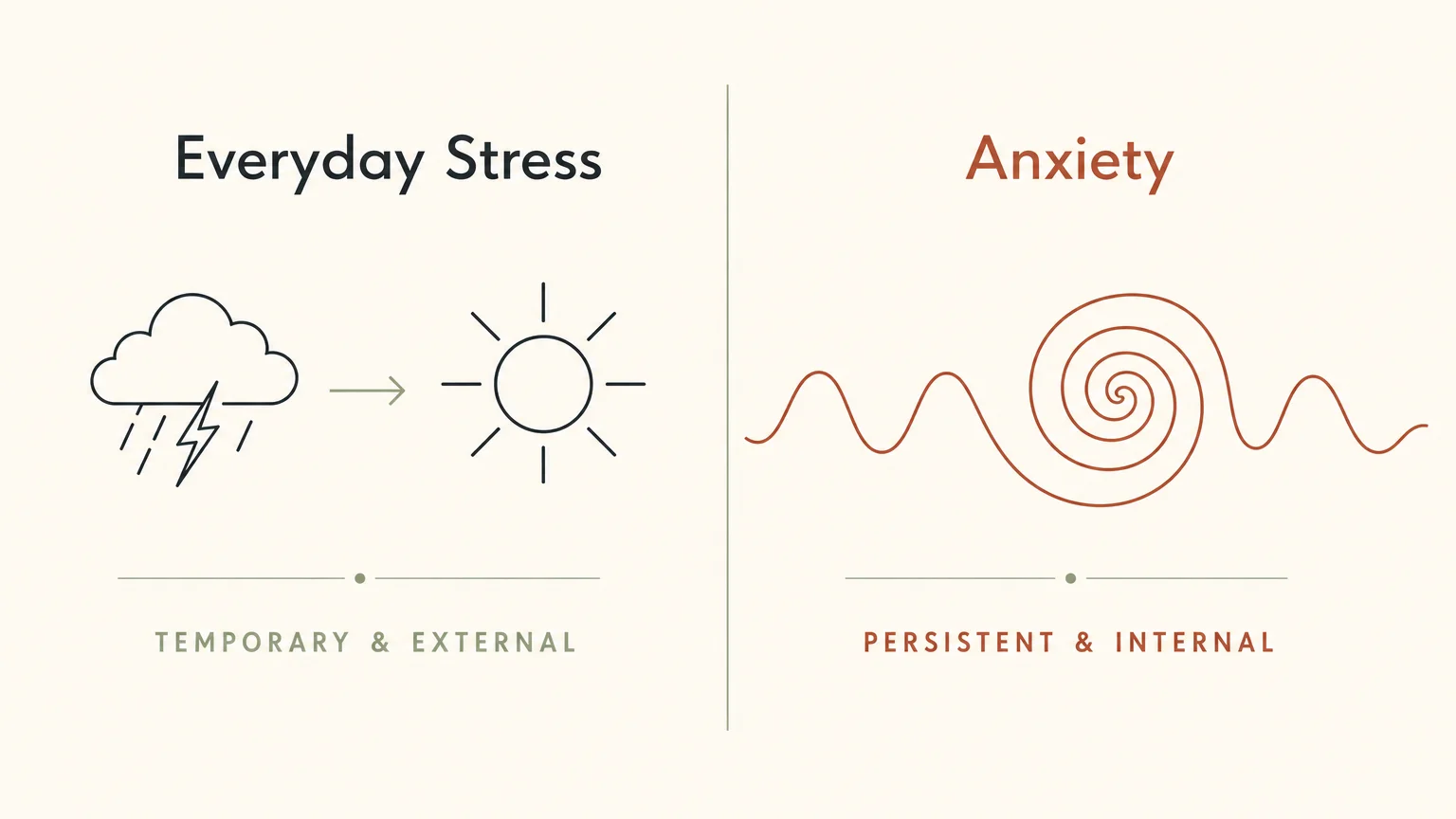
Understanding the difference between typical daily stress and a clinical anxiety disorder can help you determine when to seek professional support. Stress is a natural response to external pressures, while an anxiety disorder involves an internal alarm system that continues ringing long after the immediate threat disappears.
| Feature | Everyday Stress | Anxiety Disorder |
|---|---|---|
| Origin | Triggered by a specific, identifiable external event (like a looming project deadline or a financial setback). | Often occurs without a clear trigger, or the emotional reaction is drastically disproportionate to the actual event. |
| Duration | Resolves naturally once the stressful situation passes or the problem is tangibly solved. | Persists long after the event has passed, sometimes lingering for months or years. |
| Physical Impact | Mild to moderate physical symptoms, like temporary muscle tension or a brief stomach ache before a presentation. | Severe, disruptive physical symptoms like chronic insomnia, ongoing gastrointestinal distress, or sudden panic attacks. |
| Impact on Life | Generally manageable and rarely stops you from fulfilling your daily responsibilities. | Interferes significantly with your intimate relationships, career advancement, and overall quality of life. |

Finding the Right Professional Help
Living with untreated anxiety can severely shrink your world, but evidence-based therapies offer highly effective tools for recovery. Techniques like Cognitive Behavioral Therapy (CBT), Acceptance and Commitment Therapy (ACT), and somatic experiencing have proven track records in helping individuals regulate their nervous systems and reclaim their lives. Consider reaching out to a licensed mental health professional if you experience any of the following scenarios:
- Your physical symptoms, such as severe stomach pain, chronic migraines, or relentless insomnia, disrupt your daily life and have no clear medical cause.
- You repeatedly avoid social gatherings, career opportunities, or mundane daily tasks because the prospect of engaging causes intense, paralyzing fear.
- Your irritability or emotional outbursts are creating significant friction and distance in your closest relationships.
- You feel a constant, baseline level of dread that makes it nearly impossible to relax, even during moments of designated downtime.
Frequently Asked Questions
Can anxiety symptoms appear suddenly in adulthood?
Yes. While many people first experience anxiety during childhood or adolescence, severe anxiety can emerge at any point in life. Major life transitions, prolonged periods of chronic stress, significant hormonal shifts, or sudden traumatic events can trigger the onset of an anxiety disorder during adulthood.
How do I know if my physical symptoms are anxiety or a medical issue?
You should always consult a medical doctor to rule out physical conditions first. Health issues like thyroid imbalances, severe vitamin deficiencies, and cardiovascular conditions can closely mimic anxiety symptoms. Once a physician clears you medically, a mental health professional can help you address the psychological root of your physical distress.
Can lifestyle changes cure an anxiety disorder?
While lifestyle adjustments—such as prioritizing consistent sleep, significantly reducing caffeine intake, and engaging in regular physical activity—strongly support nervous system regulation, they are rarely a standalone cure for clinical anxiety disorders. These habits build a necessary foundation for resilience, but comprehensive treatment almost always requires focused psychotherapy and, in some cases, medication.
Recognizing how anxiety manifests in your daily life is a profound act of self-awareness. When you understand that your procrastination, chronic fatigue, or irritable outbursts are not unfixable character flaws but rather symptoms of an overloaded nervous system, you can immediately replace harsh self-criticism with genuine self-compassion. Healing is not about eradicating anxiety entirely; it is about learning to effectively manage your biological responses so fear no longer dictates your life’s choices. This article provides general educational information about psychology and relationships. It is not a substitute for professional therapy or medical advice. Everyone’s situation is unique—if you’re struggling, please reach out to a licensed mental health professional.
Last updated: June 2026. Psychology research evolves continuously—verify current findings with professional sources.






Leave a Reply