

According to a landmark meta-analysis published by the American Psychological Association, humans detect deception with 54% accuracy—barely better than a coin flip. Our instincts fail because we look for stereotypical signs of lying, such as avoiding eye contact. To understand when someone is holding back the truth, you must shift your focus from isolated gestures to behavioral clusters. When cognitive load increases during deception, the nervous system leaks stress through multiple nonverbal channels simultaneously. By observing deviations from a baseline and watching for groups of conflicting physical cues, you gain practical insight into a person’s true emotional state. Here are eight specific body language clusters that indicate hidden truths.
The Science of Clusters and Cognitive Load
The most common mistake people make when trying to spot a lie is relying on a single “tell.” A person rubbing their neck or looking away does not automatically mean they are lying; they might simply be cold, tired, or thinking deeply. Human behavior is complex, and accurate observation requires looking for clusters—groups of three or more nonverbal cues occurring simultaneously or in rapid succession.
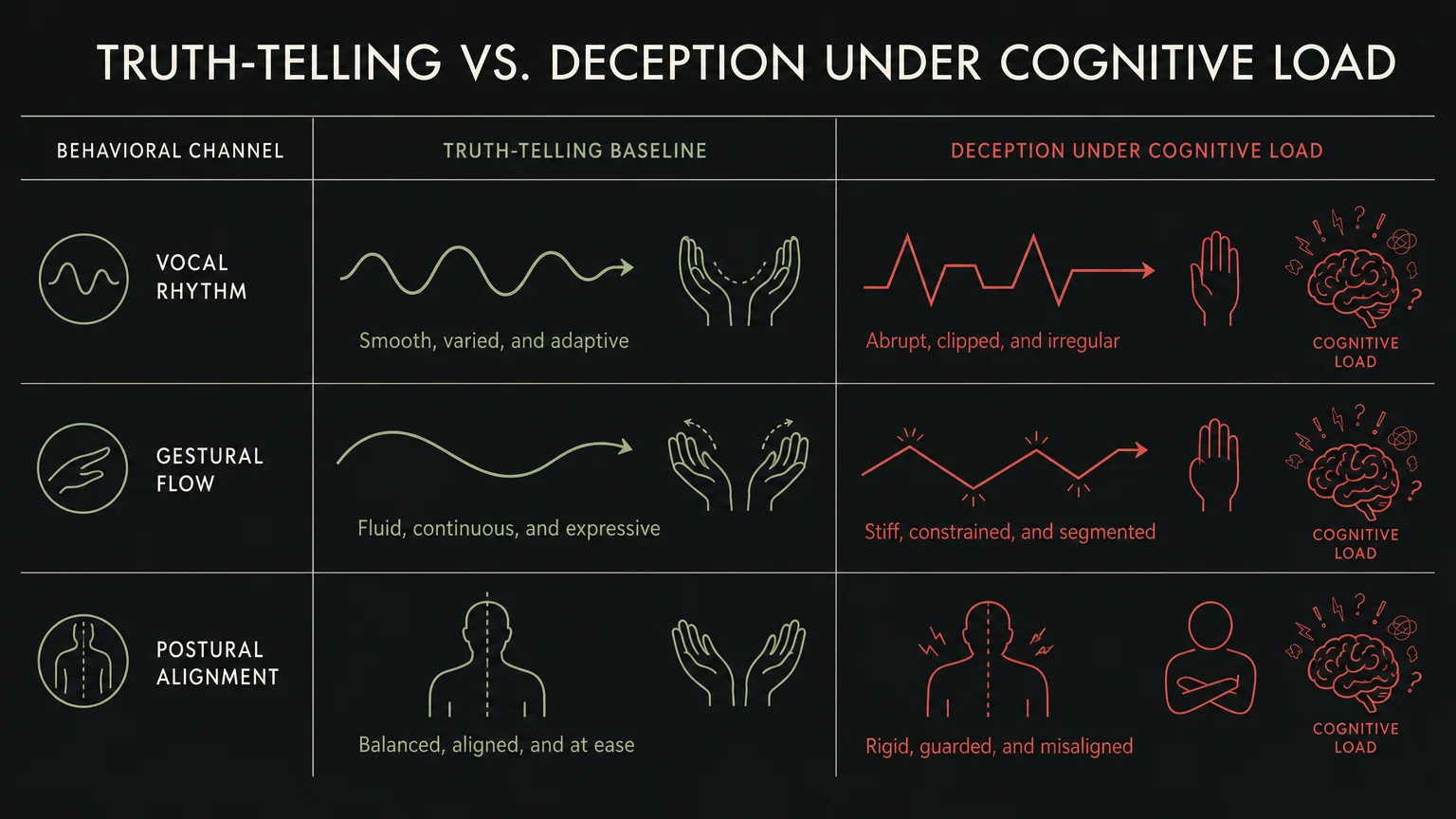
These clusters often emerge due to a psychological phenomenon known as cognitive load. Telling the truth is relatively easy for the human brain; you are simply accessing episodic memory and recalling events as they happened. Deception, however, is a highly demanding executive function. A person holding back the truth must fabricate a plausible story, monitor your reaction to see if you believe them, suppress their actual memories, and consciously manage their body language to appear natural.
Because the brain’s working memory is overwhelmed by these competing demands, it begins to drop secondary tasks, and the nervous system unconsciously leaks stress. By understanding the physiological mechanisms behind these leaks, you can learn to read the subtle shifts that indicate someone is struggling to maintain a façade.
| Behavioral Channel | Truth-Telling Baseline | Deception Under Cognitive Load |
|---|---|---|
| Vocal Rhythm | Natural pacing; spontaneous and comfortable pauses while retrieving memories. | Pitch increases; hesitation, over-explaining, or speaking unnaturally fast to fill silence. |
| Gestural Flow | Hands fluidly animate speech (using illustrators) in rhythm with spoken words. | Gestures freeze, retreat, or occur slightly after the verbal point is made. |
| Postural Alignment | Relaxed posture; fluid shifting; leaning inward toward the conversational partner. | Rigid, barrier-creating posture; pulling away; minimizing physical footprint. |
1. The Micro-Expression and Asymmetry Cluster
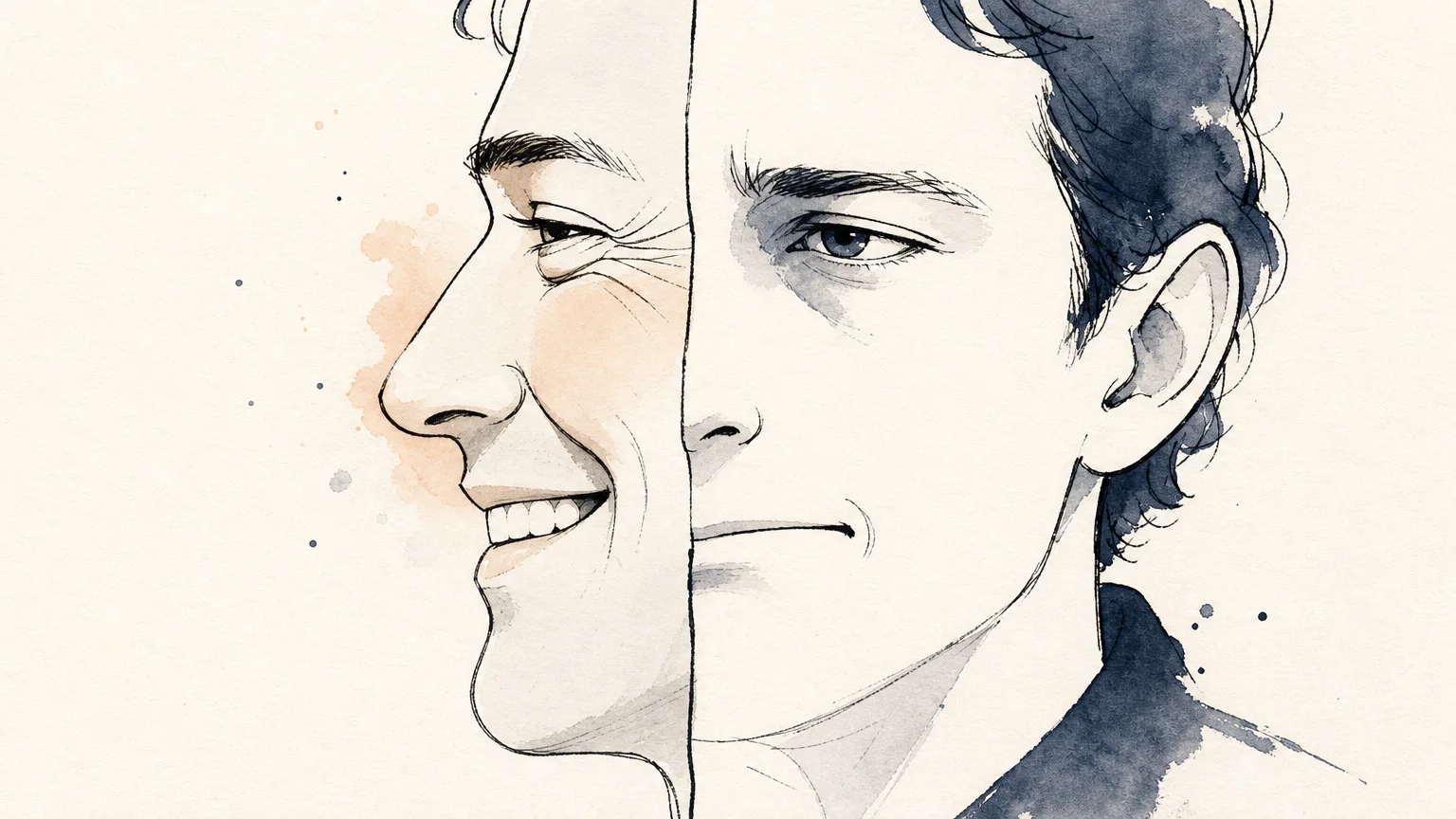
When someone is trying to conceal their true emotions, their conscious mind attempts to paste on a socially acceptable expression—like a polite smile. However, the limbic system, which processes raw emotion, fires much faster than the conscious prefrontal cortex. This conflict results in a micro-expression: an involuntary, fleeting display of genuine emotion that flashes across the face for less than half a second before the person covers it up.
Watch for a brief flash of contempt (one corner of the lip tightening and pulling upward) or fear (eyebrows raising and pulling together flat) right before a person speaks. Furthermore, fabricated expressions are often asymmetrical. A genuine smile of joy, known as a Duchenne smile, engages the muscles around the eyes, creating “crow’s feet.” A forced smile usually only engages the lower half of the face and often appears lopsided, reflecting the brain’s uneven attempt to fake the emotion.
“When lying, people usually do not monitor, control, and attempt to disguise all of their behavior; they probably couldn’t even if they wanted to.” — Paul Ekman, Ph.D.

2. The Pacifying and Self-Soothing Cluster
Holding back the truth triggers a mild fight-or-flight response, sending a rush of adrenaline through the body and causing an uncomfortable spike in heart rate and blood pressure. To combat this sudden internal stress, the body instinctively seeks to calm itself down through self-soothing behaviors.
This cluster involves repetitive, comforting touches to areas rich in nerve endings, particularly the vagus nerve. If you ask a direct question and the person responds while simultaneously rubbing the back of their neck, stroking their collarbone, touching the suprasternal notch (the hollow at the base of the throat), or rubbing their thighs, they are pacifying a sudden spike in anxiety. While these pacifiers do not guarantee deception, they definitively indicate that the topic has caused an internal stress response that the person is attempting to self-regulate.
3. The Vocal-Nonverbal Mismatch Cluster
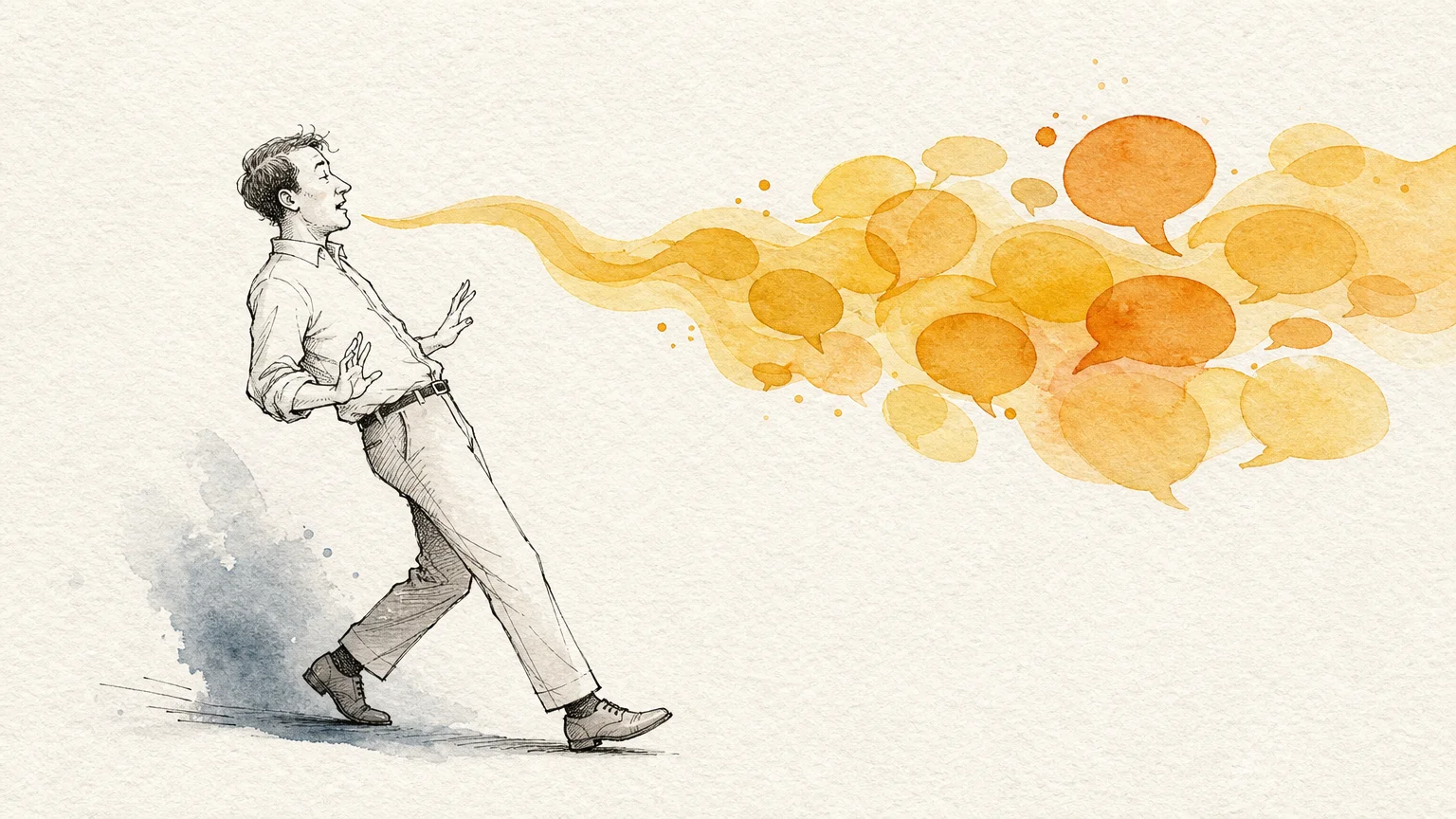
One of the most reliable clusters of deception occurs when a person’s verbal statement completely contradicts their physical behavior. Because the body’s nonverbal communication is largely unconscious, it often reveals the truth while the mouth delivers the lie.
Look for a subtle head shake indicating “no” while the person says “yes,” or a slight nod of the head while verbally denying something. Another powerful mismatch is a one-sided shoulder shrug. When people are confident in what they are saying, both shoulders may shrug naturally. If someone makes a definitive, absolute statement—”I have no idea where that missing money went”—but one shoulder subtly rises, it indicates a lack of internal commitment to the words they just spoke.

4. The “Flight” and Barrier Cluster
When the brain perceives a conversation as threatening or dangerous (such as the threat of a lie being exposed), the limbic system immediately prepares the body for an escape. You will often see this manifest in the lower body long before it reaches the face.
Pay attention to torso leaning and foot direction. A person who feels cornered by a question may subconsciously shift their torso away from you or point their feet toward the nearest exit. Additionally, they may begin to build physical barriers. This can involve crossing their arms tightly across their chest, placing a coffee cup directly between you, or pulling a laptop or bag onto their lap. These blocking behaviors are unconscious attempts to create physical distance and protection from an uncomfortable inquiry.
5. The Stiff or “Frozen” Posture Cluster
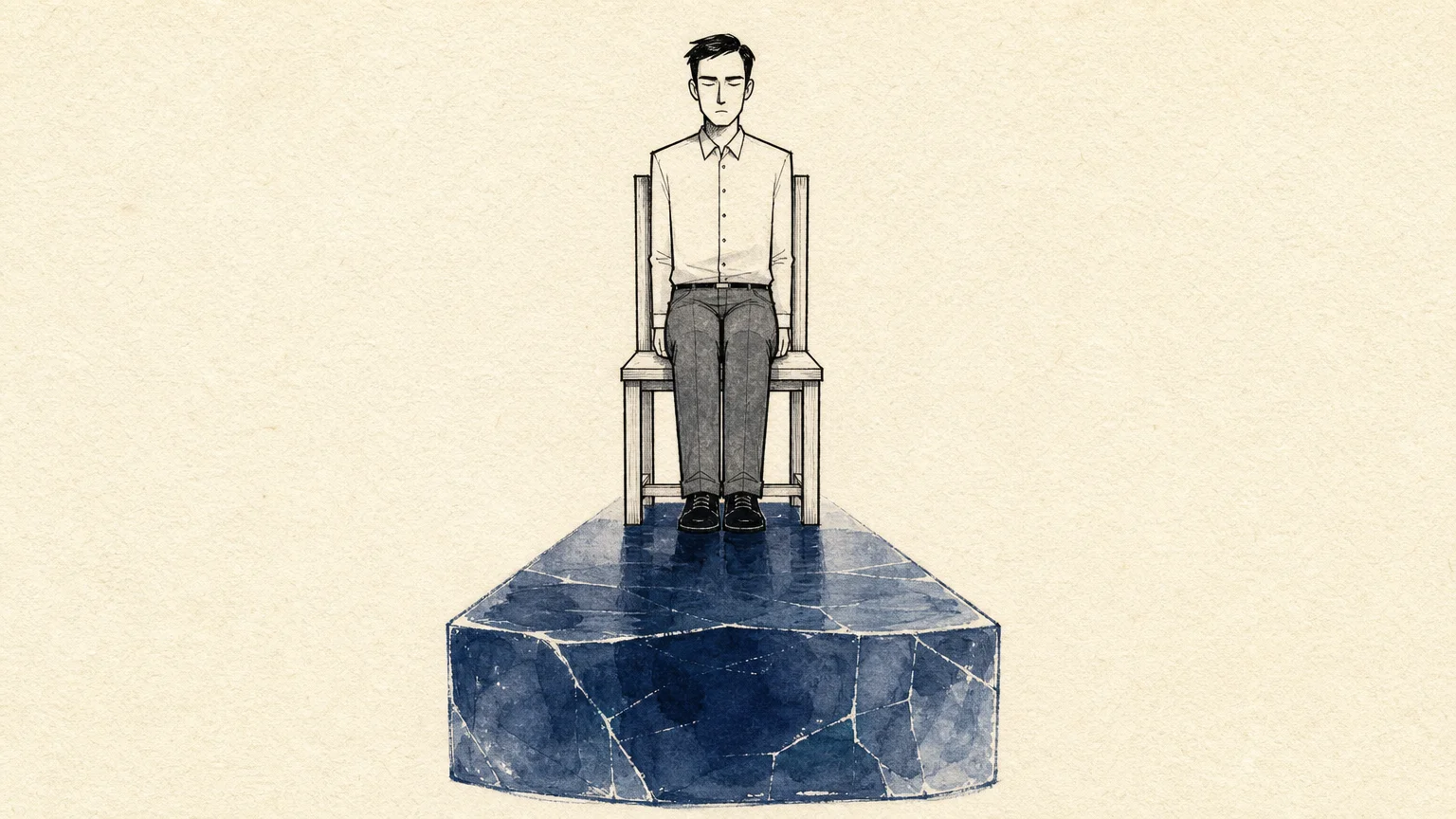
Pop culture has popularized the myth that liars are always nervous, twitchy, and constantly shifting in their seats. While extreme stress can cause fidgeting, the overwhelming cognitive load of deception frequently causes the exact opposite reaction: physical freezing.
Because the brain is terrified of leaking clues, it often goes into lockdown mode. A person holding back the truth may sit unnaturally still, keeping their arms pinned to their sides and holding their torso completely rigid. This severe lack of movement is an overcompensation mechanism. If someone who is normally animated and relaxed suddenly turns into a motionless statue the moment a difficult topic is raised, their brain is likely utilizing all its processing power to manage the narrative and suppress leakage.

6. The Manipulator and Grooming Cluster
While some people freeze under cognitive load, others channel their excess nervous energy into object manipulation and displacement behaviors. These are minor, repetitive actions that help vent the physical tension of holding back the truth.
This cluster often includes lint picking, aggressively adjusting a tie or collar, continuously clicking a pen, tapping fingers, or playing with jewelry. These behaviors, heavily clustered around the moment a sensitive question is asked, show that the nervous system is seeking an outlet for stress. A classic displacement cue is “dusting” off an already clean shirt or wiping an invisible speck off the table; the brain needs something to do with its hands to distract from the anxiety of the conversation.
7. The Overcompensating Eye-Behavior Cluster
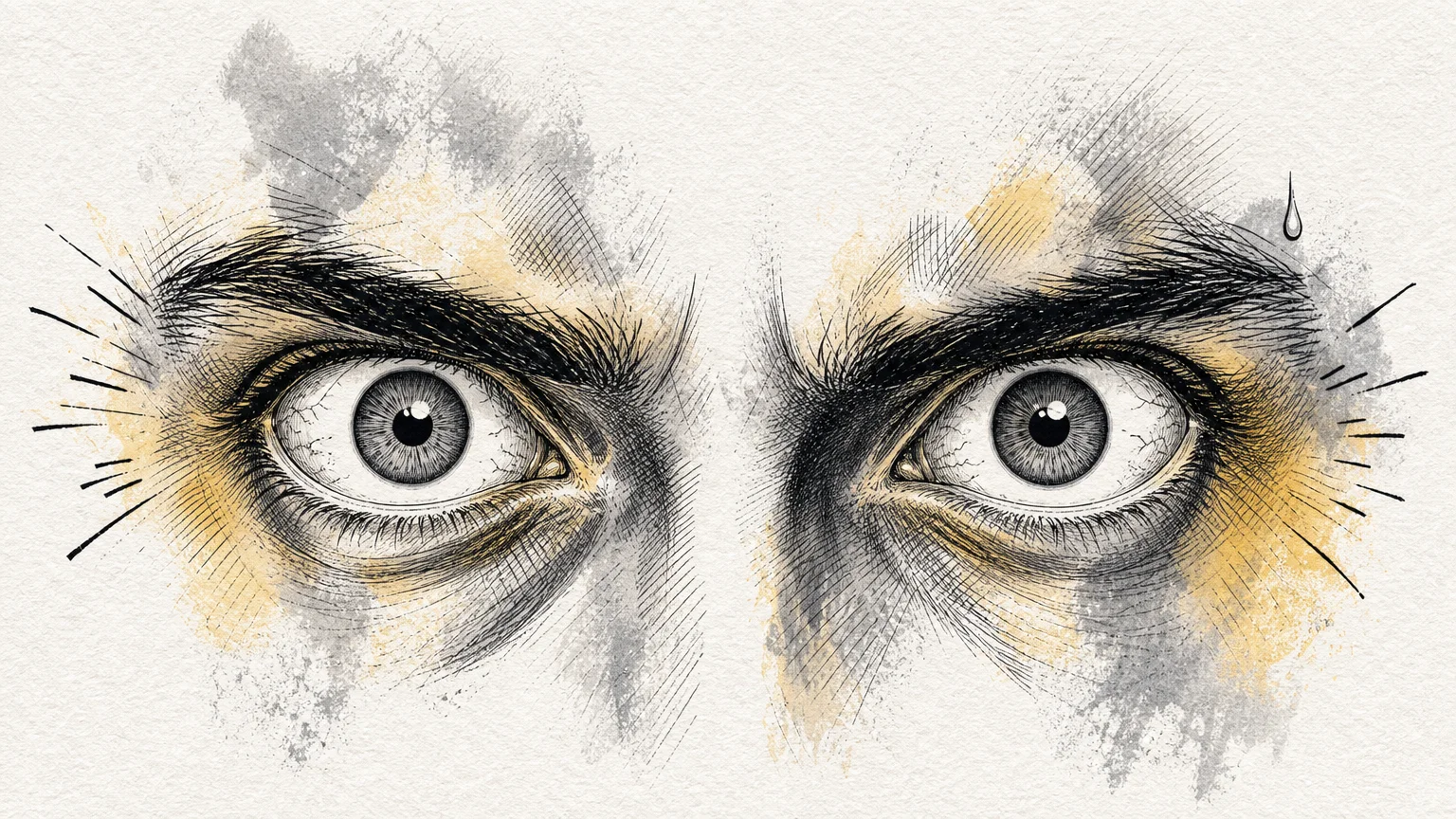
Perhaps the most pervasive myth about body language is that liars cannot look you in the eye. In reality, because deceivers know this myth so well, they often overcompensate. A person holding back the truth will frequently maintain forced, unbroken, and uncomfortable eye contact to “prove” they are being honest. They are also intensely monitoring your face to see if you are buying their story.
Beyond the unblinking stare, watch for rapid fluctuations in blink rate. Under the heavy cognitive load of formulating a lie, a person’s blink rate often slows down significantly. Once the lie is successfully delivered and the pressure momentarily drops, you may witness a sudden flutter of rapid blinks—a physical release of the tension they just held.

8. The Gestural Retreat Cluster
When people tell the truth, their hands naturally punctuate and animate their speech. These hand movements are called illustrators, and they are intricately tied to the flow of honest thought. However, when cognitive load spikes during deception, the brain does not have the bandwidth to manage both the fabricated story and natural hand movements.
Watch for a sudden drop in illustrators. If a person is speaking with their hands and suddenly drops them flat to the table or hides them under the desk right as they answer a critical question, their brain has pulled resources away from gesturing to focus entirely on the lie. Additionally, if the gestures return, they may seem slightly out of sync with the words, lagging a fraction of a second behind the verbal points because they are being consciously forced rather than naturally generated.
How to Establish a Behavioral Baseline
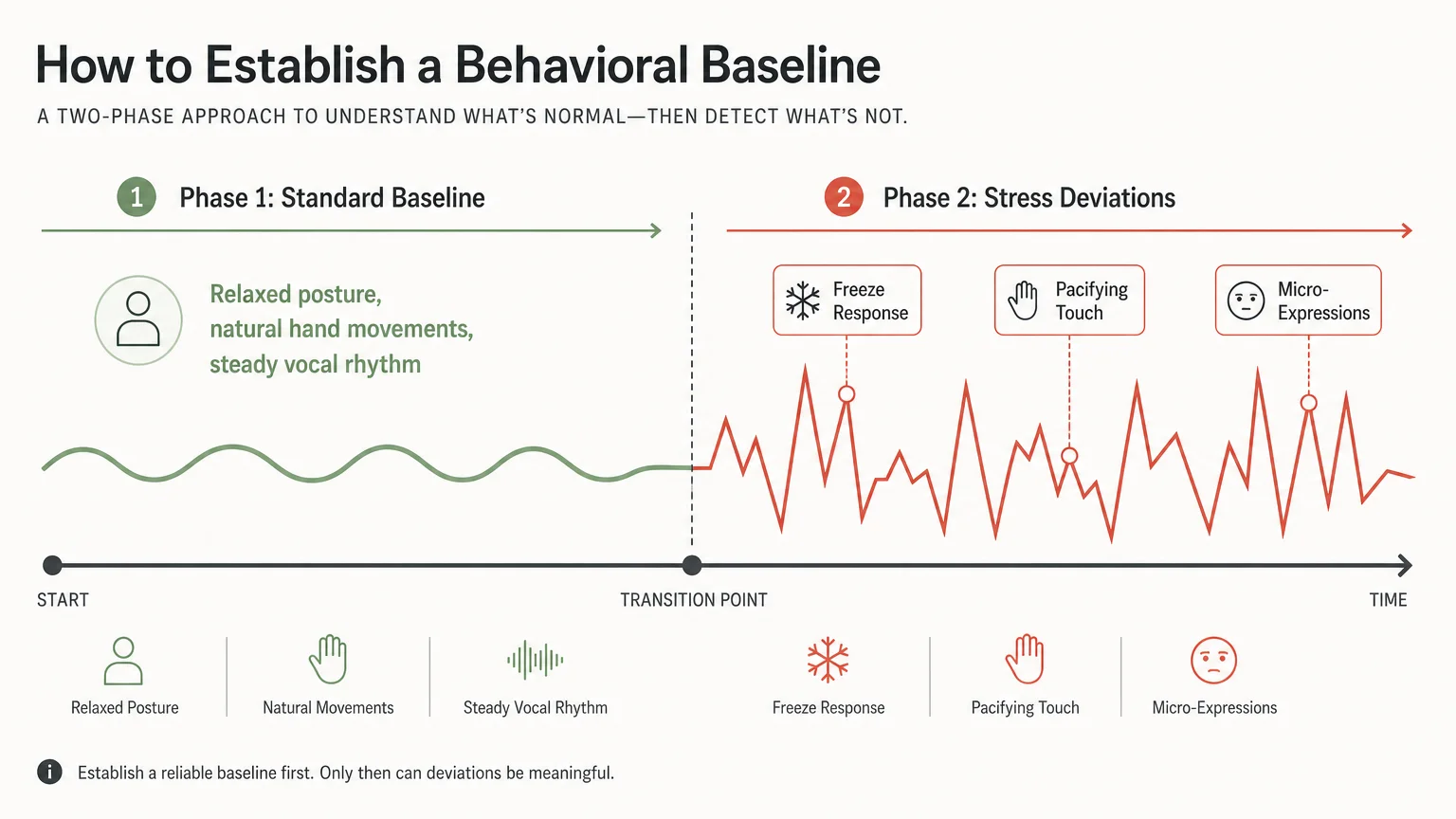
You cannot accurately read any body language cluster without first establishing a baseline. A baseline is a person’s normal, un-stressed state of being. Without knowing what is normal for an individual, you cannot spot the deviations that indicate deception.
- Observe them in a relaxed state: Engage the person in casual conversation about safe, non-threatening topics (hobbies, weather, weekend plans).
- Note their vocal pitch and pace: Listen to how fast they normally speak and the natural pitch of their voice. Notice how quickly they answer basic questions.
- Watch their baseline movements: Observe how much they naturally use their hands to talk. Note their typical posture and baseline blink rate.
- Look for the deviation: Once you transition to the difficult topic, watch for sudden, clustered shifts away from this baseline. The greater the deviation from their normal behavior, the higher the likelihood of concealed information or severe stress.
What Can Go Wrong: The Danger of Misreading Cues
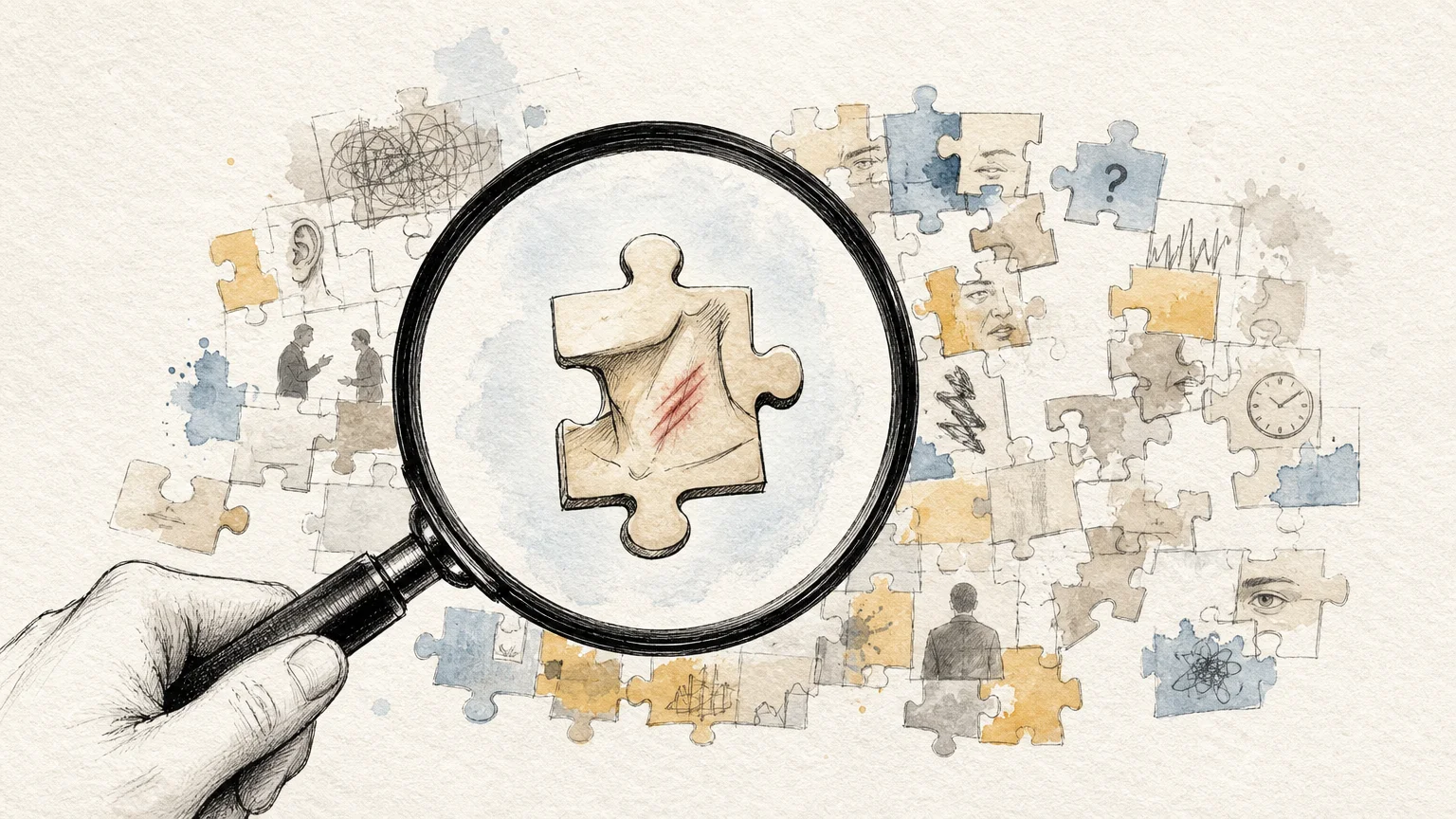
Applying body language analysis requires immense caution and empathy. The most dangerous trap is the “Othello Error,” a term coined by Paul Ekman to describe a situation where an honest person is disbelieved because they display signs of stress. Stress does not inherently equal deception.
A truth-teller who is terrified of not being believed can exhibit the exact same pacifying, freezing, and vocal shifts as a liar. Furthermore, trauma survivors and individuals navigating PTSD often display complex nonverbal cues—such as breaking eye contact or displaying flat affect—that can be severely misinterpreted by an untrained observer. Neurodivergent individuals, including those with ADHD or autism, may naturally utilize self-soothing behaviors or have baseline eye-contact patterns that deviate from neurotypical norms.
Never use body language clusters as a definitive lie detector. Instead, view these cues as check engine lights—indicators that you need to ask better, more clarifying questions to uncover why the person is experiencing elevated stress.

When to Seek Professional Support
While understanding nonverbal communication can improve your interpersonal awareness, hyper-analyzing your partner’s every blink and gesture is rarely a recipe for a healthy relationship. If you find yourself constantly looking for clusters of deception, the issue is often less about the specific lies and more about a fundamental fracture in relational security.
“Trust is built in very small moments… One such moment is not important, but if you’re always choosing to turn away, then trust erodes in a relationship—very gradually, very slowly.” — John Gottman, Ph.D.
Consider seeking support from a licensed couple’s counselor, therapist, or psychologist if you experience any of the following:
- Chronic Hypervigilance: You feel physically exhausted from constantly analyzing your partner’s words and movements for hidden meanings.
- A History of Betrayal: An unresolved incident of infidelity or financial deception has left you unable to accept your partner’s statements at face value.
- Communication Breakdown: Conversations rapidly devolve into interrogations, leaving both partners defensive, angry, and emotionally disconnected.
- Internalized Anxiety: Your suspicion is causing you severe distress, impacting your sleep, work focus, and overall mental well-being.
Therapeutic interventions, such as those provided through frameworks like the Gottman Method, focus on rebuilding the foundation of emotional attunement. A professional can help you shift from a dynamic of suspicion and interrogation to one of vulnerability, transparent communication, and mutual repair.
Deciphering body language is not about catching people out; it is about tuning in. By paying attention to the nonverbal clusters of cognitive load and stress, you can approach difficult conversations with deeper empathy and sharper insight. When you notice someone struggling, you can soften your tone, ask open-ended questions, and create a safer space for the truth to naturally surface.
This is educational content based on psychological research and general principles. Individual experiences vary significantly. For personalized guidance, consult a licensed therapist, psychologist, or counselor.
Last updated: June 2026. Psychology research evolves continuously—verify current findings with professional sources like the American Psychological Association (APA), National Institutes of Health (NIH), or The Gottman Institute.








Leave a Reply