

When someone consistently centers their own needs, you might wonder if they lack self-awareness or if something deeper is at play. Recognizing the faces of egocentric behavior is your first step toward protecting your emotional energy and establishing healthier boundaries. While culture quickly labels every selfish act as clinical narcissism, the psychological reality is more nuanced. True egocentrism often stems from a cognitive blind spot—an inability to look past one’s own lens to understand your experience. By learning to identify these specific patterns of self-centered behavior, you can shift your response from silent frustration to strategic communication. This clarity empowers you to decide exactly what the relationship requires: a firm boundary, a radically honest conversation, or professional support.
The Crucial Difference Between Egocentrism and Narcissism
When you interact with a partner, family member, or coworker who consistently prioritizes their own desires, it is incredibly tempting to label them a narcissist. Pop psychology encourages us to pathologize difficult behavior, but psychological research draws a firm line between everyday egocentricity and clinical narcissism.
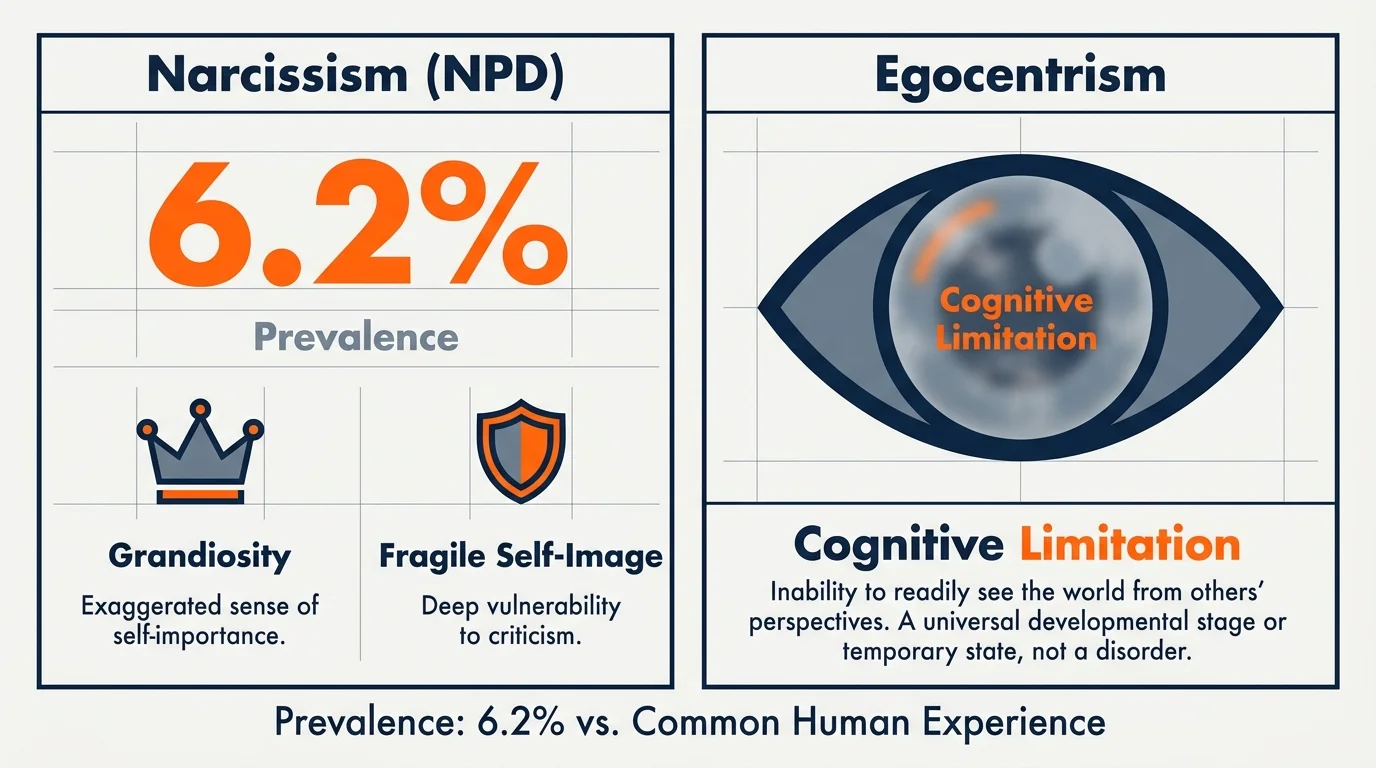
According to research from the National Library of Medicine—often cited by organizations like the American Psychological Association—Narcissistic Personality Disorder (NPD) has a lifetime prevalence of approximately 6.2%, and it manifests significantly more often in men than in women. Narcissism is a complex personality structure characterized by a profound need for external admiration, grandiosity, and a fundamental lack of empathy. Narcissistic individuals manipulate interpersonal dynamics specifically to protect a highly fragile self-image.
Egocentrism, however, is a far more common human experience and rarely operates from a place of malice. Recent psychological research from UC Davis highlights that egocentrism is primarily a cognitive limitation rather than a personality disorder. As lead researcher Dr. Andrew Todd explains, egocentrism acts as a biasing influence where people use their own thoughts, feelings, and preferences as a baseline to infer what another person is experiencing. An egocentric person essentially assumes your mind works exactly like theirs. When they fail to meet your needs, it is often because they genuinely cannot perceive a perspective outside of their own lived experience.
Understanding this difference is vital. You cannot treat a cognitive blind spot the same way you treat a manipulative personality disorder. Identifying the specific faces of egocentric behavior allows you to tailor your communication strategy to reality.

The 8 Faces of Egocentric Behavior
Egocentrism rarely looks like cartoonish villainy. More often, it shows up in subtle, frustrating patterns that slowly erode the trust and connection in a relationship. Here are the eight keys to recognizing these behaviors in action.
1. Perspective Blindness
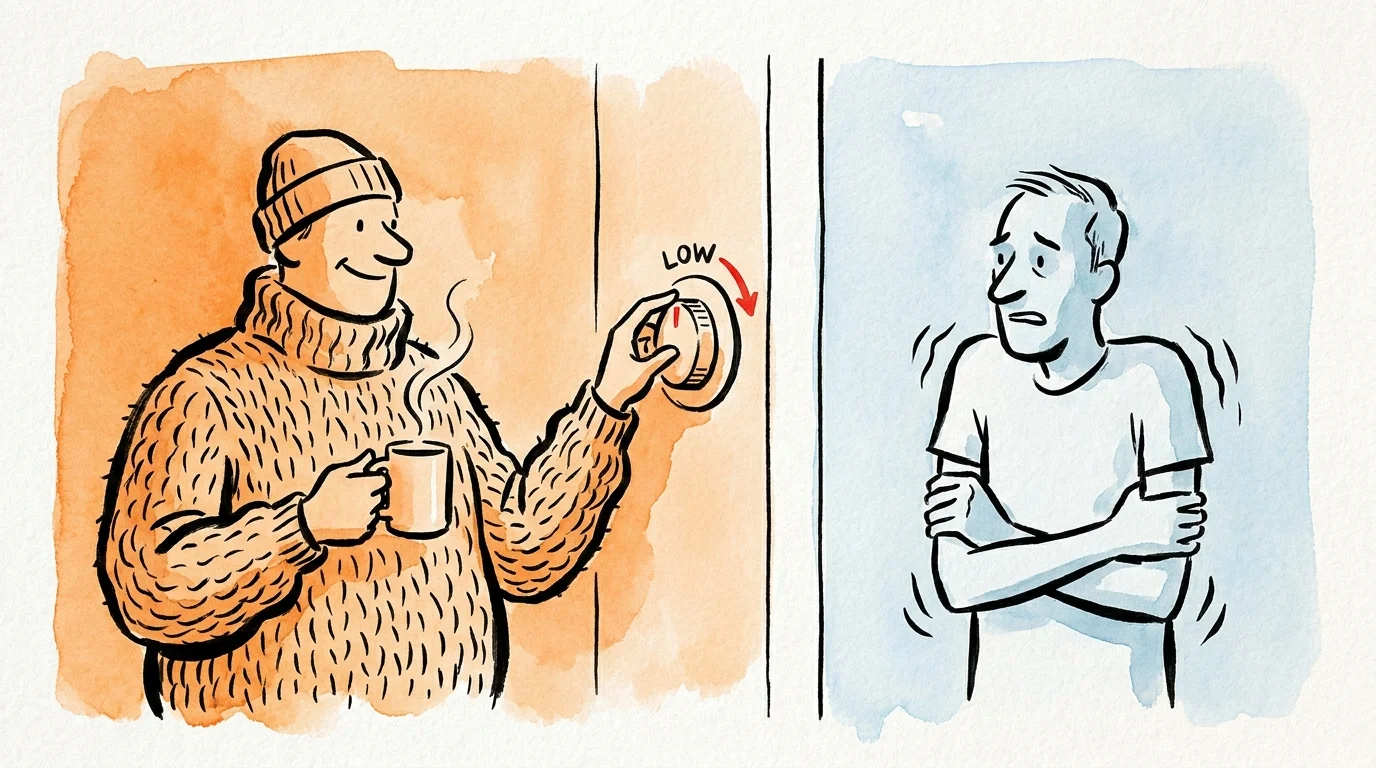
The most foundational element of egocentric behavior is the inability to step outside one’s own reality. If an egocentric person is not cold, they do not understand why you need to turn up the heat. If a specific comment did not offend them, they cannot fathom why it hurt your feelings. This is the literal definition of the cognitive blind spot: they project their internal state onto you, leaving no room for your unique physical or emotional experience.
- Practical Insight: Do not rely on hints or subtle body language. Egocentric individuals miss passive cues completely. If you need something, state it explicitly. Say, “I know you are comfortable with this pace, but I am feeling overwhelmed and need us to slow down.”
2. The Conversational Hijack
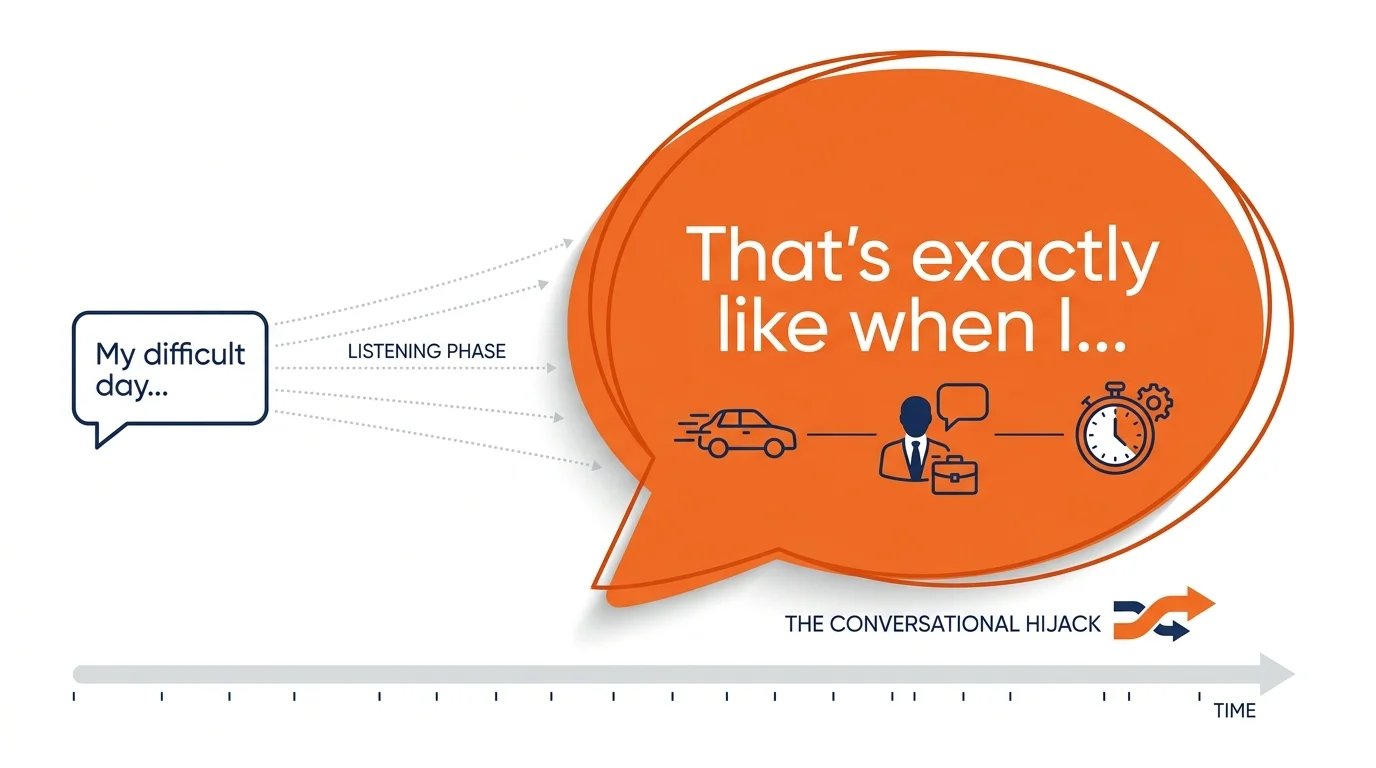
Have you ever shared a vulnerable story about a difficult day at work, only to have the other person instantly redirect the narrative to their own stress? This is the conversational hijack. They do not necessarily do this to dismiss you; in their egocentric framework, sharing a relatable story is how they attempt to forge a connection. Unfortunately, the impact on you is deeply invalidating. The conversation consistently orbits their experiences, leaving you feeling unheard and emotionally abandoned.
- Practical Insight: Use the “Pivot and Reclaim” technique. Allow them a brief moment to share, and then firmly guide the conversation back. Try saying, “I understand why your day was so stressful. Going back to what I was saying earlier, I really need your support on this specific issue.”

3. Conditional Empathy
Empathy requires a high degree of mental and emotional flexibility. It asks us to leave our own worldview behind and sit comfortably in someone else’s reality.
“We think we listen, but very rarely do we listen with real understanding, true empathy. Yet listening, of this very special kind, is one of the most potent forces for change that I know.” — Carl Rogers, Psychologist
An egocentric person is often capable of demonstrating empathy, but typically only if they have personally experienced exactly what you are going through. If your struggle falls outside their lived experience, they hit an emotional wall. Because they cannot use their own memories as a reference point, they struggle to offer meaningful, validating support.
- Practical Insight: Accept their emotional limitations. You cannot force someone to hold space for an experience they cannot comprehend. Cultivate a diverse support system so you can seek deep empathy from friends or therapists who possess the emotional bandwidth to support you.
4. Defensiveness and the Refusal of Influence
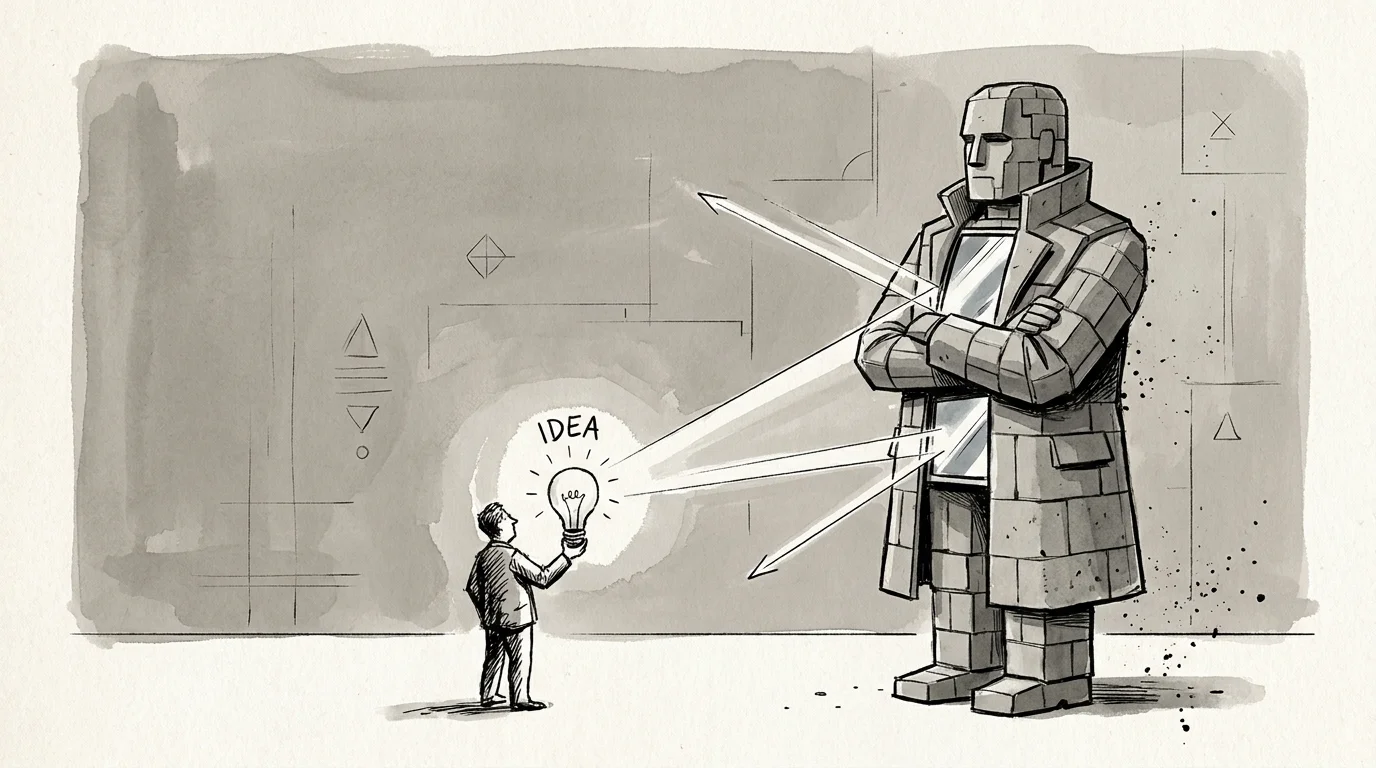
The Gottman Institute has dedicated decades to studying what makes relationships thrive, identifying “accepting influence” as a critical component of successful partnerships. Healthy couples allow their partners’ opinions and feelings to shape their decisions. When you bring up a concern to an egocentric person, however, they typically respond with intense defensiveness. Because they view the world strictly through their own lens, any feedback feels like a direct, unjustified attack on their reality. Instead of pausing to consider your viewpoint, they immediately defend their intentions, deflecting responsibility.
- Practical Insight: Frame your feedback using strictly “I” statements, and focus heavily on future solutions rather than litigating past events. “I feel disconnected when decisions are made without me. Moving forward, I need us to discuss these choices together.”

5. Boundary Assumption
Egocentric behavior frequently involves blurred lines between where they end and you begin. They might assume you are always available to help them move, volunteer your free time without asking, or borrow your belongings without permission. Because they center their own convenience and schedule, it simply does not occur to them to check in about your capacity, energy levels, or willingness to participate.
- Practical Insight: Enforce your boundaries with neutral, unwavering firmness. You do not need to over-explain or apologize for having limits. “I will not be able to help you with that project this weekend” is a complete sentence.
6. Emotional Invalidation
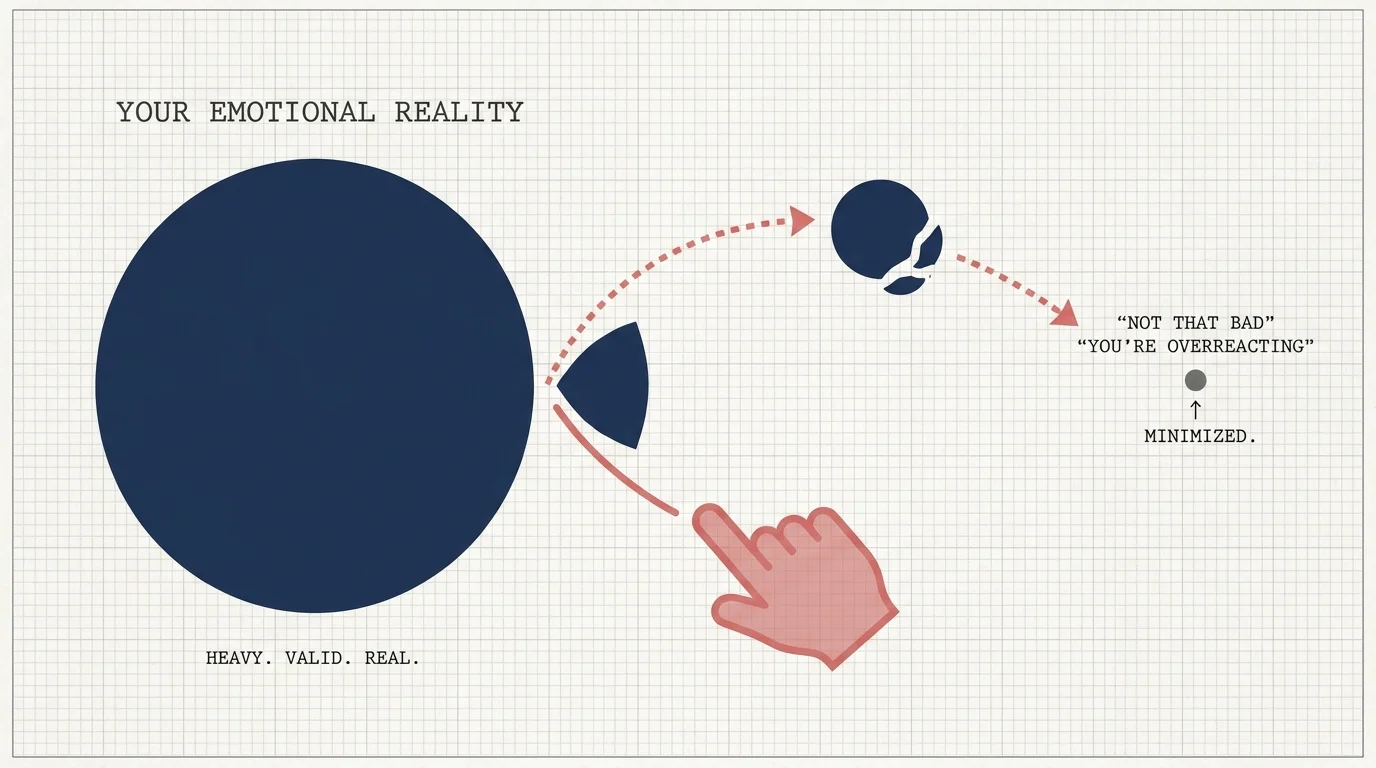
When your emotional response contradicts theirs, an egocentric person often labels your feelings as “too sensitive,” “dramatic,” or “illogical.” They struggle immensely to hold space for multiple truths. If they believe a joke was funny, your hurt feelings are viewed as a misinterpretation of reality rather than a valid emotional response. They use their own emotional baseline as the universal standard for what is acceptable.
- Practical Insight: Stop seeking their validation for your emotional reality. Remind yourself that your feelings belong entirely to you. They do not require another person’s understanding or stamp of approval to be valid.

7. The Anxiety-Driven Focus
Psychological research from UC Davis illuminates a fascinating trigger for temporary egocentrism: anxiety. When people feel anxious, highly stressed, or uncertain about the future, their cognitive load increases dramatically. As a survival mechanism, their brain retreats into its own perspective to manage the overwhelm. If a partner or friend suddenly becomes hyper-focused on themselves during a major life transition, job loss, or health crisis, you are likely witnessing anxiety-driven egocentrism rather than a permanent shift in their personality.
- Practical Insight: Timing is everything. Wait for their nervous system to settle before initiating complex relationship discussions. You cannot negotiate emotional nuances with someone whose brain is locked in survival mode.

8. The Contempt Trap
While basic egocentrism is frustrating, it becomes deeply toxic when it devolves into contempt. Dr. John Gottman famously identified contempt as the single greatest predictor of relationship dissolution, capable of predicting divorce with over 90% accuracy. While criticism attacks a specific behavior, contempt attacks your character from a position of moral superiority. If an egocentric individual begins mocking your perspective, rolling their eyes at your needs, or treating you with disgust, the behavior has crossed a dangerous line.
- Practical Insight: Contempt requires an immediate, zero-tolerance boundary. Address it the moment it happens: “When you roll your eyes at me, it feels incredibly disrespectful. I am stepping away, and we can continue this conversation when we can speak to each other with basic respect.”
The Spectrum of Self-Focus
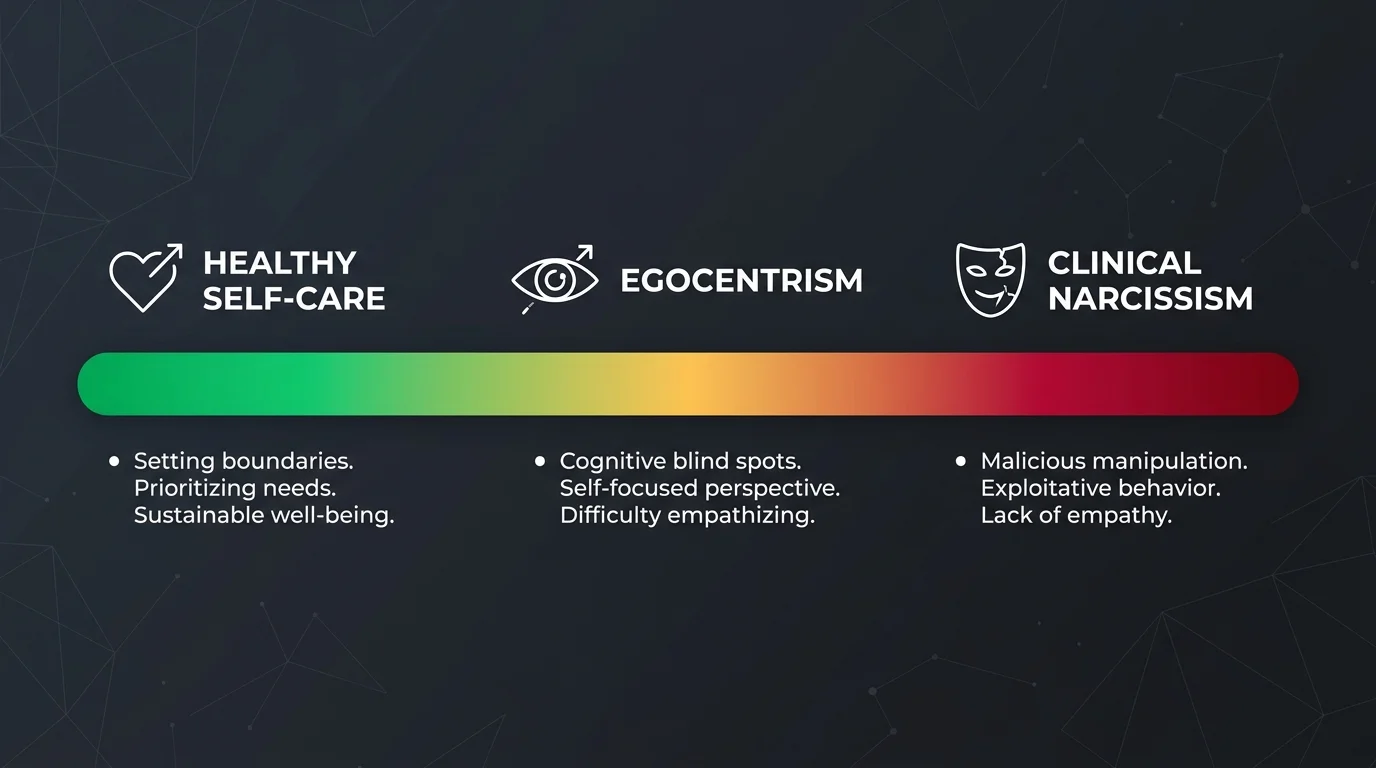
It is helpful to view self-focus not as a binary switch, but as a spectrum. Everyone advocates for their own needs, but the manner in which we do so determines whether the behavior is healthy, egocentric, or narcissistic.
| Trait | Healthy Self-Advocacy | Everyday Egocentrism | Narcissistic Traits |
|---|---|---|---|
| Perspective Taking | Can clearly see and validate your point of view, even while disagreeing. | Struggles to see your point of view; assumes their view is the obvious default. | Sees your point of view but actively dismisses it as inferior or manipulative. |
| Empathy | Listens deeply and validates your emotional experience without making it about them. | Can show empathy if they have personally experienced the exact same situation. | Lacks genuine empathy; may fake it temporarily to maintain a favorable image. |
| Conflict Response | Takes accountability for their actions and seeks collaborative repair. | Becomes highly defensive and hyper-focuses on explaining their benign intentions. | Uses gaslighting, blame-shifting, and rage to punish you for raising an issue. |
| Motivation | Driven by a desire for mutual respect, balance, and personal well-being. | Driven by cognitive bias, anxiety, or a lack of emotional awareness. | Driven by an intense need for power, admiration, and ego protection. |

Myths Worth Debunking
Navigating an egocentric dynamic is difficult enough without carrying the weight of cultural misinformation. To protect your peace, we must debunk a few pervasive myths about self-centered behavior.
- Myth 1: They know exactly what they are doing to hurt you.
While the impact of their behavior is painful, the intent is rarely malicious. Because egocentrism is largely a cognitive blind spot, the person is often genuinely oblivious to the wake of frustration they leave behind. Acknowledging their ignorance does not excuse the impact on you, but it significantly changes your strategy from fighting a villain to managing a limitation. - Myth 2: If you explain your pain perfectly, they will finally change.
Many people exhaust themselves trying to find the “perfect words” to make an egocentric partner understand their pain. You cannot over-explain someone into possessing empathy. Real behavioral change requires their internal motivation and dedicated self-reflection, not just your perfect articulation. - Myth 3: Setting a boundary with them means you are being selfish.
Egocentric individuals will often accuse you of being selfish when you finally say no to their demands. Do not internalize this projection. Setting boundaries is the exact opposite of selfishness; it is the only sustainable way to keep a relationship alive without building catastrophic levels of resentment.

Signs It’s Time to Talk to a Therapist
While boundaries and strategic communication can manage everyday egocentrism, prolonged exposure to intensely self-centered behavior takes a profound toll on your mental health. If you are experiencing the following signs, it is time to seek support from a licensed therapist through resources like Psychology Today or the National Institute of Mental Health.
- You constantly doubt your own reality. If their defensiveness has escalated to the point where you frequently wonder if you are “too sensitive” or if your memories of events are completely wrong, you are experiencing the effects of gaslighting. A therapist can help you anchor back into your own reality.
- The relationship drains your baseline energy. If the mere thought of interacting with this person causes your heart rate to spike or leaves you feeling physically exhausted, your nervous system is signaling that the dynamic is fundamentally unsafe.
- You are walking on eggshells. Healthy relationships allow for spontaneous, relaxed connection. If you carefully curate every word, tone, and facial expression to avoid triggering their defensiveness, you are living in a state of chronic hypervigilance.
- Contempt has normalized in the dynamic. If mockery, eye-rolling, and name-calling have become standard ways of communicating, the relationship has turned toxic. Professional intervention is required to assess whether the dynamic can be salvaged or if a safe exit strategy is necessary.
Frequently Asked Questions
Can an egocentric person learn to be more empathetic?
Yes, but it requires intentional effort. Empathy is not a fixed personality trait; it is a measurable, learnable skill. However, the egocentric person must actively desire to change. Therapy approaches like cognitive behavioral therapy (CBT) and mindfulness practices can help individuals slow down their reaction times, increase their cognitive flexibility, and actively practice taking other people’s perspectives.
How do I handle an egocentric parent?
Managing an egocentric parent requires radical acceptance and firm boundaries. Accept that they may never be the emotionally attuned parent you deserve. Limit your expectations of what they can provide emotionally. If conversations frequently become draining or invalidating, utilize the “grey rock” method: offer brief, neutral, and uninteresting responses to prevent them from hijacking your emotional energy.
Is egocentric behavior a trauma response?
It can be. Early childhood trauma, chronic emotional neglect, or inconsistent caregiving can arrest a person’s emotional development. When a child learns that the world is unsafe, they may remain stuck in a self-focused, self-protective survival state well into adulthood. While trauma explains the origin of the behavior, it does not absolve the adult of their responsibility to heal and treat others with respect.
Navigating the Path Forward
Recognizing the faces of egocentric behavior gives you a vital advantage: clarity. When you understand that a person’s self-centeredness is born of a cognitive blind spot rather than a targeted attack on your worth, you free yourself from the exhausting cycle of taking their behavior personally. You stop waiting for them to magically intuit your needs and start advocating for yourself with clarity and precision.
Your emotional energy is a finite and precious resource. By leaning into firm boundaries, managing your expectations, and insisting on mutual respect, you reclaim your power in the dynamic. Whether you choose to restructure the relationship, gently distance yourself, or seek professional support, you now have the psychological tools to chart a healthier course.
This is educational content based on psychological research and general principles. Individual experiences vary significantly. For personalized guidance, consult a licensed therapist, psychologist, or counselor.
Last updated: May 2026. Psychology research evolves continuously—verify current findings with professional sources.









Leave a Reply