
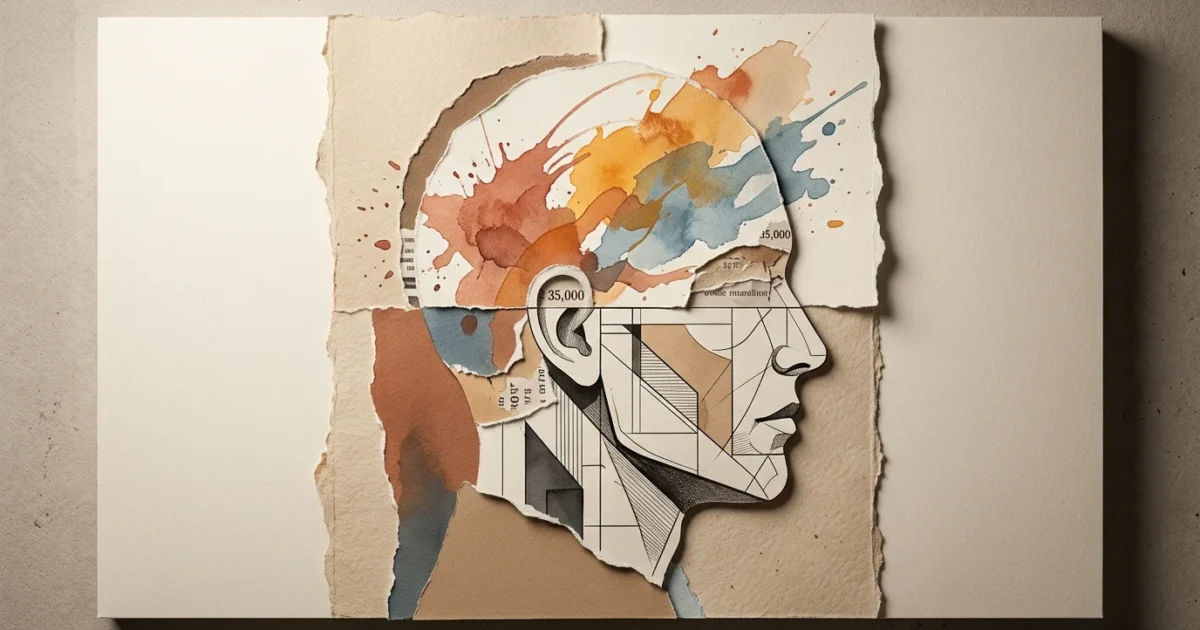
You make roughly 35,000 decisions every single day, yet your conscious mind directs only a small fraction of them. Unconscious scripts, evolutionary drives, and neurochemical rewards govern most of your daily choices.
When you understand the hidden mechanics behind your habits and emotional reactions, you regain control over your life. Behavioral psychology provides clear tools to dismantle destructive patterns and build intentional responses.
Exploring the psychology of human behavior reveals why you procrastinate, repeat old relationship dynamics, or chase fleeting rewards. These everyday psychology insights turn self-frustration into self-mastery.

The Dual-System Brain: Why Autopilot Rules Your Life
In 2011, psychologist Daniel Kahneman introduced a foundational framework dividing cognitive processing into two primary mechanisms: System 1 and System 2. This distinction explains why conscious intentions often conflict with real-world actions.
System 1 operates automatically, rapidly, and with minimal voluntary control. It effortlessly interprets emotional expressions, steers your vehicle along familiar routes, and detects the source of sudden sounds.
System 2 manages deliberate contemplation, analytical reasoning, and disciplined focus. It requires conscious mental exertion and consumes significant metabolic energy whenever you calculate complex figures or regulate emotional outbursts.
Your brain represents roughly two percent of your total body mass yet consumes approximately twenty percent of your resting metabolic energy. To conserve vital resources, it delegates recurring routines to automatic System 1 shortcuts called heuristics.
These evolutionary shortcuts help you survive, but they frequently produce irrational conclusions. You instinctively choose passive comfort over challenging personal goals simply because deep contemplation exhausts cognitive fuel.
Understanding Human Motivation: Needs, Drives, and Neurochemistry
Understanding human motivation requires examining the physiological and psychological forces that produce momentum. Willpower alone rarely sustains behavioral change without underlying emotional alignment.
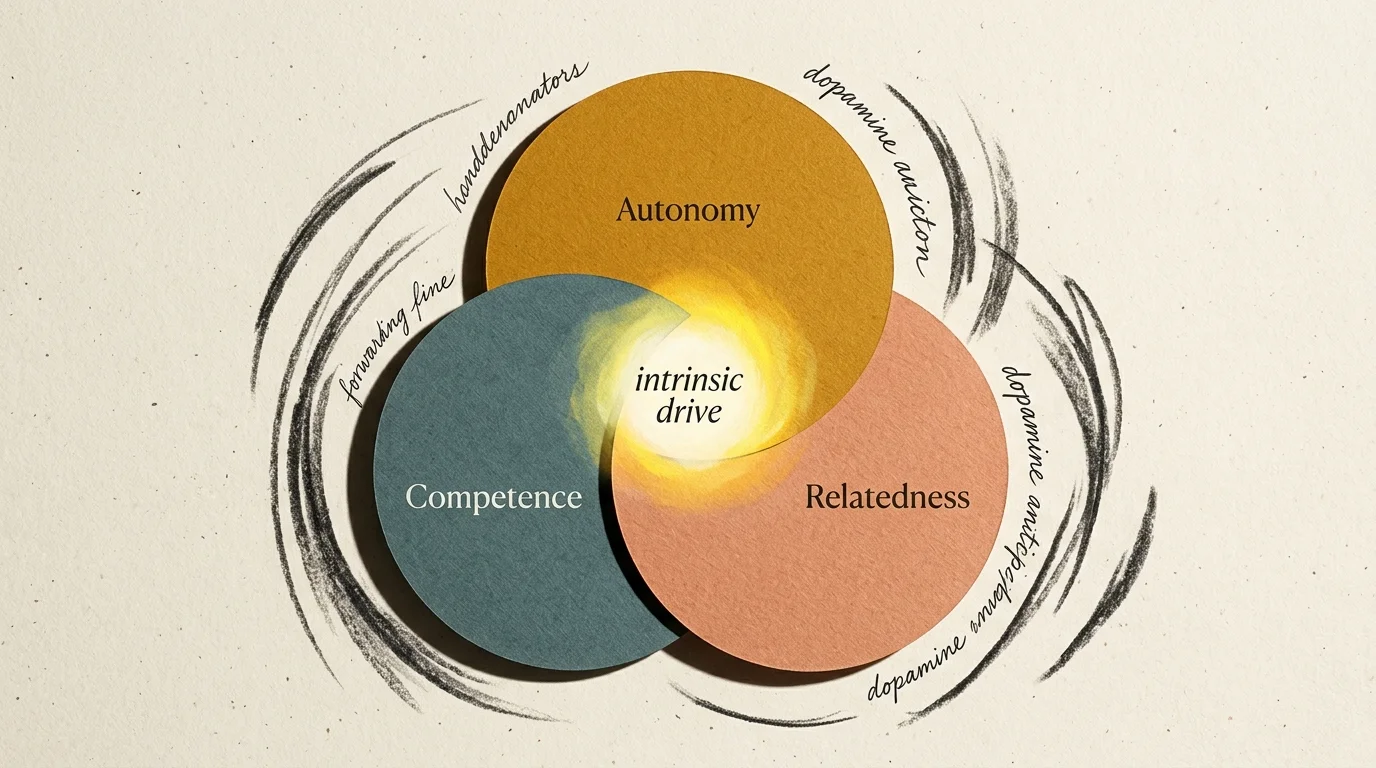
Psychologists Edward L. Deci and Richard M. Ryan introduced Self-Determination Theory to map human flourishing. Their research proves that enduring intrinsic motivation demands three fundamental psychological nutriments: autonomy, competence, and relatedness.
Autonomy represents your desire to direct your own life choices freely. Competence reflects your need to experience mastery over challenges, while relatedness involves establishing deep, secure bonds with others.
When your daily environment starves any of these foundational needs, engagement collapses. You often procrastinate on crucial tasks because external coercion strips away your sense of personal agency.
At the neurological level, the neurotransmitter dopamine governs behavioral drive. Modern neuroscience reveals that dopamine triggers intense anticipation rather than passive contentment after obtaining a goal.
The neurological expectation of a potential reward propels your behavior forward aggressively. This mechanism explains why refreshing a social media notification feed feels compelling even when the resulting content brings zero fulfillment.
The Habit Loop: Behavioral Psychology Explained
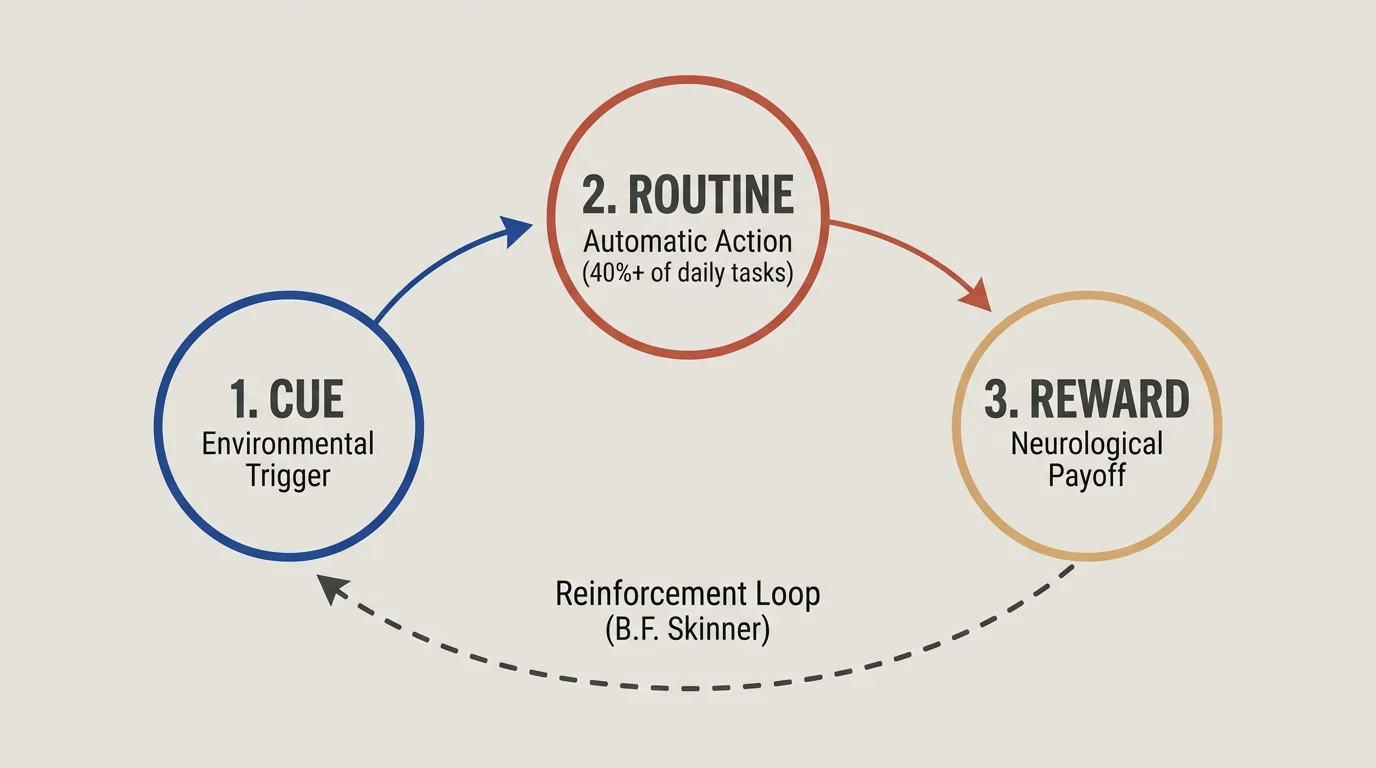
Behavioral psychology explained through modern habit research shows that automatic routines constitute over forty percent of your daily actions. Your nervous system craves predictable behavioral loops to minimize conscious processing.
Behaviorist B.F. Skinner laid the groundwork for this understanding through his operant conditioning research. He demonstrated that actions reinforced by immediate rewards strengthen over time and repeat automatically.
Every established habit follows a three-phase cycle: an environmental cue, a routine behavior, and a reinforcing reward. The cue sparks neurological craving, the routine discharges the action, and the reward cements the sequence into memory.
Consider the habit of mindless snacking during high-pressure work assignments. The sensation of professional stress acts as your cue, eating simple carbohydrates represents the routine, and immediate sensory relief delivers the biochemical reward.
You cannot eradicate an ingrained habit loop through suppression alone. Durable behavioral modification requires keeping the original cue and reward while substituting a healthier, intentional routine in the middle.

Cognitive Biases That Distort Everyday Choices
Your brain relies on hardwired perceptual filters that systematically warp objective reality. Recognizing these evolutionary blind spots helps clarify why people behave the way they do under pressure.
The negativity bias evolved as a vital survival mechanism in ancestral environments. Early humans survived by prioritizing the immediate threat of a predator over the potential benefit of pleasant scenery.
In modern society, this hardwired tendency causes you to obsess over single criticisms while ignoring dozens of compliments. The American Psychological Association notes that unmanaged negativity bias substantially escalates chronic worry and depressive rumination.
Loss aversion compounds these cognitive distortions by altering risk calculations. Behavioral economists confirm that the psychological pain of losing resources feels twice as intense as the pleasure of gaining identical resources.
Confirmation bias reinforces your existing perspectives by filtering out conflicting evidence. Your brain eagerly embraces facts supporting your established identity while dismissing valid contradictions, safeguarding your ego at the expense of accuracy.
| Psychological Mechanism | Behavioral Manifestation | Actionable Reset |
|---|---|---|
| Negativity Bias | Overemphasizing perceived threats, insults, or minor failures. | Document three specific daily wins to balance mental threat vigilance. |
| Loss Aversion | Clinging to unfulfilling jobs or relationships out of sunk-cost fears. | Frame choices around what staying costs you over five years. |
| Confirmation Bias | Consuming only media that validates existing beliefs and biases. | Actively seek out reputable counterarguments to your central assumptions. |
| Present Bias | Choosing immediate digital distraction over long-term creative projects. | Apply twenty-minute friction barriers to short-term impulses. |

Attachment and Social Survival: Why Relationships Dictate Action
Humans are obligate social mammals who evolved inside tight cooperative bands. Physical isolation once guaranteed death, which explains why social friction registers in the brain along the same pathways as physical injury.
Attachment theory, developed by John Bowlby and Mary Ainsworth, explains how early developmental caregiving shapes adult relational behavior. Your early bonds formed internal working models regarding whether other people represent safety or abandonment.
Anxious attachment prompts hypervigilance toward subtle shifts in emotional intimacy, frequently causing people to demand constant reassurance. Avoidant attachment, by contrast, triggers emotional withdrawal whenever vulnerability threatens personal independence.
Research from The Gottman Institute emphasizes that chronic interpersonal conflicts rarely concern superficial logistics like household chores. Instead, daily arguments usually represent disguised attempts to secure emotional safety and interpersonal validation.
When you recognize that reactive relationship behaviors often stem from early survival strategies, you cultivate empathy for yourself and others. Emotional triggers lose power once you identify their evolutionary roots.
“Between stimulus and response there is a space. In that space is our power to choose our response. In our response lies our growth and our freedom.” — Viktor E. Frankl, M.D., Ph.D.
Expanding that critical space between instinct and action liberates you from compulsive defense mechanisms. You transition from unconscious reactivity into deliberate emotional self-regulation.

What Can Go Wrong: Misinterpreting Behavioral Psychology
While psychological awareness fosters personal growth, misapplying behavioral concepts can create significant psychological roadblocks. Understanding these misinterpretations keeps your self-improvement efforts grounded.
A frequent error involves adopting biological determinism, using neurochemistry to excuse harmful personal actions. Blaming your dopamine receptors or childhood attachment style for toxic relationship dynamics abdicates personal responsibility.
Another hazard arises when people weaponize psychological concepts against friends and romantic partners. Applying amateur diagnostic labels during disagreements escalates defensiveness instead of fostering mutual understanding.
Finally, over-intellectualizing your emotional life can disconnect you from authentic feeling states. Analyzing the evolutionary roots of your grief does not replace the necessity of feeling and moving through that grief.

Evidence-Based Strategies to Reshape Your Actions
Translating theoretical psychological concepts into practical habits requires structured environmental design. You can reshape your subconscious behavioral scripts using specific, evidence-based methods.
Integrate these practical behavioral techniques into your everyday routines:
- Deploy Implementation Intentions: Formulate specific “if-then” protocols for challenging moments. Committing to a precise action plan beforehand significantly increases your likelihood of following through under stress.
- Manipulate Environmental Friction: Increase physical barriers for behaviors you wish to abandon, and remove barriers for productive routines. Store digital devices in separate rooms during focused work intervals.
- Enforce the Two-Minute Pause: Delay reactive impulses by precisely one hundred and twenty seconds when triggered emotionally. This brief interval allows your prefrontal cortex to regain control from the reactive amygdala.
- Practice Objective Self-Inquiry: Replace critical judgments with analytical curiosity whenever you fall short. Ask yourself what unmet physiological or emotional need drove your recent behavior.
Consistent, micro-level adjustments compound far more effectively than unsustainable overhauls. Small environmental changes steadily rewrite your automatic daily responses.

When to Seek Professional Support
Self-directed psychological tools support everyday well-being, but they cannot resolve acute psychiatric distress. Recognizing the limits of self-help protects your overall safety and long-term health.
Seek guidance from a licensed clinical psychologist or mental health professional under the following circumstances:
- Compulsive behavioral cycles that impair your employment, financial stability, or personal safety.
- Persistent depressive episodes, emotional detachment, or overwhelming anxiety lasting longer than two consecutive weeks.
- Severe trauma responses, flashbacks, or chronic physiological hyperarousal linked to historical abuse or neglect.
- Destructive coping strategies involving chemical dependencies, disordered eating patterns, or deliberate self-harm.
Modalities such as Cognitive Behavioral Therapy and Acceptance and Commitment Therapy provide personalized, clinically verified interventions. The National Institute of Mental Health provides extensive directories for finding qualified mental health professionals in your area.
Frequently Asked Questions
Why do I repeat behaviors that I know are bad for me?
Your primitive reward circuitry prioritizes immediate biochemical relief over abstract future goals. Without deliberate environmental friction, primitive impulses easily override the logical goals of your conscious prefrontal cortex.
Can adults genuinely change their core behavioral patterns?
Yes, your brain maintains lifelong neuroplasticity, allowing it to construct new neural pathways through intentional repetition. Consistent behavioral practice gradually transforms deliberate effort into effortless automatic routines over time.
How does acute stress influence human decision-making?
Stress floods your bloodstream with cortisol and adrenaline, redirecting resources away from the prefrontal cortex toward survival circuits. Research from Harvard Health Publishing demonstrates that acute stress compels you to prioritize rapid self-protection over balanced calculation.
What is the core difference between intrinsic and extrinsic motivation?
Intrinsic motivation stems from inherent enjoyment and personal value, such as reading purely to satisfy personal curiosity. Extrinsic motivation depends entirely on external rewards or social pressures, such as pursuing a job title solely for status.
Closing Thoughts: Taking Ownership of Your Mind
Understanding the psychological forces behind your behavior transforms frustration into strategic clarity. By aligning your environment with human biology, you break free from unconscious conditioning and live with intentional purpose.
This is educational content based on psychological research and general principles; individual experiences vary significantly. For personalized guidance, consult a licensed therapist, psychologist, or counselor.
Last updated: February 2026. Psychology research evolves continuously—verify current findings with professional sources.








Leave a Reply