

Financial security provides peace of mind, but psychological resilience determines whether your post-work years actually feel fulfilling. The happiest retirees share specific internal traits that transform open schedules into meaningful daily lives.
Leaving the workplace strips away built-in routines, professional identities, and spontaneous social circles. Cultivating the right mindset allows you to replace corporate structure with self-directed joy, vitality, and deep connection.
Decades of psychological research reveal that lasting contentment stems from who you become, not just what you save. Here are seven evidence-based traits that define genuinely flourishing retirees.
1. Unapologetic Curiosity: Cultivating Diverse Core Pursuits
Retirement often reveals how much you relied on external deadlines to fill your day. Without clear interests, sudden free time can quickly morph into chronic boredom.
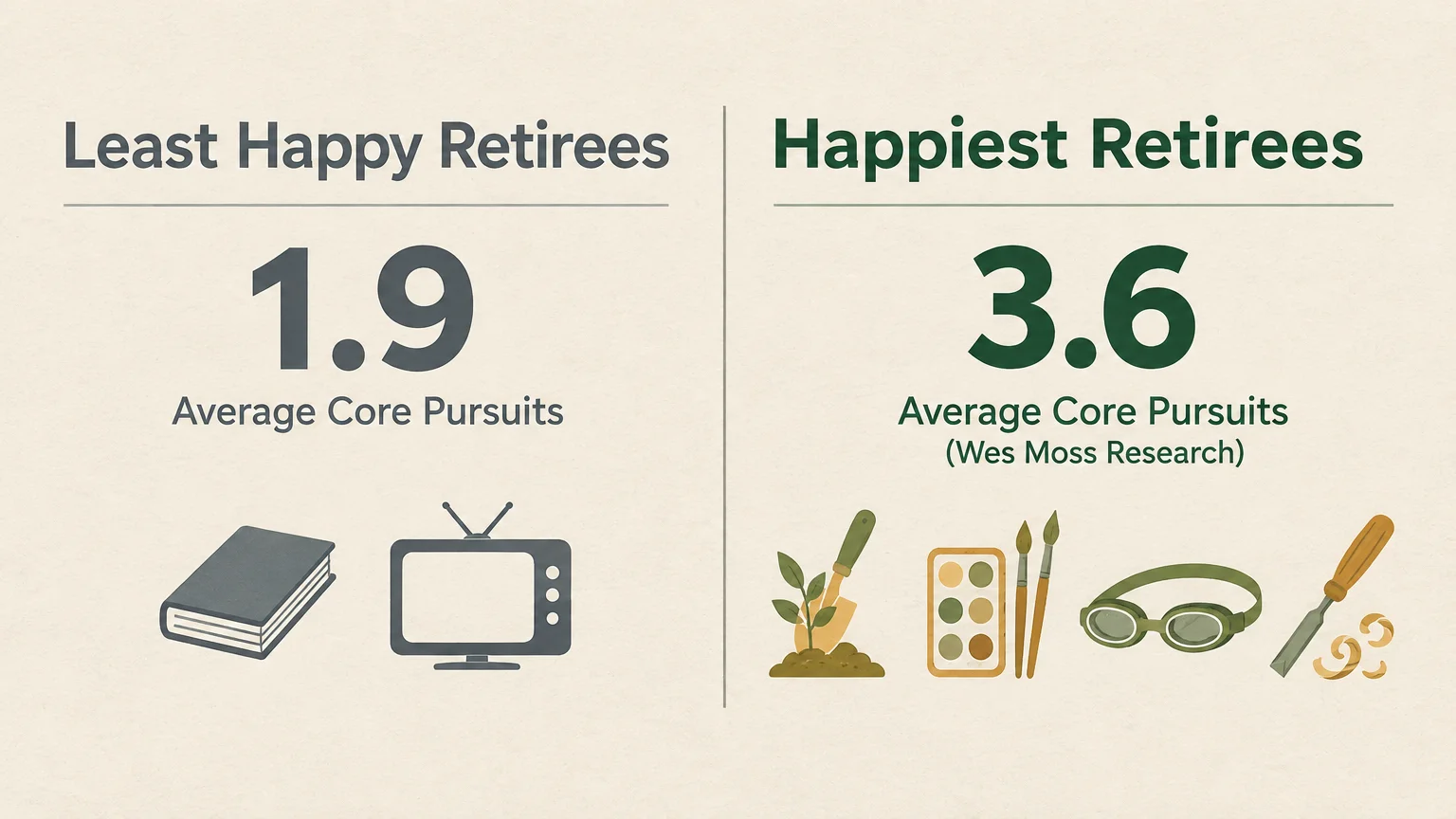
Content retirees do not sit idly waiting for inspiration to strike. Instead, they actively pursue what author and researcher Wes Moss calls core pursuits.
In Moss’s empirical surveys, the happiest retirees averaged 3.6 core pursuits, ranging from gardening and creative arts to swimming. In contrast, the least happy retirees maintained only 1.9 pursuits.
Having multiple hobbies gives your mind varied outlets for problem-solving and play. This intellectual variety protects cognitive health while infusing your week with genuine excitement.

2. Relational Intentionality: Practicing Daily Social Fitness
Workplaces provide an effortless social container that disappears the moment you clean out your desk. Happy retirees consciously construct a new relational landscape to replace those watercooler interactions.
The landmark Harvard Study of Adult Development tracked individuals across 85 years to discover what makes people flourish. The researchers concluded that strong relationships are the single greatest predictor of health and joy in later life.
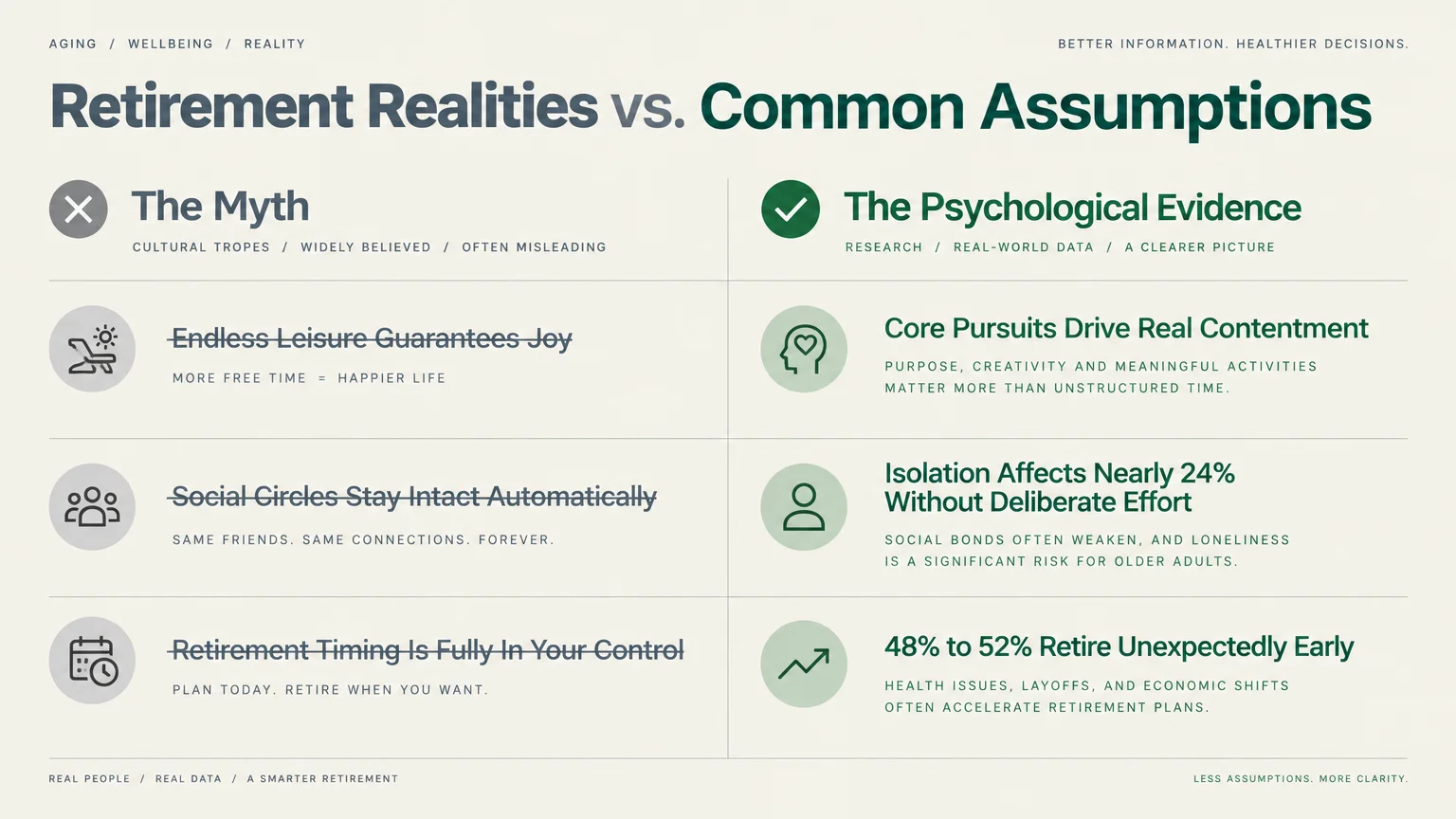
Neglecting your social network carries severe physical and psychological consequences. Data from the Centers for Disease Control and Prevention (CDC) shows that nearly 24% of adults aged 65 and older are socially isolated.
Chronic isolation increases your risk of premature death at rates rivaling smoking. It also raises your risk of dementia by 50% and stroke by 32%.
Thriving retirees practice regular social fitness by actively scheduling lunches, phone calls, and club gatherings. They invest deliberate effort into their friendships just like they once invested into work projects.
3. Psychological Flexibility: Embracing the Unplanned Pivot
Many people imagine a picture-perfect retirement date that arrives exactly as scheduled. Reality frequently disrupts those neat, linear plans.
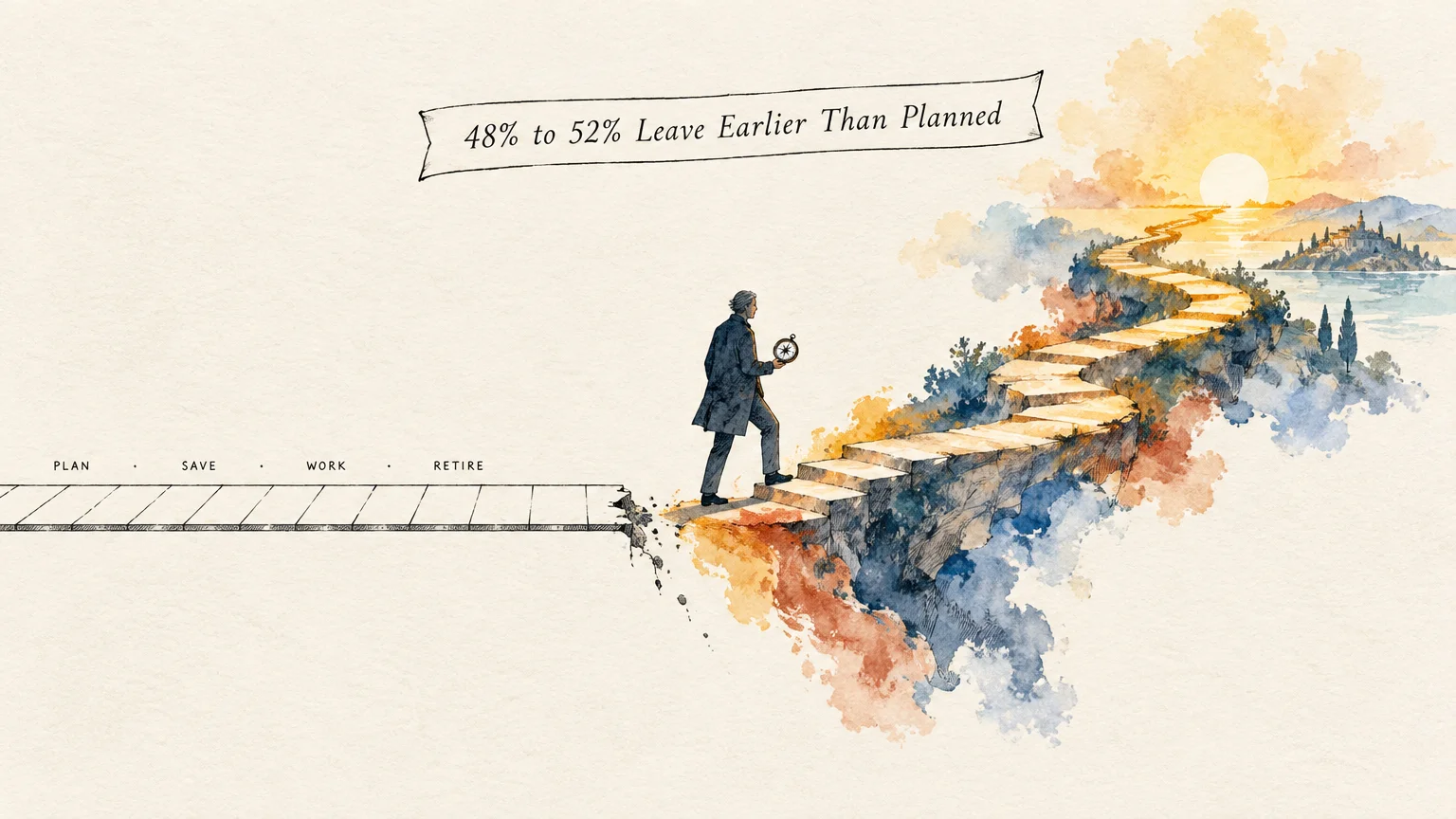
According to research by the Transamerica Center for Retirement Studies (TCRS), between 48% and 52% of retirees leave the workforce earlier than anticipated. Unexpected layoffs, family caregiving demands, or sudden health changes often force an abrupt transition.
The most resilient retirees possess psychological flexibility; they adapt to shifting circumstances rather than clinging to lost expectations. They mourn unexpected losses, accept their new reality, and pivot toward fresh opportunities.
“When we are no longer able to change a situation, we are challenged to change ourselves.” — Viktor E. Frankl, Neurologist, Psychiatrist, and Author
Flexible retirees treat disruptions as an invitation to reconstruct their daily priorities. This mental adaptability insulates them from prolonged bitterness and existential grief.

4. Generativity: Living for Something Bigger Than Leisure
Legendary developmental psychologist Erik Erikson identified late adulthood as a struggle between generativity and stagnation. Generativity involves guiding future generations and leaving a positive footprint on your community.
Retiring happily requires looking beyond self-indulgent leisure. While endless golf rounds and beach vacations feel relaxing initially, they rarely sustain long-term psychological fulfillment.
A study from the Harvard T.H. Chan School of Public Health found that older adults who volunteer at least 100 hours annually experience significantly lower depression and mortality risks.
Dedicating just two hours each week to an organization builds enduring purpose. Giving your energy to others anchors you in a reality larger than your personal comfort.

5. An Internal Locus of Worth: Decoupling Identity from Status
Corporate job titles grant immediate social validation and status. When you hand in your badge, you might suddenly wonder who you are without that professional identity.
The happiest retirees decouple their self-worth from what they produce or manage. They define themselves by their internal values, personal relationships, and unique passions instead of an email signature.
The American Psychological Association (APA) notes that identity shifts during major life transitions can trigger acute disorientation. Recognizing that your inherent worth is separate from your employment status restores emotional equilibrium.
“The curious paradox is that when I accept myself just as I am, then I can change.” — Carl Rogers, Psychologist
Accepting this new chapter allows you to craft an authentic lifestyle rooted in personal curiosity. You no longer need to impress peers; you simply live aligned with your core principles.

6. Proactive Somatic Attunement: Protecting Physical Vitality
Your emotional well-being remains intimately linked to your physical vitality. Content retirees understand that bodily neglect quickly erodes mental clarity and optimism.
TCRS survey findings reveal that 89% of retirees describe themselves as generally happy. Among those flourishing individuals, 67% prioritize staying healthy and physically active as a primary daily goal.
Proactive retirees listen closely to their bodies’ signals and address aches, sleep hygiene, and nutrition early. They treat daily movement as a vital prescription for emotional stability.
As highlighted by Harvard Health, regular exercise releases neurochemicals that protect aging brains against mood disorders. Moving your body daily keeps both your spirit and cognition sharp.

7. Present-Moment Savoring: Finding Joy in Everyday Rhythms
In your working years, you likely hurried from one urgent deadline to the next. Retirement flips that script, offering vast stretches of unstructured time.
The most satisfied retirees master the art of present-moment savoring. In fact, TCRS data indicates that 70% of content retirees focus heavily on the daily practice of enjoying life.
Rather than rushing through chores, they find delight in morning coffee, tending a garden, or listening to birdsong. This capacity for gratitude keeps chronic restlessness and anxiety at bay.
Mindful awareness grounds you in the gift of the present afternoon. It turns ordinary hours into moments of profound, peaceful gratitude.
Myths Worth Debunking About Retirement Happiness
Cultural narratives often paint retirement as an effortless tropical vacation. These unrealistic fantasies leave many people unprepared for the psychological friction of leaving work.
Examining common misconceptions helps you set grounded, healthy expectations for your post-career life.
| Common Retirement Myth | Psychological Reality | Actionable Shift |
|---|---|---|
| Money alone guarantees satisfaction. | Financial safety prevents stress, but relationships and purpose drive daily happiness. | Invest time in friendships and pursuits alongside your financial portfolio. |
| Total leisure prevents burnout. | Unbounded downtime frequently triggers boredom, apathy, and cognitive decline. | Build a balanced weekly structure with creative projects and physical activity. |
| Social connections maintain themselves. | Workplaces provided passive socializing; post-work community requires deliberate planning. | Schedule recurring weekly meetups, join affinity groups, or volunteer locally. |
| Retirement automatically brings peace. | Leaving work unmasks unresolved emotional struggles and identity voids. | Treat retirement as an active developmental stage requiring self-reflection. |
Practical Daily Habits to Cultivate Retirement Happiness
Psychological traits are not fixed personality characteristics carved in stone. You can actively develop these dispositions by implementing concrete daily habits.
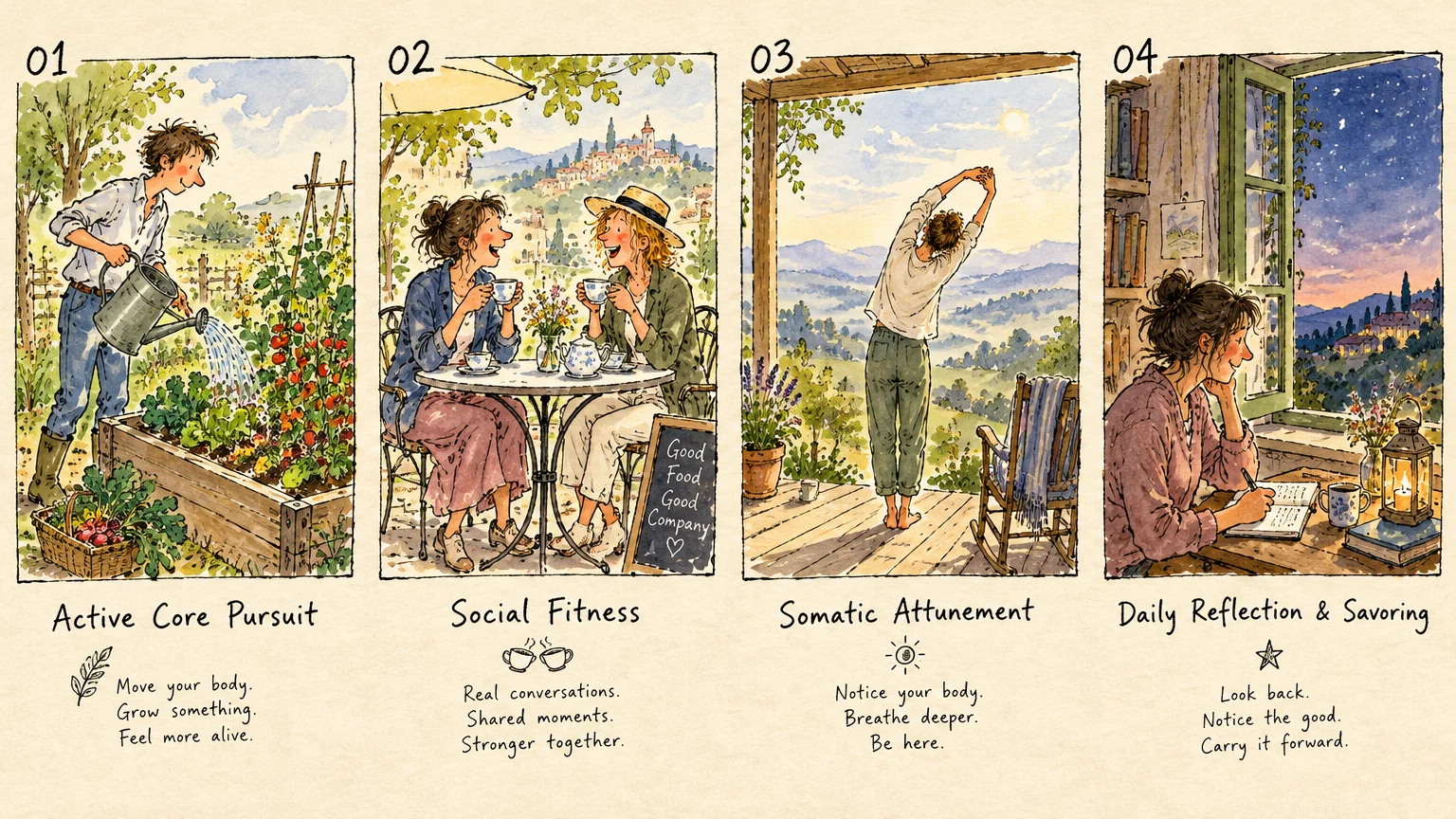
- Design a morning anchor: Wake up at a consistent hour and practice a grounding ritual like walking, reading, or stretching.
- Block out three core pursuits: Dedicate specific afternoons each week to non-work passions like woodworking, tennis, or painting.
- Initiate daily micro-connections: Call a family member, wave to a neighbor, or converse with a barista to keep relational muscles active.
- Commit to weekly service: Spend two hours each week supporting a food bank, animal rescue, or local school.
- Practice evening gratitude: Name three specific moments from your day that brought you calm or genuine satisfaction.
Small, intentional behaviors compound over weeks to reshape your neurological defaults. Consistency matters far more than grandiose, sporadic gestures.

Signs It’s Time to Talk to a Therapist
Transitioning out of your career represents one of the largest psychological shifts you will ever navigate. Disorientation and mild grief are natural parts of the process.
However, prolonged distress warrants compassionate professional support. Reach out to a licensed therapist if you experience any of the following patterns:
- Persistent anhedonia: Feeling flat, hopeless, or completely indifferent toward activities you once loved for longer than two weeks.
- Severe identity paralysis: Struggling with intense worthlessness and believing your existence lost all meaning when work ended.
- Chronic social withdrawal: Isolating yourself inside your home and repeatedly declining invitations from friends and family.
- Escalating substance use: Relying on alcohol, sedatives, or compulsive gambling to numb daily boredom and anxiety.
Therapy provides an objective, supportive space to unpack grief, reconstruct identity, and chart an authentic path forward. Working with a mental health professional can help you navigate this transition with dignity.
Frequently Asked Questions
Why do some retirees feel depressed despite having ample savings?
Financial comfort solves logistical problems, but it cannot satisfy existential or emotional needs. When career-based identity, routine, and daily camaraderie vanish, people often experience deep disorientation regardless of wealth.
How long does the psychological adjustment to retirement typically take?
Most psychologists observe that adjusting to retirement takes between one and three years. The transition often moves through phases, including an initial honeymoon, a phase of disenchantment, and an eventual stage of stable reorientation.
What should you do if your spouse retires at a different time?
Communicate transparently about daily expectations, household chores, and personal boundaries. Giving each partner room for independent routines prevents friction and protects mutual independence during this period.
How many hobbies should a retiree cultivate?
Research indicates that happy retirees average three to four core pursuits. Engaging in varied physical, creative, and intellectual activities produces optimal mental stimulation and emotional satisfaction.
Stepping Into Your Next Chapter
True retirement happiness does not hinge on a lavish portfolio or endless leisure. It blooms when you approach each day with curiosity, purpose, and genuine human connection.
Begin by choosing one trait to nurture this week. As you gently cultivate these habits, your post-work years will become an expansive canvas for meaningful living.
The information in this article is meant for educational purposes and general guidance. It does not replace individual therapy, counseling, or medical treatment.
If you or someone you know is in crisis, contact the 988 Suicide & Crisis Lifeline by calling or texting 988.
Last updated: February 2026. Psychology research evolves continuously—verify current findings with professional sources.









Leave a Reply