

Walking away from your career should feel like the ultimate victory lap, yet many retirees wake up feeling unexpectedly disoriented, restless, or anxious. The fairy tale version of retirement promised endless relaxation, but real psychological transitions rarely follow a storybook script.
Rethinking retirement expectations requires confronting the subtle mental myths that keep you feeling stuck. When you dismantle common retirement misconceptions early, you protect your emotional well-being, your key relationships, and your financial peace of mind.
Uncovering these hidden retirement mindset mistakes gives you back control. Here are the eleven biggest lies retirees tell themselves—and the evidence-based strategies you need to build a truly fulfilling next chapter.
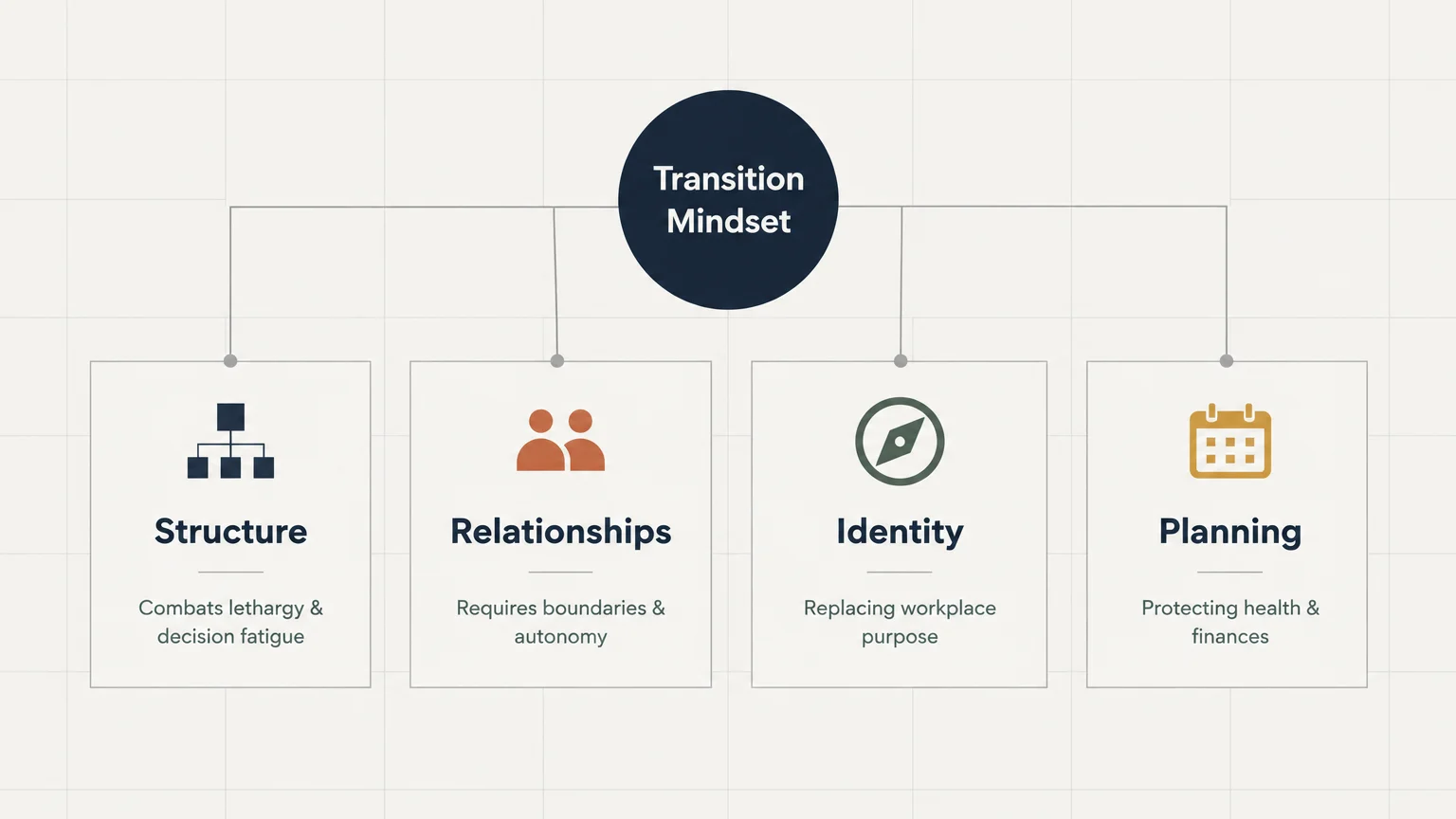
The Essentials: Rethinking Your Transition
Transitioning into retirement is a major psychological renegotiation, not merely a prolonged weekend. Preparing for the emotional reality softens the shock of leaving your professional routine.
- Structure matters: Complete freedom without an intentional schedule breeds lethargy, decision fatigue, and existential anxiety.
- Relationships shift: Spending every waking hour with your partner demands explicit communication and healthy personal boundaries.
- Identity persists: You must consciously replace the status, community, and purpose your career previously supplied.
- Planning protects you: Overlooking out-of-pocket medical expenses or claiming Social Security too early creates long-term emotional strain.
Lie 1: “Retirement Will Instantly Eliminate My Stress and Bring Pure Bliss”
Many professionals treat their final working day like a magic doorway to permanent happiness. They assume workplace departure instantly cures chronic tension and life dissatisfaction.
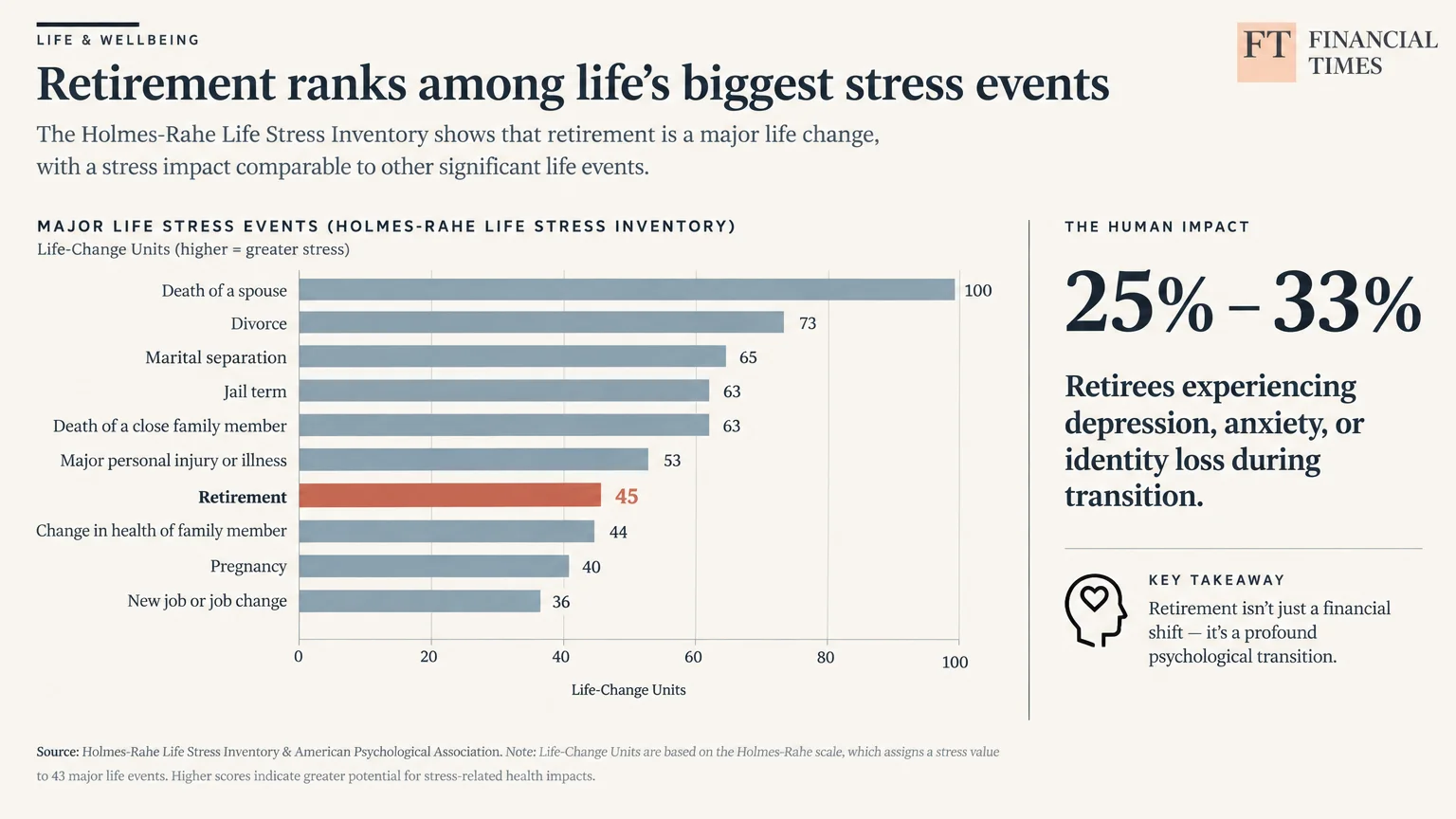
Clinical psychology reveals a sharply different reality. On the Holmes-Rahe Life Stress Inventory, retirement ranks in the top ten most stressful life events.
It carries 45 life-change units, placing it alongside major personal illness and significant financial readjustments. Leaving your daily environment represents a massive neurological disruption.
Between 25% and 33% of retirees experience symptoms of depression, anxiety, or identity loss during this shift. You are not failing if you feel uneasy; your brain is simply recalibrating.
According to the American Psychological Association, major life transitions require intentional emotional adjustment. Allow yourself time to mourn your old identity before demanding effortless bliss.

Lie 2: “My Partner and I Will Naturally Glide Into 24/7 Togetherness”
Couples often imagine retirement as an extended, uninterrupted honeymoon. In real life, sudden nonstop proximity places intense pressure on marital dynamics.
Landmark research from the National Center for Family & Marriage Research at Bowling Green State University illustrates this strain. The divorce rate for adults aged 50 and older doubled between 1990 and 2010.
Today, adults 50 and older account for roughly 36% to 40% of all American divorces. Moreover, adults aged 65 and older represent the only demographic where divorce rates continue to rise.
Therapists call this phenomenon “gray divorce.” When two people suddenly share the same physical space all day, minor idiosyncrasies can easily mushroom into chronic grievances.
Relationship researchers at The Gottman Institute emphasize that sustainable intimacy requires mutual autonomy alongside shared connection. You need separate hobbies, independent social outlets, and private zones within your home.

Lie 3: “Total Freedom Means I Never Need a Routine Again”
Throwing away your alarm clock feels liberating during your initial weeks away from the office. Over time, however, an entirely blank calendar fosters disorientation and lethargy.
Human psychology depends on predictable temporal markers. When you eliminate routine, mundane daily choices—such as deciding when to eat, exercise, or read—drain your cognitive energy.
This decision fatigue often defaults into passive time-wasting, like aimless screen scrolling or endless television watching. You end up feeling depleted despite doing very little.
Constructing a loose, reliable routine creates psychological grounding. Anchor your mornings with consistent wake times, nutritious meals, and scheduled physical movement.
Leave your afternoons flexible for spontaneous leisure and creative pursuits. Predictable structure does not limit your personal freedom; it protects it.
Lie 4: “Medicare Will Pay for All My Healthcare Needs”
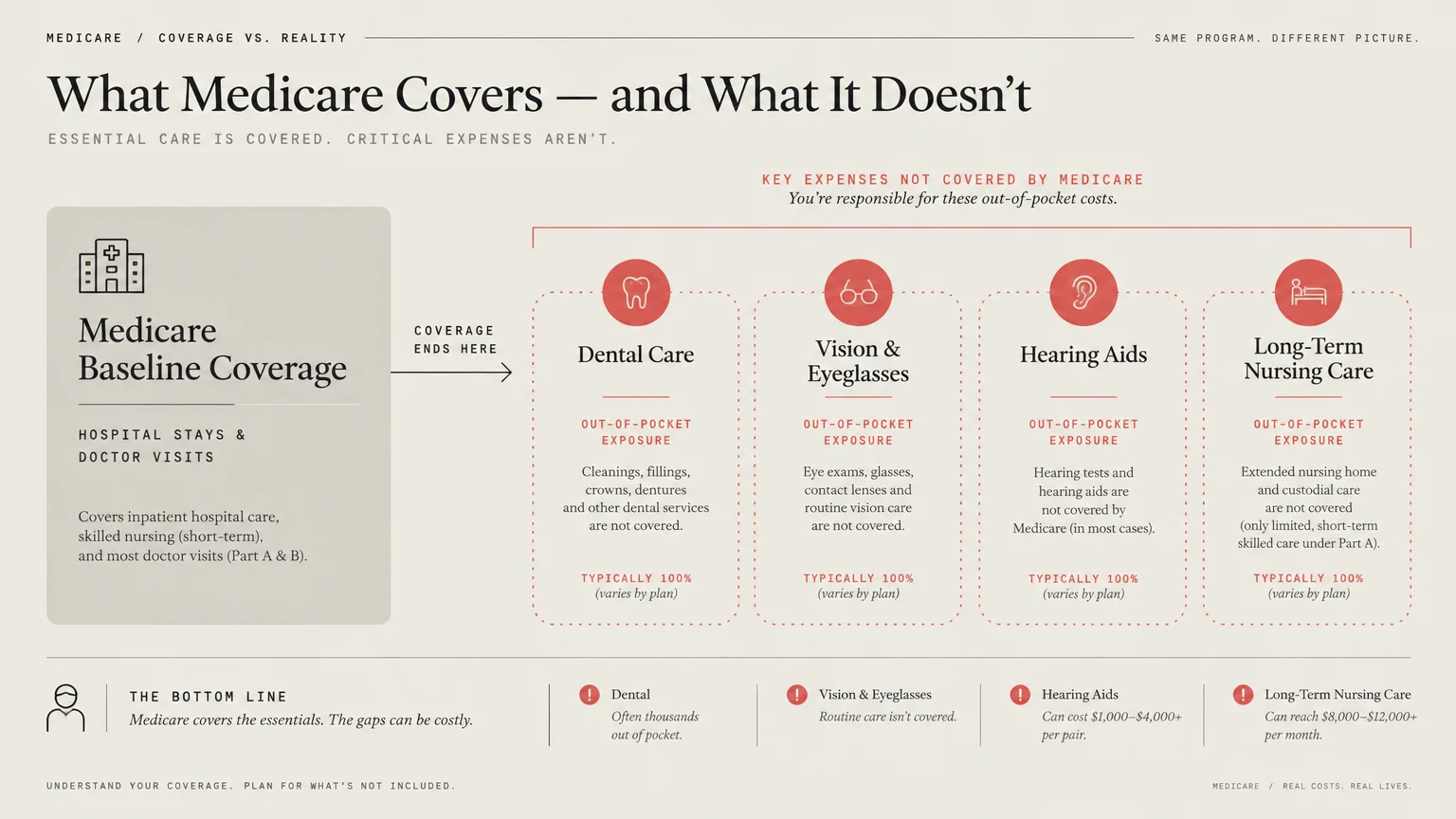
Believing Medicare serves as a comprehensive, all-inclusive safety net is a perilous financial illusion. Operating under this assumption leaves you vulnerable to massive out-of-pocket medical bills.
According to the 2026 Fidelity Retiree Health Care Cost Estimate, an average 65-year-old individual needs approximately $185,500 in after-tax savings. For a married couple retiring in 2026, that estimate climbs to roughly $371,000.
These figures cover premiums, copayments, and prescription deductibles throughout retirement. Crucially, standard Medicare Parts A and B do not pay for custodial long-term care.
If you require non-skilled personal assistance with bathing, dressing, or eating, you must fund that care privately. Unanticipated health expenses generate severe psychological stress and relationship strain.
Consult a qualified financial planner to explore supplemental coverage and long-term care contingencies well in advance. Financial clarity provides a powerful buffer against late-life anxiety.

Lie 5: “I Will Never Get Lonely With My Existing Social Circle”
You may believe your social life will flourish effortlessly once work stops. Yet the workplace quietly provides low-friction, built-in social interaction that vanishes overnight.
According to the U.S. Surgeon General’s Advisory on Loneliness and the University of Michigan National Poll on Healthy Aging, 1 in 3 older adults experiences loneliness. Social isolation represents a serious public health emergency.
The Surgeon General notes that chronic social disconnection carries a mortality risk comparable to smoking up to 15 cigarettes daily. Isolation is also linked to a 50% increased risk of developing clinical dementia.
Casual work friendships often dissolve quickly once you no longer share daily occupational goals. Preserving your cognitive and emotional health requires rebuilding your social infrastructure from scratch.
Join civic groups, engage in team sports, or participate in local interest clubs. Genuine adult friendships require intentional cultivation, vulnerability, and recurring contact.

Lie 6: “My Career Was Just a Paycheck; Leaving Won’t Threaten My Identity”
Downplaying the personal significance of your professional career is an easy defense mechanism. However, when you spend decades perfecting a craft, that role shapes your self-worth.
Sociologists call the process of stepping down “role exit.” Losing your professional status, workplace influence, and decision-making authority can provoke a sudden existential vacuum.
Many recent retirees secretly ask themselves a painful question: who am I when I produce nothing? Addressing this identity loss requires cultivating internal meaning rather than relying on external validation.
“Life is never made unbearable by circumstances, but only by lack of meaning and purpose.” — Viktor Frankl, Neurologist and Psychiatrist
Shift your perspective from what you achieved to how you want to show up in the world. Your personal significance stems from your character, passions, and relationships—not a company title.
Lie 7: “Claiming Social Security at 62 Won’t Really Hurt My Bottom Line”
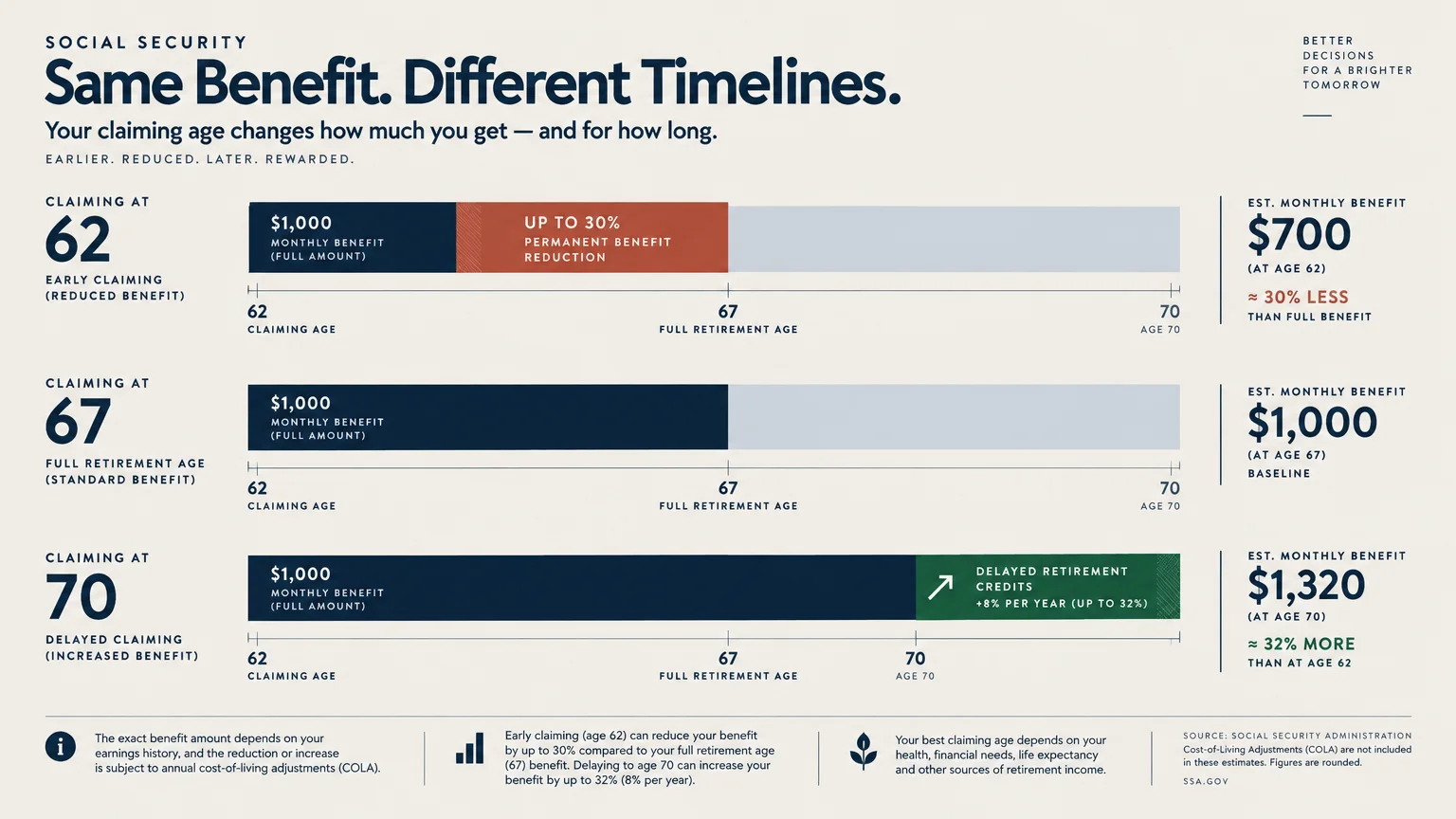
Filing for Social Security as soon as you turn 62 often feels like claiming rightful rewards. Yet claiming early locks in a permanent, lifelong reduction in monthly cash flow.
Under Social Security Administration rules, the Full Retirement Age is 67 for anyone born in 1960 or later. Claiming benefits at age 62 cuts your monthly payout by 30%.
Over a twenty-five or thirty-year retirement, that monthly loss can equate to hundreds of thousands of dollars. Compounding inflation can leave you financially constrained in your eighties.
Financial precarity is a direct catalyst for late-life depression and family conflict. If your health allows and bridge assets exist, waiting until age 70 maximizes your guaranteed income.
Review comprehensive benefit calculators and model your scenarios carefully. Making an emotionally impulsive filing decision can compromise decades of personal peace.

Lie 8: “I Will Instantly Tackle Every Hobby and Home Project on My List”
New retirees frequently build overwhelming bucket lists filled with home repairs, unread classics, and artistic ambitions. They expect unlimited free time to spark unmatched personal productivity.
Instead, an endless horizon of open hours often triggers decision paralysis. Without external deadlines or milestones, simple tasks stretch out indefinitely, leaving you feeling frustrated.
Turning personal hobbies into rigid performance goals merely recreates workplace pressure under a different label. You end up feeling guilty for relaxing rather than enjoying your hard-earned rest.
Prioritize one small project per month and pace your efforts intentionally. Savoring the process matters infinitely more than completing an arbitrary personal checklist.

Lie 9: “Moving to a Sunny Location Will Solve All My Emotional Struggles”
Selling everything to relocate to a sunny resort community sounds like the ultimate antidote to stress. Psychologists refer to this romantic daydream as the “geographic cure.”
Relocating across state lines detaches you from longtime medical providers, beloved neighbors, and deeply rooted community ties. Changing your zip code never resolves internal distress.
Navigating an unfamiliar environment while adjusting to retirement disorientation creates double the emotional burden. Many older adults find themselves deeply lonely in picturesque settings.
Test your relocation dream by renting a home for several months during that area’s least appealing season. Examine the everyday reality before severing your lifelong support network.

Lie 10: “Doing Daily Puzzles Is Enough to Keep My Brain Razor-Sharp”
Completing a daily crossword or Sudoku puzzle is enjoyable, but it will not insulate your brain from cognitive decline. Familiar puzzles only engage well-trodden neural pathways that your brain established decades ago.
Researchers at Harvard Health Publishing point out that true neuroprotection demands novel, cognitively demanding challenges. Your brain builds cognitive reserve when you grapple with unfamiliar, complex tasks.
Take up an instrument, study a foreign language, or learn intricate woodwork. Combine mental novelty with regular aerobic exercise, which directly stimulates cerebral blood flow and neuroplasticity.
Optimal cognitive defense requires a blend of novel problem-solving, physical exertion, and active social conversation. Puzzles are merely pleasant diversions, not complete cognitive workouts.

Lie 11: “It Is Too Late to Reinvent Myself or Pursue a New Purpose”
Assuming personal evolution halts at sixty or sixty-five is a heartbreaking mental mistake. Developmental psychologist Erik Erikson framed late adulthood as a profound stage of ego integrity and renewed meaning.
Contemporary neuroscience confirms that your brain remains plastic throughout your entire life. You retain the physical ability to build new synaptic connections well into your later years.
Retirement gives you the invaluable gift of unhurried time to redefine who you are. You can launch a community initiative, mentor youth, or develop creative talents.
You are not closing down your life; you are beginning its most independent phase. Approach this season as an active renaissance rather than a passive retreat.

Mindset Traps vs. Realistic Psychological Reframes
Recognizing the retirement myths retirees believe helps you break free from invisible expectations. This comparison table pairs common retirement mindset mistakes with actionable, grounded reframes.
| Retirement Mindset Mistake | Underlying Psychological Risk | Actionable Reframe |
|---|---|---|
| “I will relax all day and do absolutely nothing.” | Lethargy, loss of purpose, depressive symptoms. | Build a gentle daily routine blending movement, learning, and leisure. |
| “My partner and I will spend every hour together.” | Codependency, marital irritation, increased risk of gray divorce. | Maintain separate hobbies, distinct friendships, and personal home space. |
| “Medicare handles all my future healthcare expenses.” | Severe financial shock from out-of-pocket costs and custodial care. | Budget specifically for medical expenses and evaluate long-term care coverage early. |
| “My career had nothing to do with my true identity.” | Unacknowledged grief, disorientation, and sudden loss of status. | Acknowledge professional grief and intentionally invest in values-based service. |
| “Crosswords and brain apps will protect my memory.” | False security without building authentic cognitive reserve. | Learn complex skills, exercise aerobically, and stay socially engaged. |

Patterns to Watch For: Early Signs of Retirement Distress
Psychological disorientation rarely arrives with dramatic fanfare. Instead, it creeps into daily life through subtle behavioral withdrawals and low-grade emotional numbness.
Watch for these common behavioral red flags during your first two years of retirement:
- Loss of temporal anchors: Regularly losing track of the day of the week or ignoring personal hygiene rituals.
- Social avoidance: Declining lunch invitations, dropping community commitments, and retreating into solitary habits.
- Irritability over minor disruptions: Snapping at your spouse over trivial household preferences or schedule changes.
- Compensatory consumption: Increasing your alcohol intake, online shopping, or gambling to fill empty hours.
- Persistent existential restlessness: Chronic feelings of uselessness or waking up without an appetite for the day ahead.
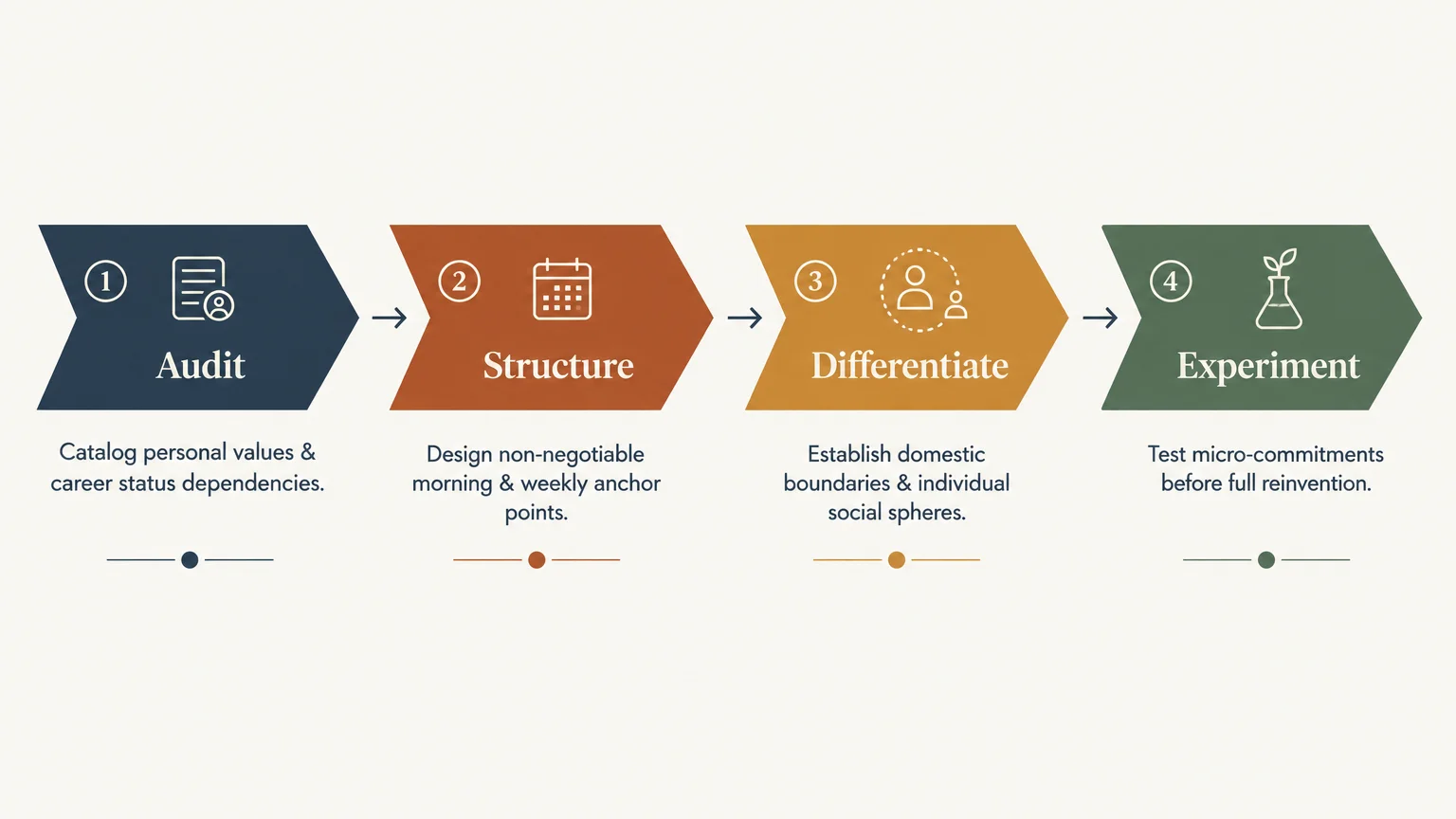
A 4-Step Framework for Rethinking Retirement Expectations
Reclaiming this phase of life demands deliberate personal design rather than passive drifting. Apply this practical four-step process to realign your daily habits with psychological health.
- Audit your daily energy: Track your moods for two weeks to identify activities that genuinely energize you versus those that drain you.
- Establish three non-negotiable anchors: Schedule one physical activity, one creative or cognitive pursuit, and one social touchpoint into every week.
- Negotiate relationship boundaries: Sit down with your partner to define dedicated personal time, shared calendar events, and domestic responsibilities.
- Select a novel skill challenge: Enroll in a class or join an organization that demands real mental effort outside your previous comfort zone.

When Self-Help Isn’t Enough
Occasional days of melancholy or boredom are a normal part of adapting to retirement. However, persistent emotional struggles require professional therapeutic intervention.
According to the National Institute of Mental Health, older adults often underreport depressive symptoms because they incorrectly assume low mood is a natural side effect of aging. Depression is an illness, not an inevitable consequence of growing older.
Reach out to a licensed counselor or physician if you notice any of these scenarios:
- Depressive symptoms lasting over two weeks: Ongoing sadness, unshakeable apathy, or significant shifts in sleep and appetite patterns.
- Intractable relationship hostility: Marital gridlock, chronic resentment, or continuous arguments that you cannot resolve peacefully.
- Escalating substance reliance: Using alcohol, prescription sedatives, or recreational drugs to numb feelings of boredom or anxiety.
- Thoughts of despair or self-harm: Feeling like a burden to loved ones or thinking that life is no longer worth living.
Frequently Asked Questions About Retirement Psychology
How long does the emotional transition to retirement usually take?
Most developmental psychologists observe that adjusting to retirement takes between twelve and twenty-four months. The process moves through stages of euphoria, disenchantment, reorientation, and eventual stability.
Why do I feel guilty whenever I take a nap or relax?
Decades of conditioning in workplace productivity create an internal bias equating personal rest with laziness. Unlearning that mindset requires actively treating rest as a necessary physiological investment.
How can my spouse and I avoid constant arguing after we retire?
Draft clear agreements regarding household chores, schedule independent time away from each other, and cultivate unique hobbies. Mutual autonomy preserves romantic appreciation and prevents suffocating codependency.
What is the most effective way to rebuild my social circle?
Focus on activity-based connection rather than searching for generic conversation. Join volunteer teams, community sports leagues, or neighborhood associations where shared tasks spark natural, organic friendships.
Moving Forward With Purpose
Retirement is not an end point; it is a profound developmental threshold that deserves your deliberate attention. By exposing the lies retirees tell themselves, you free yourself to author a life grounded in authenticity, physical vitality, and deep connection.
Take one small step today: schedule a new activity, initiate an honest conversation with your partner, or establish a morning walk routine. Your future is not determined by what you left behind, but by the intentional choices you make right now.
The information in this article is meant for educational purposes and general guidance. It does not replace individual therapy, counseling, or medical treatment. If you or someone you know is in crisis, contact the 988 Suicide & Crisis Lifeline by calling or texting 988.
Last updated: February 2026. Psychology research evolves continuously—verify current findings with professional sources.









Leave a Reply