

You wake up, check your messages, and move through your day without feeling connected to anything you do. The routine continues, but your internal drive has quietly dissolved.
Many people mistake this emotional flatness for simple physical fatigue or typical workplace burnout. In reality, moving through life without a guiding compass drains vitality far faster than hard work ever could.
Recognizing these subtle shifts empowers you to pause and recalibrate your direction. When you understand the signs of lost purpose, you can actively rebuild genuine meaning.
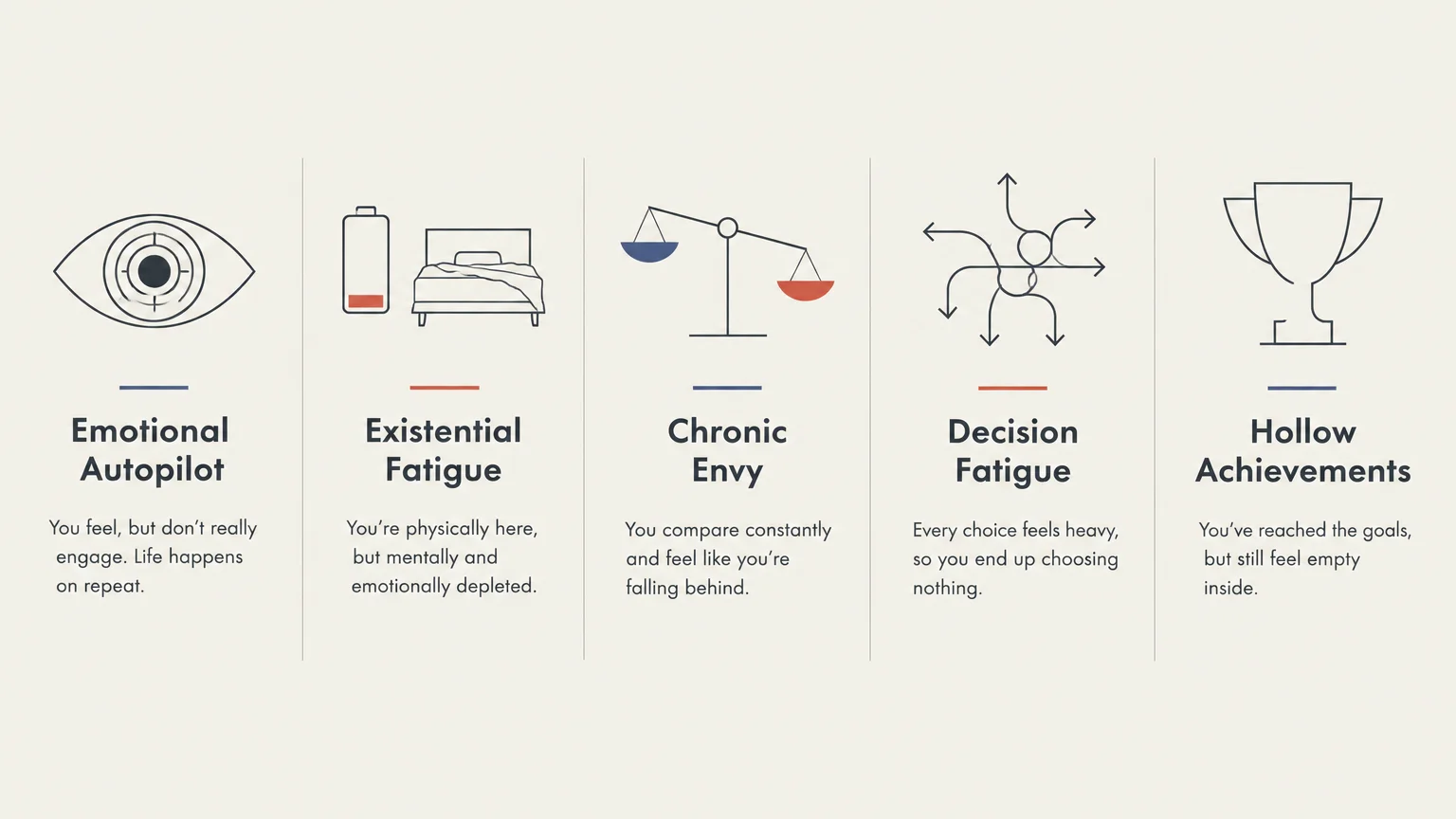
At a Glance
Losing direction rarely happens overnight; it usually unfolds as a quiet, gradual detachment from your daily life. Here is what to watch for:
- Living on emotional autopilot while daily tasks feel purely mechanical.
- Waking up exhausted because physical rest cannot cure existential depletion.
- Experiencing chronic envy toward others instead of feeling inspired by them.
- Struggling with pervasive decision fatigue over minor everyday choices.
- Realizing that major achievements leave you feeling hollow rather than fulfilled.

1. You Live on Emotional Autopilot
You complete your responsibilities on time, yet you feel completely detached from the results. Days blur together into a predictable loop of obligations and deadlines.
Clinical psychologists describe this experience as psychological numbing. It acts as an unconscious shield against frustration, but it also disconnects you from genuine satisfaction.

2. Rest Fails to Restore Your Energy
You can sleep eight hours, take a long weekend, or spend days relaxing, yet you still feel deeply drained. Physical rest cannot repair existential fatigue.
When your actions lack intrinsic significance, your mind burns immense energy just trying to stay engaged. Operating without purpose forces your willpower to do the work that passion usually handles effortlessly.

3. Chronic Envy Has Replaced Inspiration
Watching peers or colleagues succeed used to inspire you, but now it generates irritation and quiet resentment. You find yourself fixating on what other people have achieved.
As clinical resources on Psychology Today point out, persistent envy often functions as an emotional alarm. It flags your unfulfilled aspirations and warns you that your current path feels stagnant.

4. Decision Fatigue Paralyzes Your Routine
Trivial choices—such as selecting a dinner recipe, ordering clothes, or answering simple emails—suddenly trigger intense dread. Every minor fork in the road feels disproportionately heavy.
Having a distinct personal mission serves as an internal filter that simplifies your daily choices. Without overarching priorities to guide you, every tiny decision demands taxing cognitive negotiation.

5. Past Achievements Feel Hollow
Hitting a major career milestone, finishing a degree, or reaching a savings goal produces a surprisingly brief rush of joy. The pride evaporates within hours, leaving an unsettled emptiness behind.
This hollowness occurs when your goals cater to external social scripts rather than your personal convictions. Achieving someone else’s definition of success inevitably leaves your spirit unnourished.

6. You Escape Through Compulsive Distraction
You lose entire evenings to mindless social media scrolling, streaming marathons, or recreational shopping. These activities do not make you happy; they simply pass the time.
Compulsive distraction serves as a digital sedative against unresolved emptiness. By staying perpetually stimulated, you avoid confronting the uncomfortable stillness where your lack of direction becomes undeniable.

7. Major Life Milestones Bring Aimlessness
Transition periods frequently trigger disorientation. Reaching a major career peak, sending children away to college, or searching for purpose in retirement can dismantle your long-standing identity.
Research from Harvard Health indicates that losing structured roles significantly elevates feelings of isolation and cognitive decline. When external frameworks disappear, you must intentionally author your own purpose.
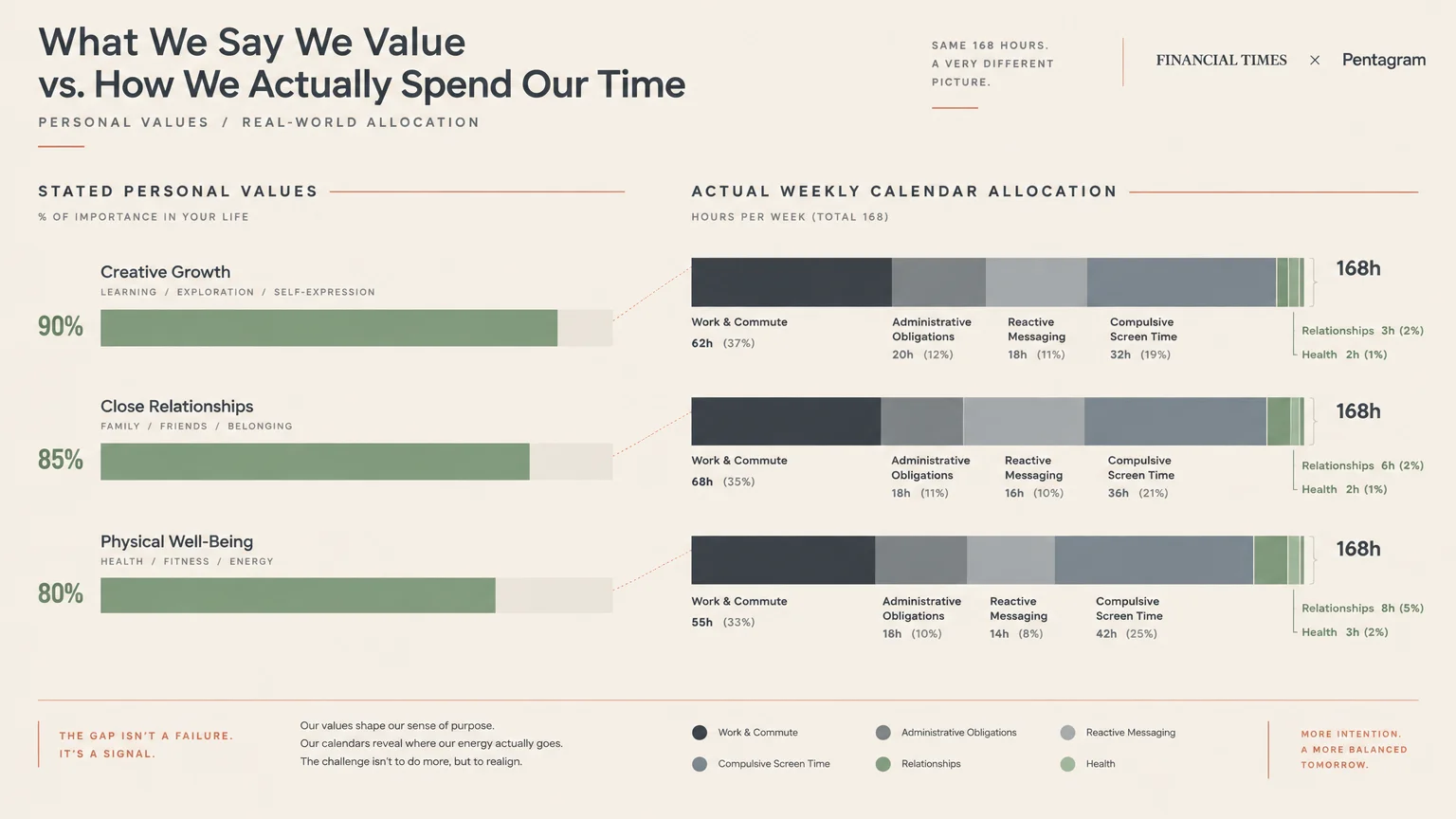
8. Your Core Values No Longer Match Your Calendar
If you value creative expression and close relationships, yet spend all your hours managing administrative chaos, emotional dissonance is inevitable. Your days no longer reflect your authentic self.
A lost sense of purpose often stems directly from this values-behavior rift. Living in contradiction to your core ideals creates an ongoing state of inner conflict.

9. Meaning in Life Feels Like an Unrealistic Concept
You catch yourself dismissing personal growth or fulfillment discussions as naive, sentimental nonsense. Cynicism gradually becomes your standard perspective on life.
This cynical mindset functions as a defensive maneuver. By convincing yourself that meaning in life is an illusion, you protect yourself against the vulnerability of trying and failing.
“Those who have a ‘why’ to live, can bear with almost any ‘how’.” — Viktor E. Frankl, Neurologist and Psychiatrist
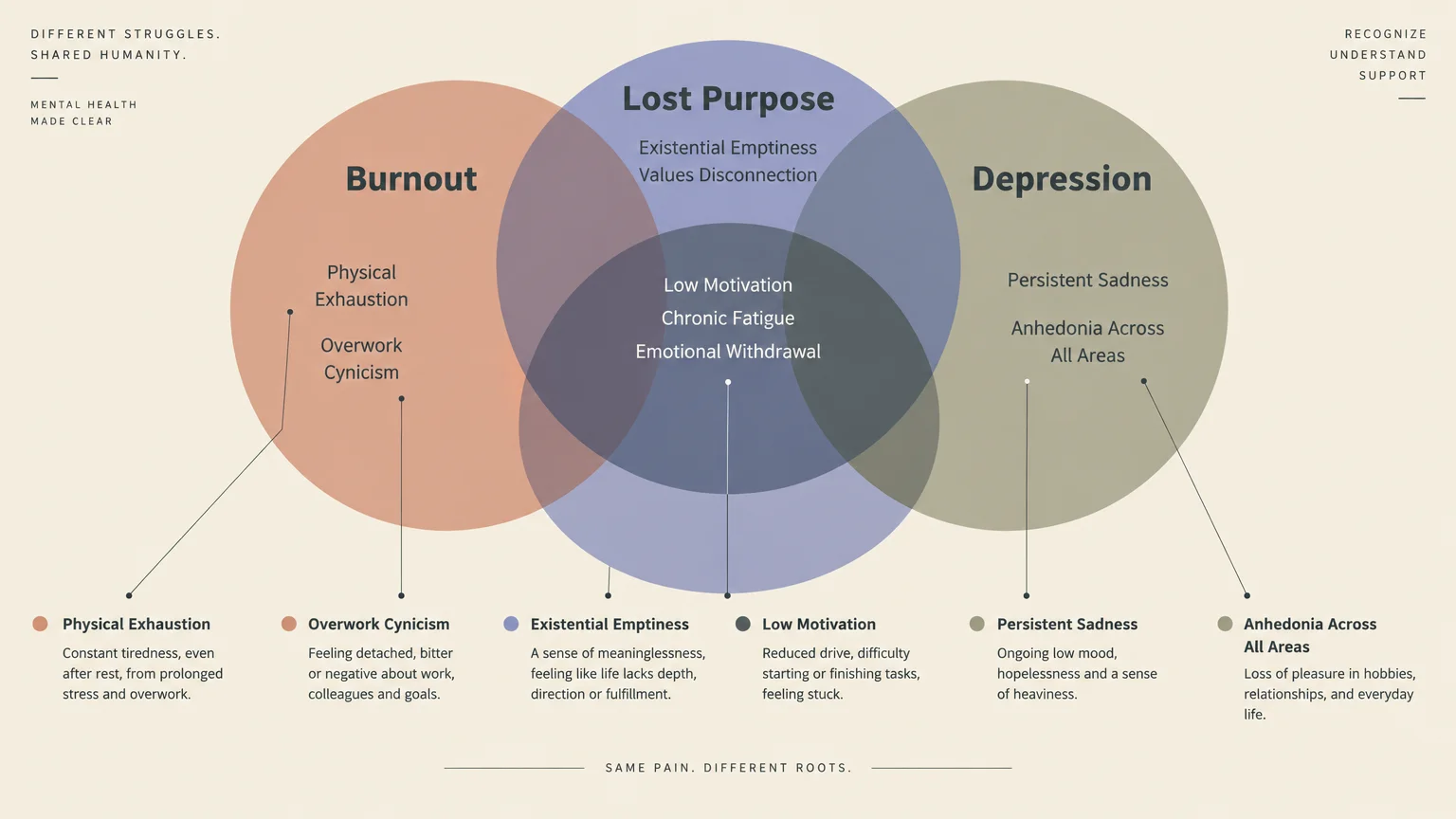
Lost Purpose, Burnout, or Depression?
Many people confuse feeling aimless with burnout or clinical mood disorders. Understanding their distinctions ensures that you apply the right remedies to your situation.
| Dimension | Lost Sense of Purpose | Occupational Burnout | Clinical Depression |
|---|---|---|---|
| Primary Experience | Aimlessness, boredom, and philosophical disconnect | Exhaustion, professional cynicism, and reduced efficacy | Persistent sadness, pervasive emptiness, and anhedonia |
| Response to Rest | Unchanged; free time often amplifies disorientation | Improves temporarily with genuine detachment from work | Unchanged; sleep disruption and low energy persist |
| Future Outlook | Uncertain or drifting, yet capable of curiosity | Pessimistic about workload, but values remain intact | Hopeless or indifferent across all life domains |
| Initial Approach | Values reassessment and identity exploration | Workplace boundary setting and physical recovery | Professional evaluation, psychotherapy, or medical care |

Patterns to Watch For
Rediscovering your direction requires dismantling several pervasive cultural myths. Falling into these mental traps will keep you spinning in analysis paralysis.
The Myth of a Single Destiny
Many people assume they must find one predetermined cosmic mission. In truth, finding purpose is an active, evolving creation rather than a hidden treasure you passively uncover.
Equating Purpose Solely With Career
Western culture constantly equates your inner worth with your professional title. When your job becomes your only source of identity, any workplace setback completely destroys your grounding.
Purpose flourishes across varied domains, including parenting, community service, artistic hobbies, and personal philosophy. Your career is merely one vehicle among many for expressing your values.
Waiting for Total Clarity Before Acting
Clarity does not precede action; it follows engagement. If you wait until you feel absolute certainty before exploring new paths, you will remain perpetually idle.
“The curious paradox is that when I accept myself just as I am, then I can change.” — Carl Rogers, Psychologist

Evidence-Based Steps for Finding Purpose
You do not need to overturn your entire existence to regain momentum. Meaning returns through deliberate, incremental practices that align your attention with what matters.
1. Conduct a Personal Values Inventory
Write down the ten principles that matter most to you, such as integrity, autonomy, curiosity, or connection. Then evaluate how much time you genuinely dedicated to each one this past month.
Identify the single largest gap between your stated values and your real schedule. Small adjustments toward closing that gap immediately restore personal integrity and self-trust.
2. Follow Your Micro-Curiosities
Do not pressure yourself to discover an all-consuming passion overnight. Instead, pay attention to the small topics, podcasts, or crafts that quietly capture your interest for ten minutes.
As clinical insights published by the American Psychological Association illustrate, curiosity provides the neurochemical foundation for sustained engagement. Micro-interests consistently lead toward deeper commitments over time.
3. Shift Focus Toward Contribution
Aimlessness tends to trap your focus squarely inward, obsessing over your personal happiness. Turning your energy outward toward helping a neighbor, mentoring a colleague, or volunteering disrupts this exhausting loop.
Service connects your daily efforts to something broader than your own ego. Contribution anchors your perspective and reminds you that your presence actively matters to the world around you.
4. Cultivate Everyday Craftsmanship
Purpose is not only found in what you do, but in how you do it. Approaching mundane tasks—like preparing a meal or tidying a desk—with deliberate care imbues the moment with dignity.
By choosing to perform ordinary duties with excellence, you reclaim agency over your immediate environment. Meaning emerges from your craftsmanship rather than external accolades.

When Self-Help Isn’t Enough
While temporary aimlessness is a normal human experience, prolonged detachment can sometimes signal deeper mental health struggles. Professional intervention provides essential structure when independent efforts stall.
Consider consulting a licensed mental health professional if you experience any of the following patterns:
- Persistent feelings of worthlessness, despair, or numbness lasting longer than two consecutive weeks.
- Complete inability to function at work, maintain personal hygiene, or care for basic physical needs.
- Severe anhedonia, where nothing in your life produces even fleeting joy or interest.
- Intrusive thoughts of self-harm, escapist fantasies involving death, or active suicidal ideation.
Evidence-based modalities such as Acceptance and Commitment Therapy (ACT) and Cognitive Behavioral Therapy (CBT) effectively treat existential stagnation. Medical guidance from organizations like the Mayo Clinic underscores the value of structured therapeutic support for clarifying life goals.
Frequently Asked Questions
How long does it typically take to rediscover your purpose?
Rebuilding direction is an ongoing process rather than an overnight revelation. Most individuals notice meaningful shifts within six to twelve weeks of consistent values-aligned action.
Patience remains critical during this transition. Rushing the process often results in adopting superficial goals that do not satisfy your underlying psychological needs.
Can you live a happy life without a grand purpose?
Yes, happiness does not require a dramatic, world-changing crusade. A rich existence often stems from local, everyday meaning—such as deep relationships, hobbies, and personal decency.
Living well in your immediate community produces substantial life satisfaction. Contentment thrives on authentic daily engagement rather than grand public achievements.
How do you handle a lost sense of purpose in retirement?
Transitioning out of the workforce requires actively replacing the structure, social contact, and identity that your career provided. You must shift from professional duties to self-directed exploration.
Engaging in structured volunteering, acquiring complex new skills, or joining community organizations restores social connection and meaningful routine during retirement years.
What is the core difference between a goal and a purpose?
A goal is a concrete, reachable milestone that you can complete and cross off your checklist. Purpose, by contrast, is an ongoing directional orientation that guides how you travel through life.
Goals provide practical checkpoints, while your purpose supplies the fundamental rationale for choosing those specific targets in the first place.
Taking Your First Steps Forward
Losing your sense of purpose is not a personal failure; it is your psychology signaling that your current life structure no longer fits who you have become. Regard this discomfort as a compass pointing toward necessary growth.
Start small today by choosing one action that aligns with what you genuinely care about, even if your motivation feels faint. Action creates clarity, and your purpose will steadily clarify as you move forward.
The information in this article is meant for educational purposes and general guidance. It does not replace individual therapy, counseling, or medical treatment.
If you or someone you know is in crisis, contact the 988 Suicide & Crisis Lifeline by calling or texting 988.
Last updated: February 2026. Psychology research evolves continuously—verify current findings with professional sources.









Leave a Reply