

When unexpected crises erupt, your mind does not freeze; it immediately assesses options and organizes actionable next steps. This instinctive clarity transforms daily friction into meaningful progress.
Natural problem solvers possess unique psychological traits that turn emotional chaos into structured resolution. Identifying these natural problem solver traits helps you navigate high-stakes decisions and deepen interpersonal trust.
Most resourceful people overlook their own problem solving skills, dismissing their steady clarity as simple common sense. Psychological science reveals that this mindset reflects distinct cognitive strengths and emotional resilience.
Understanding the Psychology of Problem Solving
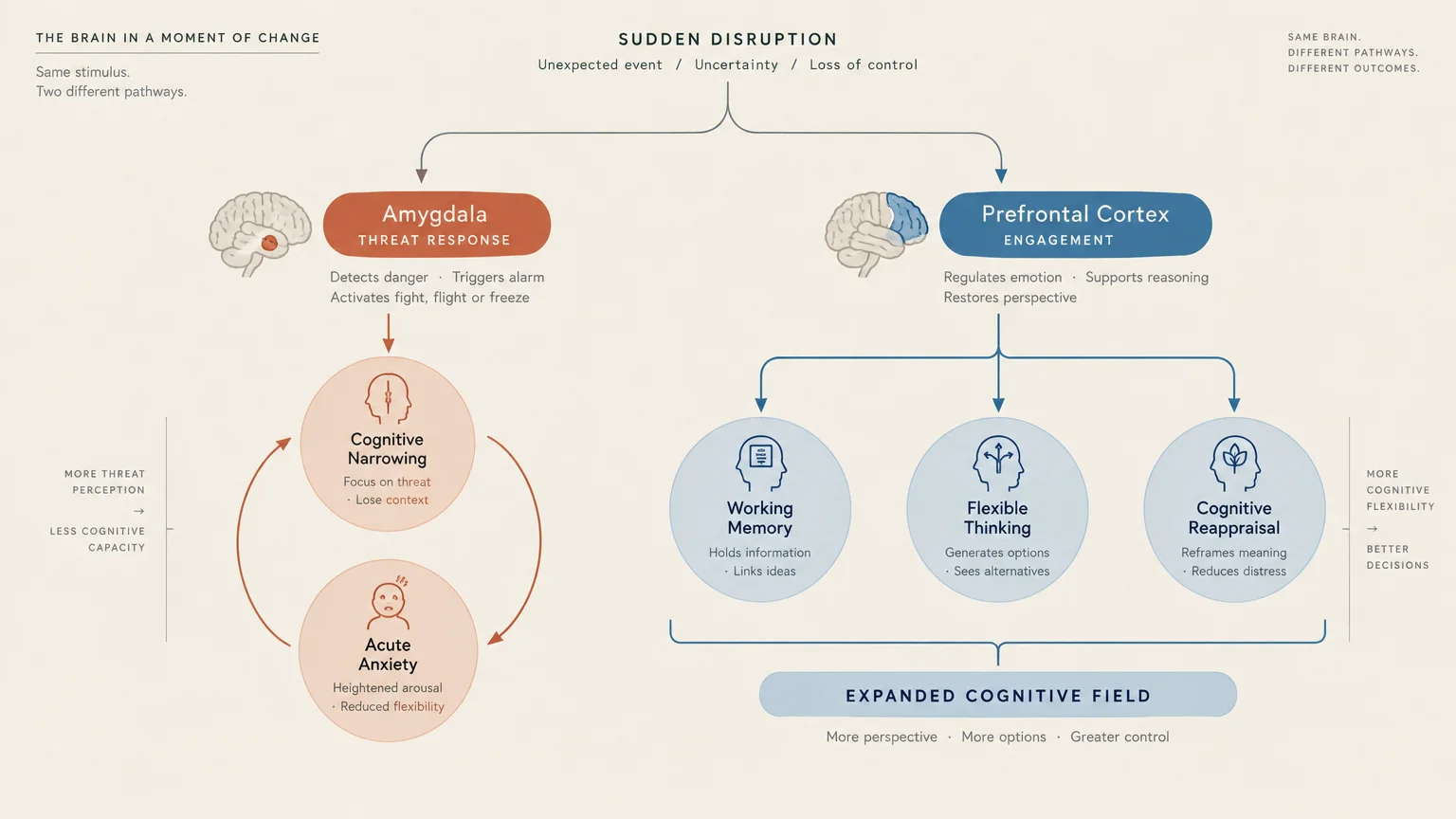
Problem solving is not merely an intellectual exercise; it is an active neurobiological process. When you face an unfamiliar obstacle, your brain engages executive functions housed within the prefrontal cortex.
According to research highlighted by the American Psychological Association, executive functioning governs working memory, flexible thinking, and self-control. These interconnected mental processes allow you to analyze complex variables without becoming overwhelmed.
Most people react to disruption with threat-based stress responses driven by the amygdala. Natural problem solvers, by contrast, engage neural pathways that temper fear and activate systematic inquiry.
This cognitive architecture relies heavily on cognitive reappraisal. Instead of interpreting a roadblock as an imminent disaster, your brain reclassifies the event as an objective challenge.
This subtle shift prevents cognitive narrowing, a phenomenon where acute anxiety blinds people to viable alternatives. By keeping your cognitive field wide, you spot connections that other people routinely miss.

10 Signs You’re a Natural Problem Solver
Recognizing your innate abilities allows you to deploy them deliberately. Here are ten critical thinking signs that indicate you are a gifted, natural troubleshooter.
1. You View Obstacles as Puzzles Rather Than Personal Attacks
When unexpected complications disrupt your schedule, you rarely collapse into victimhood or resentment. Instead, your curiosity activates automatically, turning irritation into intellectual intrigue.
You instinctively view life as an evolving series of logic puzzles waiting for an elegant solution. This cognitive reframing protects your emotional reserves during high-stress situations.
While others spend energy searching for someone to blame, you direct your attention toward untangling the root issue. This orientation keeps you moving forward when projects stall.
2. You Naturally Regulate Emotional Reactivity
Emotional stability under pressure forms the bedrock of effective problem-solving skills. You feel stress like anyone else, but you do not let panic hijack your decision-making faculties.
You instinctively create a psychological pause between an external trigger and your chosen response. This vital gap allows your rational mind to evaluate consequences before you utter a word.
By modulating your autonomic nervous system, you project calm into chaotic environments. Colleagues and family members frequently look to you because your presence stabilizes room dynamics.
3. You Ask Diagnostic Questions Instead of Assigning Blame
Whenever an initiative fails, reactive thinkers search for a scapegoat to punish. In contrast, you ask open-ended questions designed to uncover procedural breakdowns.
You ask questions like “Where did our communication break down?” or “Which assumption proved incorrect?” These diagnostic inquiries neutralize defensiveness in team members.
This quality demonstrates genuine psychological safety in your leadership style. You understand that assigning blame obscures structural vulnerabilities, while curious investigation repairs them.
4. You Possess High Cognitive Flexibility
Cognitive flexibility refers to your ability to abandon a failing strategy and adopt a new one without mourning the change. You hold plans loosely and adapt them as fresh data arrives.
Rigid thinkers cling desperately to obsolete ideas simply because they invested time in them. You recognize the sunk cost fallacy immediately and pivot without bruising your ego.
According to clinical insights shared by Harvard Health, cognitive flexibility correlates strongly with emotional resilience and lower rates of depressive rumination. Your adaptable mind preserves your mental wellness.
5. You Systematically Break Chaos into Micro-Steps
Massive, ambiguous challenges paralyze average thinkers through cognitive overload. You possess an intuitive capacity for mental chunking, decomposing monolithic crises into distinct, actionable increments.
You identify the critical domino that must fall first before touching secondary issues. This triage ability transforms bewildering disorder into a clean sequential checklist.
By focusing solely on the immediate next step, you bypass motivational hurdles. Action generates momentum, and momentum inevitably dissolves the surrounding paralysis.
6. You Balance Intuition with Empirical Evidence
Psychologist Daniel Kahneman demonstrated that human thought oscillates between rapid gut intuition and slow, deliberate analytical reasoning. Natural problem solvers strike an exceptional balance between both systems.
You honor your intuition as pattern recognition honed by past experience; however, you never rely on hunch alone. You check gut impressions against measurable metrics and tangible facts.
This dual-channel approach prevents both reckless impulsivity and tedious analysis paralysis. You move with speed, yet your choices remain firmly anchored in verifiable reality.
7. You Demonstrate Intellectual Humility
Arrogance is the enemy of accurate perception. You willingly acknowledge when you do not understand a topic, viewing knowledge gaps as opportunities rather than threats.
You do not feel compelled to be the smartest person in the room; you simply want the best outcome. Consequently, you seek expertise from diverse voices without insecurity.
This humility allows you to update your worldview when presented with superior arguments. Your loyalty belongs to truth and effectiveness, never to your personal pride.
8. You Practice Systems Thinking
Isolated thinkers address immediate symptoms, inadvertently creating secondary complications elsewhere. You instinctively examine the broader ecosystem, anticipating second-order and third-order consequences.
When evaluating a potential fix, you ask yourself: “If we alter this variable today, what breaks downstream tomorrow?” This foresight prevents short-term band-aids from breeding long-term catastrophes.
Understanding interdependencies makes your interventions exceptionally durable. You fix systemic causes once, freeing yourself from constantly fighting the same recurring battles.
9. You Have a Grounding Presence During Emergencies
In medical crises, logistical meltdowns, or interpersonal conflict, many individuals surrender to hysteria. You undergo an internal shift, becoming quieter, more deliberate, and hyper-focused.
This phenomenon reflects what family systems theorists describe as a non-anxious presence. Your regulated nervous system acts as an emotional anchor for dysregulated people around you.
You do not invalidate people’s panic; you simply provide a sturdy framework of practical direction. Your steady voice helps others regain access to their own rational thinking.
10. You Gain Energy from Resolution Rather Than Complaining
Venting offers temporary emotional release, but chronic complaining drains personal agency. You feel little desire to participate in circular grievances that yield no tangible remedy.
Engaging directly with friction energizes you, whereas passive complaints leave you exhausted. You experience genuine psychological satisfaction whenever you bring order to an untamed mess.
Completing a resolution delivers an authentic dopamine reward to your brain. This internal reinforcement loop turns complex problem solving into a sustainable, lifelong habit.
“When we are no longer able to change a situation, we are challenged to change ourselves.” — Viktor Frankl, Neurologist and Psychiatrist
Reactive Coping vs. Proactive Problem Solving
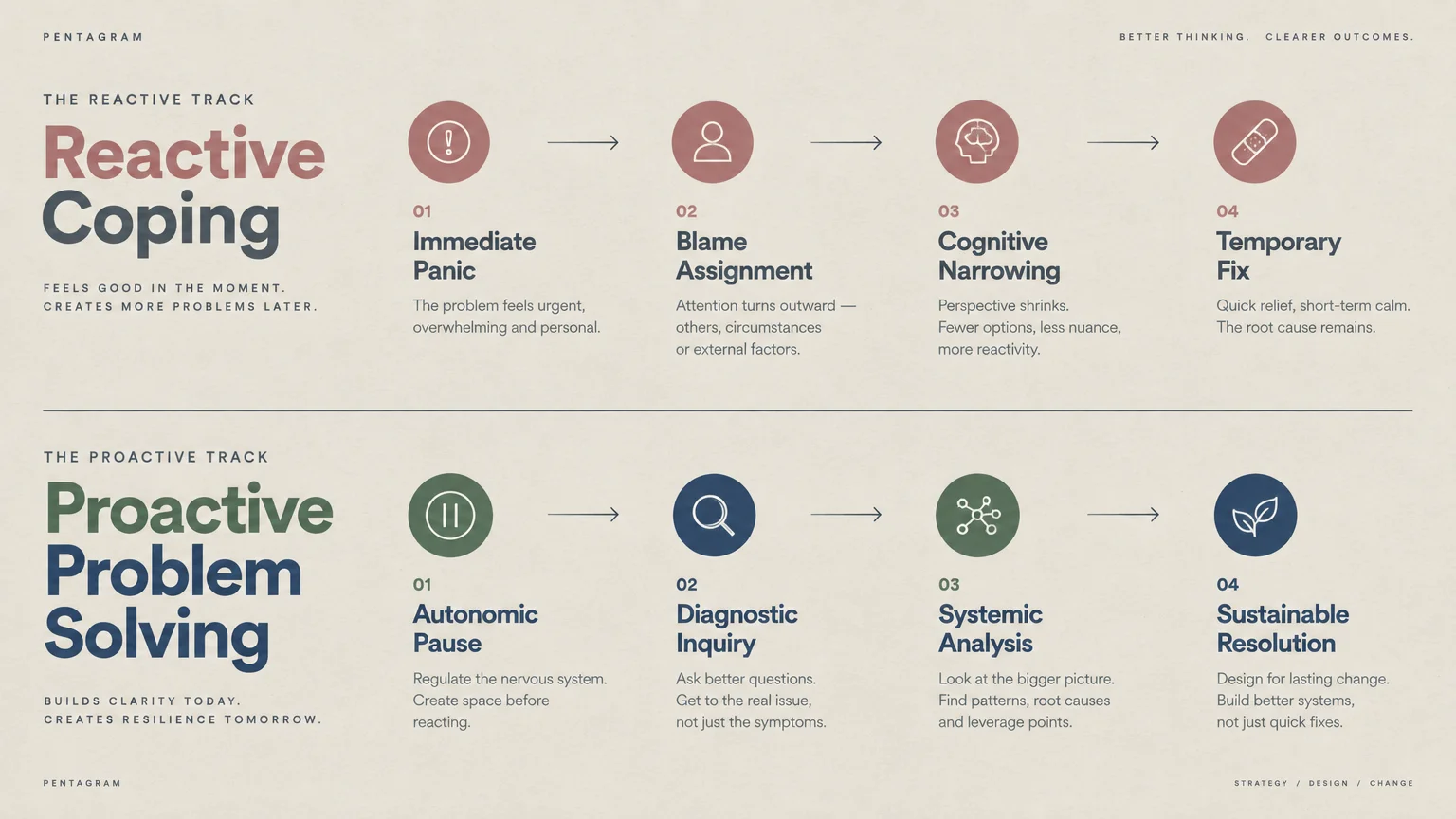
Many people mistake frantic reactivity for constructive action. Recognizing how adaptive troubleshooting differs from impulsive coping clarifies your behavioral patterns.
| Dimension | Reactive Coping | Proactive Problem Solving |
|---|---|---|
| Emotional Focus | Eliminating immediate discomfort or panic | Understanding structural variables and underlying drivers |
| Cognitive Stance | Defensive, rigid, and blame-seeking | Inquisitive, flexible, and objective |
| View on Errors | Personalized failure accompanied by shame | Neutral diagnostic data that guides iteration |
| Time Horizon | Immediate relief regardless of downstream fallout | Sustainable resolution prioritizing long-term health |
| Relational Impact | Spreads anxiety and escalates defensiveness | Creates psychological safety and collective trust |
As the table illustrates, proactive troubleshooting targets systemic durability rather than superficial calm. This distinction separates enduring solutions from fragile temporary patches.
Myths Worth Debunking
Popular culture often distorts what genuine critical thinking looks like in daily life. Examining common misconceptions helps you appreciate your strengths without unrealistic standards.
Myth 1: Natural problem solvers never experience distress. Emotional numbness is not a prerequisite for critical analysis. Resourceful people experience genuine grief and anger; they simply avoid letting emotional flooding dictate their operational responses.
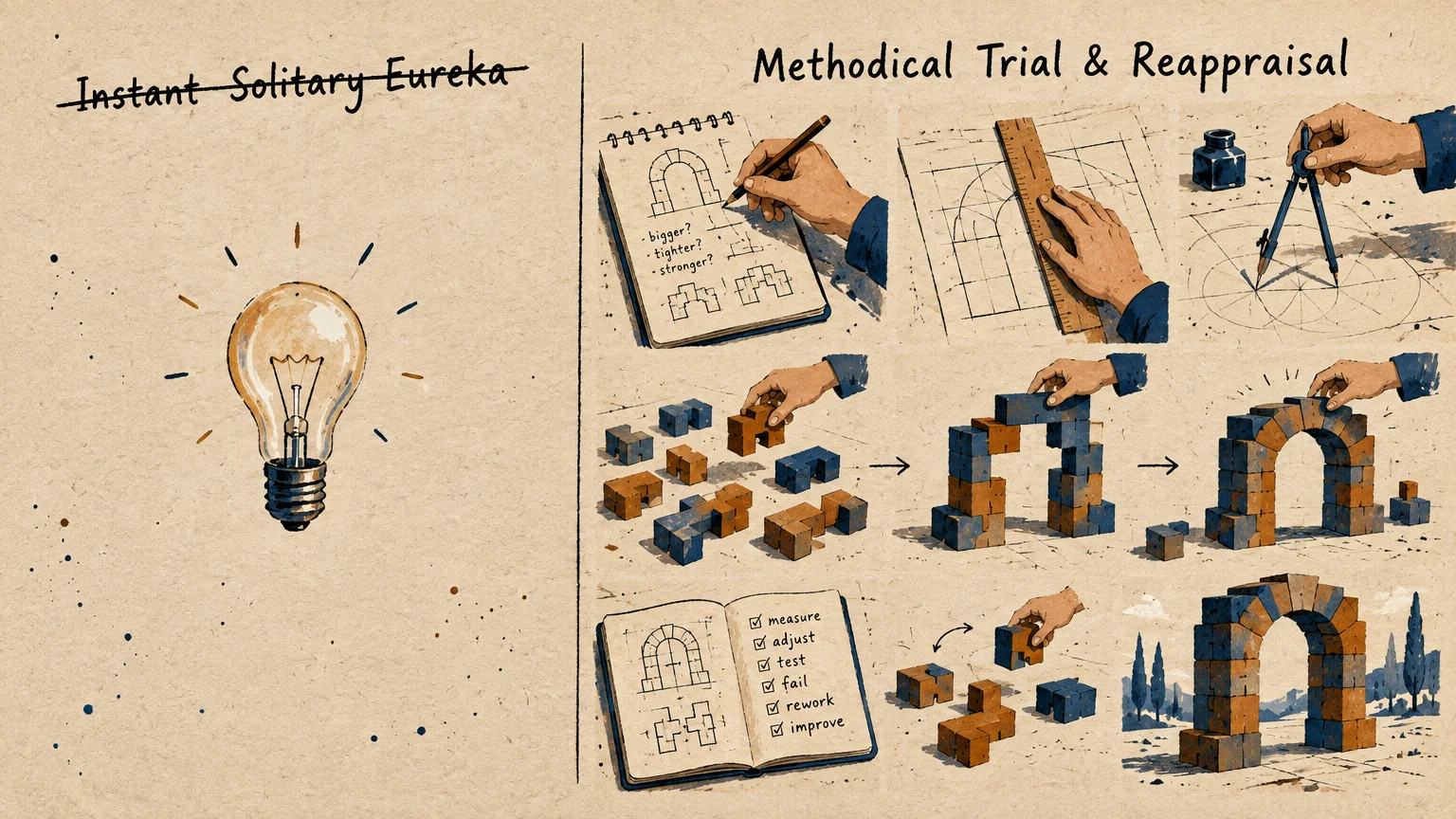
Myth 2: True problem solvers have an instant answer for everything. Impulsive responders offer immediate answers, whereas genuine critical thinkers frequently say, “I need time to study this.” Deep insight requires deliberate contemplation.
Myth 3: Problem solving is an entirely cold, mechanical process. Creative lateral thinking relies deeply on emotional empathy and subjective imagination. Connecting disparate ideas requires creative intuition alongside logical rigor.

The Hidden Shadow: When Problem Solving Becomes a Defense Mechanism
Every psychological gift carries a potential vulnerability if left unexamined. When practiced unconsciously, your urge to resolve issues can morph into intellectualization.
Intellectualization is a defense mechanism where you analyze emotional pain rationally to avoid feeling its actual weight. As articles on Psychology Today point out, overthinking feelings disconnects you from genuine intimacy.
In relationships, this tendency often manifests as premature advice-giving. When your partner or friend shares their vulnerability, they rarely need an immediate action plan.
Offering strategic bullet points when someone needs empathetic listening can make them feel dismissed. Balancing your practical mind with relational presence ensures your strength does not alienate loved ones.
Additionally, hyper-fixating on external problems can disguise an obsessive need for control. When uncertainty frightens you, fixing minor external errors can serve as an unhealthy distraction.

Signs It’s Time to Talk to a Therapist
While problem-solving skills enhance your resilience, compulsive troubleshooting can mask unaddressed emotional strain. Professional therapy offers a safe space to disentangle genuine agency from anxious over-functioning.
Consider consulting a licensed therapist if you encounter the following patterns:
- You cannot stop fixing other people’s lives: You feel an exhausting compulsion to manage family members’ choices, taking excessive responsibility for outcomes beyond your control.
- Intellectual analysis replaces emotional processing: You treat grief, loneliness, or heartbreak like technical defects to be solved rather than human experiences to be felt.
- Chronic decision fatigue causes acute burnout: The ongoing pressure to navigate every crisis induces physical exhaustion, insomnia, or severe tension headaches.
- Uncertainty triggers debilitating anxiety: Facing an unsolvable ambiguity sends your nervous system into panic, preventing you from resting or enjoying daily life.
If these struggles resonate, working with a mental health professional can help you rebuild internal peace. Organizations like Verywell Mind offer comprehensive directories to connect you with care.

4 Daily Practices to Strengthen Your Critical Thinking Skills
You can sharpen your cognitive faculties deliberately through daily mental habits. Use these four practical tools to expand your troubleshooting prowess.
- Apply the “Five Whys” Root-Cause Technique: Whenever an obstacle occurs, ask why it happened five consecutive times. Peeling back superficial layers unmasks systemic roots that demand your attention.
- Practice Deliberate Inversion: Instead of asking how to achieve success, ask how you could guarantee catastrophic failure. Eliminating vulnerabilities often illuminates the clearest path to victory.
- Take a 90-Second Physiological Reset: When unexpected chaos strikes, engage in deep diaphragmatic breathing for ninety seconds. Calming the vagus nerve returns oxygenated blood to your prefrontal cortex.
- Hunt for Disconfirming Information: Actively search for evidence that challenges your preferred hypothesis. Disproving your own biases strengthens your final decisions against unexpected shocks.
Frequently Asked Questions
Can someone learn to become a natural problem solver, or is it purely genetic?
While innate temperament influences cognitive speed, problem-solving skills are malleable neurobiological habits. Deliberately practicing emotional regulation and lateral thinking restructures your neural pathways over time.
What is the core difference between critical thinking and problem solving?
Critical thinking is the evaluative discipline of analyzing data, questioning assumptions, and identifying cognitive biases. Problem solving represents the application of those critical insights toward creating tangible real-world solutions.
Why do people get frustrated when I try to solve their problems?
When loved ones confide in you, they typically seek emotional attunement and validation first. Offering rapid-fire tactical solutions before validating their distress communicates that their feelings are an inconvenience to manage.
How does chronic stress impair natural problem-solving abilities?
Chronic stress floods your system with cortisol, diminishing prefrontal cortex function while hyper-activating the amygdala. This physiological shift restricts working memory, narrows creative perception, and forces your brain into rigid survival routines.
Harnessing Your Problem-Solving Strengths
Your ability to navigate complexity with composure is a profound asset for your career, relationships, and self-worth. Cultivating this strength allows you to face an unpredictable world with steady confidence.
Remember that your value does not depend solely on your utility as a crisis manager. Give yourself permission to step away from the whiteboard, embrace unanswered questions, and simply rest.
This article provides general educational information about psychology and relationships. It is not a substitute for professional therapy or medical advice. Everyone’s situation is unique—if you’re struggling, please reach out to a licensed mental health professional.
Last updated: February 2026. Psychology research evolves continuously—verify current findings with professional sources.









Leave a Reply