
Most people react instinctively to immediate friction, but you naturally look past the noise to spot emerging patterns. You anticipate tomorrow’s outcomes while others scramble to patch today’s symptoms.
Strategic thinking is not cold detachment; it is a vital cognitive strength blending emotional intelligence with deliberate foresight. It empowers you to navigate complex professional and personal dilemmas with quiet confidence.
If you regularly question consensus and connect distant dots, your mind runs on unique problem solving personality traits. Recognizing these signs of strategic thinking helps you direct your mental energy where it matters most.
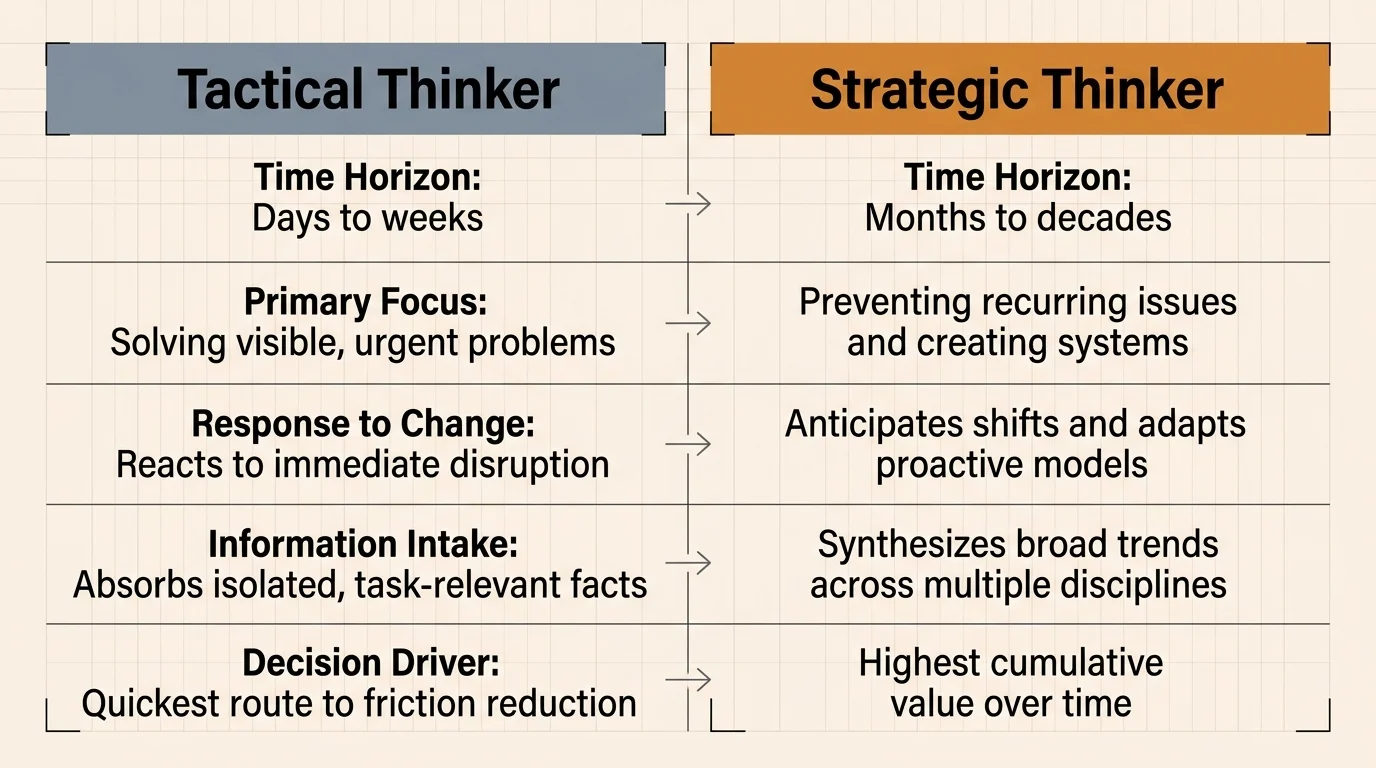
Strategic Mindset vs. Tactical Reaction: At a Glance
Tactical thinking focuses on executing immediate tasks right now. In contrast, strategic thinking evaluates how today’s small actions shape distant outcomes.
Understanding this distinction helps you recognize where your mental habits naturally fall. Both approaches serve a purpose, yet long-term success requires strategic elevation.
| Dimension | Tactical Thinker | Strategic Thinker |
|---|---|---|
| Time Horizon | Days to weeks | Months to decades |
| Primary Focus | Solving visible, urgent problems | Preventing recurring issues and creating systems |
| Response to Change | Reacts to immediate disruption | Anticipates shifts and adapts proactive models |
| Information Intake | Absorbs isolated, task-relevant facts | Synthesizes broad trends across multiple disciplines |
| Decision Driver | Quickest route to friction reduction | Highest cumulative value over time |
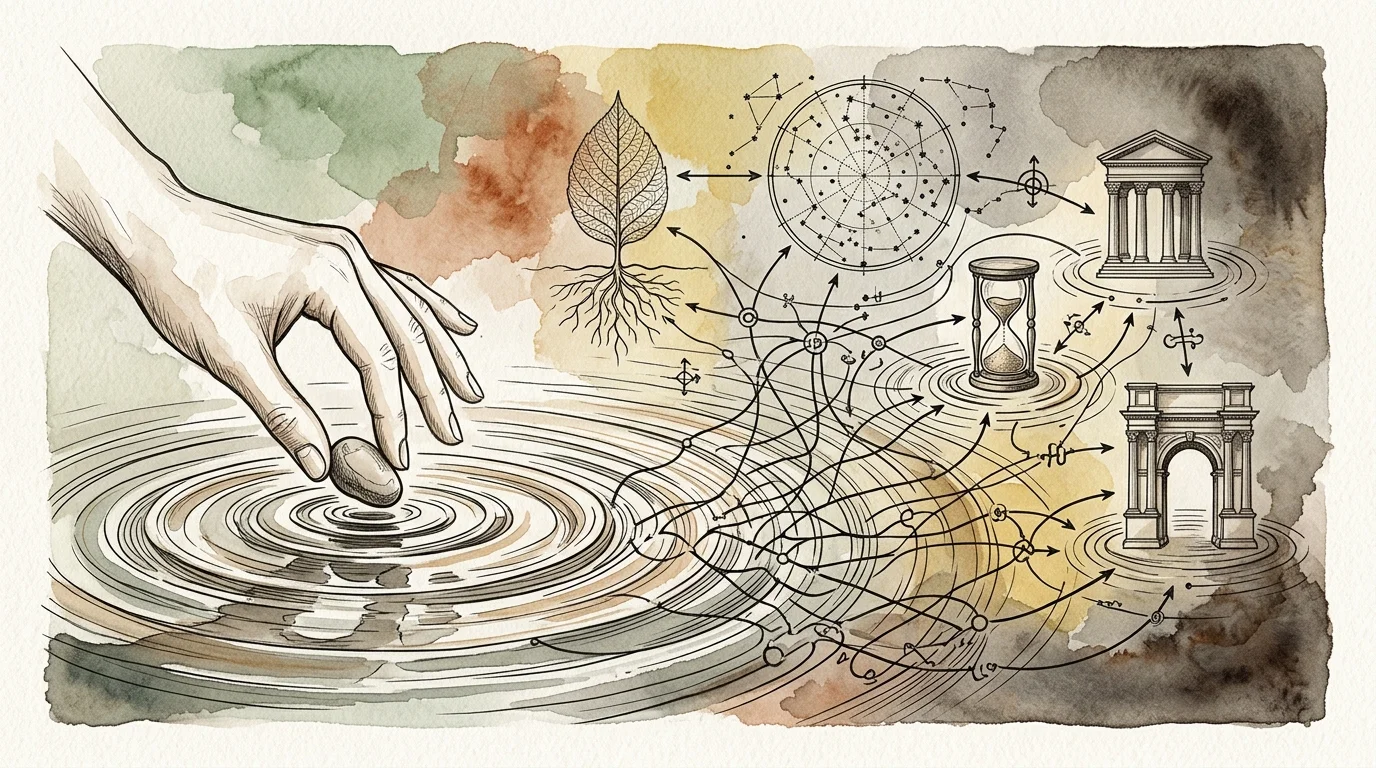
10 Signs You Are a Strategic Thinker
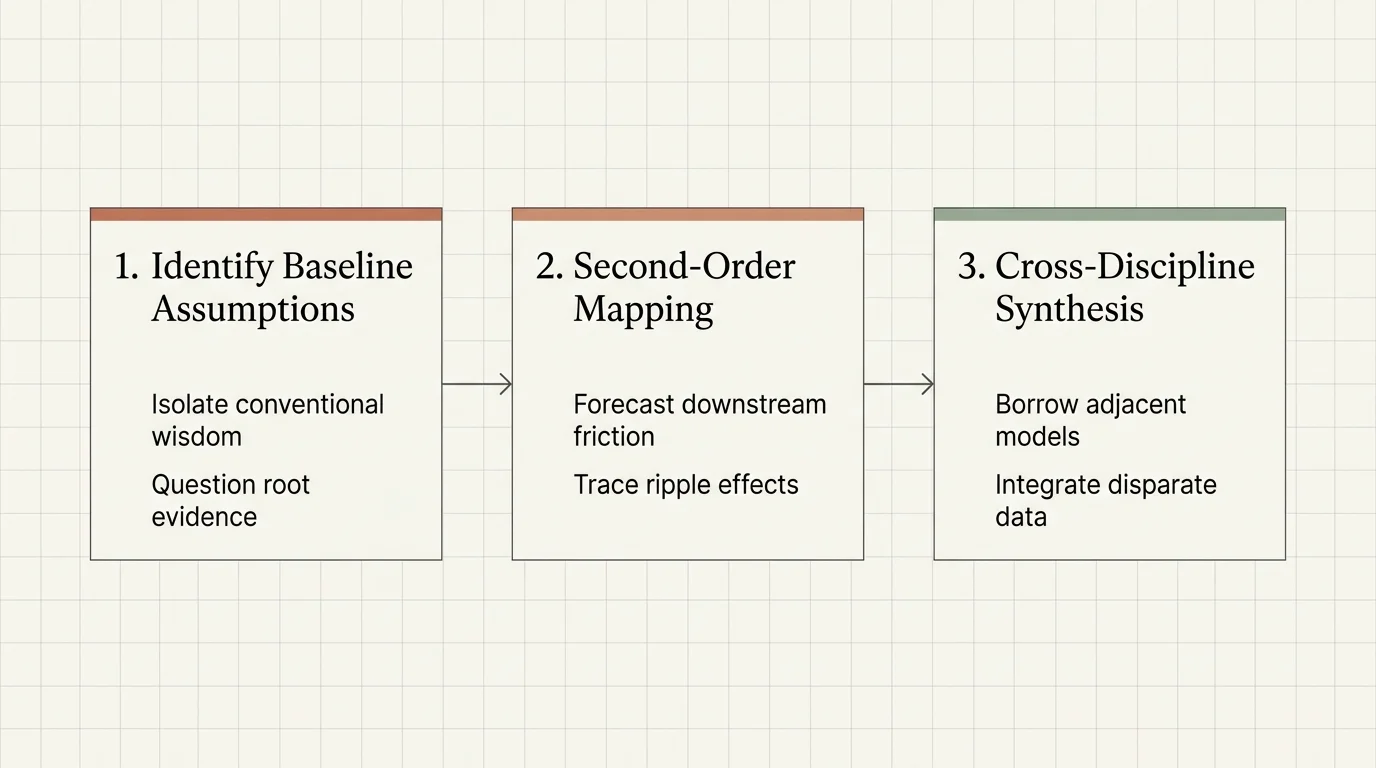
1. You Anticipate Second- and Third-Order Consequences
You rarely accept initial results at face value. Instead, you constantly map out what happens after the initial outcome occurs.
While others celebrate a quick victory, you assess potential downstream costs. This habit of second-order thinking protects you from short-sighted compromises.
You instinctively ask what new friction points a solution might create. This foresight keeps you several moves ahead in complex environments.
2. You Challenge Automatic Assumptions
You possess strong critical thinking skills that prevent you from taking conventional wisdom as absolute truth. When someone declares that things have always been done this way, your curiosity activates.
You gently dismantle prevailing narratives to uncover the baseline evidence underneath. This cognitive independence helps you identify novel pathways where others see dead ends.
3. You Connect Seemingly Unrelated Concepts
Your brain excels at cross-pollination. You frequently borrow frameworks from art, biology, or history to resolve technical hurdles.
This ability to spot hidden parallels reveals powerful strategic thinker traits. You see an integrated web of relationships where other individuals only see disconnected silos.
4. You Prioritize Long-Term Direction Over Immediate Relief
You exhibit the core characteristics of planners who value enduring architecture over immediate applause. You readily endure temporary inconvenience if it secures a sustainable future advantage.
This delayed gratification anchors your daily habits. You refuse to trade your long-term integrity or objectives for momentary comfort.
5. You Maintain Comfort with Ambiguity and Uncertainty
Uncertainty paralyzes many people, but you accept incomplete information as an inevitable condition of life. You make sound decisions based on probability rather than waiting for nonexistent certainty.
Researchers at Harvard Health highlight cognitive flexibility as an essential marker of mental resilience. Your ease with ambiguity reflects this high-level adaptive capacity.
6. You View Setbacks Through a Systems Lens
When a breakdown occurs, you resist the temptation to assign personal blame. Instead, you analyze the underlying incentives, communication flows, and environmental friction points.
You treat mistakes as diagnostic telemetry. By repairing broken structures rather than punishing individuals, you build sustainable resilience.
7. You Actively Seek Out Dissenting Perspectives
You understand that blind spots are inevitable in any human perspective. Therefore, you deliberately invite feedback from people whose life experiences and viewpoints differ sharply from your own.
You treat disagreement as valuable data rather than a personal challenge. This intellectual humility dramatically reduces your risk of costly errors.
8. You Allocate Mental Energy with Strict Intentionality
Attention is your most guarded currency. You know that saying yes to an inconsequential project means saying no to your core vision.
You aggressively filter out low-yield drama and trivial administrative noise. This ruthless prioritization ensures your mental reserves remain focused on high-leverage activities.
9. You Balance High-Altitude Vision with Grounded Execution
You do not lose yourself in purely theoretical daydreams. While you construct expansive visions, you constantly ask how those ideas will function on the ground.
You translate abstract concepts into tangible milestones with calm precision. This rare harmony between inspiration and logistics turns ideas into reality.
10. You Continually Audit Your Own Mental Models
You actively monitor your cognitive habits through regular introspection. When fresh evidence disproves an old conviction, you update your worldview without defensive resistance.
These problem solving personality traits keep your thinking sharp and relevant. You fall in love with truth rather than clinging to your existing assumptions.

The Psychology Behind Strategic Thinking
Strategic thought relies heavily on executive functions housed within your prefrontal cortex. This brain region orchestrates impulse control, working memory, and cognitive shifting.
When you pause before reacting, you recruit your prefrontal circuits instead of succumbing to amygdala-driven emotional reactivity. This intentional pause creates space for calculated choices.
“Between stimulus and response there is a space. In that space is our power to choose our response.” — Viktor Frankl, Neurologist and Psychiatrist
Frankl captures the psychological core of strategic action. By widening the gap between a prompt and your reaction, you claim total control over your trajectory.
What Can Go Wrong: The Shadows of Over-Strategizing
Even powerful strengths become liabilities when pushed to an extreme. If you over-index on strategic evaluation, you risk tumbling into cognitive traps.
Here are several pitfalls to watch for as you refine your planning skills:
- Analysis Paralysis: Gathering data endlessly to eliminate risk can stall timely execution.
- Emotional Distance: Treating interpersonal relationships like chess matches damages authentic emotional intimacy.
- Alienating Collaborators: Living ten steps ahead can leave peers feeling confused or left behind.
- Chronic Restlessness: Constantly optimizing for the future diminishes your ability to savor the present moment.
Recognizing these tendencies allows you to recalibrate before strategic planning morphs into self-sabotage.
Practical Exercises to Sharpen Your Critical Thinking Skills
You can deliberately build your strategic capacity through disciplined daily habits. Small shifts in your evaluation process yield massive cognitive dividends over time.
- Schedule Thinking Time: Block thirty minutes each week exclusively for reviewing high-level trajectory without digital devices.
- Conduct Pre-Mortems: Before launching any major initiative, imagine it failed completely and work backward to identify root causes.
- Map Second-Order Effects: Draw a visual decision tree detailing the downstream consequences of critical personal choices.
- Diversify Reading Lists: Study history, system dynamics, and psychology to expand your repository of mental models.
Practicing these steps transforms strategic intuition into reliable execution across every area of your life.

When to Seek Professional Support
Strategic contemplation is productive, but it can cross the boundary into clinical rumination or anxiety. When foresight turns into uncontrollable dread, outside guidance becomes essential.
Consider reaching out to a licensed therapist if you experience any of the following challenges:
- You cannot silence catastrophic “what-if” scenarios that disturb your sleep or work.
- Perfectionism prevents you from making basic life choices without debilitating distress.
- You intellectualize your feelings constantly to avoid experiencing genuine emotional vulnerability.
- Constant mental calculation exhausts your nervous system and causes chronic burnout.
A therapist can help you untangle adaptive foresight from anxiety-driven rumination with targeted cognitive tools.
Frequently Asked Questions
Are strategic thinkers born or made?
While innate curiosity provides a helpful foundation, strategic thinking is predominantly a learnable skill set. Regular practice in systems analysis, deliberate reflection, and emotional regulation cultivates strategic habits over time.
Can someone be too strategic in personal relationships?
Yes, applying purely strategic calculations to romantic or familial bonds can erode genuine connection. Relationships require emotional presence, vulnerability, and spontaneous warmth rather than transactional optimization.
How does strategic thinking differ from critical thinking?
Critical thinking evaluates information for accuracy, bias, and logical validity in the present. Strategic thinking uses those critical evaluations to formulate actionable, forward-looking plans that achieve enduring goals.
What is the fastest way to improve strategic thinking at work?
Start by consistently asking “why” behind organizational decisions before jumping into task execution. Seek to understand how your team’s outputs directly connect to broader company goals.
Moving Forward with Strategic Clarity
Embracing your strategic strengths allows you to lead with deliberate purpose rather than reactionary panic. As you hone your vision, remember to balance future planning with active presence today.
This article provides general educational information about psychology and relationships; it is not a substitute for professional therapy or medical advice. Everyone’s situation is unique—if you’re struggling, please reach out to a licensed mental health professional.
Last updated: February 2026. Psychology research evolves continuously—verify current findings with professional sources.









Leave a Reply