

Older adults rarely express emotional pain through overt tears or direct complaints of despair. Instead, hidden sadness in seniors often disguises itself as bodily discomfort, quiet withdrawal, or subtle changes in daily habits.
Recognizing these masked signs allows you to intervene before chronic isolation compromises someone’s physical vitality. When you understand how late-life depression actually manifests, you can offer meaningful and compassionate support.
Depression is never a normal part of aging. Learning these critical behavioral cues equips you to protect the emotional well-being of the older adults in your life.
Understanding Late-Life Depression and Emotional Masking
Senior mental health challenges operate differently than psychological distress in younger populations. Cultural norms, generational stoicism, and medical stigmas often lead older generations to minimize internal sorrow.
According to the World Health Organization, an estimated 14.75% of adults aged 70 and older live with a mental disorder. These conditions account for roughly 6.8% of all disability-adjusted life years in that demographic.
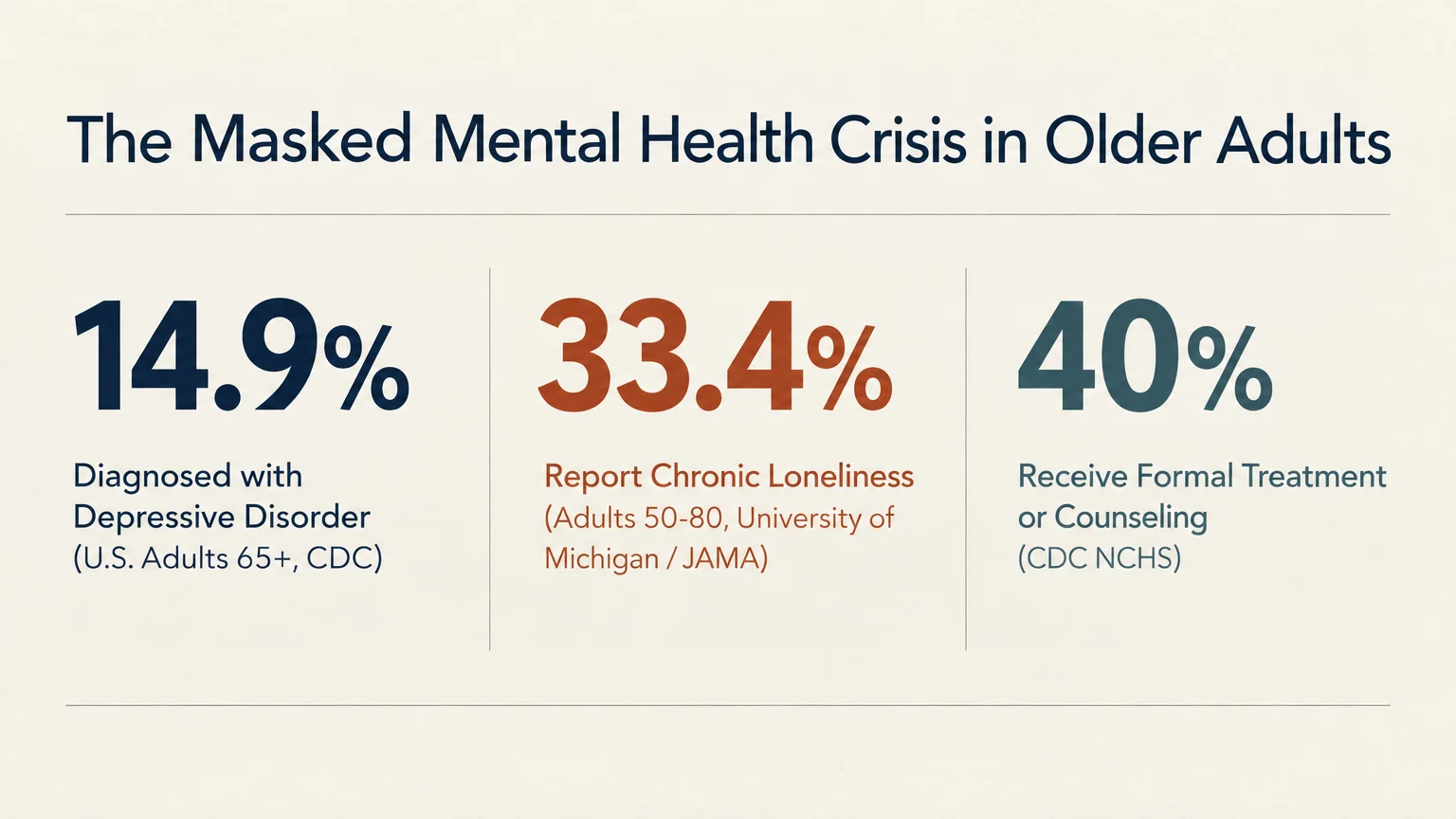
Furthermore, data from the Centers for Disease Control and Prevention (CDC) indicates that 14.9% of U.S. adults aged 65 and older have received a formal depressive disorder diagnosis.
Despite these numbers, emotional distress frequently goes undetected. Older adults often lack the vocabulary for emotional pain or fear losing their functional independence if they admit to feeling overwhelmed.
Physical illness further complicates this picture. Major depression affects 1% to 5% of older adults living independently, but that rate climbs to 11.5% for hospitalized seniors and 13.5% for those requiring home health care.
Compounding the problem, loneliness in older adults has reached urgent levels. A study from the University of Michigan published in JAMA found that 33.4% of adults aged 50 to 80 report feeling lonely some of the time or often.
The same study revealed that 29.2% feel socially isolated. Chronic loneliness accelerates cognitive decline, weakens cardiovascular function, and deepens emotional numbness.
Unfortunately, the CDC National Center for Health Statistics reports that only about 40% of adults with depression receive formal counseling or clinical treatment. The rest suffer without adequate guidance.
“When we are no longer able to change a situation, we are challenged to change ourselves.” — Viktor E. Frankl, Neurologist and Psychiatrist

12 Signs of Hidden Sadness in Older Adults
Depression in seniors rarely mirrors the textbook presentations seen in younger demographics. Look for these twelve subtle indicators when evaluating an aging parent, friend, or client.
1. Unexplained Aches and Somatic Fixation
Older adults experiencing emotional distress frequently express their sorrow through physical channels. You may notice persistent complaints of back pain, joint stiffness, gastrointestinal distress, or headaches that defy medical explanation.
Because physical ailments feel socially acceptable to discuss, seniors lean into medical visits rather than emotional check-ins. If diagnostic tests repeatedly return negative results while physical complaints multiply, consider underlying sadness.
2. Quiet Withdrawal from Cherished Routines
Pay close attention when an older adult stops attending their weekly bridge game, skips religious services, or neglects their garden. This form of social avoidance rarely happens overnight.
Instead, they offer polite excuses, claiming fatigue or bad weather. Over time, these small concessions shrink their social world and intensify feelings of isolation.
3. Drastic Changes in Appetite and Weight
Late-life melancholy frequently alters metabolic rhythms and interest in nourishment. You might open their refrigerator to find expired items, untouched groceries, or an empty pantry.
While some seniors turn to mindless snacking out of boredom, significant and unintentional weight loss remains the more common warning sign. Cooking for one often feels pointless when emotional energy runs low.
4. Altered Sleep Architecture and Restless Nights
Changes in circadian rhythms naturally occur with age, but extreme shifts signal deeper psychological turmoil. Watch for early morning awakenings—waking at 3:00 or 4:00 AM unable to fall back asleep.
Conversely, spending twelve hours in bed while claiming total exhaustion points toward avoidance. Sleep disruptions deplete physical stamina and leave older minds vulnerable to rumination.
5. Cognitive Sluggishness and Pseudo-Dementia
Depression impairs executive function, memory retrieval, and working concentration. Families often mistake this mental slowdown for Alzheimer’s disease or structural dementia.
Clinicians refer to this phenomenon as pseudo-dementia. When asked questions, a depressed older adult often replies with “I don’t know,” whereas someone with true dementia often attempts an answer or covers errors.
Treating the underlying mood disturbance frequently restores clear thinking and memory function.
6. Neglect of Personal Grooming and Home Maintenance
A decline in basic self-care offers a visible clue to an elder’s internal state. Notice whether they wear stained clothing, skip baths, or stop combing their hair.
Look at their living space as well. Unopened mail piling by the door, unwashed dishes in the sink, and uncollected trash reflect an emotional surrender to daily tasks.
7. Persistent Irritability, Grumpiness, or Agitation
Society often stereotypes aging individuals as grumpy, yet chronic irritability frequently masks severe depressive affect. Sadness turned inward creates low frustration tolerance.
Your loved one might snap over trivial disruptions, express intense impatience, or complain constantly about minor inconveniences. Agitation often serves as a defensive armor against emotional vulnerability.
8. Reluctance to Discuss Future Plans
When you ask a sad senior about next month, next season, or an upcoming holiday, watch their reaction. A depressed elder often responds with indifference, cynicism, or fatalistic avoidance.
They may utter quiet phrases like, “I won’t be around for that anyway,” or “Why bother planning ahead?” Such comments indicate an absence of hope and forward momentum.
9. Expressing Excessive Guilt and Burden Concerns
Listen closely to how an older adult frames their place in the family network. Do they apologize incessantly for needing rides, help with groceries, or basic companionship?
Pervasive statements such as “I am just a burden to everyone” reveal distorted depressive thinking. This toxic self-perception often precedes deeper social withdrawal.
10. Sudden Rushing to Give Possessions Away
Downsizing can represent a practical lifestyle choice, but sudden, urgent divestment of meaningful treasures warrants immediate scrutiny. Seniors in acute despair sometimes distribute belongings as an implicit goodbye.
If an older adult begins handing out family heirlooms unexpectedly while expressing despair, treat the behavior as a critical mental health warning.
11. Non-Compliance with Essential Medical Regimens
Skipping blood pressure medication, ignoring insulin schedules, or refusing routine physical therapy often reflects passive self-neglect. When older adults lose the desire to live, managing chronic conditions feels futile.
This passive indifference carries severe physical consequences. Always investigate whether missed medical regimens stem from cognitive confusion, financial limits, or emotional resignation.
12. Flattened Affect and Conversational Deflection
You may encounter an older relative who smiles politely, nods on cue, but shows zero emotional resonance. Their eyes look vacant, and their voice lacks melodic inflection.
Whenever you ask how they feel, they instantly redirect the conversation back to you. This protective deflection keeps their internal grief hidden from view.
Differentiating Normal Aging from Depression in Seniors
Families frequently struggle to distinguish typical physiological aging from treatable mood disorders. Conflating the two delays crucial psychological support.
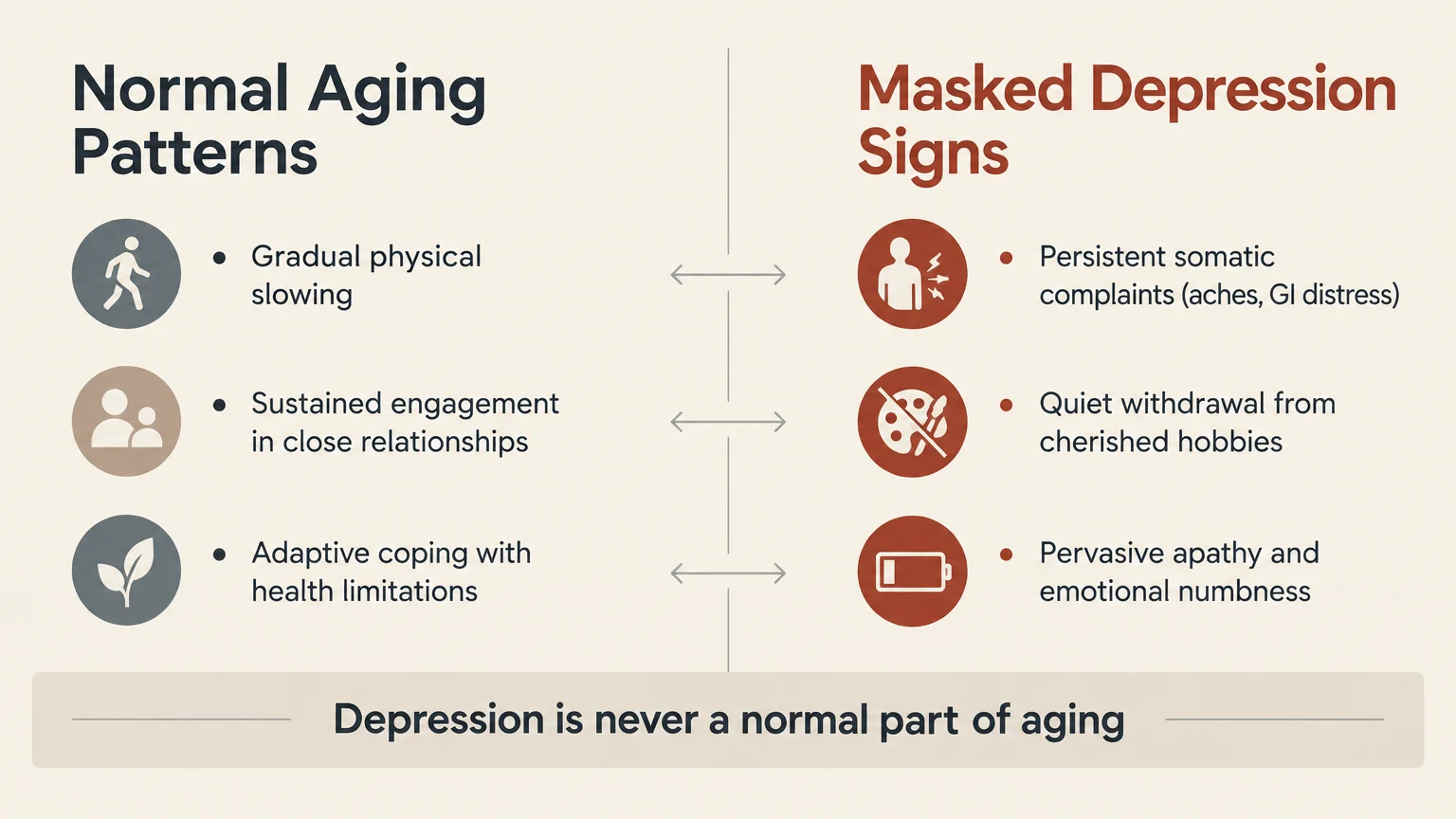
Use the comparison table below to identify whether your loved one’s behaviors reflect expected transitions or hidden psychological distress.
| Behavioral Area | Typical, Healthy Aging | Signs of Hidden Depression |
|---|---|---|
| Energy and Vitality | Gradual reduction in physical stamina; rests after exercise but enjoys hobbies. | Pervasive exhaustion; stays in bed for days without physical cause. |
| Memory and Cognition | Occasional misplaced keys or names; retains contextual awareness. | Significant apathy; gives up easily on cognitive tasks; complains of brain fog. |
| Social Engagement | Prefers smaller social circles; maintains steady ties with close companions. | Total withdrawal; avoids phone calls and cancels established routines. |
| Outlook and Affect | Accepts physical limits with humor, resilience, or philosophical peace. | Expresses nihilism, helplessness, chronic irritability, or severe guilt. |
| Self-Care Habits | Adapts grooming to physical limitations with tools and assistance. | Abandons hygiene routines; neglects basic home cleanliness and medications. |

Common Misconceptions About Senior Mental Health
Harmful myths prevent families from recognizing signs of depression elderly individuals display. Dismantling these false assumptions helps you take proactive action.
Misconception 1: Emotional sadness is an inevitable consequence of aging.
Aging naturally brings loss, grief, and physical transitions, but chronic sadness is not normal. Healthy older adults maintain curiosity, humor, and purpose despite life changes.
Misconception 2: Older minds cannot adapt to psychological therapy.
Neuroplasticity continues throughout the lifespan. Research supported by the American Psychological Association confirms that seniors respond exceptionally well to cognitive behavioral therapy and supportive psychotherapy.
Misconception 3: True depression always presents with crying spells.
Late-life depression rarely manifests as active weeping. As demonstrated by clinical research, somatic distress, apathy, and cognitive slowing represent far more common indicators.
Misconception 4: Talking about mental health will embarrass or offend an older relative.
When you approach an aging adult with warmth and non-judgmental curiosity, they often feel immense relief. Breaking their forced stoicism opens the door to healing.

Actionable Ways to Support an Aging Loved One
Intervening does not require medical training. You can implement practical behavioral strategies immediately to rebuild connection and emotional stability.
- Ask targeted, open-ended questions: Avoid general inquiries like “How are you doing?” Ask instead, “What felt like the hardest part of your week?” or “How did your morning go?”
- Promote meaningful micro-routines: Encourage a daily walk to the mailbox, watering indoor plants, or feeding birds. Predictable micro-tasks anchor the mind.
- Schedule predictable connection points: Inconsistent visits create anxiety. Call every Tuesday at 10:00 AM or visit every Sunday afternoon so they have concrete events to anticipate.
- Facilitate practical physical support: Help them organize medication boxes, clean the kitchen, or schedule transportation. Reducing their daily executive burden restores breathing room.
- Revisit personal life narratives: Engage in structured reminiscence. Ask about their early career, family traditions, or historical events they witnessed to reinforce their identity.
Creating shared purpose remains the most effective antidote to late-life despair. Encourage them to teach a grandchild a skill, help sort photographs, or share recipes.

Finding the Right Professional Help
While compassionate family involvement provides vital comfort, professional clinical intervention remains necessary when symptoms disrupt functioning. Knowing when to escalate support saves lives.
Seek qualified clinical guidance under these specific circumstances:
- Rapid, unmanaged weight loss or self-neglect: When an older adult stops eating or fails to take life-sustaining prescriptions, consult their primary physician immediately.
- Persistent cognitive decline without clear neurological cause: If memory lapses appear suddenly alongside low mood, a geriatric psychiatric evaluation can rule out pseudo-dementia.
- Unrelenting physical pain with clear diagnostic clearance: When medical specialists find no organic cause for debilitating pain, a mental health professional can treat underlying somatic depression.
- Expressions of worthlessness or suicidal ideation: Take any direct or indirect mention of ending life seriously. Never dismiss these comments as dramatic ploys.
Start by consulting a geriatrician or primary care physician to rule out thyroid imbalances, vitamin deficiencies, or adverse drug interactions. The Mayo Clinic notes that medical conditions like hypothyroidism can directly mimic major depressive episodes.
For therapeutic support, seek clinicians specializing in geriatric mental health. Evidence-based treatments like Cognitive Behavioral Therapy (CBT), Problem-Solving Therapy (PST), and Reminiscence Therapy show remarkable success across older cohorts.
If you or an older loved one faces an acute emotional crisis or suicidal thoughts, call or text the 988 Suicide & Crisis Lifeline. The service operates 24/7 across the United States and Canada, providing free and confidential support.
You can also review evidence-based educational materials through the National Institute of Mental Health to understand diagnostic pathways and clinical resources.
Frequently Asked Questions
Why do seniors often hide their depression from family members?
Older adults frequently mask sadness out of fear of losing their independence, becoming a financial or physical burden, or facing institutionalization. Generational stigmas surrounding psychological weakness also drive secrecy.
Can medical issues trigger depression in older adults?
Yes. Chronic cardiovascular disease, stroke, Parkinson’s disease, diabetes, and thyroid dysfunction directly alter brain chemistry. Certain prescription medications, including beta-blockers and corticosteroids, can also precipitate depressive symptoms.
What is the difference between late-life depression and dementia?
Dementia causes progressive intellectual decline where individuals often try to conceal their memory lapses. Depressed seniors with pseudo-dementia notice their cognitive struggles acutely, complain about them, and show marked indifference during testing.
How can I bring up mental health with an aging parent who resists therapy?
Frame the conversation around physical health, energy, and quality of life rather than psychiatric terms. Suggest visiting their physician to discuss low energy, disrupted sleep, or chronic fatigue rather than depression.
Moving Forward with Compassion
Recognizing hidden sadness requires patience, keen observation, and persistent empathy. By looking past physical complaints and quiet withdrawal, you can meet your loved one where they are emotionally.
Take one proactive step today: call your older relative, schedule an unhurried visit, or coordinate a conversation with their primary doctor. Consistent, attentive presence can illuminate the darkest corners of late-life isolation.
This article provides general educational information about psychology and relationships. It is not a substitute for professional therapy or medical advice. Everyone’s situation is unique—if you’re struggling, please reach out to a licensed mental health professional.
Last updated: October 2026. Psychology research evolves continuously—verify current findings with professional sources.







Leave a Reply