
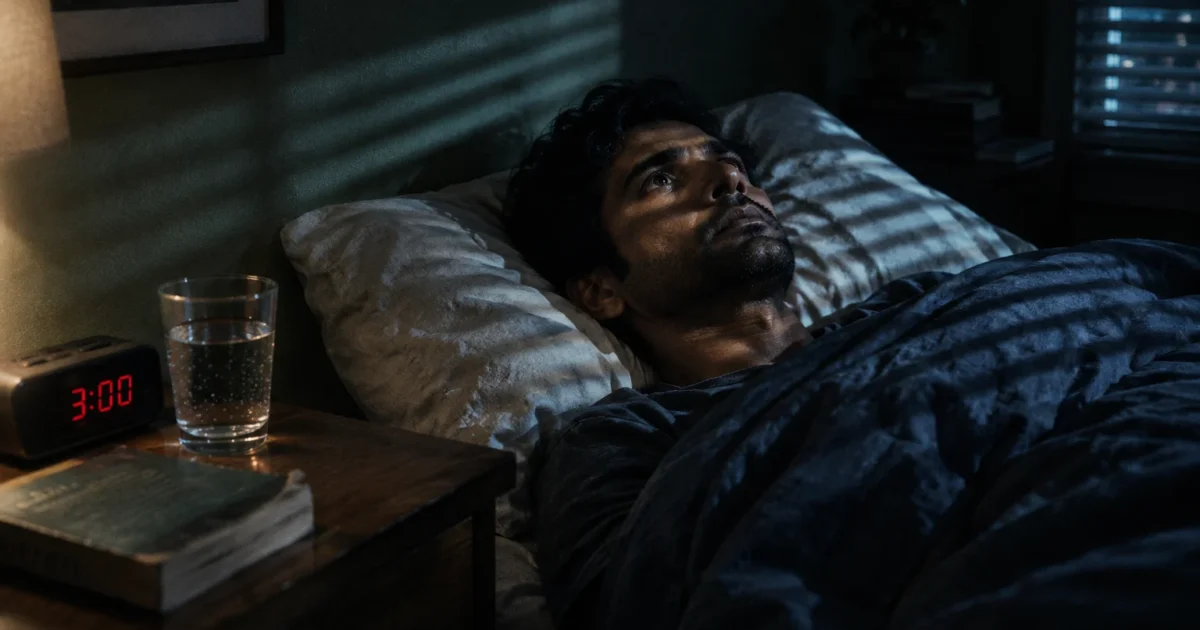
When the bedroom lights turn off, your brain loses the daytime sensory distractions that keep worry quiet. That sudden stillness can unleash a wave of intense physical and mental distress right as your body prepares for rest.
If you find yourself lying awake with a pounding pulse, anxiety at night might be hijacking your nervous system. Recognizing nighttime anxiety symptoms helps you separate perceived danger from actual threats so you can recover your peace.
Understanding these nocturnal patterns gives you practical control over your evening wellness.
Why Your Nervous System Surges in the Dark
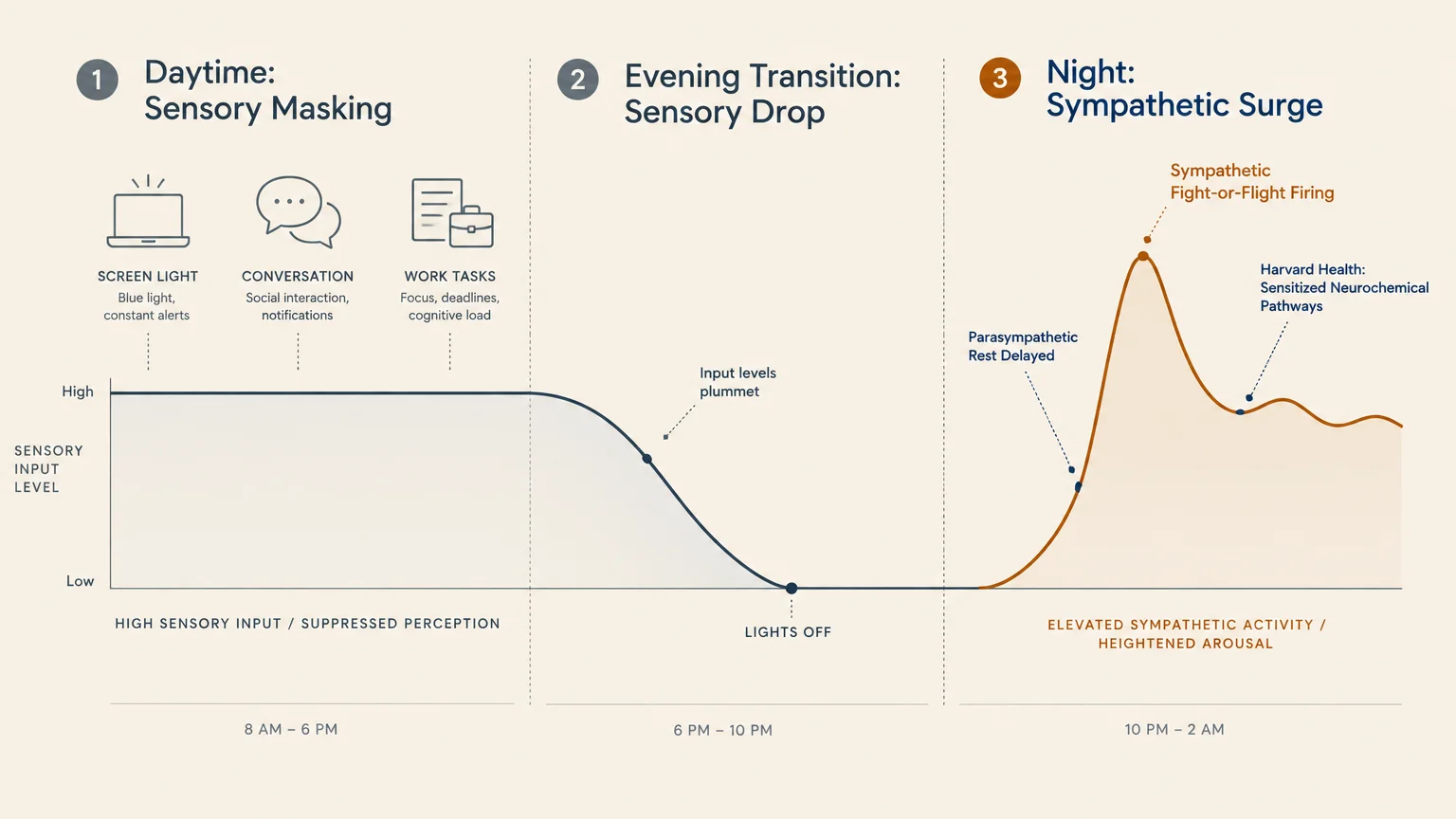
During the day, constant work tasks, conversations, and screens occupy your mental bandwidth. When sensory stimulation drops to zero, your brain finally begins processing lingering emotional tensions from the day.
Your autonomic nervous system can mistake this quiet vulnerability for an evolutionary threat, triggering a protective fight-or-flight posture.
According to clinical research from Harvard Health, chronic psychological stress sensitizes your neurochemical pathways. This disruption leaves your sympathetic nervous system firing when it should be resting.
12 Symptoms of Anxiety That Show Up at Night
Anxiety manifests differently in the dark than it does during daylight hours. Here are twelve physical and cognitive symptoms that commonly surface when you attempt to sleep.
1. Racing Thoughts and Mental Replay
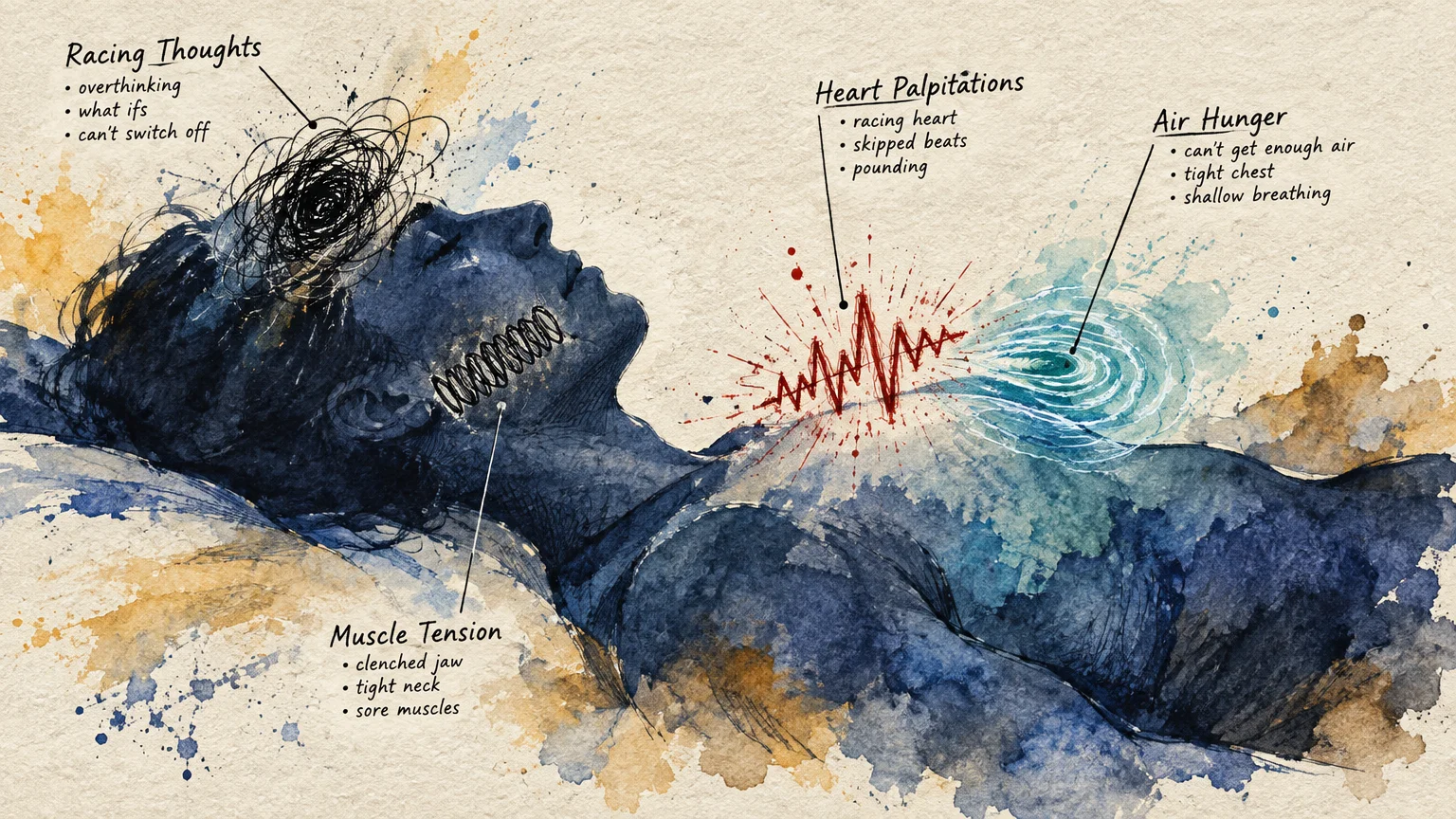
You lay down intending to sleep, but your mind rapidly rehearses past conversations or tomorrow’s obligations. This rapid looping prevents your brainwaves from transitioning into restorative slow-wave rest.
You may feel trapped in an endless cycle of worry about sleeplessness itself, which spikes your adrenaline further.
2. Nocturnal Panic Attacks
You suddenly awaken from a sound sleep in an overwhelming state of physiological terror, often gasping for air. Unlike nightmares, nocturnal panic attacks occur without an accompanying frightening dream or storyline.
The National Institute of Mental Health reports that panic episodes peak within minutes, causing intense chest tightness and dizziness.
3. Heart Palpitations and Fluttering Chest
As your head touches the pillow, your pulse may feel abnormally loud, rapid, or erratic against your mattress. This sensory amplification happens because you are lying flat in an otherwise silent environment.
An elevated resting heart rate signals sympathetic dominance, convincing your mind that physical danger is imminent even while you rest.
4. Unconscious Muscle Tension and Jaw Clenching
You might catch yourself clenching your teeth, locking your jaw, or hiking your shoulders toward your ears in bed. Many people carry this isometric muscle tension unconsciously throughout the night.
This sustained physical strain frequently produces morning tension headaches, facial soreness, and stiff cervical muscles.
5. Severe Hypnic Jerks and Sleep Starts
Just as you drift into light sleep, a violent muscle spasm or falling sensation jolts you wide awake. While occasional hypnic jerks are normal, severe and frequent starts reflect high motor neuron excitability.
An anxious nervous system misinterprets natural muscle relaxation as a dangerous fall, firing motor signals to snap you back to attention.
6. Shortness of Breath and “Air Hunger”
You consciously draw deep breaths but feel unable to satisfy your lungs with sufficient oxygen. This sensation, medically termed air hunger, often stems from subtle daytime hyperventilation.
Paradoxically, striving to inhale deeply alters carbon dioxide balances in your bloodstream, worsening sensations of suffocation.
7. Night Sweats and Temperature Swings
You awaken drenched in perspiration or shivering under heavy blankets despite comfortable bedroom temperatures. The hypothalamus controls both your emotional threat response and your thermal equilibrium.
When anxiety surges during transitional sleep stages, sudden bursts of adrenaline constrict peripheral blood vessels and trigger sudden temperature spikes.
8. Gastrointestinal Fluttering and “Stomach Drops”
A hollow drop or sharp fluttering in your gut can keep you wide awake and uneasy. Your gut and brain communicate continuously through the vagus nerve, responding instantly to emotional alarms.
Elevated evening stress hormones accelerate gastrointestinal motility or provoke acid reflux, producing physical discomfort that amplifies mental worry.
9. Sensory Hypervigilance to Ambient Sounds
A settling floorboard or the hum of an appliance suddenly feels menacing and intrusive. In this state of hypervigilance, your auditory processing centers stay hyper-focused on detecting environmental threats.
This constant monitoring prevents your brainstem from disengaging, locking you into a defensive sentinel state throughout the evening.
10. 3 A.M. Catastrophizing and Existential Dread
Everyday challenges that feel solvable during daylight hours take on apocalyptic proportions in the early morning darkness. At 3 A.M., your prefrontal cortex operates at significantly diminished metabolic capacity.
Without active executive functioning to counter irrational fears, your emotional centers construct catastrophic scenarios about health, finances, and relationships.
11. Motor Restlessness and the Urge to Fidget
You toss, turn, and continuously rearrange your pillows because remaining still feels deeply unbearable. Unlike restless legs syndrome, this somatic agitation represents a generalized drive to burn off trapped adrenaline.
Your skeletal muscles remain primed for physical action, making quiet stillness feel like an impossible physical task.
12. Early Morning Awakening with Rapid Pulse
You awaken hours before your scheduled alarm with an immediate surge of adrenaline and morning dread. This abrupt awakening often stems from an exaggerated cortisol awakening response.
Returning to sleep becomes difficult because your nervous system treats early dawn as an urgent signal to prepare for crisis.
Nighttime Anxiety vs. Physical Sleep Disorders
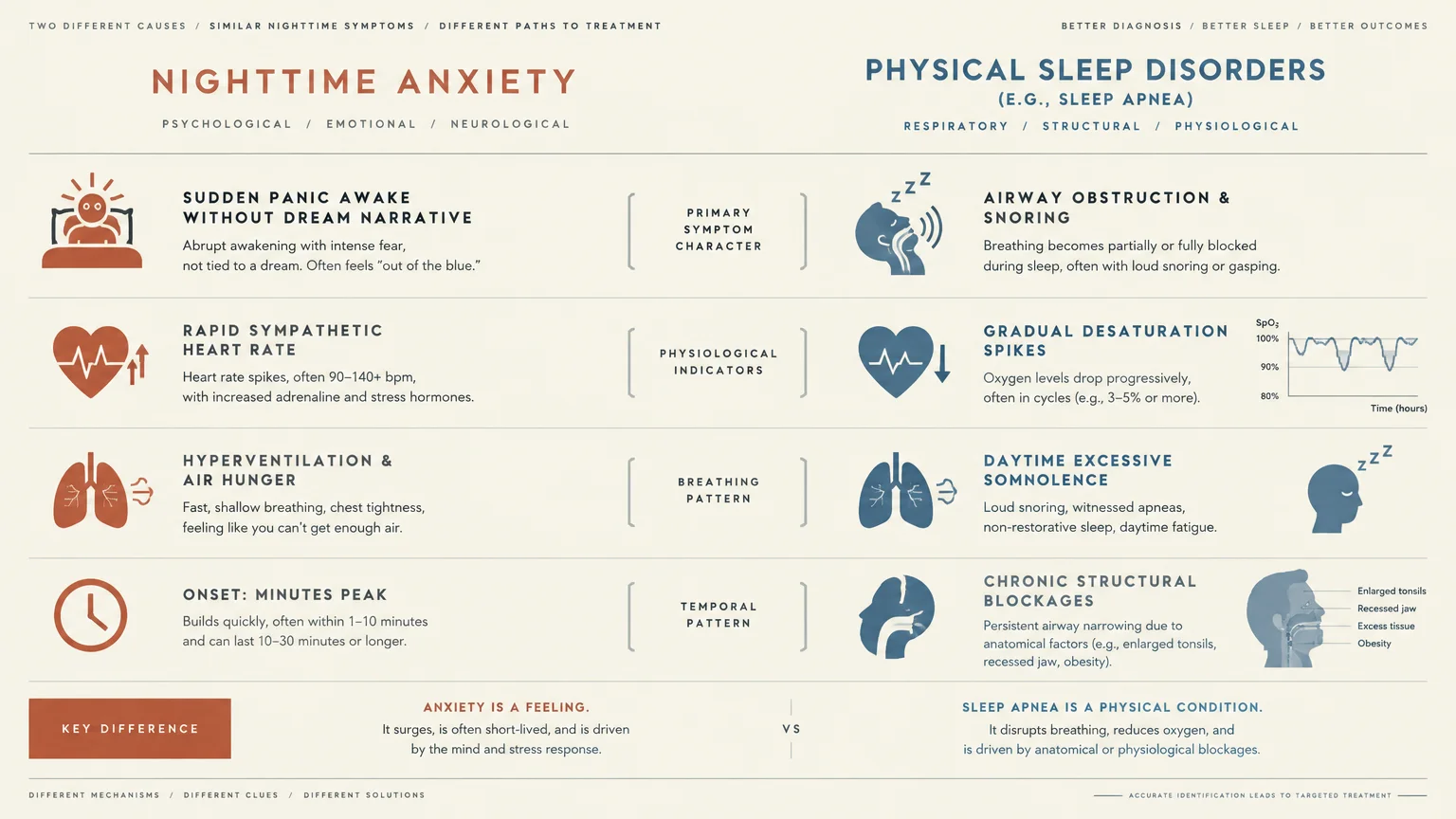
Distinguishing anxiety from primary sleep disorders helps you choose the right intervention strategy. Review the core distinctions below to understand what your nighttime symptoms indicate.
| Condition | Primary Root Cause | Key Physical Sensations | Recommended Relief Strategy |
|---|---|---|---|
| Nighttime Anxiety | Autonomic hyperarousal and elevated stress hormones | Racing pulse, jaw clenching, dread, muscle tension | Somatic grounding, nervous system regulation, CBT-I |
| Primary Insomnia | Conditioned sleep-state misalignment and habituation | Frustration, clock-watching, light non-restorative sleep | Sleep restriction therapy, stimulus control routines |
| Sleep Apnea | Mechanical airway obstruction or central neurological pausing | Choking, gasping, loud snoring, extreme daytime sleepiness | Polysomnography evaluation, CPAP therapy, oral appliances |
If physical symptoms persist regardless of your stress levels, speak with a physician to evaluate potential physical causes.

Evidence-Based Tools to Calm Evening Anxiety
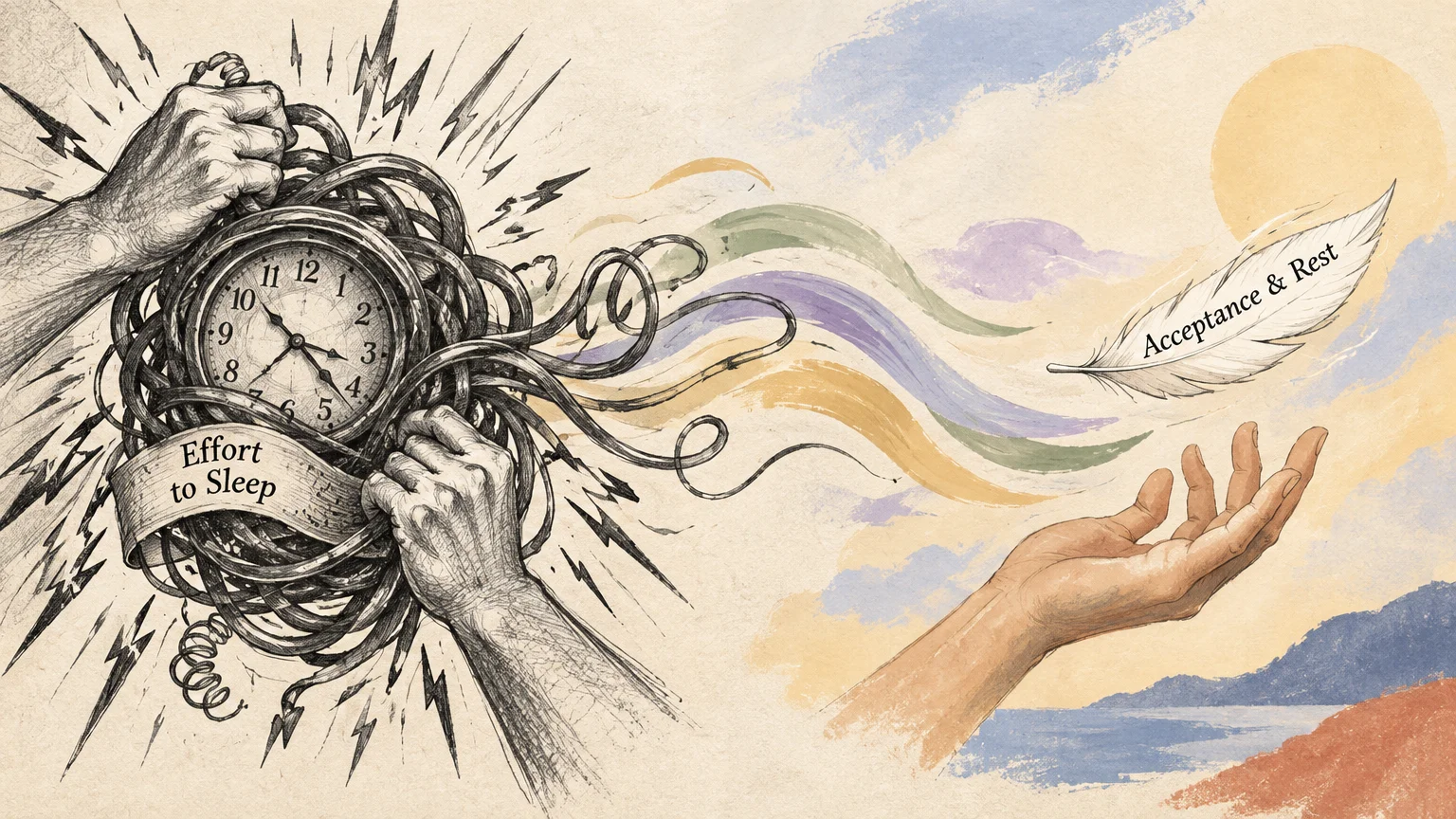
Calming an overactive nervous system requires physical actions that signal safety directly to your brainstem. Apply these evidence-based techniques when can’t sleep anxiety begins to surface.
- Execute physiological sighs: Take two deep inhales through your nose, then slowly empty your lungs completely through an extended mouth exhale.
- Practice stimulus control: Leave your bed if you remain awake past twenty minutes to prevent your brain from linking your mattress to stress.
- Externalize your thoughts: Write your unresolved obligations into a notebook before bed to signal your brain that the day is finished.
- Engage the mammalian dive reflex: Place an ice pack against your chest or forehead for five minutes to trigger immediate vagal nerve activation.
According to the American Psychological Association, consistent behavioral routines downregulate physiological arousal far more reliably than willpower alone.
“Between stimulus and response there is a space. In that space is our power to choose our response.” — Viktor Frankl, Neurologist and Psychiatrist
Learning to pause when nocturnal symptoms appear allows you to observe physical sensations without spiraling into panic.
Myths Worth Debunking
Misinformation regarding sleep often intensifies evening distress. Understanding the clinical realities behind these myths will help remove unnecessary self-blame.
Myth 1: Can’t sleep anxiety means you have poor sleep hygiene
Immaculate sleep hygiene cannot silence an active threat response. While a cool, dark room creates favorable conditions, you must soothe your underlying nervous system arousal.
Myth 2: Nocturnal panic attacks indicate heart disease
Palpitations in bed feel alarming, but panic-driven heart surges are physically benign reactions to adrenaline. A routine checkup with a physician can rule out cardiac concerns and bring peace of mind.
Myth 3: You should stay in bed until you fall asleep
Lying in bed while tense trains your brain to associate your mattress with sleepless frustration. Getting up resets this conditioned response and prevents chronic sleep-related anxiety.

Signs It’s Time to Talk to a Therapist
Occasional nighttime worry is a standard human experience, but persistent symptoms warrant professional guidance. Consider scheduling an evaluation with a mental health provider if you notice:
- Nocturnal panic attacks that recur several times during a single month.
- Pervasive dread throughout your afternoon regarding your ability to sleep that evening.
- Relying on alcohol, sedatives, or over-the-counter sleep aids to initiate rest.
- Daytime cognitive fog, emotional irritability, or executive dysfunction that harms your daily life.
Structured therapies like Cognitive Behavioral Therapy for Insomnia (CBT-I) provide lasting relief for sleep-related distress. Clinical overviews from the Mayo Clinic identify CBT-I as the premier first-line treatment for chronic insomnia.
You can also explore therapeutic resources through the Cleveland Clinic to address underlying generalized anxiety and nocturnal panic.
Frequently Asked Questions
Here are answers to the most common questions regarding anxiety and sleep disruption.
Why does anxiety get worse at night?
At night, environmental silence removes daytime sensory distractions, allowing buried worries to demand your attention. Natural circadian drops in body temperature can also trigger physical vulnerability.
Can anxiety wake you up gasping for air?
Yes, nocturnal panic attacks and hyperventilation can make you wake up gasping for air. However, you should consult a doctor to rule out obstructive sleep apnea.
How do I stop can’t sleep anxiety quickly?
Engage in physiological sigh breathing, step out of bed for fifteen minutes, and apply a cold compress to your forehead. These actions stimulate vagal tone and interrupt adrenaline release.
Are hypnic jerks dangerous?
Hypnic jerks are harmless involuntary muscle twitches triggered as your motor system powers down. Reducing evening caffeine intake and managing stress levels lowers their frequency significantly.
Next Steps for Better Rest
Rebuilding peaceful nights requires patience, self-compassion, and gentle behavioral adjustments. Treating your symptoms with curiosity rather than fear helps your nervous system recognize that your bedroom is truly safe.
This article provides general educational information about psychology and relationships. It is not a substitute for professional therapy or medical advice. Everyone’s situation is unique—if you’re struggling, please reach out to a licensed mental health professional.
Last updated: October 2026. Psychology research evolves continuously—verify current findings with professional sources.





Leave a Reply