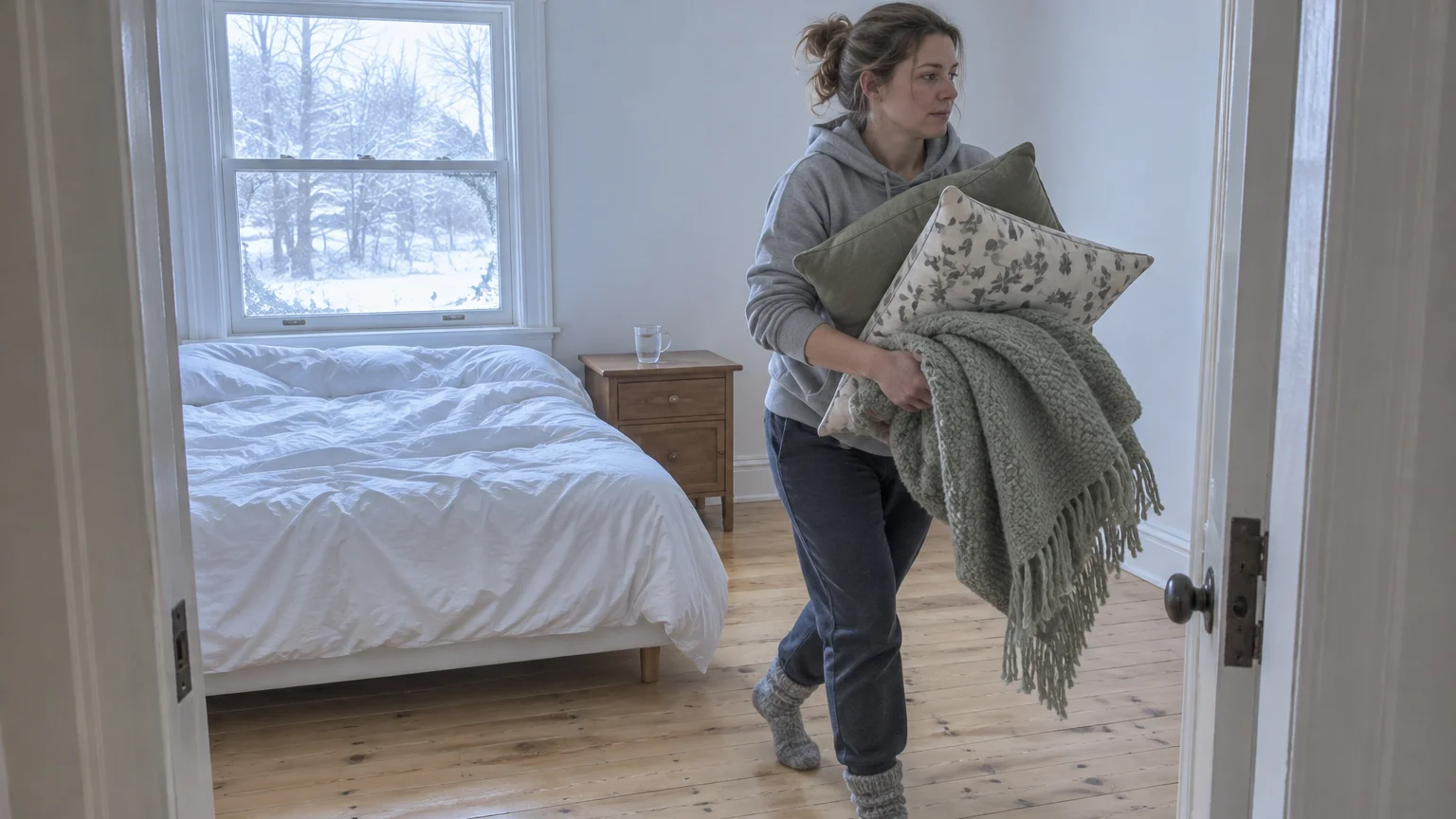
Walking into a crowded bedroom after an exhausting day rarely feels restorative. Every stray object, glowing screen, and unfinished task quietly signals to your brain that the workday is not over.
Clearing key things to remove from bedroom surfaces does more than improve aesthetics. It lowers cognitive stimulation and trains your nervous system to wind down faster at night.
You do not need costly furniture or minimalist perfection to feel calmer at night. Removing eight specific triggers helps you build a better sleep space starting tonight.

01 Visual Clutter and Unfinished Projects
Stacks of folded laundry, unopened mail, and half-finished crafts do more than take up floor space. Neuroimaging research from the Princeton Neuroscience Institute (2011) shows that multiple objects in your visual field compete for neural representation.
When clutter fills your line of sight, your attention system works harder to filter out distractions. A 2015 St. Lawrence University study of 281 adults found that heavily cluttered bedrooms led to longer sleep onset and more nighttime disturbances.
In a 2010 UCLA study of 32 families, women who viewed their homes as cluttered showed flatter daily cortisol drops and higher fatigue. While that study showed correlation rather than causation, visual chaos clearly strains mental bandwidth.
To declutter bedroom surfaces tonight, grab a laundry basket and move stray items to another room. Smart bedroom organization keeps hobbies, paperwork, and storage bins behind closed doors.
02 Smartphones, Televisions, and Bedtime Screens
Keeping your phone within arm’s reach invites late-night scrolling when your mind needs quiet. According to a 2026 Pew Research Center survey, 41% of U.S. adults say their smartphone hurts how much sleep they get—rising to 62% among ages 18 to 29.
Surveys from the American Academy of Sleep Medicine (AASM) show that 87% of U.S. adults keep smartphones in the bedroom overnight, and 91% have lost sleep binge-watching TV. Half of adults surveyed use a screen in bed every single day.
Research published in Frontiers in Psychiatry (2025) linked each extra hour of screen time in bed to a 59% higher chance of insomnia symptoms. A 2025 JAMA Network Open study similarly found a 33% higher rate of poor sleep quality among daily pre-bed screen users.
The AASM recommends powering down electronics 30 minutes to 1 hour before bed and charging your phone in another room. The CDC and NIOSH advise keeping televisions out of the bedroom altogether and starting a screen-free wind-down 1.5 hours early.
03 Work Laptops, Desks, and Wakeful Cues
Checking spreadsheets under the covers blurs the psychological boundary between effort and rest. Over time, your brain begins associating your mattress with deadlines, problem-solving, and tension.
Stimulus control—a core practice in Cognitive Behavioral Therapy for Insomnia backed by the AASM and the National Institutes of Health—addresses this conditioning directly. Chronic insomnia affects roughly 6% to 10% of people, and clinical guidelines direct sleepers to use the bed exclusively for sleep and sex.
CDC and NIOSH guidance (2020) similarly advises removing work, reading, and television from the bedroom. If you lie awake for roughly 15 to 20 minutes, leave the bed and do something calm in dim light until drowsiness returns.
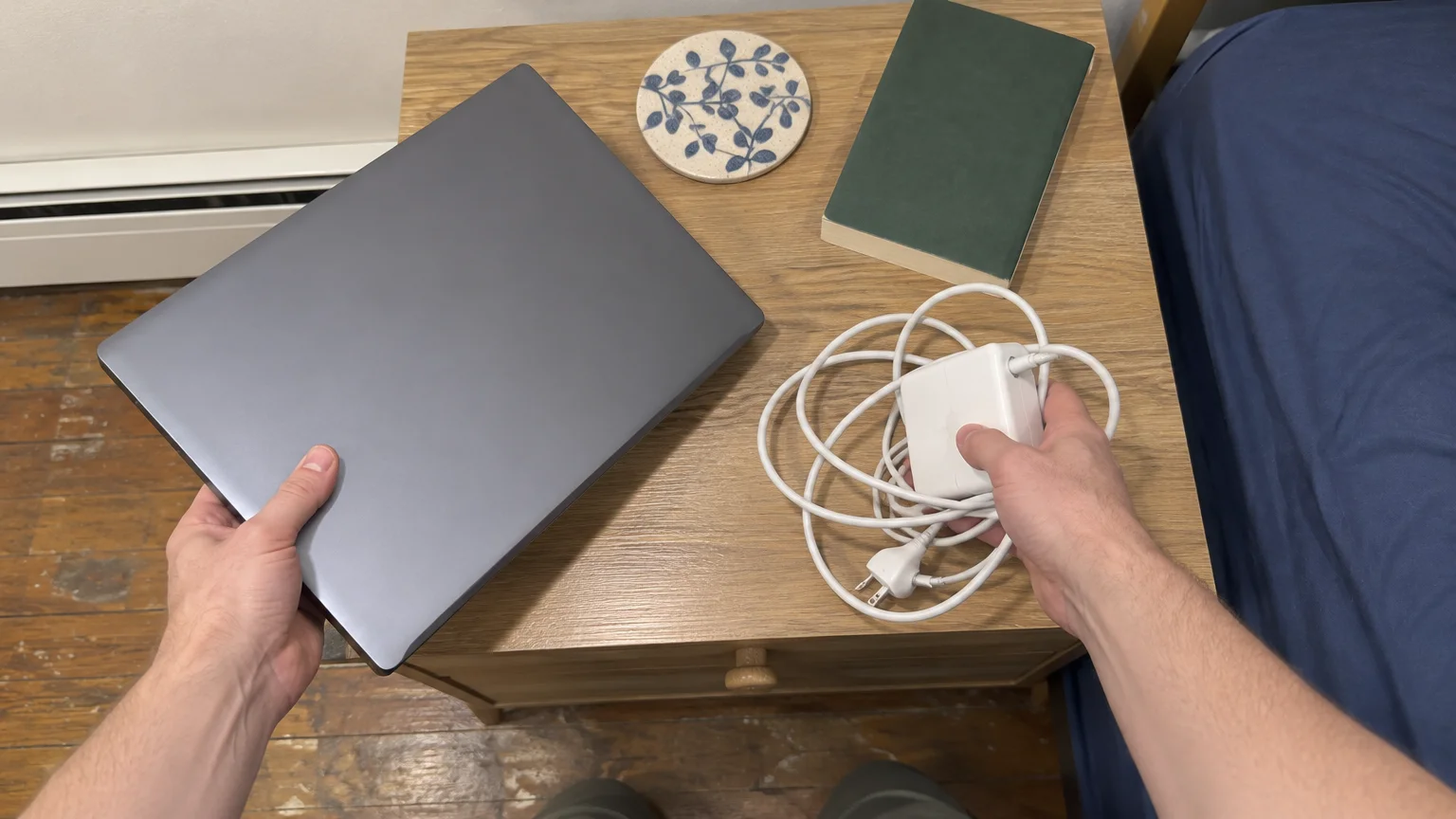
Move laptops, chargers, and desk setups into a living area whenever possible. If you live in a studio apartment, place a folding screen between your workspace and mattress to separate visual cues.
04 Visible, Glowing Alarm Clocks
Waking up in the middle of the night and staring at bright red or blue numbers quickly triggers frustration. You start calculating how many hours remain before your alarm rings, which spikes alertness and makes drifting back off much harder.
CDC and NIOSH sleep guidance recommends blocking or removing clocks with white- or blue-lit dials. In CBT-I stimulus control protocols, clinicians advise against clock-watching altogether so you can judge that 15-to-20-minute wakeful window by feel instead.
Swap your smartphone alarm for a simple battery-powered clock without a glowing display. Turn the face toward the wall or tuck it inside a nightstand drawer so you still hear the chime without seeing the time.
05 Bright, White, or Blue Light Sources
Even small standby LEDs on power strips or streetlamps leaking through thin blinds can interfere with rest. Research summarized by the National Sleep Foundation (2020) shows that evening artificial light—especially short-wavelength blue light—slows melatonin production and delays circadian rhythms.
CDC and NIOSH recommendations (2020) advise making your sleep environment very dark. Standard blinds often let light bleed around the edges, so opaque room-darkening shades and doorway draft stoppers work far better.
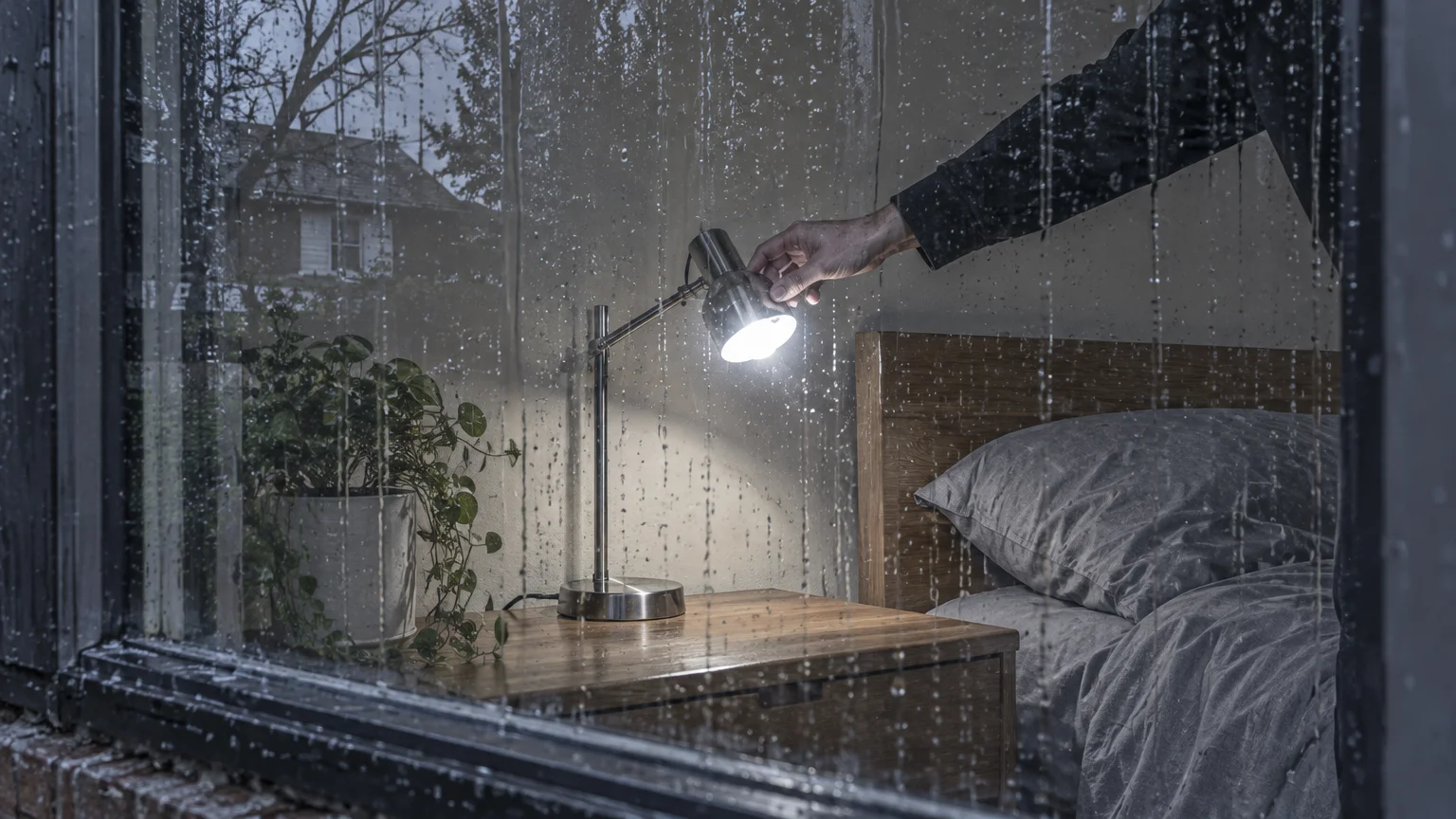
Unplug blinking electronics or cover indicator lights with electrical tape. If you need lighting for safe nighttime bathroom trips, use a dim red nightlight instead of white or blue bulbs.
06 Scented Candles, Incense, and Air Fresheners
Lighting a lavender candle might feel like one of the classic calm bedroom tips, yet indoor fragrances can silently irritate your body overnight. The American Lung Association (2023, 2026) advises against burning candles or incense indoors and recommends going fragrance-free.
Scented sprays and air fresheners emit volatile organic compounds at room temperature and can react with indoor ozone to create secondary pollutants. These airborne chemicals may trigger headaches, dizziness, or respiratory flare-ups while you breathe them in all night long.
A 2024 American Academy of Pediatrics fact sheet also warns against chemical air fresheners, products listing generic fragrance—which can contain phthalates—and mothballs in bedding or closets. Crack a window for fresh air instead of masking stale odors.
07 Old Pillows and Dust-Trapping Fabrics
Flat pillows, worn mattresses, and mounds of decorative throw cushions quietly gather allergens right beside your face. According to the Asthma and Allergy Foundation of America (AAFA), up to 20 million Americans have house dust mite sensitivity, with symptoms often worsening overnight.
The AAFA recommends replacing pillows every 1 to 2 years and swapping out mattresses every 7 to 10 years. Removing extra throw pillows, plush keepsakes, and heavy drapes eliminates easy hiding spots for dust.
Protect your remaining bedding with zippered allergen-proof encasements rated at 6 microns or smaller. Wash sheets, pillowcases, and blankets weekly in hot water at least 130°F, and keep indoor humidity below 50%.

08 Pets Sleeping in Your Bed
Sharing a duvet with a warm dog or cat brings comfort, yet restless paws and shifting weight fragment deep sleep. A 2017 Mayo Clinic study tracking 40 dog owners over seven nights revealed an important distinction.
Having a dog in the bedroom did not meaningfully hurt rest, but letting the dog on or in the bed lowered sleep efficiency and caused more awakenings. A 2024 U.S. study in Scientific Reports of roughly 1,600 adults tied pet co-sleeping to higher insomnia severity.
That pattern appeared stronger for dogs than cats and increased when multiple pets shared the mattress. CDC, NIOSH, and American Lung Association guidelines recommend keeping pets off beds—and out of bedrooms entirely if you have allergies.
Quick Reset: What to Remove and Better Targets
Small environmental adjustments reinforce the calm you create by clearing out distractions. Use this quick reference to align your room with clinical sleep thresholds.
| What to Remove | What to Replace It With | Evidence-Based Target |
|---|---|---|
| Smartphones, TVs, and tablets | Paper book in another room before bed | Screen-free 30 minutes to 1.5 hours before sleep |
| Glowing white or blue clocks | Non-lit alarm clock turned away | No clock-watching during 15–20 minute wakeful windows |
| Scented candles and air fresheners | Brief ventilation from an open window | Fragrance-free air without VOCs or phthalates |
| Old pillows and extra throw cushions | Supportive pillows with zippered encasements | Replace pillows every 1–2 years; wash weekly at 130°F+ |
| Excess heat and loud background noise | Cool, quiet air and blackout shades | 60–67°F (NSF) and indoor noise at or below 30 dBA (WHO) |
What Can Go Wrong When You Declutter
Tidying your room can backfire if perfectionism replaces relaxation. Scrubbing closets until late at night or stressing over every stray sock raises arousal right when your body needs stillness.
A spotless bedroom also cannot fix an uncomfortable climate or noisy hallway. The National Sleep Foundation identifies 60 to 67°F as optimal for sleep, while the World Health Organization advises keeping indoor nighttime noise at or below 30 dBA.
Finally, clearing physical items helps little if you bring mental clutter into bed. Pairing a calmer room with consistent bedtimes and a brief wind-down routine gives your nervous system a clearer signal to rest.
When to Seek Professional Support
Environmental tweaks solve many mild sleep struggles, yet deeper patterns sometimes require clinical care. Consider reaching out to a licensed psychologist, sleep specialist, or physician—and explore resources from the American Psychological Association or National Institute of Mental Health—in these situations:
- You struggle to fall asleep or stay asleep most nights for weeks on end, which may indicate chronic insomnia that responds well to structured CBT-I.
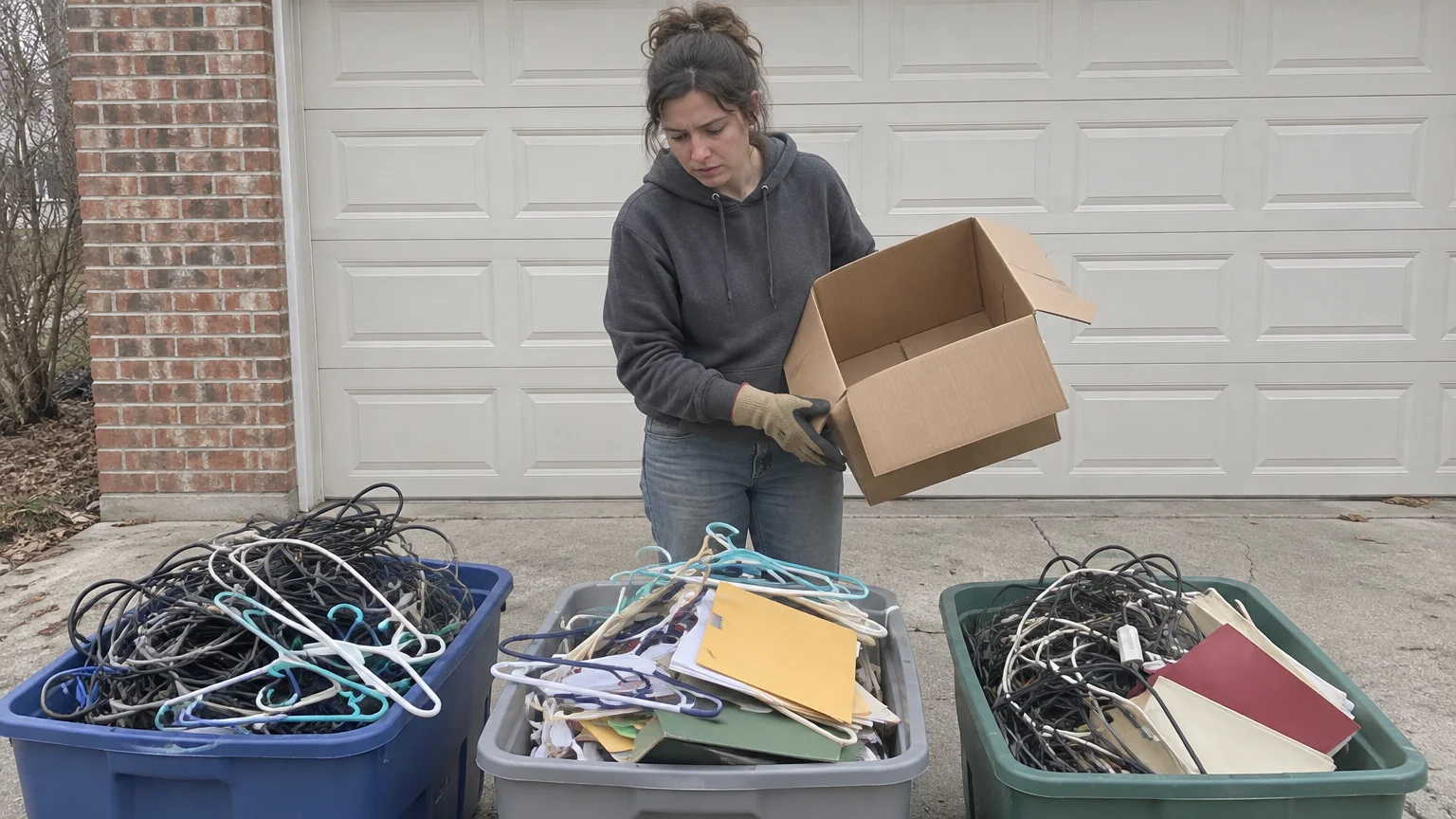
- Discarding broken items, mail, or excess belongings triggers intense panic, grief, or paralysis that makes clearing your room feel impossible on your own.
- Darkness or quiet triggers hypervigilance, racing thoughts, or trauma-related memories that keep your body on high alert through the night.
- Persistent daytime exhaustion, loud snoring, or mood shifts interfere with your work, driving safety, or close relationships despite a calm bedroom setup.
Start With One Small Removal Tonight
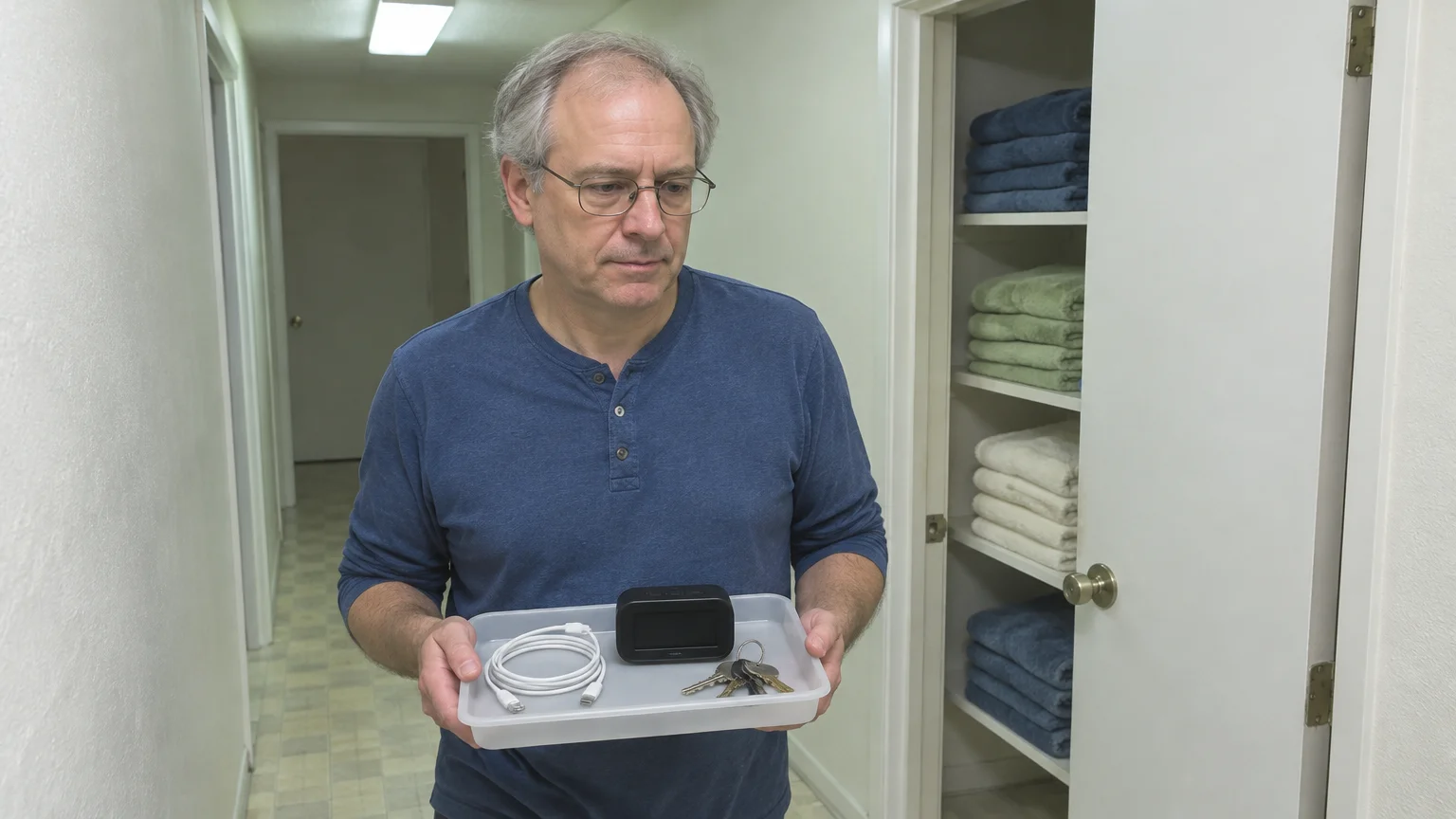
You do not have to overhaul every drawer before bedtime to feel a difference. Pick one item from the list—such as moving your phone charger outside the door or clearing your nightstand—and notice how your mind responds over the next week.
This is educational content based on psychological research and general principles. Individual experiences vary significantly. For personalized guidance, consult a licensed therapist, psychologist, or counselor.
Last updated: November 2026. Psychology research evolves continuously—verify current findings with professional sources.