
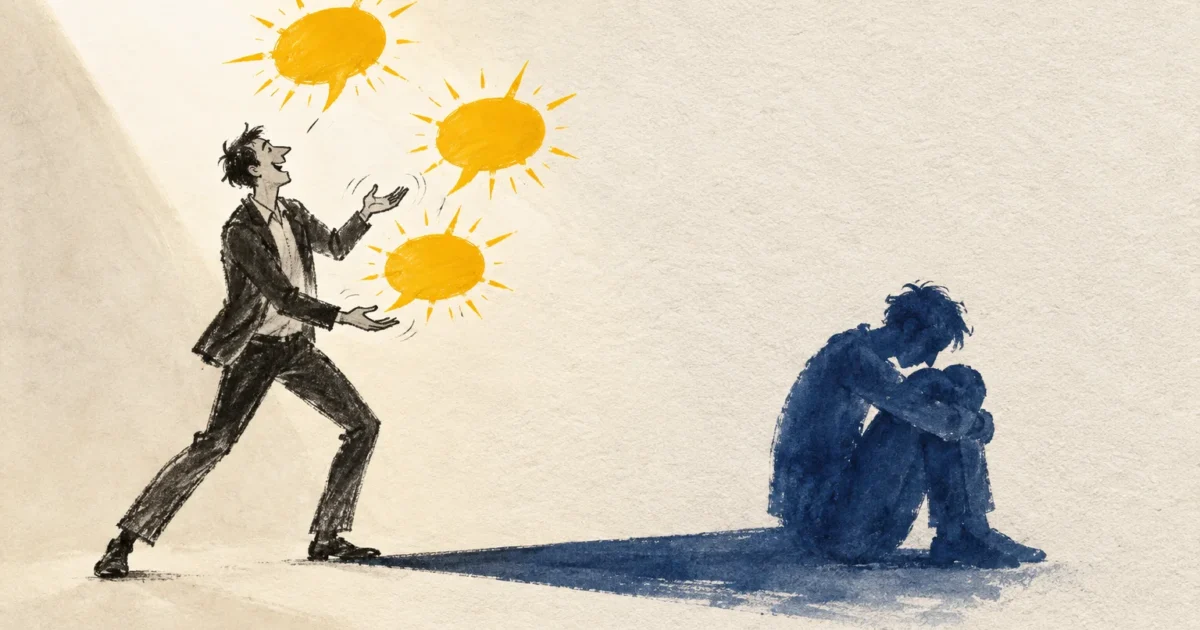
When a heavy conversation begins, a fast quip often feels far safer than raw honesty. Cracking jokes temporarily shields you from discomfort, but it can also quietly sabotage your closest relationships.
Using humor to deflect turns genuine grief, fear, or frustration into quick punchlines before anyone notices your vulnerability. This defense mechanism keeps people entertained while keeping them at a calculated distance.
Learning to spot this habit allows you to replace reflexive comedic avoidance with authentic connection. Examining your instincts will reveal whether your wit functions as genuine joy or protective armor.
The 9 Signs You Are Deflecting With Humor
1. You Crack Jokes During Serious Conversations
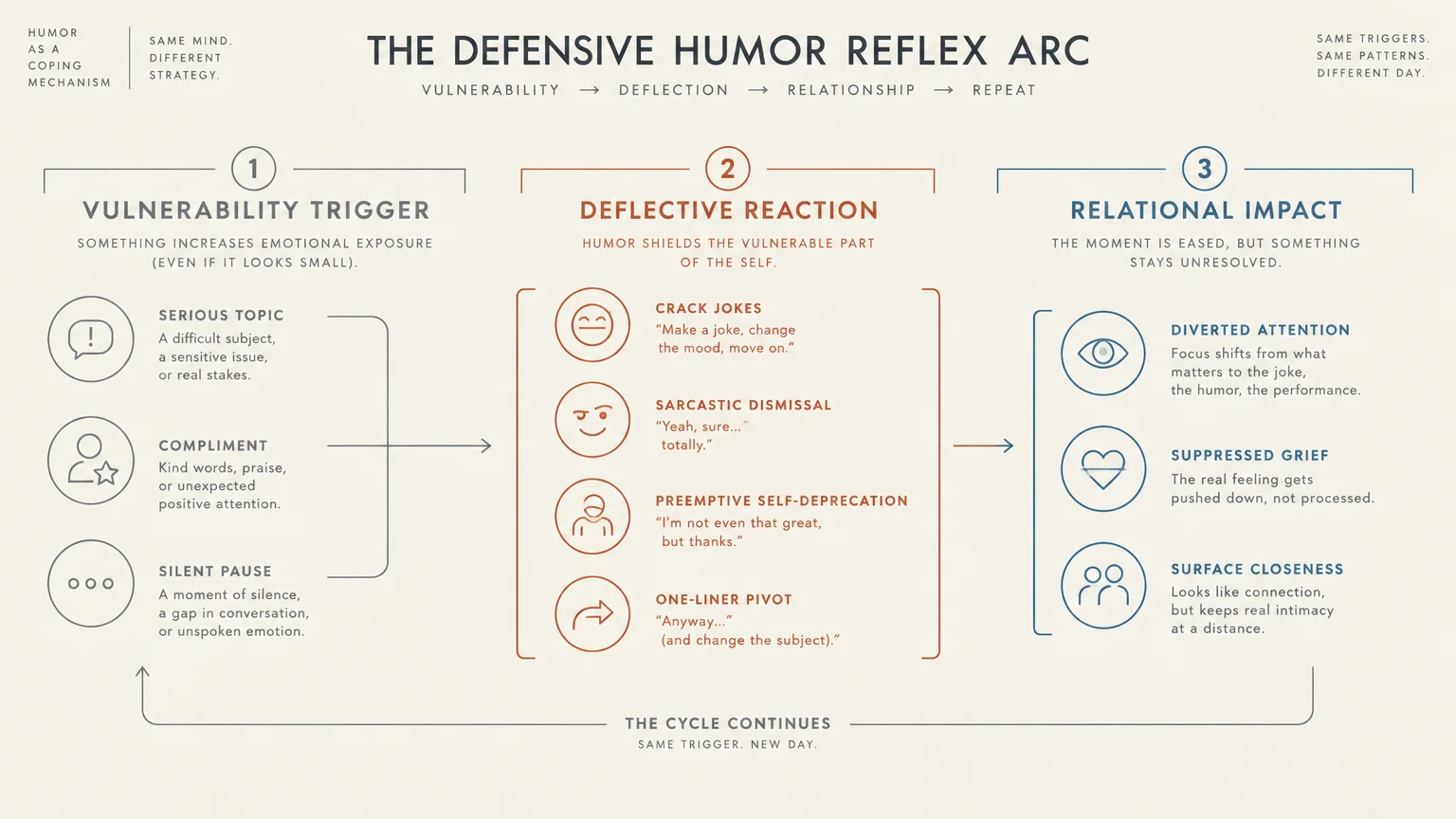
When a partner or friend shares deep hurt, you immediately offer a witty retort. This automatic reflex diverts attention away from uncomfortable emotional reality.
Laughter diffuses tension instantly, but it also signals that serious feelings are unwelcome. Over time, your companions stop bringing important issues to your attention.
You might believe you are cheering them up. In reality, you are managing your personal anxiety by shutting down the dialogue.
2. Compliments Trigger Sarcastic Remarks
Hearing heartfelt praise makes your skin crawl. You quickly dismiss genuine admiration by mocking yourself or playfully roasting the person who paid the compliment.
Accepting warmth requires openness, which feels unsafe if you view intimacy as an emotional threat. Tossing out sarcasm keeps warmth from penetrating your defenses.
This response tells the speaker that their sincerity is foolish. Consequently, people pull back their affection to avoid feeling rejected.
3. Self-Deprecation Serves as Your Preemptive Strike
You highlight your own flaws through sharp jokes before anyone else can comment. If you mock your insecurities first, nobody else can use them against you.
Psychologists categorize this behavior as self-defeating humor. While it wins quick laughs, it gradually erodes your self-worth and invites others to disrespect your dignity.
You preempt criticism by hurting yourself publicly. Over time, this comic shield solidifies internal feelings of inadequacy.
4. Emotional Tension Makes You Panic and Perform
Heavy silence in a room feels intolerable. Whenever solemn moments arise, you scramble to play the entertainer and force a collective chuckle.
You shoulder an imagined burden to regulate everyone else’s mood. Unfortunately, interrupting quiet reflection deprives people of space to sit with their truth.
Your impulse to perform stems from fear, not spontaneity. True comfort in relationships means tolerating shared stillness without needing applause.
5. You Pivot Personal Topics with Sudden One-Liners
Whenever someone asks how you are coping after a breakup or job loss, you deliver a punchline and quickly pivot.
The joke creates an immediate exit ramp from genuine dialogue. It leaves the other person chuckling while your real grief remains unexpressed and unresolved.
You starve yourself of genuine comfort by packaging your struggles as light entertainment. Solitude deepens because nobody sees your true hurt.
6. Loved Ones Say They Struggle to Know the Real You
Friends describe you as hilarious, yet they admit they cannot read you. You present a cheerful persona that masks your authentic thoughts and fears.
When you constantly deflect with jokes, your bonds remain surface-level. Real emotional closeness requires sharing sorrow alongside joy.
You might wonder why you feel misunderstood despite having an active social calendar. An audience enjoys a performance, but friends crave your authentic self.
7. Sarcasm Replaces Constructive Conflict
During disagreements, you deploy biting satire rather than stating your specific grievances. You weaponize humor to win arguments without exposing your true vulnerabilities.
Mockery breeds resentment in romantic partnerships. Direct communication resolves conflict, whereas defensive irony only deepens relational fractures.
Research from The Gottman Institute shows that contempt and mockery erode relational safety faster than direct disagreement.
8. You Experience Severe Post-Interaction Exhaustion
You return home from casual social gatherings feeling depleted and hollow. Maintaining a comedic routine requires continuous vigilance and rapid emotional suppression.
This social fatigue occurs because hiding your genuine state consumes immense cognitive energy. You carried an exhausting performance instead of resting in natural connection.
When you constantly calculate the next clever line, you never relax. Solitude becomes a relief simply because you can finally drop the mask.
9. You Dismiss Hurtful Comments with “Just Kidding”
You deliver sharp criticisms disguised as teasing, followed swiftly by claiming it was only a joke. This habit allows you to express hostility without taking responsibility.
When the other person reacts with hurt, you accuse them of being overly sensitive. This defensive pattern invalidates their boundaries while keeping your ego safe.
Disguising judgment as comedy damages trust between partners. Real repair demands owning your intent rather than retreating behind a playful excuse.

Why Humor Becomes an Emotional Shield
Deflecting with humor is a widespread psychological defense mechanism. According to the American Psychological Association, defense mechanisms operate to protect the mind from emotional distress and external conflict.
Psychologist George Vaillant noted in long-term developmental studies that mature adaptations channel distress constructively. Humor serves as a healthy coping tool when people use it to tolerate hardship rather than evade reality.
Many people develop this instinct during early childhood. If showing sadness, fear, or anger brought rejection or hostility, comedy became a reliable survival tactic.
By keeping situations light, you signaled to caregivers that you were easy to manage. That childhood armor, however, turns into an adult barrier against intimacy.
Recognizing the root of this defensive reflex helps you practice self-compassion. You developed your wit to protect yourself, but you no longer face those same threats.
Healthy Humor vs. Deflective Humor
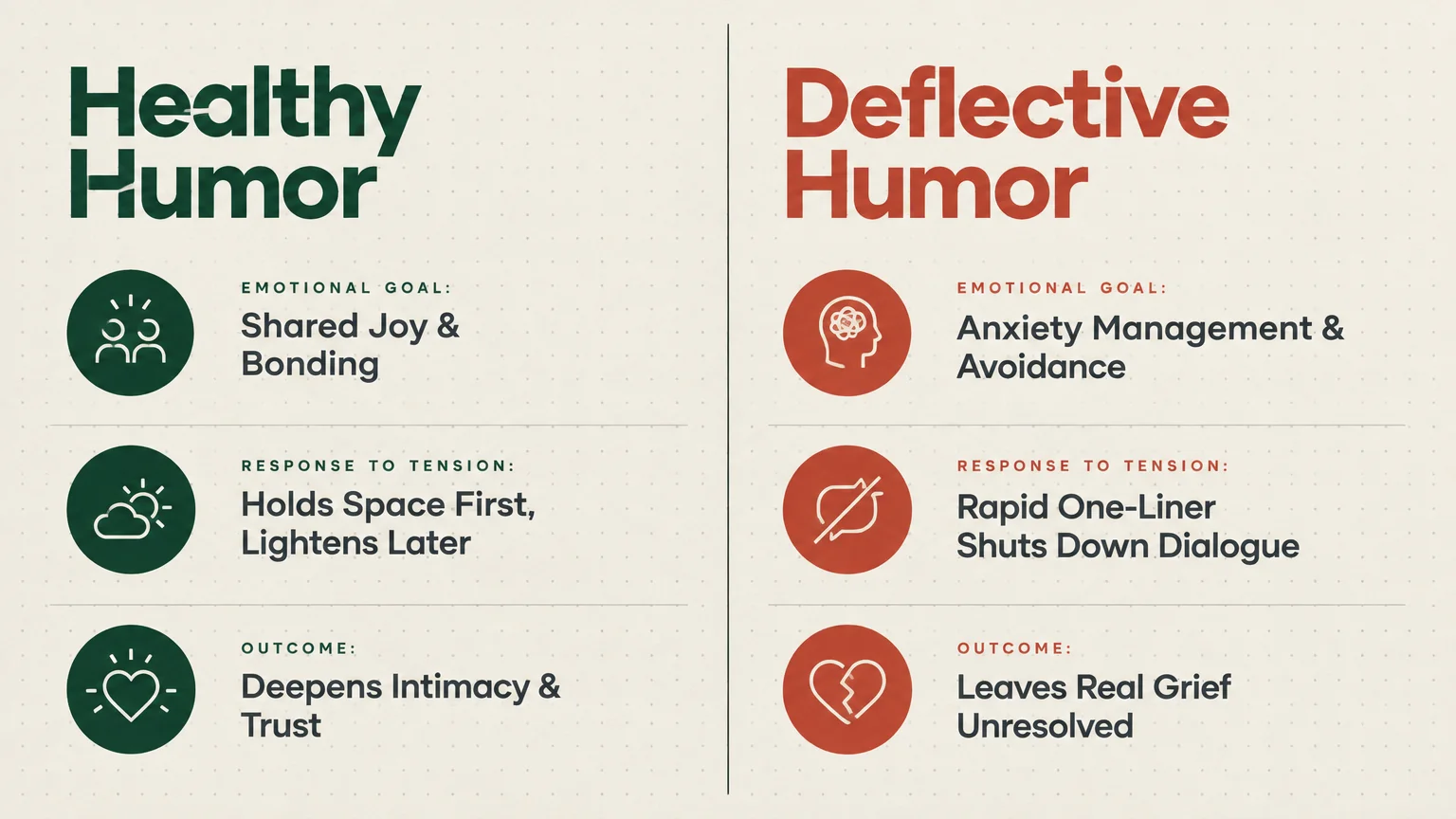
Humor itself is not problematic; your underlying motivation determines whether it heals or harms. Examining these dynamics reveals whether laughter builds bridges or builds walls.
| Dynamic | Healthy Humor | Deflective Humor |
|---|---|---|
| Primary Purpose | Connects and shares joy | Shields against vulnerability |
| Emotional Impact | Validates feelings | Dismisses or minimizes pain |
| Impact on Others | Fosters mutual trust | Leaves others feeling dismissed |
| Aftermath | Relieved and energized | Exhausted and lonely |
Healthy humor invites companions into your inner world. Deflective humor bolts the door while pretending nobody is home.
Notice how you feel immediately after the laughter fades. If you feel relieved yet emotionally distant, you likely used humor as an avoidance tactic.

Patterns to Watch For
Spotting deflective habits requires honest observation during your daily interactions. Subtle conversational maneuvers often reveal when your defense mechanism activates.
Notice your physical sensations when conversations shift toward emotional depth. A sudden spike in heart rate or an urge to talk quickly often heralds an impending joke.
Pay close attention to these common behavioral patterns:
- Mentally rehearsing punchlines while another person confides in you about their grief or distress.
- Experiencing sudden shame or panic immediately after sharing a genuine, unvarnished feeling.
- Accusing friends or romantic partners of being too serious when they address interpersonal friction.
- Laughing out loud while recounting painful childhood memories or traumatic events.
Inappropriate laughter often indicates deep emotional overwhelm. Your nervous system releases trapped tension through laughter when a reality feels too threatening to address directly.
When you replace automatic punchlines with honest presence, you create space for deeper mutual understanding. Your relationships gradually become safe havens rather than performance stages.
“Vulnerability is not winning or losing; it’s having the courage to show up and be seen when we have no control over the outcome.” — Brené Brown, Ph.D., LMSW
Vulnerability requires enduring uncertainty without a rehearsed script. When you lay down your comedic defenses, you allow loved ones to see and support your genuine self.

How to Stop Deflecting and Embrace Vulnerability
Unlearning a reflexive defense mechanism requires patience and steady effort. You do not have to abandon your wit to cultivate emotional depth.
Practice these concrete strategies to loosen the grip of comedic deflection:
- Take a Three-Second Breath: When tension builds, resist the immediate urge to deliver a joke. Allow the silence to exist while you breathe steadily.
- Identify the Underneath Emotion: Scan your body for tension in your chest or stomach. Quietly name what you feel, whether it is fear, embarrassment, or sadness.
- Communicate Simply and Directly: Replace your planned quip with an honest sentence. Saying “I feel insecure right now” builds far more intimacy than a cynical joke.
- Enlist a Supportive Confidant: Tell a trusted companion that you want to stop deflecting. Ask them to gently point out when you hide behind sarcasm.
Vulnerability does not mean sharing your deepest secrets with every acquaintance. It simply means communicating with sincerity in moments that call for emotional presence.
Expect these new habits to feel uncomfortable initially. Emotional exposure feels risky when you have spent years relying on humor for safety.
Over time, tolerating that brief discomfort yields deeper, more resilient connections with the people you cherish.

When Self-Help Isn’t Enough
Deflecting with humor sometimes conceals psychological wounds that casual habit adjustments cannot heal. When avoidance impairs your relationships or well-being, professional guidance offers a safe path forward.
Consider seeking support from a licensed mental health professional if you experience the following challenges:
- You laugh off severe past trauma because facing the memory triggers debilitating panic or dissociation.
- Your habitual sarcasm has damaged key relationships, leaving you profoundly isolated and unable to reconcile.
- You experience chronic depression or intense anxiety behind a cheerful public persona.
- You turn to alcohol or substance use alongside humor to suppress uncomfortable feelings.
Resources from organizations like the National Alliance on Mental Illness emphasize that clinical intervention prevents chronic isolation. A therapist provides a non-judgmental space to unpack buried emotions.
Therapy approaches like Acceptance and Commitment Therapy and Cognitive Behavioral Therapy offer practical skills for processing difficult feelings. You can search directories through Psychology Today to locate an experienced clinician near you.
Frequently Asked Questions
Is deflecting with humor a sign of trauma?
Humor often emerges as an adaptive survival strategy during childhood emotional neglect or trauma. When vulnerability caused conflict, humor kept you safe and gained approval from unpredictable caregivers.
Can humor still be healthy during stressful life events?
Healthy humor relieves physical tension and offers perspective without invalidating genuine pain. It becomes unhealthy only when it prevents you from feeling and resolving your authentic emotions.
How can I support a partner who constantly deflects with jokes?
Acknowledge their humor with warmth, then gently refocus on the emotional core. Say something like, “I love your humor, but I really want to know how your heart is doing right now.”
Will stopping deflection ruin my personality or sense of humor?
Shedding defensive humor actually enhances your wit by freeing it from anxiety. You will laugh out of genuine playfulness rather than fear and self-protection.
Cultivating Authentic Emotional Presence
Humor remains one of the finest tools for joy, resilience, and perspective. You never need to extinguish your comedic spark to live an honest life.
Allowing yourself to feel sad, afraid, or tender does not diminish your strength. Putting away your comedic armor invites the profound connection and belonging you deserve.
This article provides general educational information about psychology and relationships; it is not a substitute for professional therapy or medical advice. Everyone’s situation is unique—if you’re struggling, please reach out to a licensed mental health professional.
Last updated: October 2026. Psychology research evolves continuously—verify current findings with professional sources.








Leave a Reply