

Most people assume mental health crises arrive with unmistakable signs, but the reality is much quieter. The most critical psychological warning signals are often subtle shifts in your physical body, cognitive stamina, and daily habits that you probably dismiss as just “being tired.” Ignoring these quiet indicators allows underlying stress, anxiety, or depression to embed deeply into your nervous system, turning manageable struggles into overwhelming conditions. By learning to recognize the hidden symptoms of mental exhaustion—from unexplained physical pain to a sudden inability to make small decisions—you can intervene before a total crash occurs. Understanding these early behavioral and somatic changes gives you the power to reclaim your well-being, protect your relationships, and restore your emotional resilience.
At a Glance: The Warning Signs
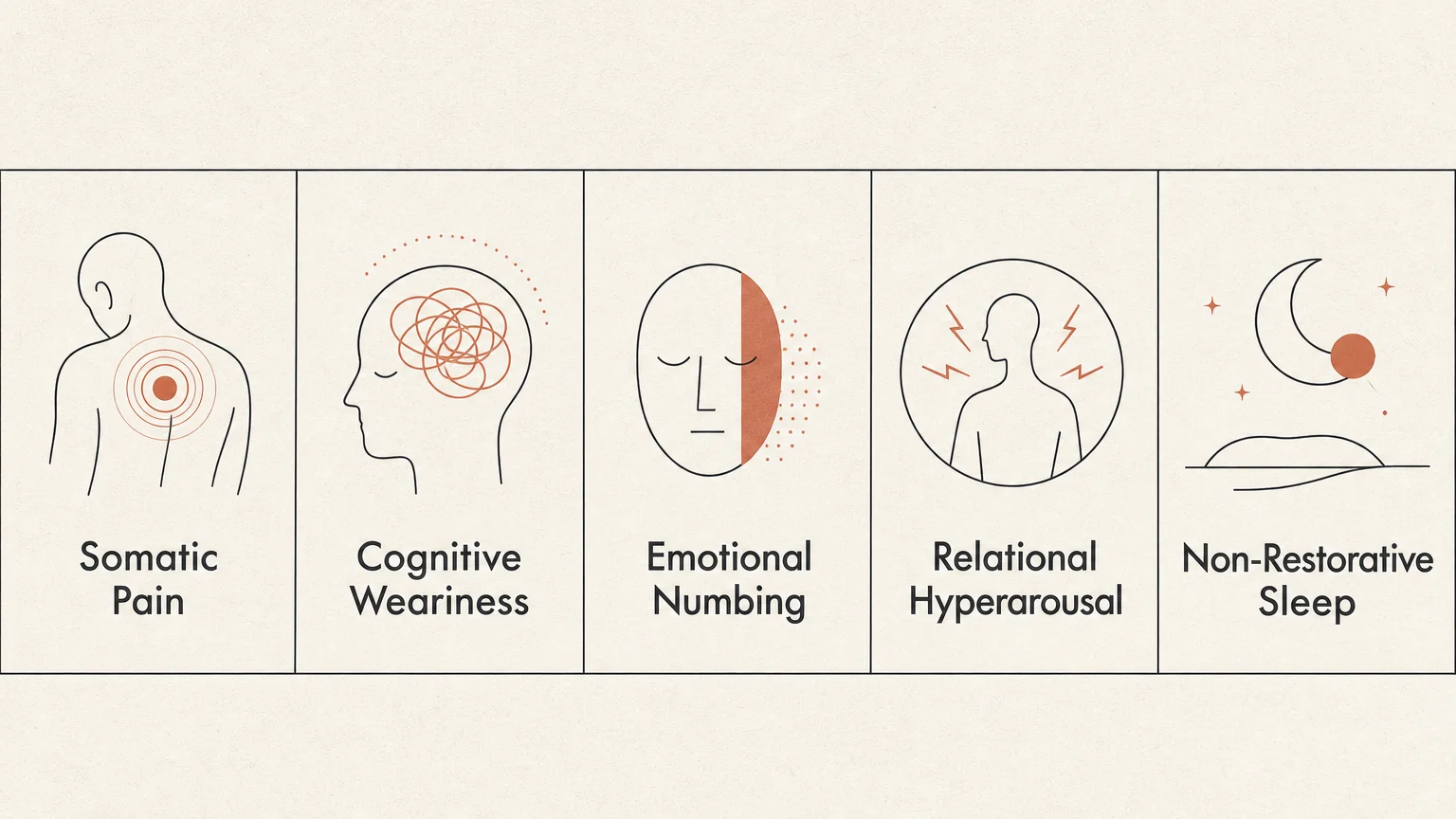
If you are rushing and need to assess your current mental bandwidth quickly, here are the core hidden symptoms to evaluate. Experiencing one or two of these occasionally is a normal part of the human experience. However, if several of these resonate deeply and persist for weeks, your mind is likely signaling for immediate relief.
- Unexplained Somatic Pain: Frequent headaches, digestive distress, or muscle tension that cannot be traced to a physical injury or illness.
- Cognitive Weariness: Staring at simple tasks, struggling to draft short emails, or feeling paralyzed by minor daily decisions.
- Emotional Numbing: A persistent feeling of flatness or apathy, where neither joy nor sadness registers fully.
- Relational Hyperarousal: Snapping at loved ones over minor questions or perceiving simple requests from a partner as massive demands.
- Non-Restorative Sleep: Waking up physically exhausted and mentally racing, regardless of how many hours you spent in bed.

The Physical Toll: When Your Body Speaks for Your Mind
We are culturally conditioned to view the mind and body as separate entities. When your stomach hurts, you go to a gastroenterologist. When your neck aches, you visit a physical therapist. Yet, your central nervous system processes both emotional distress and physical pain using the same underlying architecture. When you chronically suppress stress, anxiety, or sadness, your body eventually takes over the communication process through a phenomenon known as somatization.
Somatic symptoms are frequently the first domino to fall in a mental health decline. According to recent psychological research, unexplained physical pain and a severe, chronic lack of energy are among the symptoms that bother patients with depression the most. A state of prolonged anxiety keeps your nervous system in a constant “fight or flight” mode. Over time, this vigilance can lead to central sensitization, a condition where your nervous system becomes hyper-reactive and begins translating minor physical discomforts into intense, chronic pain signals.
The Mayo Clinic highlights that when somatic symptom disorders go unrecognized, they can lead to severe disruptions in daily functioning, relationship troubles, and an increased risk of long-term disability. If you have been bouncing from doctor to doctor seeking a physical explanation for persistent fatigue, tension headaches, or digestive issues, it may be time to evaluate your psychological landscape. Your body might simply be carrying the invisible weight of a mind that has not been allowed to rest.
Actionable Insight: Practice somatic tracking. When you feel unexplained physical pain, sit quietly for two minutes and observe the sensation without trying to fix it. Ask yourself, “What emotion might be sitting underneath this tension?” Sometimes, acknowledging the emotional origin of a symptom signals to your nervous system that it is safe to turn down the physical alarm.
Cognitive Weariness: The “Brain Fog” You Shouldn’t Ignore
You sit down at your desk to complete a routine task you have done a hundred times. Instead of starting, you stare blankly at the screen. Drafting a three-sentence reply to a colleague feels like climbing a mountain. Later that evening, your partner asks, “What do you want for dinner?” and the question brings you to the verge of tears. This is not laziness; it is cognitive weariness, and it is a hallmark symptom of severe burnout and high-functioning anxiety.
When you operate in a state of chronic stress, your brain continuously funnels energy toward survival and threat-detection centers, leaving your prefrontal cortex—the area responsible for logic, executive function, and decision-making—entirely starved of resources. Data from an American Psychological Association workplace survey revealed that 36% of adult workers reported experiencing cognitive weariness, while an alarming 44% reported profound physical fatigue. When your cognitive load exceeds your mental bandwidth, error processing becomes impaired, causing you to make uncharacteristic mistakes or triple-check simple tasks out of paranoia.
| Normal Fatigue | Cognitive Weariness |
|---|---|
| Improves significantly after a good night’s sleep or a quiet weekend off. | Persists regardless of sleep hours; rest feels fundamentally unrefreshing. |
| You feel physically tired but can still engage in hobbies or social conversations. | Your brain feels like a frozen computer screen; engaging in hobbies feels like a chore. |
| Decision-making is slightly slower but manageable. | Minor decisions (like what to wear or eat) cause intense frustration or paralysis. |
| You can prioritize tasks effectively, even if you execute them slower. | Every task feels equally urgent and overwhelming, destroying executive function. |
Actionable Insight: When cognitive weariness strikes, ruthlessly eliminate micro-decisions from your day. Automate your meals, wear a repetitive wardrobe for a week, and set specific times to check your email rather than monitoring it constantly. Give your prefrontal cortex a mandatory vacation from decision-making.

Emotional Numbing and the Loss of Joy
There is a dangerous cultural myth that depression always looks like crying in bed. While profound sadness is a valid manifestation of mental illness, many people experience something far more insidious: anhedonia, or the complete loss of joy and pleasure. Instead of feeling deeply sad, you feel absolutely nothing. You go through the motions of your life like an actor reading from a script, disconnected from the emotional weight of your own experiences.
Emotional numbing often starts as a survival mechanism. If your environment is chaotic, highly stressful, or traumatic, your brain learns to dial down your emotional receptors to protect you from being overwhelmed by pain. However, the emotional dials in our brains are not highly specific. You cannot selectively mute your anxiety without also muting your happiness.
“We cannot selectively numb emotions, when we numb the painful emotions, we also numb the positive emotions.” — Brené Brown, PhD, MSW
When you lose your connection to joy, your relationships naturally suffer. You may find yourself withdrawing from social gatherings, dreading interactions with friends, or staring blankly at your children while they play, desperately wishing you could feel the warmth and affection you know you have for them. This emotional flattening is a massive red flag that your psychological reserves are running on fumes.
Actionable Insight: Do not try to force yourself to feel “happy.” Instead, practice gentle grounding exercises to bring your awareness back into your body. Hold an ice cube, notice the exact temperature of your coffee cup, or focus on the physical sensation of your feet on the floor. Reawakening the nervous system starts with physical sensation, which slowly bridges the gap back to emotional feeling.

The “Snap” Factor: Hyperarousal and Irritability
One of the most misunderstood symptoms of declining mental health is anger. Many people envision a mental breakdown as a quiet retreat into solitude. In reality, a struggling mind is often highly irritable, defensive, and volatile. When your nervous system is trapped in chronic hyperarousal, your “window of tolerance” shrinks dramatically. Suddenly, the people you love the most receive the worst version of you.
This irritability is intimately linked to relationship distress. If your partner asks a mundane question like, “Did you pay the electric bill?” your brain does not process it as a neutral inquiry. Because your baseline stress level is already at 99%, that one question pushes you to 100%. You perceive the question as a profound demand, an attack on your competence, or an unbearable burden, causing you to snap defensively.
Relationship researchers at The Gottman Institute refer to this physiological state as “flooding.” When your heart rate elevates beyond 100 beats per minute due to stress, your body shuts off access to the parts of your brain responsible for empathy, humor, and active listening. You literally lose the biological capacity to be a supportive, connected partner until your nervous system calms down.
Actionable Insight: If you find yourself snapping at loved ones frequently, implement a strict “20-minute timeout” rule. When you feel the physiological signs of flooding (racing heart, tight chest, flushed face), calmly tell your partner, “I am feeling overwhelmed and need 20 minutes to regulate before we continue.” Use that time to breathe deeply, step outside, or do light stretching. Do not use the time to ruminate on the argument.

Sleep Architecture Disruption: Waking Up Exhausted
Most adults know that poor sleep is detrimental to mental health, but the relationship is deeply cyclical. We often focus heavily on insomnia—the inability to fall asleep—but overlook the severe impact of disrupted sleep architecture. You might be spending eight hours in bed, but if your brain is trapped in hyper-vigilance, you are not entering the restorative phases of deep sleep and REM (Rapid Eye Movement) sleep.
A brain on the verge of burnout refuses to mentally “close its tabs.” You may fall asleep out of sheer physical exhaustion, only to jolt awake at 3:00 AM with a racing heart, suddenly remembering an email you forgot to send or ruminating on a minor social interaction from three days ago. This early morning awakening is a classic biological marker of clinical depression and generalized anxiety.
When your sleep architecture is fractured, your brain cannot adequately clear out metabolic waste or consolidate memories. You wake up feeling like you were hit by a truck. Relying on caffeine to push through this specific type of exhaustion only spikes your cortisol levels further, perpetuating the vicious cycle of wired-but-tired anxiety.
Actionable Insight: Shift your focus from “trying to sleep” to “creating safety.” Create a wind-down routine that deliberately signals to your nervous system that the work day is over. Write down every lingering thought or task on a piece of paper and physically leave it in another room. This practice, often called a “brain dump,” gives your mind permission to stop guarding that information overnight.

What Can Go Wrong: The Danger of “Pushing Through”
The most dangerous misconception about mental health is the belief that if you are still functionally completing your daily tasks, you do not need help. Society glorifies “pushing through” discomfort, rewarding high-achievers who sacrifice their well-being for productivity. This mindset creates a dangerous illusion: the trap of high-functioning burnout.
You may tell yourself that your exhaustion is temporary, or that you just need to hold on until the next vacation. However, relying on occasional vacations to cure chronic burnout is like putting a band-aid on a fractured bone. Research indicates that the delay in seeking mental health treatment often spans an average of just over two years, frequently because individuals mistakenly attribute their psychological symptoms to temporary physical issues or simply refuse to acknowledge their severity.
Delaying intervention allows these hidden symptoms to calcify. What starts as mild cognitive weariness can devolve into severe executive dysfunction. What begins as occasional relationship irritability can fracture marriages. The longer you wait to address the underlying distress, the more intensive the recovery process becomes.
“The curious paradox is that when I accept myself just as I am, then I can change.” — Carl Rogers, PhD
Healing requires you to stop performing and start acknowledging the reality of your internal experience. Admitting that you are overwhelmed, exhausted, and struggling is not a failure; it is the fundamental prerequisite for meaningful change.

When to Seek Professional Support
It can be incredibly difficult to know when a bad week has transitioned into a clinical issue requiring professional intervention. If you are questioning whether your symptoms warrant therapy, it is usually a sign that they do. Look for these specific indicators that it is time to connect with a licensed mental health professional:
- Your physical symptoms persist despite medical clearance: If your primary care physician has ruled out underlying medical conditions for your pain, fatigue, or gastrointestinal distress, you should consult a psychologist or psychiatrist to evaluate somatic symptom pathways.
- Your relationships are actively degrading: If your irritability, emotional numbing, or withdrawal is causing deep, consistent conflict with your partner, family, or friends, therapeutic support is necessary to rebuild your emotional regulation.
- Your coping mechanisms have become destructive: If you find yourself relying heavily on alcohol, substances, impulsive spending, or doom-scrolling to numb your daily experience, you are utilizing unsustainable survival tactics.
- You experience intrusive, dark thoughts: If your exhaustion transitions into passive suicidal ideation—such as thinking, “I wish I could just go to sleep and not wake up for a week,” or feeling that your family would be better off without you—this is a medical emergency. You deserve immediate, compassionate care.
Frequently Asked Questions
What is the difference between burnout and depression?
Burnout is an occupational phenomenon specifically related to chronic, unmanaged workplace stress. It usually improves when you are entirely removed from the work environment. Depression is a broader clinical mood disorder that affects your emotional state across all areas of your life, though prolonged burnout can certainly lead to or mimic clinical depression.
Can untreated anxiety cause actual physical pain?
Yes. Chronic anxiety can cause your nervous system to remain in a state of high alert, a phenomenon known as central sensitization. This makes your brain process normal physical sensations as intense pain, frequently leading to headaches, muscle tension, and severe gastrointestinal issues.
How do I explain cognitive weariness to my partner?
Focus on the physical reality of the symptom. Explain that your brain’s “battery” is entirely drained, causing an inability to process information or make even small decisions. Reassure your partner that your lack of engagement is a symptom of mental exhaustion, not a lack of love or care for the relationship.
Where do I start if I feel completely overwhelmed?
Start with the basics of biological regulation. Focus entirely on hydration, eating consistently, and resting without screens. Simultaneously, reach out to your primary care physician to discuss your symptoms, or contact a therapist. You do not have to fix everything at once; you just have to take the first step.
Taking the Next Step
Recognizing that you are struggling is a profoundly brave act. If you read through these symptoms and felt a deep sense of recognition, please take a deep breath and offer yourself a moment of grace. You are not broken, lazy, or inadequate. Your nervous system is simply operating under a load it was never designed to carry long-term.
You have permission to step back. You have permission to drop the balls you are juggling that are not made of glass. Begin by having an honest conversation with someone you trust about how heavy things have felt lately. Whether that means scheduling an appointment with a therapist, talking to a doctor about your physical symptoms, or simply setting a firm boundary around your rest this weekend, your healing journey begins the moment you decide your well-being is worth protecting.
The information in this article is meant for educational purposes and general guidance. It does not replace individual therapy, counseling, or medical treatment. If you or someone you know is in crisis, contact the 988 Suicide & Crisis Lifeline by calling or texting 988.
Last updated: June 2026. Psychology research evolves continuously—verify current findings with professional sources.









Leave a Reply