
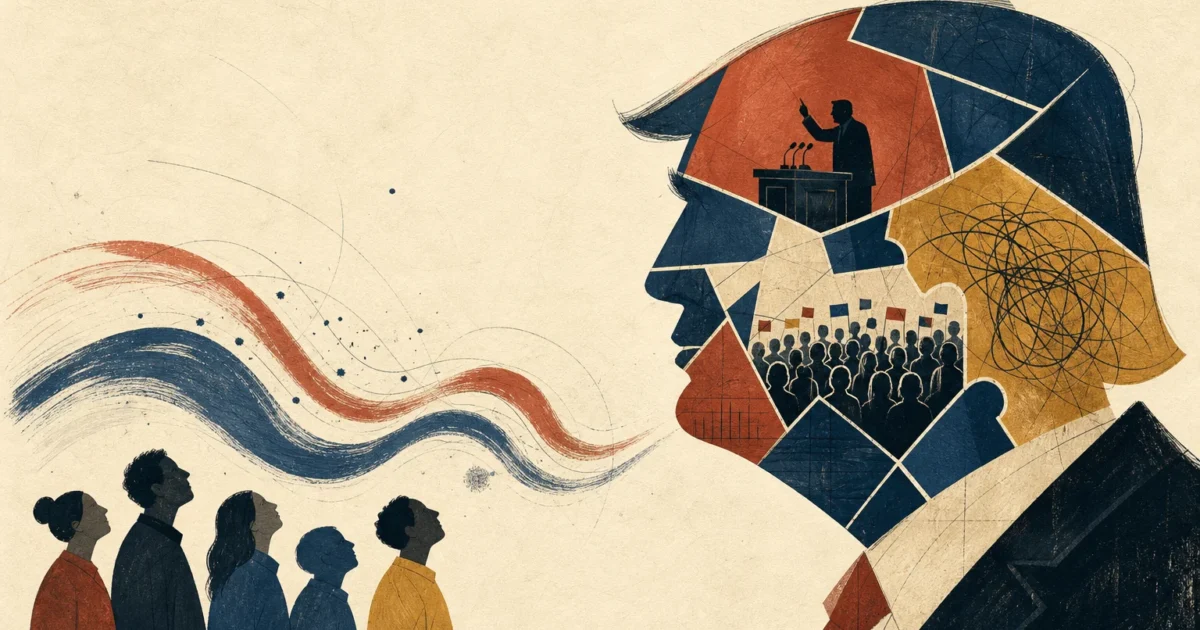
The psychological profile of Donald Trump continues to captivate and divide the American public, offering a real-time masterclass in the profound impact of personality on global politics. By examining his observable behaviors through the lens of political psychology, you can better understand not only his unprecedented leadership style but also why he inspires such intense loyalty and fierce opposition. Rather than attempting a clinical diagnosis from afar, researchers focus on his specific leadership traits—such as his episodic decision-making, performance of hegemonic masculinity, and projection of dominance. Exploring these dynamics provides practical clarity on how modern political figures shape societal behavior, fuel affective polarization, and ultimately influence the collective mental health of the electorate.

The Ethical Boundary: Understanding the Goldwater Rule
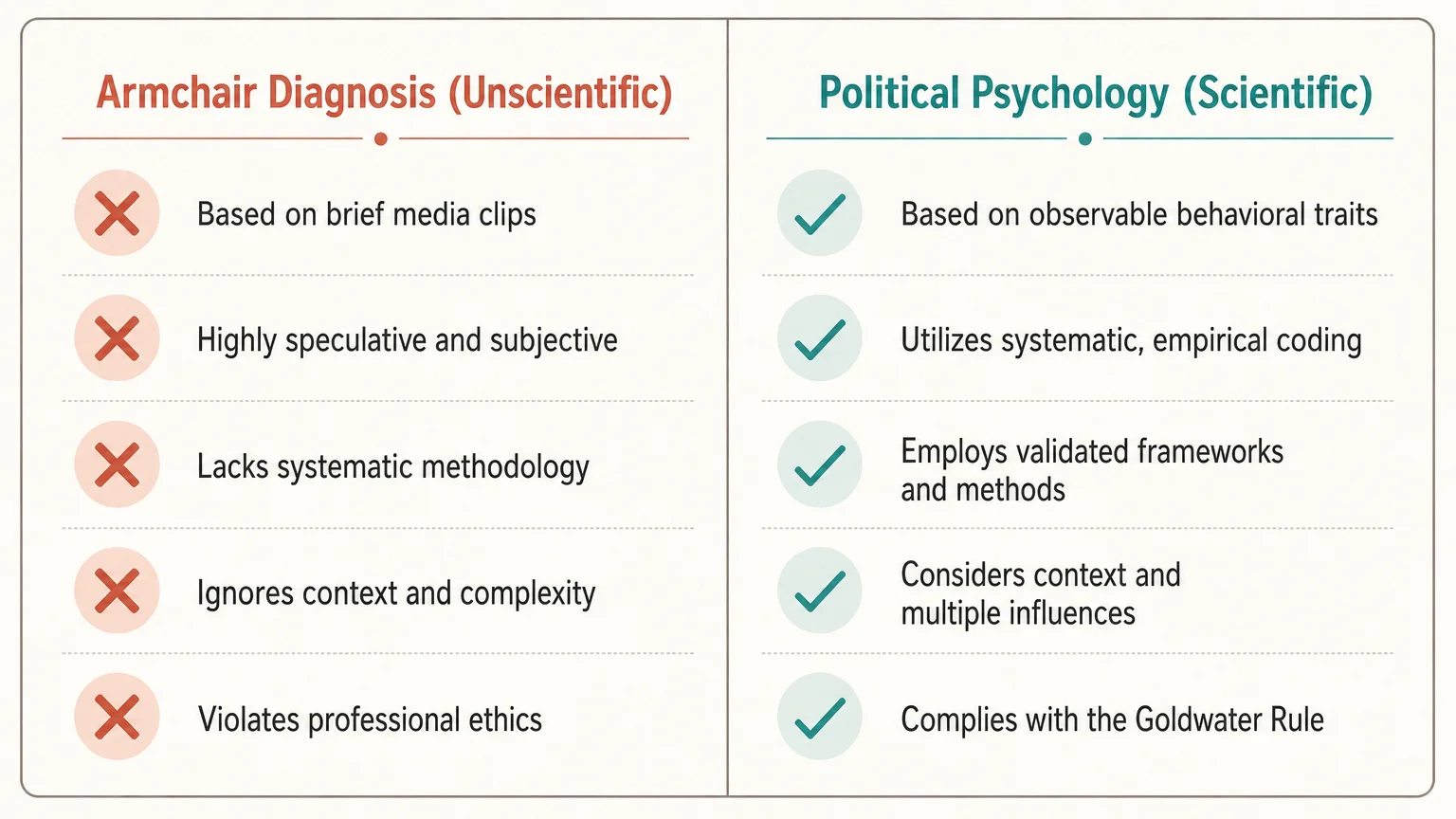
To responsibly explore the psychology of Donald Trump—or any public figure—you first have to understand the ethical boundaries established by mental health professionals. In 1973, the American Psychiatric Association (APA) implemented what is known in the field as the Goldwater Rule. This mandate prohibits mental health professionals from offering an official diagnosis of a public figure without conducting a personal clinical examination and securing explicit consent.
The rule originated after the 1964 presidential election, when a magazine polled thousands of psychiatrists about the mental fitness of candidate Barry Goldwater. The resulting armchair diagnoses were heavily biased and scientifically invalid, leading to a successful defamation lawsuit. The APA recognized that diagnosing someone based solely on their media appearances, public speeches, and curated personas damages the credibility of the psychiatric profession.
During Trump’s presidency and his subsequent campaigns, the Goldwater Rule sparked intense debate within the psychological community. Some professionals argued they had a moral “duty to warn” the public about behaviors they viewed as dangerous. However, the APA held firm, emphasizing that public observation is not a substitute for clinical rigor. Consequently, when political psychologists analyze Donald Trump, they do not diagnose him with specific clinical disorders. Instead, they evaluate his observable personality traits, his distinct leadership style, and the psychological impact his behavior has on the public.

“The Episodic Man”: A Psychology of the Present
If you have ever found Donald Trump’s behavior unpredictable or seemingly contradictory, you are observing a phenomenon that personality psychologist Dan P. McAdams describes as the “episodic man.” In his 2020 book The Strange Case of Donald J. Trump: A Psychological Reckoning, McAdams outlines a fascinating framework for understanding Trump’s actions, heavily rooted in narrative psychology.
Human beings generally make sense of their lives through a coherent internal narrative. You likely integrate your past experiences, your present actions, and your future goals into a continuous life story. This narrative gives you a sense of stable identity. Trump, McAdams argues, operates differently. He exists almost entirely in the present moment. Each day—and every interaction—is an isolated episode to be won.
This psychological framework explains several hallmarks of his behavior:
- Transaction over tradition: Because he views the world episodically, he treats relationships, political alliances, and international treaties as immediate transactions rather than long-term investments.
- Volatility without cognitive dissonance: When episodes do not connect to a broader narrative, contradicting oneself is not painful. He can hold opposing positions from one day to the next without experiencing the internal conflict most people feel when they break a promise.
- The superhero persona: By existing outside a continuous, reflective timeline, he projects a larger-than-life image. He positions himself as an elemental force of nature rather than a vulnerable, flesh-and-blood human being.
For a politician, episodic processing is highly effective in the modern media landscape. It allows him to dictate the 24-hour news cycle by constantly generating new, dramatic episodes that force his opponents to stay perpetually on the defensive.
The Allure of Hegemonic Masculinity and Dominance
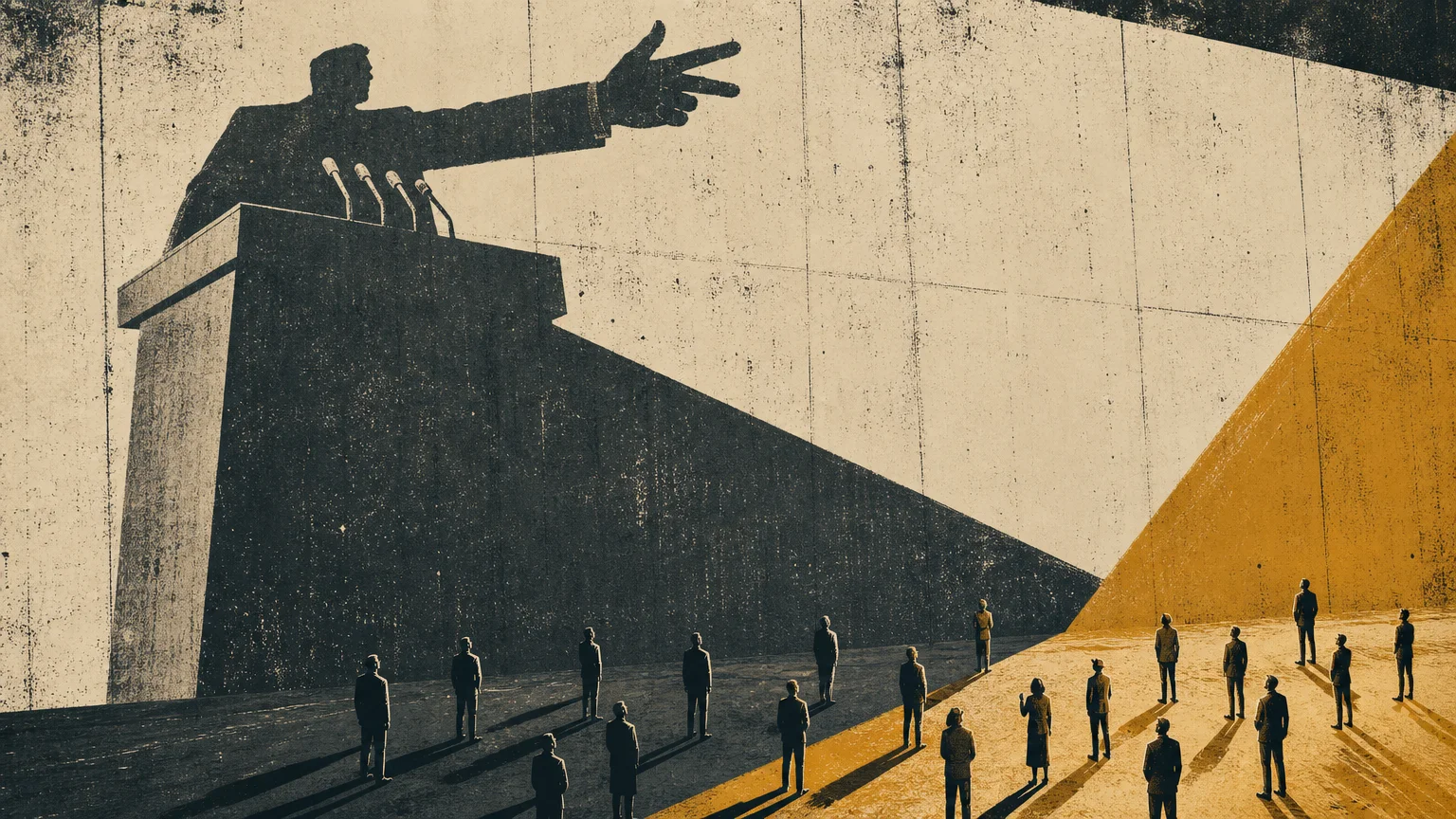
Understanding Trump’s psychology requires looking outward at the psychological needs of the electorate. Why does his specific brand of rhetoric resonate so deeply with millions of Americans? The answer lies heavily in the psychology of identity, dominance, and social hierarchy.
A revealing 2021 study published in the Proceedings of the National Academy of Sciences found that his political appeal is intrinsically tied to “hegemonic masculinity.” This term refers to the cultural idealization of a specific type of toughness—a worldview where dominance, status, and unyielding power are prized far above emotional vulnerability or collaborative compromise.
When voters feel disenfranchised, financially insecure, or threatened by rapid cultural shifts, a leader who projects unapologetic dominance provides a profound sense of psychological safety. Trump’s refusal to apologize, his combative debate style, and his “blue-collar billionaire” persona validate the frustrations of his base. He does not ask for permission to break political norms, and for his supporters, that defiance is deeply cathartic. It fulfills a psychological craving for certainty in an increasingly complex world.
Furthermore, political psychologists note that his rhetoric aligns with voters who score high in Social Dominance Orientation (SDO). Individuals with high SDO prefer hierarchical social structures and tend to view society as a zero-sum game—believing that if another group gains power or rights, their own group inherently loses. Trump’s “us-versus-them” messaging speaks directly to this underlying psychological fear, offering to protect the hierarchy his supporters value.
Dark Triad Leadership Traits and Affective Polarization
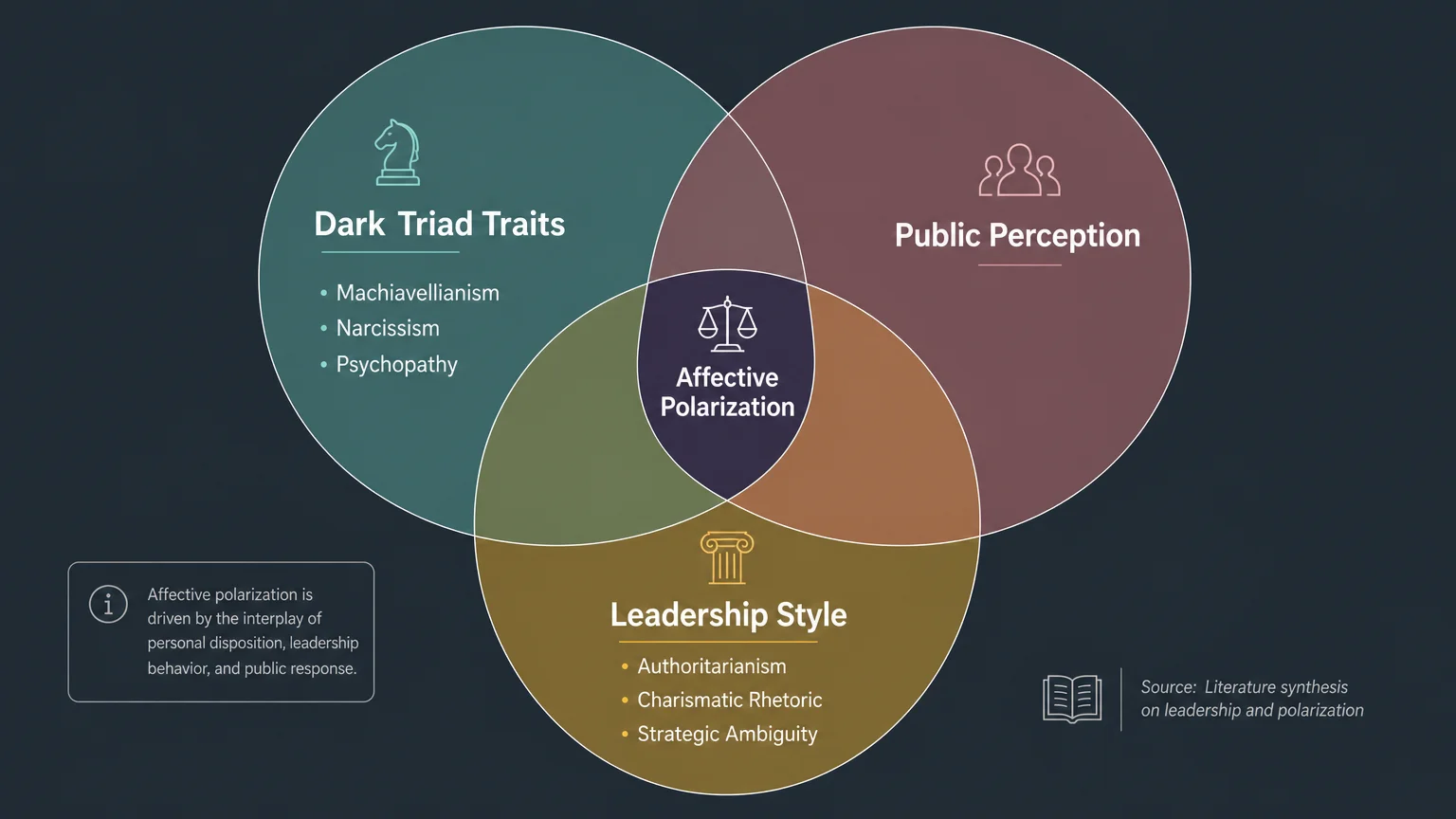
In the realm of organizational and political psychology, researchers frequently study the “Dark Triad” of personality traits: Machiavellianism (strategic manipulation), narcissism (grandiosity and entitlement), and psychopathy (low empathy and impulsivity). While everyone possesses these traits to varying, usually harmless degrees, leaders who exhibit them prominently can fundamentally alter the psychological landscape of their organizations or countries.
Recent research, including a comprehensive study published in the European Journal of Political Research, demonstrates that politicians exhibiting Dark Triad traits dramatically increase “affective polarization” among voters. Affective polarization occurs when you do not just disagree with the opposing political side on policy matters; you begin to view them with genuine hostility, contempt, and distrust.
A leader projecting these traits essentially grants permission for their supporters to abandon civil discourse. If the leader behaves aggressively and without empathy toward out-groups, the followers often mirror that behavior, assuming it is the new standard for survival. For deeper insights into how manipulative personalities operate, you can explore comprehensive behavioral guides on platforms like Verywell Mind.
The table below breaks down how these specific traits manifest in a political leadership context, and how they are perceived by both supporters and critics:
| Observable Leadership Trait | Behavior in Office | Perception by Supporters | Perception by Critics |
|---|---|---|---|
| Narcissistic Grandiosity | Demanding absolute loyalty; centering oneself in all national narratives. | Strong, confident, and uniquely capable of solving systemic crises. | Authoritarian, self-serving, and a threat to established democratic norms. |
| Machiavellian Tactics | Pitting factions against each other; viewing institutional norms as obstacles to be broken. | A savvy, unapologetic disruptor who outsmarts a corrupt political establishment. | Manipulative, corrupt, and highly destructive to vital public institutions. |
| Episodic Impulsivity | Governing via late-night social media posts; enacting abrupt, unvetted policy shifts. | Authentic, transparent, and refreshingly unscripted. | Erratic, chaotic, and dangerously unpredictable on the global stage. |

The National Toll: How Political Polarization Affects You
The psychological analysis of a prominent political figure is not merely an academic exercise—it has a tangible, direct impact on your daily life. The intense polarization fueled by combative leadership styles has contributed to a documented, widespread mental health crisis across the United States.
According to the APA’s 2024 “Stress in America” report, 69 percent of adults cited the U.S. presidential election as a significant source of stress, while 77 percent worried deeply about the future of the nation. By the time the 2025 “Crisis of Connection” survey was released, the data grew even more concerning. Sixty-two percent of Americans reported that societal division was a major life stressor. More alarmingly, the APA found a direct correlation between this societal stress and an epidemic of loneliness. Over half of the adults surveyed reported feeling emotionally disconnected, isolated, or lacking companionship.
When politics becomes deeply personalized and aggressively combative, it severs friendships, fractures families, and depletes your emotional reserves. You may find yourself withdrawing from loved ones because the emotional cost of political disagreement is simply too high, leading to the exact isolation the APA warns about. This creates a vicious cycle: the more isolated we become, the more susceptible we are to angry, polarizing rhetoric.
“Braving the wilderness is a call to courage. A call to move closer to each other, because people are hard to hate close up. A call to speak truth to bullshit. But be civil.” — Brené Brown, Ph.D.
Patterns to Watch For: Misconceptions About Political Psychology
When analyzing Donald Trump’s behavior and the public’s intense reaction to him, several common psychological misconceptions arise. Recognizing these patterns can help you consume political news with a more critical, grounded mindset:
- Assuming erratic behavior is irrational: It is tempting to label a combative late-night social media post as irrational. However, political psychologists note that this behavior often serves a highly calculated strategic purpose. By dominating the news cycle with outrageous statements, a leader can distract from unfavorable stories and keep political opponents perpetually exhausted and on the defensive.
- Believing supporters are simply misinformed: Critics often assume that if Trump’s supporters just had the “right facts,” they would immediately change their minds. This completely ignores the psychology of identity. When political affiliation becomes a core part of a person’s identity, attacking the leader feels like a personal attack on the self. This triggers cognitive dissonance, causing people to double down on their beliefs rather than abandon them.
- Confusing behavioral analysis with clinical diagnosis: You do not need a clinical psychiatric diagnosis to recognize and protect yourself from harmful behavioral patterns. You can observe, critique, and understand a leader’s lack of empathy, propensity for gaslighting, or manipulative tactics without violating ethical boundaries or stigmatizing actual mental health conditions.

* Let’s check: “Holding a warm mug, a person finds comfort in supportive connection when doing it alone isn’t enough.”
* Is it engaging? Yes.
* Does it describe
When Self-Help Isn’t Enough
Navigating the psychological weight of modern politics is undeniably exhausting. While setting strict boundaries around your news consumption and practicing mindfulness are excellent starting points, the stress of living in a heavily fractured society sometimes requires professional intervention. Consider seeking help from a licensed therapist or checking the resources provided by the National Institute of Mental Health (NIMH) if you experience any of the following scenarios:
- Political anxiety disrupts your daily functioning: If chronic fear about the future of the country causes severe insomnia, panic attacks, or an inability to concentrate on your work or family responsibilities.
- Compulsive doomscrolling mimics addiction: When you cannot stop consuming political news or engaging in online arguments, even when you know it is actively harming your mental health and destroying your peace of mind.
- Severed family ties lead to profound isolation: If political polarization has caused you to lose your primary support system, leading to symptoms of clinical depression, withdrawal, or overwhelming loneliness.
- Intense feelings of hopelessness: When anxiety about the political landscape turns into a pervasive, immovable belief that your life, or the world, has no future. For immediate, confidential support, you can always contact the 988 Suicide & Crisis Lifeline.
Understanding the psychology of Donald Trump—and the psychological forces that sustain his political movement—allows you to step back from the emotional chaos of the 24-hour news cycle. When you recognize the mechanics of episodic leadership, the powerful allure of hegemonic masculinity, and the deliberate use of polarization, the political landscape becomes slightly less bewildering. You gain the ability to analyze events objectively rather than reacting to them emotionally.
You cannot control the rhetoric of political leaders, but you can control how you engage with it. Protect your peace, set firm boundaries around political discussions, and prioritize genuine, real-world connections over digital outrage. Finding common ground in your immediate community is often the strongest antidote to national polarization. This is educational content based on psychological research and general principles. Individual experiences vary significantly. For personalized guidance, consult a licensed therapist, psychologist, or counselor.
Last updated: June 2026. Psychology research evolves continuously—verify current findings with professional sources.









Leave a Reply