
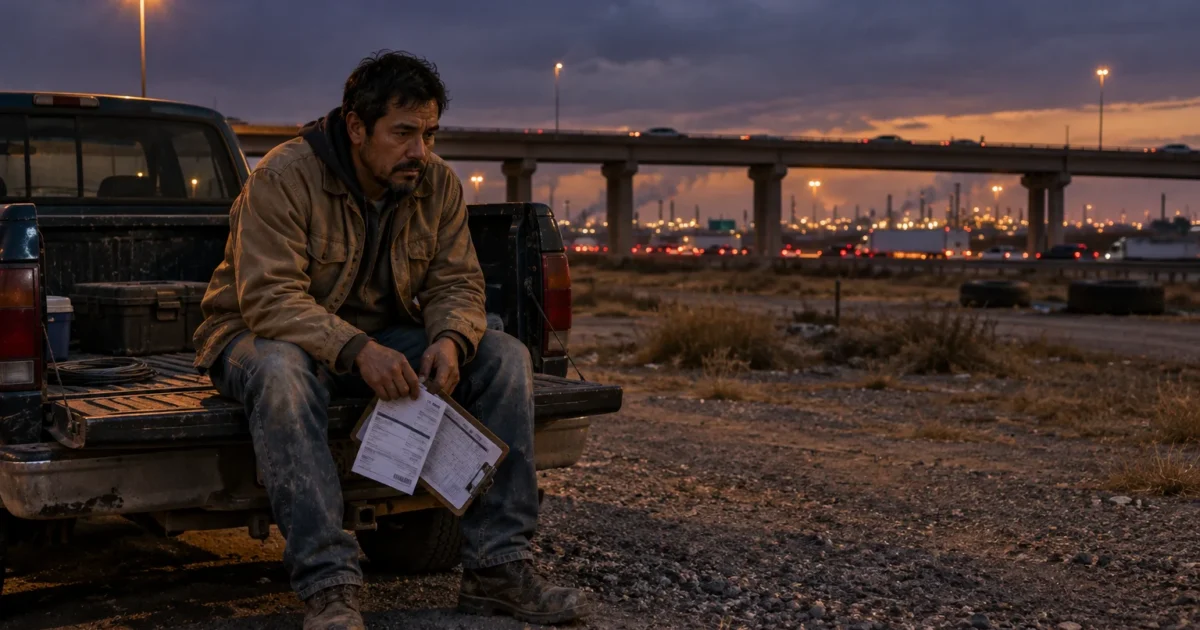
Your zip code shapes your nervous system far more than you might realize. Discovering how your home state ranks reveals the economic, occupational, and healthcare pressures quietly driving your daily stress levels.
While personal coping habits matter, regional infrastructure, job stability, and community resources dictate how easily your body recovers from pressure. Environmental conditions often set your baseline tension before your day even begins.
Recent data reveals profound disparities in quality of life across the United States. Finding where your state lands provides essential validation and practical insight to help you protect your emotional well-being.
How Your Environment Shapes Chronic Stress
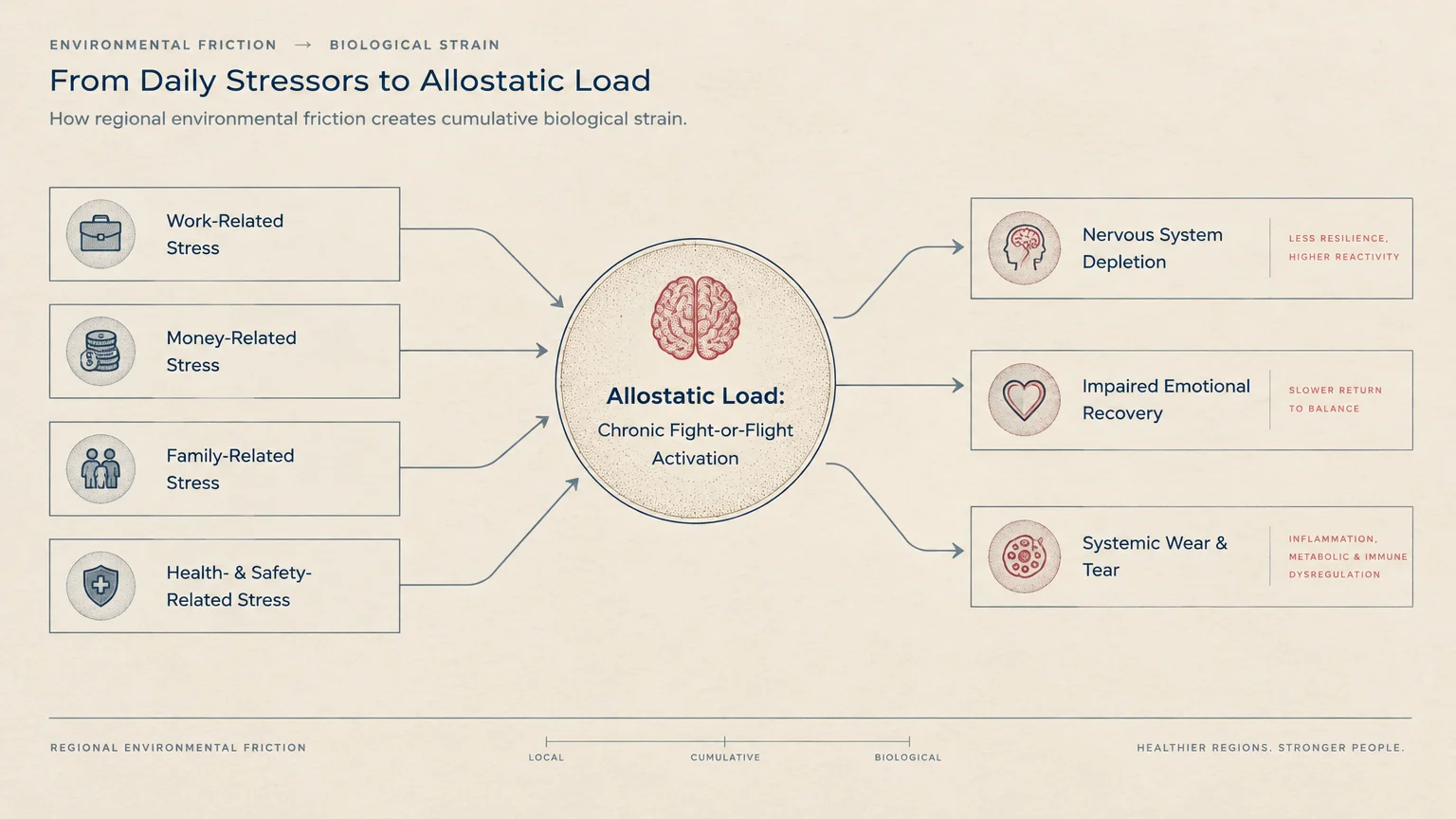
Psychologists use the term allostatic load to describe the cumulative physical wear and tear caused by chronic stress. When your environment constantly demands vigilance, your nervous system remains trapped in a prolonged fight-or-flight state.
Where you live determines your daily exposure to systemic friction. Factors like long commutes, unaffordable healthcare, unstable employment, and social isolation constantly drain your mental stamina.
To measure these disparities, researchers at WalletHub evaluated all fifty states using forty objective indicators across four categories: work-related stress, money-related stress, family-related stress, and health- and safety-related stress.
Their findings demonstrate that geographic stress is not simply an individual perception. Systemic regional hurdles create measurable patterns that dictate how easily residents maintain their psychological health.
The 10 Most Stressed States in America
The states experiencing the highest strain share compounding socioeconomic challenges. When financial insecurity combines with limited medical infrastructure, daily survival takes precedence over emotional recovery.
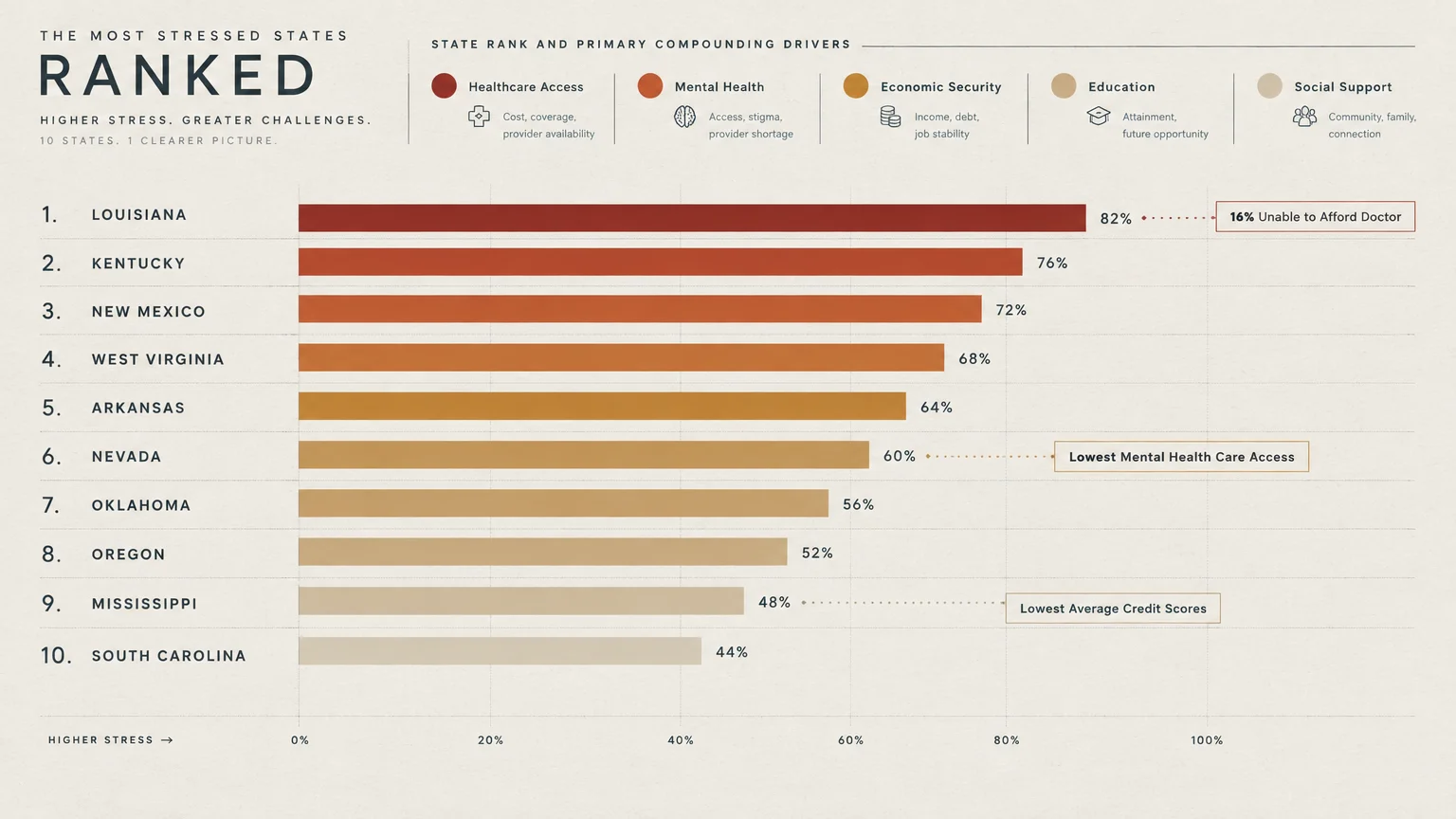
Louisiana ranks as the most stressed state in the country. The state contends with high poverty alongside severe job insecurity, leaving families with minimal margin for unexpected emergencies.
Healthcare access in Louisiana presents an especially steep hurdle for daily well-being. Approximately 16% of adults in the state reported being unable to see a doctor in the past year due to medical costs.
Kentucky holds the second position, driven by elevated health-related stress and limited access to preventive wellness resources. Many families navigate persistent medical debt that compounds workplace demands.
New Mexico ranks third overall, contending with pronounced economic instability and family-related pressures. High poverty rates in the state directly amplify daily relational conflict and financial strain.
West Virginia follows at fourth, showing severe work-related distress and lower job security. Industrial transitions have left many communities without reliable, well-paying employment opportunities.
Arkansas rounds out the top five, struggling with lower household incomes and significant health vulnerabilities. Limited access to mental health professionals makes managing this chronic strain even harder.
Nevada ranks sixth, marked by high housing costs and severe healthcare provider shortages. In fact, Nevada ranks lowest in the nation for overall mental health care access.
Oklahoma holds the seventh spot, driven by economic insecurity and lower rates of health insurance coverage. These financial gaps leave residents vulnerable when unexpected health crises occur.
Oregon lands at eighth, facing widespread housing affordability hurdles and rising family pressures. While natural beauty abounds, high living expenses place heavy burdens on working households.
Mississippi ranks ninth, weighed down by the lowest average credit scores in the nation and extended workweeks. Financial strain prevents many families from building adequate emergency savings.
Alabama takes the tenth position, driven by economic hurdles, lower credit scores, and limited public healthcare funding. Communities frequently lack the structural support necessary to alleviate chronic household strain.

The 10 Least Stressed States: Protective Regional Buffers
The least stressful states cultivate conditions that help residents decompress. These environments combine steady employment, accessible outdoor recreation, and reliable social safety nets.
South Dakota earns the distinction of being the least stressed state in America. Despite longer working hours, the state offers exceptional job security, low unemployment, and minimal commute times.
Utah ranks as the second least stressed state, bolstered by remarkable family stability and deep community connections. Strong social ties provide a protective buffer against daily emotional wear and tear.
Minnesota holds the third spot, combining a robust economy with world-class healthcare systems. Comprehensive public infrastructure significantly lowers the baseline anxiety of its residents.
New Hampshire and Vermont claim the fourth and fifth spots among the lowest-stress states. Both states boast low crime rates, high access to mental healthcare, and abundant access to natural spaces.
Idaho ranks sixth among the lowest-stress states, supported by stable local communities and lower population densities. However, rapid growth is beginning to place new pressures on local housing markets.
North Dakota ranks seventh, offering solid financial stability, low unemployment rates, and short average commutes. These reliable daily routines preserve mental bandwidth for personal life.
Connecticut and Massachusetts hold the eighth and ninth positions among the least stressed states. Although costs of living remain elevated, both states offer high wages, excellent public schools, and strong healthcare coverage.
Iowa completes the ten least stressed states, providing affordable housing alongside high job stability. Residents encounter fewer financial obstacles when meeting their basic monthly needs.
All 50 States Ranked by Stress Level
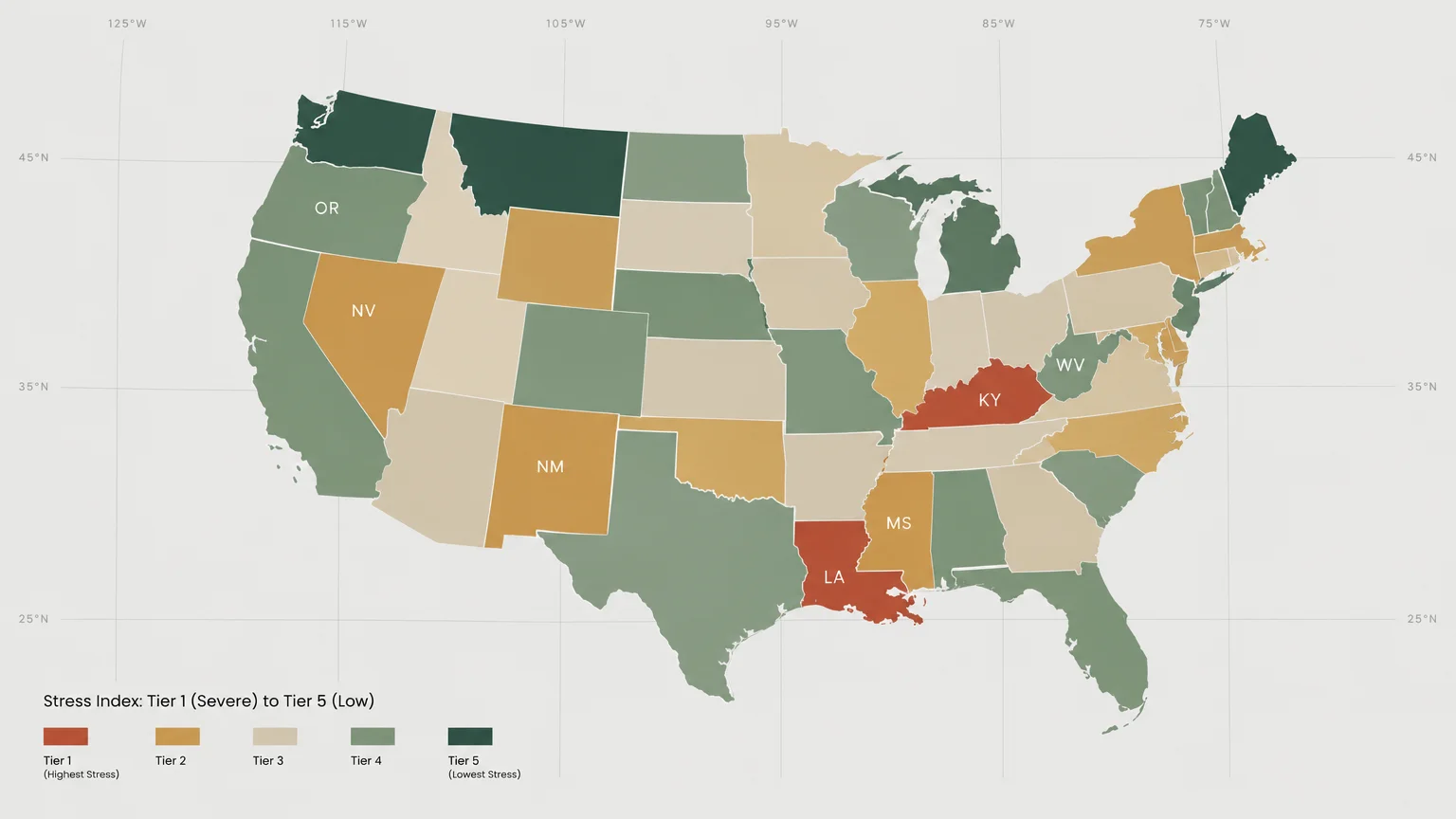
Understanding where your state lands helps contextualize your daily emotional reality. This comprehensive ranking reflects overall stress performance based on work, financial, family, and health indicators.
| Rank | State | Stress Category | Primary Stress Pressures |
|---|---|---|---|
| 1 | Louisiana | Severe Stress | Poverty, healthcare costs, low job security |
| 2 | Kentucky | Severe Stress | Health vulnerabilities, medical debt, low income |
| 3 | New Mexico | Severe Stress | Economic volatility, family pressures, housing |
| 4 | West Virginia | Severe Stress | Job insecurity, physical health challenges |
| 5 | Arkansas | Severe Stress | Low wages, healthcare access limitations |
| 6 | Nevada | Severe Stress | Provider shortages, housing costs, work hours |
| 7 | Oklahoma | Severe Stress | Uninsured rates, financial strain, food insecurity |
| 8 | Oregon | Severe Stress | Cost of living, housing scarcity, family strain |
| 9 | Mississippi | Severe Stress | Low credit scores, long hours, poverty |
| 10 | Alabama | Severe Stress | Credit challenges, healthcare gaps, lower wages |
| 11 | Tennessee | High Stress | Healthcare costs, wage competition, debt |
| 12 | Georgia | High Stress | Commute lengths, healthcare accessibility gaps |
| 13 | South Carolina | High Stress | Rapid population growth, infrastructure strain |
| 14 | Texas | High Stress | Long work hours, high uninsured rates, commute |
| 15 | North Carolina | High Stress | Housing affordability, regional wage disparities |
| 16 | Ohio | High Stress | Economic shifts, family health vulnerabilities |
| 17 | Indiana | High Stress | Manufacturing transitions, workplace pressures |
| 18 | Arizona | High Stress | Extreme weather, mental health provider shortages |
| 19 | Michigan | High Stress | Seasonal strain, industrial economic volatility |
| 20 | Florida | High Stress | Housing and insurance costs, service industry strain |
| 21 | Missouri | Moderate-High Stress | Healthcare gaps in rural areas, debt loads |
| 22 | California | Moderate-High Stress | High cost of living, heavy traffic, housing costs |
| 23 | Illinois | Moderate-High Stress | Property taxes, urban commute times, job shifts |
| 24 | Alaska | Moderate-High Stress | Longest work hours, seasonal isolation, cost of goods |
| 25 | Colorado | Moderate Stress | Housing expenses, shifting job security dynamics |
| 26 | Pennsylvania | Moderate Stress | Aging infrastructure, regional economic gaps |
| 27 | New York | Moderate Stress | High living costs balanced by strong care access |
| 28 | Washington | Moderate Stress | Housing expenses, overcast seasons, tech volatility |
| 29 | Maryland | Moderate Stress | Commute times balanced by higher median income |
| 30 | Virginia | Moderate Stress | Regional traffic pressures offset by stable jobs |
| 31 | Delaware | Moderate Stress | Rising healthcare demand, healthcare workforce gaps |
| 32 | Rhode Island | Moderate-Low Stress | Housing scarcity balanced by short travel distances |
| 33 | Kansas | Moderate-Low Stress | Affordable housing, manageable commute times |
| 34 | Montana | Moderate-Low Stress | Outdoor access, though housing costs are rising |
| 35 | Wyoming | Moderate-Low Stress | Long working hours offset by high open space |
| 36 | Maine | Moderate-Low Stress | Strong community safety, older population needs |
| 37 | Wisconsin | Moderate-Low Stress | Stable communities, balanced cost of living |
| 38 | Nebraska | Moderate-Low Stress | Low unemployment rates, predictable daily routines |
| 39 | New Jersey | Moderate-Low Stress | High taxes offset by premier healthcare systems |
| 40 | Hawaii | Moderate-Low Stress | High living expenses offset by premier health access |
| 41 | Iowa | Low Stress | Exceptional housing affordability, steady employment |
| 42 | Massachusetts | Low Stress | Premier medical networks, robust public education |
| 43 | Connecticut | Low Stress | High personal income, comprehensive care systems |
| 44 | North Dakota | Low Stress | Stable local economy, short commute durations |
| 45 | Idaho | Low Stress | Community safety, strong outdoor recreation |
| 46 | Vermont | Low Stress | High healthcare access, low violent crime rates |
| 47 | New Hampshire | Low Stress | Economic stability, minimal personal tax burdens |
| 48 | Minnesota | Low Stress | Resilient social services, premier medical care |
| 49 | Utah | Low Stress | High social trust, strong community support |
| 50 | South Dakota | Lowest Stress | High job security, low unemployment, brief commutes |
Mental Health Disparities Across State Borders
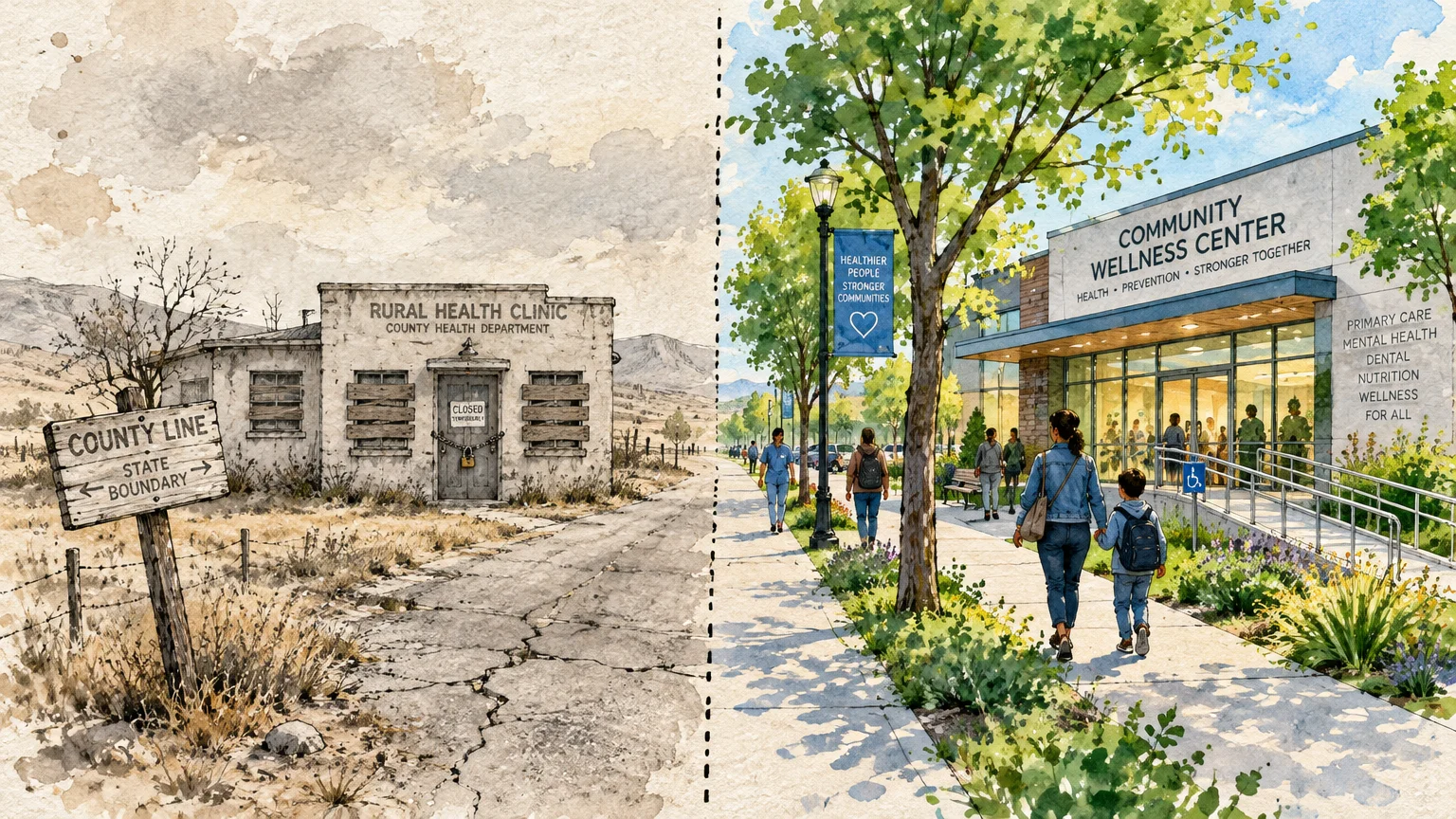
Living in a high-stress state becomes far more challenging when local healthcare infrastructure cannot meet community demand. Access to clinical support often dictates whether acute pressure transforms into chronic dysfunction.
According to Mental Health America, 23.4% of American adults—representing over 60 million individuals—experienced a mental illness in the past year. Alarmingly, one in four adults with a mental illness were completely unable to receive the treatment they needed.
The disparity in mental health workforce availability across state borders remains staggering. States like New York, Hawaii, New Jersey, Vermont, and Iowa provide the nation’s best healthcare access and insurance coverage.
Conversely, states like Nevada, Arizona, Alabama, Idaho, and Wyoming rank at the very bottom for mental health care access. In these regions, severe clinician shortages and restrictive insurance networks leave thousands without essential care.
If you live in an area with limited mental health providers, you must take a more proactive approach to finding care. Telehealth platforms and national organizations like the National Alliance on Mental Illness offer crucial alternative pathways for support.
The National Landscape: Economic Pressure and Connection Deficits
While state rankings highlight geographic differences, systemic stress remains widespread across the country. Macroeconomic uncertainty and cultural division elevate baseline tension regardless of where you reside.
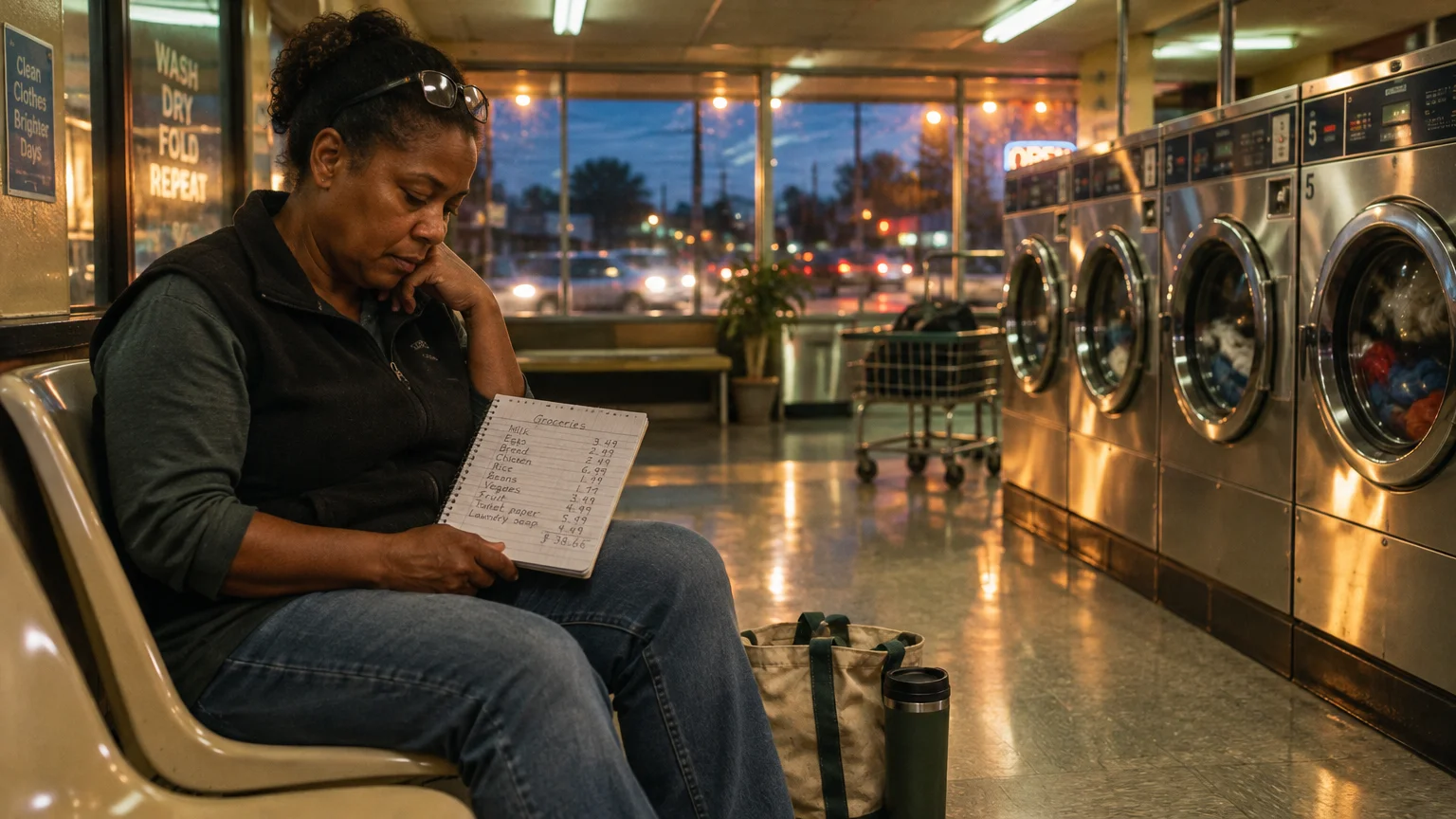
According to an annual poll by the American Psychiatric Association, 48% of Americans report feeling more anxious than they did the previous year. Paying monthly bills and following current events tied as the leading sources of this anxiety, cited by 62% of respondents.
Workplace demands continue to drain household energy reserves across every region. Data from the American Psychological Association indicates that 69% of employed adults cite work as a significant source of stress, with 54% noting that job insecurity harms their workplace well-being.
This relentless pressure carries significant economic and emotional consequences. Financial anxiety alone costs American employers an estimated $250 billion annually in lost productivity and absenteeism.
Societal division also erodes the personal relationships that normally protect us from burnout. The American Psychological Association found that 62% of adults identify societal division as a major stressor.
Adults stressed by societal conflict are notably more likely to lose patience with family members and cancel social plans. Isolating yourself when overwhelmed removes the very connection required to regulate your nervous system.
Indeed, 69% of adults report needing more emotional support than they received over the past year. Furthermore, over half of Americans report feeling isolated from others or lacking true companionship.
“We don’t have to do it all alone. We were never meant to.” — Brené Brown, PhD, LMSW
Common Misconceptions
Moving across state lines is often romanticized as an effortless cure for burnout. However, changing your geographic location without addressing underlying behavioral patterns rarely creates lasting peace.
Misconception 1: A low-stress state will automatically eliminate your anxiety. Psychologists refer to the belief that moving will solve emotional struggles as the “geographic cure.” Moving cannot resolve unaddressed trauma, maladaptive coping habits, or relational conflict.
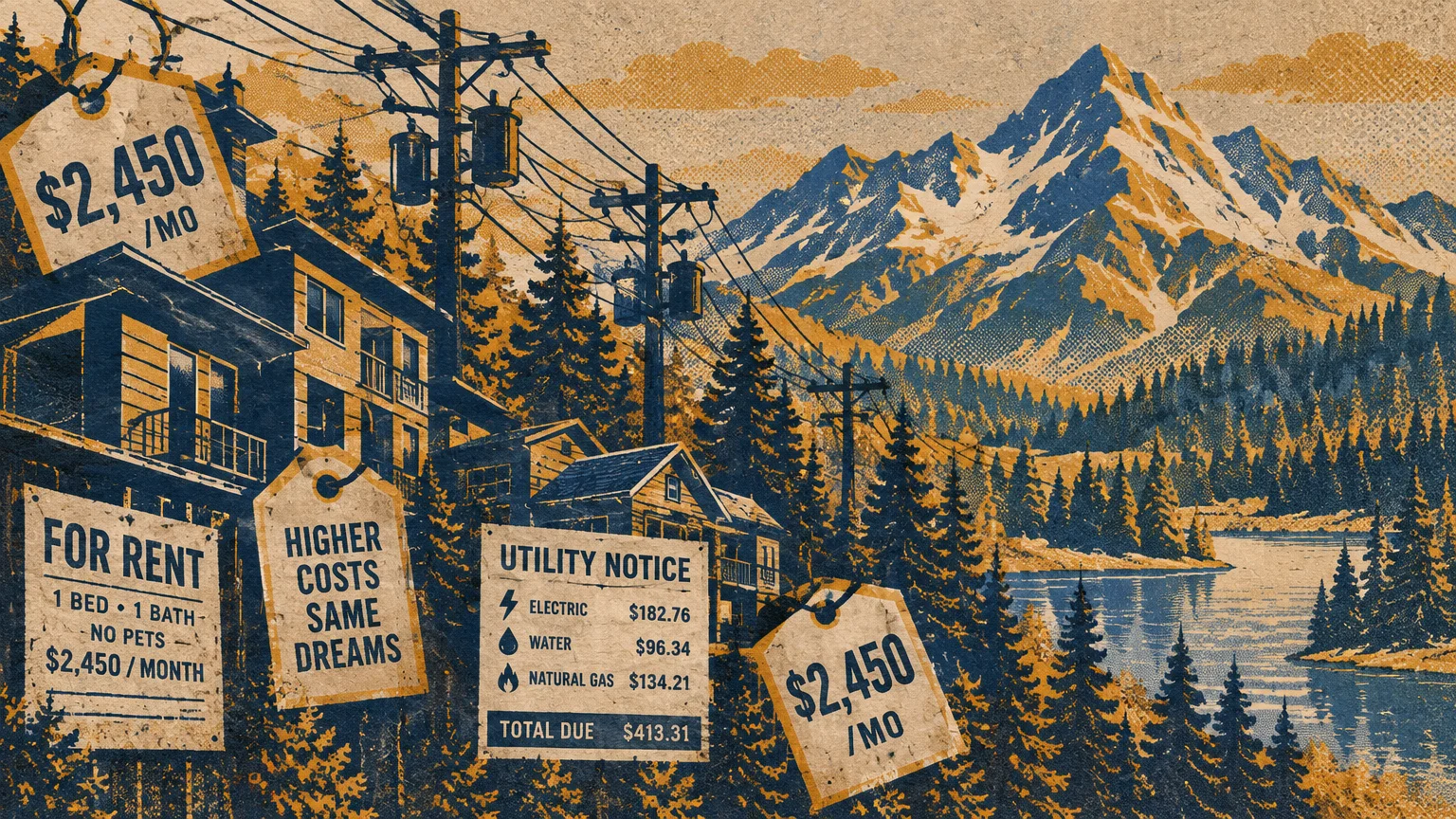
Misconception 2: High-earning states guarantee lower personal stress. States with high median incomes frequently feature exorbitant housing markets, intense workplace cultures, and grueling traffic. Financial resources do not protect you from chronic time scarcity.
Misconception 3: Rural living always provides a tranquil lifestyle. While rural communities offer open space and quiet, they often struggle with fewer medical specialists, limited broadband, and higher transportation costs. Geographic isolation can unintentionally increase emotional strain.

Psychological Strategies for High-Stress Environments
You cannot unilaterally redesign your state’s tax structure, healthcare system, or highway layout. You can, however, establish intentional boundaries that shield your nervous system from systemic pressures.
- Audit your daily information consumption. Constantly consuming sensationalized news triggers your body’s threat response; limiting updates to designated windows preserves vital emotional energy.
- Establish firm micro-boundaries around work hours. Chronic work stress thrives when off-duty hours blur; disconnect completely from work messaging once your scheduled day ends.
- Build a local micro-community of trusted peers. Reversing isolation requires intentional effort; schedule regular, face-to-face check-ins with friends to foster mutual emotional support.
- Engage in active physiological reset habits. Chronic stress floods your system with cortisol; release this tension through daily walks, focused breathing exercises, or progressive muscle relaxation.
- Streamline your financial decision points. Financial ambiguity magnifies anxiety; establish automated savings transfers and realistic monthly budgets to reduce daily financial dread.
Finding the Right Professional Help
Self-directed lifestyle adjustments provide valuable support, but they cannot replace clinical interventions when chronic stress overwhelms your coping capacity. Professional therapy equips you with personalized tools to process persistent environmental strain.
Consider seeking guidance from a licensed mental health professional if you recognize any of the following scenarios in your daily life:
- Persistent physical manifestations of stress: You experience unyielding insomnia, tension headaches, digestive distress, or panic sensations that medical doctors cannot trace to organic illness.
- Deterioration of primary relationships: You regularly lose patience with your partner or children, withdraw from close friends, or feel completely emotionally numb during social interactions.
- Impaired cognitive and occupational functioning: You find yourself unable to concentrate at work, miss critical deadlines, or experience persistent executive dysfunction caused by decision fatigue.
- Overwhelming feelings of hopelessness: You view your current circumstances as entirely inescapable and experience a lingering sense of dread about the future.
If private therapy feels financially out of reach, explore community mental health clinics or federated resources through the Substance Abuse and Mental Health Services Administration. Sliding-scale counseling options exist across all fifty states to ensure economic barriers do not block healing.
Frequently Asked Questions
Why does Louisiana rank as the most stressed state?
Louisiana ranks first due to compounding pressures across multiple categories. The state struggles with elevated poverty, lowest job security, long average work hours, and high healthcare costs that prevent residents from seeing physicians.
What factors make South Dakota the least stressed state?
South Dakota excels primarily due to outstanding economic stability and job security. The state maintains low unemployment, brief daily commutes, and a low cost of living that reduces baseline financial anxiety.
Can moving to a less stressed state improve mental health?
Relocating can alleviate external burdens like excessive traffic, high taxes, or dangerous neighborhoods. However, sustainable mental wellness still requires healthy boundaries, strong relationships, and effective emotional processing habits.
Where can I find mental health help if my state lacks providers?
You can access accredited telehealth platforms that connect you with licensed clinicians across state lines. Additionally, national organizations like the National Alliance on Mental Illness offer free peer support groups and navigators.
Protecting Your Well-Being Wherever You Live
Your environment undoubtedly influences your emotional reserves, but awareness grants you the power to respond proactively. Recognizing regional pressures allows you to validate your feelings without internalizing systemic dysfunction as a personal failure.
Focus on what remains within your direct sphere of control today. Cultivate deep relationships, set firm boundaries with work, and prioritize daily practices that restore calm to your nervous system.
The information in this article is meant for educational purposes and general guidance. It does not replace individual therapy, counseling, or medical treatment. If you or someone you know is in crisis, contact the 988 Suicide & Crisis Lifeline by calling or texting 988.
Last updated: October 2026. Psychology research evolves continuously—verify current findings with professional sources.









Leave a Reply