

You bring up a sensitive concern, and your partner suddenly checks their phone or asks about dinner plans. Sensing emotional resistance tells you that an unspoken barrier has entered the room.
When individuals fear interpersonal tension, conflict avoidance signs quickly replace open dialogue. Recognizing these subtle maneuvers protects your relationships from lingering resentment, silent drift, and unresolved hostility.
Spotting these defensive habits helps you respond to underlying fears with steady patience rather than frustration. Here is how to identify avoidance patterns and steer conversations toward productive connection.
The Psychology Behind Conflict Avoidance
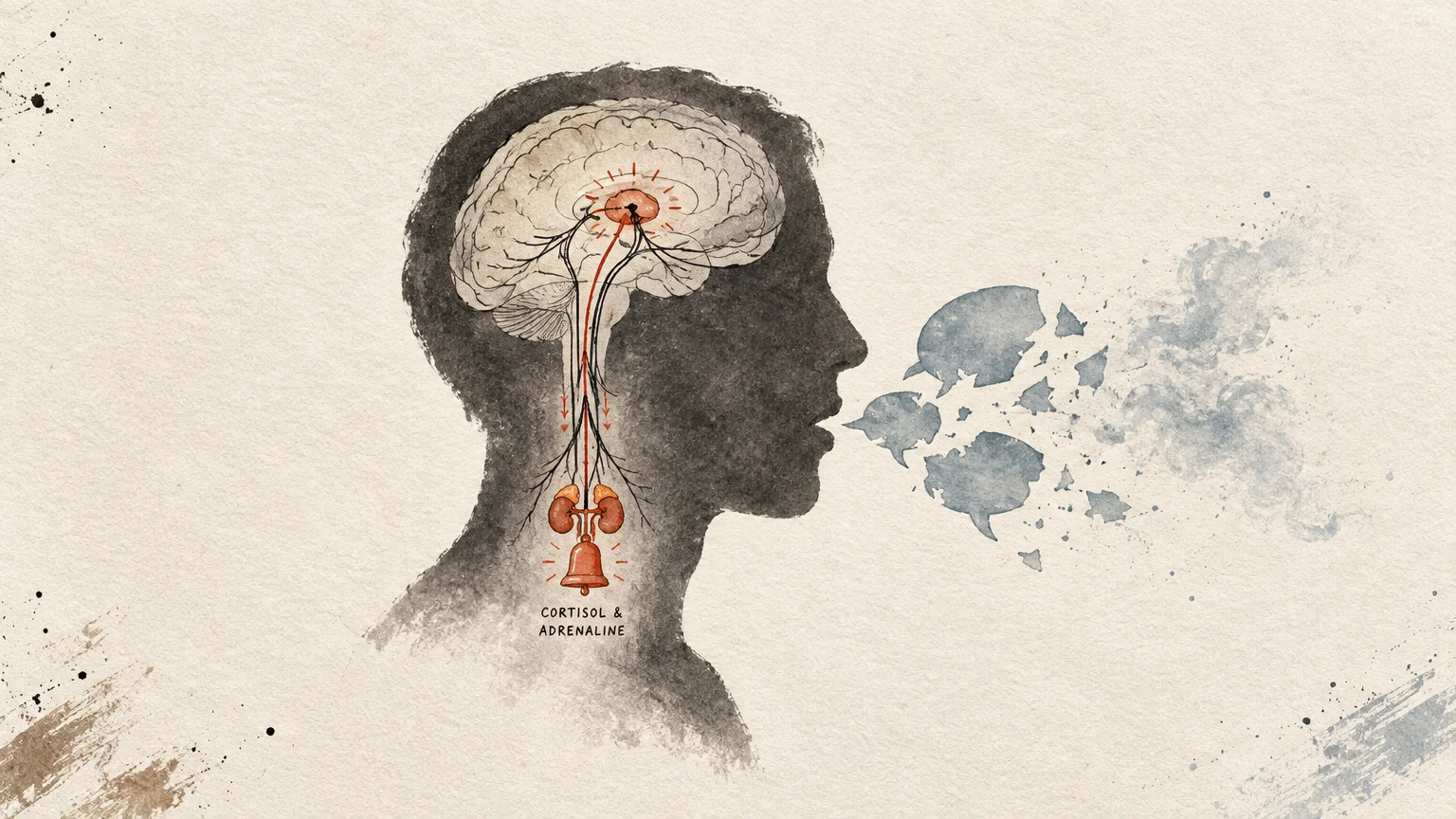
Avoidance rarely stems from simple apathy; rather, it typically signals an overloaded nervous system. When confronting interpersonal friction feels threatening, the human brain defaults to basic self-protection.
Psychologists at the American Psychological Association note that interpersonal stress triggers biological survival mechanisms. Your sympathetic nervous system releases cortisol and adrenaline, prompting you to flee or freeze.
For conflict-avoidant individuals, this survival instinct manifests as behavioral retreat. They sidestep awkward topics to secure fleeting emotional comfort, even if that retreat creates lasting relational harm.
Attachment theory offers further insight into why difficult conversations trigger avoidance. Adults with avoidant attachment tendencies learned early that expressing vulnerability often leads to rejection or overwhelming demands.
Early family conditioning reinforces these self-protective communication habits. If someone grew up in an unpredictable or hypercritical household, staying silent felt like the only reliable survival strategy.
Consequently, many people perceive difficult conversations as existential threats rather than collaborative opportunities. Recognizing this subconscious anxiety helps you respond with steady curiosity instead of personalized resentment.

7 Telltale Signs Someone Is Avoiding a Hard Conversation
Recognizing signs of avoidance enables you to distinguish between everyday distractions and deliberate emotional evasion. Watch for these seven behavioral patterns in your personal and professional relationships.
1. Chronic Topic Switching and Deflection
You introduce a sensitive concern, and the other person instantly pivots to an unrelated subject. They might ask about your weekend plans, highlight trivial details, or bring up an unrelated past grievance.
This tactical redirection derails the interaction before vulnerable feelings surface. By seizing control of the narrative, the speaker shields themselves from uncomfortable self-reflection.
For example, asking a coworker about a missed project deadline might prompt an enthusiastic speech about office supplies. The sudden subject change sidesteps the core issue of accountability.
Pay attention if this distraction happens consistently around specific topics. When discussions regarding finances, boundaries, or commitments repeatedly dissolve into small talk, deflection is at work.
2. The Sudden Surge in Superficial Agreeableness
Sometimes avoidance masquerades as immediate cooperation. The individual enthusiastically agrees with your points and makes hasty promises simply to end the interaction as quickly as possible.
Relationship experts term this appeasement behavior a fawning response. The person prioritizes interpersonal peace over authentic alignment, leaving the underlying tension completely unresolved.
For instance, a partner might quickly say, “You’re totally right, I’ll change that tomorrow,” without asking clarifying questions. Their primary objective is ending the conversation, not solving the problem.
You will spot this sign when agreeable words never produce measurable behavior changes. Their superficial consent acts solely as an exit ramp from substantive dialogue.
3. Stonewalling and Total Emotional Withdrawal
During tense moments, an avoidant person may shut down completely. They cross their arms, avert their gaze, or offer nothing more than cold silence and monosyllabic replies.
Research from The Gottman Institute identifies stonewalling as a primary predictor of relationship distress. It frequently occurs when heart rates exceed 100 beats per minute, causing acute psychological flooding.
In practice, the stonewaller builds an impenetrable emotional wall while remaining physically in the room. They refuse to validate your questions or offer any verbal feedback.
While stonewalling feels intentionally punishing, it often reflects a desperate effort to manage internal overload. Unfortunately, this silence leaves you isolated and prevents any meaningful resolution.
4. Weaponized Humor and Chronic Sarcasm
While light humor can defuse mild awkwardness, weaponized jokes frequently conceal acute vulnerability. When you raise a sincere concern, the person deflects your words with a flippant punchline or sarcastic remark.
Sarcasm establishes a protective barrier between the speaker and genuine emotional intimacy. It minimizes your feelings while exempting them from real accountability.
Consider a situation where you share feelings of loneliness, and your partner quips, “Maybe I should buy you a goldfish.” That sharp joke invalidates your emotional reality under the guise of comedy.
If your attempts at serious dialogue consistently turn into comedy routines, recognize the defensive motive. Laughter shields them from confronting anxieties they feel unprepared to handle.
5. Tactical Busyness and Physical Disappearance
Whenever you suggest talking, the person suddenly finds an urgent task to complete. They might clean the kitchen, answer work emails, or schedule back-to-back social commitments.
In modern relationships, this tactic often appears as digital ghosting or deliberately delayed text messages. By controlling their physical and digital availability, they eliminate opportunities for spontaneous dialogue.
For example, someone might stay at the office late or retreat to another room whenever sensitive topics arise. Physical distance becomes their chosen shield against emotional vulnerability.
While genuine schedule conflicts happen, systematic unavailability around critical topics reveals deliberate avoidance. They hope that passing time will dissolve the problem without their participation.
6. Blaming Your Tone Instead of Addressing the Issue
Instead of addressing the substance of your concern, the other person critiques your delivery. They claim you sound accusatory, chose the wrong moment, or spoke with unnecessary sharpness.
Clinical articles in Psychology Today refer to this defensive tactic as tone policing. By placing your emotional expression on trial, the individual diverts focus from their own behavior.
For instance, bringing up an unpaid bill might prompt the reply, “I would listen if you didn’t sound so condescending.” The conversation suddenly shifts to your tone, leaving the bill forgotten.
This diversion forces you to justify how you spoke rather than solving the real problem. Consequently, the original issue remains ignored while you debate interpersonal etiquette.
7. Over-Intellectualizing Emotional Reality
Some individuals process emotional friction by treating interpersonal disputes like legal debates. They dissect your arguments with clinical detachment, quoting abstract concepts while ignoring heartfelt feelings.
Intellectualization operates as a sophisticated psychological defense mechanism against raw vulnerability. It replaces empathetic connection with sterile analysis, transforming an intimate talk into an academic debate.
For example, expressing hurt about feeling excluded might trigger a lecture on statistical communication probability. Rationalizing the event allows them to bypass the messy work of empathy.
When someone hides behind cold logic, they detach from the human impact of the situation. This approach leaves you feeling emotionally dismissed, despite their articulate explanations.
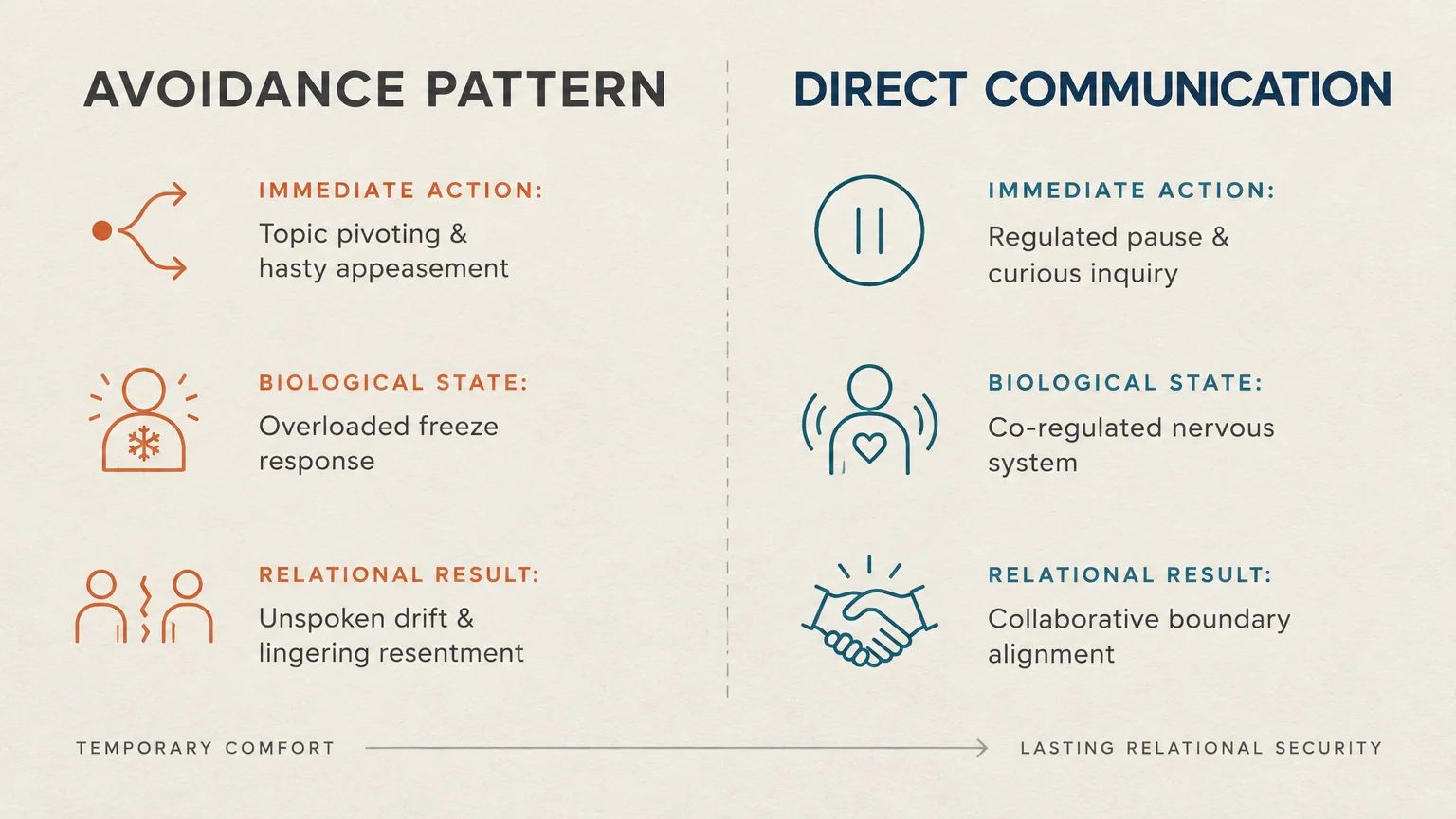
Avoidance vs. Direct Communication: Key Differences
Recognizing the difference between evasion and healthy communication helps you evaluate your interactions. The table below outlines how avoidant behavior contrasts with direct, collaborative engagement.
| Communication Area | Avoidant Pattern | Direct, Healthy Approach |
|---|---|---|
| Topic Management | Abruptly shifts focus to trivial details or changes subjects. | Acknowledges the core issue and stays on topic. |
| Emotional Vulnerability | Hides behind sarcasm, cold silence, or abstract logic. | Expresses feelings openly using clear “I” statements. |
| Agreements & Follow-Through | Makes rapid, hollow promises to terminate the discussion. | Negotiates workable compromises and honors commitments. |
| Handling Feedback | Attacks the speaker’s tone, timing, or delivery style. | Listens without defensiveness to understand the concern. |
| Time Availability | Fabricates urgent chores or delays responses indefinitely. | Schedules an agreed-upon time to talk within 48 hours. |

Myths Worth Debunking
Misunderstandings regarding conflict avoidance often cause people to misinterpret social cues or escalate arguments. Debunking these common myths will bring greater clarity to your personal relationships.
Myth 1: Silence Signifies Agreement
Many people assume that a quiet counterpart agrees with their perspective. In reality, silence often conceals profound resentment, inner paralysis, or emotional disengagement.
When someone stops replying, they are frequently managing sensory overload rather than conceding defeat. Assuming agreement only sets the stage for future conflict.
Myth 2: Conflict Avoidance Preserves Relationship Peace
Sidestepping hard discussions might produce brief calm, but it inevitably generates long-term relational damage. Suppressed grievances ferment into passive-aggressive hostility and emotional distance.
True peace requires resolving differences rather than ignoring them. Sweeping problems under the rug creates a fragile surface that eventually collapses under pressure.
Myth 3: Strong Relationships Never Require Awkward Talks
Pop culture perpetuates the fantasy that true love or deep friendships flow effortlessly. In truth, every lasting partnership demands uncomfortable boundary discussions and ongoing negotiations.
Healthy relationships do not avoid friction; instead, they excel at constructive repair. Expecting effortless harmony encourages people to hide their authentic concerns.
Myth 4: Pushing Harder Produces an Immediate Breakthrough
When you encounter avoidance, your initial urge might be to demand immediate answers. However, aggressive confrontation typically triggers the other person’s defensive survival instincts.
Excessive pressure causes avoidant individuals to retreat further into their defensive shells. Fostering emotional safety yields much greater progress than demanding immediate resolution.

Actionable Strategies to Address Avoidance
“Clear is kind. Unclear is unkind.” — Brené Brown, Ph.D., LMSW
Breaking cycles of evasion requires patience, firm boundaries, and emotional self-regulation. When you adjust how you initiate conversations, you lower the perceived stakes for everyone involved.
- Regulate your own nervous system: Ground your body and soften your vocal tone before opening a discussion. Calm energy communicates safety to the other person.
- Use a gentle startup: Introduce your topic without criticism or contempt. Frame your perspective around your feelings and needs rather than the other person’s flaws.
- Name the dynamic objectively: Point out the conversational pattern without casting blame. Try saying, “I notice we switch topics whenever we discuss household responsibilities.”
- Create bounded conversational containers: Propose a fifteen-minute conversation rather than an open-ended debate. Definite time limits reduce the dread of an exhausting confrontation.
- Frame the issue collaboratively: Structure the conversation as you and your partner teaming up against the problem. Joint ownership removes the impulse to play defense.
- Ask low-threat questions: As communication guides on Verywell Mind suggest, invite collaboration rather than demanding explanations. Ask, “What would make discussing this topic feel safer for you?”
- Establish agreed-upon pause signals: Agree that either person can request a brief recess during intense moments. Always designate a specific time to reconvene so the pause does not become avoidance.
Practicing these techniques replaces defensive posturing with collaborative problem-solving. Over time, predictable safety transforms difficult conversations into opportunities for deeper connection.
Remember that change takes consistent practice from both parties. Celebrating small conversational wins reinforces new, healthy habits while building mutual trust.

Signs It’s Time to Talk to a Therapist
Sometimes, communication problems become too deeply entrenched for self-help strategies alone. Professional guidance provides the neutral framework and tools necessary to dismantle long-standing relational blocks.
Consider consulting a licensed therapist if you encounter any of the following patterns in your relationship:
- Multi-day stonewalling episodes: When silent treatments last for days or weeks, the relationship enters severe gridlock.
- Pervasive fear of speaking up: Feeling like you constantly walk on eggshells erodes self-esteem and creates acute anxiety.
- Escalating passive-aggressive behavior: When unresolved issues manifest as subtle sabotage or chronic sarcasm, trust rapidly deteriorates.
- Cyclical broken promises: Repeated superficial agreements without subsequent follow-through indicate deeply rooted emotional resistance.
Evidence-based modalities like Emotion-Focused Therapy (EFT) and the Gottman Method specialize in de-escalating these exact defensive cycles. A trained therapist helps both partners voice underlying attachment needs safely.
Individual therapy can also help avoidant communicators unpack past traumas and expand their distress tolerance. Learning that conflict does not equate to abandonment unlocks lifelong emotional freedom.
Frequently Asked Questions
How do you speak with someone who shuts down during arguments?
Offer them a structured pause while scheduling a concrete time to resume the discussion. Lowering your vocal volume and sitting down can also ease their physical defensiveness.
Is conflict avoidance a sign of emotional immaturity?
Avoidance usually reflects an overwhelmed nervous system or learned family patterns rather than mere immaturity. However, refusing to address chronic avoidance can stall adult emotional maturity.
How long should you wait before bringing up an avoided topic again?
Wait between a few hours and a full day so elevated stress hormones can normalize. Delaying the talk for weeks, however, allows unresolved feelings to solidify into bitter resentment.
Can chronic avoidance end an otherwise loving relationship?
Yes, persistent avoidance gradually replaces authentic intimacy with emotional distance. Without resolving fundamental differences, couples often experience quiet alienation that ultimately destroys the relationship.
Fostering Courageous and Honest Connection
Addressing difficult conversations requires both courage and profound empathy. By learning to identify the subtle signs of avoidance, you can respond with calm clarity rather than reactive anger.
Healthy relationships do not thrive on the absence of conflict; they grow through courageous repair. Meeting uncomfortable moments with honesty paves the path toward lasting emotional safety.
The information in this article is meant for educational purposes and general guidance. It does not replace individual therapy, counseling, or medical treatment.
If you or someone you know is in crisis, contact the 988 Suicide & Crisis Lifeline by calling or texting 988.
Last updated: February 2026. Psychology research evolves continuously—verify current findings with professional sources.









Leave a Reply