

You feel an instinctive urge to pull away the moment someone asks for deeper emotional closeness. When a partner seeks vulnerability, your nervous system responds by pushing them away to preserve safety.
Recognizing avoidant attachment signs helps you make sense of this reflexive retreat. Grounded in classic attachment theory, these behaviors represent protective strategies you developed to survive emotional neglect or intrusion.
Unpacking your relational defense mechanisms gives you direct agency over your love life. You can safeguard your independence while building healthy intimacy without feeling trapped or overwhelmed.
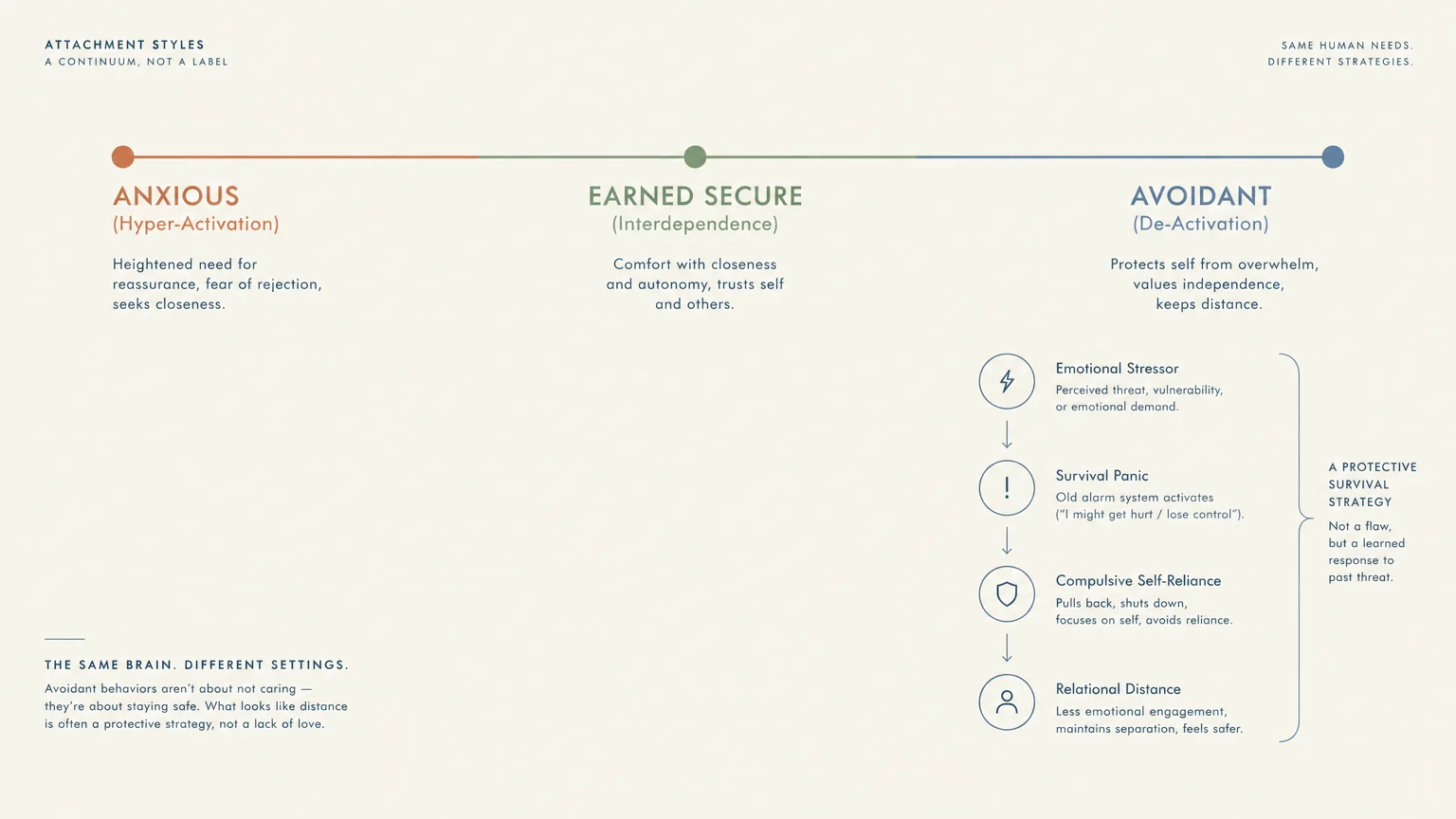
Understanding the Avoidant Attachment Style
Attachment theory categorizes how human beings bond and protect themselves in romantic partnerships. An avoidant attachment style forms when an individual learns early in life to view emotional reliance as unsafe.
Instead of turning to loved ones during stress, you turn inward. You treat your own emotional fortress as your only reliable defense mechanism against pain.
Clinical research from the American Psychological Association shows that attachment patterns remain malleable throughout adulthood. Recognizing your defenses is the first decisive step toward earned emotional freedom.

1. Fierce Compulsive Self-Reliance
You believe that relying on anyone else invites inevitable disappointment. You take immense pride in solving every personal problem alone and view asking for assistance as an unacceptable weakness.
Psychologists call this defense compulsive self-reliance. Independence ceases to be a healthy practical skill and becomes an inflexible barrier against human connection.
For example, you might refuse help while sick or navigate major financial transitions without telling your partner. Carrying this burden alone creates exhaustion, yet you still prefer isolation over interdependence.
Notice when pride disguises an underlying fear of being let down. True autonomy includes the freedom to accept support when life becomes challenging.

2. Emotional Suppression and Minimizing Feelings
You instinctively downplay distress by convincing yourself that difficult emotions simply do not matter. When hurt or sadness surfaces, your mental reflex is to shrug it off and move forward.
You often identify as strictly rational and view emotional expression as chaotic or unproductive. This intellectual filter allows you to avoid uncomfortable sensations lingering in your body.
Suppression exacts a severe physiological and relational toll over time. When you systematically mute painful emotions, you inevitably stifle your ability to experience deep joy and spontaneous warmth.
Educational resources from Psychology Today indicate that suppressed emotions manifest as chronic bodily tension or irritability. Allowing yourself to feel does not make you weak; it keeps you human.

3. The Urge to Pull Away When Closeness Increases
A suffocating sensation often strikes right after an intimate breakthrough or a wonderful weekend together. Rather than enjoying the closeness, you feel trapped and desperately search for an exit.
You execute deactivating strategies to re-establish emotional distance. You might stop answering text messages, pick petty arguments, or bury yourself in work projects for days.
This sudden withdrawal confuses your partner and often earns you the label of an emotionally distant partner. Your partner seeks repair, but their pursuit only escalates your desire to escape.
Recognize that this panic is a nervous system alarm, not an authentic sign of incompatibility. Closeness feels dangerous to your survival instincts even when your relationship is safe.

4. Hyper-Fixating on Flaws and Idealizing Fantasies
You frequently spot trivial imperfections in your partner and blow them up into non-negotiable dealbreakers. The way they laugh, dress, or organize their kitchen suddenly proves the relationship cannot work.
Clinicians refer to this behavior as searching for the fatal flaw. You use microscopic defects to rationalize an emotional exit before real vulnerability can develop.
Alternatively, you may obsess over an ex-partner or yearn for an imaginary soulmate who will check every box. This romanticized phantom provides a convenient excuse to reject the real person standing before you.
Comparing real people to unattainable fantasies safeguards you against heartbreak. However, perfectionism guarantees chronic isolation because no living human can pass an impossible test.

5. Extreme Discomfort with Vulnerability and Needs
Sharing your insecurities, grief, or tender hopes makes your stomach turn. You keep conversations light or ask endless questions about your partner to keep the spotlight off your inner world.
You also struggle when your partner expresses normal attachment needs for reassurance or time together. You perceive their natural desires as suffocating obligations that threaten your autonomy.
Renowned vulnerability researcher Brené Brown describes why hiding your authentic self damages emotional resilience.
“Vulnerability is not winning or losing; it’s having the courage to show up and be seen when we have no control over the outcome.” — Brené Brown, Ph.D., LMSW
Vulnerability feels like walking into an ambush without armor. Yet without vulnerability, no relationship can cross the threshold from polite acquaintance into profound partnership.

6. Conflict Avoidance and Stonewalling
Disagreements feel hazardous rather than constructive. When emotional tension flares during an argument, you frequently shut down, cross your arms, and detach into complete silence.
Relationship researchers at The Gottman Institute classify this protective reaction as stonewalling. Stonewalling occurs when internal physiological flooding overwhelms your ability to process verbal input.
While you withdraw to prevent an emotional explosion, your cold silence feels punitive and terrifying to your partner. Your shutdown inadvertently escalates the very conflict you want to avoid.
Learning to ask for structured, twenty-minute timeouts preserves your emotional balance without abandoning your partner. Taking space with a stated return time de-escalates conflict effectively.

7. Guarding Boundaries Rigidly Against Encroachment
You build inflexible walls around your physical space, personal calendar, and hobbies. Any suggestion of sharing a living environment or combining routines triggers intense dread.
Healthy boundaries resemble open doorways that protect your safety while allowing connection. In contrast, avoidant boundaries resemble fortress gates designed to keep everyone permanently outside.
This defensive perimeter ensures that nobody can impose expectations on you or demand your energy. Unfortunately, maintaining an unyielding perimeter leaves you stranded inside your own walls.
Healthy relationships allow two whole individuals to interlock without losing their distinctive identities. Autonomy and intimacy are complementary partners, not bitter enemies.

Where Does Avoidant Attachment Come From?
Attachment strategies take root during infancy and early childhood. When primary caregivers ignore, punish, or dismiss distress, an infant quickly learns that expressing needs brings rejection.
To preserve proximity to their caregivers, the young child shuts down their emotional signaling system. You learned that self-soothing was your only dependable survival strategy.
In other cases, an avoidant style develops in response to enmeshed or intrusive parenting. A child who feels constantly smothered builds severe defenses to safeguard basic personal individuality.
Your avoidant attachment style is not an innate character defect. It represents an intelligent, creative adaptation that kept your younger self emotionally safe during formative years.
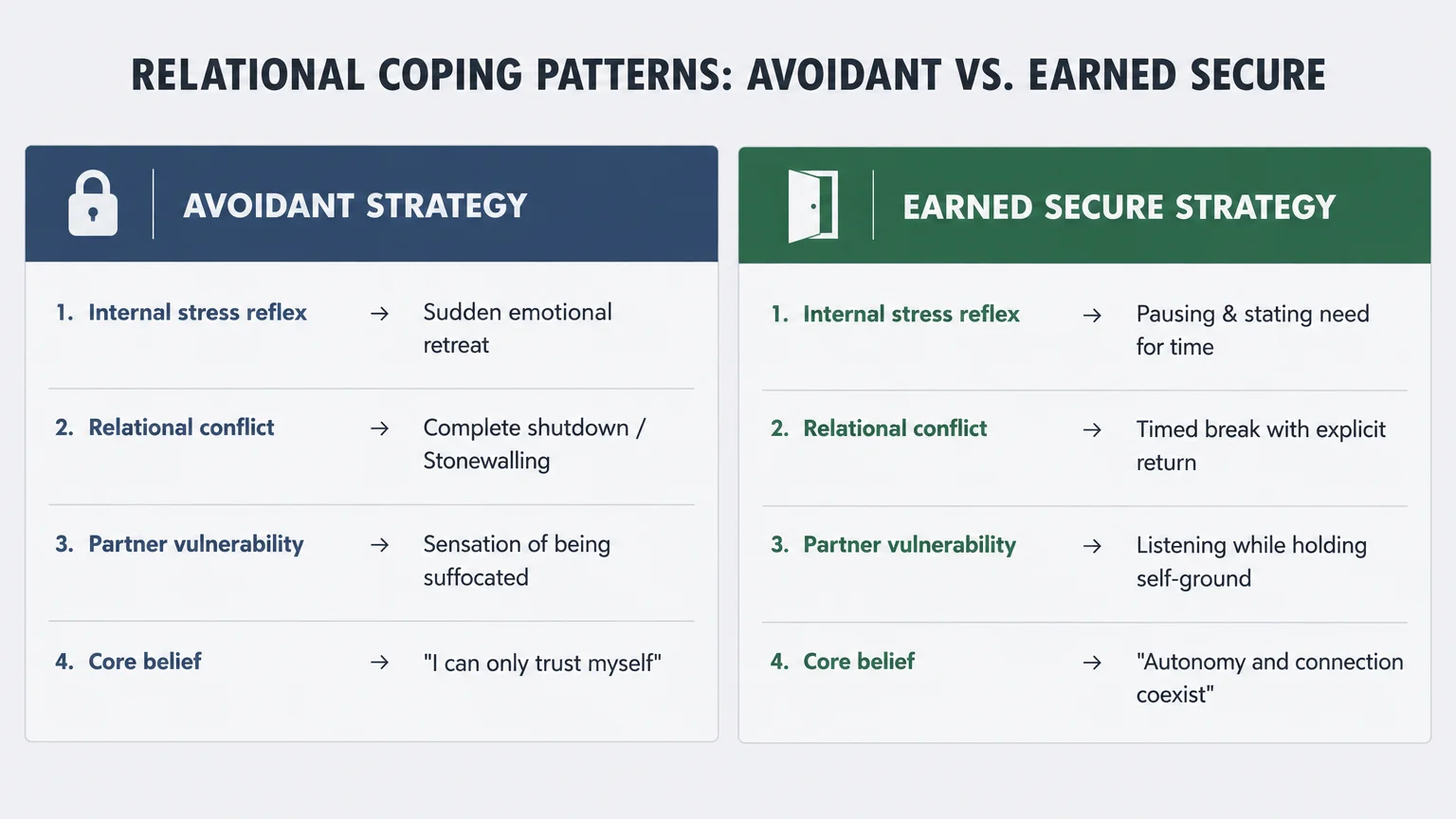
Avoidant vs. Secure Coping Strategies
Contrasting avoidant instincts with secure alternatives clarifies where you can introduce deliberate change. Examining these typical relationship moments highlights your personal growth opportunities.
| Relationship Trigger | Avoidant Instinct | Secure Relational Response |
|---|---|---|
| Partner expresses emotional distress | Dismisses feelings as dramatic or illogical | Listens patiently and validates their perspective |
| Conflict or disagreement flares | Shuts down, stonewalls, or storms away | Takes a timed pause, then discusses solutions |
| Deepening intimacy after major milestone | Panics, picks fights, or ghosts temporarily | Names the fear while enjoying the connection |
| Needing help or practical support | Suffers silently and handles it alone | Requests specific assistance without shame |
| Partner asks for quality time | Feels suffocated and demands total isolation | Negotiates a shared schedule that honors both needs |
Small, deliberate behavioral pivots weaken automatic defense circuits over time. Secure behavior is a learned practice rather than a static personality trait.

What Can Go Wrong: Misconceptions About Avoidant Attachment
Popular discourse frequently demonizes individuals with avoidant attachment as callous, uncaring partners who lack empathy. This toxic stereotype causes unwarranted shame and deters people from seeking help.
In reality, individuals with high avoidance often experience deep emotional empathy and a quiet craving for connection. Their profound fear of intimacy simply hijacks their nervous system before connection can flourish.
Another critical pitfall is attempting to heal relational avoidance through solitary, intellectual exercises. Reading psychology books in complete solitude will never rewire emotional triggers forged in relationships.
You cannot read your way into secure attachment; you must experience it interpersonally. Real progress requires risking honest vulnerability with safe, consistent people.
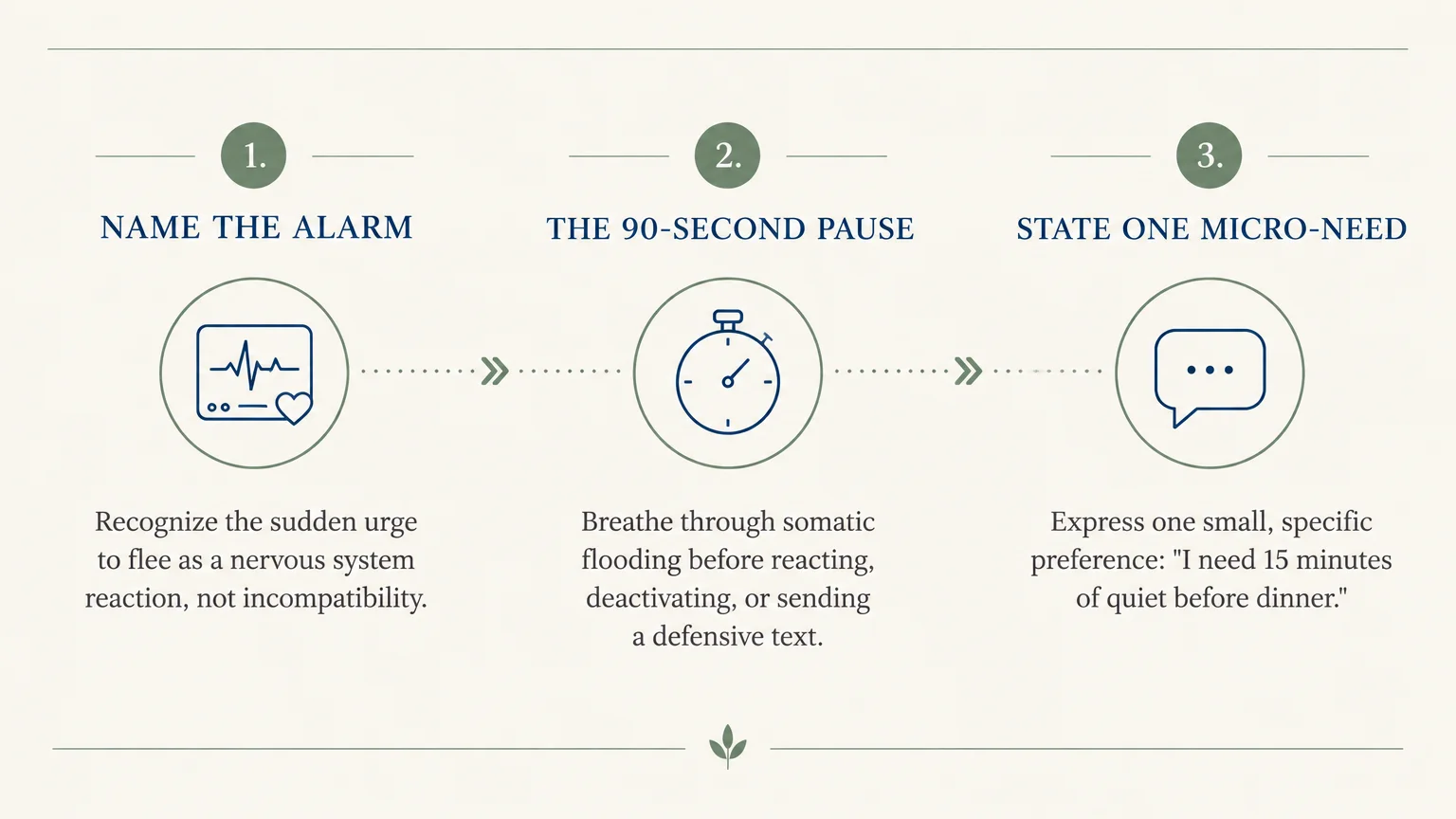
Actionable Steps to Shift Toward Earned Security
Rewiring attachment defenses requires persistent, gentle experimentation in your daily interactions. Practice these evidence-based techniques to expand your capacity for closeness:
- Track your physical deactivation cues: Notice bodily signs like a clenched jaw, sudden annoyance, or shallow breathing when closeness intensifies.
- Expand your emotional vocabulary: Identify and name two specific feelings each morning rather than defaulting to “fine” or “busy.”
- Practice micro-vulnerability: Share one small fear, preference, or childhood memory with a safe friend once a week.
- Implement the structured timeout: When feeling flooded during arguments, say, “I need twenty minutes to calm down, and then I will return.”
- Interrogate flaw-seeking thoughts: When you start nitpicking your partner, ask yourself what vulnerability you are actively dodging.
Taking microscopic relational risks trains your nervous system to tolerate intimacy without triggering panic alarms. Each positive relational outcome rewires your internal expectations of love.
You can discover additional interpersonal communication strategies on Verywell Mind. Progress builds through steady, patient repetition rather than dramatic overnight transformations.

When to Seek Professional Support
Unpacking protective survival scripts can feel daunting without skilled guidance. Consider working with a licensed relationship therapist or mental health counselor in these scenarios:
- Repetitive relationship sabotage: You abruptly terminate promising relationships whenever genuine emotional intimacy develops.
- Debilitating social loneliness: Your rigid self-reliance leaves you feeling chronically isolated, depressed, or alienated from others.
- Severe conflict paralysis: Disagreements trigger complete emotional dissociation, stonewalling, or uncontrolled rage.
- Compulsive numbing routines: You consistently rely on alcohol, extreme overwork, or gaming to suppress underlying emotional distress.
Evidence-based modalities like Emotionally Focused Therapy (EFT) and attachment-informed cognitive behavioral therapy produce excellent outcomes for avoidant patterns. A qualified clinician creates a safe container to test vulnerability without judgment.
Frequently Asked Questions About Avoidant Attachment
Can an avoidant attachment style change into a secure one?
Yes, people can develop what psychologists term earned security through intentional self-work, healthy therapy, and safe relationships. Attachment patterns function like habits that can be consciously rewired.
Do avoidant partners actually experience heartbreak?
Avoidant individuals experience intense heartbreak, though their grief is often delayed by weeks or months due to emotional suppression. Once defenses lower, loneliness and sorrow often hit forcefully.
How do you differentiate avoidant attachment from narcissism?
Avoidant attachment is driven by a fear of vulnerability and a desire for safety, whereas narcissism involves grandiosity and entitlement. Avoidant people have empathy, even when expressing it feels terrifying.
What should you do if your partner has an avoidant attachment style?
Offer them consistent emotional space, avoid accusatory demands during conflict, and praise small gestures of openness. Regulate your own anxiety rather than pursuing them when they retreat.
Building Relationships on Your Own Terms
Healing your avoidant tendencies does not mean surrendering your precious individuality or living in constant emotional chaos. Healthy intimacy honors your boundaries while offering a loving sanctuary where you never have to walk alone.
Choose one micro-step today, whether that means sharing a private thought or pausing before stonewalling. Genuine emotional freedom blossoms when courage gently replaces defense.
The information in this article is meant for educational purposes and general guidance; it does not replace individual therapy, counseling, or medical treatment. If you or someone you know is in crisis, contact the 988 Suicide & Crisis Lifeline by calling or texting 988.
Last updated: February 2026. Psychology research evolves continuously—verify current findings with professional sources.







Leave a Reply