

You notice your partner angling their screen away or flipping their phone face-down the moment you walk into the room. Sudden shifts in digital habits often trigger an intuitive gut check that you should not dismiss.
While healthy relationships require personal privacy, distinct secrecy often points to emotional betrayal, financial deceit, or hidden personal habits.
Learning to identify deceptive patterns helps you address relationship concerns calmly before anxiety undermines your peace of mind. Here are the core indicators that separate normal phone boundaries from active concealment.
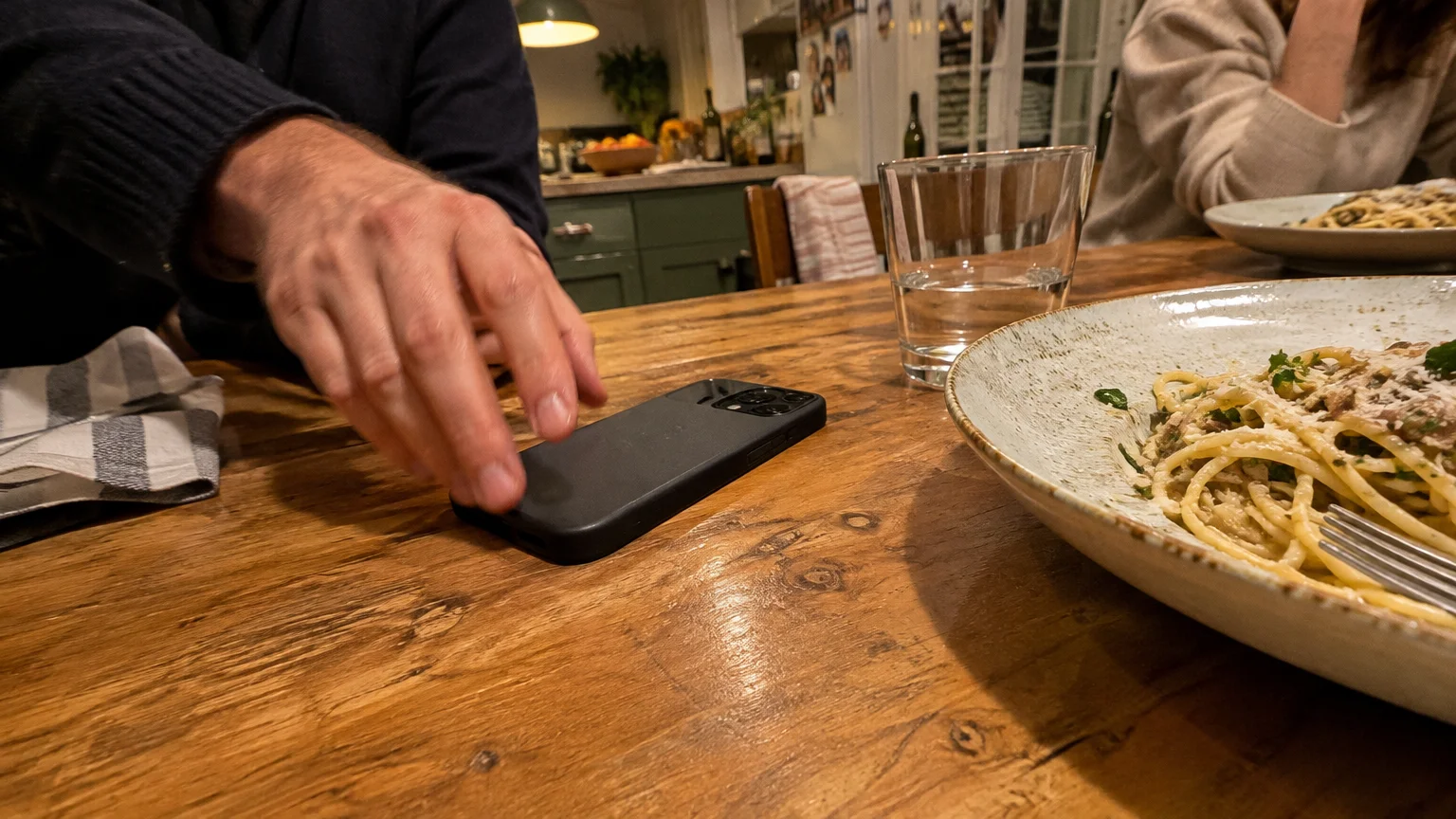
1. Habitual Screen-Flipping and Face-Down Placement
Pay attention to how your partner sets their device on tables and nightstands. If they suddenly begin turning the screen face-down every time they put it down, they may be shielding incoming notifications.
People occasionally flip their phones to avoid distractions during focused conversations. However, a compulsive reflex to obscure the display suggests they want to prevent specific names or preview messages from appearing in your sight.

2. Angling the Screen and Body Shielding
Notice their posture whenever you sit beside them on the sofa. If your partner tilts the screen at sharp angles or repositions their shoulders to block your line of sight, they are actively hiding content.
Open partners relax their posture and leave screens visible during casual browsing. Physical guarding indicates hypervigilance; your presence feels like a risk to whatever private interaction they are sustaining.
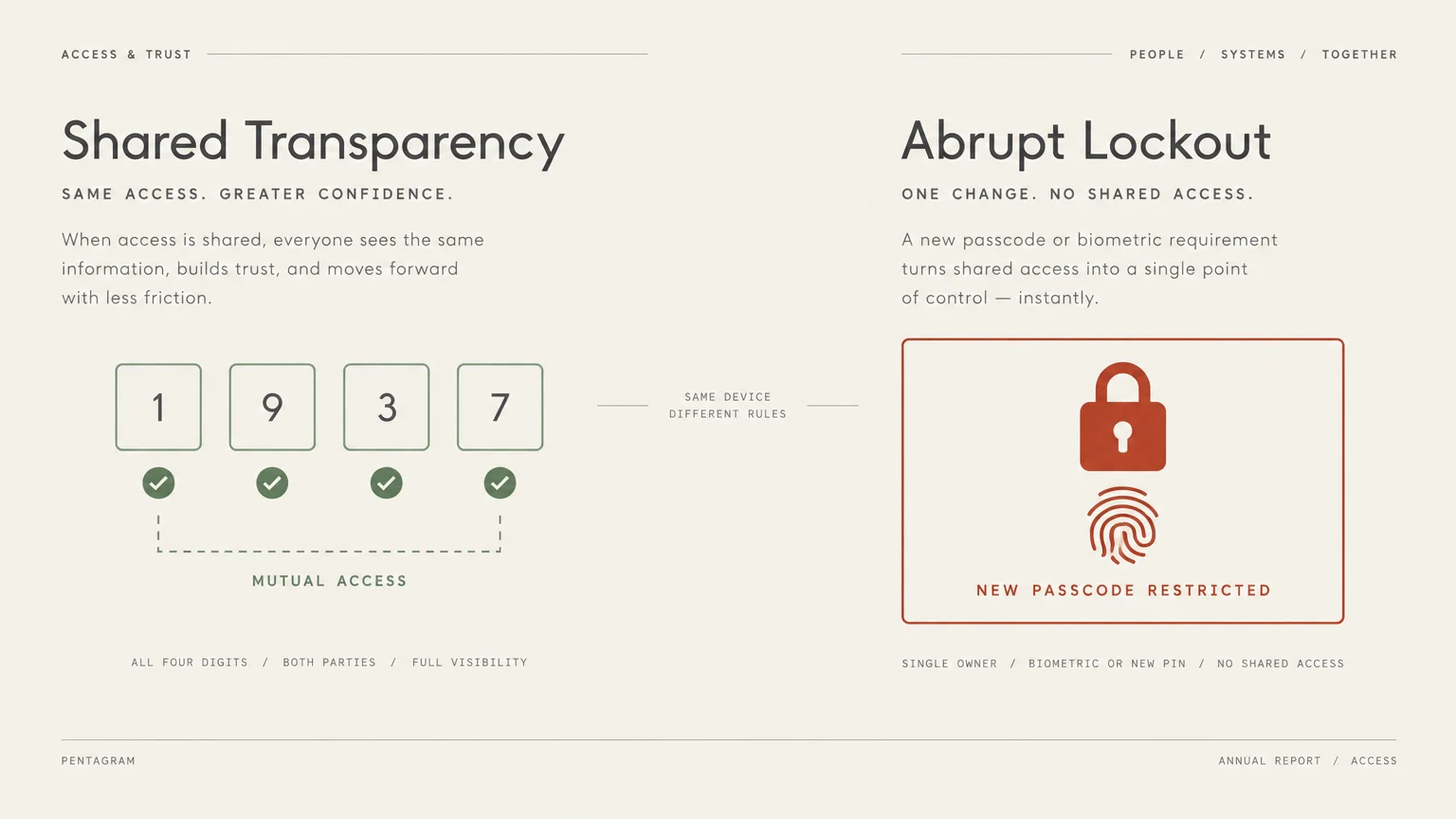
3. Abrupt Passcode Changes and New Biometric Locks
Shared transparency often involves knowing each other’s device codes for everyday convenience. When a partner abruptly changes their passcode without mentioning it, their action signals an intentional boundary shift.
They might claim the change enhances security against data theft. Yet if they refuse to share the new pin for routine tasks, they are prioritizing secrecy over established relational trust.

4. The Device Goes Everywhere, Even into the Bathroom
Observe whether the phone becomes an inseparable physical attachment. If your partner now takes their device into the shower, on quick trips to the kitchen, or to take out the trash, consider that behavior a warning sign.
Leaving a device unattended creates acute anxiety for someone who conceals information. They carry it everywhere to ensure an unexpected vibration or chime never rings out while you are nearby.
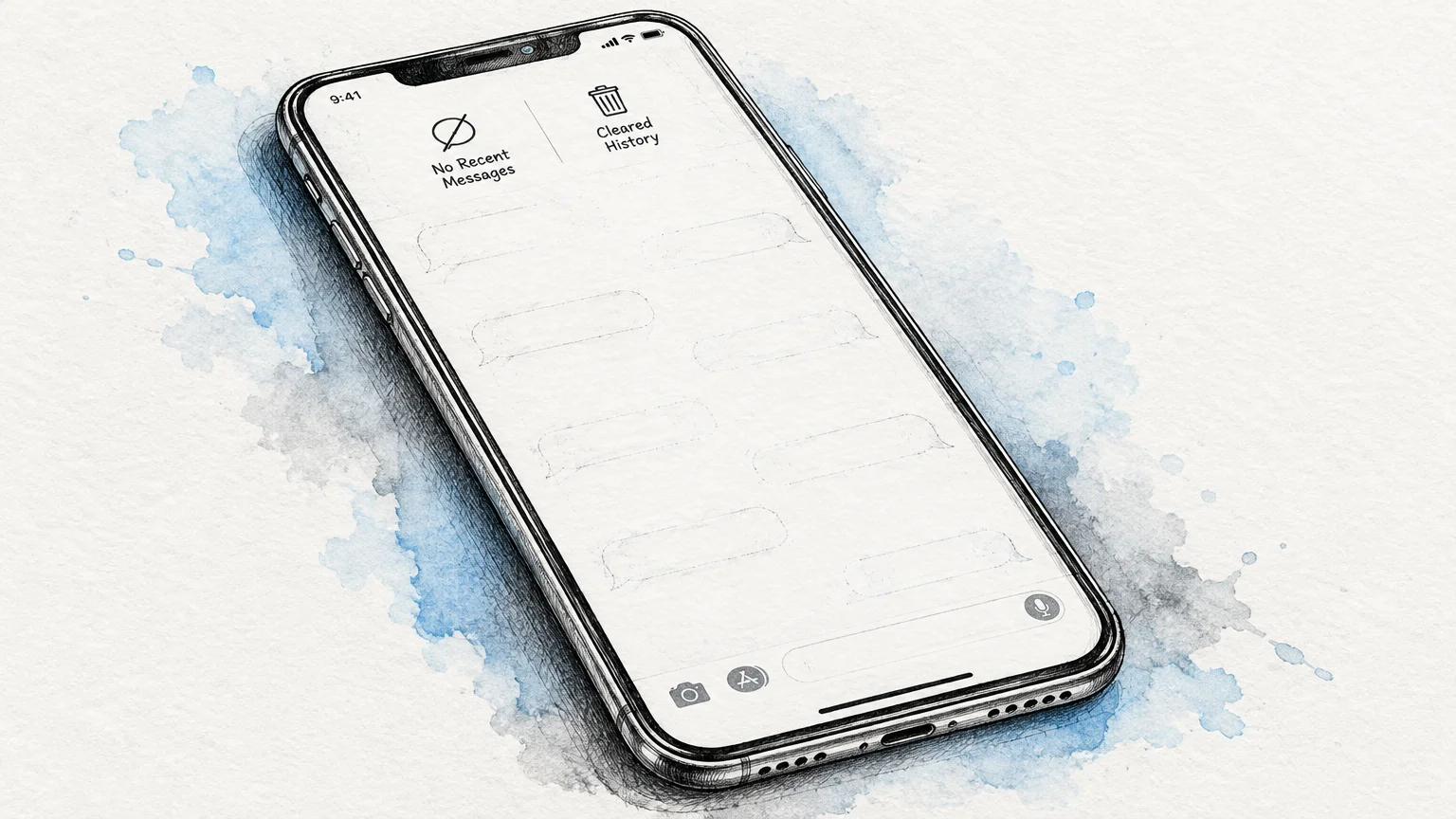
5. Habitually Cleared History and Deleted Message Threads
A spotless digital record often reveals more than an active inbox. If you happen to glance at their browser history or message list and find every conversation wiped clean, they are curating evidence.
Few people delete standard text threads daily. Routine purging suggests a deliberate habit to eliminate traces of dialogue, shared media, or late-night web browsing before you can see them.

6. Disproportionate Defensive Outbursts
Ask a harmless question, such as asking who just texted or requesting to check the weather on their screen. If they respond with hostility, accusations of control, or immediate panic, their defensiveness speaks volumes.
Psychologists at the Gottman Institute identify defensiveness as a major threat to relational stability. Guilty individuals frequently turn questions back onto the asker to distract from their own covert actions.
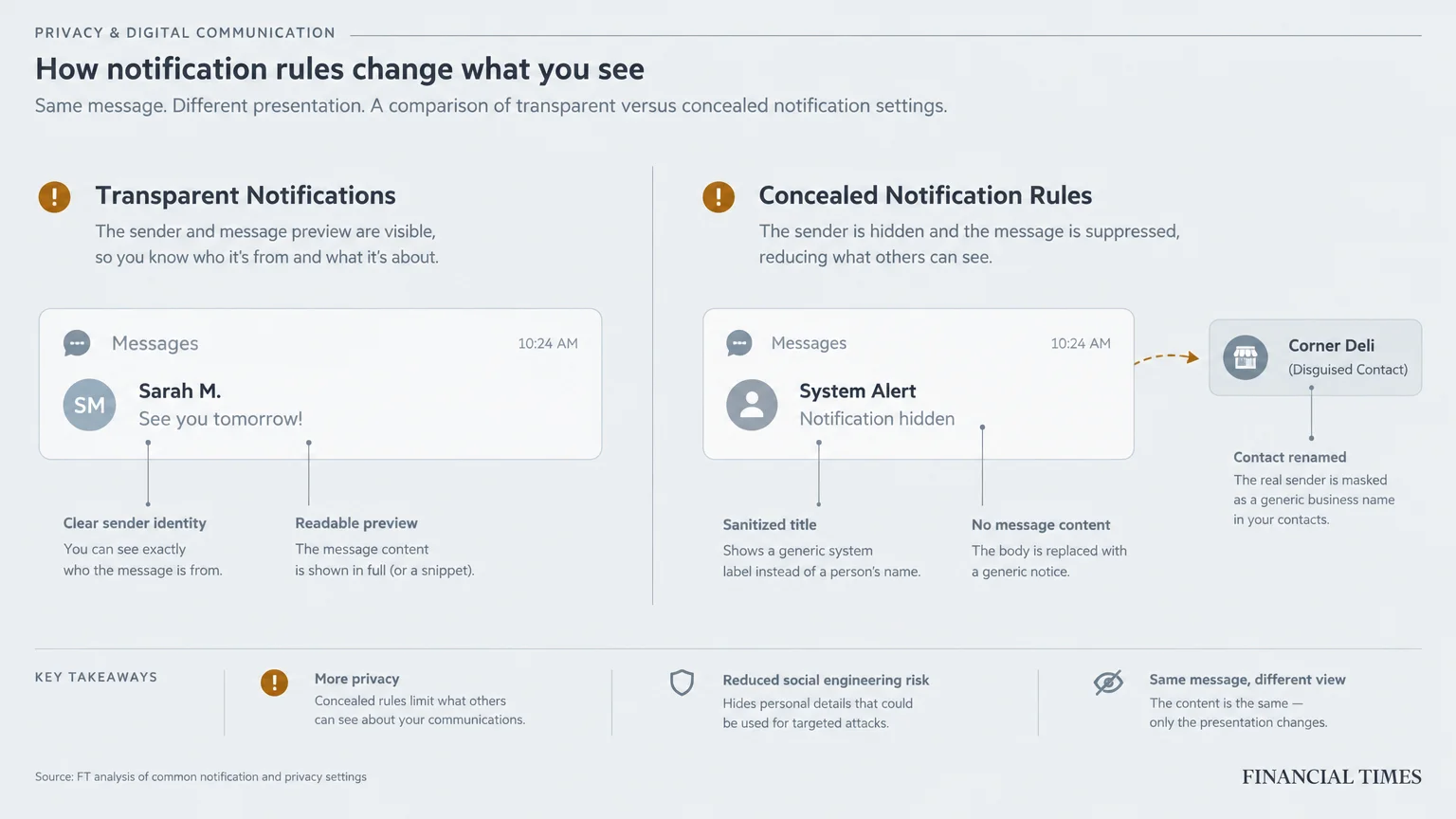
7. Ghost Notifications and Renamed Contacts
Modern operating systems allow users to conceal message previews or silence specific alerts. If your partner’s phone regularly lights up with blank alert banners or generic system icons, they have altered their privacy settings.
Some unfaithful partners disguise contacts by assigning them neutral titles, such as a local pizza parlor or coworker’s initials. These deceptive aliases allow suspicious conversations to proceed under the guise of mundane notifications.
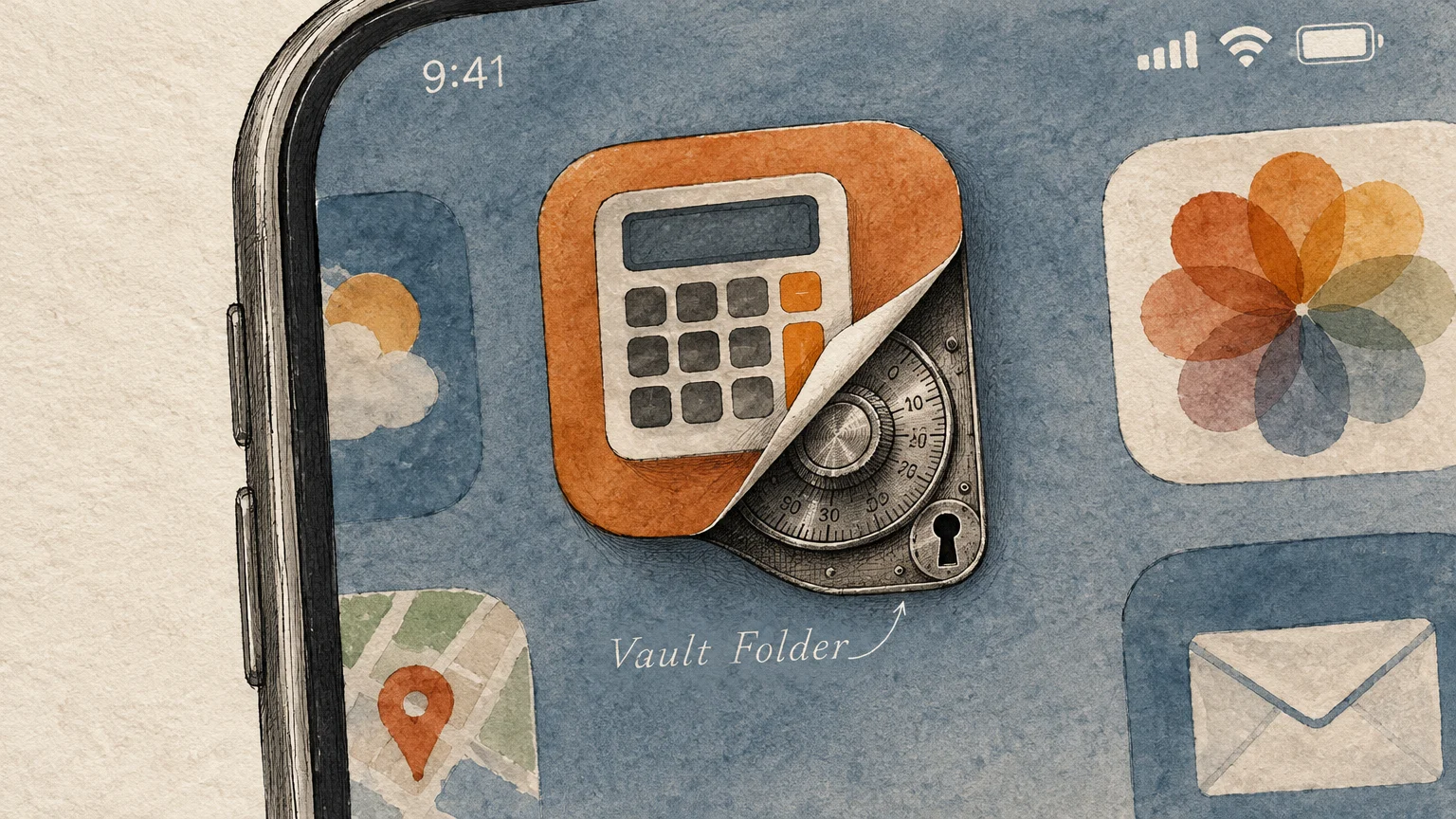
8. Hidden Apps, Secure Folders, and Vaults
Smartphones provide numerous methods for concealing sensitive files and secondary messaging tools. Look for calculator icons that require passcodes or hidden folders tucked inside obscure system utility groups.
Apps like Signal, Telegram, or WhatsApp feature auto-disappearing messages and password-locked folders. While professionals use these tools for work security, an insistence on encrypted communication for personal chats often masks secretive connections.

9. Unexplained Late-Night Usage and Screen Time Spikes
Check for shifts in sleep routines centered on phone engagement. If your partner stays up hours after you fall asleep or wakes up early to scroll in isolation, their behavior demands attention.
Sudden spikes in battery consumption or social media activity during odd hours reveal hidden digital habits. When late-night scrolling replaces intimacy or sleep, your partner is investing emotional energy away from the partnership.
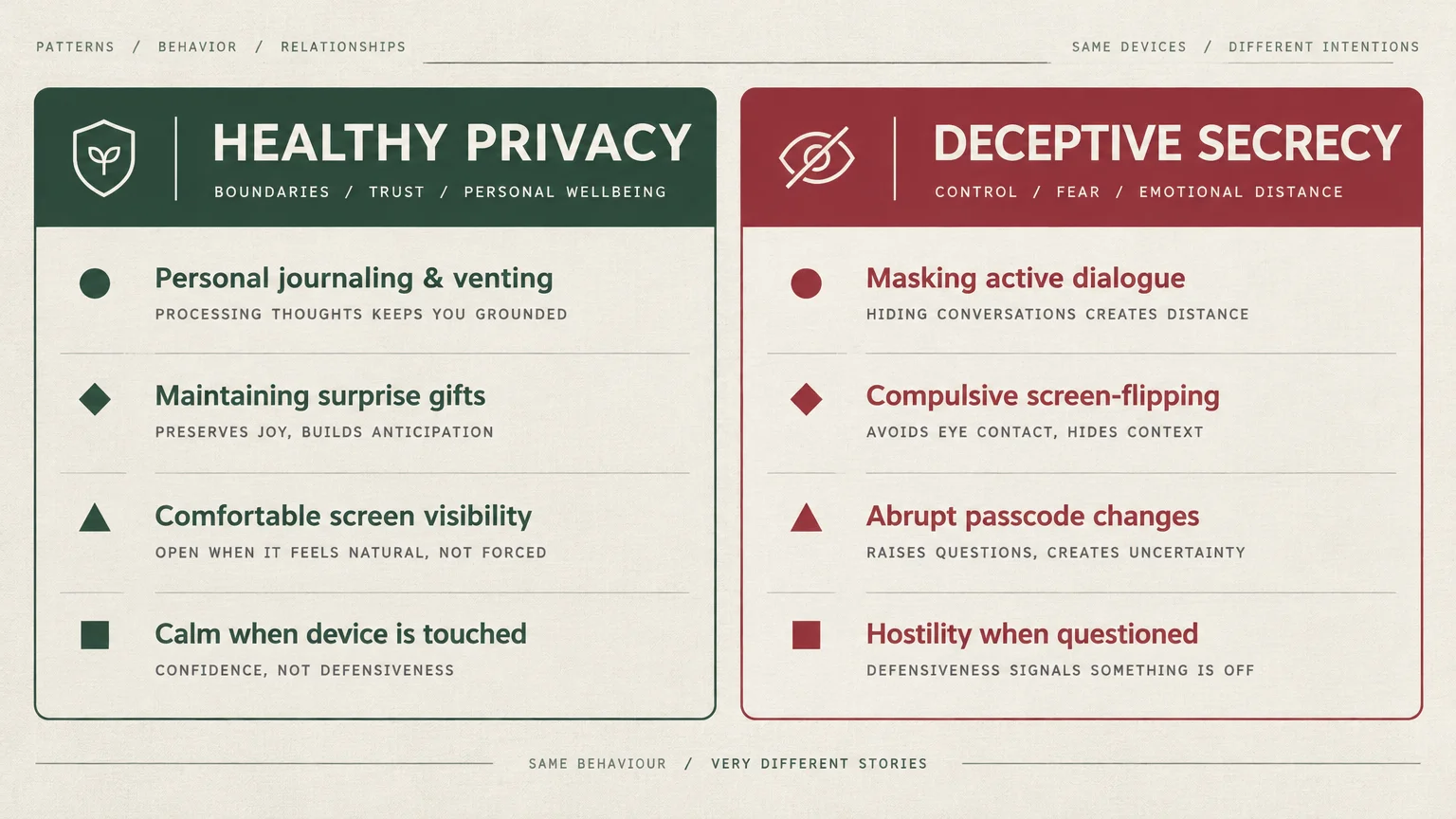
Healthy Privacy vs. Deceptive Secrecy
Distinguishing between healthy privacy and toxic secrecy protects you from gaslighting and unjustified paranoia. Healthy privacy preserves individual autonomy, while deceitful secrecy conceals behaviors that would hurt your partner if revealed.
| Factor | Healthy Privacy | Deceptive Secrecy |
|---|---|---|
| Core Motivation | Preserves personal space, journaling, or gift surprises. | Hides boundary violations, deceit, or emotional affairs. |
| Emotional Reaction | Calm, relaxed, and open to casual questions. | Defensive, anxious, angry, or immediately accusatory. |
| Device Handling | Left unattended on tables, desks, or chargers freely. | Clutched constantly, taken to the bathroom, kept face-down. |
| Passcode Sharing | Shared for convenience without fear of discovery. | Hidden, frequently altered, or guarded aggressively. |
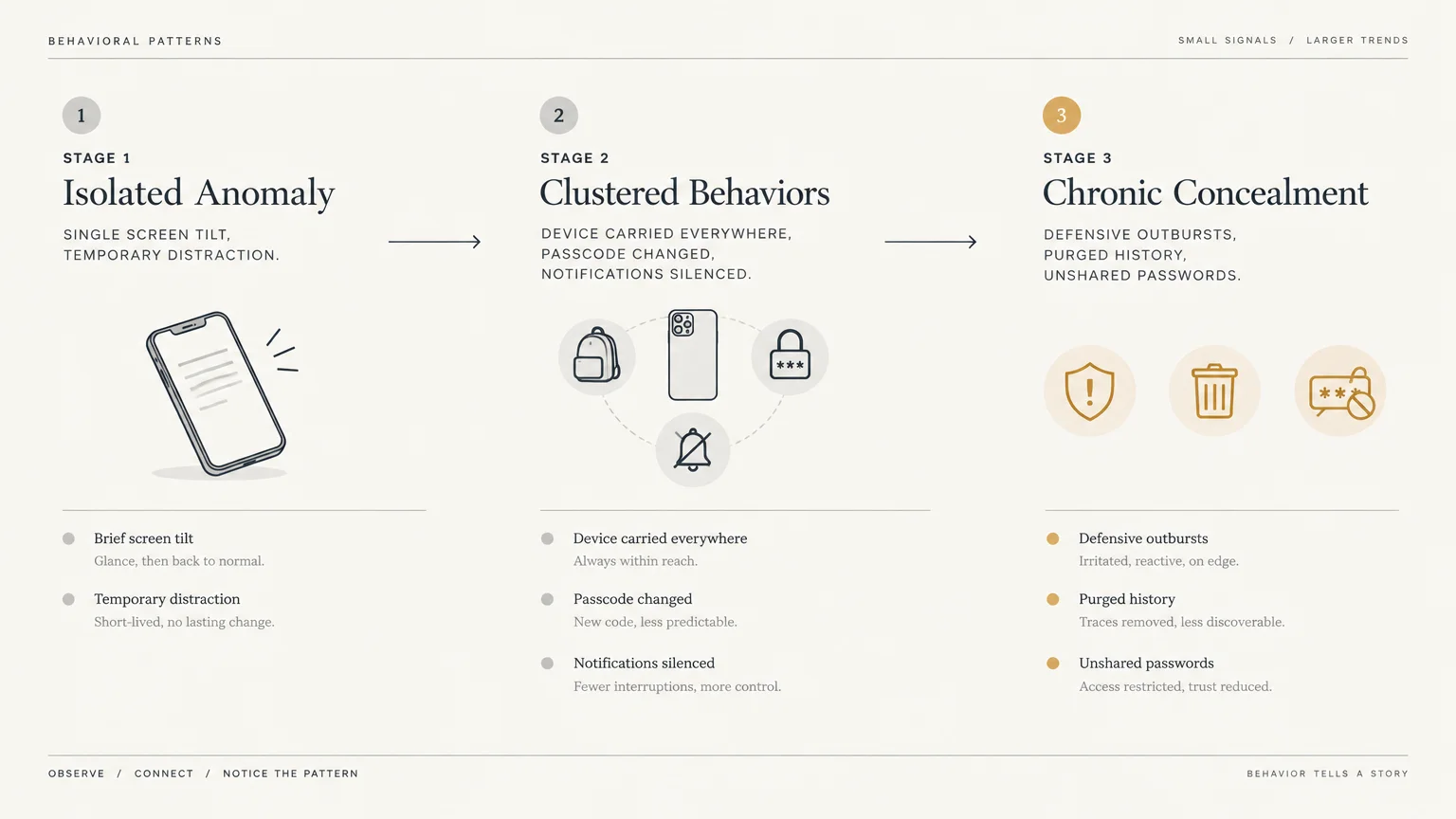
Patterns to Watch For
Before confronting your partner, consider the psychological dynamics that complicate digital infidelity and suspicion. Recognizing these patterns prevents you from misinterpreting normal behavior or falling victim to emotional manipulation.
Confusing Autonomy with Evasion: Every partner deserves a private journal space or casual chats with friends. However, autonomy does not involve deliberately withholding relationship-altering secrets or deceptive liaisons.
The Trap of Chronic Snooping: Compulsive phone checking rarely produces lasting relief; it feeds obsessive anxiety. Investigating devices behind someone’s back violates mutual dignity and replaces authentic dialogue with surveillance.
Gaslighting and Projection: Partners hiding infidelity often accuse you of being paranoid, jealous, or untrustworthy. According to the American Psychological Association, projecting blame onto the innocent partner serves as a common psychological defense.
“Secrecy is the core component of an affair. It is not just about sex; it is about the emotional and erotic power of the unsaid and the hidden.” — Esther Perel, LMFT, Relationship Expert
Esther Perel highlights that secrecy creates an intoxicating barrier against reality. When your partner hides their digital world, the concealment damages the relational bond even more than the content of their messages.

How to Address Suspicious Phone Habits Constructively
Confronting your partner requires emotional composure and strategic communication. Avoid attacking them in the heat of frustration; instead, approach the conversation with grounded observations.
- Pick a neutral, private time: Never start a high-stakes conversation right before bed or while either of you feels hurried.
- Describe objective behaviors: State what you observe rather than jumping straight to unverified accusations. Say, “I notice you angle your screen away when I sit down,” instead of calling them a liar.
- Express vulnerability: Explain how their secretive behavior affects your emotional safety. Research highlighted by Psychology Today shows that vulnerable expressions disarm defensive barriers far better than anger.
- Ask for collaborative transparency: Invite them to establish clear digital boundaries together. Mutual agreements regarding device openness rebuild trust far faster than mandatory phone checks.
Observe their willingness to listen and validate your distress. A partner invested in the relationship will prioritize your comfort over their phone habits, whereas a guilty individual will escalate the conflict.

When Self-Help Isn’t Enough
Sometimes open communication cannot untangle deep-seated deceit or psychological distress. In specific scenarios, professional counseling becomes essential for your emotional well-being.
Seek professional guidance if you encounter any of these relationship crisis points:
- Persistent Gaslighting: Your partner constantly denies observable facts, making you question your own sanity and memory.
- Obsessive Hypervigilance: You find yourself unable to sleep, eat, or concentrate because you feel driven to inspect their device repeatedly.
- Financial Concealment: Secret phone activities hide gambling debts, hidden credit cards, or unexplained asset transfers that jeopardize your household.
- Complete Emotional Withdrawal: Your partner flatly refuses to discuss digital boundaries and responds to every calm inquiry with prolonged stonewalling.
Couples therapists provide structured neutral grounds to process infidelity and re-establish honest communication. Individual therapy also helps you rebuild self-esteem after enduring prolonged deception.
Frequently Asked Questions
What is micro-cheating on a phone?
Micro-cheating involves subtle digital actions that cross emotional boundaries without overt physical contact. Common examples include sending flirtatious emojis to an ex, maintaining secret chat apps, or hiding conversations from your partner.
Is snooping through my partner’s phone ever acceptable?
Checking a phone without permission violates privacy and signals a breakdown in foundational trust. If your anxiety compels you to snoop, direct confrontation or couples counseling serves your long-term mental health far better.
How do we rebuild trust after digital secrecy?
Rebuilding trust requires absolute transparency, unprompted honesty, and patience from the deceptive partner. Both partners must agree on shared digital boundaries, such as open passcodes and honest conversations about online relationships.
Moving Forward with Clarity
A partner’s phone secrecy hurts because it fractures the mutual vulnerability necessary for deep intimacy. Trust your instincts when behaviors suddenly shift, but ground your response in calm self-respect rather than panic.
Take proactive steps to protect your emotional health through clear boundaries and honest dialogues. You deserve a relationship anchored in transparency, where safety and peace of mind replace quiet suspicion.
This is educational content based on psychological research and general principles; individual experiences vary significantly. For personalized guidance, consult a licensed therapist, psychologist, or counselor.
Last updated: February 2026. Psychology research evolves continuously—verify current findings with professional sources.








Leave a Reply