
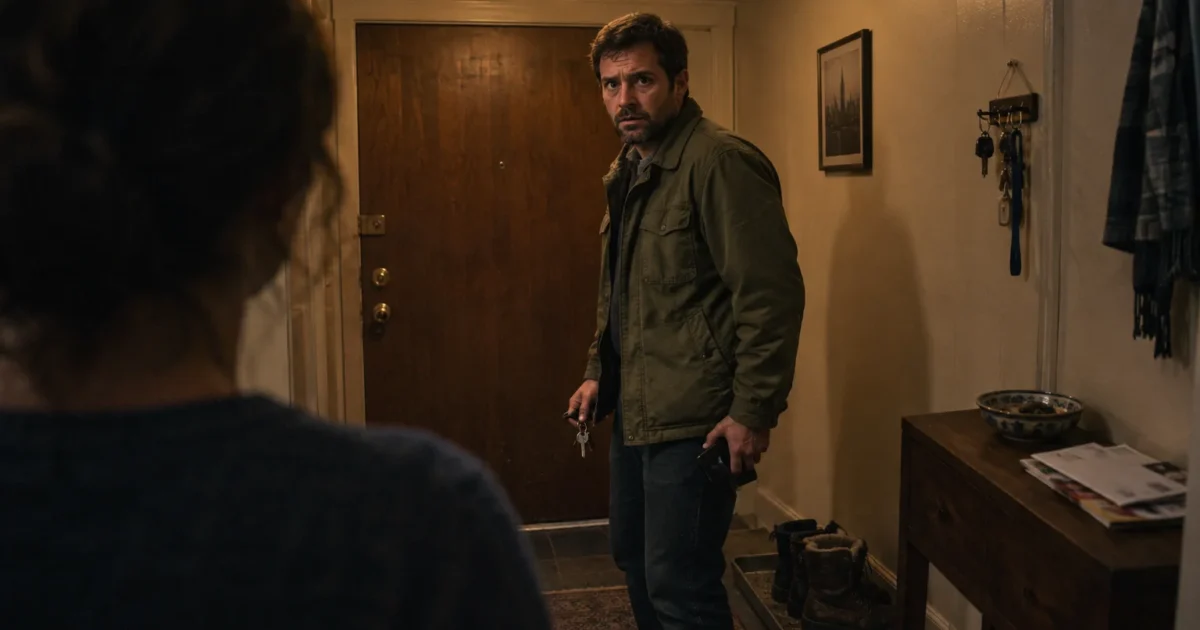
Confronting a partner about suspected infidelity triggers an intense emotional collision. When caught off guard, an unfaithful partner rarely responds with transparent accountability or immediate vulnerability.
Instead, many unfaithful partners lean on predictable psychological defense mechanisms designed to preserve their self-image. These verbal deflections often distort reality, leaving you questioning your own sanity and intuition.
Understanding what cheaters say when backed into a corner protects your emotional well-being. Recognizing these classic cheating excuses allows you to separate genuine remorse from manipulative self-preservation.
Why Confrontations Trigger Scripted Defenses
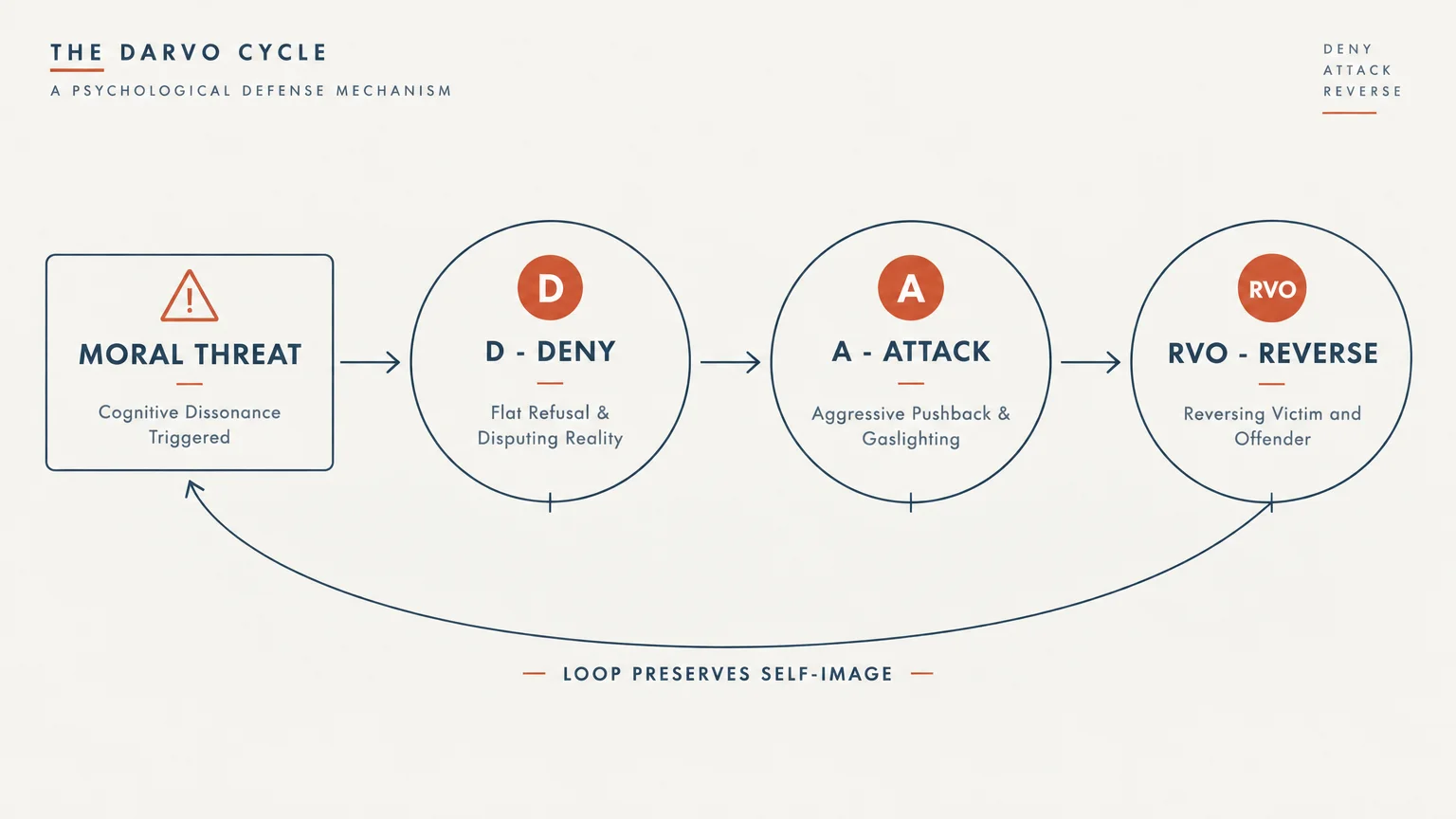
Infidelity shatters an individual’s conscious identity as an honest and trustworthy partner. To bridge that internal conflict, unfaithful partners experience intense cognitive dissonance.
According to research highlighted by the American Psychological Association, individuals under moral threat routinely deploy self-serving rationalizations to preserve self-esteem.
This defensive posture frequently manifests as DARVO—an acronym for Denying the behavior, Attacking the accuser, and Reversing the Roles of Victim and Offender.
Recognizing this psychological reaction helps you realize that their initial resistance reflects internal panic, not your failure as an investigator or spouse.
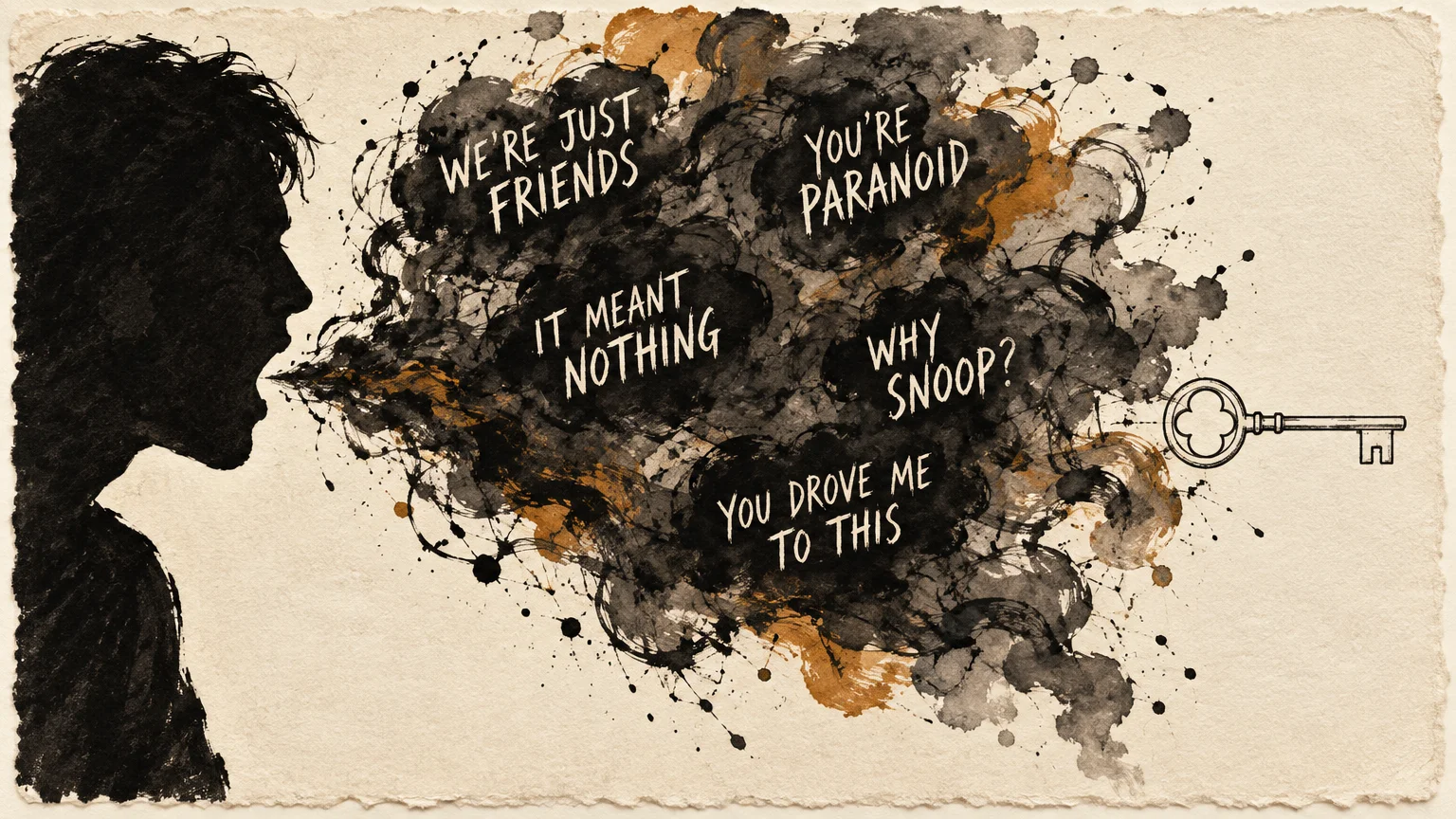
8 Things Cheaters Often Say When Confronted
1. “You’re Being Paranoid; We’re Just Friends”
This classic phrase represents textbook gaslighting. Your partner actively attempts to rewrite your perception of obvious infidelity red flags.
By pathologizing your intuition as paranoia, they try to make you feel unstable rather than answering direct questions.
In healthy relationships, platonic friendships maintain transparent boundaries; secretive texts and deleted logs rarely qualify as innocent camaraderie.
2. “You Drove Me to This Because You Neglected Me”
Blame-shifting is a cornerstone tactic when confronting a cheater. Instead of owning their actions, your partner manufactures a narrative where your perceived shortcomings caused their betrayal.
Every long-term partnership encounters emotional lulls, communication lapses, and intimacy dry spells. However, resolving relationship dissatisfaction requires honest dialogue or separation, not clandestine affairs.
You share responsibility for relationship dynamics, but your partner holds sole responsibility for choosing to cheat.
3. “It Was Just a Mistake That Meant Nothing”
Labeling an affair as an accident or claiming it meant nothing minimizes catastrophic emotional damage. Betrayal is never an accidental stumble; it requires a prolonged sequence of calculated choices.
Cheaters frequently dismiss outside attachments to pacify your immediate rage. Yet trivializing their behavior prevents the introspection necessary to stop it from happening again.
Meaningful repair demands that your partner examines why they prioritized external validation over your shared commitment.
4. “Why Were You Snooping Through My Phone?”
When confronted with undeniable digital evidence, unfaithful partners frequently pivot to manufactured outrage over privacy boundaries. This diversion weaponizes your verification methods to obscure their underlying dishonesty.
Clinical insights from Psychology Today indicate that defensive anger acts as an emotional smokescreen to seize conversational control.
While digital privacy remains important in healthy couples, checking a device is a natural symptom of broken trust, not the core offense.
5. “You’re Crazy—Nothing Ever Happened”
Cheaters sometimes issue flat-out denials even when you present physical receipts, photographs, or saved text transcripts. The unfaithful partner relies on your self-doubt to keep their facade intact.
This brazen reaction seeks to undermine your grip on reality and force you into second-guessing your senses.
Stand firm in your truth. You do not need their verbal confession to validate the objective reality in front of you.
6. “I Was Going to Tell You When the Time Was Right”
This excuse frames the dishonest partner as a thoughtful protector. They claim they withheld painful facts merely to spare your feelings during a challenging week or holiday season.
Withholding infidelity is an act of self-preservation, never kindness. It robs you of autonomy and strips away your right to make informed choices about your health and future.
Unfaithful partners rarely volunteer painful disclosures until external discovery leaves them with no alternatives.
7. “If You Truly Loved Me, You Would Trust Me”
This manipulative phrase weaponizes your love and devotion against you. Your partner characterizes your legitimate vigilance as an unprovoked betrayal of your emotional bond.
Authentic trust requires verified honesty, consistent transparency, and behavioral integrity. It does not require blind obedience in the presence of evident deception.
Demanding unquestioned trust while concealing secret behavior is emotional extortion, not romantic devotion.
8. “I Had Too Much to Drink and Lost Control”
Blaming alcohol or narcotics allows a straying partner to outsource moral accountability to a chemical substance. They attempt to present themselves as another helpless victim of temporary physical impairment.
Intoxicants certainly lower impulse control and impair judgment, but they do not manufacture extramarital relationships out of thin air.
Relying on intoxication as an alibi avoids addressing internal vulnerabilities and chronically poor relationship boundaries.
Understanding why an unfaithful partner reacts so defensively requires looking past their superficial words.
“When an affair is uncovered, the hurt partner wants to know the details, but the unfaithful partner often responds by hiding behind defensive self-justifications.” — Esther Perel, LMFT
Recognizing these defense patterns keeps you anchored in reality when conversational chaos threatens your peace.
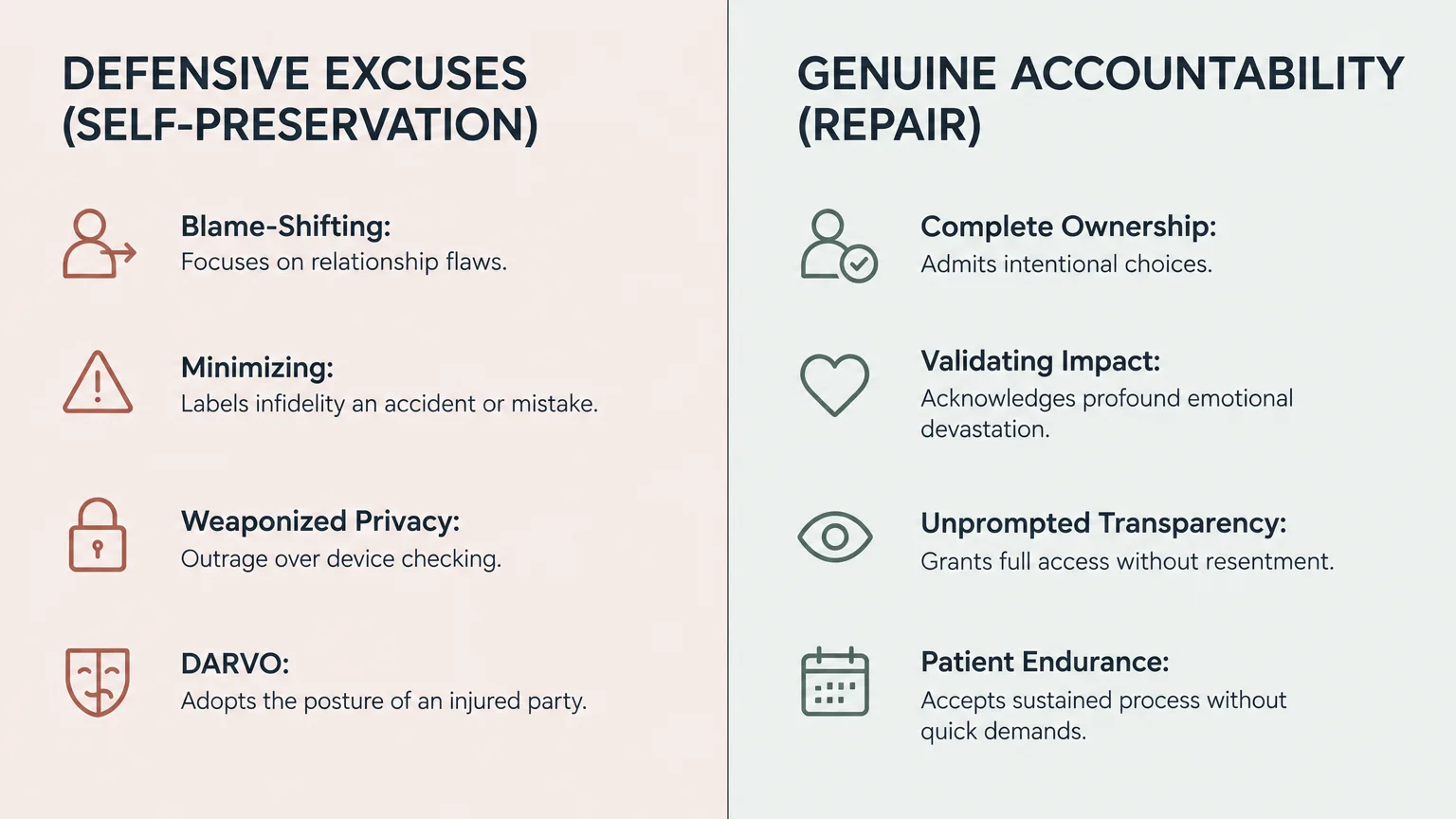
Patterns to Watch For: Excuses vs. Genuine Accountability
Distinguishing between evasive excuses and genuine accountability determines whether rebuilding your relationship is possible. Research from The Gottman Institute shows that surviving infidelity requires absolute non-defensiveness and total emotional transparency.
Review the comparison table below to identify whether your partner is deflecting blame or demonstrating true remorse.
| Common Cheating Excuse | Psychological Motive | Healthy Accountability Response |
|---|---|---|
| “You’re being completely paranoid; we’re just friends.” | Gaslighting to discredit your intuition and hide signs of cheating. | “I crossed emotional lines with this person, and I will cut off contact immediately.” |
| “You drove me to do this because you neglected me.” | Blame-shifting to evade guilt and reverse victim roles. | “My relationship frustrations never justified dishonesty; I own my choice entirely.” |
| “Why were you snooping through my personal belongings?” | Conversational diversion to focus on your conduct instead of betrayal. | “My secret behavior broke your trust; I understand why you looked for answers.” |
| “It was just a one-time mistake that meant nothing.” | Minimizing the act to bypass deep emotional reckoning. | “I caused you devastating trauma, and I am committed to exploring why I did this.” |

How to Respond When You Hear These Cheating Excuses
Navigating an intense confrontation requires emotional discipline so you do not get dragged into exhausting circular debates.
Apply these grounded strategies when your partner attempts to dodge accountability:
- Refuse the conversational bait: If your partner attacks your phone snooping or calls you jealous, redirect the dialogue immediately back to their secret actions.
- Hold the line on objective reality: State calmly that your observations and boundaries are non-negotiable facts rather than topics for debate.
- Require full behavioral transparency: Demand clear timelines, device access, and ended contact if your partner claims they want to repair trust.
- Pause conversations that turn volatile: Step away when shouting, stone-cold denial, or name-calling replaces constructive communication.
According to relationship clinicians at Verywell Mind, establishing clear interpersonal boundaries prevents compounding trauma during relational betrayals.

When Self-Help Isn’t Enough
Confronting infidelity can destabilize your mental health and overwhelm your standard coping skills. While self-directed resources provide helpful initial clarity, severe crises require professional psychological support.
Reach out to a licensed couples therapist or mental health counselor if you experience any of the following challenges:
- Pervasive cognitive distortion: You feel detached from reality, continuously doubt your senses, or struggle to make basic everyday decisions.
- Compulsive serial betrayal: Your partner demonstrates a repeated history of affairs, deceit, and zero capacity for sustained empathy.
- Acute trauma responses: You experience intrusive flashbacks, debilitating panic attacks, severe insomnia, or overwhelming depressive episodes.
- High-conflict co-parenting gridlock: Relational hostility prevents cooperative household decisions or exposes children to ongoing domestic volatility.
Frequently Asked Questions
What is the most common reaction when a cheater is confronted?
Most unfaithful partners react with immediate denial, shock, or defensive anger. These instinctive responses stem from panic and an urgent desire to deflect personal accountability.
How do you know if a cheater is genuinely remorseful?
Genuine remorse involves validating your hurt without offering excuses or shifting blame. A truly remorseful partner provides unconditional transparency and respects your healing process.
Should you reveal all your evidence at once during confrontation?
Holding back specific details lets you evaluate your partner’s commitment to honesty. If they continue lying about facts you already possess, you confirm active manipulation.
Can a relationship survive after these cheating excuses?
Reconciliation is only possible if your partner moves past defensiveness into sustained accountability. Recovery requires radical honesty, firm boundaries, and dedicated clinical support.
Moving Forward With Clarity
Confronting an unfaithful partner tests your emotional endurance and shakes the foundation of your world. Remember that what cheaters say under pressure reflects their personal shortcomings, not your worth.
Focus on your physical safety, emotional stability, and personal boundaries before making life-altering relationship decisions. You deserve clarity, honesty, and relationships grounded in reciprocal respect.
The information in this article is meant for educational purposes and general guidance; it does not replace individual therapy, counseling, or medical treatment. If you or someone you know is in crisis, contact the 988 Suicide & Crisis Lifeline by calling or texting 988.
Last updated: October 2026. Psychology research evolves continuously—verify current findings with professional sources.







Leave a Reply