

You agree to host dinner, take on extra shifts, or let someone dismiss your concerns—all while feeling an uncomfortable knot tighten in your chest. While appeasing others feels safe, it gradually silences your authentic voice.
Conflict anxiety compels many people to trade short-term peace for chronic frustration. Recognizing your conflict avoidance patterns helps you establish healthy boundaries and foster genuine emotional closeness.
Here are twelve distinct behaviors linked to the fear of conflict, along with practical steps to express yourself with calm confidence.
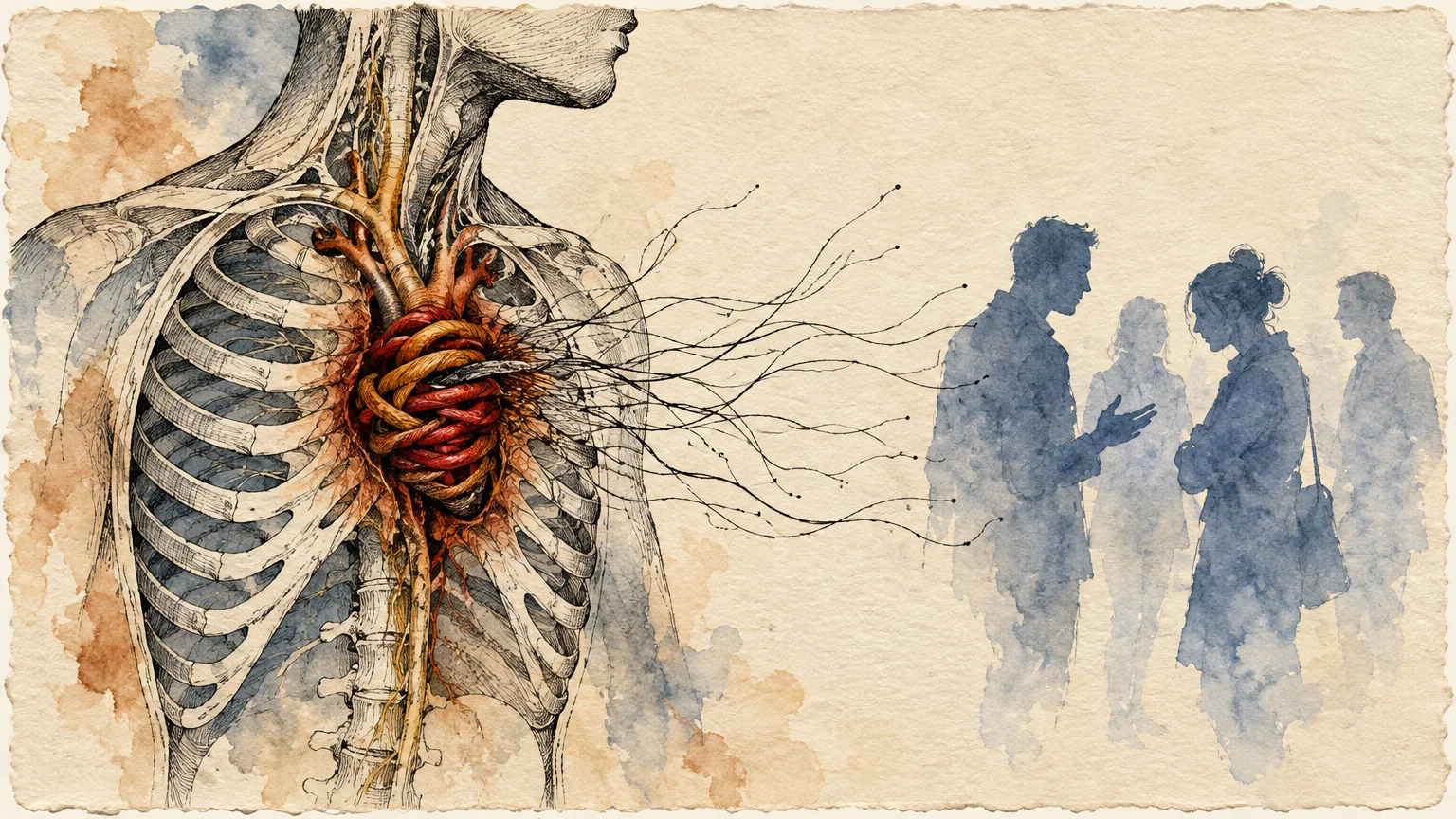
The Psychology Behind Conflict Avoidance
Your nervous system often interprets interpersonal tension as an existential threat. When a disagreement looms, your brain initiates a stress response, treating social friction like physical danger.
According to the American Psychological Association, chronic stress patterns frequently stem from perceived threats to social belonging and emotional security.
If you grew up in a volatile home, you likely learned that disagreement leads to explosion. Conversely, if your caregivers suppressed negative emotions, you may view any friction as a relationship failure.
In response, your autonomic nervous system relies on the fawn response. You appease the other person to neutralize the perceived danger and restore safety.
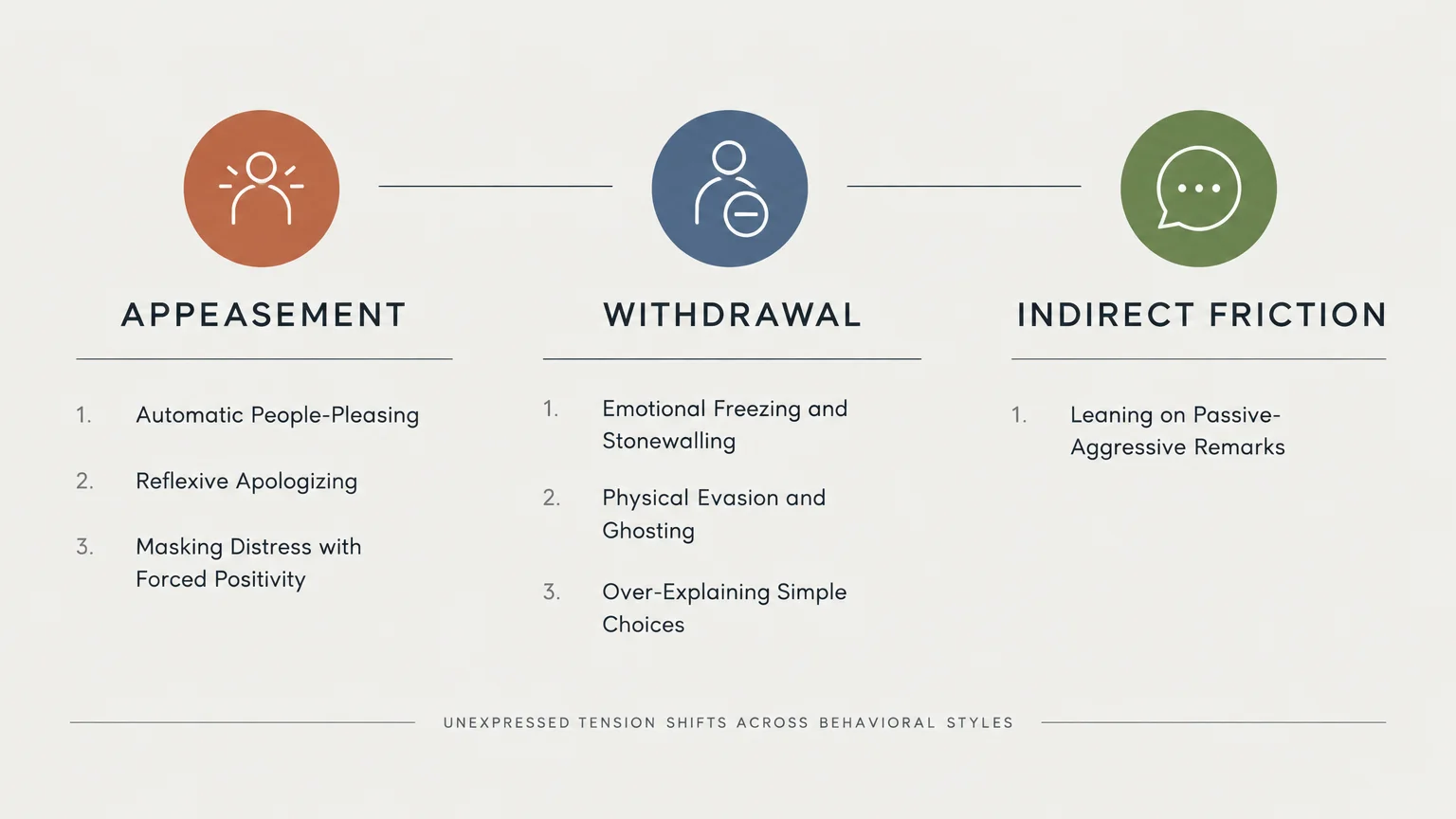
12 Behaviors Linked to Fear of Conflict
1. Automatic People-Pleasing
You say yes to requests before you even evaluate your own schedule or energy. The urge to appease others overrides your personal capacity.
Over time, this people pleasing creates profound exhaustion and unexpressed bitterness. You fulfill obligations out of obligation rather than authentic generosity.
2. Reflexive Apologizing
You say “sorry” for asking questions, sending an email, or simply taking up space. You treat your basic presence as an inconvenience.
This reflexive habit acts as a preemptive defense shield. By accepting blame in advance, you attempt to disarm potential criticism before it begins.
3. Emotional Freezing and Stonewalling
When difficult conversations arise, your mind may go completely blank. You shut down emotionally, unable to access the words needed to speak your mind.
Research from The Gottman Institute highlights stonewalling as a physiological response to emotional overwhelm. Your body withdraws to protect your internal equilibrium.
4. Leaning on Passive-Aggressive Remarks
Because you struggle to express anger directly, your frustration leaks out through subtle jabs, heavy sighs, or sarcastic remarks. You hope the other person notices your discontent without a confrontation.
This communication pattern leaves both parties feeling guarded. It generates tension without resolving the underlying grievance.
5. Physical Evasion and Ghosting
You cancel plans at the last minute, delay answering text messages, or physically exit the room when tensions rise. Running away feels far more manageable than discussing a sensitive topic.
While avoiding confrontation grants immediate relief, it magnifies anxiety over time. Unresolved issues continue to simmer beneath the surface.
6. Masking Distress with Forced Positivity
You deflect serious issues by making light of boundary violations or laughing off dismissive treatment. You smile through mistreatment so nobody feels uncomfortable.
This behavior invalidates your emotional reality. It signals to others that your feelings do not require respect or consideration.
7. Over-Explaining Simple Choices
When you decline an invitation or state a boundary, you provide an elaborate backstory. You feel the subconscious need to prove your decision is justified.
Over-explaining invites others to debate your reasons. A clear boundary requires no extensive defense.
8. Suppressing Personal Preferences
When asked where to eat, what to watch, or how to spend the weekend, you instinctively answer, “I don’t care, whatever you want.” You erase your desires to eliminate friction.
Habitual self-erasure eventually leads to a diluted sense of self. You lose touch with what you genuinely enjoy and value.
9. Internal Ruminating and Secret Resentment
Instead of addressing an issue directly, you replay the event obsessively in your head. You compose imaginary arguments and accumulate silent grudges.
Clinical resources from Verywell Mind note that chronic rumination increases depressive symptoms and relationship distress. Internalized resentment erodes emotional intimacy from within.
10. Hyper-Monitoring Speech and Tone
You spend excessive mental energy calculating how to phrase requests to avoid upsetting anyone. You dissect facial expressions and punctuation to predict emotional shifts.
This conflict anxiety drains your emotional bandwidth. It keeps your nervous system in high alert, anticipating friction that may never arrive.
11. Caving In Prematurely During Disagreements
The instant an argument starts, your internal distress peaks. To stop the uncomfortable sensation, you immediately surrender your position and admit fault.
While this ends the discussion instantly, it reinforces an unhealthy relational dynamic. Your boundaries bend under slight pressure, leaving your needs unmet.
12. Triangulating Through Third Parties
Rather than discussing a grievance with the person involved, you complain to friends, family, or coworkers. You seek validation from bystanders instead of resolving the actual issue.
Triangulation provides temporary emotional relief, but it damages workplace and social trust. The core disagreement remains entirely unaddressed.
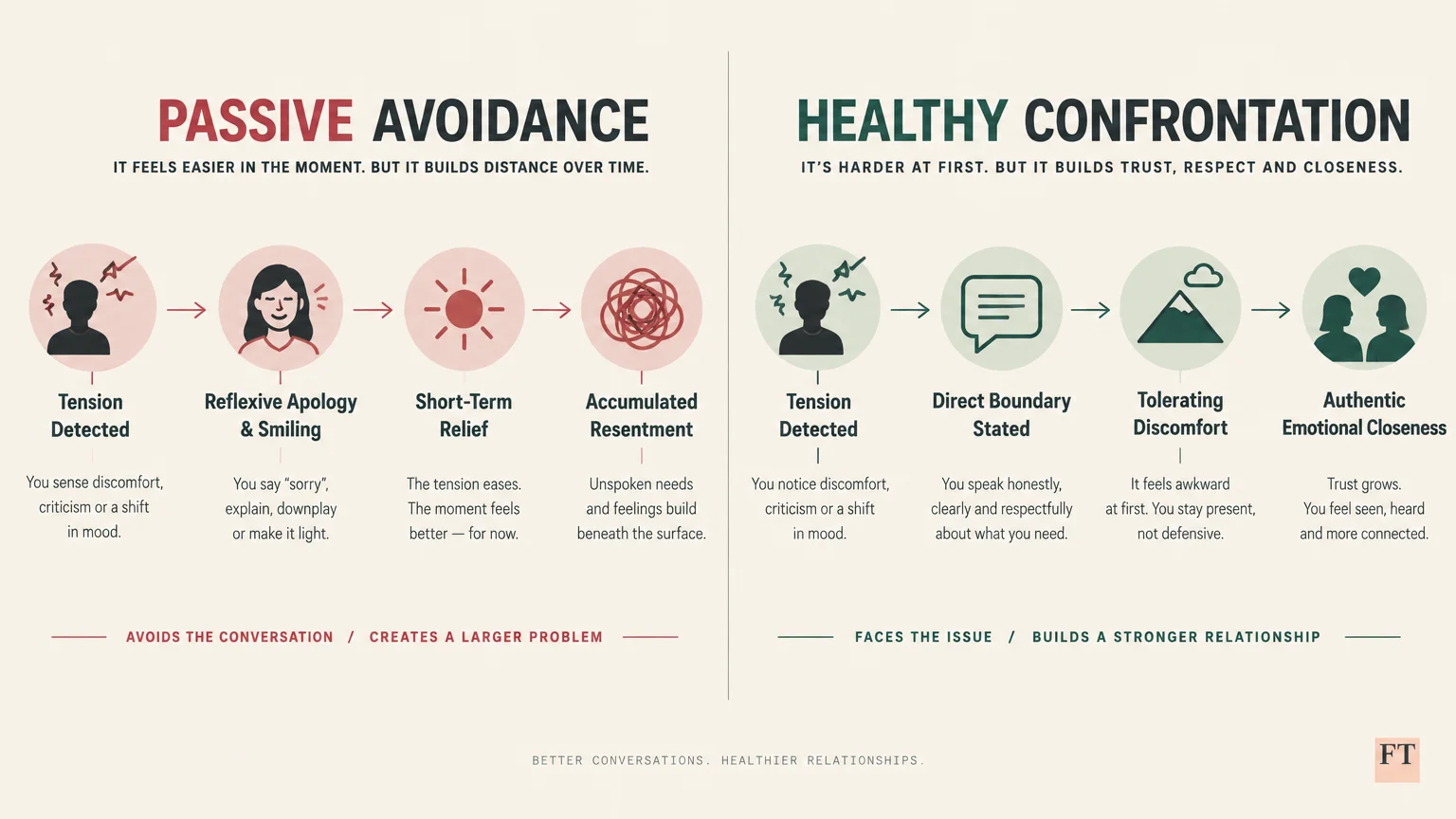
Passive Avoidance vs. Healthy Confrontation
Understanding the difference between fear of conflict behaviors and assertive engagement clarifies where adjustments are needed.
| Interpersonal Dynamic | Conflict-Avoidant Response | Assertive Response |
|---|---|---|
| Setting Boundaries | Saying yes reluctantly, then feeling bitter or making excuses later. | Declining clearly and politely without guilt or excessive justification. |
| Handling Disagreements | Suppressing personal opinions to maintain surface harmony. | Sharing differing views respectfully while remaining curious about other perspectives. |
| Receiving Constructive Criticism | Apologizing excessively, shutting down, or collapsing into shame. | Listening actively, evaluating feedback, and asking clarifying questions. |
| Addressing Hurt Feelings | Giving the silent treatment, using sarcasm, or pretending nothing happened. | Stating hurt feelings directly using clear “I” statements. |
| Negotiating Daily Preferences | Always deferring choices to the other person. | Voicing personal desires while collaborating on fair compromises. |

What Can Go Wrong: The Hidden Costs of Peacekeeping
A common misconception suggests that avoiding conflict preserves relationship stability. In reality, chronic avoidance breeds distance, miscommunication, and emotional detachment.
When you routinely swallow your thoughts, you deprive others of knowing the authentic you. Intimacy cannot grow without vulnerability, and vulnerability requires working through disagreement.
“Clear is kind. Unclear is unkind.” — Brené Brown, PhD, LMSW, Research Professor
Suppressing emotions also exerts a physical toll. Research frequently connects unaddressed interpersonal tension to headaches, digestive issues, and muscular tension.
Furthermore, suppressed anger rarely disappears. It tends to build until a minor inconvenience triggers an explosive outburst, startling others and deepening your shame.

Actionable Strategies to Build Conflict Tolerance
Breaking conflict avoidance patterns requires training your nervous system to tolerate the temporary discomfort of speaking up.
- Use the tactical pause: When someone asks for a commitment, pause for five seconds. Say, “Let me check my calendar and get back to you,” to break the reflexive yes.
- Practice low-stakes assertion: Start small. Send back a drink that was prepared incorrectly, or state your movie preference without backtracking.
- Adopt simple “I” statements: Structure difficult feedback clearly: “I felt overwhelmed when plans changed without notice; next time, I need an update earlier.”
- Soothe your physiology: Before speaking up, exhale longer than you inhale. Dropping your shoulders and unclenching your jaw signals safety to your nervous system.
- Reframe disagreement: Remind yourself that healthy conflict is an act of connection, not destruction. It allows two people to understand each other better.

When to Seek Professional Support
While everyone experiences moments of hesitation, severe fear of conflict can diminish your quality of life. Professional guidance can help untangle deep-seated survival responses.
Mental health resources from the Cleveland Clinic emphasize that therapies like Cognitive Behavioral Therapy (CBT) and somatic therapy effectively reframe interpersonal anxiety.
Consider seeking therapy if you encounter these challenges:
- You experience severe panic, nausea, or shaking whenever someone expresses mild frustration.
- You stay in abusive, exploitative, or toxic relationships because the thought of speaking up feels impossible.
- Your work performance or career growth suffers because you cannot negotiate, delegate, or express an opinion.
- You feel numb, dissociated, or utterly disconnected from your personal needs and values.
A qualified therapist provides a structured environment to practice assertiveness skills and dismantle old shame conditioning.
Frequently Asked Questions
Is fear of conflict a symptom of trauma?
Fear of confrontation often stems from developmental or relational trauma. If you grew up in an unpredictable environment, appeasement served as a necessary survival strategy.
How do I stop feeling sick when confrontation happens?
That physical sensation reflects an adrenaline surge triggered by your fight-or-flight system. Grounding exercises, slow diaphragmatic breathing, and gradual exposure help regulate your body during tension.
What is the difference between avoiding conflict and choosing battles?
Choosing battles is an intentional, strategic decision based on your values and priorities. Conflict avoidance is driven by fear, anxiety, and a compulsion to escape discomfort at any cost.
Can conflict avoidance ruin a romantic relationship?
Yes. Chronic avoidance breeds passive aggression, unresolved resentment, and emotional distance. Healthy partnerships require honest communication to resolve friction and maintain genuine intimacy.
Cultivating Courage in Daily Conversations
Moving away from fear of conflict behaviors does not mean becoming confrontational or aggressive. It simply means valuing your self-respect as much as you value external harmony.
Every time you speak your truth kindly and clearly, you rewire your nervous system. You prove to yourself that you can withstand discomfort and remain standing on the other side.
This article provides general educational information about psychology and relationships. It is not a substitute for professional therapy or medical advice. Everyone’s situation is unique—if you’re struggling, please reach out to a licensed mental health professional.
Last updated: February 2026. Psychology research evolves continuously—verify current findings with professional sources.







Leave a Reply