

When someone offers you sincere support, your mind might instantly search for their hidden agenda. This reflex shields your emotional safety, but it can also prevent you from experiencing genuine intimacy.
Relational hesitation rarely stems from simple cynicism. Psychologists recognize that persistent mistrust usually reflects protective strategies shaped by childhood instability, broken boundaries, or unresolved betrayal.
Identifying the behavioral patterns behind this guard helps you navigate your relationships with greater clarity. Understanding these eight common characteristics illuminates why you feel the urgent need to stay self-reliant.
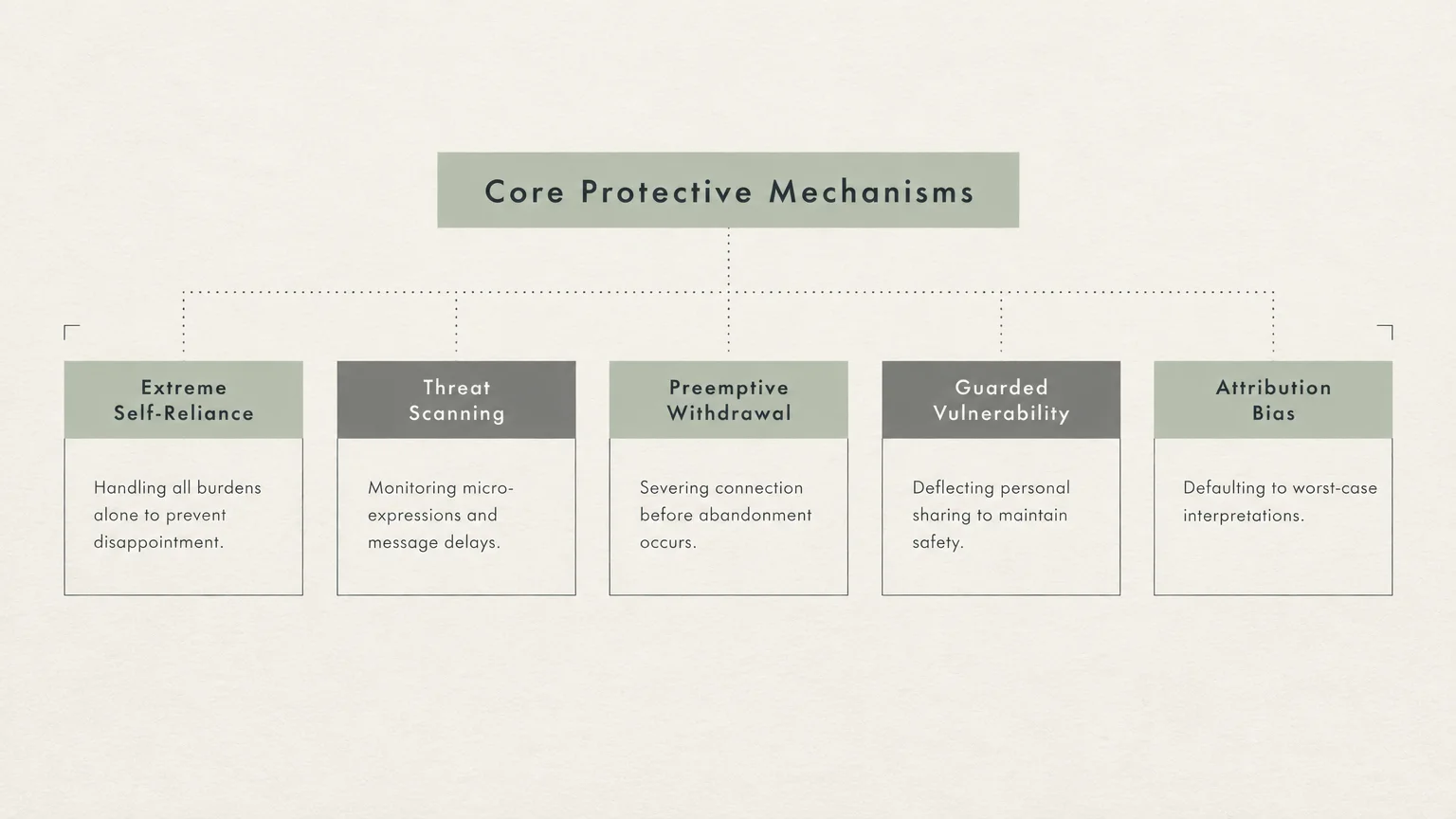
The Essentials: Trust Struggles at a Glance
- Extreme Self-Reliance: You handle responsibilities alone to avoid disappointment.
- Threat Scanning: You monitor micro-expressions, tonal shifts, and message delays for hidden deceit.
- Preemptive Withdrawal: You sever emotional connections before someone can abandon you.
- Guarded Vulnerability: You redirect conversations away from personal feelings to protect your inner world.
- Attribution Bias: You automatically interpret ambiguous interactions as intentional rejection.

8 Traits Common Among People Who Struggle to Trust
Recognizing the characteristics of trust issues helps demystify behaviors that often feel involuntary. Below are the eight most prominent patterns observed by relationship counselors and clinical psychologists.
1. Fierce Hyper-Independence
People who struggle with trust frequently embrace extreme self-reliance. You might believe that asking for help exposes you to inevitable disappointment or control.
When you handle every burden alone, no one possesses the power to let you down. Unfortunately, this defensive posture eventually breeds chronic emotional and physical exhaustion.
2. Hypervigilance and Micro-Behavior Scanning
You may instinctively scan people for subtle shifts in vocal tone, body language, or responsiveness. Your nervous system stays on high alert to identify potential betrayals before they materialize.
According to the American Psychological Association, chronic hypervigilance frequently stems from prolonged emotional stress. This heightened alertness often causes you to interpret harmless ambiguities as deliberate deceptions.
3. Preemptive Withdrawal and Relationship Sabotage
Pushing people away before they have the chance to leave often feels safer than risking rejection. You might pick sudden fights or pull back emotionally whenever relational intimacy deepens.
Walking away first provides a temporary sensation of control over an ending. Sadly, this behavior usually manifests the exact abandonment you originally feared.
4. Reluctance to Share Deep Vulnerability
Opening up about your deepest fears, flaws, or aspirations feels like handing someone a weapon. Instead, you likely keep conversations intellectual, humorous, or centered entirely on the other person.
Keeping this emotional distance protects you from ridicule or manipulation. However, withholding your authentic self prevents relationships from growing beyond shallow, transactional acquaintances.
5. Testing Loved Ones with Silent Trials
Do you set quiet benchmarks to see if partners or friends will prove their loyalty? You might deliberately withhold contact or engineer conflicts to assess their devotion.
While these unconscious tests aim to cultivate certainty, they rarely produce lasting peace. Mistrust constantly moves the goalposts, leaving both you and your partner exhausted.
6. Chronic Overthinking and Negative Attribution Bias
When someone acts ambiguously, your mind likely jumps straight to the worst possible scenario. A delayed text message quickly becomes definitive evidence of betrayal, neglect, or disdain.
Psychologists call this tendency a negative attribution bias. Preparing for catastrophe cushions the emotional shock of betrayal, but it keeps your nervous system trapped in distress.
7. Rigid Boundaries and Compartmentalization
Healthy boundaries protect your well-being, while defensive boundaries operate like impenetrable fortress walls. You might strictly compartmentalize your social circles to keep anyone from seeing your complete life.
Sharing only curated fragments of yourself grants a feeling of total privacy. Yet this isolation prevents the emotional integration necessary for secure, enduring companionship.
8. Discomfort with Affection and Compliments
Sincere flattery, thoughtful gifts, or sudden affection may trigger immediate skepticism rather than joy. You might catch yourself wondering what the other person expects from you in return.
If past partners or caregivers used affection as currency, kindness feels dangerous. Learning that genuine generosity exists without hidden demands requires patient emotional recalibration.

The Roots: Causes of Difficulty Trusting Others
Recognizing trust issues in relationships requires understanding where these patterns originate. Defensive adaptations do not emerge randomly; they form in response to legitimate psychological wounds.
Developmental psychologist Erik Erikson identified trust versus mistrust as the earliest psychosocial stage of human development. Inconsistent caregiving during infancy teaches the developing nervous system that the external environment is inherently unreliable.
Later in life, attachment trauma reinforces relational wariness. Clinical insights published in Psychology Today emphasize that insecure attachment styles often develop after childhood neglect, boundary violations, or sudden relational betrayals.
Your difficulty trusting others reflects an adaptive brain working to protect you from repeating historical pain. Honoring that protective intent helps you approach personal healing with self-compassion rather than shame.
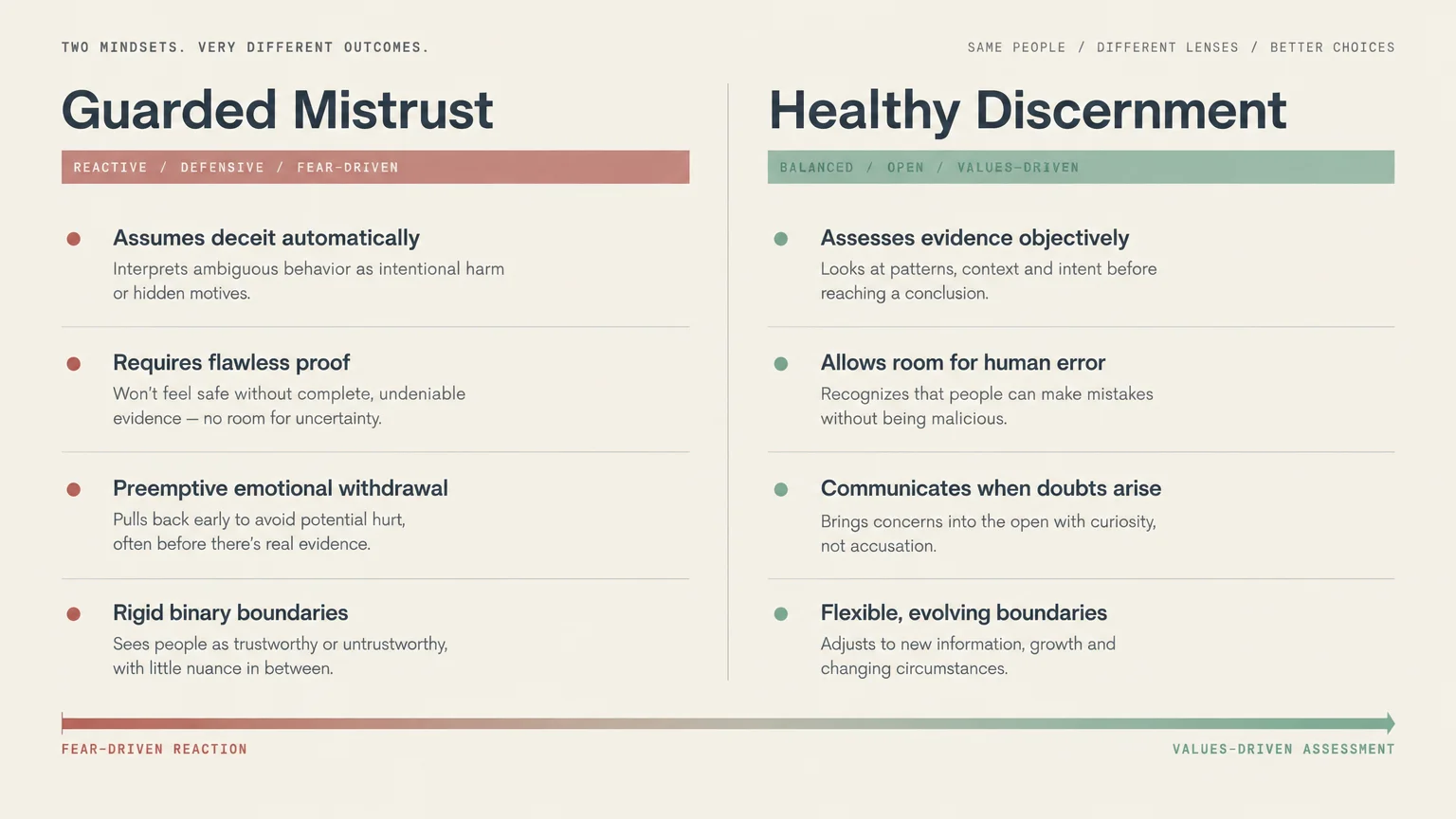
Guarded Mistrust vs. Healthy Relational Discernment
Distinguishing between healthy discernment and defensive mistrust is crucial for personal growth. The table below outlines how these two approaches navigate common relational situations.
| Relational Situation | Guarded Mistrust | Healthy Discernment |
|---|---|---|
| Ambiguous Communication | Assumes hidden malice or deception immediately. | Asks clarifying questions before drawing conclusions. |
| Personal Boundaries | Maintains rigid, impenetrable emotional walls. | Sets flexible, clearly communicated limits. |
| Sharing Vulnerability | Views vulnerability as dangerous exposure. | Shares personal information gradually as safety is proven. |
| Conflict Management | Withdraws, stonewalls, or launches preemptive attacks. | Addresses differences directly through constructive dialogue. |
Healthy discernment evaluates people based on real-time evidence and observable consistency. In contrast, chronic mistrust judges present companions through the lens of past betrayals.

Expert Perspectives on Cultivating Relational Safety
Empirical research highlights how trust functions in day-to-day human interactions. Renowned relationship researcher Dr. John Gottman describes trust as an active commitment rather than a passive feeling.
“Trust is the feeling that this person has my back and is there for me. It means they will not lie, deceive, or exploit me.” — John Gottman, Ph.D.
Clinical observations from The Gottman Institute confirm that emotional attunement builds trust over time. When partners consistently acknowledge bids for connection, relational security gradually replaces suspicion.
Vulnerability researcher Dr. Brené Brown similarly emphasizes that trust develops incrementally across minor, shared moments.
“Trust is earned in the smallest of moments. It is earned through paying attention, listening, and gestures of genuine care and connection.” — Brené Brown, Ph.D., LMSW
When you recognize that relational security builds slowly, you no longer face an all-or-nothing wager. You can choose to extend trust gradually, step by step.

What Can Go Wrong: Common Misconceptions About Trust Issues
Misinterpreting defensive behaviors can hinder your emotional recovery. Examining common fallacies helps you avoid unnecessary self-criticism and poor relational choices.
Many people mistakenly assume that guarded individuals lack empathy or warmth. In reality, guarded people often experience emotions intensely, which makes the fear of betrayal feel devastating.
Another myth suggests that finding the perfect partner will instantly resolve your trust struggles. External reassurance cannot heal internal wounds without active personal self-reflection.
Believing you must practice blind trust to achieve healthy relationships represents an equally dangerous mistake. Mature bonds require mutual accountability, boundaries, and earned confidence.

Practical Strategies to Rebuild Relational Trust
Unlearning deeply ingrained defense mechanisms takes patience and structured practice. You can rewire your relational expectations using targeted psychological tools.
Begin by noticing your internal protector whenever sudden suspicion or withdrawal surfaces. Acknowledging your defensive impulses without judgment prevents them from unconsciously directing your choices.
Practice micro-vulnerability by sharing small, low-stakes feelings with reliable individuals. When companions receive your disclosures with care, your nervous system gradually registers relational safety.
Challenge your attribution bias by intentionally considering benign explanations for ambiguous actions. If someone responds slowly, remind yourself that work demands often delay communication.
As noted by Verywell Mind, cognitive reframing weakens catastrophic thinking habits. Over time, practicing cognitive flexibility reduces the perceived need to isolate yourself.
Finally, express your interpersonal expectations directly instead of administering silent loyalty trials. Direct communication invites authentic partnership while eliminating stressful guesswork.

When to Seek Professional Support
Addressing deep-seated trust challenges independently can feel daunting. Professional counseling offers a secure environment to process foundational attachment wounds.
Consider seeking clinical guidance if chronic suspicion creates unmanageable anxiety or severe relationship conflict. Specialized therapy helps interrupt behavioral patterns before they cause complete isolation.
Evidence-based modalities like Cognitive Behavioral Therapy (CBT) and Eye Movement Desensitization and Reprocessing (EMDR) offer proven relief. A skilled clinician helps you separate past emotional injuries from your present reality.
You should also pursue support if emotional numbness impairs your daily vitality. True healing occurs when your nervous system learns to experience peace within authentic connection.
Frequently Asked Questions
Can trust issues be completely resolved?
Yes, people can significantly heal relational mistrust through self-awareness and therapy. While protective reflexes may occasionally surface, you can learn to respond with conscious discernment.
What is the difference between healthy caution and chronic trust issues?
Healthy caution assesses people based on current behavior and objective consistency. Chronic mistrust assumes deception in advance, regardless of a person’s demonstrated character.
How can you support a partner who struggles to trust?
Provide predictable consistency, transparent communication, and patience without taking their defense mechanisms personally. Clear boundaries paired with emotional reliability foster gradual safety.
Are trust issues always caused by childhood experiences?
Childhood attachment strongly influences trust, but adult betrayals can also generate significant mistrust. Infidelity, abusive relationships, and sudden workplace betrayals frequently trigger defensive withdrawal.
Rebuilding trust is a gradual process of honoring your past while practicing courage in the present. You do not need to dismantle your emotional walls overnight; you only need to open a single window.
The information in this article is meant for educational purposes and general guidance. It does not replace individual therapy, counseling, or medical treatment.
If you or someone you know is in crisis, contact the 988 Suicide & Crisis Lifeline by calling or texting 988.
Last updated: February 2026. Psychology research evolves continuously—verify current findings with professional sources.









Leave a Reply