

Most people assume that good listening simply means staying quiet while someone else speaks. However, psychological research shows that high-level listening requires dynamic, active engagement that makes others feel safe, understood, and genuinely valued. According to findings from behavioral researchers and relationship experts, exceptional listeners act as collaborative sounding boards rather than passive sponges. They ask clarifying questions, regulate their own emotional reactivity, and offer insightful feedback without rushing to fix every problem. By evaluating your daily interactions against science-backed communication patterns, you can identify your existing strengths and learn how to deepen your emotional connections with partners, friends, and colleagues.
The Psychology of Listening: Why Hearing Is Not Listening
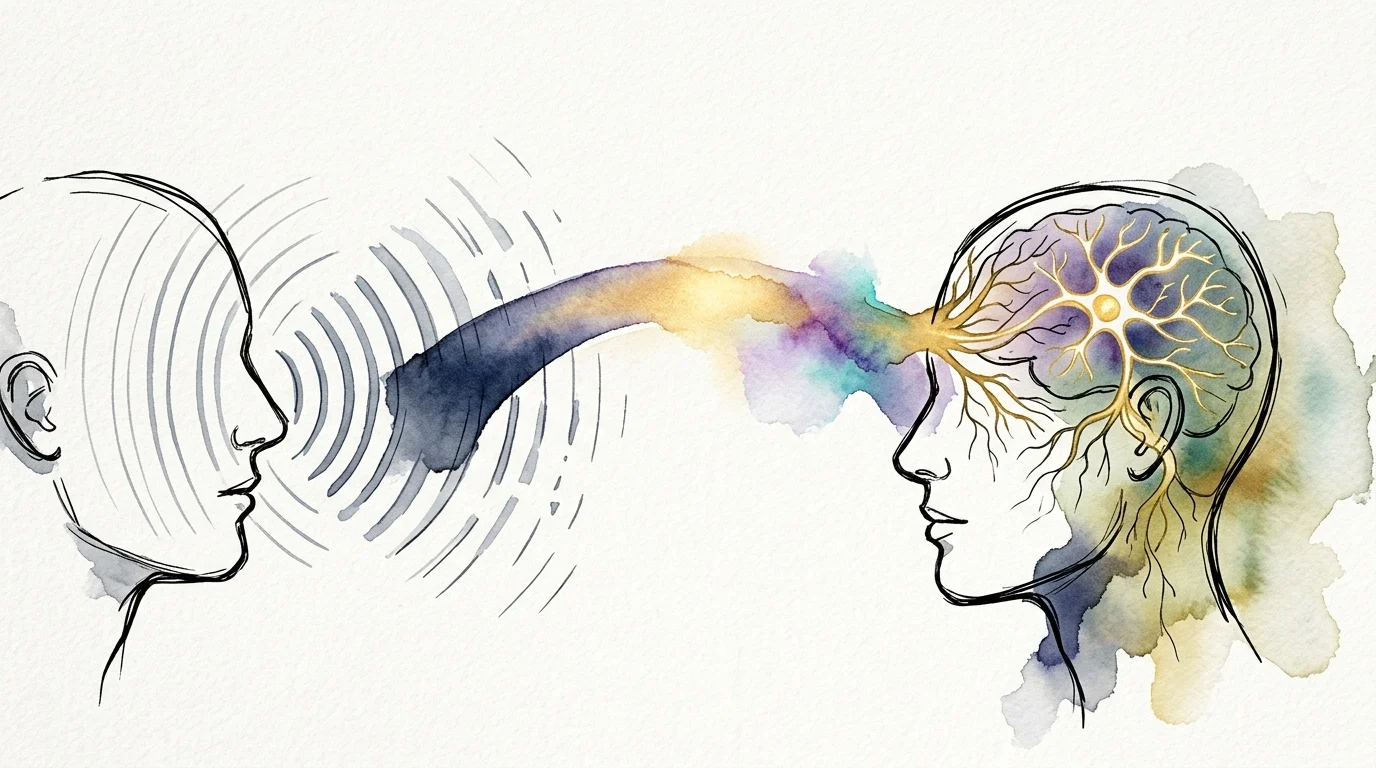
Hearing is a passive biological process—your auditory system receives sound waves and converts them into neural signals. Listening, by contrast, is a deliberate cognitive and emotional choice. In humanistic psychology, pioneered by Dr. Carl Rogers, active listening serves as the foundation for psychological growth and relational trust. When you listen deeply, you do not merely absorb words; you construct a bridge between your internal world and another person’s subjective experience.
Modern clinical studies confirm that feeling heard directly lowers systemic stress. When a speaker feels understood, their sympathetic nervous system calms down, reducing heart rate and cortisol levels. Relationship researchers at The Gottman Institute have found that emotional attunement—the ability to process and respect a partner’s feelings—is the single strongest predictor of long-term relationship stability. Demonstrating strong good listener traits allows you to build social capital, de-escalate conflicts, and foster genuine intimacy in every area of your life.

9 Signs You’re a Good Listener
Psychologists evaluate listening capability through specific behavioral indicators, emotional responses, and conversational habits. Here are nine clear signs that you possess exceptional active listening skills.
1. You Act as a Trampoline, Not a Passive Sponge
A persistent myth suggests that a good listener simply sits in silence while absorbing information like a sponge. However, a landmark study published by business researchers Jack Zenger and Joseph Folkman in the Harvard Business Review analyzed data from over 3,400 participants and discovered a very different pattern. The best listeners are not passive; they act like trampolines.
Instead of absorbing your speaker’s energy without giving anything back, you bounce ideas off one another. You amplify, clarify, and shape their thoughts through gentle energy and active engagement. You inject positive energy into the conversation while allowing the speaker’s ideas to gain height and clarity.
2. You Validate Emotions Before Jumping to Problem-Solving
When someone shares a personal struggle, your immediate instinct might be to fix the issue or offer quick advice. While well-intentioned, rushing to solutions often communicates that the speaker’s feelings are an inconvenience to clear away. Excellent listeners prioritize emotional validation over immediate troubleshooting.
According to the American Psychological Association, emotional validation means acknowledging someone’s internal experience as valid and understandable, regardless of whether you agree with their perspective. You use validating responses like, “That sounds remarkably frustrating,” or “It makes complete sense that you felt overwhelmed in that situation.” By honoring their emotional reality first, you help them regain clarity before moving toward actionable solutions.
“Empathy has no script. There is no right way or wrong way to do it. It’s simply listening, holding space, withholding judgment, connecting you to that feeling inside yourself that understands the feeling.” — Brené Brown, Ph.D., LMSW
3. You Hold Space for Silence Without Urgency
Uncomfortable pauses cause many people to fill the air with filler words, unsolicited opinions, or personal anecdotes. If you are a skilled listener, you treat silence as a functional tool rather than an awkward gap. You recognize that complex emotional processing requires time.
When a speaker pauses, they are often searching for the right words or accessing deeper emotional layers. Pausing for three to five seconds before responding gives the speaker permission to elaborate. This practice demonstrates that you respect their internal pace and are comfortable holding space for their vulnerability.
4. You Track Micro-Expressions and Nonverbal Cues
Human communication is heavily nonverbal. Words convey facts, but vocal tone, posture, facial expressions, and eye movement reveal the emotional truth behind those facts. Good listeners practice nonverbal attunement—they notice subtle shifts in body language and adjust their responses accordingly.
Articles published in Psychology Today emphasize that incongruence between words and nonverbal behavior often flags unexpressed feelings. For example, if a friend says, “I’m fine,” but their shoulders slump and their gaze drops, a strong listener picks up on the emotional disconnect. You might gently respond, “You say you’re fine, but your tone sounds a bit heavy. Do you want to talk about it?”
5. You Ask Curiosity-Driven, Open-Ended Questions
The types of questions you ask reflect your listening posture. Closed questions (such as “Did that make you angry?”) invite brief, one-word answers and force the speaker into pre-set categories. Open-ended questions (such as “How did that experience impact you?”) invite exploration and self-discovery.
Your questions stem from genuine curiosity rather than an attempt to lead the speaker toward your personal conclusions. You ask questions that help the speaker understand themselves better, such as:
- “What was the most challenging part of that situation for you?”
- “How are you feeling about your options moving forward?”
- “What would support look like for you right now?”
6. You Manage Your Internal Monologue and Emotional Reactivity
Poor listeners spend their turn in conversation preparing their rebuttal, planning their advice, or relating the story back to themselves. Good listeners cultivate internal silence. You focus your cognitive resources on processing the speaker’s message rather than drafting your reply.
This skill requires strong emotional self-regulation. If the speaker expresses a viewpoint that triggers your defensiveness, you notice your physical tension without immediately interrupting or pushing back. You compartmentalize your reaction so you can fully comprehend their perspective before formulating a thoughtful response.
7. You Paraphrase and Mirror Key Concepts
Cognitive mirroring is a core component of therapeutic communication. As a strong listener, you periodically reflect back what you have heard using your own words. This practice serves two crucial functions: it verifies your understanding and confirms to the speaker that you are following their narrative.
Phrases like “What I hear you saying is…” or “It sounds like you felt caught between two impossible choices—is that right?” allow the speaker to clarify any misunderstandings immediately. This loop of listening, summarizing, and confirming builds remarkable conversational precision.
8. You Create Unconditional Psychological Safety
Psychological safety is the belief that one can speak up without fear of humiliation, rejection, or immediate judgment. Grounded in Carl Rogers’ concept of “unconditional positive regard,” exceptional listeners project warmth, openness, and non-judgmental acceptance.
“When someone really hears you without passing judgment on you, without trying to take responsibility for you, without trying to mold you, it feels damn good.” — Carl Rogers, Ph.D.
When people speak to you, they do not fear that their vulnerabilities will be weaponized, shared with others, or met with moral superiority. You create an environment where others feel safe to lay down their defensive armor and explore their honest feelings.
9. You Retain and Reference Relational Details Over Time
Listening does not end when the immediate conversation finishes. A clear indicator of deep listening is your ability to recall details from past interactions and follow up later. Remembering significant dates, names of colleagues, personal goals, or ongoing anxieties proves that you valued the original conversation.
Checking in a week later with a simple message—such as “How did your presentation go today? I remember you were feeling anxious about it last Tuesday”—demonstrates sustained care. This continuity transforms isolated conversations into an ongoing relational bond.

Comparing Communication Styles: Passive vs. Active Listeners
Understanding the distinction between unengaged listening and science-backed active listening helps you audit your personal communication style. The following table outlines how different listening approaches operate in everyday scenarios:
| Conversational Dimension | Passive / Unengaged Listener | Collaborative Active Listener |
|---|---|---|
| Primary Goal | To wait for their turn to speak or provide immediate fixes. | To understand the speaker’s subjective reality and offer validation. |
| Handling Silence | Fills pauses immediately to avoid awkwardness or tension. | Allows pauses so the speaker can reflect and process deeper thoughts. |
| Response to Emotions | Minimizes discomfort or rushes to offer logical solutions. | Validates the emotional experience before discussing actionable steps. |
| Questioning Style | Asks closed, leading, or interrogation-style questions. | Asks open-ended, curiosity-driven questions that foster discovery. |
| Internal Focus | Focuses on internal monologue, rebuttals, or personal stories. | Focuses fully on the speaker’s words, tone, and nonverbal cues. |
Common Misconceptions About Good Listening
Misunderstandings about communication dynamics can prevent people from developing effective good listener traits. Clarifying these misconceptions will help you refine your approach.
Misconception 1: Listening means staying silent at all times.
Absolute silence can feel cold, dismissive, or passive. High-level listening requires verbal nods, supportive micro-responses, clarifying questions, and responsive feedback that show active presence.
Misconception 2: Listening implies complete agreement.
You can listen to someone deeply, validate their feelings, and understand their logic without agreeing with their conclusion. Empathy is about understanding a perspective, not endorsing a position.
Misconception 3: Great listeners always know how to solve problems.
The most effective listeners rarely offer immediate solutions. Instead, they act as sound mirrors, asking insightful questions that empower the speaker to discover their own solutions.
Misconception 4: Maintaining 100% direct eye contact is mandatory.
Unbroken, intense eye contact can feel aggressive or uncomfortable for many people. Natural listening involves comfortable visual engagement balanced with occasional soft glances away, allowing both parties room to breathe.
How to Be a Better Listener: 4 Daily Micro-Skills
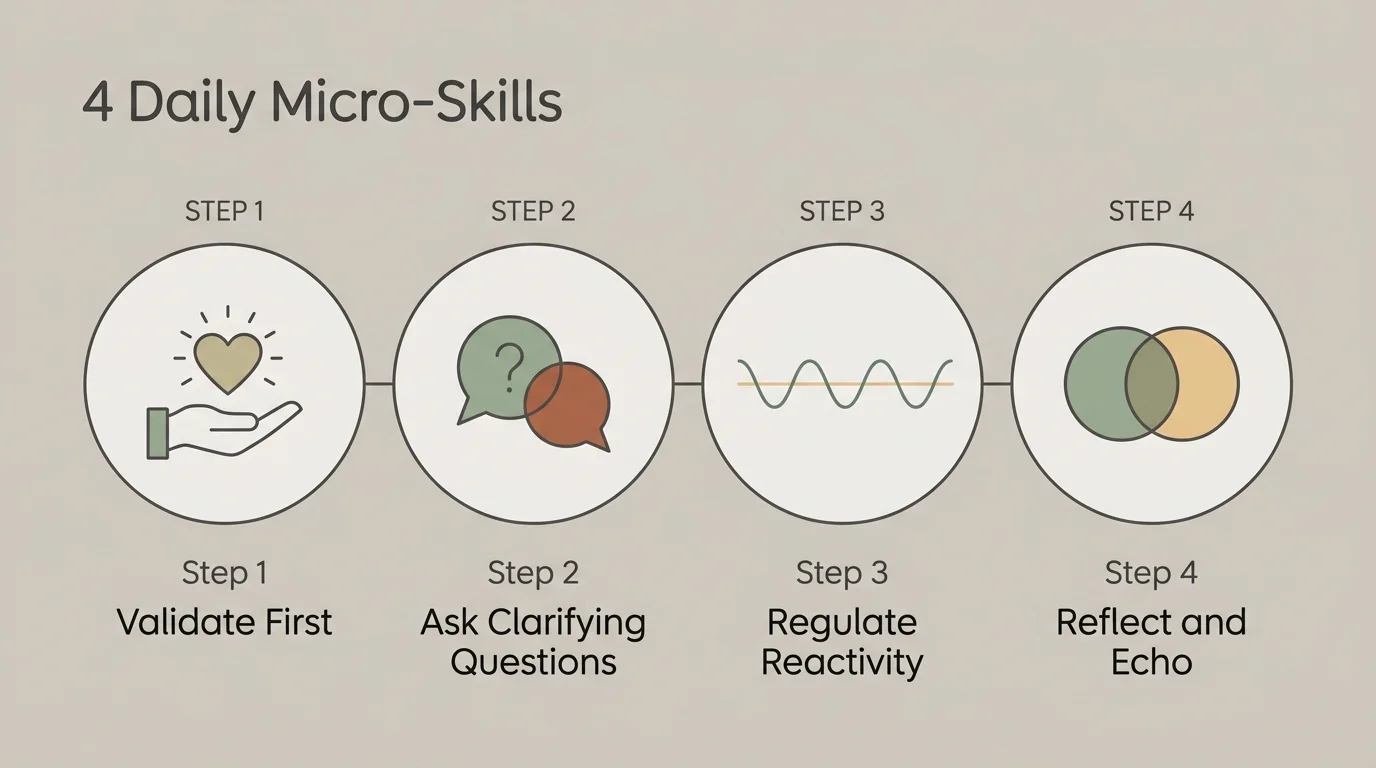
If you want to sharpen your communication habits, practicing micro-skills in low-stakes daily interactions can quickly elevate your conversational quality. Here is how to be a better listener using research-backed habits:
- Implement the Three-Second Pause: Before answering anyone today, count to three silently in your head. This brief pause prevents accidental interruptions, lowers conversational rush, and ensures the speaker has truly finished their thought.
- Practice the Empathy-First Rule: Make a conscious commitment never to offer advice until you have delivered at least one genuine statement of emotional validation. Verify that the speaker actually wants advice before offering it.
- Run a Curiosity Audit: During conversations, notice when your mind starts formulating your response. Whenever you catch your focus shifting inward, immediately refocus on the speaker by asking yourself, “What part of their experience am I missing right now?”
- Summarize Before Transitioning: In high-stakes conversations or complex discussions, summarize what you heard before introducing a new topic or expressing a counter-perspective. Say, “To make sure I understand you fully…” before stating your point.

When Listening Challenges Signal Deeper Relationship Issues
While developing personal listening skills yields tremendous benefits, communication is a two-way street. Chronic listening breakdowns within relationships often signal deeper psychological patterns that require focused support.
Consider seeking guidance from a licensed marriage and family therapist or mental health professional if you notice these persistent challenges:
- Emotional Stonewalling: One partner consistently shuts down, disengages, or refuses to respond during sensitive conversations.
- Severe Emotional Reactivity: Routine discussions quickly escalate into explosive arguments, personal attacks, or defensive defensiveness.
- Chronic Invalidating Patterns: Expressing feelings consistently results in mockery, gaslighting, or dismissal.
- Unprocessed Trauma Triggers: Past traumatic experiences make quiet attunement or emotional presence feel unsafe or overwhelming.
Educational resources from organizations such as the National Institute of Mental Health (NIMH) offer valuable guidance on identifying healthy relational boundaries and finding specialized therapeutic support.
Frequently Asked Questions
How can I tell if I am interrupting people too much?
If conversations frequently stall, if speakers stop sharing details abruptly, or if you regularly find yourself finishing other people’s sentences, you may be interrupting. Practice the three-second pause rule to give speakers full space to express themselves.
What should I do if someone speaks for a very long time without stopping?
Good listening includes maintaining healthy conversational boundaries. You can gently interject with a summarizing statement, such as: “You’ve shared so much important context; I want to pause for a second to make sure I’m taking it all in properly.”
Can active listening skills be learned, or are people born with them?
Active listening is a cognitive and behavioral skill, not an innate trait. While some individuals naturally display higher empathy, anyone can systematically develop strong listening habits through deliberate practice, self-awareness, and emotional regulation techniques.
How do I handle listening when I am feeling completely exhausted?
Honesty is essential for authentic connection. If you lack the bandwidth to listen effectively, communicate your boundary warmly: “I care deeply about what you want to share, but I am mentally exhausted right now. Can we talk about this after dinner so I can give you my full attention?”
Building Stronger Connections Through Mindful Presence
Developing exceptional listening skills is one of the most transformative gifts you can offer your personal and professional relationships. By stepping away from passive absorption and stepping into active, validating dialogue, you transform routine interactions into opportunities for real human connection. Start by choosing one micro-skill—such as pausing before responding or asking an open-ended question—and observe how your conversations shift.
This article provides general educational information about psychology and relationships. It is not a substitute for professional therapy or medical advice. Everyone’s situation is unique—if you’re struggling with severe relational conflict or emotional distress, please reach out to a licensed mental health professional.
Last updated: February 2026. Psychology research evolves continuously—verify current findings with professional sources.









Leave a Reply