

Your stomach tightens days before you pack your bags or pull into your relatives’ driveway. While holiday gatherings promise warmth, they often trigger an automatic nervous system reaction that shapes your conduct in subtle, unexpected ways.
Uncovering these hidden reactions allows you to reclaim your emotional equilibrium before stepping through the front door. Recognizing your personal stress responses helps you transform dread into intentional, grounded self-advocacy during tense reunions.
According to the American Psychological Association (2023), 89% of adults experience holiday-related stress, often ignited by unresolved family tension. Learning the specific behaviors linked to this anxiety gives you the leverage to protect your peace.
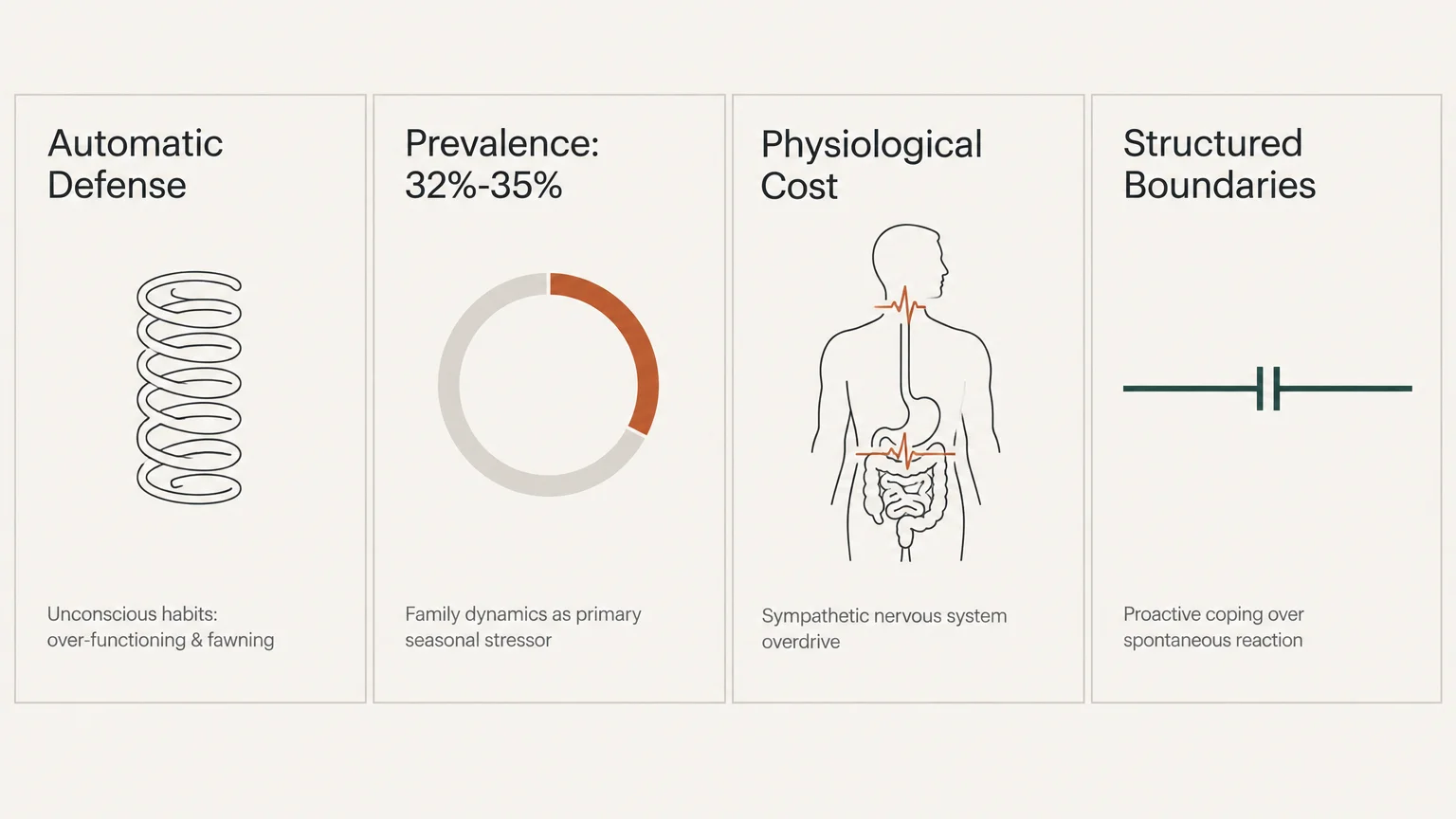
The Essentials: Key Takeaways
- Automatic Defense Mechanisms: Family gathering anxiety frequently manifests as invisible behavioral habits, such as over-functioning, people-pleasing, and emotional numbing.
- High Statistical Prevalence: Research indicates that navigating challenging family dynamics remains a primary seasonal stressor for roughly one in three adults.
- Physiological Impact: Dread regarding family reunions triggers somatic symptoms, including digestive distress, muscle tension, and rapid exhaustion.
- Actionable Boundaries: Shifting from unconscious reactivity to structured, proactive coping allows you to preserve your mental well-being without causing explosive conflict.

Why Family Gatherings Trigger Acute Anxiety
Family gatherings compress decades of complex relationship history into a single afternoon. When you enter your relatives’ home, old relational dynamics immediately resurface.
Family systems theory explains that households operate like emotional units. When you return to that unit, the group exerts unspoken pressure on you to resume your former childhood role.
This dynamic often triggers family systems regression. Even confident, independent adults can suddenly feel like helpless, reactive teenagers in the presence of parents or siblings.
Furthermore, the American Psychiatric Association (2024) found that 32% to 35% of adults identify family dynamics as a leading cause of seasonal anxiety. Your nervous system remembers past criticisms, sibling rivalries, and boundary violations, treating the event as an impending threat.
For individuals with existing mental health challenges, these events carry an even higher emotional cost. The National Alliance on Mental Illness (NAMI) notes that 64% of people with mental health conditions report that holiday gatherings worsen their symptoms.
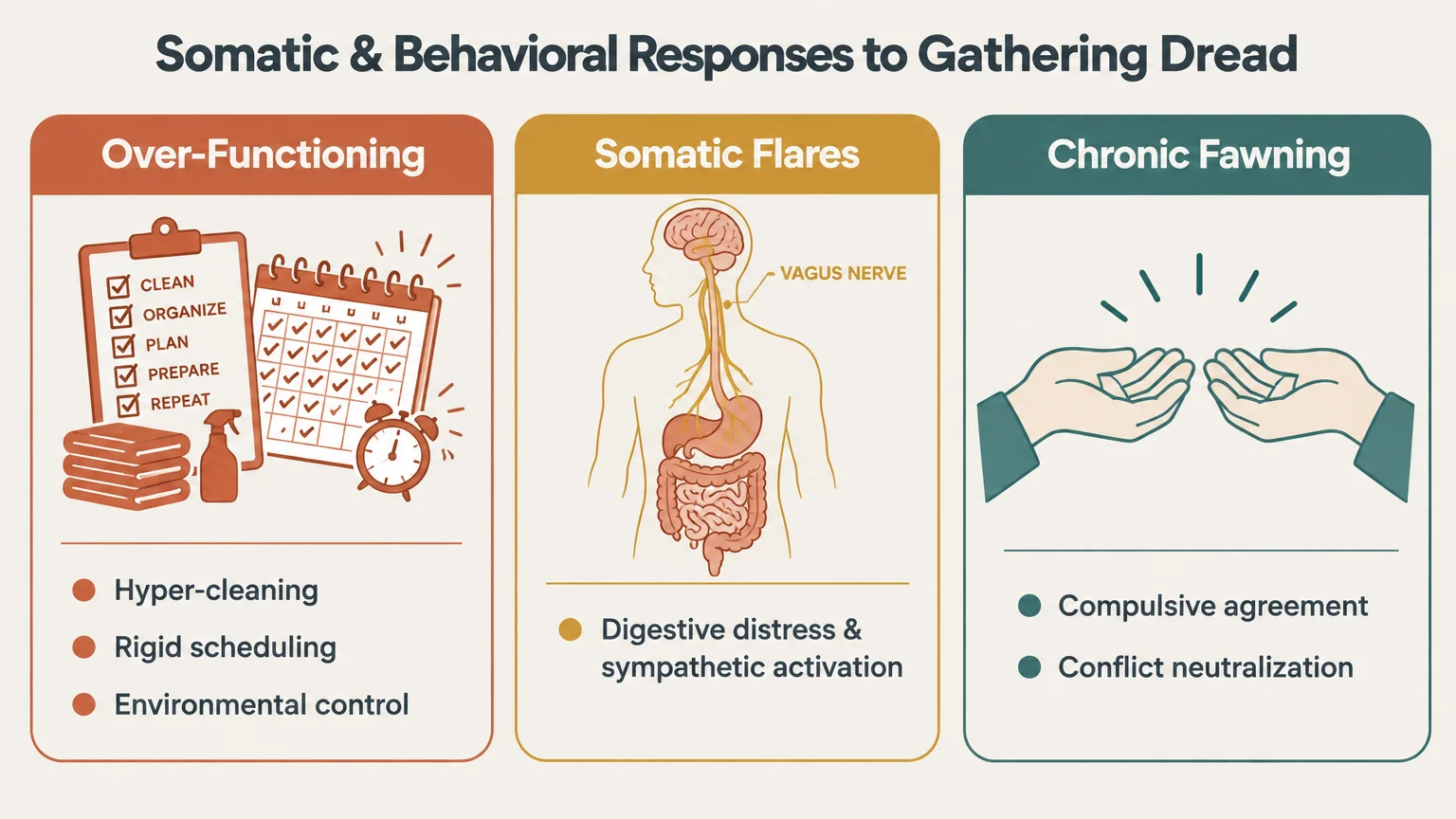
12 Behaviors Linked to Family Gathering Anxiety
1. Over-Functioning and Hyper-Preparation
You might channel your anticipatory dread into relentless physical activity before the event arrives. You obsess over cooking complex dishes, coordinating rigid schedules, or vacuuming every corner of your home.
This over-functioning serves as a defense against perceived chaos. By controlling the physical environment, you attempt to control unpredictable interpersonal dynamics.
2. Somatic Flares and Physical Illness
Your body frequently registers family gathering anxiety long before your conscious mind acknowledges it. You might experience sudden migraines, severe stomach cramps, or tight neck muscles the morning of an event.
According to the Cleveland Clinic, chronic stress activates the sympathetic nervous system, shifting blood flow away from digestion. When you dread an interaction, your gut often pays the price.
3. Chronic People-Pleasing and Fawning
The “fawn” response involves placating others to neutralize potential hostility. At family reunions, this shows up as laughing at offensive jokes, agreeing with opposing opinions, or volunteering for exhausting chores.
You suppress your authentic feelings to keep the peace. While this prevents short-term arguments, it leaves you feeling resentful and emotionally depleted afterward.
4. Strategic Physical Disappearances
Do you frequently volunteer to pick up last-minute groceries, walk the family dog, or wash dishes alone in the kitchen? These micro-escapes offer a quick sensory reprieve from overwhelming social environments.
Hiding in the guest bathroom for extended periods provides necessary nervous system regulation. It signals that your social battery has drained and you require emergency quiet.
5. Digital Shielding and “Phubbing”
Staring at your smartphone screen while surrounded by relatives creates an invisible barrier against uncomfortable questions. Psychologists refer to this behavior as phone-snubbing, or “phubbing.”
Scrolling social media or answering work emails creates the illusion of productivity while deflecting attention. It signals to others that you are unavailable for difficult conversations.
6. Conversational Deflection
When someone experiences social anxiety at family events, they often adopt an interrogator persona. You ask relatives endless questions about their careers, hobbies, or renovations so they never ask about your life.
By keeping the spotlight firmly on the other person, you protect your vulnerabilities. However, this one-way dynamic prevents genuine connection and feels exhausting to maintain.
7. Environmental Hypervigilance
Anxious guests constantly scan the room for subtle shifts in mood, tone, or body language. You track whether your uncle is drinking too quickly or if your mother’s smile seems forced.
This hypervigilance stems from a desire to predict and prevent emotional explosions. Your brain burns immense cognitive energy monitoring everyone else’s comfort instead of enjoying your own time.
8. Preemptive Irritability and Snapping
Anxiety does not always look like quiet nervousness; it frequently disguises itself as irritability. You might snap at your partner on the car ride over or pick a fight over trivial logistics.
This defensive armor prepares you for perceived conflict. Your fight-or-flight response has activated, priming you to strike before anyone can hurt you.
9. Behavioral Regression
You might notice changes in your posture, voice pitch, or decision-making around your parents. Suddenly, you seek parental validation or bicker with your siblings over childhood grievances.
Regression is a natural psychological defense mechanism when confronted with ancient family hierarchies. It strips away your adult autonomy, leaving you feeling small and reactive.
10. Chemical or Sensory Numbing
Many individuals turn to external substances to soften the sharp edges of family gathering anxiety. You might pour an extra glass of wine before dinner or graze mindlessly on heavy comfort foods.
The American Psychological Association (2023) revealed that 38% of stressed adults rely on negative coping mechanisms like alcohol or poor eating habits. These behaviors offer immediate sedation, though they often amplify regret later.
11. Dissociation and Emotional Flatlining
When interpersonal tension becomes unbearable, your nervous system may shut down into a hypoaroused state. You physically sit at the dinner table, but your mind drifts far away.
You might feel numb, foggy, or completely disconnected from your physical body. Dissociation acts as an internal circuit breaker when escape is physically impossible.
12. Post-Event Mental Autopsies
The anxiety does not end when you drive away from the gathering. Instead, you replay every interaction, dissecting your words and searching for imagined offenses.
This obsessive rumination represents an attempt to regain control after feeling exposed. It prolongs the stress response, keeping your cortisol levels elevated for days afterward.
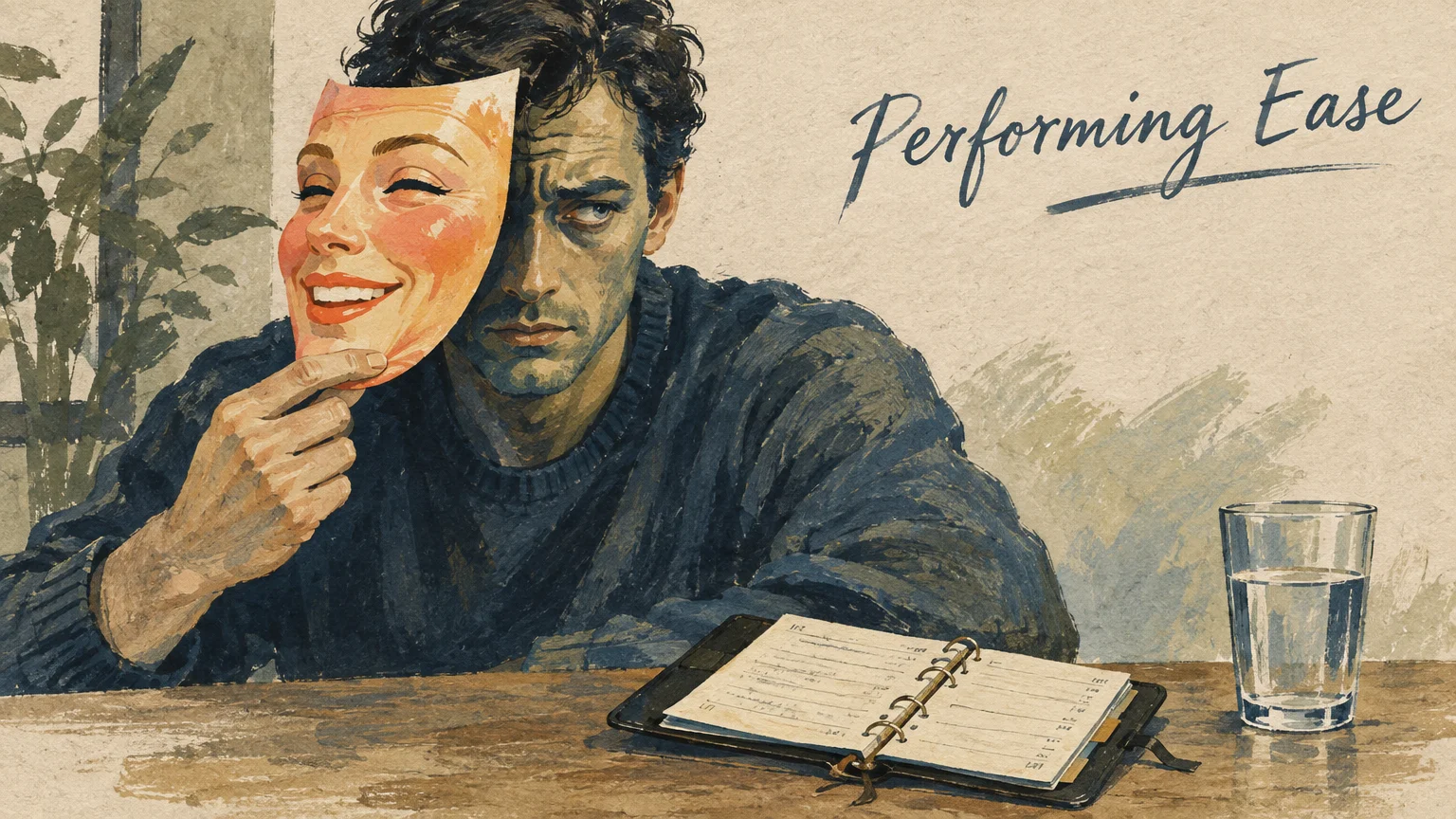
Patterns to Watch For: Misconceptions About Gathering Anxiety
Many people mistake their anxiety-driven behaviors for personality flaws. You might assume your desire to leave early means you are ungrateful, cold, or socially inept.
In reality, these behaviors reflect protective adaptations shaped by past relational stress. Your nervous system is working overtime to prevent emotional injury.
Another common misconception suggests that loving your family prevents you from feeling anxious around them. In truth, love and nervous system distress often coexist within identical relationships.
Recognizing the difference between intentional choices and fear-based reactions allows you to respond with self-compassion. Awareness forms the bridge between chronic reactivity and true emotional freedom.
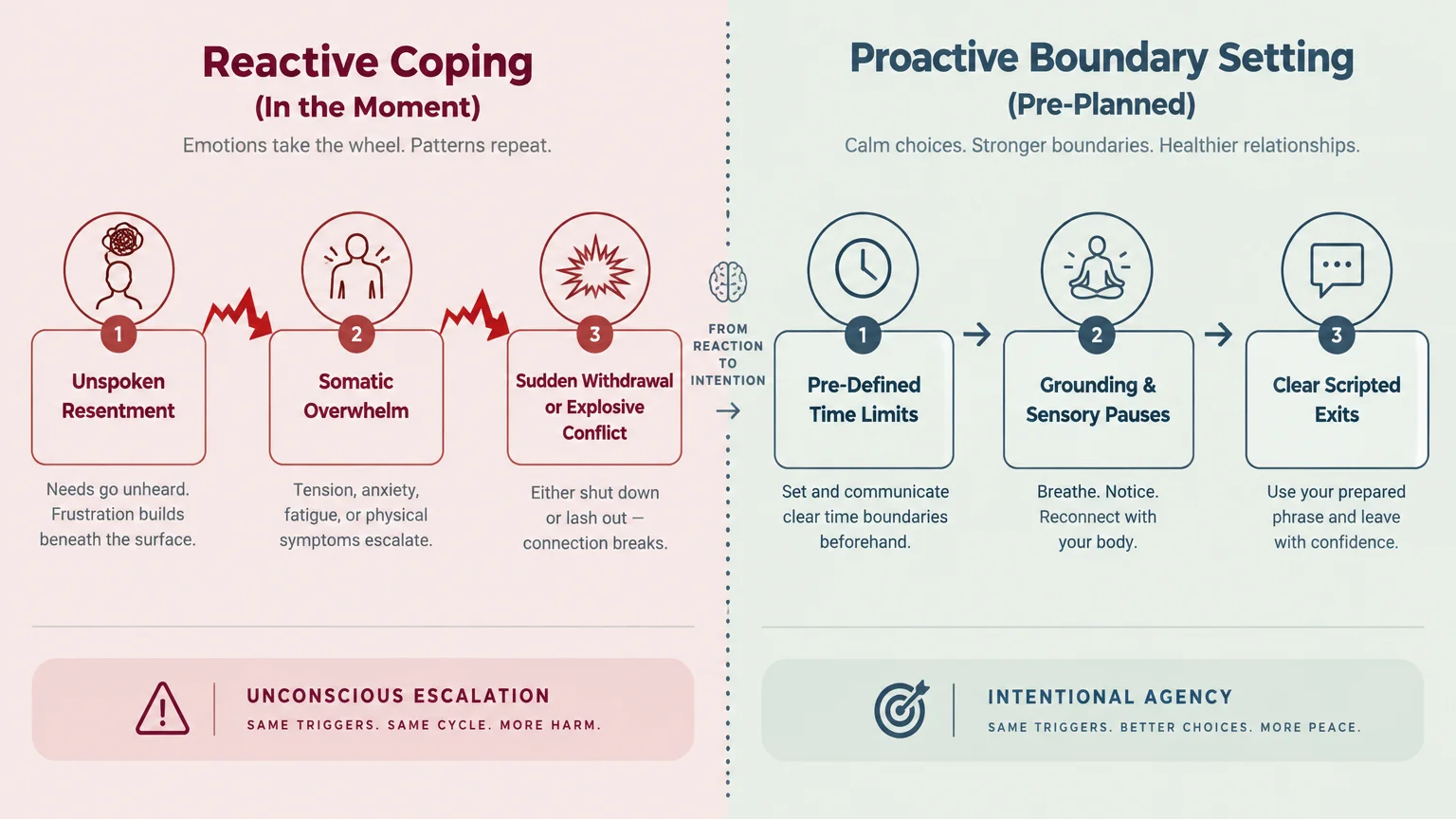
Reactive Coping vs. Proactive Boundary Setting
Managing family gathering anxiety requires replacing automatic survival habits with intentional boundaries. The table below outlines how common reactions can transform into healthier strategies.
| Reactive Anxiety Behavior | Underlying Emotional Need | Proactive Boundary Response |
|---|---|---|
| Disappearing into the bathroom for 30 minutes to hide. | Sensory decompression and nervous system regulation. | “I am stepping outside for a brief 10-minute walk to recharge.” |
| Numbing out with excessive alcohol during dinner. | Relief from social tension and critical questions. | Holding a non-alcoholic drink and stepping away from intrusive debates. |
| Agreeing with opinions that violate your personal values. | Fear of conflict, rejection, or emotional punishment. | “I see that differently, but let’s focus on enjoying dinner today.” |
| Spending the entire party serving and cleaning in isolation. | Desire to avoid vulnerable face-to-face interactions. | Sitting down with trusted family members and declining extra cleanup tasks. |
| Ruminating over every spoken word on the drive home. | Need for emotional validation and closure. | Writing thoughts in a journal and practicing self-soothing affirmations. |

Expert Perspective on Family Boundaries
Setting boundaries during high-stakes family gatherings feels daunting because it disrupts established family patterns. However, internal peace requires clear self-definition.
“Daring to set boundaries is about having the courage to love ourselves, even when we risk disappointing others.” — Brené Brown, PhD, LMSW, Research Professor and Author
Boundaries do not exist to punish your relatives; they exist to preserve your capacity to connect safely. When you honor your limits, you minimize resentment and protect your mental health.
Research from The Gottman Institute emphasizes that clear emotional boundaries reduce interpersonal conflict over time. Healthy families adapt when members communicate their needs calmly and consistently.

Actionable Holiday Stress Tips: Reclaiming Your Agency
You do not have to endure family gatherings as a passive victim of old dynamics. Implementing structured holiday stress tips gives you a practical framework for self-protection.
- Establish a Firm Time Limit: Decide your arrival and departure times before leaving home. Having a predetermined exit plan prevents you from staying past your emotional breaking point.
- Form an Alliance with a Supportive Ally: Designate a partner, sibling, or friend as your grounding contact. Create a non-verbal cue that signals when you need help changing the subject.
- Prepare Deflection Scripts: Practice neutral, non-defensive responses to predictable intrusive questions. Simple phrases like, “I am keeping my focus on the present today,” redirect nosy relatives gracefully.
- Schedule Sensory Breaks: Step outside into cool air, practice deep box breathing, or wash your hands with warm water. Physical groundings reset your vagus nerve during high-stress moments.
- Arrange Separate Lodging: If you travel for the gathering, stay at a hotel or rental home instead of the family house. This guaranteed sanctuary ensures uninterrupted restorative sleep.

When Self-Help Isn’t Enough
While practical coping skills resolve mild holiday tension, some family environments carry severe psychological risks. Recognizing when simple coping strategies fall short protects your long-term mental stability.
Consider seeking professional support from a licensed therapist if you experience any of the following scenarios:
- Debilitating Somatic Distress: You experience recurring panic attacks, vomiting, or complete insomnia in the weeks leading up to family events.
- Trauma Triggers and Flashbacks: Returning to the family home resurfaces unresolved memories of childhood neglect, physical harm, or severe emotional abuse.
- Escalating Substance Dependence: You cannot endure family interactions without relying heavily on alcohol, sedatives, or illicit substances to function.
- Severe Post-Event Depressive Episodes: Gathering with family triggers prolonged depressive episodes, intense hopelessness, or overwhelming shame that impairs your daily work or relationships.
A mental health professional can help you process ancestral trauma and establish firm non-negotiable boundaries. In some instances, therapy provides the clarity required to take a temporary or permanent estrangement sabbatical.
Frequently Asked Questions
Why do I feel like a teenager again when I visit my family?
This experience is known as emotional regression. When you return to your childhood environment, familiar sights, smells, and conversational cues trigger ingrained neurological response patterns.
Your brain temporarily defaults to the coping mechanisms you developed when you were younger. Practicing adult self-talk and keeping your physical adult belongings visible can help maintain grounding.
How do I respond when family members criticize my personal choices?
Avoid taking the bait or launching into an elaborate defense. Over-explaining invites relatives to treat your personal decisions as a debate.
Use short, calm boundary statements such as, “I am comfortable with my path,” or, “I am not looking for feedback on that.” Then immediately steer the conversation toward a neutral topic.
Is it ever acceptable to skip a family gathering entirely?
Yes. If attending an event threatens your physical safety, sobriety, or mental health, you possess the full right to decline.
You can send a polite, clear decline without over-apologizing. Protecting your fundamental psychological well-being must always take precedence over catering to seasonal social expectations.
How can I decompress effectively after a stressful reunion?
Schedule a designated buffer day following major family gatherings before returning to work or complex responsibilities. Use this period exclusively for gentle nervous system regulation.
Focus on quiet activities such as nature walks, light stretching, nourishing meals, and restorative sleep. Avoid immediately analyzing the trip; allow your physiological stress hormones time to dissipate naturally.
Moving Forward with Self-Compassion
Navigating family gathering anxiety requires practice, patience, and intentional boundaries. As you attend upcoming events, observe your behavioral patterns without harsh judgment or self-blame.
Every time you notice an anxious reflex and respond with intentional boundary setting, you rewire decades of conditioning. You hold the authority to choose peace over performance, no matter who sits across the dinner table.
The information in this article is meant for educational purposes and general guidance. It does not replace individual therapy, counseling, or medical treatment. If you or someone you know is in crisis, contact the 988 Suicide & Crisis Lifeline by calling or texting 988.
Last updated: February 2026. Psychology research evolves continuously—verify current findings with professional sources.









Leave a Reply