

Gathering your relatives under one roof offers a rare opportunity to move past polite small talk and tackle topics that genuinely safeguard your family’s future. Proactive discussions prevent painful crises down the road while building emotional resilience across generations.
According to the American Psychological Association, roughly 41% of adults experience heightened stress during the holidays—often driven by unspoken tensions, grief, and financial strain.
By framing delicate topics with empathy and clear boundaries, you can transform seasonal gatherings into milestones of mutual support. Here are nine vital family conversations to have at Thanksgiving.

Why Holiday Gatherings Open a Window for Deeper Dialogue
Holiday dinners gather multiple generations who rarely share the same physical room. This unique gathering gives your family a valuable window for intentional connection.
Avoiding important logistical and emotional subjects out of polite hesitation often breeds silent anxiety. Addressing essential matters directly replaces fear with shared clarity.
Research from Harvard Health indicates that open communication protects families during unexpected health changes. Sharing difficult realities reduces stress for both aging parents and adult children.
Stepping into these conversations requires vulnerability from every person at the table. It means setting aside old defenses to prioritize mutual care.
“Vulnerability is not winning or losing; it’s having the courage to show up and be seen when we have no control over the outcome.” — Brené Brown, Ph.D., LMSW
When you lead with curiosity rather than control, you create a safe environment for difficult truths. Vulnerability transforms awkward holiday dinners into moments of deep relief.
1. Healthcare Directives and Medical Proxies
Medical emergencies force families to make sudden, agonizing decisions in hospital hallways. Establishing clear healthcare directives beforehand eliminates confusion and protects your loved ones from lingering guilt.
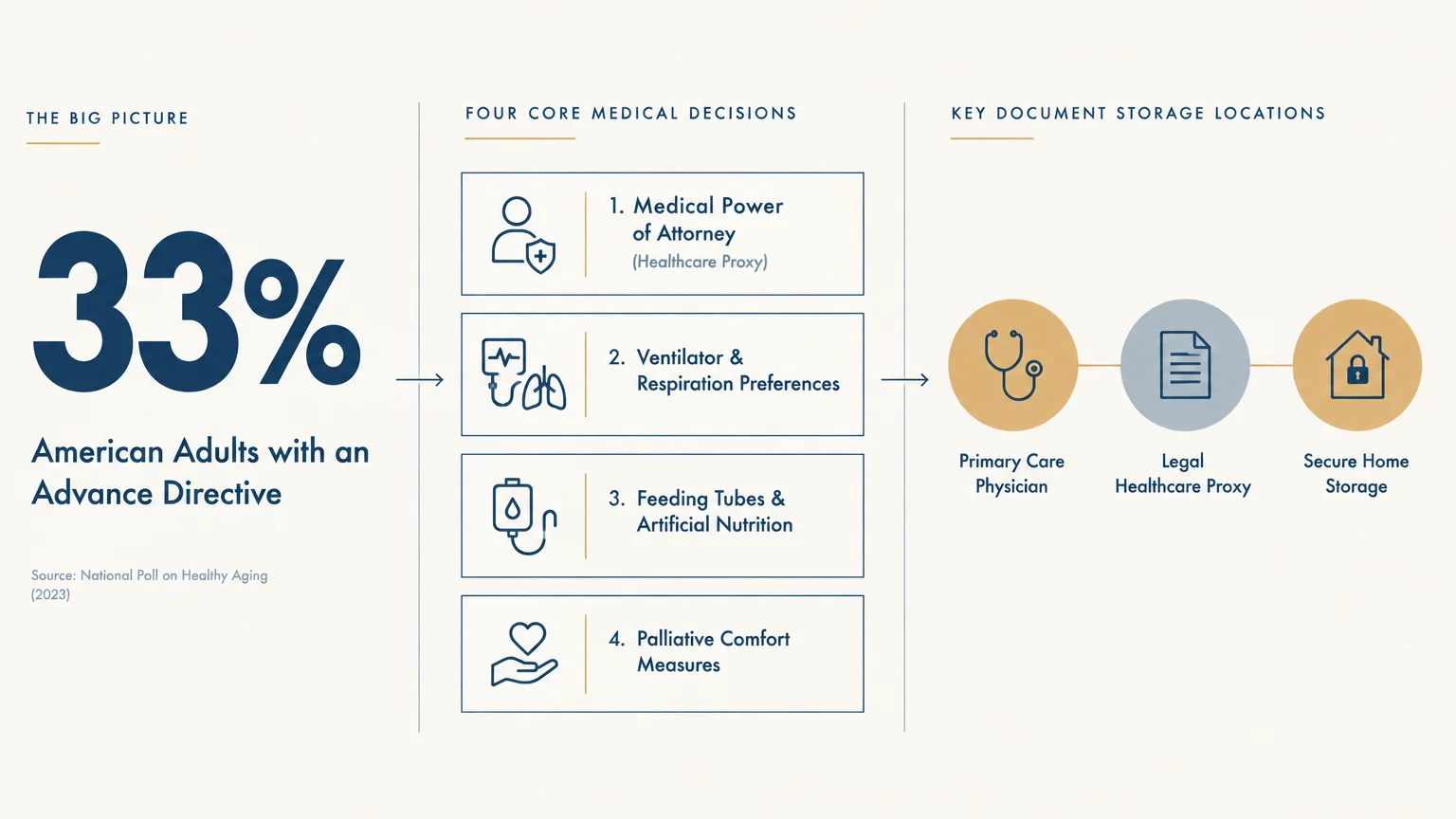
A study published in Health Affairs revealed that only about 33% of American adults have completed an advance directive. This leaves two out of three families unprepared for a critical illness.
When talking to aging parents, gently ask who holds their medical power of attorney. Inquire about their preferences regarding ventilators, feeding tubes, and palliative comfort measures.
You can initiate the dialogue by saying, “We love you and want to honor your medical wishes if an accident ever occurs.”
Make sure every adult child knows where legal healthcare proxy documents are stored. Confirm that your parents’ primary care physicians have copies on file.
Revisit these preferences annually. Medical wishes often evolve as health conditions change over time.
2. Estate Planning Documents and Digital Legacies
Estate planning protects your family from bureaucratic nightmares after a loss. It ensures that an individual’s hard-earned assets pass smoothly to chosen beneficiaries.
Data from Caring.com indicates that only 24% to 32% of American adults have an active will or estate plan. Even among seniors aged 65 and older, one in four still lacks one.
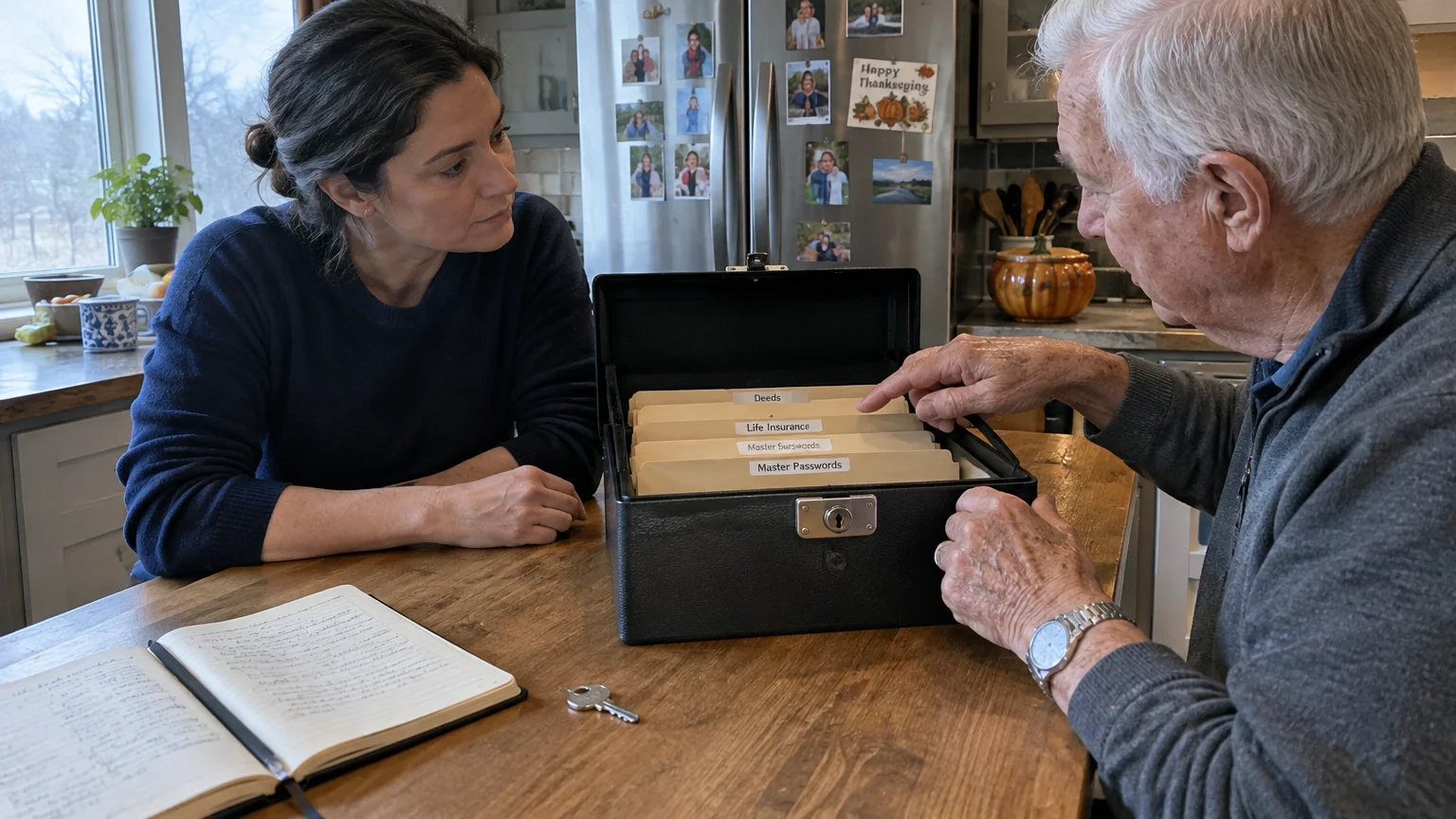
You can frame this estate planning family talk around logistical access rather than inheritance amounts. Ask your relatives where they keep deed papers, insurance policies, and tax returns.
Modern estate planning also demands attention to digital legacies. Families frequently struggle to access locked phones, email accounts, and subscription services after an unexpected passing.
Ask where parents store master passwords, financial logins, and two-factor recovery keys. Designate a secure password manager or a fireproof lockbox in the home.
Knowing where critical documents live saves months of painful probate delays. It brings immense peace of mind to everyone involved.
3. Long-Term Senior Care and Living Preferences
Discussing living arrangements before a crisis preserves personal autonomy. It allows aging parents to define what quality of life means to them as their physical needs change.
Senior care costs require realistic financial planning. The CareScout and Genworth Cost of Care Survey highlights the significant private expenses facing American families.
Hiring a non-medical home health aide now costs a national median of approximately $35 per hour. For 44 hours of weekly care, that totals $80,080 each year.
Assisted living facilities average $74,400 per year, or $6,200 monthly. Meanwhile, a private room in a skilled nursing facility averages $129,575 annually.
A common misconception is that Medicare pays for these long-term custodial services. By federal regulation, Medicare only funds short-term skilled rehabilitative care up to 100 days.
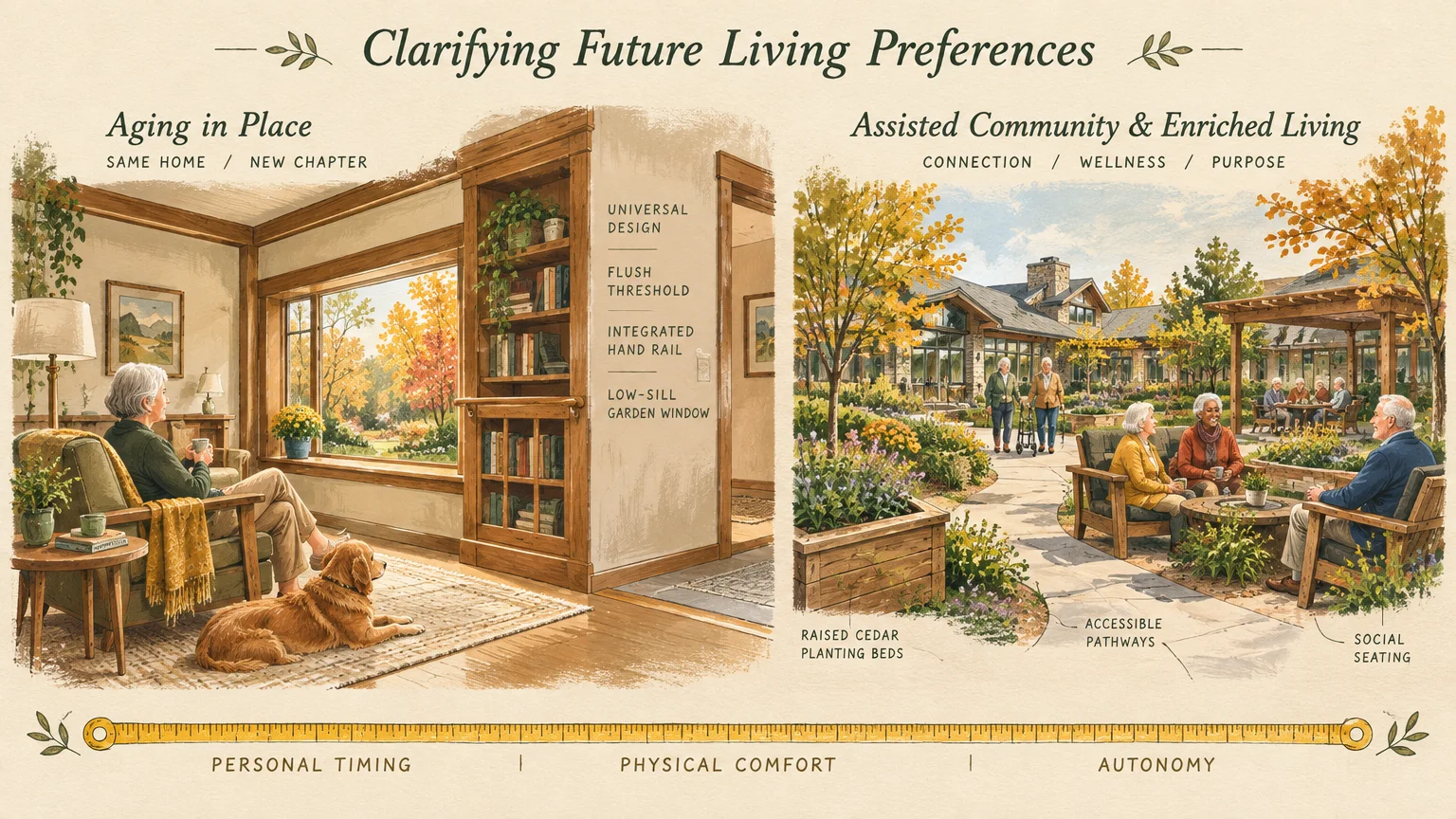
Ask your parents if they prefer to age in place with home renovations or transition to an active community. Exploring options early prevents rushed decisions during a hospital discharge.
4. Distributing the Caregiving Load Fairly
Unspoken expectations around elder care easily fracture sibling relationships. Without explicit communication, primary caregiving duties almost always fall onto one child.
The National Alliance for Caregiving and AARP report that 51 to 59 million Americans serve as unpaid caregivers. Caregivers to older adults spend an average of 26 to 27 hours per week.
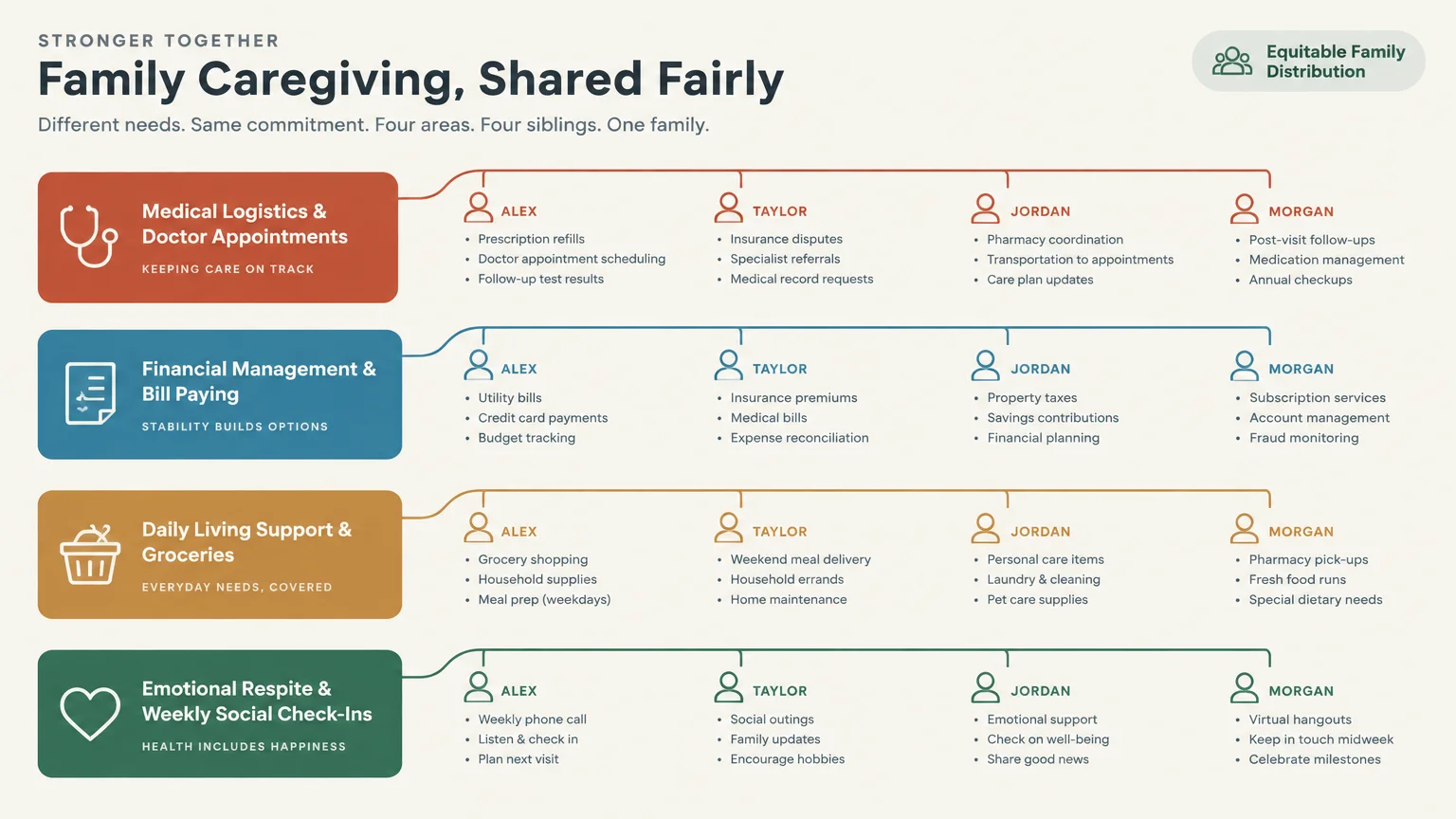
Use holiday family discussions to map out caregiving tasks collaboratively. Divide responsibilities based on individual strengths, schedules, and geographic proximity.
Siblings living nearby can handle grocery shopping and physician appointments. Siblings living farther away can manage remote bill paying, insurance claims, or fund respite care aides.
Regular caregiving check-ins prevent resentment from festering. Shared responsibility protects the primary caregiver from dangerous physical and emotional exhaustion.

5. Financial Realities and Intergenerational Wealth Transfers
Money remains an uncomfortable topic around holiday tables. However, financial transparency protects aging relatives from predatory scams and clarifies long-term security.
Ask whether your parents have sufficient liquid funds to maintain their standard of living. Inquire gently about existing debts, mortgage balances, and ongoing medical expenses.
If parents plan to transfer assets during their lifetime, review current tax regulations together. The IRS annual gift exclusion limit is $19,000 per recipient for 2025 and 2026, up from $18,000 in 2024.
Married couples filing jointly can split gifts to provide up to $38,000 per recipient without filing IRS Form 709. Understanding these limits simplifies generational wealth planning.
Open financial dialogue removes shameful secrecy. It ensures that family resources serve everyone’s well-being efficiently.

6. Preserving Oral Histories and Family Legacy
Crucial thanksgiving conversation topics should also celebrate connection, wisdom, and joy. Gathering ancestral stories strengthens emotional grounding across generations.
Developmental psychology indicates that children who know their family narrative possess higher self-esteem and greater emotional resilience. Understanding family roots anchors identity during tough times.
Set a smartphone voice recorder on the table between courses. Invite older relatives to share stories about their childhood and early adulthood.
Here are four engaging prompts to spark rich storytelling:
- “What was the boldest decision you made in your twenties?”
- “How did your parents navigate tough economic seasons when you were growing up?”
- “What family tradition meant the most to you as a child?”
- “What piece of life wisdom has guided you through difficult trials?”
Recording these reflections creates an irreplaceable audio archive for future generations. It reminds older family members that their lived experience is deeply cherished.

7. Honest Mental Health Check-Ins
The holiday season frequently magnifies chronic loneliness, clinical depression, and unprocessed grief. A sincere inquiry into someone’s well-being can be life-changing.
The National Alliance on Mental Illness (NAMI) reminds us that many people suffer silently beneath festive exteriors. Check in privately with relatives who seem withdrawn or overwhelmed.
Move past superficial pleasantries by asking: “How has your heart been feeling lately?” Listen attentively without rushing to dismiss their pain or offer toxic positivity.
Validating someone’s emotional pain fosters authentic trust. Sometimes, knowing that a relative truly hears you provides the exact comfort needed to heal.
If someone shares profound distress, encourage them to connect with compassionate support services. Knowing they are not carrying burdens alone restores hope.
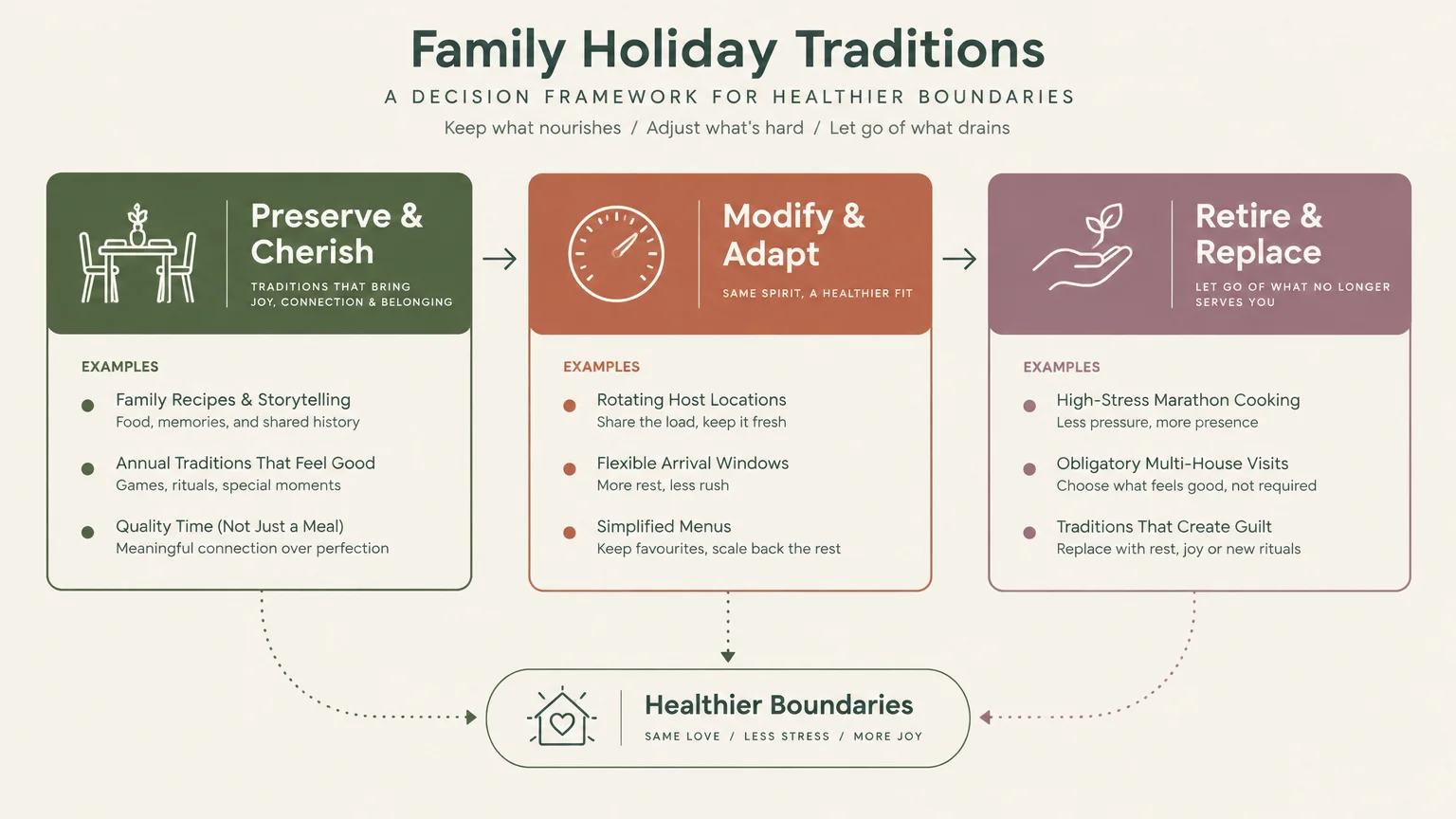
8. Evolving Traditions and Holiday Boundary Setting
Traditions give families a sense of belonging, but rigid expectations often create severe burnout. As families grow and change, old hosting rituals may no longer work.
Research from The Gottman Institute emphasizes that lasting relationships require continuous negotiation of expectations. Adapting traditions with mutual respect preserves relational warmth.
Discuss whether preparing elaborate meals causes excessive strain on the hosts. Propose shifting to potluck meals, catered dishes, or simpler family activities.
Support family members who need to set healthy boundaries around visit durations or sleeping arrangements. Honest conversations prevent the silent resentment that exhausts holiday joy.
Remember that loving your family does not mean sacrificing your physical or mental health. Redefining rituals together keeps holiday gatherings peaceful and sustainable.

9. Future Hopes and Values for the Rising Generation
Thanksgiving brings together young adults, teenagers, and elders with diverse life perspectives. Engaging younger relatives in forward-looking conversations builds their confidence and purpose.
Ask college students or young professionals about their core passions and evolving career dreams. Offer supportive curiosity rather than unsolicited critiques.
Inquire about their values by asking: “What community causes inspire you right now?” or “What new skills are you excited to build this year?”
These questions show young family members that you respect their emerging autonomy. They reinforce the family as a source of encouragement and safety.
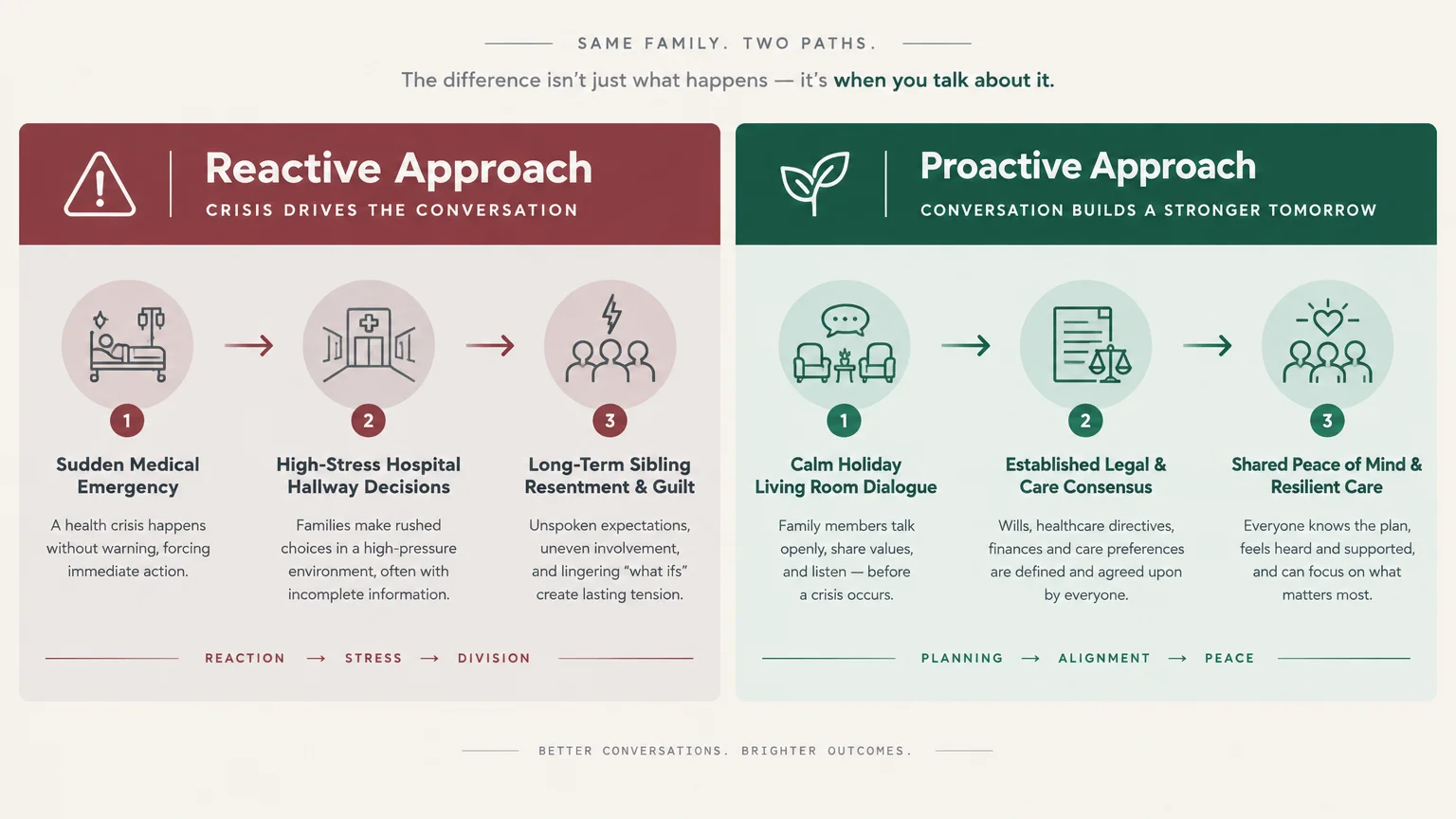
Proactive Versus Reactive Family Discussions
The difference between thriving families and distressed families often comes down to timing. Handling delicate logistics before a crisis occurs transforms dread into constructive collaboration.
| Discussion Dimension | Proactive Approach | Reactive Crisis Mode |
|---|---|---|
| Timing & Context | Initiated during calm holiday gatherings | Triggered by sudden hospitalization or fall |
| Emotional State | Collaborative, calm, and empathetic | Panicked, defensive, and grief-stricken |
| Financial Preparation | Planned budgets; documents readily accessible | Unexpected private costs; probate disputes |
| Decision-Making Agency | Aging adults steer their own choices | Medical teams or state guardians make choices |
| Caregiver Distribution | Shared tasks among family members | Burden dumped onto one overwhelmed caregiver |
When you examine these two approaches side by side, the benefits of proactive planning become obvious. Deliberate preparation preserves your family’s financial stability and emotional harmony.

Common Misconceptions
Addressing common misunderstandings directly helps family members drop their defenses. Here are four widespread myths that disrupt productive family conversations at Thanksgiving.
Misconception 1: Medicare Covers Long-Term Assisted Living and Home Care
Many adults assume Medicare provides comprehensive funding for senior care. In reality, Medicare covers only medically necessary, acute skilled rehabilitative care for up to 100 days.
Custodial care—including bathing, dressing, meal preparation, and memory care—is not covered by Medicare. Families must pay out of pocket, use long-term care insurance, or qualify for Medicaid.
Misconception 2: Estate Planning Is Only Necessary for Wealthy Individuals
Many believe that estate planning only matters for individuals with millions in assets. In truth, every adult needs advance directives, financial powers of attorney, and a basic will.
Without legal paperwork, state probate laws dictate asset distribution and parental guardianship for minor children. Estate planning protects loved ones regardless of net worth.
Misconception 3: Talking About Aging and End-of-Life Decisions Invites Misfortune
Some family members avoid health talks due to deep-seated superstition or discomfort. However, avoiding these discussions does not prevent decline; it only ensures chaotic emergency responses.
Open discussions normalize life transitions. They empower aging loved ones to articulate their wishes with clarity, dignity, and confidence.
Misconception 4: Siblings Will Automatically Share Caregiving Labor Fairly
Families frequently assume siblings will divide tasks equally without formal discussion. In practice, the sibling who lives closest or has the most flexible schedule absorbs the entire load.
Unspoken caregiving arrangements spark chronic resentment and burnout. Explicit discussions ensure that every sibling contributes meaningfully through time, administrative work, or financial support.

Finding the Right Professional Help
While many family discussions resolve smoothly, certain situations require external guidance. Enlisting objective professionals protects family relationships and ensures legal and medical safety.
Consider seeking specialized professional assistance in the following circumstances:
- High-Conflict Sibling Disagreements: When siblings deadlock over finances or medical care, an elder mediator or family therapist provides impartial facilitation.
- Noticeable Cognitive Decline: If a parent shows progressive memory loss, poor judgment, or confusion, consult a neurologist or a certified geriatric care manager.
- Complex Asset or Blended Family Logistics: For blended families, business succession, or complex trusts, consult a qualified elder law attorney.
- Overwhelming Caregiver Burnout: If a primary caregiver experiences chronic exhaustion, insomnia, or severe depressive symptoms, connect them with mental health resources via the National Institute of Mental Health (NIMH).
Professional specialists bring objective insight and proven frameworks to complex family dynamics. Reaching out for professional help reflects proactive leadership, not defeat.
Frequently Asked Questions
How do I initiate a conversation about estate planning without sounding morbid?
Frame the discussion around mutual family protection and logistical preparedness rather than death. Share your own recent steps in creating a will or naming a healthcare proxy.
Asking where critical papers are located in case of a minor emergency softens the tone. It keeps the conversation focused on practical care rather than mortality.
What should our family do if an aging parent refuses to discuss future care?
Avoid pushing the topic into an intense confrontation. Acknowledge their desire for independence and validate that they remain in control of their life decisions.
Leave informative brochures or articles with them, and suggest revisiting the topic in a few weeks. Gradual conversations often yield better results than forced negotiations.
Is Thanksgiving dinner really the right time for serious logistical conversations?
Do not bring up complex logistical matters during the main holiday meal. Reserve the dinner table for shared appreciation, lighthearted stories, and personal connection.
Instead, schedule a separate, quiet conversation over morning coffee or an afternoon walk. Select a time when the relevant adults are rested and unhurried.
How can out-of-town siblings contribute to senior care without being physically present?
Long-distance siblings can manage digital bill paying, track insurance claims, and order prescription refills. They can also research local day programs and coordinate professional home aides.
Contributing financially to respite care provides immense relief to local caregivers. Consistent emotional support and check-in calls also ease the caregiver’s mental load.
Next Steps for Meaningful Holiday Conversations
Meaningful family dialogue does not require resolving every logistical challenge in a single afternoon. Beginning the conversation with genuine empathy lays the groundwork for enduring trust.
Choose one or two topics that feel most urgent for your family this Thanksgiving. Take practical notes, follow up on legal or financial tasks, and continue communicating with compassion.
The information in this article is meant for educational purposes and general guidance. It does not replace individual therapy, counseling, or medical treatment.
If you or someone you know is in crisis, contact the 988 Suicide & Crisis Lifeline by calling or texting 988.
Last updated: February 2026. Psychology research evolves continuously—verify current findings with professional sources.









Leave a Reply