
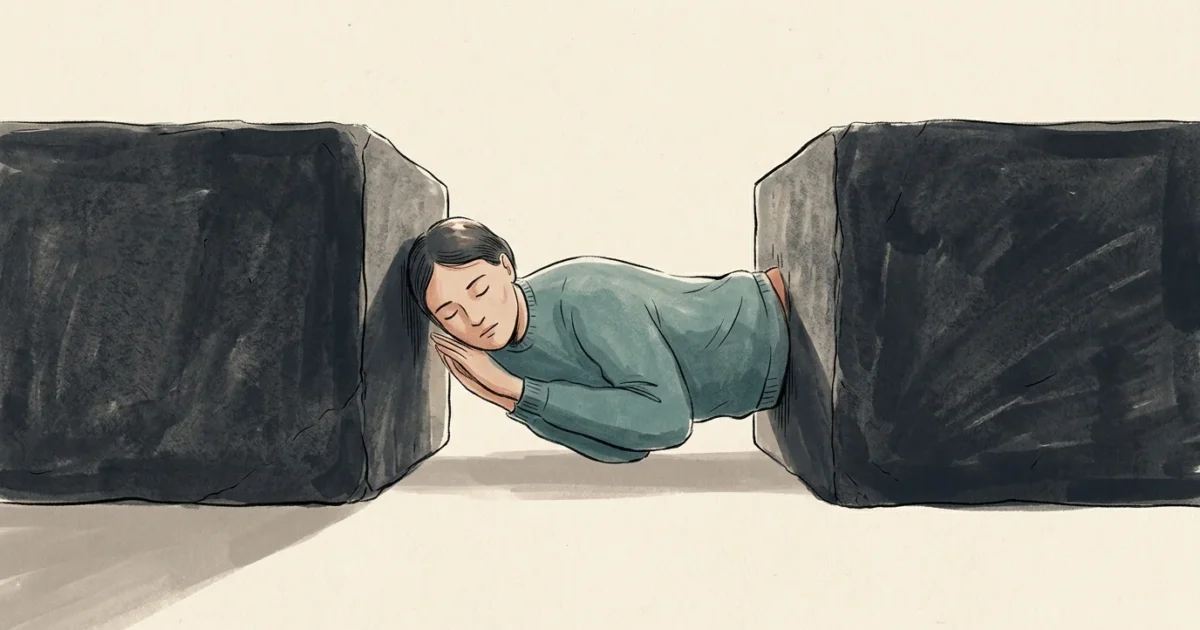
Stepping into the role of the family mediator often feels like an act of devotion, but constantly managing everyone else’s emotions can quietly erode your own sense of self. When you spend your life smoothing over disagreements, absorbing tension, and putting your feelings on hold, you become the invisible shock absorber for family stress. While this role highlights your empathy and high emotional intelligence, it also carries a steep psychological price tag, including chronic exhaustion and difficulty stating your true needs. Recognizing your family peacemaker signs represents the first step toward building healthier boundaries without abandoning the people you love.

At a Glance
- Core Definition: A family peacemaker instinctively de-escalates conflict, mediates arguments, and suppresses personal preferences to keep relational balance.
- Recognizable Patterns: Signs include emotional hypervigilance, habitual conflict avoidance, identity shape-shifting, and intense guilt surrounding personal boundaries.
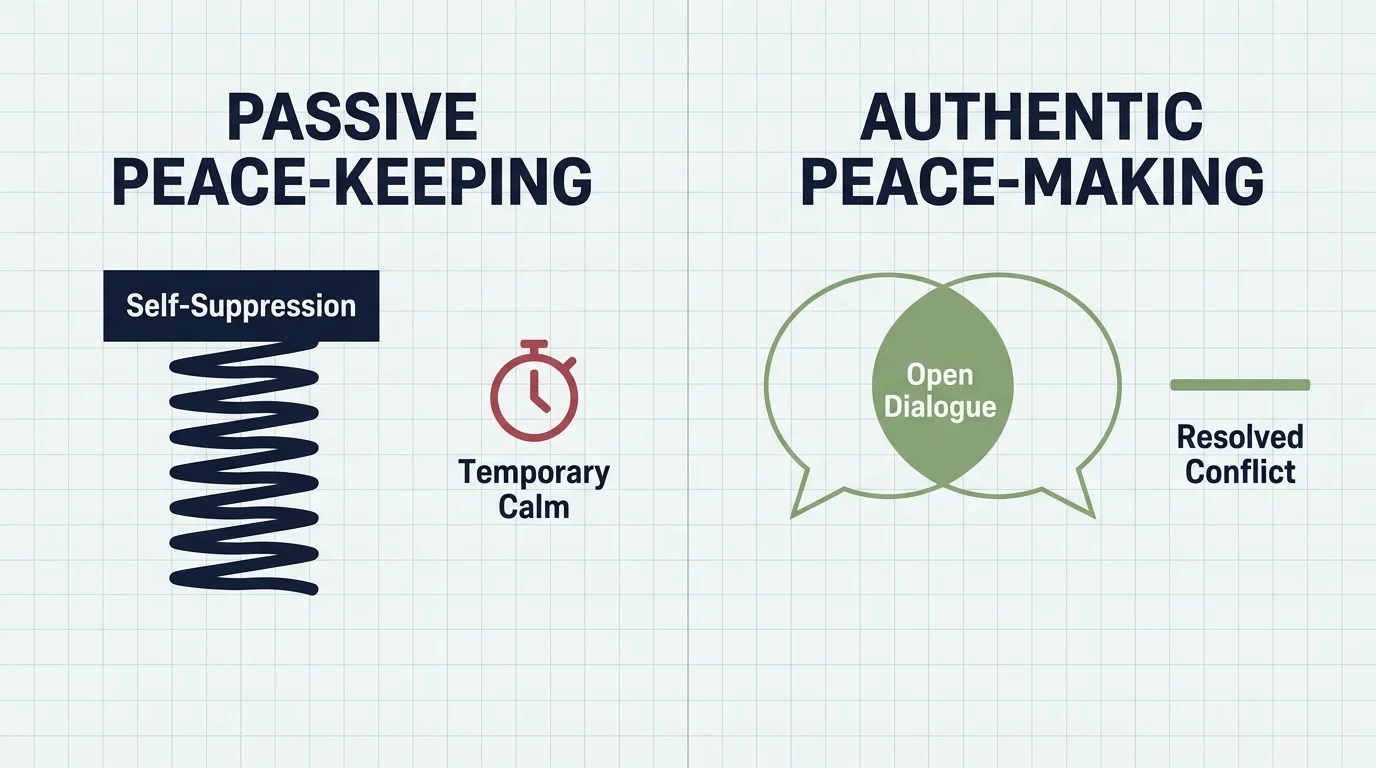
- Key Difference: Authentic peace-making resolves conflicts through open dialogue, whereas passive peace-keeping relies on self-suppression to maintain a temporary illusion of calm.
- Long-Term Health Cost: Unchecked peace-keeping frequently leads to psychological burnout, somatic stress, and difficulty establishing emotional intimacy in adult romantic partnerships.
- Actionable Path Forward: Shifting out of this dynamic requires learning psychological differentiation, stepping out of family triangulation, and allowing others to process their own emotional discomfort.
The Psychology Behind the Family Peacemaker Role
Family systems do not exist as collections of isolated individuals; they operate as interconnected emotional networks. When conflict arises between family members, the entire system experiences distress. To manage this discomfort, family systems often unconsciously assign specific roles to individual members. You might recognize roles such as the achiever, the scapegoat, or the family peacemaker. Your family conflict role likely developed early in childhood as an adaptive survival mechanism designed to maintain safety, predictability, and connection within your household.
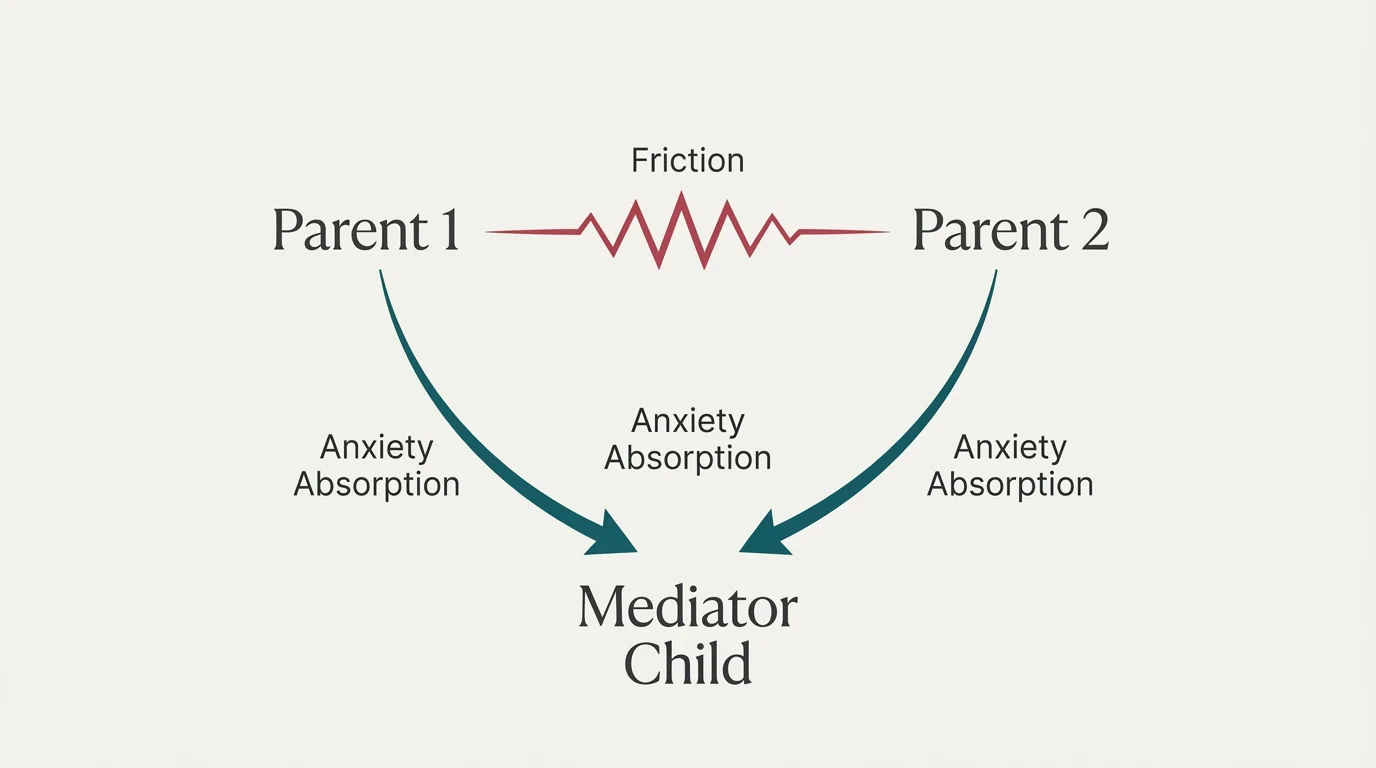
Psychological research rooted in Murray Bowen’s Family Systems Theory reveals that when two family members experience friction—such as parents arguing or siblings clashing—they frequently reduce their anxiety by drawing in a third person. Clinicians call this process triangulation. As the designated mediator, you step into this triangle to absorb excess anxiety and restore balance. Over time, taking on adult emotional responsibilities as a child can lead to parentification; you learn that your value depends on your ability to soothe others rather than simply express your authentic self.
“Conflict management is not about eliminating disagreement; it is about learning how to navigate differing needs without destroying emotional connection.” — John Gottman, Ph.D., Co-Founder of The Gottman Institute
While being the mediator in family dynamics demonstrates remarkable resilience and empathy, repeating this behavior for decades can blur the line between healthy compassion and self-erasure. To transform this habit, you must first recognize how it manifests in your daily life.
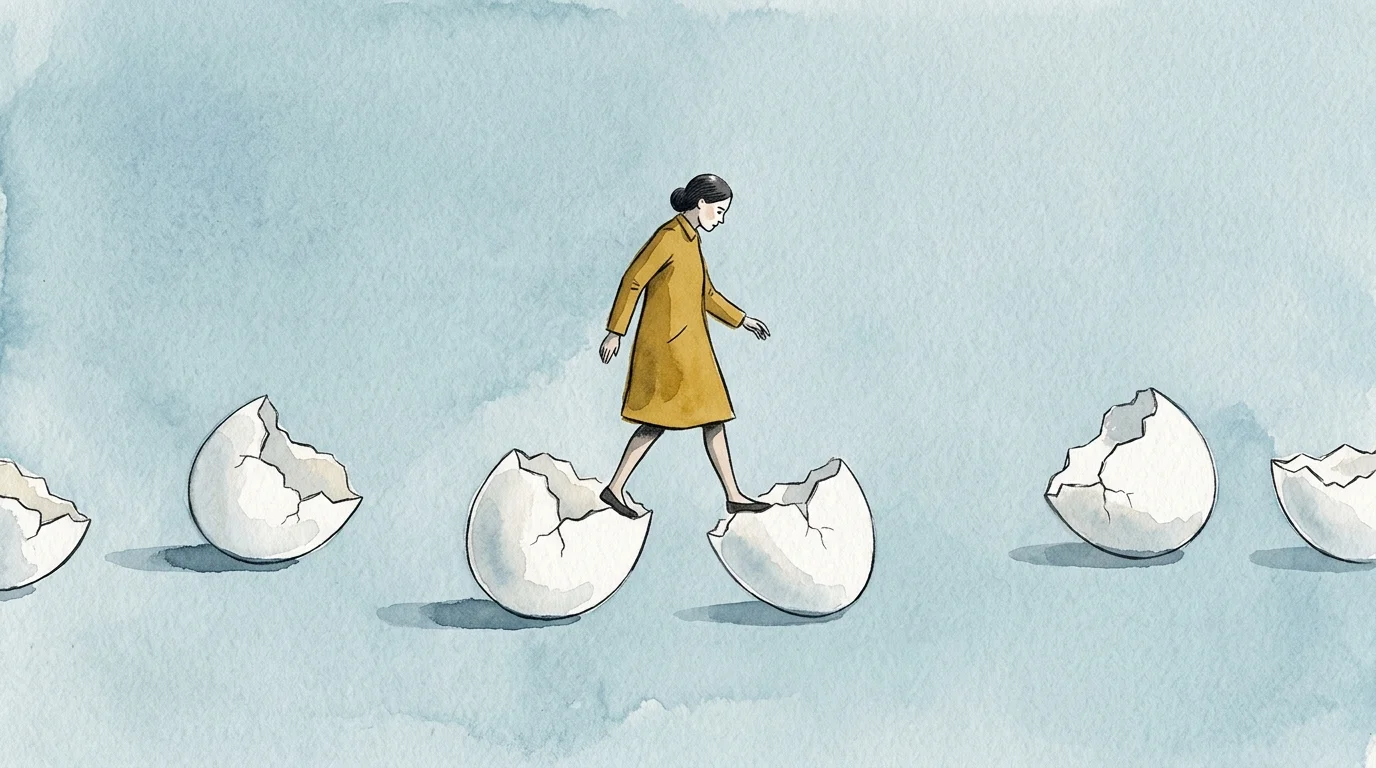
6 Signs You’re a Peacemaker in Your Family
1. You Constantly Gauge the Emotional Temperature of the Room
You enter a family gathering and immediately scan the room for subtle emotional cues. You register a clenched jaw, a sharp tone, or an unusually quiet parent within seconds. This heightened awareness, known clinically as emotional hypervigilance, means your nervous system stays on high alert. You monitor everyone else’s mood to anticipate potential conflict before it erupts, believing that if you can predict a storm, you can prevent it.
2. You Step In as the Unofficial Mediator During Disputes
When tension flares between relatives, you rarely remain a bystander. You step between arguing parties to translate their words, soften harsh statements, or propose quick compromises. Being the mediator in family arguments often feels like an instinct rather than a choice; you act as a relay switch for communication because watching two people you love disagree causes you unbearable internal distress. You find yourself saying phrases like, “What they really meant was…” or “Let’s just focus on having a nice dinner.”
3. You Suppress Your Own Opinions and Needs to Avoid Waves
One of the clearest signs you avoid family conflict involves hiding your real thoughts, feelings, and preferences. When asked where you want to eat, what political topic you support, or how you feel about a holiday plan, you default to “I don’t care, whatever everyone else wants.” You swallow your hurt or disagreement because you fear that voicing your authentic perspective might spark an argument or make you appear “difficult.” Over time, this passive stance can make your true needs invisible—even to yourself.
4. You Carry the Heavy Weight of Family Secrets and Triangulation
Because family members view you as neutral, non-judgmental, and empathetic, they frequently vent to you about each other. A parent complains to you about your sibling; a sibling confides their resentment toward a parent. You become a vault for sensitive secrets and unexpressed grievances. While this proves that your family trusts you, carrying confidential information creates immense emotional fatigue and puts you in an uncomfortable position between the people you care about.
5. You Experience Intense Guilt Whenever You Set a Boundary
Saying “no” to a family request triggers an immediate wave of panic and guilt. When you consider skipping a family event, declining an invitation, or asking someone to speak to you more respectfully, an internal voice tells you that you are being selfish, cold, or disloyal. You equate self-care with causing harm, believing that prioritizing your mental health directly threatens your family’s stability and happiness.
6. You Shape-Shift Your Personality to Keep the Peace
Among peacemaker personality traits, adaptive shape-shifting ranks among the most common. You adjust your speech, emotional expression, and personal values depending on which relative you are speaking with. With a critical relative, you remain quiet and agreeable; with an emotionally intense relative, you become the calm, steady rock. While flexibility represents a genuine strength, changing who you are to keep others comfortable eventually creates a unsettling sense of detachment from your authentic identity.
Peace-Keeping vs. Peace-Making: Understanding the Difference
Many people use the terms “peace-keeper” and “peace-maker” interchangeably, but psychological frameworks draw a sharp distinction between the two. Peace-keeping relies on short-term conflict avoidance and self-suppression to maintain a superficial illusion of harmony. In contrast, true peace-making involves facing necessary conflict directly to build long-term, authentic resolution.
| Aspect | Unhealthy Peace-Keeping (Avoidance) | Healthy Peace-Making (Resolution) |
|---|---|---|
| Primary Goal | Immediate reduction of tension and anxiety | Long-term understanding and mutual respect |
| Communication Style | Indirect, passive, or overly accommodating | Direct, honest, and emotionally clear |
| Handling Boundaries | Sacrifices personal boundaries to soothe others | Maintains personal boundaries while respecting others |
| Individual Impact | Leads to resentment, exhaustion, and loss of identity | Fosters self-respect, confidence, and emotional freedom |
| Family Impact | Enables ongoing unhealthy dynamics and unspoken tension | Encourages genuine accountability and growth |

The Double-Edged Sword: Benefits vs. Long-Term Costs
Living as a family peacemaker offers undeniable social benefits. You likely possess exceptional emotional intelligence, active listening skills, and an advanced ability to navigate workplace diplomacy. People naturally trust you because you excel at de-escalating tense situations and finding creative middle ground. These strengths often serve you well in professional settings and community leadership.
However, chronic peace-keeping exacts a significant physical and emotional toll. According to research published by the American Psychological Association, long-term emotional suppression correlates with increased physiological stress, including chronic muscle tension, digestive issues, and elevated anxiety levels. When you continuously bottle up valid emotions like anger or disappointment, those feelings do not disappear; they manifest somatically or transform into quiet resentment.
Furthermore, taking on the family peacemaker role can impair your adult romantic relationships. If you learned that love requires constant self-sacrifice, you may struggle to assert your desires with a partner, pull away when healthy disagreements occur, or attract partners who expect you to manage their emotional life.
“Daring to set boundaries is about having the courage to love ourselves, even when we risk disappointing others.” — Brené Brown, Ph.D., LMSW

Patterns to Watch For (Misconceptions About Family Roles)
Unlearning automatic peace-keeping behaviors requires challenging several deeply held assumptions about family dynamics. Watch for these common mental traps that keep you stuck in passive conflict management:
- Misconception 1: “If I stop mediating, the family will fall apart.” This belief assumes you hold sole responsibility for adult relationships that existed long before you entered the picture. When you step back, family members may experience short-term friction, but they also gain the opportunity to develop their own conflict-resolution skills.
- Misconception 2: “Avoiding conflict is the same as having a loving relationship.” Genuine closeness requires honesty. Avoiding important discussions creates surface-level quiet, not real intimacy. Suppressing differences prevents your family from knowing and accepting the real you.
- Misconception 3: “Setting a boundary is an aggressive act.” Boundaries are not punishments or ultimatum statements; they are clear guidelines defining what you need to stay safely connected to others. Defining your limits protects relationships from festering resentment.
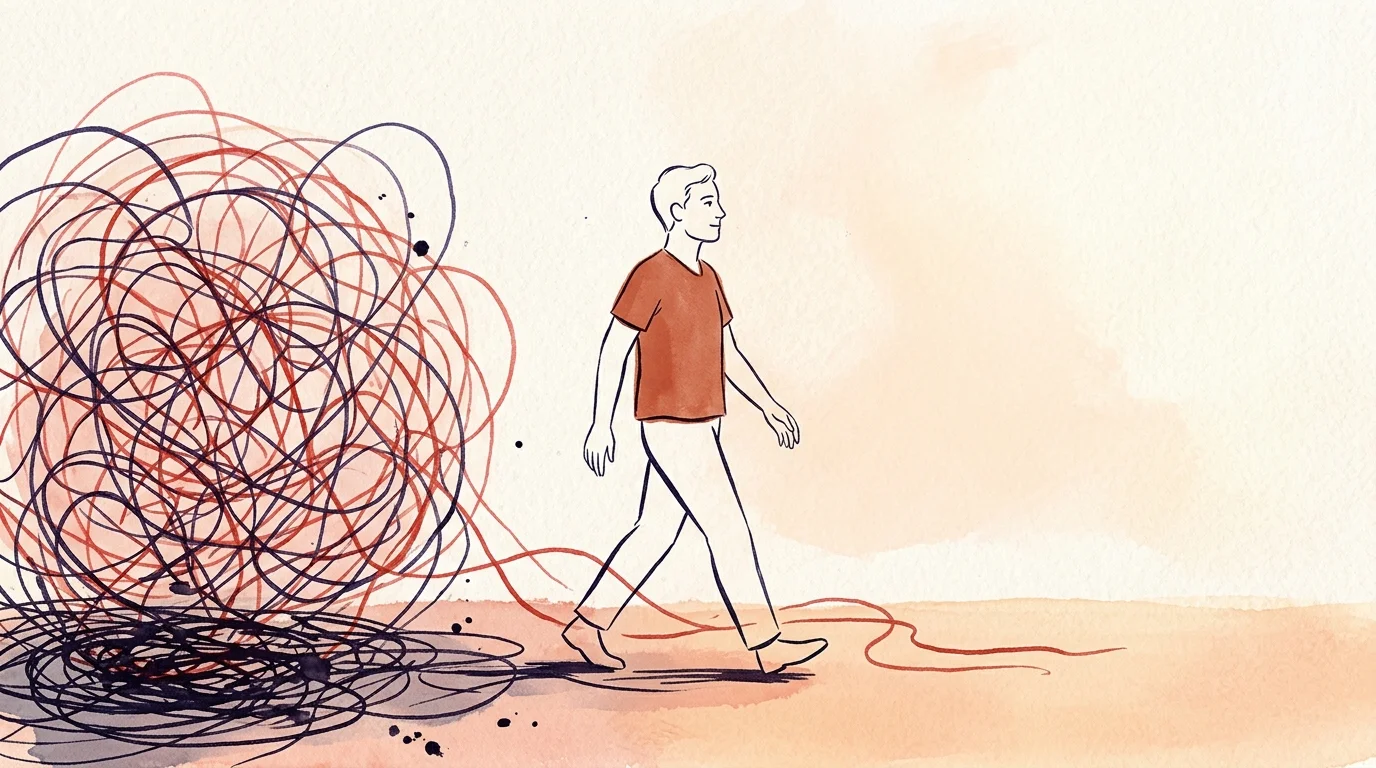
How to Transition from Unhealthy Peace-Keeper to Grounded Family Member
Shifting away from chronic peace-keeping does not mean turning into a confrontational or uncaring person. Instead, it means moving toward grounded self-possession. You can support these practical strategies to break the cycle:
1. Practice the “Pause and De-triangulate” Technique
When a relative attempts to recruit you into a dispute with another family member, pause before responding. Resist the urge to fix, translate, or offer unsolicited advice. Use clear, disengaging scripts to redirect communication back to the source:
- “I love you both, but this sounds like something you and Mom need to discuss directly.”
- “I know you are frustrated with Dad, but I am not comfortable passing messages between you.”
- “I trust that you two have the capability to work this out together.”
2. Build Tolerance for Emotional Discomfort
Peace-keepers intervene primarily to stop their own anxiety when tension arises around them. Practice sitting with the discomfort of an awkward silence or an unresolved disagreement. Remind yourself: “Other people’s emotions are not my emergency, and I do not need to fix this moment to be safe.”
3. Express Preferences in Low-Stakes Situations
Reclaim your voice by practicing small moments of self-assertion. State your preference when choosing a restaurant, selecting a movie, or deciding on a weekend activity. Expressing low-stakes opinions trains your nervous system to understand that speaking up does not trigger relational rejection.
4. Adopt the Principles of Differentiation
Psychological differentiation refers to the ability to stay connected to your family emotionally while remaining an independent individual with distinct thoughts, values, and boundaries. Learn to view family members as separate adults responsible for their own choices, reactions, and growth paths.

When Self-Help Isn’t Enough
While self-awareness empowers personal change, unlearning deep family roles can feel overwhelming on your own. Professional mental health support becomes essential in several specific scenarios:
- Active Substance Abuse or Domestic Violence: If your family system involves active addiction, emotional abuse, or physical safety concerns, attempting to mediate puts your personal well-being at severe risk. Professional intervention is required.
- Severe Physical and Psychological Symptoms: If family interactions consistently trigger panic attacks, depressive episodes, chronic insomnia, or severe somatic pain, working with an individual therapist can help you process stored trauma.
- Persistent Boundary Impairment: If you find it impossible to set boundaries in your career or romantic life without crippling guilt, individual counseling offers a structured environment to rebuild your sense of self.
To locate specialized care, consult directory databases at Psychology Today, or explore community mental health resources through the National Alliance on Mental Illness (NAMI).
Frequently Asked Questions
Can a family peacemaker stop mediating without feeling guilty?
You will likely experience guilt when you first stop mediating family conflicts. This guilt is a normal reaction to breaking a long-standing family rule, not evidence that you are doing something wrong. With consistent boundary practices, your nervous system adjusts, and the guilt gradually diminishes.
How does being a family peacemaker affect adult romantic relationships?
Former family peacemakers often struggle with expressing personal desires, asserting boundaries, or handling normal relationship friction. They may withdraw during minor disagreements or continuously yield to their partner’s preferences, which can lead to emotional distance and sudden burnout.
Is being a peacemaker a personality trait or a learned behavioral response?
While natural traits like high empathy and sensitivity play a role, family peacemaking operates primarily as a learned behavioral response. Children adopt this habit to navigate family instability, manage parental stress, or maintain safety within their home environment.
What is the fastest way to respond when relatives pull me into an argument?
The fastest response involves neutral, non-defensive disengagement. State calmly that you care about everyone involved, but that you prefer to stay out of the dispute so they can resolve it directly with each other.
Moving Forward with Balanced Compassion
Stepping out of the family conflict role does not mean turning your back on the people you love. It means choosing to participate in your family as a complete person rather than an emotional mediator. When you stop managing everyone else’s feelings, you grant others the dignity of managing their own lives while reclaiming the energy you need to build your own.
Relearning how to engage with your family takes time, patience, and self-compassion. As you step back from passive peace-keeping, you create space for authentic peace-making—building honest, resilient relationships where your voice matters just as much as anyone else’s.
The information in this article is meant for educational purposes and general guidance. It does not replace individual therapy, counseling, or medical treatment. If you or someone you know is in crisis, contact the 988 Suicide & Crisis Lifeline by calling or texting 988.
Last updated: February 2026. Psychology research evolves continuously—verify current findings with professional sources.









Leave a Reply