

Perfect mothers do not exist, and developmental psychology proves your children do not need one. Decades of clinical research show that healthy child development relies on consistent emotional attunement rather than flawless caretaking.
Modern parenting culture often creates unattainable standards that fuel exhaustion and chronic self-doubt. When you focus on grounded psychological traits, you replace pressure with genuine connection.
Developmental psychologists identify specific maternal behaviors that nurture resilience, independence, and secure attachment. These ten evidence-based characteristics reveal what your children truly need from you.

1. Emotional Attunement and Active Presence
Psychologists define emotional attunement as your ability to recognize, understand, and respond to your child’s inner emotional state. When you tune in, your child feels deeply understood and valued.
Attunement does not require perfection or mind reading. Instead, it means pausing your own reactions to observe your child’s body language, facial expressions, and vocal tone.
Put down digital devices and establish gentle eye contact during daily conversations. This focused presence signals that your relationship matters more than outside distractions.
Attunement creates the neurological foundation for emotional security. It assures children that their experiences matter to the most important person in their world.

2. Unconditional Positive Regard
Psychologist Carl Rogers introduced unconditional positive regard as a cornerstone of mental health. In motherhood, this practice means valuing your child for who they are rather than how they perform.
Separate your child’s core worth from their temporary behaviors. You can firmly correct an inappropriate action while still reaffirming your steady love for the child.
“When someone really hears you without passing judgment on you, without trying to take responsibility for you, without trying to mold you, it feels damn good.” — Carl Rogers, Ph.D.
When children know your acceptance does not hinge on grades or compliance, they build resilient self-esteem. They learn to take healthy emotional risks without fearing rejection.

3. Clear and Consistent Boundaries
Warmth without structure creates anxiety, whereas warmth combined with firm rules builds deep security. Developmental psychologist Diana Baumrind identified this balanced approach as authoritative parenting.
Children thrive when they understand family expectations and know the consequences of crossing established limits. Predictable boundaries teach self-discipline and demonstrate that you care enough to protect them.
The American Psychological Association notes that authoritative parenting consistently produces children with superior emotional balance and social competence.
State your limits calmly without shouting, threatening, or bargaining. Consistent enforcement proves that your boundaries serve as a protective guardrail rather than an emotional punishment.
4. Reliable Emotional Regulation and Co-Regulation
Immature nervous systems cannot soothe themselves during intense distress. Through co-regulation, your child borrows your calm neurological state to stabilize their own runaway emotions.
If you meet your child’s emotional storm with anger or panic, you escalate the crisis. When you remain steady, you teach them that intense feelings are safe and temporary.
Take three slow, deliberate breaths before responding to an explosive outburst. Your physical composure sends an immediate signal of safety to your child’s reactive brain.
You can find additional evidence-based strategies for emotional regulation through resources on Psychology Today.

5. Embracing the “Good Enough” Standard and Relational Repair
British psychoanalyst Donald Winnicott introduced the “good enough mother” concept to dismantle toxic ideals of maternal perfection. Winnicott observed that minor parental failures actually benefit a child’s psychological growth.
Small, manageable disappointments teach children to tolerate frustration and adapt to the real world. What matters most is not avoiding mistakes, but actively repairing ruptures after conflict occurs.
Clinical research highlighted by Harvard Health indicates that relational repair strengthens attachment bonds. A sincere apology rebuilds trust and models emotional maturity.
Saying, “I lost my temper earlier, and I am sorry,” normalizes accountability. It demonstrates that relationship ruptures are temporary and solvable through mutual respect.

6. Supporting Autonomy and Healthy Separation
Effective mothers nurture deep connection while actively preparing their children for independence. Psychologists Edward Deci and Richard Ryan emphasize that autonomy is a fundamental human psychological need.
Resist the urge to solve every friendship dispute, organize every assignment, or control every minor choice. Stepping back allows your child to develop genuine problem-solving capabilities.
Offer age-appropriate choices throughout the day to cultivate decision-making confidence. You might ask whether they prefer doing chores before dinner or finishing them right after school.
When you trust your child to manage small challenges, they develop authentic self-efficacy. They learn that they can handle difficult situations independently.

7. Emotional Validation Over Dismissal
When a child cries over a trivial setback, dismissive parents often say, “It is not a big deal.” Attuned mothers recognize that the distress feels immense to the child.
Research from The Gottman Institute shows that emotion-coaching parents validate feelings before addressing behaviors. Validating an emotion does not mean accepting unacceptable conduct.
Name the feeling aloud by stating, “You feel disappointed because we have to leave the park.” Acknowledging feelings helps children organize their internal emotional experiences.
Children who feel heard calm down faster than children whose feelings are denied. Validation shows your child that all emotions are welcome, even when boundaries remain firm.

8. Providing a Secure Base for Exploration
Attachment theorists John Bowlby and Mary Ainsworth discovered that children explore the world confidently when they view their mother as a secure base.
A secure base gives your child courage to take healthy social and academic risks. They venture outward into new environments knowing your comfort awaits their return.
Welcome your child with open arms whenever they encounter fear, fatigue, or social setbacks. Your reassuring presence recharges their emotional reserves for future challenges.
Children who possess a secure base exhibit greater curiosity, social resilience, and willingness to try new experiences throughout their lives.

9. Modeling Self-Compassion and Personal Boundaries
Mothers who sacrifice every personal need inadvertently teach their children that adult life requires chronic self-neglect. Psychologists emphasize that children absorb your habits far more than your spoken advice.
When you treat your own mistakes with self-compassion, your child learns to forgive themselves. Prioritizing your physical rest, hobbies, and adult relationships protects your emotional patience.
Establish clear personal boundaries by voicing your needs calmly. Stating, “I need twenty quiet minutes to read,” normalizes healthy adult self-care within your household.
Discover evidence-based self-compassion tools at Verywell Mind to sustain your emotional health over the parenting journey.

10. Developmental Flexibility and Adaptability
What works for an energetic toddler will fail with an introspective adolescent. Psychologically astute mothers continuously adjust their expectations and communication styles as their children mature.
Toddlers require direct physical containment and simple directions, while teenagers need negotiated freedom and non-judgmental guidance. Adapting your methods prevents exhausting and unnecessary power struggles.
Treat your child’s evolving developmental stages as natural growth milestones rather than personal losses. Remaining flexible preserves your relational bond across every decade of your child’s life.
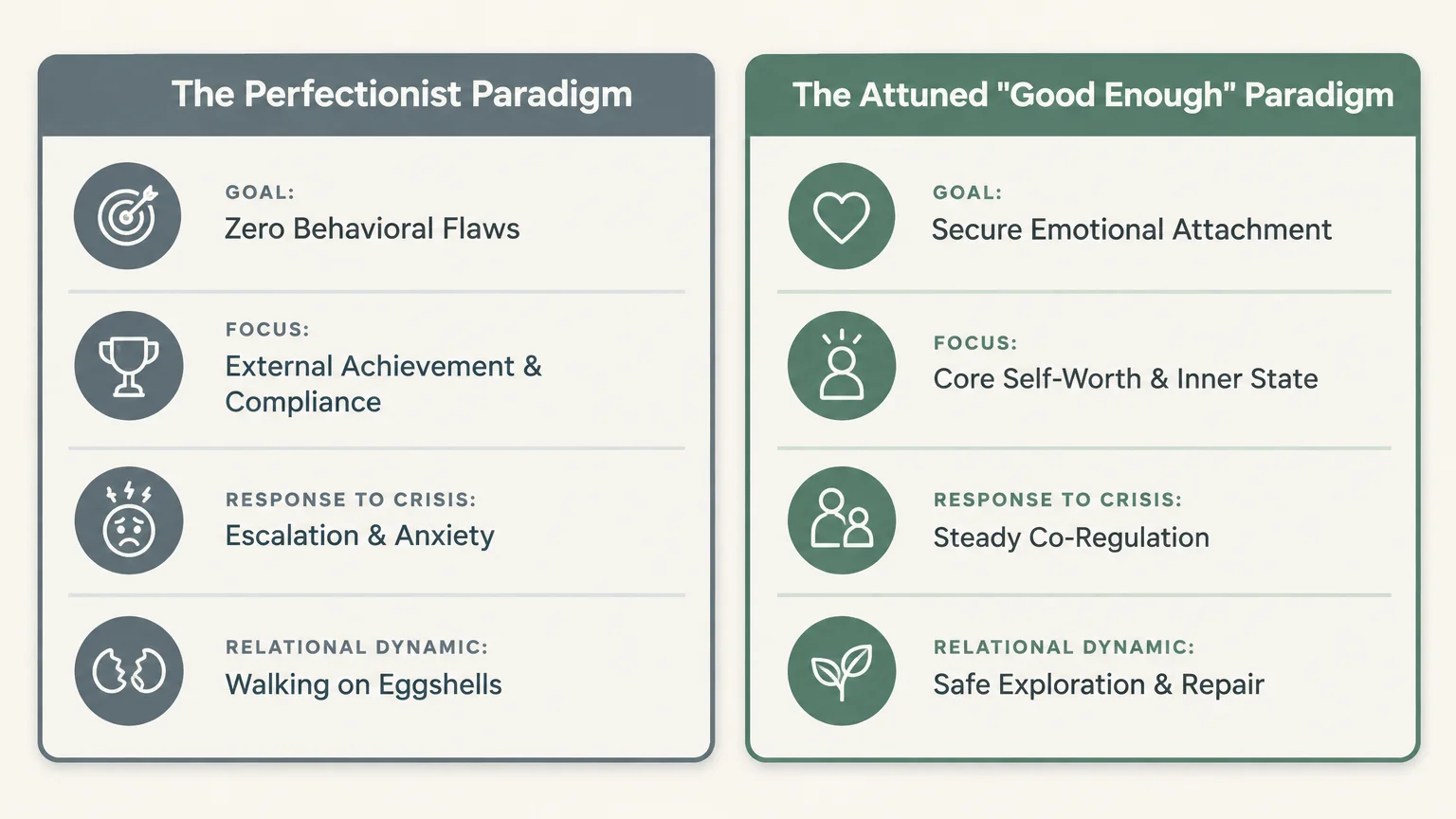
Comparing Motherhood Paradigms
Modern culture frequently confuses parental perfection with maternal competence. This comparison illustrates how psychological attunement differs from rigid perfectionism across key parenting areas.
| Dimension | Perfectionist Mothering | Attuned Psychological Mothering |
|---|---|---|
| Emotional Stance | Suppresses distress; experiences intense guilt after normal frustration. | Acknowledges feelings; practices co-regulation and regular repair. |
| Boundary Setting | Alternates between rigid control and exhausted permissiveness. | Enforces calm, predictable boundaries accompanied by warmth. |
| Handling Mistakes | Interprets parenting missteps as fundamental personal failure. | Views missteps as natural opportunities for modeling repair. |
| Fostering Autonomy | Micromanages outcomes to shield child from discomfort. | Encourages independent exploration while providing a secure base. |
| Maternal Well-Being | Neglects personal needs until experiencing total burnout. | Protects personal boundaries to sustain long-term patience. |
Focusing on psychological attunement frees you from unrealistic social expectations. Your child does not need a flawless mother; they need a responsive and authentic parent.

Patterns to Watch For: Common Motherhood Misconceptions
Many devoted mothers carry heavy burdens caused by inaccurate psychological beliefs. Recognizing these common misconceptions helps you parent with greater peace and confidence.
A widespread myth insists that good mothers never feel angry, bored, or resentful. In truth, parental frustration is an involuntary neurological response to persistent overstimulation and fatigue.
Another common misconception suggests that successful mothers always keep their children happy. In reality, experiencing sadness, anger, and boredom fosters critical emotional problem-solving skills.
Many mothers believe they must control every outcome in their child’s life. Your true psychological task is supporting your child through life’s challenges, not shielding them from all friction.
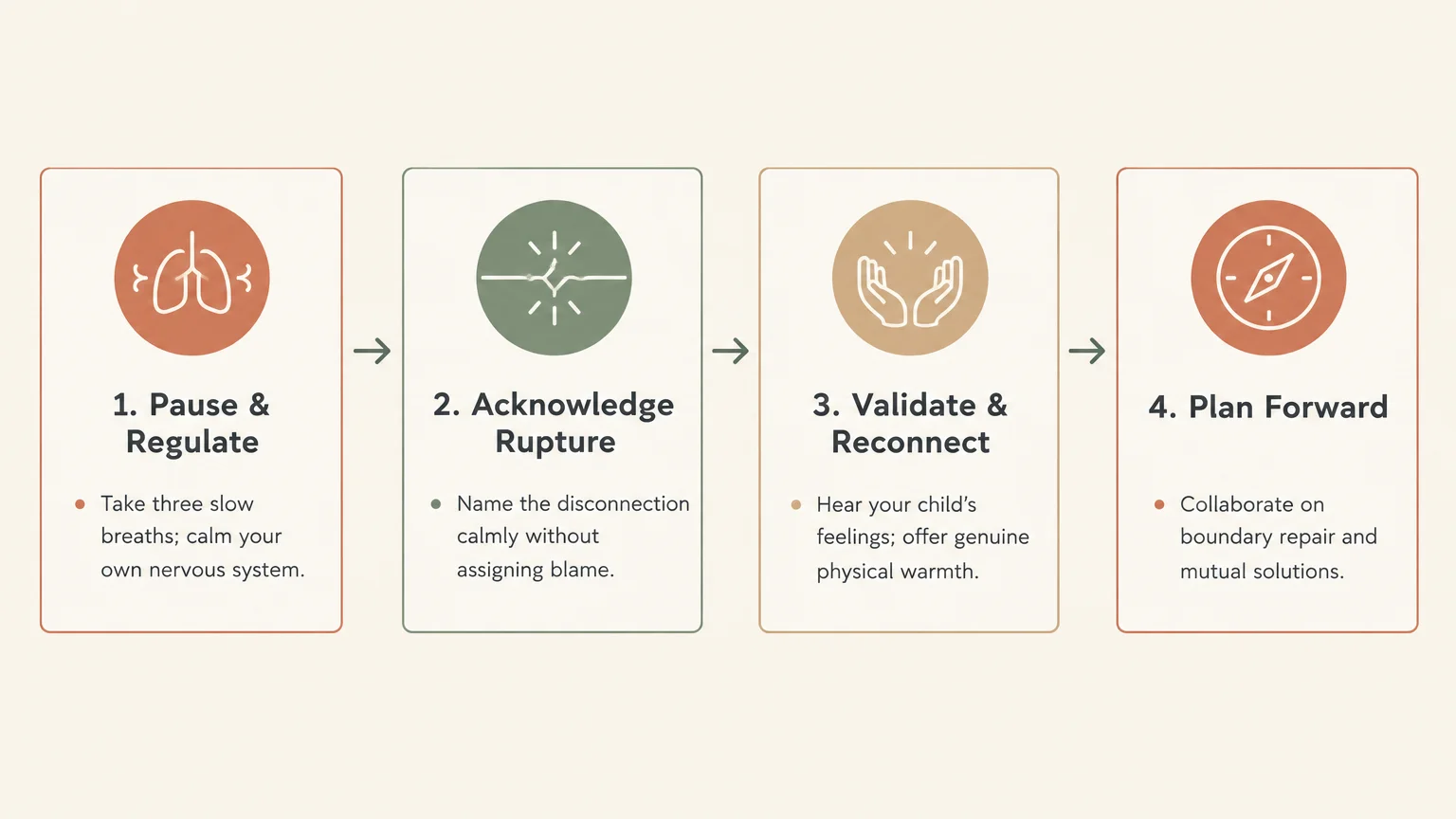
Four Steps to Practice Relational Repair
Relational ruptures occur in every family, but intentional repair restores psychological safety. Follow these four evidence-based steps whenever conflict disrupts your connection with your child.
- Regulate your own nervous system first: Step away, take slow breaths, and wait until your physiological arousal returns to baseline before speaking.
- Initiate the reconnection: Approach your child gently once both of you have calmed down, signaling that the relationship remains safe.
- Take complete ownership: Acknowledge your behavior directly without making excuses or blaming the child for triggering your reaction.
- Invite open dialogue: Ask your child how they experienced the conflict, listen without defending yourself, and agree on a plan moving forward.
Consistent repair proves that emotional conflict does not destroy unconditional love. Your child internalizes the truth that family bonds can survive friction, mistakes, and honest apologies.

When Self-Help Isn’t Enough
Motherhood places immense demands on your nervous system, and independent effort cannot resolve every psychological hurdle. Professional therapeutic guidance provides vital relief when parental stress becomes overwhelming.
Consider consulting a licensed family therapist or mental health professional if you notice any of these persistent signs:
- Persistent feelings of rage, severe emotional detachment, or debilitating burnout that interfere with daily caretaking routines.
- Intense, chronic health anxiety or catastrophic thoughts concerning your child’s safety that prevent normal childhood exploration.
- Unresolved personal childhood trauma triggered repeatedly by your child’s specific developmental milestones or emotional outbursts.
- Escalating family conflicts that resist peaceful de-escalation and undermine emotional safety within the household.
Seeking professional therapy strengthens your parental foundation and supports family resilience. Taking this proactive step models accountability and emotional courage for your children.
Frequently Asked Questions
What is the single most critical characteristic of a good mother?
Psychologists prioritize emotional attunement. Consistently noticing, accepting, and responding to your child’s inner feelings builds the secure attachment necessary for lifelong emotional health.
How can I overcome chronic mom guilt after losing my patience?
Reframe mistakes as opportunities for repair. Apologize sincerely, explain your feelings calmly, and remember that Winnicott’s “good enough” framework values repair over unattainable perfection.
Does being an attentive mother mean sacrificing my own identity?
No. Children thrive when mothers model healthy boundaries, pursue personal interests, and care for their own emotional well-being.
How does authoritative parenting differ from authoritarian parenting?
Authoritative parenting balances high standards with warmth, empathy, and open dialogue. Authoritarian parenting enforces rigid obedience through fear, criticism, and emotional distance.
Moving Forward With Confidence
Being a good mother requires presence, humility, and emotional connection rather than flawless execution. When you prioritize attunement, clear boundaries, and relational repair, your child flourishes.
Celebrate the small moments of genuine warmth you share with your child each day. Your steady, imperfect love provides everything they need to grow into resilient, capable adults.
This article provides general educational information about psychology and relationships. It is not a substitute for professional therapy or medical advice.
Everyone’s situation is unique—if you’re struggling, please reach out to a licensed mental health professional.
Last updated: October 2026. Psychology research evolves continuously—verify current findings with professional sources.









Leave a Reply