

If you thrive at lively dinner parties one weekend but desperately need complete solitude the next, standard personality labels probably leave you feeling misunderstood. Personality exists on a spectrum; you do not have to fit neatly into a rigid category to understand your emotional social baseline. You are likely an ambivert—someone who possesses a balanced mix of both introverted and extroverted traits. Coined by psychologist Edmund S. Conklin in 1923, this mid-spectrum profile offers exceptional social flexibility, deep listening skills, and situational adaptability. Recognizing these distinct ambivert characteristics helps you manage your energy, build stronger relationships, and leverage your psychological flexibility in everyday life.
What Is an Ambivert? The Personality Spectrum Explained
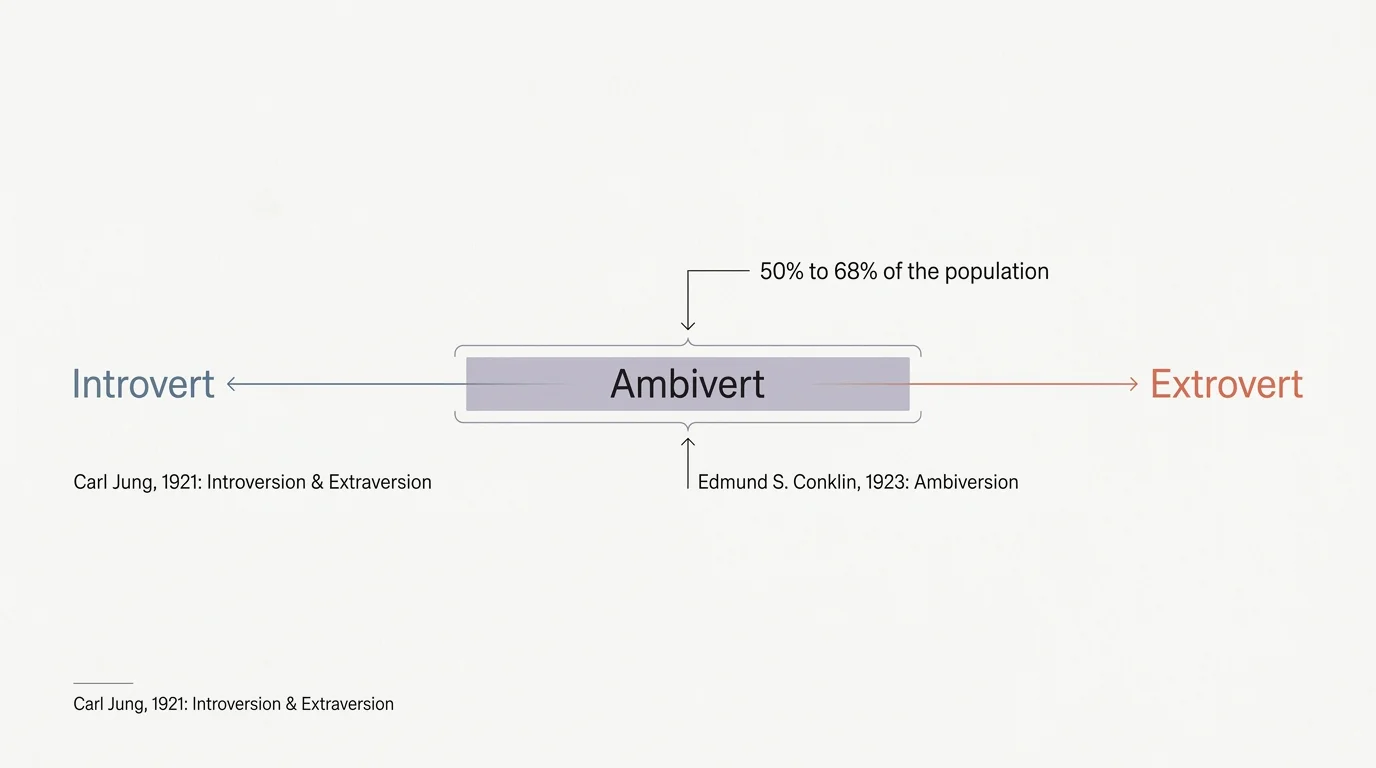
To understand what is an ambivert, you must look at how modern psychology views personality traits. In 1921, Swiss psychiatrist Carl Jung introduced the concepts of introversion and extraversion in his seminal work, Psychological Types. Jung observed that people direct their fundamental psychological energy either inward toward internal thoughts or outward toward external interactions. However, Jung acknowledged that few people exist purely at either extreme end of the spectrum.
Two years later, in 1923, American psychologist Edmund S. Conklin coined the term ambivert to describe the vast group of individuals positioned comfortably in the middle. Rather than getting energy exclusively from solo quiet time or large social crowds, ambiverts draw energy dynamically based on context, mood, and environment.
Contemporary behavioral research reveals that true extreme introverts and extroverts represent minority populations. Organizational psychologist Adam Grant highlights that ambiverts comprise roughly 50% to 68% of the total population. This makes ambiversion the most common personality profile on the introversion-extroversion spectrum. When exploring introvert vs extrovert vs ambivert traits, you discover that ambiversion represents a highly adaptable baseline rather than a lukewarm compromise.
| Personality Trait | Introvert | Ambivert | Extrovert |
|---|---|---|---|
| Primary Energy Source | Solitude, quiet environments, internal reflection | Balanced interaction and quiet time depending on context | Social stimulation, group activities, dynamic environments |
| Communication Style | Thoughtful, reflective, prefers written or one-on-one dialogue | Flexible; adaptively balances expressive talking with active listening | Outspoken, highly verbal, prefers spontaneous group discussions |
| Social Dynamic | Drained by prolonged social gatherings | Enjoys socializing but reaches a distinct energy limit | Energized by long social events; drained by isolation |
| Decision-Making | Processes internally before sharing ideas | Blends internal reflection with open collaborative feedback | Processes thoughts externally by talking through ideas |
11 Definitive Signs You’re an Ambivert
Because society frequently forces people into binary boxes, identifying as an ambivert provides clarity and relief. Here are 11 distinct signs of an ambivert that indicate your personality operates near the center of the spectrum.
1. Your Social Battery Depends Entirely on Context
Unlike classic introverts who feel consistently drained by groups, or classic extroverts who charge up in crowds, your energy level fluctuates according to the environment. A night out with close friends might energize you immensely, while an hour in a noisy networking conference drains your battery completely. You evaluate each event based on emotional safety, group dynamics, and personal interest rather than a simple desire to socialize or stay home.
2. You Enjoy Socializing, But You Always Plan an Exit Strategy
You love accepting social invitations and genuinely anticipate having fun. However, as you prepare to head out, you almost always map out a exit route. Knowing you can leave gracefully at 10:00 PM allows you to engage fully while you are present. Once your social quota caps out, your dynamic presence vanishes, and you need quiet recovery time.
3. You Balance Expressive Speaking with Active Listening
In group conversations, you rarely dominate the microphone, nor do you hide in the background. You easily hold space for others, asking thoughtful questions that draw out deeper details. When it is your turn to speak, you share your perspectives clearly and expressively. This natural balance makes conversational partners feel genuinely seen and heard by you.
4. Small Talk Doesn’t Terrify You, But It Doesn’t Satisfy You
Introverts often despise casual small talk, whereas extroverts use it seamlessly to build immediate rapport. As an ambivert, you navigate surface-level chatter about weather or weekend plans without anxiety; however, you quickly seek a bridge to deeper, more meaningful topics. You view small talk as an operational doorway toward authentic psychological connection.
5. You Excel at Both Independent Projects and Teamwork
Your work performance does not hinge on a single operational structure. Give you a solo research assignment, and you focus deeply for hours without needing external stimulation. Put you on a cross-functional collaborative team, and you facilitate discussion, contribute ideas, and build consensus smoothly. You flex between independent focus and group synergy effortlessly.
6. People Describe You Differently Depending on How They Met You
If someone asks your coworkers about you, they might describe you as an outgoing, assertive communicator. If someone asks your quiet close friend, they might label you a gentle, reserved listener. Both descriptions are fully accurate. Your adaptable ambivert personality traits allow you to display different sides of your temperament depending on what the social environment demands.
7. You Need Equal Portions of Solitude and Social Connection
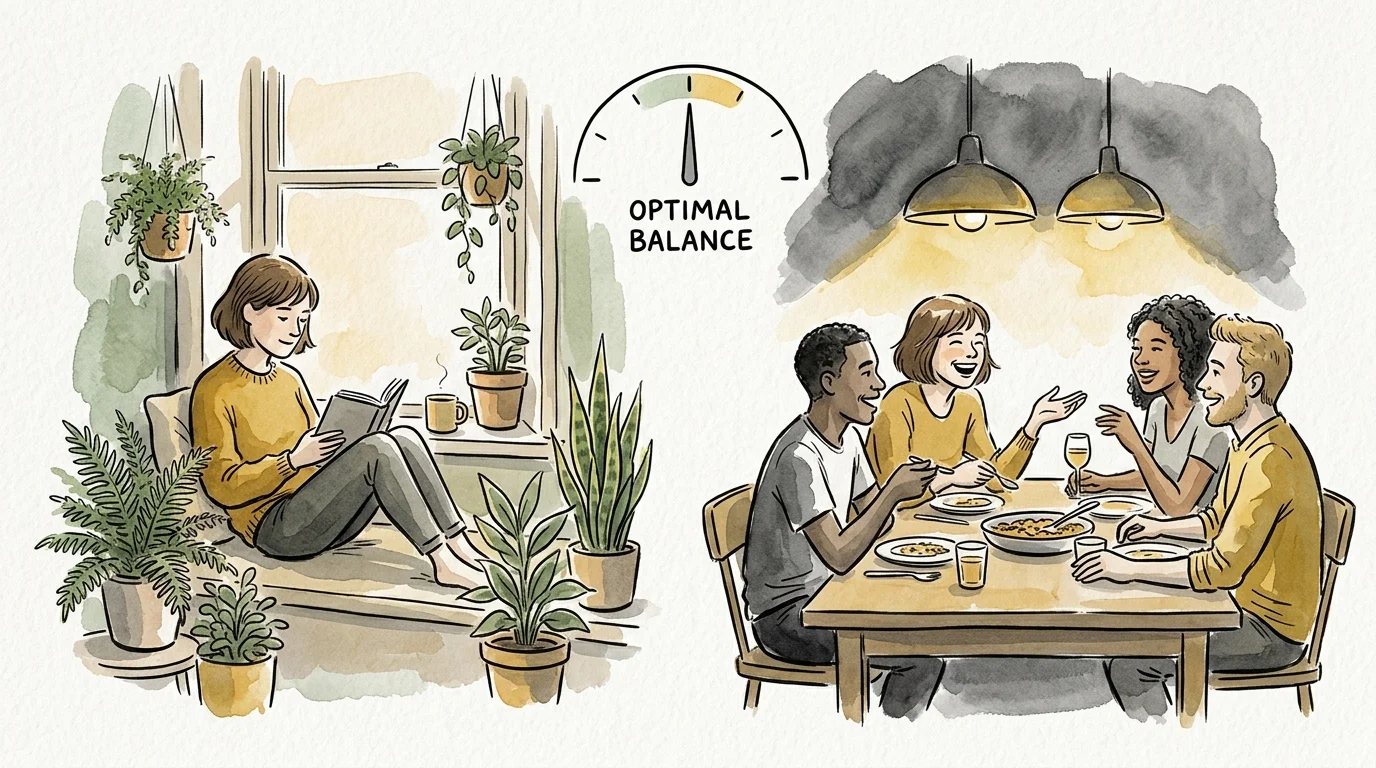
Too much isolation leaves you feeling sluggish, lonely, and understimulated; conversely, back-to-back social commitments leave you exhausted and overwhelmed. You consistently seek equilibrium. A ideal weekend for you frequently includes a lively group activity paired with dedicated, uninterrupted hours of personal quiet time.
8. You Serve as a Natural Mediator in Friend Groups and Teams
Because you understand both the introvert’s need for quiet space and the extrovert’s drive for active engagement, you often translate between the two groups. You notice when quieter team members get talked over, and you gently create space for their input. Simultaneously, you appreciate the high-energy enthusiasm of extroverts and help channel their ideas into focused action.
9. Overstimulation and Understimulation Bother You Equally
Your sensory sensory comfort zone sits squarely in the middle. Prolonged exposure to flashing lights, shouting crowds, or constant interruptions triggers cognitive fatigue. Yet, spending days alone with zero human contact causes restless irritability. You instinctively curate environments that offer structured engagement without chaotic sensory overload.
10. You Read the Room Effortlessly and Adjust Your Energy
High intuitive awareness allows you to scan emotional tone rapidly. If a meeting feels tense or subdued, you step up with energetic optimism to break the ice. If a room feels hyperactive and unorganized, you lean back, project calm stability, and bring steady focus to the conversation. You modulate your presence to serve the room’s collective needs.
11. You Experience “Emotional Hangovers” from Extreme Socials or Extreme Isolation
After a full weekend filled with weddings, parties, or conferences, you experience severe emotional fatigue where even simple text messages feel overwhelming. Conversely, after several days of complete isolation, you experience a low-mood sluggishness that only human connection can cure. Your nervous system demands dynamic oscillation between engagement and rest.

The “Ambivert Advantage”: What Science Says About Your Strengths
For decades, popular culture celebrated high-octane extroversion as the ultimate hallmark of leadership and success. However, groundbreaking behavioral research demonstrates that holding ambivert characteristics creates distinct psychological and professional advantages.
In a landmark 2013 study published in Psychological Science, Wharton professor Adam Grant tracked the sales revenue of over 300 professionals over a three-month period. He discovered that ambiverts earned 24% more revenue than introverts and 32% more revenue than extroverts. The highest earners were those who scored directly in the middle of the introversion-extroversion continuum.
Why do ambiverts excel so consistently? Grant concluded that extroverts often pitch too assertively and talk too much, while introverts often appear too reserved to close deals effectively. Ambiverts naturally engage in a flexible balance—asserting when necessary, but spending significantly more time listening to client needs and adjusting their approach accordingly.
“When someone really hears you without passing judgment on you, without trying to take responsibility for you, without trying to mold you, it feels damn good.” — Carl Rogers, Founder of Person-Centered Therapy
This psychological flexibility translates directly into emotional intelligence (EQ). According to research compiled by the American Psychological Association, individuals who demonstrate adaptive interpersonal skills manage stress better and establish higher quality social bonds. Your ability to flex between inward reflection and outward action makes you a resilient partner, an empathetic friend, and an effective leader.

What Can Go Wrong: Misconceptions and Hidden Challenges
While possessing ambivert traits offers incredible adaptability, it also presents unique personal and relational challenges. Understanding where things can break down empowers you to protect your energy and maintain healthy boundaries.
- The Chameleon Trap: Because you adapt so naturally to external environments, you might occasionally lose touch with your authentic needs. You risk over-adapting to make others comfortable, leading to inner resentment or identity confusion.
- Misleading Social Cues: Friends or romantic partners may find your fluctuating energy puzzling. An extroverted partner might feel hurt when you suddenly retreat after a fun outing, interpreting your need for quiet as emotional distance.
- Decision Fatigue Regarding Social Plans: Deciding whether to attend an event often feels complex. Because you know you could have fun, but also know you might drain your battery, you may experience chronic indecision when managing your calendar.
- Burnout from Over-Committing: During periods of high energy, you might fill your schedule with social and professional engagements. When your energy baseline shifts inward a few days later, you face a daunting calendar that now feels impossible to manage.

How to Leverage Your Ambivert Traits for Well-Being
To maximize your strengths and protect your nervous system, implement intentional daily habits tailored to your spectrum-spanning personality.
1. Practice Proactive Energy Budgeting
Treat your emotional energy like financial capital. If you schedule a high-intensity social or professional event on Thursday, proactively protect Friday evening for quiet, low-stimulation activities. Avoid booking back-to-back high-engagement weekends without deliberate rest periods built in.
2. Communicate Your Needs Clearly to Loved Ones
Help your friends and partner understand your ambivert dynamics. Explain that your need to withdraw after a busy social gathering is not a reflection of your feelings toward them, but a biological reset for your nervous system. Articles on Psychology Today emphasize that clear communication regarding emotional boundaries prevents relational misunderstandings.
3. Create Flexible Work Patterns
Design your work structure to honor both sides of your personality. Block out chunks of time for quiet, deep-focus work where you disable notifications. Balance those periods with collaborative brain-storming sessions or active networking. If you manage a team, advocate for hybrid meeting structures that allow time for both verbal discussion and written reflection.
4. Practice Authentic Check-Ins
Before accepting invitations or taking on new leadership responsibilities, pause and ask yourself: “Do I currently have the capacity for this, or am I operating on social auto-pilot?” Aligning your actions with your immediate energy baseline protects you from chronic exhaustion, a state thoroughly researched by health authorities like the Cleveland Clinic.

When to Seek Professional Support
Being an ambivert is a healthy, highly functional personality profile. However, severe fluctuations in energy, mood, or social behavior can sometimes point to underlying mental health conditions rather than personality traits.
Consider consulting a licensed therapist or mental health professional if you experience any of the following scenarios:
- Social Withdrawal Driven by Anxiety: You avoid social situations not to recharge quietly, but because of intense fear, dread, or fear of negative judgment.
- Extreme Mood or Energy Swings: Your energy shifts rapidly alongside severe mood instability, sleep disruption, or risky behaviors, which may indicate mood disorders rather than trait flexibility.
- Chronic Masking and Exhaustion: You feel forced to perform socially to please others, resulting in complete emotional numbness, persistent depression, or identity loss.
- Inability to Function in Daily Life: Social fatigue consistently interferes with your work obligations, personal care, or basic daily activities.
Resources provided by Verywell Mind and evidence-based mental health organizations can help you locate qualified counselors to explore your emotional baseline safely.
Frequently Asked Questions
Can an introvert turn into an ambivert over time?
While core temperament traits remain relatively stable throughout life, personal growth, career requirements, and conscious effort can widen your social skill set. An introvert can develop robust social tools and learn to navigate dynamic environments easily, effectively functioning as an ambivert in daily life.
How do I know if I am an ambivert or an introverted extrovert?
An introverted extrovert fundamentally gains energy from social connections but gets overwhelmed by low-quality chatter or sensory overload. An ambivert sits truly in the middle of the spectrum, gaining genuine energy from both solitude and social interaction depending entirely on context and internal baseline.
Are ambiverts better leaders than extroverts?
Research suggests ambiverts often make exceptional leaders because of their balanced communication styles. They actively listen to suggestions from quiet team members while offering clear, decisive direction when required. However, leadership effectiveness ultimate depends on emotional intelligence, empathy, and situational awareness rather than personality labels alone.
Is ambiversion recognized by official psychological frameworks?
While popular personality inventories like the Myers-Briggs Type Indicator (MBTI) use rigid categories, modern trait psychology—such as the Big Five Personality Framework (OCEAN)—measures extraversion on a continuous scale. On this spectrum, ambiversion represents the broad middle distribution where most human beings actually score.
Embracing Your Psychological Flexibility
Recognizing that you operate as an ambivert frees you from forcing yourself into rigid personality categories. Your ability to listen deeply during quiet conversations while stepping up confidently in dynamic crowds is not inconsistent—it is your greatest psychological strength. Honor your need for quiet reflection just as passionately as you embrace your desire for human connection, and build a lifestyle that supports both ends of your unique personal spectrum.
The information in this article is meant for educational purposes and general guidance. It does not replace individual therapy, counseling, or medical treatment. If you or someone you know is in crisis, contact the 988 Suicide & Crisis Lifeline by calling or texting 988.
Last updated: February 2026. Psychology research evolves continuously—verify current findings with professional sources.









Leave a Reply