

You replay casual conversations for hours, wondering if your tone sounded awkward or offensive. Breaking free from this mental exhaustion begins when you recognize how external validation secretly dictates your daily choices.
When you prioritize external approval over your own needs, your self-worth fluctuates with every passing opinion. Chronic self-monitoring drains your cognitive energy and silences your authentic voice.
Understanding the subtle habits that signal an overreliance on others’ perceptions allows you to reclaim your peace. Here is how approval-seeking manifests in your everyday life and how you can reset your boundaries.
The Evolutionary Roots of External Validation
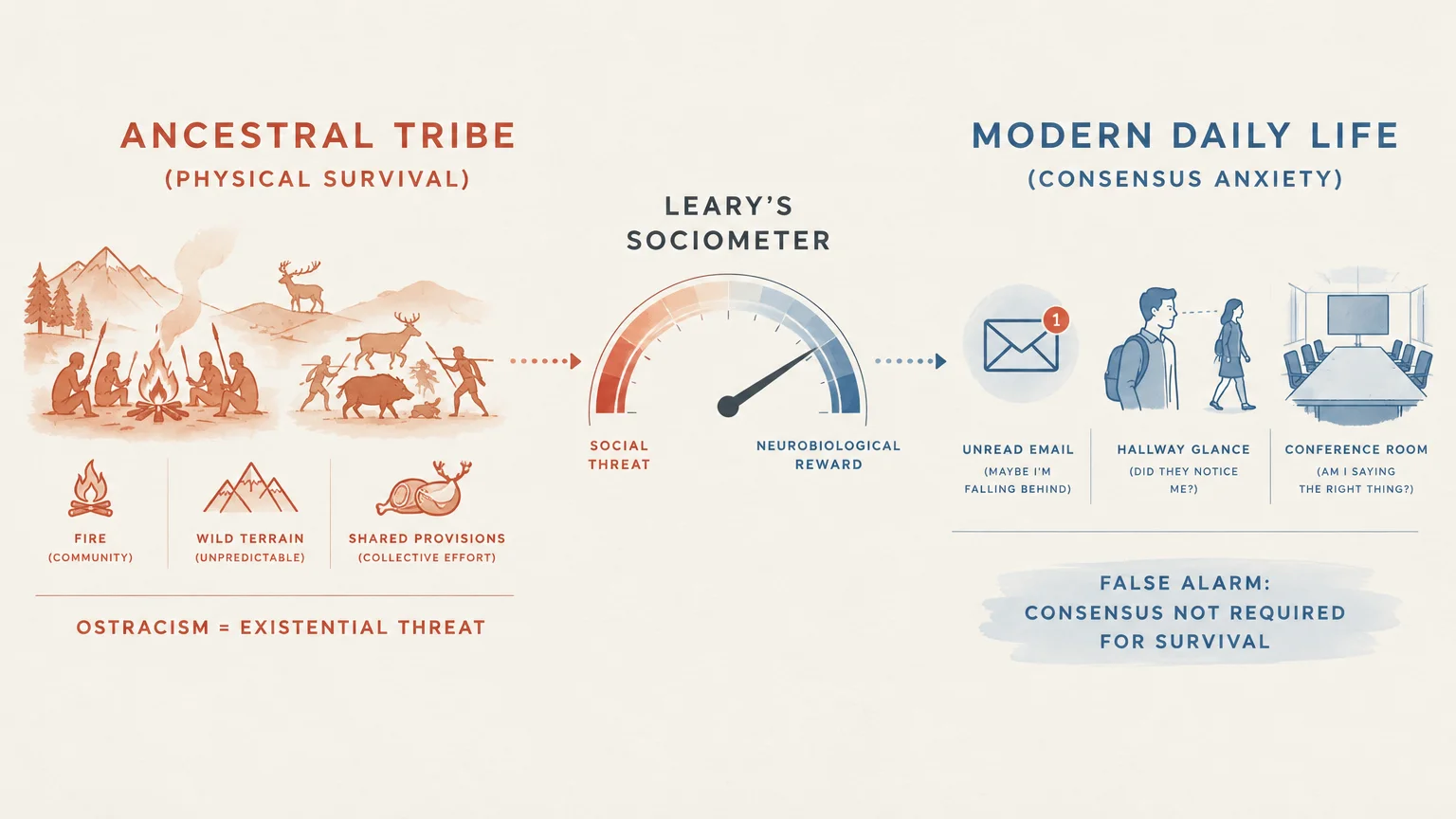
Human brains evolved to view social rejection as an existential threat to survival.
In ancestral environments, isolation from the tribe meant losing access to shared food, warmth, and collective defense.
According to the American Psychological Association, social acceptance activates the same neurobiological reward pathways as physical safety.
Psychologist Mark Leary formulated sociometer theory to explain this deeply wired vulnerability.
The theory posits that self-esteem acts like an internal fuel gauge that measures your social standing.
When you suspect disapproval, your internal alarm sounds, triggering intense distress and corrective behaviors.
However, modern life no longer requires total consensus for your survival.
When this survival mechanism runs unchecked, it produces chronic anxiety and paralyzes your sense of self.

The Spotlight Effect: Why Others Notice Less Than You Think
A landmark study from Cornell University identified what researchers call the spotlight effect.
The study demonstrated that people consistently overestimate how much others notice their appearance, mistakes, and speech.
In reality, most individuals remain completely absorbed in their own private worries and obligations.
When you fall into overthinking opinions, you assume people examine your life under a high-powered microscope.
Recognizing that others think about you far less than you imagine offers tremendous psychological freedom.
“Fitting in is about assessing a situation and becoming who you need to be in order to be accepted. Belonging, on the other hand, doesn’t require us to change who we are; it requires us to be who we are.” — Brené Brown, Ph.D., LMSW

10 Behaviors Linked to Caring Too Much About Others’ Opinions
1. Over-Apologizing for Everyday Existence
You apologize when someone bumps into you at the grocery store or when you ask a server for water.
This habitual reflex is one of the classic people pleasing signs that signal an unconscious fear of taking up physical or emotional space.
You preemptively assume fault to disarm potential frustration from those around you.
Over time, constant apologizing sends a message to your subconscious that your presence is an inconvenience.
Practice replacing reflexive apologies with gratitude by saying “Thank you for waiting” instead of “Sorry I am late.”
2. Hyper-Scanning Rooms for Micro-Reactions
You track subtle changes in vocal pitch, slight shifts in posture, and fleeting facial expressions during casual meetings.
If a colleague furrows their brow while you speak, your stomach sinks immediately.
This vigilance reflects an intense preoccupation with caring what others think, turning ordinary social cues into perceived threats.
Psychologists refer to this heightened surveillance as hyper-attunement, often developed during chaotic childhood environments where tracking adult moods kept you safe.
Remind yourself that another person’s furrowed brow usually reflects their private headache or stress, not your performance.
3. Becoming a Social Chameleon
You alter your humor, political viewpoints, and personal preferences to mirror whoever stands in front of you.
When you engage in this extreme approval seeking behavior, disagreement feels dangerous and unacceptable.
You agree with movie recommendations you hate and pretend to support values that contradict your personal ethics.
While adaptive flexibility is normal, constantly erasing your viewpoints leaves you feeling hollow and disconnected.
Begin sharing gentle dissents on minor topics, such as admitting that you do not enjoy a popular television show.
4. Outsourcing Low-Stakes Decisions
You poll three friends before purchasing a jacket, selecting a meal, or replying to an informal message.
This inability to trust your taste serves as one of several telltale low self esteem signs.
When you outsource decisions, you spread the emotional liability so nobody can critique your standalone choice.
Unfortunately, this habit reinforces the belief that your private judgment lacks competence and reliability.
Build self-trust by making everyday choices within thirty seconds without consulting outside feedback.
5. Chronic Overcommitment and Boundary Failure
You say yes to extra projects and social invitations even when your body demands rest.
Saying no feels intolerable because you fear that establishing limits will cause others to label you selfish or lazy.
Research published by Mayo Clinic links the chronic inability to say no with elevated burnout and somatic distress.
When your worth depends on being universally accommodating, boundaries feel like aggression rather than self-care.
Buy yourself time with requests by using a standard response: “Let me check my calendar and get back to you tomorrow.”
6. Post-Event Mental Replay (Rumination)
Hours after a dinner or presentation, you dissect every sentence you uttered in excruciating detail.
This pattern of overthinking opinions convinces you that you sounded foolish, boring, or insensitive.
Cognitive psychologists classify post-event processing as a core maintenance factor for social anxiety.
Your brain searches for imagined social mistakes to resolve an irrational feeling of vulnerability.
Interrupt this rumination loop by asking: “Do I remember anything awkward that my dinner companion said tonight?”
7. Assuming Responsibility for Other People’s Emotions
When a partner, coworker, or friend grows quiet, you automatically ask yourself what you did wrong.
You rush to soothe their irritation, tell jokes, or fix situations that do not belong to you.
This behavioral pattern stems from blurred emotional boundaries, where another person’s discomfort feels like an indictment of your goodness.
Mature relationships require allowing other adults the dignity of experiencing their own bad days without your intervention.
Practice repeating this grounding boundary: “Their mood is their experience, and I am not required to repair it.”
8. Over-Explaining Simple Choices and Boundaries
When you decline an invitation, you compose a lengthy paragraph detailing your logistical hurdles and scheduling conflicts.
You feel compelled to provide bulletproof alibis so nobody feels offended by your absence.
Over-explaining signals that you believe your autonomy requires external permission and justification.
Confident boundaries are brief, polite, and unburdened by manufactured rationalizations.
Deliver clear declines without excessive defense: “I cannot make it this weekend, but thank you for thinking of me.”
9. Shrinking Your Successes to Protect Others
You minimize a promotion, salary increase, or personal milestone because you worry that sharing it will cause resentment.
When someone compliments your achievements, you immediately deflect the praise toward luck or external factors.
Downplaying your light reveals a fear that stepping into your competence will alienate peers.
Authentic connection never demands that you dim your accomplishments to soothe another person’s insecurities.
Accept compliments with a simple, grounded response: “Thank you, I worked hard on that project and appreciate your kind words.”
10. Looking Outward Before Checking Your Internal Compass
You finish an activity or purchase and immediately check social media comments before deciding whether you enjoyed it.
If peers praise your outfit, you love it; if someone raises an eyebrow, you secretly want to discard it.
This dynamic represents the total surrender of internal evaluation to the court of public approval.
You live from the outside in, evaluating your life through an imagined audience rather than your felt experience.
Pause before sharing moments online and ask yourself: “How did this experience feel in my body while it happened?”
Approval Seeking vs. Healthy Social Awareness
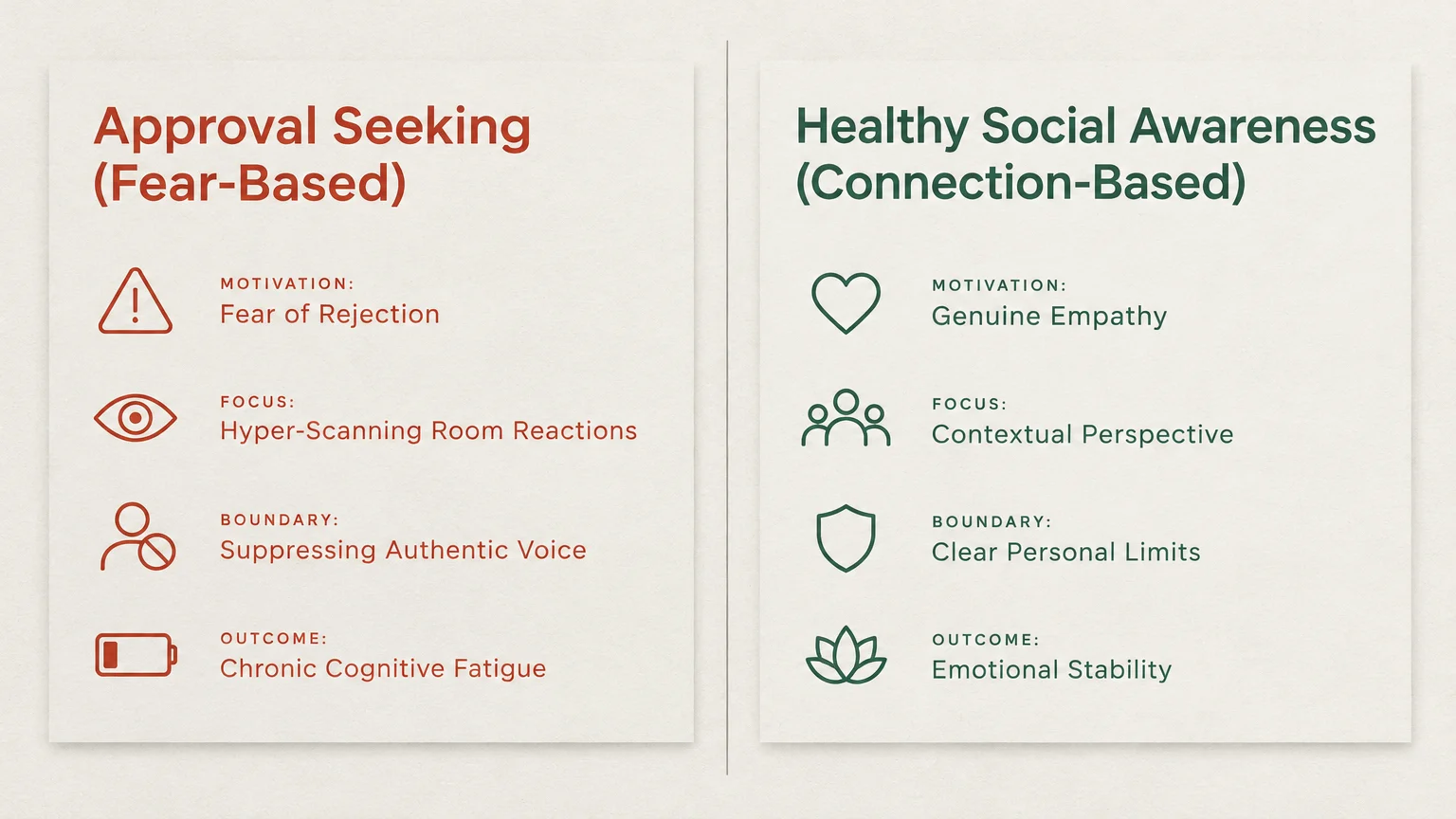
Distinguishing between empathetic social awareness and approval addiction protects you from swinging into total detachment.
Consideration for others builds deep relationships, whereas approval-seeking sacrifices integrity for temporary reassurance.
| Dimension | Healthy Social Awareness | Approval-Seeking Behavior |
|---|---|---|
| Conflict Response | Addresses issues calmly while respecting differing viewpoints. | Avoids conflict entirely or surrenders personal boundaries to keep peace. |
| Boundary Setting | Communicates limits clearly without guilt or excessive justification. | Struggles to say no; feels profound guilt when declining requests. |
| Handling Criticism | Evaluates feedback objectively for personal growth. | Interprets feedback as total rejection and personal failure. |
| Decision Making | Considers external input but trusts personal judgment. | Outsources decisions to avoid personal responsibility and criticism. |
| Sense of Worth | Anchored internally in core values and self-acceptance. | Fluctuates wildly based on praise, social media likes, or peer reactions. |
Studying these differences helps you preserve warmth and social consideration without compromising your authentic principles.
“The curious paradox is that when I accept myself just as I am, then I can change.” — Carl Rogers, Ph.D.

Myths Worth Debunking
Myth 1: Caring less about opinions makes you selfish and cold.
Many people believe that shedding approval addiction transforms them into detached, uncaring individuals.
In truth, releasing the desperate need for validation allows you to love others more generously.
When you stop needing people to validate your worth, you can finally see and support them for who they are.
Myth 2: People-pleasing is simply good manners and kindness.
Politeness respects others, while people-pleasing attempts to manage and manipulate what others think of you.
When you agree to tasks while harboring silent resentment, your behavior is dishonest rather than kind.
Genuine kindness emerges from voluntary generosity, not from an anxious fear of rejection.
Myth 3: Confident individuals never worry about rejection.
Even emotionally resilient leaders experience occasional pangs of social doubt and insecurity.
The difference lies in how they respond to those fleeting feelings.
Self-assured individuals notice the fear of judgment without allowing it to direct their choices or silence their convictions.

Practical Steps to Unhook From External Approval
Rewiring lifelong conditioning takes deliberate, gradual behavioral practice.
Use these concrete strategies to build internal safety and silence the mental noise of external expectations.
- Identify your approval triggers: Notice the specific environments or authority figures that prompt you to seek reassurance.
- Implement the 24-hour decision rule: Delay agreeing to new requests to assess whether you truly have the capacity and desire.
- Practice micro-disagreements: Express harmless differing preferences about food, movies, or schedules to desensitize your fear of friction.
- Clarify your personal values: Write down your core values so you evaluate your life against your own standards rather than popular trends.
- Limit digital validation: Spend designated days offline to disconnect from metrics that artificially game your need for praise.
Consistent repetition of these micro-actions trains your nervous system to tolerate social separation without panicking.

Signs It’s Time to Talk to a Therapist
While occasional insecurity is common, severe approval dependence can indicate underlying psychological distress.
Professional counseling provides targeted strategies to dismantle deep-seated fears of abandonment and build authentic self-worth.
Consider reaching out to a licensed mental health professional if you experience any of the following scenarios:
- Paralyzing social anxiety: Fear of negative evaluation prevents you from speaking in meetings, attending gatherings, or pursuing career advancement.
- Severe burnout and resentment: Chronic boundary failure leaves you completely depleted, physically ill, or experiencing clinical depressive symptoms.
- Complete loss of personal identity: You no longer know your personal preferences, values, or career desires without someone else defining them for you.
- Trauma-rooted hypervigilance: Your constant need for approval stems from childhood neglect, emotional abuse, or relationships where safety depended on perfectionism.
Evidence-based modalities like Cognitive Behavioral Therapy (CBT) and Acceptance and Commitment Therapy (ACT) offer powerful tools for recovery.
Frequently Asked Questions
Why do I care so much about what strangers think of me?
Your brain cannot easily distinguish between a critical stranger and an ancestral tribe member whose rejection endangered survival.
You project your own underlying insecurities onto strangers, assuming they scrutinize you as harshly as you scrutinize yourself.
What is the difference between empathy and people-pleasing?
Empathy involves understanding and caring for someone’s emotions while holding clear personal boundaries.
People-pleasing sacrifices your own well-being and truth in a bid to control someone else’s emotional reaction.
How long does it take to stop seeking approval?
Rewiring ingrained behavioral habits is an ongoing process that typically takes several months of deliberate practice.
You will notice gradual improvements in your confidence as you consistently tolerate the discomfort of setting boundaries.
Can low self-esteem cause chronic social overthinking?
Yes, low self-esteem leads you to doubt your social competence and anticipate negative reactions from others.
This lack of core confidence drives endless rumination as your mind tries to protect you from perceived social failure.
Reclaiming Your Autonomy and Peace
Shifting your focus from external validation to internal self-trust requires patience with yourself.
Every time you express an honest opinion or hold a gentle boundary, you reinforce your intrinsic worth.
Your life belongs to you, not to the passing opinions of the people around you.
The information in this article is meant for educational purposes and general guidance. It does not replace individual therapy, counseling, or medical treatment.
If you or someone you know is in crisis, contact the 988 Suicide & Crisis Lifeline by calling or texting 988.
Last updated: February 2026. Psychology research evolves continuously—verify current findings with professional sources.









Leave a Reply