

Aging brings profound life transitions, but persistent sadness, anxiety, or emotional numbness should never feel like an inevitable consequence of growing older. Research confirms that your later decades can foster deep emotional resilience and satisfaction.
Many older adults silently carry manageable emotional burdens because society frequently misinterprets psychological distress as routine aging. You possess real agency to safeguard your cognitive vitality and daily joy.
These evidence-based mental health tips show you how to protect your emotional well-being, leverage modern healthcare resources, and thrive across every stage of later life.
1. Recognize That Depression Is Never a Normal Part of Aging
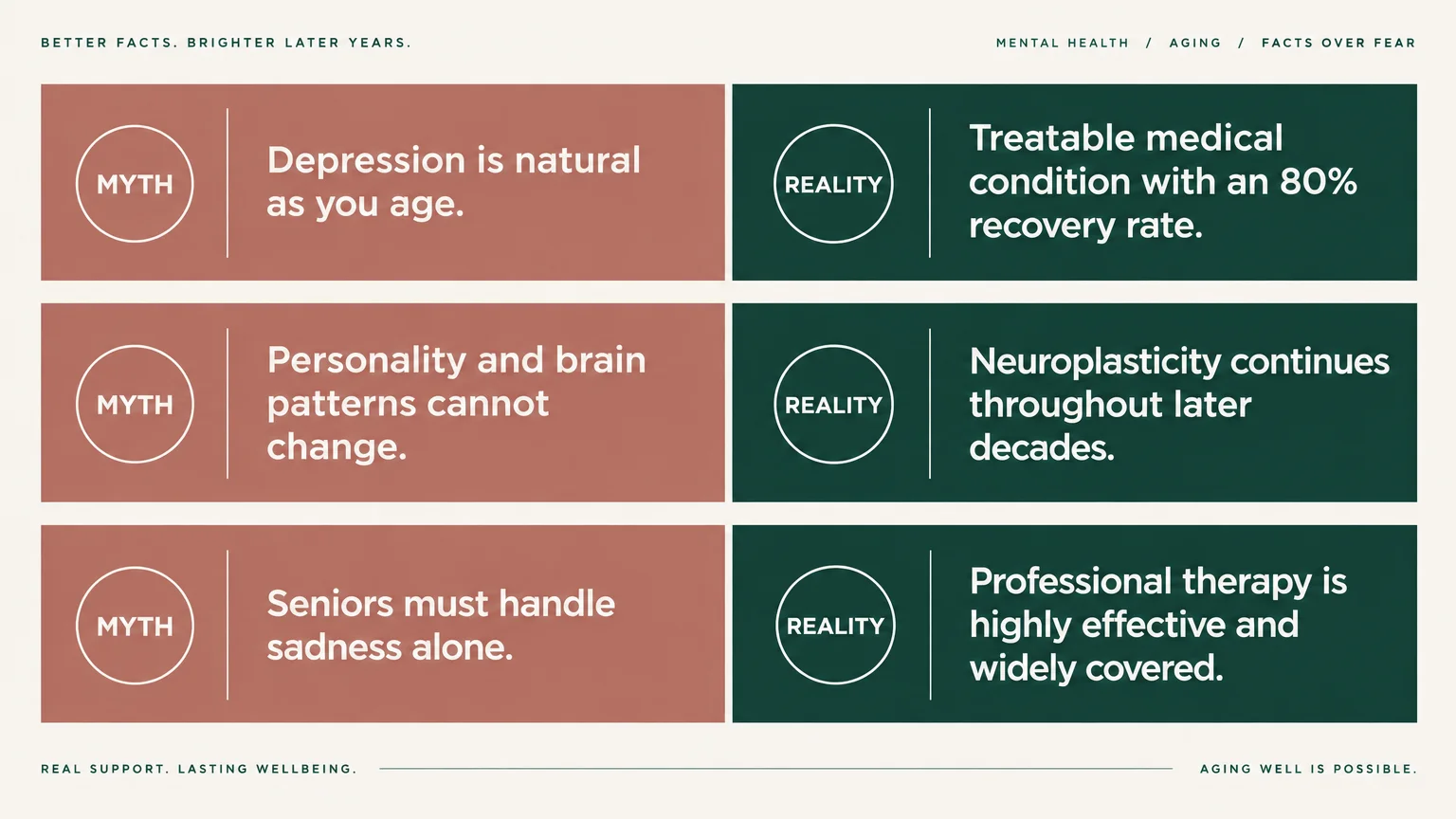
Too many people dismiss chronic fatigue, diminished motivation, and persistent low mood as inevitable consequences of growing older. In reality, geriatric depression represents a distinct, treatable medical condition rather than a natural biological fate.
According to the World Health Organization (2023), approximately 14% to 20% of adults aged 60 and older live with a mental or neurological disorder. Unipolar depression and anxiety disorders represent the most prevalent conditions.
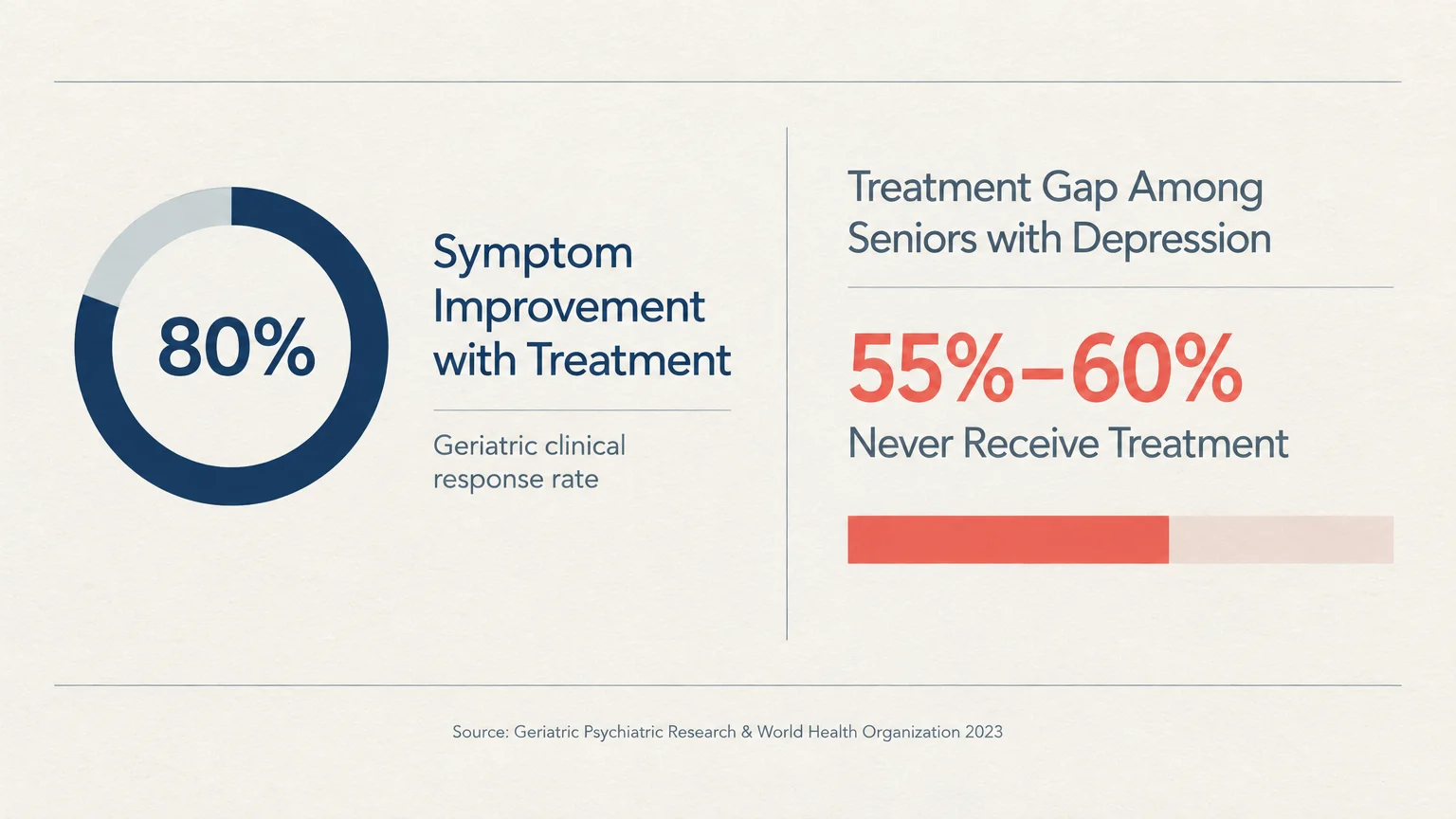
Data from geriatric psychiatric research demonstrates that up to 80% of older adults with depression experience significant symptom improvement with proper clinical care. Targeted interventions dramatically restore day-to-day vitality.
Despite these high recovery rates, roughly 55% to 60% of seniors experiencing depression never receive professional treatment. Families and caregivers frequently normalize depressive withdrawal, allowing unnecessary suffering to continue unchecked.
Aging can alter how mood disorders present physically. Rather than expressing overt sadness, seniors frequently report physical aches, unexplained digestive complaints, or severe apathy.
Learning to identify these covert symptoms helps you separate regular physiological aging from clinical distress. Acknowledging emotional pain is the essential first step toward sustainable healing.
2. Leverage Your Annual Free Medicare Depression Screening
Preventive mental healthcare should carry the same priority as monitoring your cardiovascular health or bone density. Your primary care physician serves as an accessible first line of defense against emerging mood disorders.
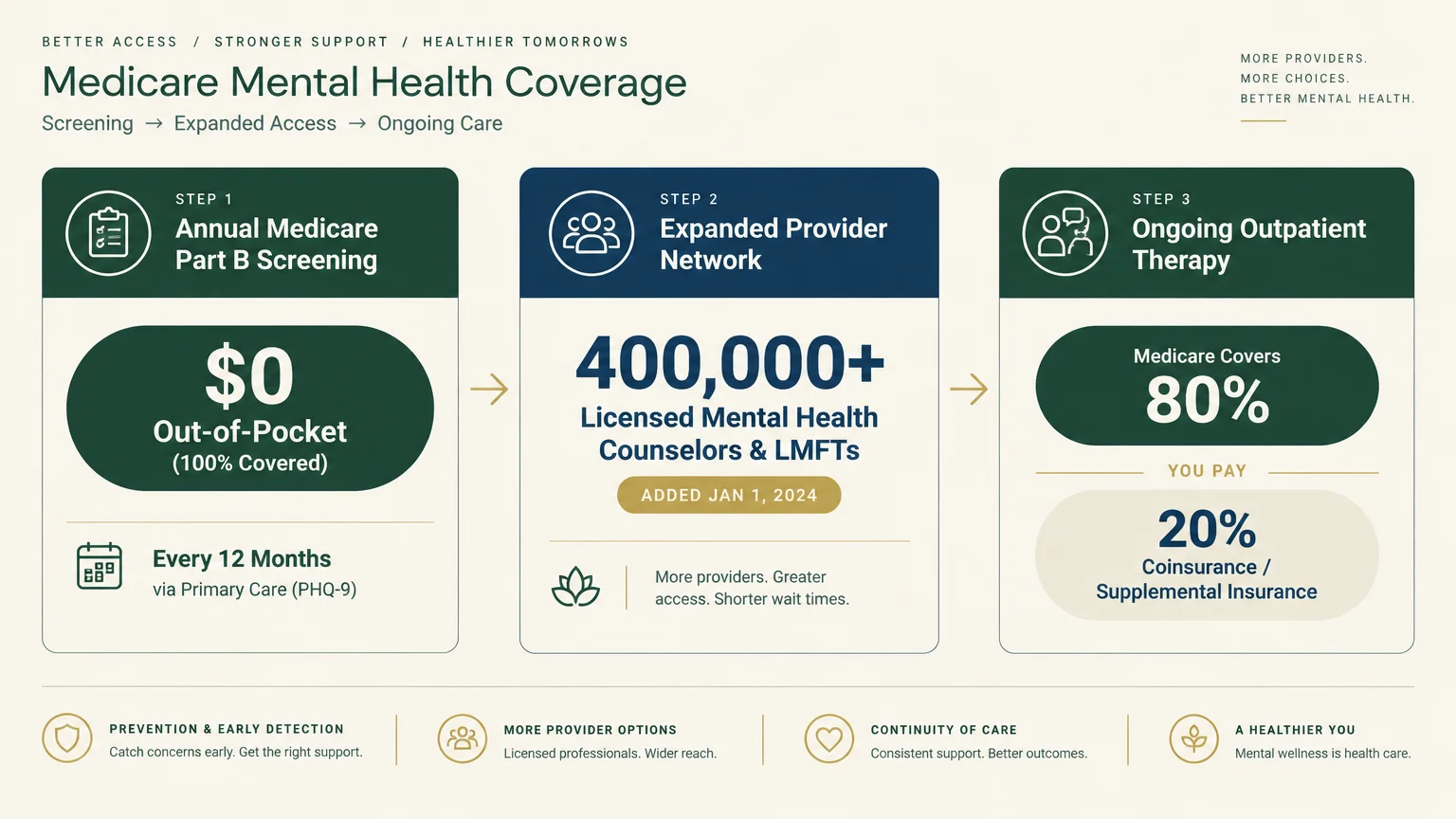
Under Medicare Part B, you are entitled to one clinical depression screening every 12 months at 100% coverage. You pay zero out-of-pocket costs, with no deductible or coinsurance, when completed in a primary care setting.
This annual screening utilizes validated clinical questionnaires, such as the Patient Health Questionnaire (PHQ-9). It accurately measures changes in mood, appetite, energy, and sleep patterns over time.
Crucially, Medicare expanded its mental health workforce significantly starting January 1, 2024. Authorized under the Consolidated Appropriations Act, Medicare Part B now directly covers Licensed Professional Mental Health Counselors and Licensed Marriage and Family Therapists.
This legislative change added over 400,000 eligible community mental health providers to the Medicare network. Locating an experienced counselor in your immediate neighborhood has never been easier.
For ongoing outpatient therapy, Medicare Part B covers 80% of the approved amount once you meet your annual deductible. You or your supplemental insurance policy cover the remaining 20% coinsurance.

3. Combat Chronic Loneliness Like a Critical Medical Risk
Social isolation is not simply an emotional state; it is an urgent biological health hazard. Meaningful human connection acts as a physiological buffer that protects both your cardiovascular system and brain health.
The U.S. Surgeon General’s Advisory on Social Connection reports that chronic loneliness increases premature mortality by nearly 30%. This health hazard equals smoking up to 15 cigarettes every single day.
A comprehensive report from the National Academies of Sciences, Engineering, and Medicine revealed that social isolation increases dementia risk by approximately 50%. Solitary lifestyles deprive the brain of complex social and sensory stimuli.
Prolonged loneliness also floods your body with sustained systemic cortisol, driving widespread inflammation. This chronic biological stress impairs your immune system and weakens cardiovascular resilience.
Counteract social isolation by establishing intentional, weekly interactive rituals. Join a local community garden, participate in book clubs, or enroll in adult education courses at community colleges.
Focus on interaction quality rather than sheer quantity. Deep, reciprocal relationships where you can share authentic thoughts produce the greatest psychological protection against cognitive decline.

4. Maintain 150 Minutes of Mood-Regulating Weekly Movement
Physical movement serves as one of the most potent, biologically proven treatments for mild to moderate depression. Exercise activates systemic anti-inflammatory pathways and stimulates the synthesis of essential mood-stabilizing neurotransmitters.
The Mayo Clinic emphasizes that regular aerobic exercise stimulates brain-derived neurotrophic factor (BDNF). This protein promotes cellular neurogenesis, repairing vital brain circuits damaged by chronic stress.
Guidelines from the Centers for Disease Control and Prevention recommend that seniors complete at least 150 minutes of moderate-intensity aerobic activity weekly. You can meet this benchmark by walking briskly for 30 minutes, five days a week.
Add muscle-strengthening and balance activities on two non-consecutive days each week. Exercises like chair yoga, resistance band routines, or tai chi prevent falls while restoring bodily autonomy and physical confidence.
If 30 consecutive minutes feels intimidating, break your physical activity into three 10-minute intervals throughout your day. Short bouts of regular movement deliver comparable cardiovascular and psychological benefits.
Pair exercise with outdoor environments whenever safe and possible. Combining physical exertion with natural sunlight and fresh air produces an amplified mood-boosting effect on the nervous system.

5. Anchor Your Days with Clear Purpose and Micro-Goals
The sudden transition into retirement frequently strips away external accountability, daily structure, and social utility. Losing professional identity can leave older adults feeling unmoored, which often invites depressive apathy.
Cultivating personal meaning provides an internal compass that anchors your cognitive vitality and daily motivation. Renowned psychiatrist Viktor Frankl spent decades studying how meaning protects human psychological stability.
“Those who have a ‘why’ to live, can bear with almost any ‘how’.” — Viktor E. Frankl, Neurologist and Psychiatrist
Construct daily micro-goals each evening for the morning ahead. Clear objectives provide structured purpose, whether you plan to bake a new recipe, write letters to grandchildren, or restore vintage furniture.
Consider volunteering for causes that align with your values. Research shows that older adults who volunteer regularly exhibit greater longevity, higher self-worth, and lower rates of clinical depression.
Sharing your lifetime of skills with younger generations validates your enduring contribution to the community. Generativity fosters profound emotional peace and protects you from existential despair.

6. Protect Your Sleep Architecture and Circadian Health
Sleep patterns naturally shift as you grow older, leading to lighter sleep stages and earlier morning awakenings. However, severe sleep fragmentation and chronic insomnia are abnormal conditions that demand clinical attention.
Data from the National Institute of Mental Health confirms that unmanaged insomnia significantly multiplies the risk of developing a major depressive episode. Disrupted sleep impairs emotional regulation and short-circuits memory consolidation.
Step outdoors into direct morning sunlight for 15 to 30 minutes shortly after waking. Bright natural light sets your biological clock by regulating the timing of nighttime melatonin release.
Establish a rigid, relaxing wind-down routine in the evening to prepare your brain for restorative rest. Keep your bedroom cool, dark, and completely free from stimulating electronic screens.
Avoid drinking caffeinated beverages after lunch and limit nighttime alcohol consumption. While alcohol may induce drowsiness, it destroys restorative REM sleep and causes frequent midnight awakenings.
If you persistently wake up gasping or snore loudly, ask your physician about a sleep apnea evaluation. Obstructive sleep apnea deprives your brain of oxygen, directly triggering daytime depression and cognitive fog.

7. Process Bereavement Without Suppressing Your Grief
Older age often presents compounding bereavements, including the loss of lifelong partners, close siblings, and cherished friends. Attempting to suppress or outrun grief places immense physiological strain on your heart and nervous system.
Pioneering psychologist Carl Rogers recognized that acknowledging painful, vulnerable realities forms the essential foundation of psychological healing.
“The curious paradox is that when I accept myself just as I am, then I can change.” — Carl Rogers, Psychologist
Learn to distinguish healthy bereavement from clinical major depression. Normal grief comes in unpredictable waves often interspersed with warm memories, whereas clinical depression produces unrelenting feelings of worthlessness and pervasive emptiness.
When bereavement persists beyond 12 months with debilitating emotional yearning, clinicians diagnose prolonged grief disorder. This condition requires specialized psychological treatment rather than passive waiting.
Join a structured bereavement support group through a local hospital, hospice agency, or community faith center. Sharing grief with peers who understand your profound loss breaks the isolation of mourning.
Give yourself permission to experience joy without feeling guilty about moving forward. Honoring a departed loved one does not require lifelong emotional suffering.

8. Stimulate Cognitive Reserve with Complex Novelty
Your brain retains neuroplasticity across your entire lifespan, continuously organizing neural networks in response to novel experiences. Maintaining sharp cognitive health directly shields you from late-life anxiety and depressive symptoms.
According to the American Psychological Association, engaging in intellectually challenging tasks builds cognitive reserve. This structural buffer allows your brain to function resiliently despite age-related changes.
Passive mental tasks like repeating familiar crossword puzzles offer limited cognitive benefit because your brain operates on autopilot. In contrast, complex novelty forces disparate neural regions to forge new synapses.
Enroll in a class to learn a foreign language, master a musical instrument, or study digital photography. The initial friction and mental exertion of learning stimulate critical neurotransmitters.
Combine intellectual engagement with social collaboration whenever possible. Playing strategic games like bridge, chess, or mahjong exercises executive function while providing vital social stimulation.
Approach new intellectual challenges with curiosity rather than fear of making mistakes. Challenging your mind keeps your emotional perspective flexible, adaptive, and confident.
9. Establish a Dedicated Crisis and Warmline Safety Plan
Developing a clear emotional safety plan ensures you know exactly who to call when acute distress strikes. Proactive planning removes paralyzing decision fatigue during overwhelming moments of vulnerability.
Statistics from the Centers for Disease Control and Prevention reveal that adults aged 75 and older experience disproportionately high suicide rates. Older men aged 85 and older face the highest rate nationwide.
Life transitions, bereavement, and physical illness can create deep feelings of helplessness. Having dedicated crisis numbers stored in your phone provides immediate relief and protection.
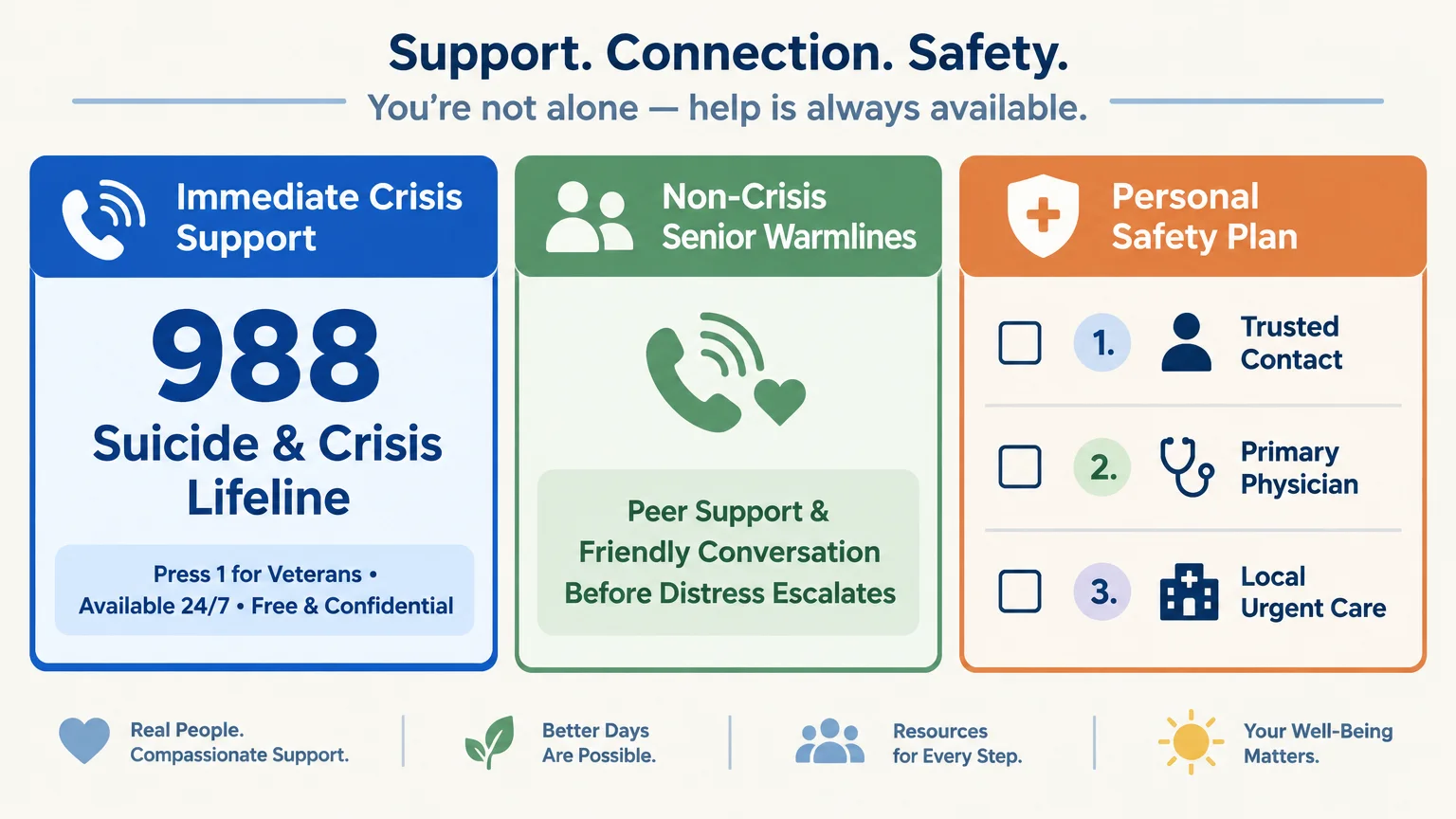
If you or someone you love experiences suicidal ideation or overwhelming panic, call or text the 988 Suicide & Crisis Lifeline immediately. Veterans can dial 988 and press 1 for dedicated specialized support.
For non-emergency emotional distress, older adults can contact the Institute on Aging’s Friendship Line at 1-800-971-0016. This 24/7 accredited warmline provides compassionate, toll-free conversation specifically tailored for seniors.
Sharing your struggles with an empathetic listener de-escalates emotional crises rapidly. Reaching out for professional help is a powerful statement of personal courage.

10. Utilize Evidence-Based Psychotherapy Formats
Psychotherapy is exceptionally effective for older adults, producing symptom reduction comparable to or exceeding pharmaceutical treatments. Tailored geriatric therapies respect your deep life experience while providing modern, practical coping mechanisms.
A qualified therapist helps you navigate grief, adapt to physical limitations, and reframe negative cognitive distortions. Different evidence-based therapeutic frameworks target specific emotional challenges.
Review the comparison table below to identify which psychological approach best matches your current mental health goals.
| Therapy Format | Core Mechanism | Best Suited For |
|---|---|---|
| Cognitive Behavioral Therapy (CBT) | Identifies and restructures distorted thoughts while promoting positive daily behavioral activation. | Late-life anxiety, generalized worry, clinical depression, and chronic insomnia. |
| Problem-Solving Therapy (PST) | Breaks overwhelming real-life stressors into manageable, systematic action steps. | Caregiver burnout, chronic illness adaptation, and executive decision-making stress. |
| Reminiscence & Life Review Therapy | Systematically guides reflection on past life events to resolve conflicts and extract meaning. | Grief, unresolved developmental regrets, existential dread, and legacy planning. |
Discuss these modalities with your primary physician or a licensed mental health professional. Experienced clinicians will adapt their pacing to accommodate your physical comfort and communication style.
Individual psychotherapy provides a confidential, objective space free from family dynamics. Investing time in your emotional wellness pays lifelong psychological dividends.
Myths Worth Debunking About Aging and Mental Health
Outdated cultural myths discourage many seniors from pursuing life-changing psychological care. Dismantling these harmful misconceptions empowers older adults and their families to seek timely treatment.
Myth 1: Cognitive lapses always signal irreversible dementia
Experiencing occasional memory lapses does not mean you have Alzheimer’s disease or another form of irreversible dementia. Normal age-related retrieval delays differ fundamentally from progressive neurodegenerative diseases.
Furthermore, untreated depression, thyroid imbalances, and vitamin B12 deficiencies frequently trigger severe cognitive fog known as pseudo-dementia. When clinicians treat the underlying depression, cognitive performance often rebounds completely.
Myth 2: Older adults are too set in their ways to benefit from therapy
This common myth underestimates the incredible emotional wisdom that older adults bring into therapeutic work. Clinical trials consistently prove that seniors often respond to talk therapy faster than younger patients.
Decades of lived experience provide seniors with deep internal resilience and context. Therapists help you harness that existing strength to resolve contemporary life transitions.
Myth 3: Talking about emotional struggles makes pain worse
Many seniors grew up in generations that prioritized emotional stoicism and regarded vulnerability as weakness. Suppressing emotional distress, however, drives up cardiovascular tension and leads to debilitating physical ailments.
Verbalizing painful emotions in a structured clinical setting reduces amygdala reactivity and lowers physiological stress. Expressing vulnerability provides immense emotional relief and accelerates neurological recovery.

Signs It’s Time to Talk to a Therapist
Identifying early warning signs allows you to intervene before emotional difficulties impair your physical independence. Watch for these critical clinical indicators in your daily routine:
- Pervasive loss of pleasure (Anhedonia): Losing all interest in cooking, gardening, or interacting with loved ones indicates genuine neurochemical depletion rather than routine aging.
- Unexplained physical symptoms: Persistent headaches, gastrointestinal upset, or diffuse bodily pain without clear medical etiology frequently stem from somatized psychological distress.
- Progressive social withdrawal: Repeatedly declining social invitations, staying in bed for days, or neglecting essential hygiene signifies severe emotional overwhelm.
- Feelings of worthlessness or burden: Repeatedly stating that your family would be better off without you requires urgent, comprehensive professional assessment.
If you or an older family member experience two or more of these symptoms for over two weeks, seek professional guidance. Timely therapeutic intervention preserves independence and restores vitality.
Frequently Asked Questions About Senior Mental Health
Does Medicare cover virtual therapy sessions for seniors?
Yes, Medicare permanently covers telehealth for outpatient mental health appointments. You can complete licensed psychotherapy from home using a computer, tablet, or standard audio telephone.
How can I tell the difference between depression and grief?
Grief comes in fluctuating waves tied to reminders of loss, while self-esteem remains intact. Depression causes persistent emotional numbness, unrelenting guilt, and a total loss of self-worth.
Can medications taken for physical illnesses cause depression?
Yes, numerous prescription medications can induce depressive symptoms as side effects. Common culprits include certain beta-blockers, corticosteroids, and sedatives; review your prescription list with your doctor.
What should I do if an older relative refuses mental health care?
Frame the initial consultation around observable physical concerns like sleep loss or fatigue rather than mental illness. Offer to accompany them to their regular physician to begin the discussion gently.
Nurturing Your Emotional Well-Being Every Day
Emotional well-being is not a luxury reserved for the young; it remains the cornerstone of fulfilling golden years. Protecting your mental health preserves your cognitive autonomy, dignity, and joy.
Choose one small, practical strategy from this guide to implement today, such as scheduling a walk or contacting a supportive friend. Small, consistent steps build lifelong psychological resilience.
This is educational content based on psychological research and general principles. Individual experiences vary significantly.
For personalized guidance, consult a licensed therapist, psychologist, or counselor.
Last updated: February 2026. Psychology research evolves continuously—verify current findings with professional sources.









Leave a Reply