

You meet every deadline, support everyone around you, and present a composed exterior to the world. Beneath that polished surface, an unrelenting current of nervous energy drains your vitality.
Hidden anxiety thrives when persistent dread masquerades as diligence, hyper-independence, or perfectionism. You might never experience overt panic attacks, yet your nervous system stays locked in survival mode.
Recognizing these quiet indicators allows you to reclaim your emotional bandwidth before physical exhaustion sets in. Here are eleven subtle signs of anxiety and evidence-based ways to find relief.
The Essentials
- Hidden anxiety—often called high-functioning anxiety—hides behind productivity, achievement, and external composure.
- The American Psychiatric Association classifies these behaviors under Generalized Anxiety Disorder (GAD) rather than a separate clinical diagnosis.
- Physical tension, digestive sensitivity, mental rehearsal, and leisure guilt serve as classic indicators of chronic internal stress.
- Clinical tools like the GAD-7 help evaluate symptom severity when quiet worry begins compromising your well-being.
Understanding the Mechanics of Hidden Anxiety
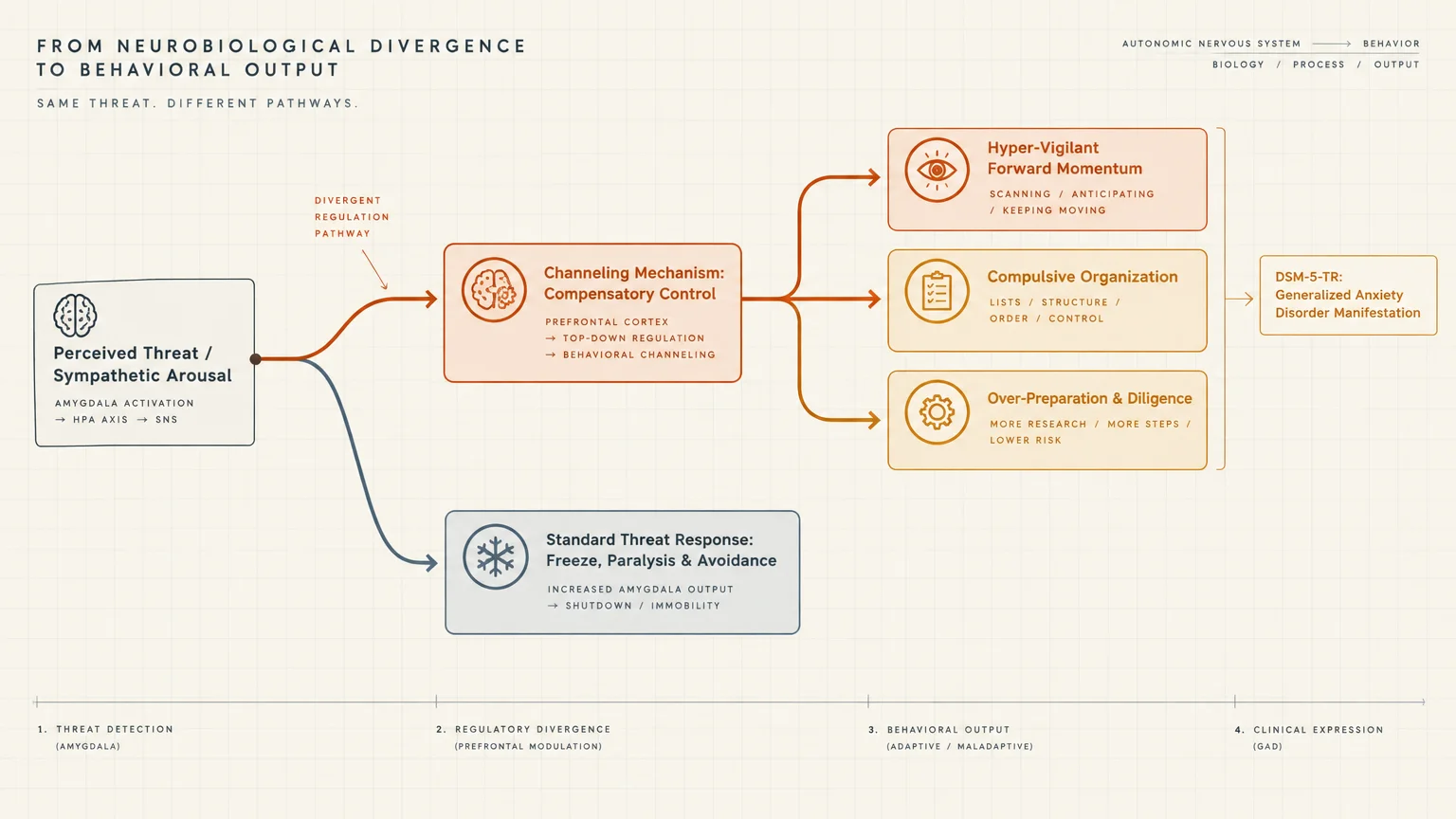
You might wonder how anxiety can remain concealed when it feels so intense internally. The answer lies in how your brain channels chronic fight-or-flight activation.
Instead of freezing or avoiding responsibilities, your nervous system responds to perceived threats with forward momentum. You overcompensate through work, hyper-vigilance, and compulsive organization to maintain control.
Neither “hidden anxiety” nor “high-functioning anxiety” exists as a formal diagnosis in the American Psychiatric Association’s DSM-5-TR. In clinical settings, these symptoms typically fall under Generalized Anxiety Disorder (GAD) or unspecified anxiety disorders.
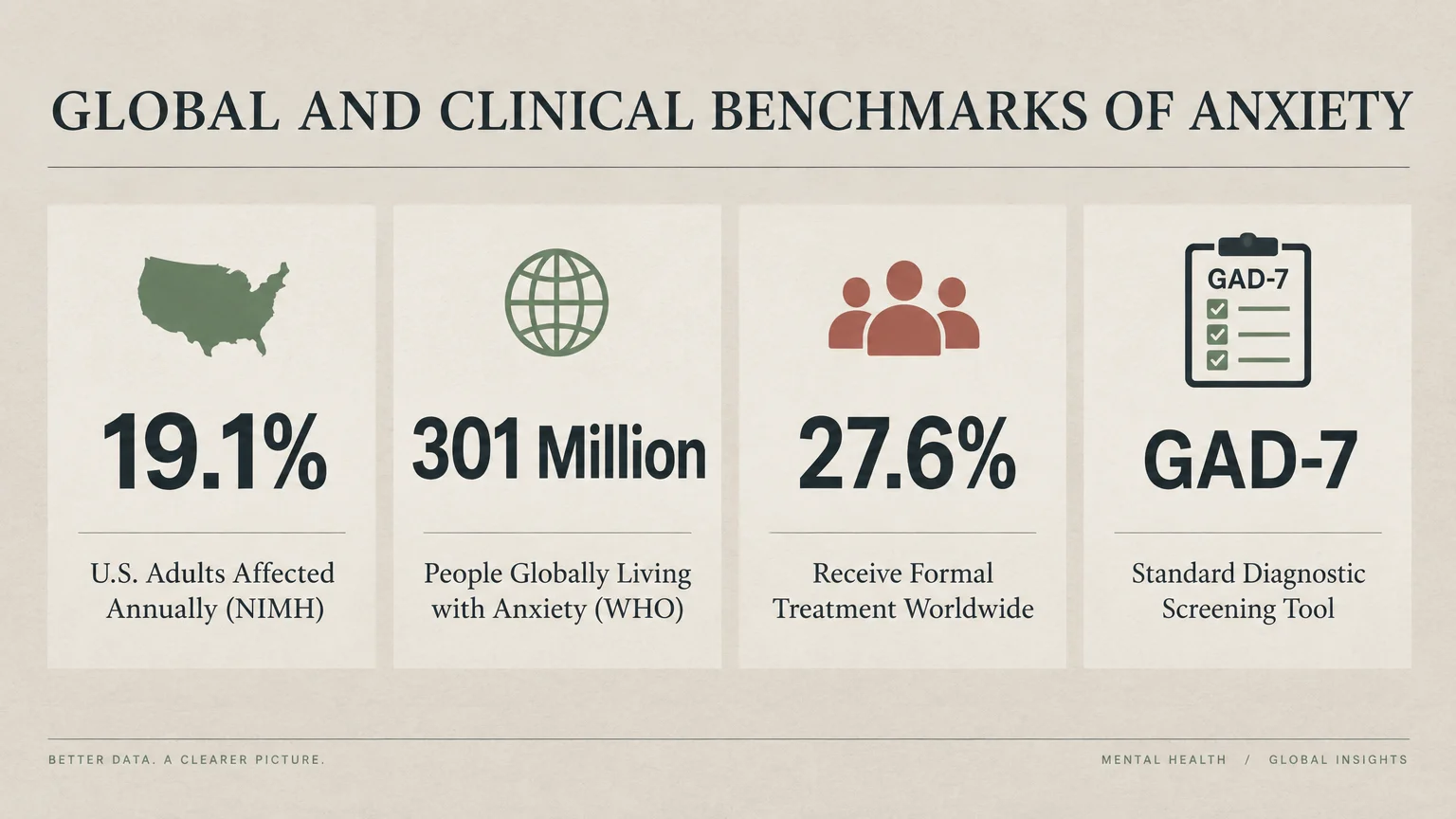
According to the National Institute of Mental Health (NIMH), anxiety disorders affect 19.1% of American adults annually. Furthermore, an estimated 31.1% of adults experience an anxiety disorder at some point in their lives.
The World Health Organization (WHO) reports that over 301 million people globally live with anxiety disorders. Yet, the WHO estimates that only 27.6% of individuals with anxiety receive formal treatment worldwide.
In June 2023, the U.S. Preventive Services Task Force recommended routine anxiety screenings for all asymptomatic adults aged 19 to 64. This clinical guidance reflects how frequently anxiety symptoms go undetected in daily life.

11 Subtle Signs of Hidden Anxiety
1. Chronic Somatic Tension and Unconscious Clenching
Hidden anxiety rarely stays confined to your mind; it lives inside your muscles. You may habitually clench your jaw, lock your shoulders, or tighten your abdomen without realizing it.
These subtle physical contractions occur because your sympathetic nervous system continuously prepares for physical threats. Over time, this unreleased tension manifests as tension headaches, neck stiffness, and unexplained back pain.
2. Over-Preparation and Compulsive Checking
Do you rewrite emails five times, arrive thirty minutes early to casual events, or create exhaustive backup plans? While others view you as impeccably organized, fear drives this meticulous behavior.
You prepare obsessively because unpredictability feels emotionally catastrophic. By controlling every small variable, your mind creates an illusion of complete security against sudden failure.
3. Constant Mental Rehearsal and Catastrophic Forecasting
When you have hidden anxiety, your brain rarely rests in the present moment. Instead, you constantly mentally script future interactions, difficult conversations, or hypothetical emergencies.
Psychologists call this cognitive pattern anticipatory coping or worst-case forecasting. You run these mental simulations believing they protect you, but they actually perpetuate chronic nervous arousal.
4. Persistent Need for Subtle Reassurance
Hidden anxiety signs frequently show up in communication patterns. You might not ask for overt comfort, but you routinely fish for confirmation that things are fine.
You might ask colleagues, “Does this sound okay?” or text partners, “Are you upset with me?” You seek external validation to soothe internal uncertainty that you cannot resolve on your own.
5. Hyper-Pleasing and Deficient Boundaries
Saying no feels dangerous when you live with disguised anxiety. You take on extra projects at work and volunteer for personal favors, even when your schedule is full.
This habitual compliance stems from a deep fear of conflict, abandonment, or disapproval. You manage your social anxiety by making yourself indispensable to everyone around you.
“Perfectionism is not the same thing as striving to excel. Perfectionism is not about healthy achievement and growth; it’s a shield.” — Brené Brown, Ph.D., LMSW
6. Procrastination Disguised as Productive Research
Anxiety symptoms do not always look like passive avoidance; they frequently look like excessive research. You might delay starting a project by organizing files, reading articles, or cleaning your desk.
This behavior, known as productive procrastination, shields you from the vulnerability of producing imperfect work. Your fear of failure masquerades behind a curtain of busywork.
7. Sudden Irritability and Low Sensory Tolerance
Because your nervous system constantly operates near maximum capacity, small disruptions push you over the edge. Background noises, unexpected schedule changes, or repetitive sounds can provoke sudden irritation.
Others may perceive your reaction as moodiness or impatience. In reality, your emotional bandwidth is so depleted by chronic worry that minor stimuli trigger a stress response.
8. Restless Downtime and Leisure Guilt
Sitting on the couch or taking a weekend off should feel rejuvenating, yet it triggers intense unease. When you stop moving, the background anxiety you normally outrun catches up with you.
You equate rest with laziness or irresponsibility. To avoid uncomfortable internal quiet, you reflexively fill downtime with chores, side projects, or digital scrolling.
9. Micro-Controlling Routines and Surroundings
When internal feelings feel chaotic, you attempt to control external environments. You might become rigid about kitchen cleanliness, meal routines, or specific ways tasks must be completed.
This rigidity represents a coping mechanism to manage internal dysregulation. When minor routines derail, your distress is disproportionate to the actual inconvenience.
10. Midnight Awakening and 3:00 AM Rumination
You might fall asleep without trouble due to sheer exhaustion, only to awaken abruptly hours later. Between 2:00 AM and 4:00 AM, your brain snaps into high alert.
According to Harvard Health Publishing, nocturnal cortisol spikes and hyperarousal often drive these sudden middle-of-the-night awakenings. Your mind races through unresolved tasks and regrets until dawn arrives.
11. Functional Gastrointestinal Sensitivity
The gut and the brain maintain continuous two-way communication through the vagus nerve and the enteric nervous system. When you carry unexpressed anxiety, your digestion often bears the brunt of the distress.
You might experience recurrent nausea, stomach cramping, acid reflux, or irregular bowel movements without an identifiable organic illness. These somatic responses reflect how your enteric nervous system reacts to perpetual stress hormones.
Overt vs. Hidden Anxiety: Key Differences
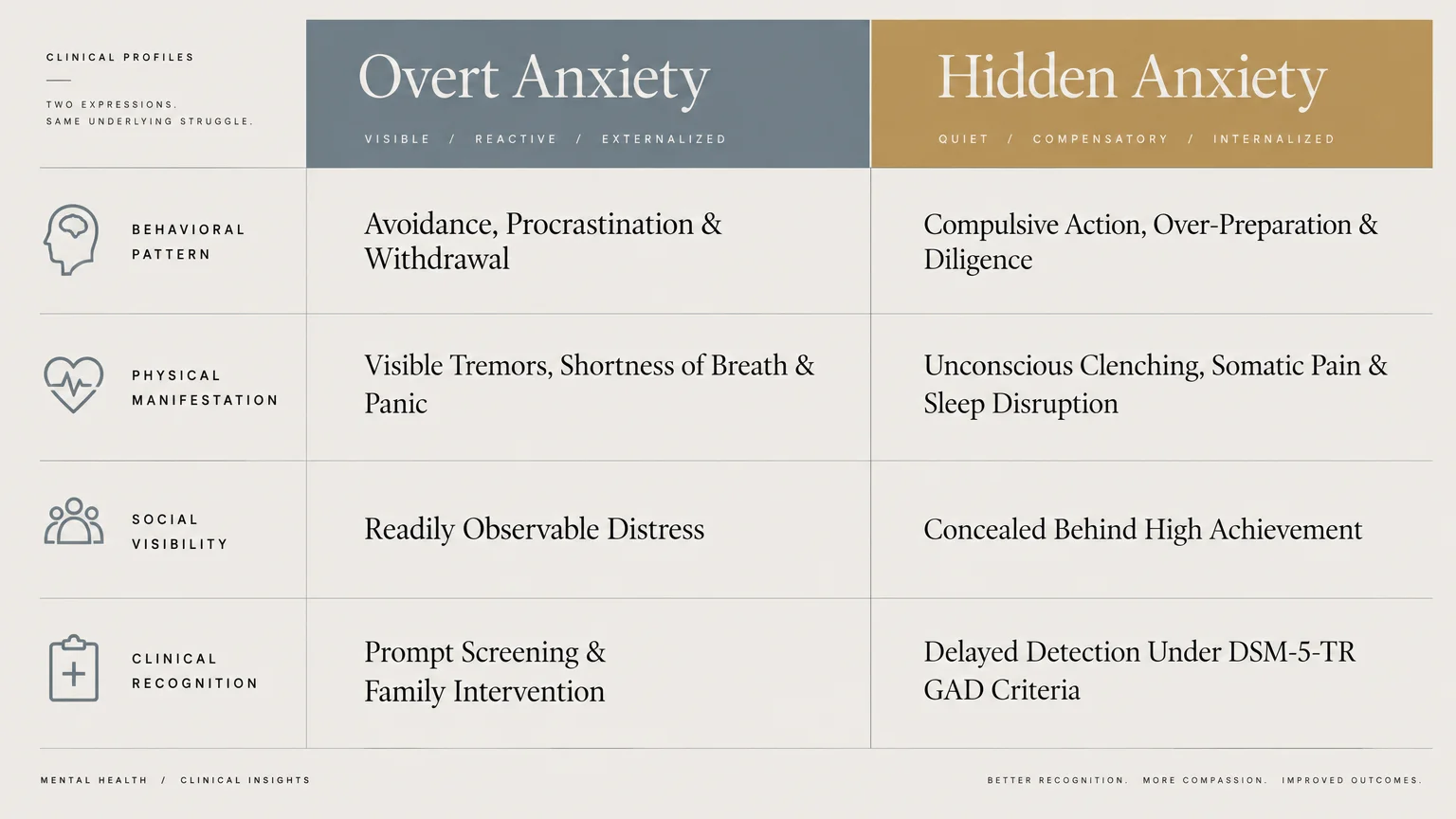
Distinguishing between visible distress and internalized worry clarifies why high-functioning presentations often go unaddressed for years. The following table highlights their primary characteristics.
| Dimension | Overt Anxiety Symptoms | Hidden Anxiety Symptoms |
|---|---|---|
| External Behavior | Noticeable withdrawal, visible panic attacks, crying, observable trembling. | Overachievement, punctuality, high productivity, organized demeanor. |
| Internal Driver | Immediate overwhelm and desire to escape distressing environments. | Fear of failure, dread of losing control, hyper-vigilance. |
| Coping Mechanism | Avoidance of feared tasks, places, or public situations. | Hyper-preparation, micro-managing, people-pleasing, staying constantly busy. |
| Social Presentation | Expresses distress openly; asks directly for help or excuses themselves. | Masks struggle with humor, reassurance-seeking, and self-reliance. |
| Primary Risk | Social isolation, agoraphobia, missed professional obligations. | Severe burnout, clinical depression, chronic cardiovascular strain. |
Patterns to Watch For: Common Misconceptions
Misunderstandings surrounding anxiety prevent millions from seeking effective help. Clarifying these fallacies helps you identify subtle anxiety signs early.
Myth 1: High performance indicates emotional wellness. Many individuals assume that professional success precludes mental health conditions. In truth, frantic performance often serves as a maladaptive shield against profound emotional insecurity.
Myth 2: Anxiety always looks like panic. Panic attacks represent only one expression of anxiety disorders. Hidden anxiety frequently presents as chronic low-grade apprehension without acute hyperventilation or shaking.
Myth 3: You can simply power through persistent worry. White-knuckling your way through chronic tension taxes your cardiovascular, immune, and endocrine systems. Untreated internal stress leads to psychological depletion over time.

Evidence-Based Strategies to Manage Hidden Anxiety
1. Calibrate Your Baseline with the GAD-7
Clinicians frequently use the Generalized Anxiety Disorder 7-item scale (GAD-7) to assess symptom severity. A score of 10 or greater typically indicates moderate anxiety that warrants formal evaluation.
Taking a validated self-assessment provides objective data about your emotional state. It cuts through internal rationalizations and highlights how stress impacts your daily functioning.
2. Engage the Physiological Sigh for Nervous System Regulation
When you notice physical clenching, direct somatic interventions interrupt the fight-or-flight cycle quickly. The physiological sigh involves two rapid inhales through your nose followed by a long, slow exhale through your mouth.
Practicing this breath pattern two or three times activates your parasympathetic nervous system. It lowers your heart rate and signals safety to your brain without requiring cognitive effort.
3. Implement Structured “Worry Windows”
If worst-case forecasting consumes your day, designate a specific 15-minute window each afternoon for worry. When anxious thoughts arise outside that window, write them down and postpone them until your scheduled time.
This cognitive-behavioral technique breaks the cycle of continuous rumination. It honors your concerns without allowing them to dictate your entire day.
4. Practice Intentional Imperfection
Challenge your perfectionism through small, deliberate behavioral experiments. Send an email with a minor typo, leave a dish in the sink overnight, or decline a low-priority invitation.
These exercises teach your nervous system that imperfect outcomes do not produce catastrophe. Over time, you build tolerance for ambiguity and reduce the compulsion to over-prepare.

When Self-Help Isn’t Enough
While lifestyle adjustments provide meaningful relief, self-management has limitations. You should consider seeking professional guidance from a licensed therapist in the following situations:
- Physical symptoms persist: Sleep disturbances, tension headaches, or digestive distress continue despite medical clearance and stress-reduction efforts.
- Coping relies on substances: You routinely depend on alcohol, sedatives, or intense overworking to numb internal worry and unwind.
- Relationships feel strained: Your need for reassurance, irritability, or rigid scheduling begins harming intimacy with your partner, children, or colleagues.
- Daily energy collapses: You experience persistent emotional numbness, pervasive dread, or symptoms of burnout that make basic tasks feel insurmountable.
According to the American Psychological Association (APA), Cognitive Behavioral Therapy (CBT) and Acceptance and Commitment Therapy (ACT) produce high success rates for anxiety disorders.
Frequently Asked Questions
What is the difference between hidden anxiety and generalized anxiety?
Hidden anxiety describes how an individual manages and presents their distress, whereas Generalized Anxiety Disorder is a formal DSM-5-TR diagnosis. Most people with hidden anxiety meet clinical criteria for GAD.
Can hidden anxiety cause long-term health complications?
Yes. Prolonged sympathetic activation elevates cortisol and systemic inflammation. Over years, unaddressed chronic anxiety increases risks for hypertension, cardiovascular strain, and weakened immune responses.
How does a mental health professional evaluate hidden anxiety?
Clinicians conduct diagnostic interviews, review medical histories, and administer standardized tools like the GAD-7. They evaluate internal cognitive patterns and somatic distress rather than relying solely on observable behavior.
Why do high achievers struggle with hidden anxiety so often?
High achievers frequently receive social praise for behaviors driven by anxiety, such as overworking and perfectionism. This positive external reinforcement encourages them to ignore internal distress until severe exhaustion occurs.
Reclaiming Your Peace
High performance does not require internal torment. Acknowledging your hidden anxiety represents courage and self-awareness, not weakness or failure.
By tuning into somatic signals, setting boundaries, and seeking support, you can dismantle patterns of perpetual vigilance. You deserve to experience genuine tranquility, not just the outward appearance of composure.
The information in this article is meant for educational purposes and general guidance. It does not replace individual therapy, counseling, or medical treatment. If you or someone you know is in crisis, contact the 988 Suicide & Crisis Lifeline by calling or texting 988.
Last updated: February 2026. Psychology research evolves continuously—verify current findings with professional sources.







Leave a Reply