

Your long-term happiness depends far less on external circumstances than on internal psychological patterns. Groundbreaking research shows that distinct personality traits consistently predict emotional well-being, physical health, and overall life satisfaction.
While genetics shape your baseline temperament, these core traits are not fixed in stone. You can actively strengthen the habits and mindsets that foster sustainable joy.
Exploring the science of happiness reveals how small shifts in your daily perspective protect your mental health. Here are six research-backed happiness predictors you can build starting today.
How Personality Shapes Well-Being
For decades, psychologists investigated why some individuals maintain inner joy despite facing severe hardships. Research demonstrates that personality traits and wellbeing share an undeniable, quantifiable link.
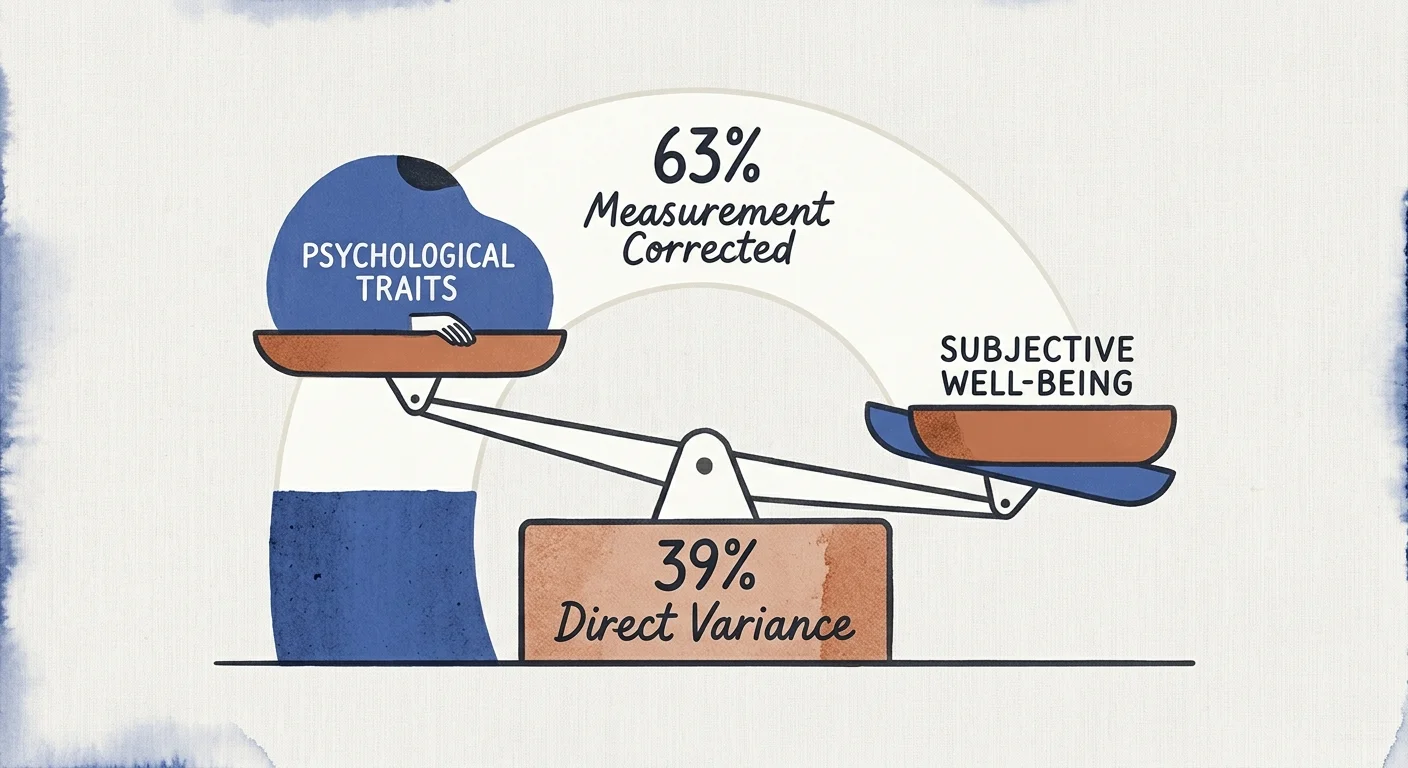
A landmark meta-analysis by Steel et al. (2008) in Psychological Bulletin revealed that personality traits account for up to 39% of the variance in subjective well-being. That number climbs to 63% when researchers correct for measurement error.
Furthermore, an 11-year study of 9,110 adults by van Scheppingen et al. (2023) in the Journal of Personality and Social Psychology confirmed that trait predictors remain remarkably stable from ages 16 to 95.
The American Psychological Association emphasizes that while personality has a biological foundation, intentional habits allow you to reshape your emotional patterns over time.

1. Relational Warmth and Prosocial Connection
Humans are inherently social creatures; our nervous systems thrive on genuine mutual support. Relational warmth reflects your willingness to connect openly, empathize deeply, and cooperate with others.
The Harvard Study of Adult Development has tracked over 3,000 individuals across 85 years under directors Robert Waldinger and Marc Schulz. The study reached an unequivocal conclusion: warm relationships are the single strongest predictor of lifelong health and happiness.
People who prioritize high-quality connections live longer, experience less physical pain, and maintain sharper cognitive function as they age.
You can cultivate relational warmth by practicing active listening during daily conversations and performing spontaneous acts of kindness for loved ones.

2. Emotional Stability and Resilience
Emotional stability describes your ability to navigate distress without falling into prolonged despair or chronic anxiety. In personality research, this trait represents the opposite end of high neuroticism.
Individuals with strong emotional stability experience the same painful life events as anyone else. However, they possess the coping mechanisms required to regain psychological equilibrium quickly.
According to research synthesized by Harvard Health, regular mindfulness practice and cognitive reframing physically alter neural pathways to dampen chronic reactivity.
Psychiatrist Viktor Frankl captured this principle of psychological agency when reflecting on the human capacity to endure hardship:
“Between stimulus and response there is a space. In that space is our power to choose our response. In our response lies our growth and our freedom.” — Viktor E. Frankl, Psychiatrist and Author
By identifying automatic catastrophic thoughts, you learn to respond deliberately rather than reacting impulsively to stressors.

3. Dispositional Optimism
Optimism does not mean ignoring life’s hardships or enforcing toxic positivity. Instead, dispositional optimism is the generalized expectation that good things will happen and that your efforts matter.
A major study by Lee et al. (2019) in PNAS examined over 71,000 participants and uncovered profound physical benefits. The most optimistic individuals enjoyed an 11% to 15% longer lifespan.
Furthermore, highly optimistic men and women showed 50% to 70% greater odds of reaching exceptional longevity, surviving past age 85.
When you view setbacks as temporary and solvable, your body experiences significantly lower physiological stress, which preserves your cardiovascular health.

4. Trait Gratitude and Appreciative Awareness
Trait gratitude involves a persistent recognition of goodness in your life and an acknowledgment that the sources of that goodness lie outside yourself.
In seminal clinical trials, Emmons and McCullough (2003) demonstrated that actively practicing gratitude creates measurable psychological shifts. Participants reported 25% higher subjective well-being and elevated daily positive affect.
Surprisingly, grateful participants also completed 1.5 more hours of physical exercise each week compared to control groups focused on neutral events or hassles.
Writing down three specific moments of appreciation each evening trains your brain to filter for positive experiences throughout your day.

5. Conscientiousness and Purposeful Self-Regulation
Conscientiousness reflects your capacity for self-discipline, organized planning, and dependable follow-through. It is one of the most consistent traits linked to happiness and career satisfaction.
A comprehensive meta-analysis by Kern and Friedman (2008) highlighted that conscientiousness correlates steadily with subjective well-being. This connection stems primarily from healthier daily habits and lower interpersonal conflict.
Highly conscientious individuals avoid reckless behaviors, manage their finances prudently, and follow medical guidelines reliably.
You can strengthen your conscientiousness by setting microscopic daily goals and building predictable routines that reduce decision fatigue.

6. Social Vitality and Extraversion
Social vitality encompasses your enthusiasm for engaging with the world, seeking novel experiences, and sharing energy with others.
In the psychology of happy people, extraversion consistently correlates with higher life satisfaction because it motivates individuals to seek rewarding social interactions.
If you are an introvert, social vitality does not require attending loud, crowded gatherings. You can fulfill this need through intimate, one-on-one conversations that foster deep intellectual and emotional intimacy.
The key lies in actively initiating meaningful contact rather than retreating into complete social isolation when challenges arise.

Comparing the 6 Happiness Traits
| Personality Trait | Core Psychological Mechanism | Validated Well-Being Benefit | Practical Daily Habit |
|---|---|---|---|
| Relational Warmth | Prosocial bonding and mutual empathy | Reduced chronic inflammation and longer lifespan | Express daily appreciation to someone you care about |
| Emotional Stability | Adaptive cognitive appraisal and stress recovery | Lower baseline cortisol and lower anxiety rates | Practice five minutes of slow, diaphragmatic breathing |
| Dispositional Optimism | Constructive, problem-focused coping style | 50% to 70% greater odds of living to age 85 | Identify one realistic solution for current challenges |
| Trait Gratitude | Attentional bias toward supportive resources | 25% increase in subjective positive mood | Log three specific moments of gratitude every evening |
| Conscientiousness | Impulse control and sustained goal direction | Higher career fulfillment and healthier physical habits | Plan tomorrow’s two primary tasks before going to bed |
| Social Vitality | Active behavioral activation and connection | Higher daily positive emotional states | Initiate one deep conversation each week |
Each trait operates like an emotional muscle. Focusing on one or two areas creates positive ripple effects across your entire psychological landscape.

Common Misconceptions About Personality and Joy
Many people hold rigid beliefs about their capacity for change. Examining these myths helps remove self-imposed barriers to emotional fulfillment.
Misconception 1: Your personality is completely fixed after childhood. Research on neuroplasticity demonstrates that intentional cognitive behavioral practices can systematically alter your baseline emotional traits throughout adulthood.
Misconception 2: Happiness requires relentless positive thinking. True emotional well-being involves acknowledging painful feelings while maintaining healthy coping strategies, rather than suppressing grief or anger.
Misconception 3: You must be an extreme extrovert to experience joy. Introverts achieve identical levels of well-being when they nurture close friendships, honor their energy needs, and pursue meaningful goals.

Evidence-Based Strategies to Cultivate Happiness Predictors
You can build these foundational traits through small, consistent behavioral experiments. Try integrating these practical strategies into your weekly routine:
- Audit your social circle: Schedule weekly intentional check-ins with friends who nurture your sense of security and mutual trust.
- Implement cognitive reappraisal: When an unexpected obstacle arises, write down two potential growth opportunities it might offer.
- Keep a micro-gratitude log: Record three precise sensory moments you appreciated today, such as the warmth of morning tea.
- Design structural friction: Protect your focus by placing distracting devices in another room while working on meaningful projects.
- Engage in deliberate outreach: Send one sincere text message of appreciation to a colleague or family member every morning.
Consistency matters far more than intensity. Practicing these micro-habits for five minutes daily produces compounding emotional rewards.

Finding the Right Professional Help
Cultivating positive traits is an ongoing process, but self-directed habits cannot resolve every psychological challenge. Sometimes, deep-rooted emotional patterns require expert clinical care.
According to the National Institute of Mental Health and Mayo Clinic, you should consider consulting a licensed mental health professional in the following scenarios:
- You experience persistent feelings of numbness, hopelessness, or sadness that last longer than two weeks.
- Chronic worry or panic interferes with your ability to perform at work or maintain healthy relationships.
- Unresolved trauma or past adverse experiences prevent you from forming safe, trusting interpersonal bonds.
- You rely on alcohol, substances, or compulsive behaviors to cope with uncomfortable emotional states.
Evidence-based therapies, such as Cognitive Behavioral Therapy (CBT) and Acceptance and Commitment Therapy (ACT), provide tailored tools to help you develop lasting emotional stability.
Frequently Asked Questions
Can introverts be as happy as extroverts?
Yes. While extraversion facilitates social enthusiasm, introverts experience profound happiness through deep, selective relationships, solitary creative pursuits, and quiet reflective practices.
What is the single strongest predictor of long-term happiness?
The 85-year Harvard Study of Adult Development identifies high-quality relationships and relational warmth as the single greatest predictor of lifelong health and life satisfaction.
How long does it take to shift a personality trait?
Research indicates that sustained, intentional behavioral practice can produce noticeable shifts in personality traits and emotional regulation within three to six months.
Does wealth increase happiness after basic needs are met?
Financial stability removes critical life stressors, but beyond meeting comfortable living standards, relational warmth, meaning, and emotional stability have a far greater impact on long-term happiness.
Moving Toward Sustainable Well-Being
Lasting happiness is not a lottery prize reserved for the fortunate; it is an active practice shaped by your daily choices. By nurturing warmth, gratitude, and resilience, you build an enduring foundation for joy.
The information in this article is meant for educational purposes and general guidance, and it does not replace individual therapy or medical treatment. If you or someone you know is in crisis, contact the 988 Suicide & Crisis Lifeline by calling or texting 988.
Last updated: February 2026. Psychology research evolves continuously—verify current findings with professional sources.








Leave a Reply