
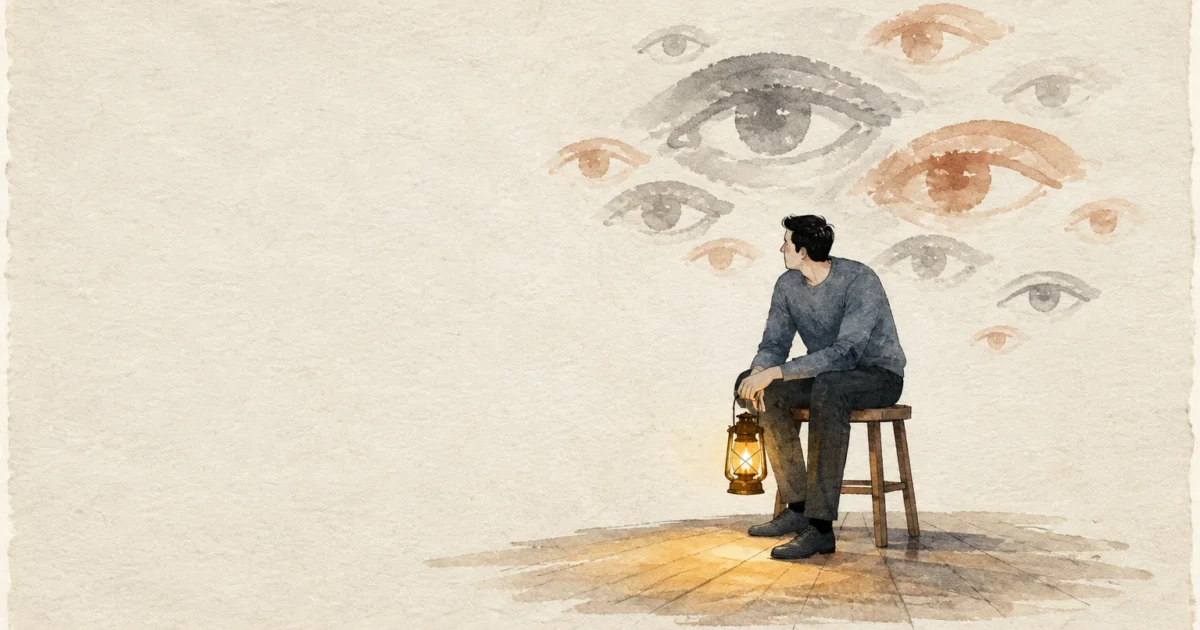
You rewrite a routine email five times or agree to social plans you dread just to keep the peace. These subtle, everyday habits often stem from a deep fear of being judged.
Psychologists refer to this heightened vigilance as the fear of negative evaluation. Left unaddressed, it silently drains your cognitive energy and stifles your genuine self-expression.
Uncovering the psychological roots behind these self-consciousness signs gives you back your autonomy. By identifying your defense mechanisms, you can replace chronic anxiety with genuine self-assurance.
The Psychology Behind the Fear of Judgment
Human beings possess an innate evolutionary drive to belong to a protective tribe. In early human history, social rejection signaled literal abandonment and physical danger.
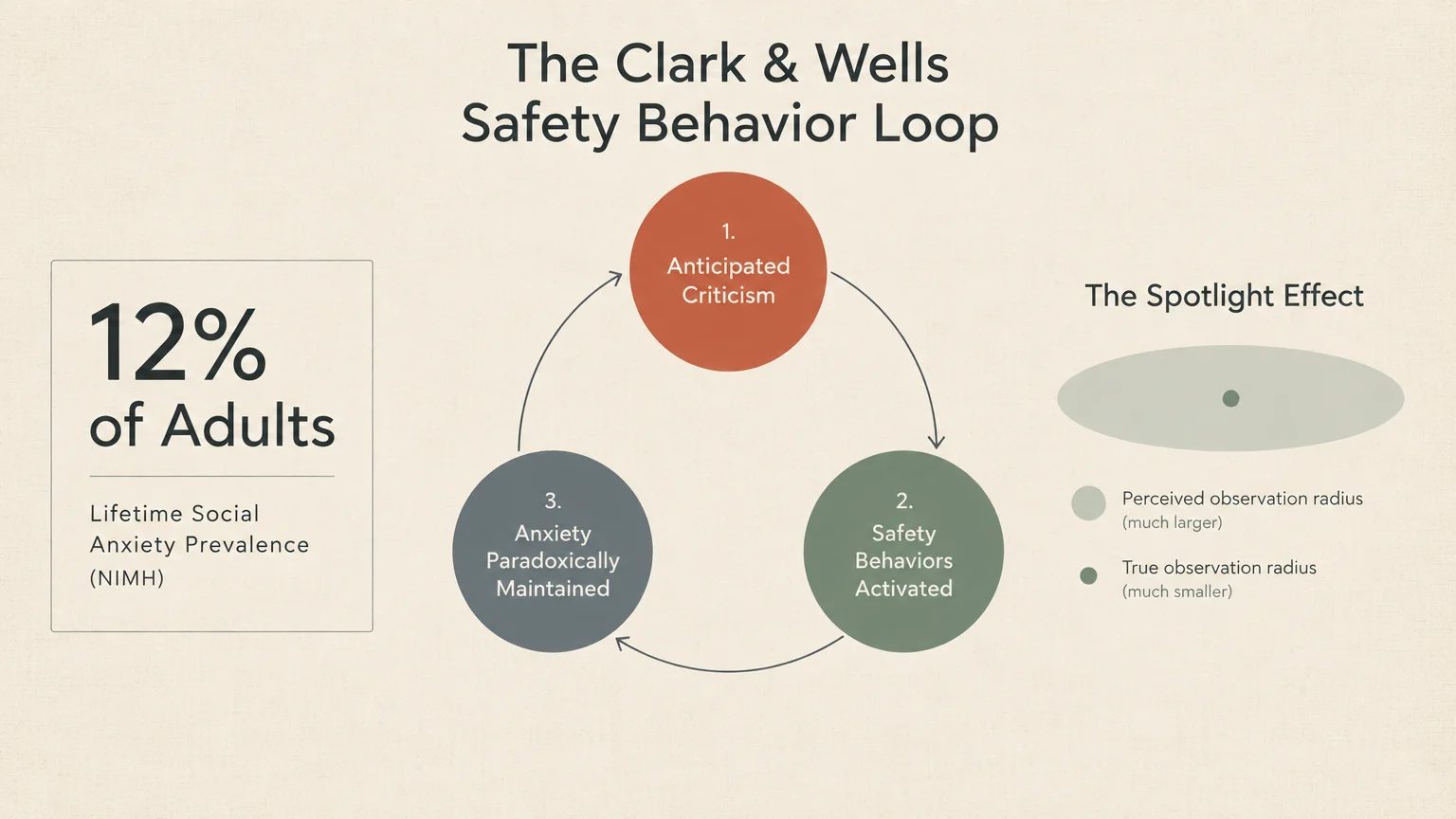
Today, your nervous system processes social disapproval through those same ancient neural circuits. The National Institute of Mental Health (NIMH) estimates that roughly 12% of adults encounter social anxiety disorder during their lives.
When you anticipate social criticism, your mind constructs automatic defenses known as safety behaviors. Pioneering research by cognitive therapists David M. Clark and Adrian Wells revealed that safety behaviors paradoxically preserve your anxiety instead of resolving it.
Furthermore, individuals routinely overestimate how much others observe their behavior or flaws. Social psychologists call this pervasive cognitive distortion the spotlight effect.

1. Chronic People-Pleasing and Boundary Erosion
Saying yes when your schedule is full reflects an underlying struggle with people pleasing. You place the comfort of others ahead of your physical and emotional reserves.
Trauma experts often categorize this adaptive habit as the fawn response. You placate perceived critics to prevent conflict before negative evaluation can take shape.
While compliance offers fleeting comfort, it steadily erodes personal authenticity. You inadvertently train other people to disregard boundaries that you fail to vocalize.

2. Mental Scripting and Post-Event Rumination
Rehearsing small talk in your mind before an ordinary dinner indicates protective scripting. You formulate lines in advance to avoid awkward pauses or clumsy remarks.
The psychological friction does not disappear once the interaction finishes. Instead, you dissect every comment you made through intense post-event processing.
During these mental replays, your mind magnifies perceived blunders while dismissing positive exchanges. This hyper-focus keeps your nervous system in a state of high alert.

3. Habitual Over-Apologizing
Many individuals utter apologies dozens of times daily for everyday circumstances. You might apologize for asking a routine question, coughing, or taking up physical room.
This automatic reaction serves as preemptive appeasement. By assuming blame immediately, you attempt to disarm potential critics before they vocalize dissatisfaction.
The American Psychological Association (APA) indicates that submissive habits frequently reinforce feelings of inadequacy. Over-apologizing conditions your brain to believe that your ordinary presence creates an inconvenience.

4. Armor-Plated Perfectionism
Perfectionism rarely stems from a pure desire for personal mastery. More often, it functions as a defensive maneuver to guard against feelings of shame.
You polish work assignments or your physical appearance until nothing seems vulnerable to attack. Flawlessness becomes an emotional fortress designed to block external criticism.
“Perfectionism is a twenty-ton shield that we lug around thinking it will protect us, when in fact it’s the thing that’s really preventing us from being seen.” — Brené Brown, Ph.D., LMSW
Demanding absolute perfection guarantees chronic mental and emotional exhaustion. When you link your self-worth to flawless execution, any minor mistake feels catastrophic.

5. Social Chameleonism and Emotional Masking
Pay attention to how easily your personal views shift depending on the room. You may agree with social opinions, media recommendations, or plans you privately dislike.
This social chameleonism represents an advanced form of emotional masking. You conceal personal quirks because your brain equates vulnerability with immediate social isolation.
Over time, continuous adaptation produces profound internal loneliness. Even when people offer compliments, you know they admire an artificial persona rather than you.
6. Passive Decision-Making and Deflecting Choices
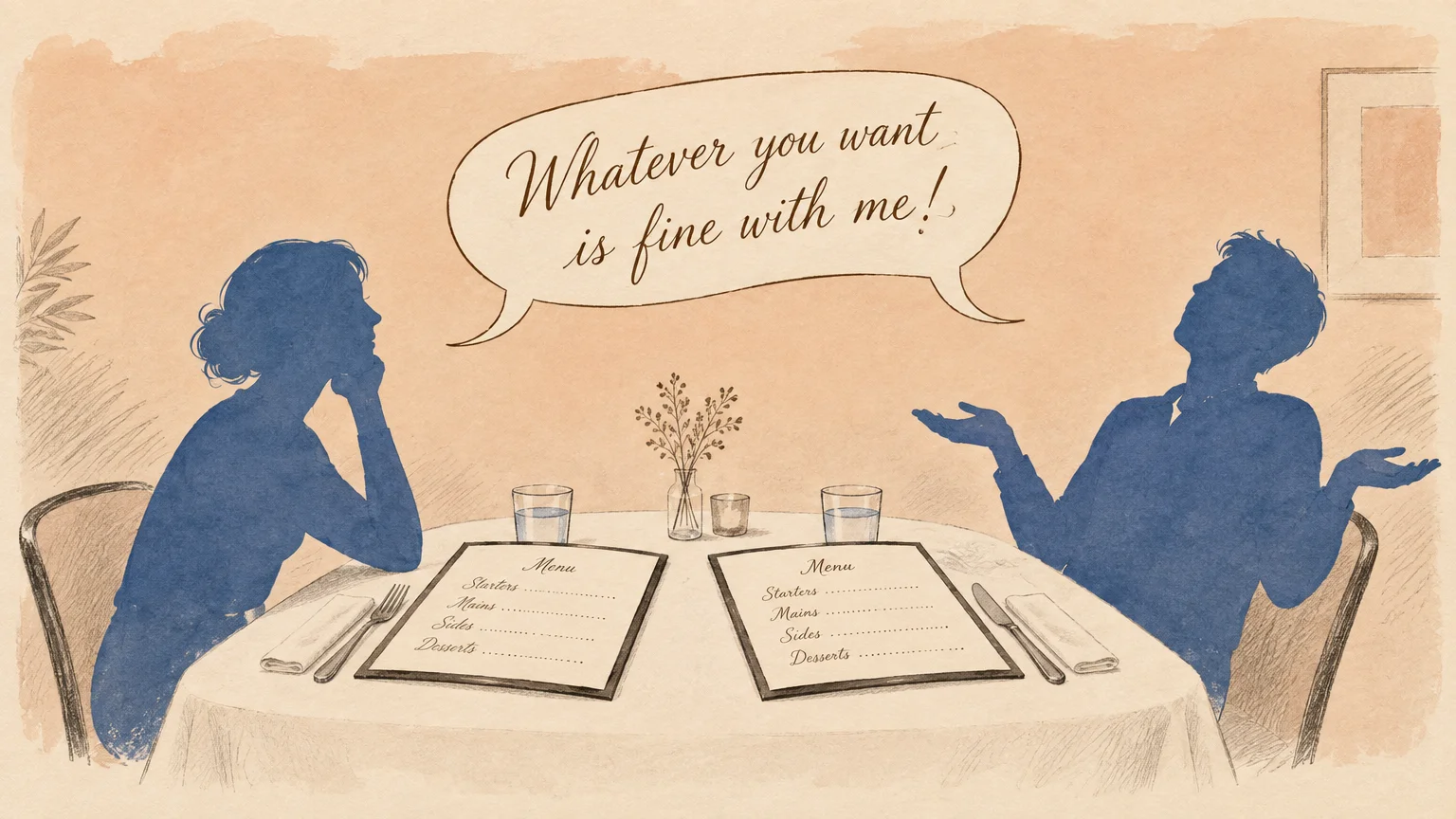
When someone asks your dining preference, you might reflexively respond, “Whatever you want.” Deferring everyday decisions shields you from blame if the meal or venue disappoints.
Deflecting choices removes accountability, but it also signals that your voice carries little significance. You surrender personal agency to maintain an illusion of harmony.
This passivity eventually strains interpersonal dynamics. Friends and romantic partners grow exhausted from bearing the responsibility of making every shared decision.

7. Micro-Avoidance and Safety Behaviors
The fear of judgment psychology regularly reveals itself through subtle physical habits. You might stare intently at your mobile phone when entering a crowded room alone.
Other people avert eye contact, speak quietly, or position themselves near exits. Research highlighted by Mayo Clinic shows these social anxiety behaviors serve to sidestep anticipated scrutiny.
Unfortunately, micro-avoidance prevents your brain from discovering that social settings are manageable. Because you relied on your phone, you falsely credit the device for your emotional safety.
Comparing Safety Behaviors to Adaptive Coping
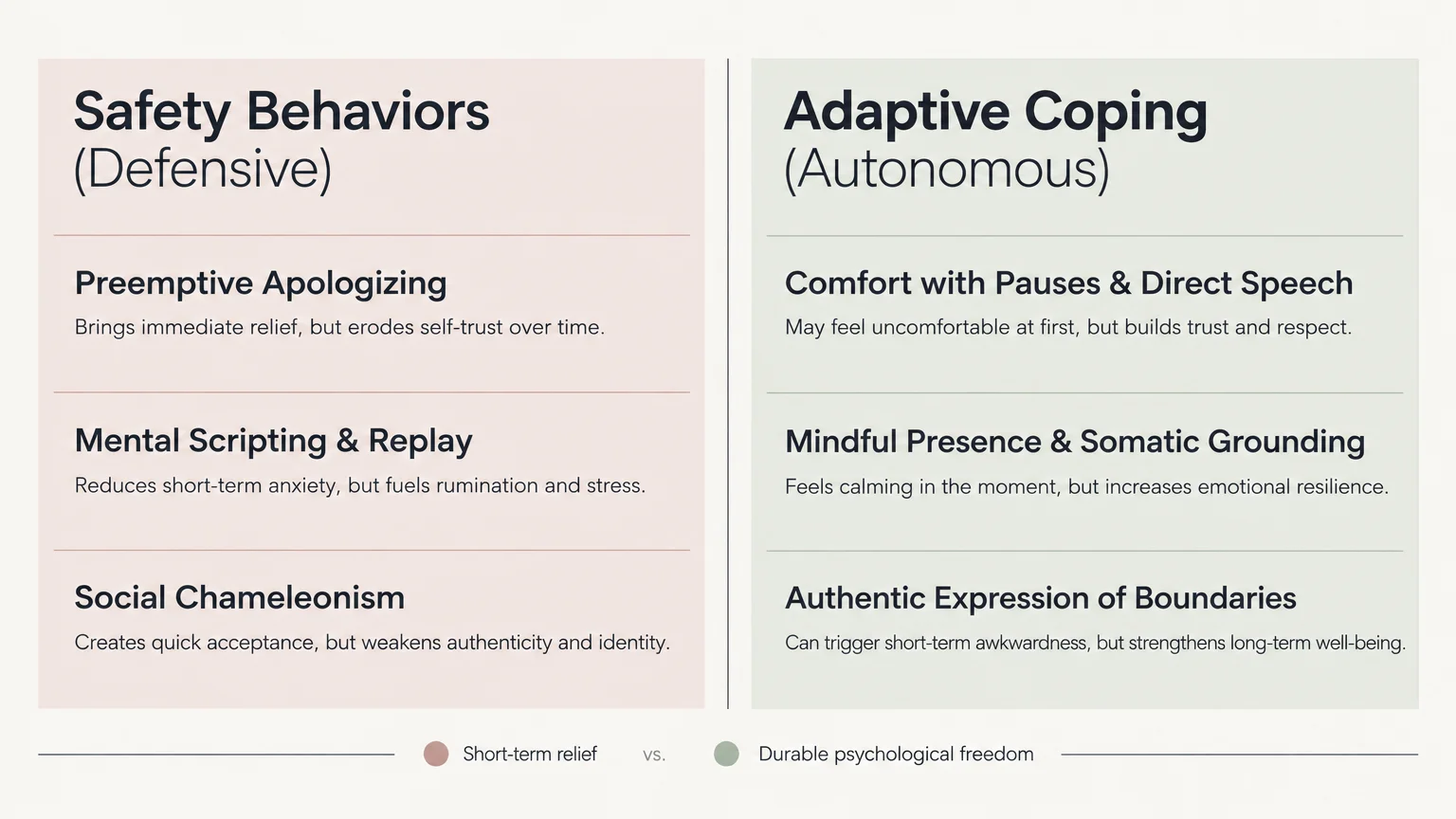
Replacing safety behaviors with direct coping strategies helps break cycles of fear. The comparison below illustrates how common defensive patterns contrast with productive, self-affirming alternatives.
| Defensive Safety Behavior | Underlying Fear | Adaptive Coping Alternative |
|---|---|---|
| Preemptive people-pleasing | Conflict and abandonment | Communicating clear, kind boundaries |
| Habitual over-apologizing | Being perceived as an imposition | Expressing appreciation instead of guilt |
| Mental scripting in advance | Awkwardness and verbal blunders | Cultivating mindful conversational presence |
| Armor-plated perfectionism | Judgment of perceived personal flaws | Accepting imperfect, genuine progress |
| Phone-checking in public | Looking lonely or exposed | Grounding through relaxed posture and breath |

What Can Go Wrong: The Unintended Costs of Defensive Living
Protective defenses seem helpful initially, but they yield significant unintended consequences over time. Relying on protective behaviors breeds the very alienation you hope to prevent.
Unchecked people-pleasing fosters deep, quiet resentment. You grow bitter toward friends for neglecting your preferences, even though you never shared them openly.
Post-event rumination also elevates your baseline stress hormones and disrupts restorative rest. Poor sleep degrades emotional regulation, amplifying self-consciousness signs the next day.
Safety behaviors also generate accidental self-fulfilling prophecies. Closed postures, muted speech, and constant screen-checking can lead others to assume you wish to remain isolated.

Evidence-Based Strategies to Reclaim Your Voice
Dismantling protective defenses requires intentional behavioral practice rather than willpower alone. Cognitive behavioral methods help you gently test your anxious assumptions against real-world evidence.
Begin transforming your internal response using these practical, grounded approaches:
- Conduct behavioral experiments: Arrive three minutes late to a casual event to prove that minor imperfections do not trigger catastrophe.
- Practice objective reality-testing: Ask what tangible facts support your worry that an entire group is judging your presence.
- Execute an apology audit: Replace automatic apologies with gratitude by saying “thank you for waiting” instead of “sorry I am slow.”
- Anchor in your body: Ground your awareness into physical contact points, such as your feet on the floor, when social dread emerges.
Clinical resources from Harvard Health show that cognitive reframing creates measurable shifts in emotional reactivity. Consistent micro-steps gradually desensitize your brain to the possibility of social disapproval.

When to Seek Professional Support
Experiencing occasional self-consciousness is an ordinary part of modern living. However, intense dread warrants outside therapeutic guidance when it shrinks your daily world.
Consider consulting a qualified mental health clinician if you encounter these specific red flags:
- You decline professional advancements or leadership roles to escape public visibility.
- Social encounters routinely induce intense physical symptoms like panic attacks, nausea, or sleeplessness.
- You isolate yourself for prolonged intervals to avoid routine interactions with peers.
- You depend on alcohol or sedatives to tolerate ordinary gatherings and social conversations.
Approaches such as Cognitive Behavioral Therapy (CBT) and Acceptance and Commitment Therapy (ACT) yield remarkable recovery rates. A therapist helps you safely extinguish threat responses through gradual exposure exercises.
Frequently Asked Questions
Here are answers to frequent questions regarding social anxiety behaviors and self-consciousness signs.
Why am I so terrified of what other people think?
This anxiety originates in evolutionary biology, where group inclusion ensured biological survival. Early experiences like harsh parenting, social exclusion, or bullying can heighten this sensitivity into adult hypervigilance.
What is the difference between introversion and fear of being judged?
Introverts enjoy solitary pursuits and replenish their mental energy through quiet time alone. Conversely, those grappling with fear of judgment often want connection but avoid social settings out of anxiety.
Can the fear of judgment ever be completely eliminated?
Completely erasing social awareness is neither realistic nor helpful for maintaining healthy human relationships. The objective is weakening the fear so outside perspectives no longer direct your actions.
How can I stop replaying conversations in my head after socializing?
Set a five-minute timer to acknowledge your thoughts, then write down three neutral facts about the interaction. Re-engage your senses with physical activity to stop post-event rumination loops.
Moving Forward with Compassionate Courage
Rebuilding your self-trust takes patience and regular daily practice. Each time you decline an unreasonable request or state an honest thought, you reinforce your self-respect.
The information in this article is meant for educational purposes and general guidance. It does not replace individual therapy, counseling, or medical treatment.
If you or someone you know is in crisis, contact the 988 Suicide & Crisis Lifeline by calling or texting 988.
Last updated: February 2026. Psychology research evolves continuously—verify current findings with professional sources.








Leave a Reply