

Holiday calendars promise connection and celebration, yet they frequently deliver overwhelming mental depletion. Recognizing early emotional burnout protects your psychological well-being before celebration gives way to total collapse.
Emotional exhaustion occurs when chronic psychological and social demands severely drain your emotional reserves. Holiday expectations often accelerate this depletion by forcing artificial cheer onto an already overloaded nervous system.
When you know the warning signs, you can establish healthy boundaries and reclaim genuine peace. Here are nine evidence-based signs of holiday fatigue and practical steps to restore your equilibrium.
The Hidden Mechanics of Holiday Burnout
The transition from late autumn into the new year brings a sharp surge in physiological and mental demands. While commercial imagery highlights joyous gatherings, real-world routines quickly fracture under scheduling pressures and family negotiations.
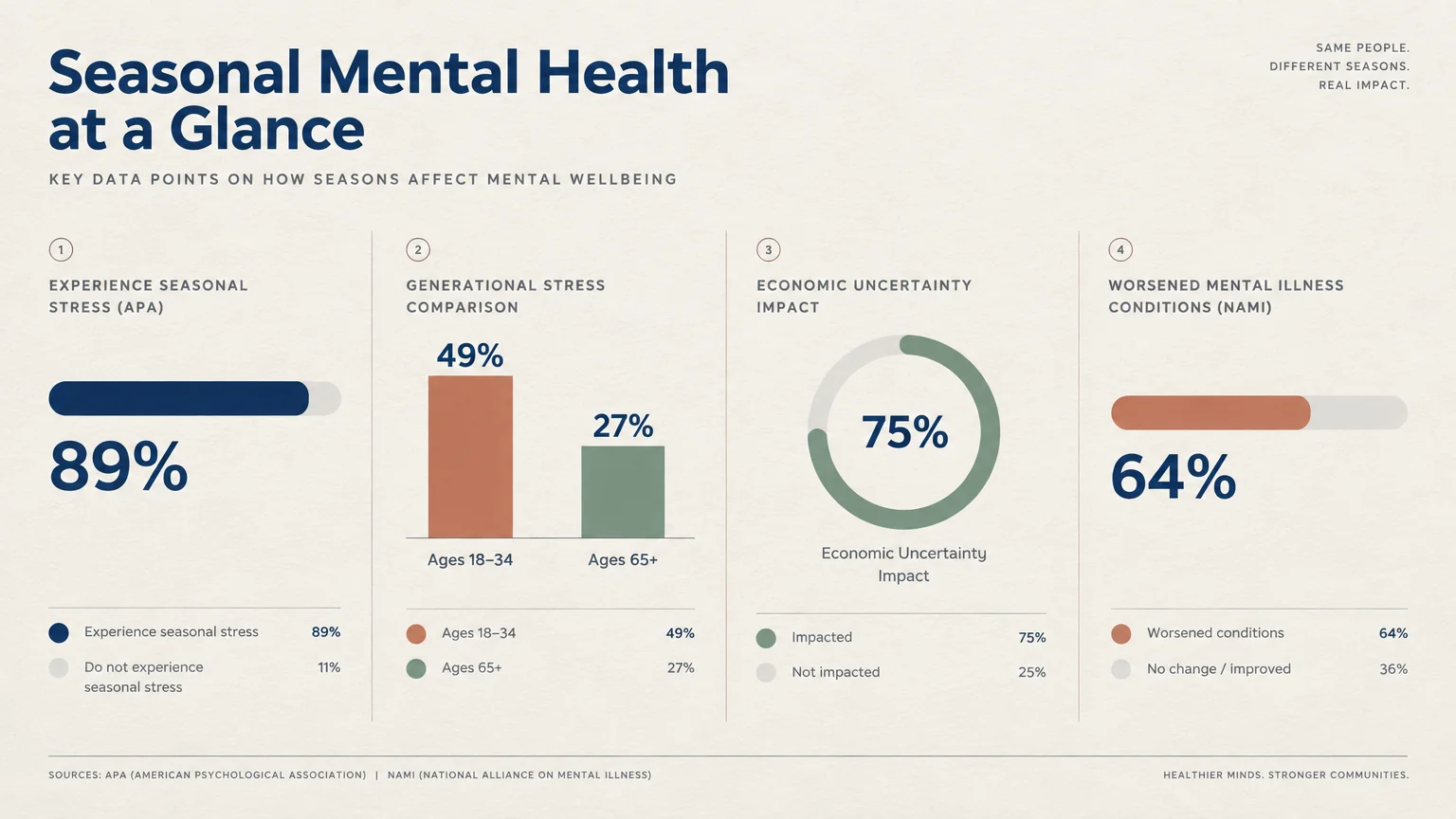
According to research from the American Psychological Association, nearly 89% of adults experience significant stress during the holiday season. Furthermore, 41% report that their stress levels actively increase compared to other times of the year.
That elevated pressure impairs personal well-being, with 43% of surveyed adults stating holiday stress interferes with their capacity to enjoy the season. When chronic demands outpace your psychological recovery, emotional exhaustion develops.
Recent data from the American Psychiatric Association reveals that 41% of adults anticipated more holiday-related stress than in previous years. This represents a noticeable rise from 28% in 2024 and 29% in 2023.
Younger adults face an especially heavy burden. Among adults aged 18 to 34, 49% anticipated heightened holiday tension, compared to just 27% of adults aged 65 and older.
Economic realities amplify these internal strains. Approximately 75% of adults identify economic uncertainty as a key contributor to seasonal anxiety, while 46% specifically struggle with affording or finding gifts.
The World Health Organization classifies burnout in the ICD-11 as an occupational phenomenon characterized by energy depletion, cynicism, and reduced efficacy. Although “holiday burnout” remains a colloquial term, it mirrors clinical exhaustion in its neurobiological impact.
For individuals managing pre-existing conditions, the season presents distinct risks. The National Alliance on Mental Illness notes that 64% of people with mental illness report that the holidays worsen their conditions.
Sign 1: Persistent Dread Replacing Festive Anticipation
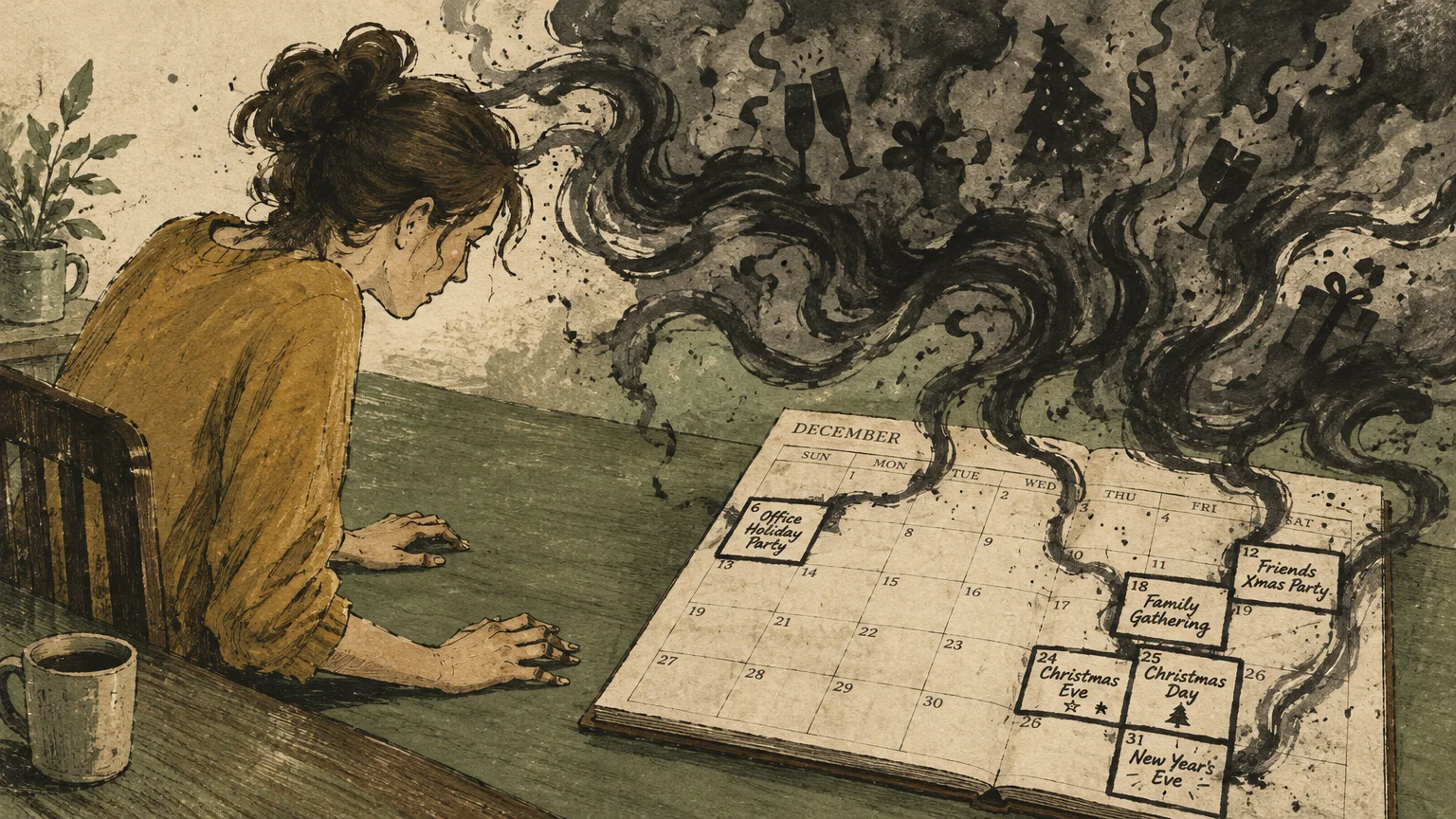
You may recall times when social invitations prompted excitement or simple curiosity. When emotional exhaustion takes hold, that natural anticipation flips into an inescapable sense of heavy dread.
A simple invitation to a dinner party or office exchange can register internally as an invasive demand. Your nervous system interprets upcoming celebrations not as opportunities for joy, but as tasks you must survive.
This dread stems from anticipatory cognitive overload. When your mental capacity operates at a deficit, your brain perceives any added commitment as an existential threat to your remaining energy.
Notice your somatic reactions when glancing at your calendar. A sinking sensation in your stomach, tight shoulders, or a sudden desire to cancel everything indicates your internal reserves are already spent.
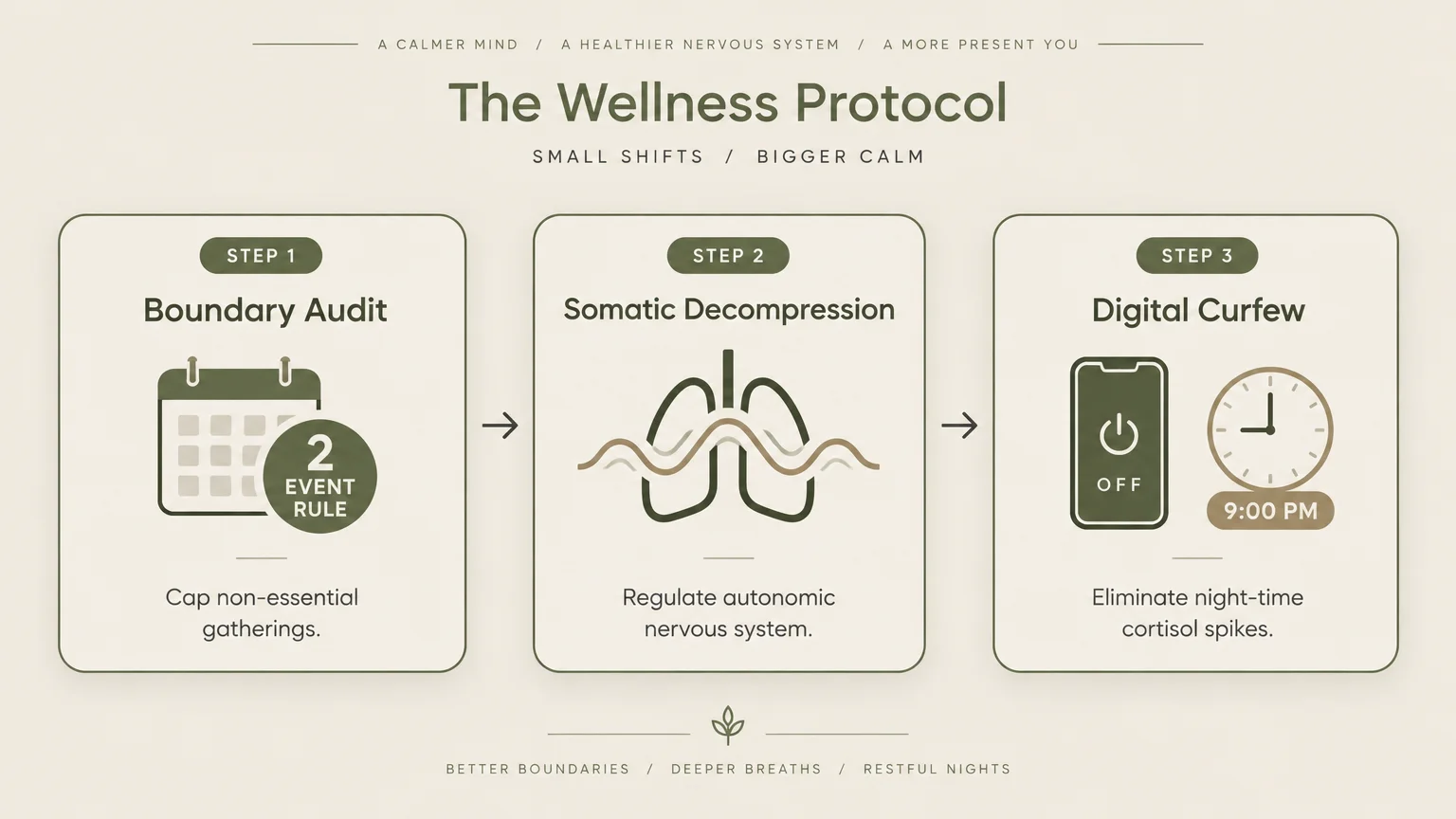
To counteract this symptom, implement the “Two-Event Rule.” Limit yourself to two non-essential social commitments each week, declining remaining invitations without negotiating against your own health.

Sign 2: Severe Social Battery Depletion and Compulsive Withdrawal
Social interactions demand continuous emotional regulation, active listening, and social filtering. When holiday demands escalate, your baseline social stamina collapses rapidly.
You might find yourself retreating to bathrooms at gatherings simply to sit in quiet isolation. Conversations that once felt effortless begin to feel like exhausting physical labor.
The American Psychological Association reports that 21% of stressed adults cope by isolating themselves from others. However, sudden total withdrawal often compounds internal distress.
Their findings also reveal that 54% of adults report feeling isolated from others, while 50% feel explicitly left out. Societal division further strains connections, with 62% citing cultural polarization as a major interpersonal stressor.
Compulsive withdrawal differs from healthy restorative solitude. Isolating out of self-preservation often leaves you brooding over guilt rather than actually replenishing your nervous system.
Instead of disappearing without explanation, practice intentional micro-breaks. Step outside for five minutes of fresh air during gatherings, or establish a firm departure time before you arrive.

Sign 3: Heightened Irritability and a Hair-Trigger Temper
Emotional exhaustion degrades your distress tolerance. When your internal reserves run dry, minor inconveniences trigger disproportionate feelings of anger, frustration, or impatience.
You may find yourself snapping at a partner over misplaced wrapping tape or losing patience in crowded grocery aisles. These explosive reactions rarely reflect the immediate circumstance.
Neurobiologically, persistent stress weakens functional connectivity between the amygdala and the prefrontal cortex. The amygdala governs threat detection, while the prefrontal cortex mediates rational judgment and impulse control.
When chronic fatigue compromises prefrontal inhibition, your primitive threat-response system dominates. Everyday logistical mishaps register in the brain as hostile disruptions.
When you feel that familiar surge of heat or irritation, pause immediately. Engage a physiological sigh—two deep inhales through your nose followed by one long, slow exhale through your mouth.
This rapid breathing pattern activates parasympathetic signaling. It swiftly lowers heart rate and restores cognitive control before you react harshly to those around you.

Sign 4: Brain Fog and Diminished Executive Function
Holiday management requires intense cognitive coordination. Tracking budgets, planning travel schedules, purchasing gifts, and organizing meals heavily tax your working memory.
Under continuous strain, executive functioning falters. You might walk into a room and forget your objective, misplace essential items repeatedly, or struggle to make simple decisions.
Even deciding what to wear to a family dinner can cause decision paralysis. This cognitive fog represents your brain’s protective attempt to reduce operational processing load.
According to survey research, navigating gift affordability strains 46% of consumers, while broader economic concerns impact 75%. Financial stress rapidly depletes mental bandwidth, leaving little capacity for routine problem-solving.
Alleviate executive fatigue through systematic externalization. Write every holiday task on physical paper rather than carrying mental checklists throughout the day.
Streamline your choices wherever possible. Wear identical outfit formulas to different events, establish standard gift selections, and politely decline elaborate, multi-course culinary obligations.

Sign 5: Emotional Detachment and Anhedonia
Perhaps the most disorienting symptom of emotional exhaustion is feeling entirely detached from moments meant to evoke joy. Psychologists classify this state as emotional blunting or anhedonia.
You might watch family members open gifts, sit around a festive dinner, or sing traditional carols while feeling completely disconnected. You observe the scene as a detached spectator rather than an active participant.
This detachment functions as an involuntary defensive shut-off valve. When demands overwhelm your emotional capacity, your psyche dulls all affective responses to prevent psychological fracture.
Unfortunately, anhedonia suppresses positive and negative emotions alike. While it shields you from acute anguish, it also blocks warmth, tenderness, and spontaneous delight.
Counteract detachment through tactile grounding exercises. Focus deliberately on immediate sensory details: the warmth of a mug against your palms, the scent of pine needles, or the texture of a wool sweater.
Sensory grounding anchors your awareness in physical reality. It interrupts psychological dissociation without forcing performative cheerfulness.

Sign 6: Physical Exhaustion That Sleep Does Not Relieve
Emotional exhaustion rarely stays confined to your mind; it rapidly takes root in your physical body. You may sleep eight hours yet wake feeling as depleted as when your head hit the pillow.
This unyielding lethargy reflects elevated allostatic load. Chronic stress floods your circulation with cortisol, which disrupts your natural sleep architecture and suppresses deep, restorative slow-wave rest.
Somatic manifestations often accompany this persistent fatigue. Frequent tension headaches, tight jaws from sleep-clenching, gastrointestinal distress, and generalized muscle aches become common seasonal companions.
Medical experts at the Mayo Clinic highlight that chronic fatigue alters immune responsiveness. You become markedly more vulnerable to common winter viruses when prolonged emotional strain goes unaddressed.
Differentiate between sleep and genuine psychological rest. Sleep is a biological maintenance cycle, whereas rest requires releasing cognitive vigilance and emotional performance.
Incorporate periods of intentional, awake stillness into your afternoon routine. Lie flat on a rug for fifteen minutes without screens, podcasts, or music to let your nervous system downshift.

Sign 7: Deep Resentment Toward Traditions and Requests
Resentment serves as an infallible internal alarm indicating that your personal boundaries have collapsed. When you give beyond your true capacity, quiet frustration steadily curdles into bitterness.
You may feel intense irritation toward family members who expect you to cook specific dishes, host annual events, or coordinate celebrations. You might catch yourself thinking, “Why does everything fall on me?”
This resentment often stems from silent self-abandonment. When you habitually say “yes” out of guilt or fear of disappointing others, you burden your future self with an unbearable load.
“Daring to set boundaries is about having the courage to love ourselves, even when we risk disappointing others.” — Brené Brown, Ph.D., MSW
Traditions should enrich your life, not demand your psychological sacrifice. When a seasonal ritual relies entirely on one person’s silent exhaustion, it ceases to be a meaningful tradition and becomes an unpaid obligation.
Conduct a frank “Tradition Audit” this season. Divide historical holiday customs into three distinct groups: rituals that nourish you, rituals you can modify, and rituals you must discard entirely.
Sign 8: Hypervigilance Around Family Dynamics
Returning to family-of-origin environments often triggers unconscious psychological regression. Old behavioral patterns re-emerge quickly, pulling adults back into outdated family roles and dynamic conflicts.
Data shows that navigating complex family dynamics represents a primary holiday stressor for 32% of adults. Furthermore, 48% grapple with grief and missing deceased loved ones during seasonal gatherings.
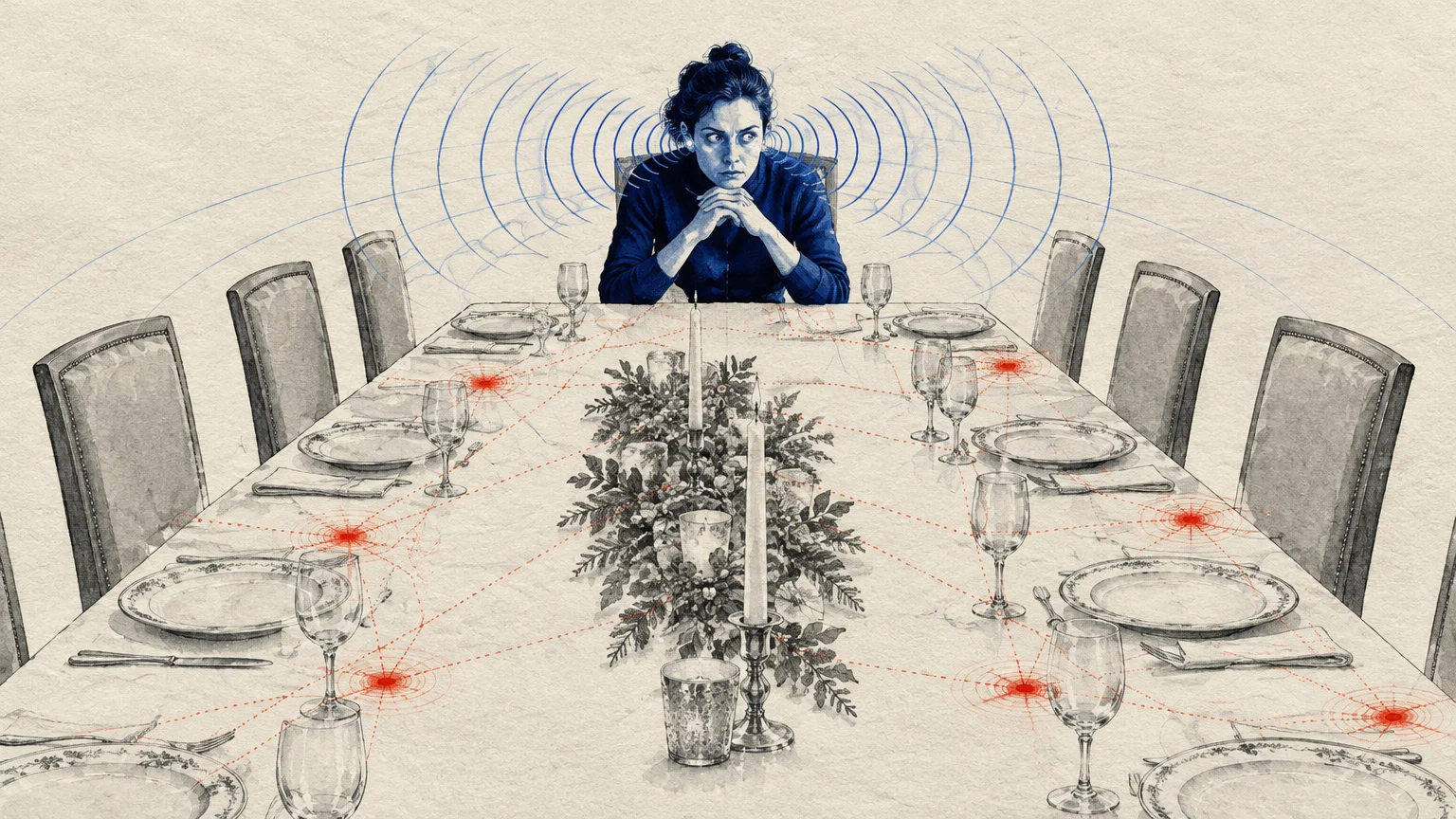
When emotional resources run low, your capacity to handle delicate relational dynamics diminishes. You may spend gatherings bracing for critical remarks, monitoring room tension, or avoiding sensitive conversations.
This continuous hypervigilance exhausts the autonomic nervous system. Anticipating conflict keeps your body in a sustained fight-or-flight state, draining your remaining cognitive reserves within minutes.
The Gottman Institute emphasizes that psychological self-soothing and intentional boundaries protect relationships from catastrophic emotional flooding.
Adopt an “Observer Stance” when interacting with challenging family members. View dynamic tensions with clinical curiosity rather than emotional entanglement, reminding yourself that other people’s behavior reflects their internal state, not your value.

Sign 9: Relying on Maladaptive Numbing Behaviors
When internal overwhelm peaks and constructive coping strategies feel unreachable, many adults turn to rapid chemical or behavioral sedation. Numbing becomes an accessible substitute for authentic relief.
According to the American Psychological Association, 38% of adults who face holiday stress turn to negative coping behaviors. Specifically, 16% alter their eating patterns, while 13% rely heavily on alcohol or nicotine to manage seasonal strain.
You might notice an urgent desire to pour an extra drink before entering an event, mindlessly graze on sugar past fullness, or scroll social media for hours in dark rooms.
These coping behaviors deliver fleeting relief by artificially downregulating stress sensations. However, they consistently impose harsh secondary costs on your nervous system.
Alcohol severely fragments restorative sleep cycles, while refined sugars amplify systemic inflammation and energetic crashes. Compulsive scrolling fosters passive comparison, deepening personal loneliness and self-criticism.
When you feel the compulsion to numb, apply the HALT framework. Ask yourself whether you are fundamentally Hungry, Angry, Lonely, or Tired before reaching for temporary distractions.
Holiday Stress vs. Emotional Exhaustion: Recognizing the Difference
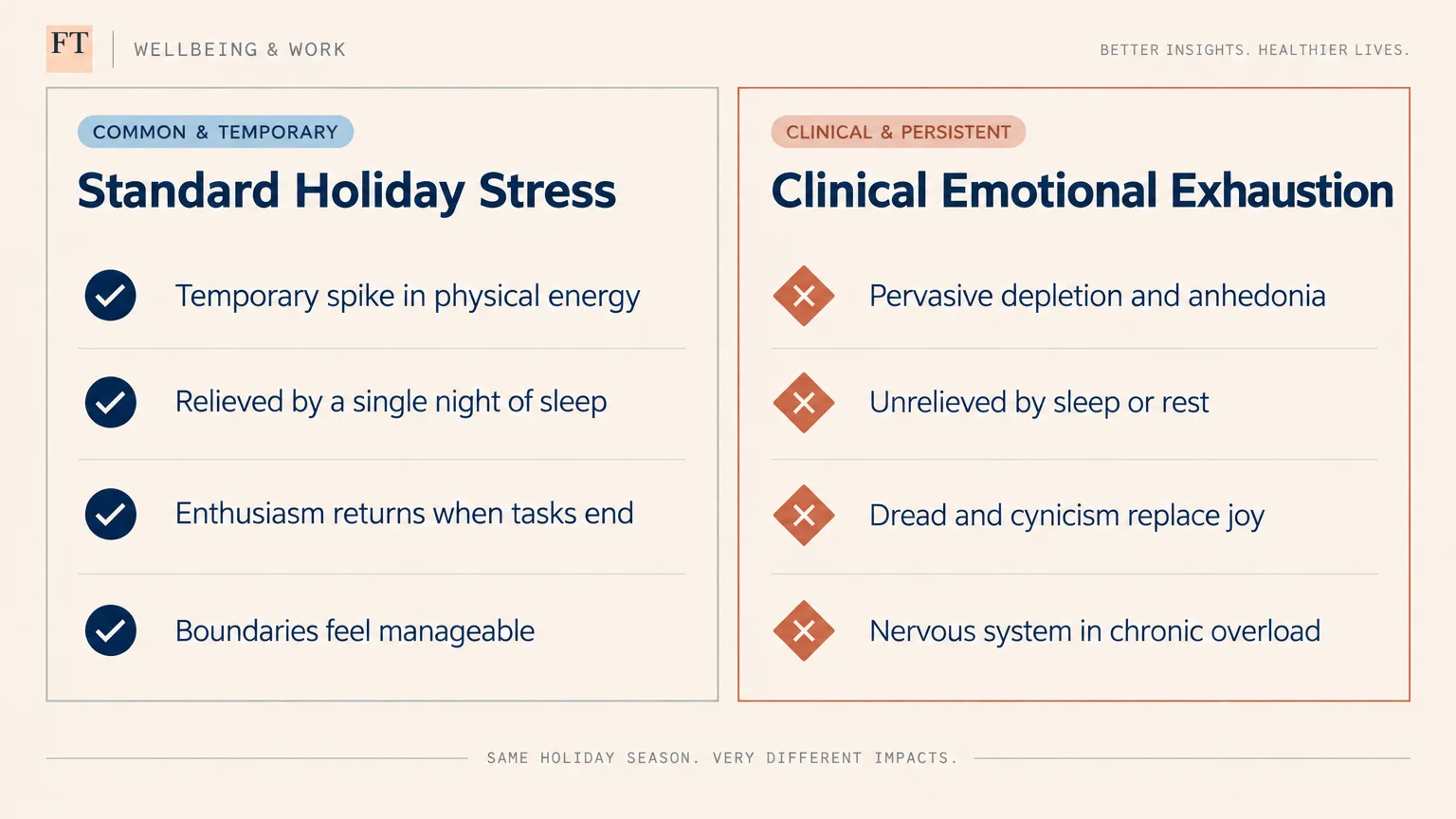
Understanding where ordinary seasonal busyness ends and clinical depletion begins helps you choose appropriate interventions. The following table contrasts normal situational stress with emotional exhaustion and clinical concerns.
| Dimension | Ordinary Holiday Stress | Holiday Emotional Exhaustion | Clinical Depression / SAD |
|---|---|---|---|
| Duration | Fleeting; tied to immediate events like shopping or travel days. | Persistent throughout the season; lingers for days after events conclude. | Continuous for two weeks or longer; persists long after holidays pass. |
| Recovery Response | A single afternoon of rest or one solid night of sleep restores energy. | Sleep and passive sitting fail to restore emotional and cognitive vitality. | Unresponsive to standard rest; pervasive feelings of emptiness or despair. |
| Emotional Quality | Temporary annoyance or situational nervousness; humor remains intact. | Cynicism, irritability, chronic detachment, and frequent resentment. | Persistent hopelessness, profound guilt, anhedonia, or worthlessness. |
| Daily Functioning | Able to complete responsibilities effectively despite minor friction. | Struggles with basic executive decisions; high effort required for routine tasks. | Substantial impairment in work, hygiene, or basic physical self-care. |
| Relief Mechanism | Task completion, delegating a chore, or concluding a busy event. | Rigorous boundary enforcement, nervous system reset, cognitive unburdening. | Evidence-based psychotherapy, clinical support, or targeted medical care. |
Differentiating between these states prevents dismissive self-talk. Recognizing true exhaustion allows you to treat your symptoms with clinical seriousness rather than forcing yourself through unsustainable demands.

What Can Go Wrong: Pitfalls in Managing Seasonal Burnout
Well-intentioned attempts to manage holiday fatigue can backfire when guided by common psychological misconceptions. Identifying these errors protects you from accidental harm.
The most pervasive error is adopting toxic positivity. Forcing yourself to project artificial cheerfulness depletes massive cognitive energy and deepens internal loneliness.
Suppressing authentic emotions elevates autonomic arousal and increases cardiovascular strain. Acknowledging your fatigue honestly produces far better mental health outcomes than forced enthusiasm.
Another dangerous pitfall involves extreme overcorrection through complete social isolation. While boundary management remains essential, cutting off all human connection often accelerates depressive spirals.
Data indicates that 54% of adults already grapple with feelings of isolation. Abandoning meaningful relationships out of overwhelm robs you of genuine co-regulation and empathetic support.
A third misstep is discarding your baseline physical routines to meet holiday schedules. Sacrificing regular sleep, daily movement, and balanced nutrition removes the foundation supporting your nervous system.
Treat foundational self-care habits as non-negotiable medical appointments. When time gets tight, shorten your workouts or simplify your meals, but avoid eliminating your health routines entirely.
Restorative Protocols: Reclaiming Your Mental Space
Recovering from emotional exhaustion requires decisive, proactive structural adjustments. You cannot passively wait for the season to conclude to begin caring for your depleted mind.
Start by restructuring how you communicate personal limits. Decline commitments cleanly without offering lengthy excuses, which only invite debate and heighten personal guilt.
Use clear, neutral boundary statements such as, “Thank you for thinking of me, but I am unable to attend this year.” A polite, direct refusal requires no defensive elaboration.
Research published by the American Psychological Association highlights that while 70% of adults feel comfortable discussing their stress, only 41% actually talk about it. Speak openly with a trusted friend about your emotional capacity.
Construct explicit “low-stimulation zones” within your personal schedule. Designate specific mornings or entire weekend days where you agree to attend zero public venues and handle zero event logistics.
Audit your gift-giving customs to alleviate chronic financial pressure. Discuss setting reasonable spending limits or organizing secret-Santa exchanges with loved ones to minimize logistical and economic burdens.
Finally, practice psychological self-compassion when guilt surfaces. Choosing your mental well-being over social expectations is a rational, mature act of self-preservation, not selfishness.

When to Seek Professional Support
While strategic boundary setting and restorative rest resolve everyday holiday fatigue, severe emotional exhaustion can cross into clinical distress. Certain indicators require immediate professional intervention.
- Persistent Symptoms Beyond Two Weeks: Exhaustion, daily numbness, or pervasive sadness that continues long after the holiday season has concluded.
- Executive and Functional Collapse: Inability to maintain essential work tasks, fulfill basic parenting duties, or manage personal hygiene.
- Escalating Substance Dependency: Increasing reliance on alcohol, prescription medications, or other substances to get through daily routines or numb distressing feelings.
- Intrusive Despair and Ideation: Overwhelming feelings of worthlessness, hopelessness, or thoughts that loved ones would be better off without you.
If you experience profound distress or thoughts of self-harm, connect with specialized resources immediately. Call or text the 988 Suicide & Crisis Lifeline by dialing 988 for free, confidential, 24/7 support.
You can also reach out to the Substance Abuse and Mental Health Services Administration (SAMHSA) national helpline at 1-800-662-4357 for local mental health treatment referrals.
Frequently Asked Questions
How long does holiday emotional exhaustion typically last?
Situational holiday fatigue usually resolves within several days to a week of resuming your normal routines and enforcing restful boundaries. If severe fatigue, low mood, and anhedonia persist for more than two consecutive weeks, consult a physician or mental health professional to evaluate for clinical depression.
How does holiday burnout differ from Seasonal Affective Disorder (SAD)?
Holiday burnout stems from interpersonal, financial, and logistical overstimulation during seasonal events. Seasonal Affective Disorder is a clinical depressive condition with a seasonal pattern linked to reduced winter sunlight, requiring medical interventions such as light therapy, psychotherapy, or medical management.
How can I decline family invitations without causing major conflict?
Communicate boundaries early, warmly, and decisively using brief “I” statements. Frame your decision around your personal needs rather than past family behavior, stating: “I need downtime to recharge this week, so I will be staying home, but I look forward to catching up in January.”
Why do I feel more exhausted attending family gatherings than working long hours?
Family events require continuous emotional vigilance, self-monitoring, and boundary maintenance against historical dynamics. This high cognitive and emotional regulation burns mental energy much faster than structured work tasks, resulting in profound relational fatigue.
Protecting Your Well-Being Beyond the Season
The holidays do not obligate you to exhaust your mental and physical health in pursuit of someone else’s seasonal ideal. Genuine connection begins with personal equilibrium; you cannot offer authentic presence from an empty psychological well.
Give yourself permission to pause, decline requests, and prune obligations that do not serve your well-being. Step back, breathe deeply, and allow this season to unfold at a pace that honors your mental health.
This is educational content based on psychological research and general principles. Individual experiences vary significantly. For personalized guidance, consult a licensed therapist, psychologist, or counselor.
Last updated: October 2026. Psychology research evolves continuously—verify current findings with professional sources.







Leave a Reply