

Your body often registers emotional pressure long before your conscious mind acknowledges it. When unresolved anxiety translates directly into tight shoulders, stomach knots, or pounding headaches, you possess a somatic stress response profile.
Recognizing these bodily signals gives you a powerful diagnostic tool to protect your long-term health. Instead of treating isolated aches, you can address the nervous system overload creating them.
Discover the distinct traits that define physical stress processors, alongside evidence-backed strategies to recalibrate your mind-body connection before exhaustion takes hold.
Why Your Body Carries the Burden of Stress
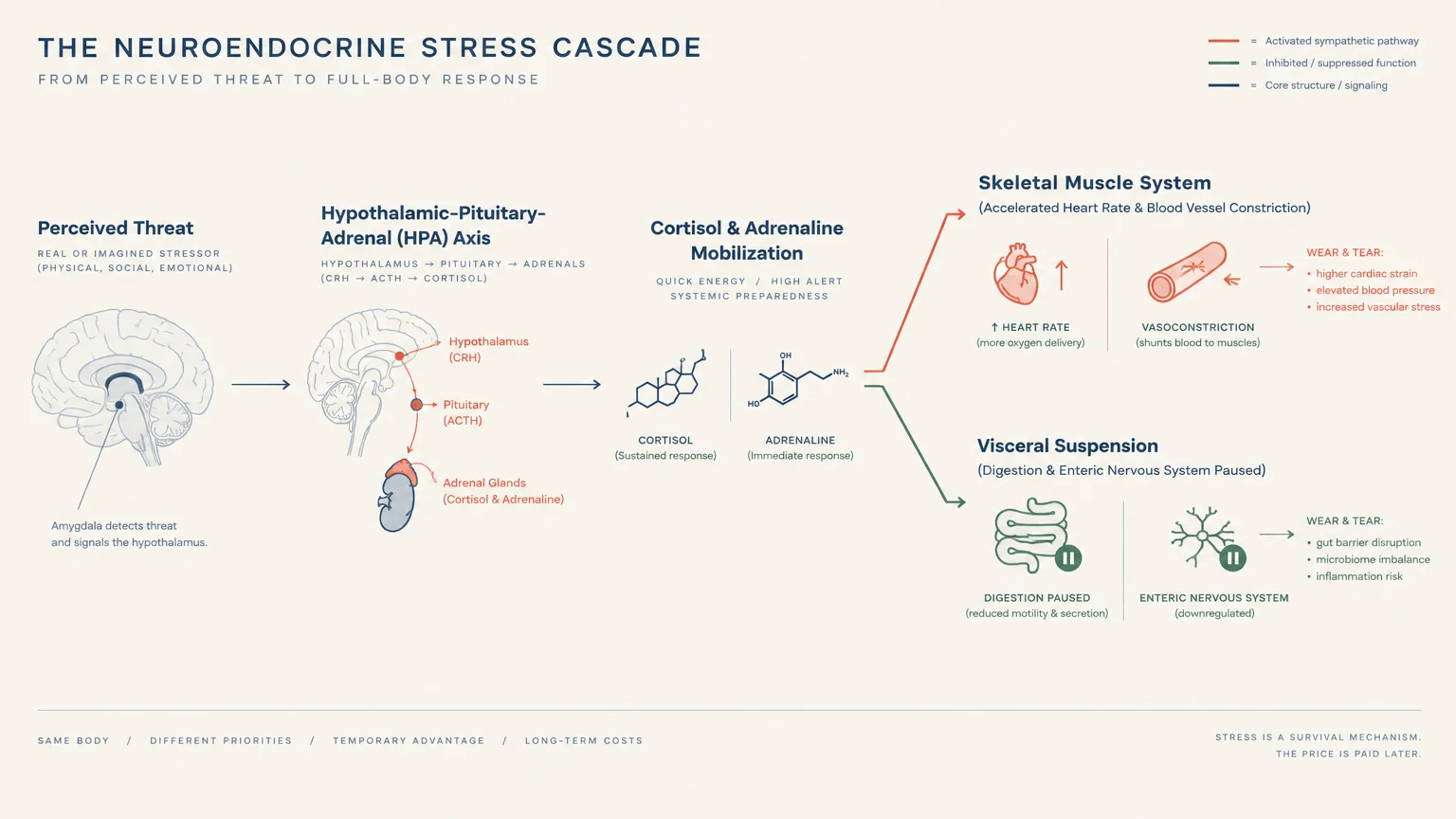
When you face perceived threats, your brain activates the sympathetic branch of your autonomic nervous system. This evolutionary survival cascade mobilizes the hypothalamic-pituitary-adrenal axis to release cortisol and adrenaline.
Adrenaline accelerates your heartbeat, constricts peripheral blood vessels, and diverts metabolic resources toward your major skeletal muscles. Meanwhile, your digestive and reproductive processes pause to conserve vital energy.
According to research highlighted by the Cleveland Clinic, chronic activation of this mechanism leads to visceral wear and tear. When emotional stressors remain unresolved, the physical symptoms of stress become chronic bodily states.
Some individuals process tension primarily through mental rumination; others experience stress and tension almost entirely as physical discomfort. Understanding this mind-body connection allows you to treat the root cause rather than chasing transient physical symptoms.
9 Traits of People Who Feel Stress Physically
1. Heightened Interoceptive Sensitivity
You notice subtle shifts inside your internal organs before anyone else spots your discomfort. A minor flutter in your chest or a slight stomach drop commands your immediate attention.
Neuroscientists describe this ability as interoception—the brain’s perception of internal physiological signals. While high interoceptive awareness offers valuable self-knowledge, it can also amplify stress in the body when interpreted with apprehension.
2. Chronic Muscle Tension Clustering
Your musculoskeletal system acts like an emotional shock absorber. Instead of feeling mentally frazzled, you carry tight trapezius muscles, a clenched jaw, or tension headaches.
Data from the American Psychological Association shows that muscle guarding is a universal reflex against potential injury. In somatic processors, these contractions persist continuously, choking off localized blood flow and triggering tender trigger points.
You may catch yourself raising your shoulders toward your ears while typing an email. This unconscious bracing reflects nervous system hyper-vigilance rather than simple poor posture.
3. Rapid Gastrointestinal Reactivity
Your stomach mirrors your emotional climate almost instantly. Difficult conversations, impending deadlines, or interpersonal conflict frequently trigger nausea, abdominal cramping, or sudden changes in bowel habits.
The digestive tract contains millions of neurons forming the enteric nervous system, often called your second brain. As clinical studies from Harvard Health demonstrate, stress alters gut motility and increases mucosal sensitivity.
Because the brain and gut communicate constantly via the vagus nerve, emotional distress translates swiftly into visceral distress.
4. Tendency Toward Emotional Alexithymia
You might struggle to articulate subjective feelings when confronting difficult interpersonal situations. When a loved one asks how you feel, you might answer that you feel fine—even while your neck throbs.
Psychologists call this tendency alexithymia, meaning difficulty identifying and describing feelings with words. Because your conscious mind bypasses emotional processing, unresolved feelings emerge as somatic stress signs instead.
Your body takes responsibility for communicating what your language leaves unexpressed.
5. Dawn Cortisol Surges and Early Awakenings
You frequently jolt awake at dawn with a pounding pulse and an unsettling hollow sensation in your stomach. Your alarm has not sounded yet, but your body is already gearing up for battle.
This experience corresponds to an exaggerated cortisol awakening response. Your adrenal glands release morning hormones prematurely, triggering physiological arousal before conscious cognitive worry begins.
You might wonder why you feel anxious before you even check your daily schedule. Your endocrine system simply reacts to anticipatory stress stored in your tissues overnight.
6. Inflammatory Skin and Immune Flare-Ups
Prolonged emotional strain frequently appears across your skin. During intense work weeks, you might suddenly encounter unexplained hives, eczema patches, adult acne flare-ups, or persistent itchiness.
Psychological stress stimulates your peripheral nerve fibers to release pro-inflammatory neuropeptides directly into the dermis. Concurrently, elevated glucocorticoid levels compromise your skin barrier function and alter systemic immunity.
The medical specialty of psychodermatology confirms that your skin reflects emotional turmoil through visible inflammatory reactions.
7. Low Threshold for Sensory Overstimulation
Crowded rooms, harsh fluorescent lighting, or sudden loud noises exhaust you rapidly during stressful seasons. You feel physically agitated in chaotic environments that you might normally navigate with ease.
When your autonomic nervous system remains locked in sympathetic dominance, your brain filters sensory stimuli less effectively. You experience sensory inputs as aggressive physical intrusions rather than harmless background details.
This sensory sensitivity serves as a clear signal that your nervous system capacity has reached its limit.
8. High-Functioning Perfectionism and Emotional Stoicism
You likely maintain high personal standards and rarely ask for help during crises. You pride yourself on functioning smoothly through chaotic circumstances while suppressing your personal fatigue.
Research reveals that people who bottle their emotions exhibit higher cardiovascular reactivity than those who express distress. Suppressing emotional vulnerability forces your autonomic physiology to absorb the unpaid psychological debt.
“Perfectionism is a self-destructive and addictive belief system that fuels this primary thought: If I look perfect, and do everything perfectly, I can avoid or minimize the painful feelings of blame, judgment, and shame.” — Brené Brown, Ph.D., LMSW
When you refuse to rest voluntarily, your physical body will eventually orchestrate an enforced rest through pain or physical exhaustion.
9. The “Let-Down Effect” Sickness
You rarely get sick during the height of a critical project or family crisis. Instead, you collapse with a migraine, respiratory infection, or severe fatigue on the first day of your vacation.
Researchers identify this pattern as the “let-down effect.” During intense periods, sustained adrenaline and cortisol suppress immune symptoms; when pressure abates, your immune system initiates an acute inflammatory rebound.
Your system waits until survival demands subside before initiating the physiological repairs it postponed for weeks.
Comparing Somatic vs. Cognitive Stress Responses
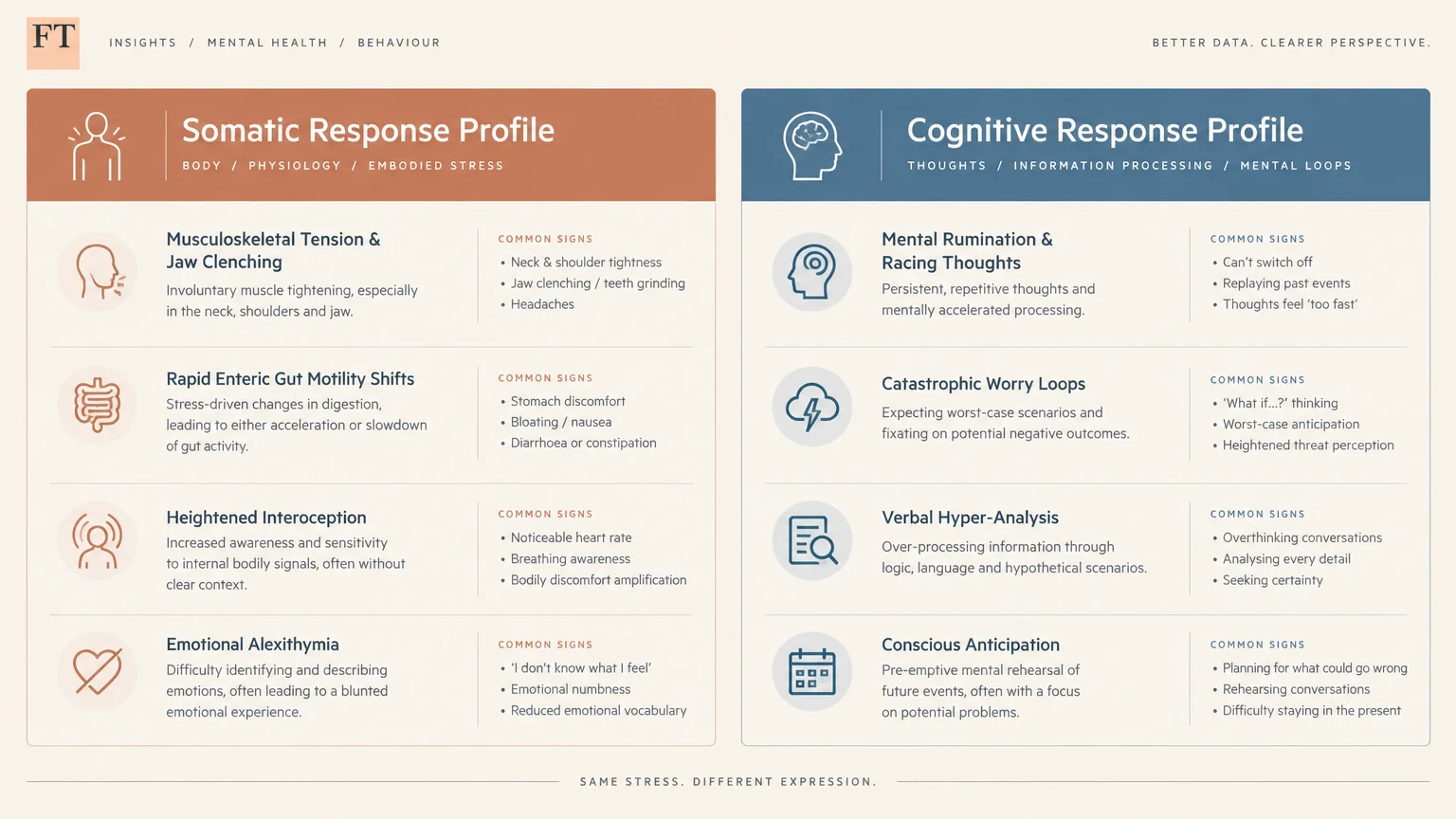
Stress manifests uniquely in every individual. While some people struggle with racing thoughts and catastrophic worry, somatic responders primarily absorb emotional friction in their physical tissues.
Review the comparison below to identify where your nervous system naturally channels psychological distress.
| Dimension | Somatic Responders | Cognitive Responders |
|---|---|---|
| Primary Symptoms | Tension headaches, GI upset, muscle stiffness, heart palpitations | Racing thoughts, catastrophic rumination, decision fatigue |
| First Warning Sign | Visceral discomfort or localized body aches | Mental narrative loops and anticipatory dread |
| Emotional Style | Minimizes feelings verbally; bodily sensations carry affect | Over-analyzes emotions; intellectualizes feelings |
| Typical Blindspot | Ignores mental distress until physical symptoms enforce a halt | Ignores physical exhaustion while attempting to solve problems mentally |
| Best Initial Relief | Breathwork, somatic grounding, progressive muscle release | Cognitive reframing, expressive writing, problem-solving |
Most people experience a blend of both styles, but identifying your primary pattern helps you choose interventions that target your specific physiology.

Evidence-Based Strategies to Release Stress and Tension
Because somatic stress manifests physically, traditional talk therapy alone may not always resolve your discomfort. You need body-first interventions that directly calm your autonomic nervous system.
- Practice the Physiological Sigh: Take two quick inhales through your nose, followed by one long, slow exhale through your mouth. Repeating this cycle three times immediately activates your parasympathetic brake.
- Use Progressive Muscle Relaxation: Systematically tense muscle groups for five seconds and release them for thirty seconds. This technique teaches your motor neurons the physical contrast between contraction and relaxation.
- Implement 5-4-3-2-1 Sensory Grounding: Name five things you see, four you can touch, three you hear, two you smell, and one you taste. Grounding interrupts internal autonomic alarm loops.
- Engage in Low-Intensity Somatic Movement: Gentle shaking, gentle stretching, or slow walking metabolizes lingering adrenaline without taxing your already strained adrenal system.
- Apply Thermal Vagal Stimulation: Splash cold water onto your face or place an ice pack against your chest. This prompts the mammalian dive reflex, reducing your heart rate within seconds.
Practicing these techniques daily trains your body to return to baseline promptly after acute stressors pass.
Consistent somatic regulation restores communication between your brain and visceral organs, reducing chronic physical symptoms of stress.

What Can Go Wrong: Risks of Overlooking Somatic Signals
Dismissing your body’s distress signals carries serious physical and psychological consequences. Here are the most common pitfalls people encounter when handling stress in the body.
First, you might fall into medical misattribution. If you ignore emotional contributors, you may undergo endless invasive medical tests seeking structural diagnoses for purely stress-mediated functional symptoms.
Clinical experts at the Mayo Clinic note that unmanaged stress exacerbates chronic conditions like hypertension and autoimmune disorders.
Conversely, the opposite trap is equally perilous: assuming every bodily ache stems from anxiety. Failing to evaluate severe chest pain or gastrointestinal bleeding can cause you to miss underlying organic diseases.
Finally, somatic responders often weaponize wellness trends against themselves. Trying to force yourself into calm through rigid perfectionism only generates more internal tension.

When to Seek Professional Support
Learning to decipher your body requires patience, but you should not navigate debilitating physical pain in isolation. Consider consulting a licensed mental health professional or physician under these conditions:
- Your medical tests return normal, yet symptoms persist: You have completed comprehensive medical checkups for dizziness, chest tightness, or digestive agony, but doctors find no organic disease.
- Somatic pain impairs your daily functioning: Headaches, stomach pain, or chronic fatigue keep you from working, socializing, or completing routine tasks.
- You experience panic attacks or severe health anxiety: You constantly scan your pulse or breathing, leading to spiraling panic and compulsive symptom checking.
- Physical distress leads to emotional numbness or depression: Carrying constant muscular pain or digestive turmoil erodes your mood, leaving you feeling helpless or detached.
Therapeutic modalities like Somatic Experiencing, Biofeedback, and Acceptance and Commitment Therapy offer powerful frameworks for rebuilding your nervous system resilience.
Frequently Asked Questions
Why does my body react to stress before my mind does?
Your amygdala and autonomic nervous system process survival threats milliseconds faster than your prefrontal cortex can formulate conscious thoughts. Consequently, your heart races and muscles tense before your intellect identifies the trigger.
Can somatic stress cause real tissue inflammation?
Yes. Chronic sympathetic nervous system arousal continuously stimulates the release of pro-inflammatory cytokines while blunting cortisol sensitivity. Over time, this systemic neurogenic inflammation can damage cardiovascular tissue and worsen autoimmune disorders.
What is the difference between somatization and illness anxiety?
Somatization involves experiencing genuine physical symptoms like pain or gastrointestinal distress caused by psychological strain. Illness anxiety disorder, formerly termed hypochondria, involves excessive fear of having a catastrophic illness despite having minimal or no physical symptoms.
How can I calm physical stress symptoms quickly?
The fastest biological intervention is the physiological sigh: two quick nasal inhalations followed by an extended oral exhalation. Repeating this breath pattern triggers the baroreceptor reflex, rapidly down-regulating heart rate and autonomic arousal.
Cultivating a Safe Relationship With Your Body
Your body is not betraying you when it responds to tension with physical aches; it is functioning as a sensitive early warning system. By listening to these physical prompts rather than silencing them, you can build genuine self-compassion and durable resilience.
Begin today by pausing during your workday to unclench your jaw, soften your shoulders, and take one deep physiological sigh.
This article provides general educational information about psychology and relationships. It is not a substitute for professional therapy or medical advice.
Everyone’s situation is unique—if you’re struggling, please reach out to a licensed mental health professional.
Last updated: February 2026. Psychology research evolves continuously—verify current findings with professional sources.








Leave a Reply