Key Signs of a Narcissist in Dating and Romance
When dating a narcissist, initial interactions often feel intoxicating before the dynamic shifts into emotional instability. Learning to identify these red flags protects you from prolonged manipulation.
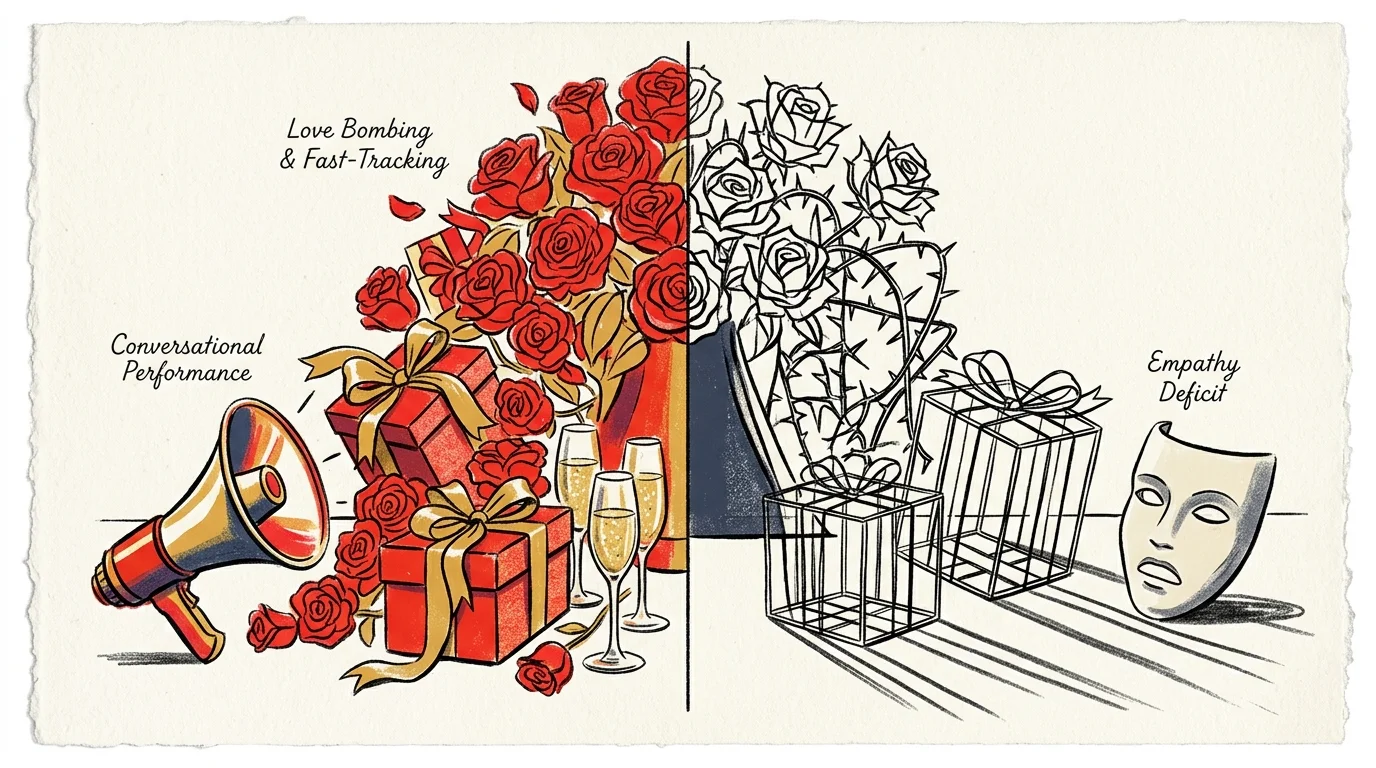
1. Intense Love Bombing and Accelerated Commitment
At the start of a relationship, a partner with strong narcissistic traits often overwhelms you with excessive flattery, lavish gifts, and declarations of undying devotion.
This tactic, known as love bombing, creates an intense emotional bond before you have time to evaluate their actual character or compatibility.
2. Pervasive Lack of Genuine Empathy
Empathy requires attuning to another person’s emotional state without judgment. A narcissistic partner frequently dismisses, minimizes, or mocks your distress when you share vulnerable feelings.
Clinical insights from the Cleveland Clinic highlight that an inability or unwillingness to recognize the feelings of others remains a core indicator of narcissistic functioning.
3. Unbalanced, Conversational Narcissism
Notice whether your conversations feel like authentic dialogues or one-sided performances. Narcissistic partners consistently steer every topic back to their achievements, grievances, or opinions.
If you attempt to discuss your own achievements or hardships, they quickly change the subject or compete to outshine your experience.
4. Extreme Entitlement and Demands for Special Treatment
Individuals with narcissistic traits believe they deserve special privileges, VIP treatment, and automatic compliance from everyone around them.
When rules or boundaries apply to them, they often react with indignation, rule-breaking, or anger toward service workers and romantic partners alike.
5. Fragile Ego and Disproportionate Rage
Beneath an outward facade of supreme confidence lies an intensely fragile self-esteem. Any constructive feedback, perceived slight, or mild disagreement can trigger explosive rage or cold withdrawal.
This defensive reaction, often termed narcissistic injury, aims to punish you and regain dominant control over the dynamic.





Pls stop emailing me 😡. I unscrambled so much 😡. Stop sending 😡
Good information but I’m having to deal with a coworker who has narcissistic characteristics. Do you have any advice on how to deal with a coworker 🤔