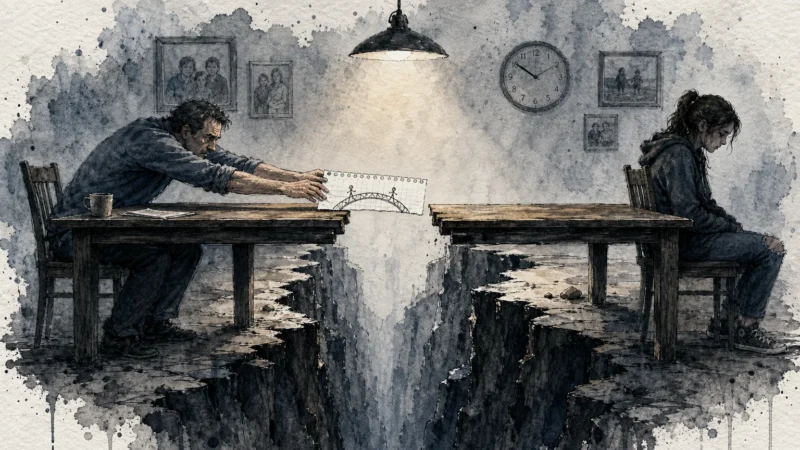
Psychology Diary

The First Step Toward Change Is Awareness

  • Home
  • Relationships
  • Mental Health
  • Expert Tips
  • Life
  • Family
  • Marriage

The Psychology of Human Connection: Why We Need It More as We Age

August 31, 2025 · Relationships

Older woman reflecting while looking at a photo album.

Special Considerations: Money, Trust, and Safety

Some challenges in a long-term partnership require more than just standard communication skills. Issues around finances, broken trust, and emotional safety need to be handled with extra care, structure, and, in some cases, professional support.

The Monthly “Money Huddle”

Financial stress is a leading cause of conflict for couples at any age, but it can become particularly acute when planning for or living in retirement. Differing views on spending, saving, and risk can create enormous tension. The key is to move from conflict to collaboration.

Schedule a brief, low-stress “money huddle” once a month. This is not the time for blame or deep-seated arguments. It is a 15-20 minute, business-like meeting to review the basics: what came in, what went out, and are we on track with our goals? Start the conversation with a team-oriented script: “I want us to feel like we’re on the same team with our finances. Can we set aside 20 minutes on Sunday to look at our budget together?” It’s also important to distinguish between privacy and secrecy. It’s perfectly healthy for partners to have some financial independence (privacy), but hiding debt or making major financial decisions without discussion (secrecy) erodes the foundation of trust.

Rebuilding After a Breach of Trust

Recovering from a significant breach of trust—such as an affair or a major financial deception—is a long and difficult road. An apology is a necessary first step, but it is not sufficient. Rebuilding trust requires a long-term pattern of transparent, trustworthy behavior. This process often benefits from the guidance of a trained couples therapist.

If you are working to rebuild, focus on creating clear, measurable agreements. The partner who broke the trust must be willing to be exceptionally transparent for a period of time to help the other partner feel safe again. This is not about punishment; it’s about demonstrating a commitment to change through actions, not just words.

Worked Mini-Example 2: A Trust-Repair Agreement

A couple is recovering from a financial breach where one partner accumulated secret credit card debt. A simple, initial agreement might look like this:

Agreement: “For the next three months, we agree to the following steps to rebuild financial trust. 1) We will have a 15-minute ‘money huddle’ every Sunday morning to review all account balances together. 2) The partner who incurred the debt will provide the other with login access to the credit card accounts for viewing purposes. 3) Any non-grocery purchase over $100 will be discussed via text or a quick call beforehand. We will revisit this agreement in three months to see how we’re doing and decide on next steps.”

This type of specific, time-bound agreement makes the process of rebuilding feel manageable and provides a clear way to measure progress.

Prioritizing Your Safety

This is a critical point: the communication tools discussed in this article are for partnerships where both people feel fundamentally safe. If your relationship involves emotional abuse, coercion, control, or physical harm, your priority is not joint communication. It is your safety. In abusive dynamics, tools like “I-statements” can be twisted and used against you. Trying to have a structured “check-in” with someone who is manipulative can put you at further risk.

Abuse is not a communication problem; it is a power and control problem. If you feel afraid of your partner, if you find yourself “walking on eggshells,” or if your partner consistently belittles you, isolates you from others, or controls your access to money, please seek confidential support. Documenting incidents (dates, times, what happened) can be helpful if you decide to take further action. Your first step should be to talk to a trusted friend, family member, or a professional. You can find confidential support and safety planning resources from the National Domestic Violence Hotline at 1-800-799-7233 or by visiting their website.


Pages: 1 2 3 4 5 6 7 8

Share this article

Facebook Twitter Pinterest LinkedIn Email

Leave a Reply Cancel reply

Your email address will not be published. Required fields are marked *

Search

Latest Posts

  • Two friends sitting at a kitchen table, unconsciously mirroring each other's posture by resting their chins on their hands. 7 Signs Someone Mirrors Your Personality Without Realizing It
  • A woman laughs at her phone while her friend sits beside her on a sofa with a forced, thin smile and envious eyes. 7 Friendship Behaviors That Reveal Hidden Jealousy
  • A mixed media collage showing a glowing smartphone screen inside a mirror frame, casting a shadow of a staged performance on a curtain. 7 Signs Someone Is Performing Kindness For Attention
  • A mixed media collage of a person in a theatrical spotlight while their partner sits in the shadows of a theater audience. 7 Signs Someone Loves Attention More Than They Love You
  • A person sits in a dimly lit room, staring thoughtfully out a window during twilight, capturing a mood of emotional stillness. 7 Signs Someone Is Emotionally Stuck In The Past
  • An ink illustration of a person weighed down by a giant smoky hand and seven thin wire-like lines coiling around their limbs. 7 Signs Someone Is Using Guilt To Control You
  • A couple sits on opposite ends of a sofa in a dark room, one looking out a window and the other looking at a phone, showing emotional distan 7 Signs Someone Is Emotionally Immature
  • A mixed media collage showing a calm silhouette surrounded by jagged, colorful paper cutouts and ink splatters, representing chaos. 7 Signs Someone Loves Drama More Than Peace
  • A woman sits alone on a sofa in a dimly lit room, looking thoughtfully toward a window, evoking emotional exhaustion. 7 Phrases Manipulative People Use In Arguments
  • A mixed media collage showing gold and indigo threads being pulled from a paper silhouette, symbolizing mental energy depletion. 7 Signs Someone Is Quietly Draining Your Mental Energy

Newsletter

Get the latest posts delivered to your inbox.

Related Articles

husband cheat

If Your Husband Says These Things, He Doesn’t Deserve You!

You are too much People who say things like these to other people are more…

Read More →
Psychopath Warning Sign

The No.1 Biggest Psychopath Warning Sign: Here’s How They Detect Vulnerability

Watch for these psychopath warning signs and avoid being a target! US Serial killer Ted…

Read More →
attachment

Attachment Styles and Their Powerful Role in Adult Relationships

What does “attachment” mean? You probably think a lot about the fact that “we need…

Read More →
A tense, high-contrast conversation between two people in a minimalist setting.

5 Body Language Secrets That Reveal Someone Is Lying to You

At a Glance: What You’ll Learn The Baseline Rule: Why you can’t spot a lie…

Read More →
Toxic Behaviors

6 Toxic Behaviors Your Partner Would Avoid If They Really Loved You

These toxic behaviors are not part of a loving relationship! Being in love is a…

Read More →
red flags that no therapist can fix, relationship

10 Relationship Red Flags that No Therapist Can Fix 

Unmet needs in intimacy Frustration and conflict may occur from a lack of fulfillment or…

Read More →
Partner

If Your Partner Is Asking You to Do These 7 Absurd Things, It’s Time to Leave

They Demand You Make Major Life Changes Making comments about the kind of coffee they…

Read More →

7 Things Men Wish Women Knew About Intimacy

4. They are scared that they won’t do things right  Nobody was born knowing everything,…

Read More →
manipulate

7 Signs Someone Is Trying to Manipulate You

#4 They Shake Your Self-Confidence Because a person lacking in confidence is the most malleable,…

Read More →

Psychology Diary

The First Step Toward Change Is Awareness

Inedit Agency S.R.L.
Bucharest, Romania

contact@psychologydiary.com

Explore

  • About Us
  • Advertiser Disclosure
  • Contact Us
  • Disclaimer
  • Do not sell my personal information
  • Editorial Policy
  • Frequently Asked Questions
  • Privacy Policy
  • Terms and Conditions
  • Subscribe
  • Unsubscribe

Categories

  • Expert Tips
  • Family
  • Life
  • Marriage
  • Mental Health

© 2026 Psychology Diary. All rights reserved.