
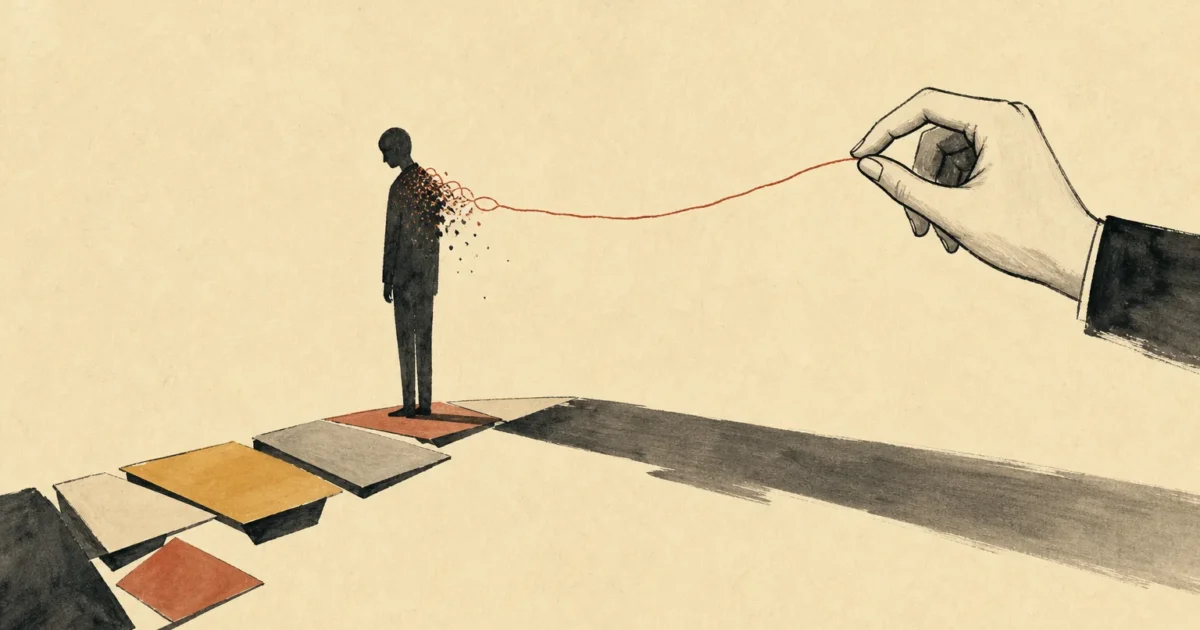
Emotional manipulation quietly erodes the foundation of trust in your relationship, replacing mutual respect with control and self-doubt. Recognizing these subtle psychological tactics is your first critical step toward reclaiming agency and emotional well-being. Unlike overt aggression, manipulation often masquerades as intense care or even your own personal failings. Manipulators use covert strategies—like shifting blame, distorting reality, and withholding affection—to keep you off balance and dependent on their approval. Left unchecked, this dynamic severely damages your self-esteem and mental health. By understanding the specific, hidden patterns of emotional manipulation, you can clearly identify toxic behaviors, set firm boundaries, and make informed decisions about your emotional safety.
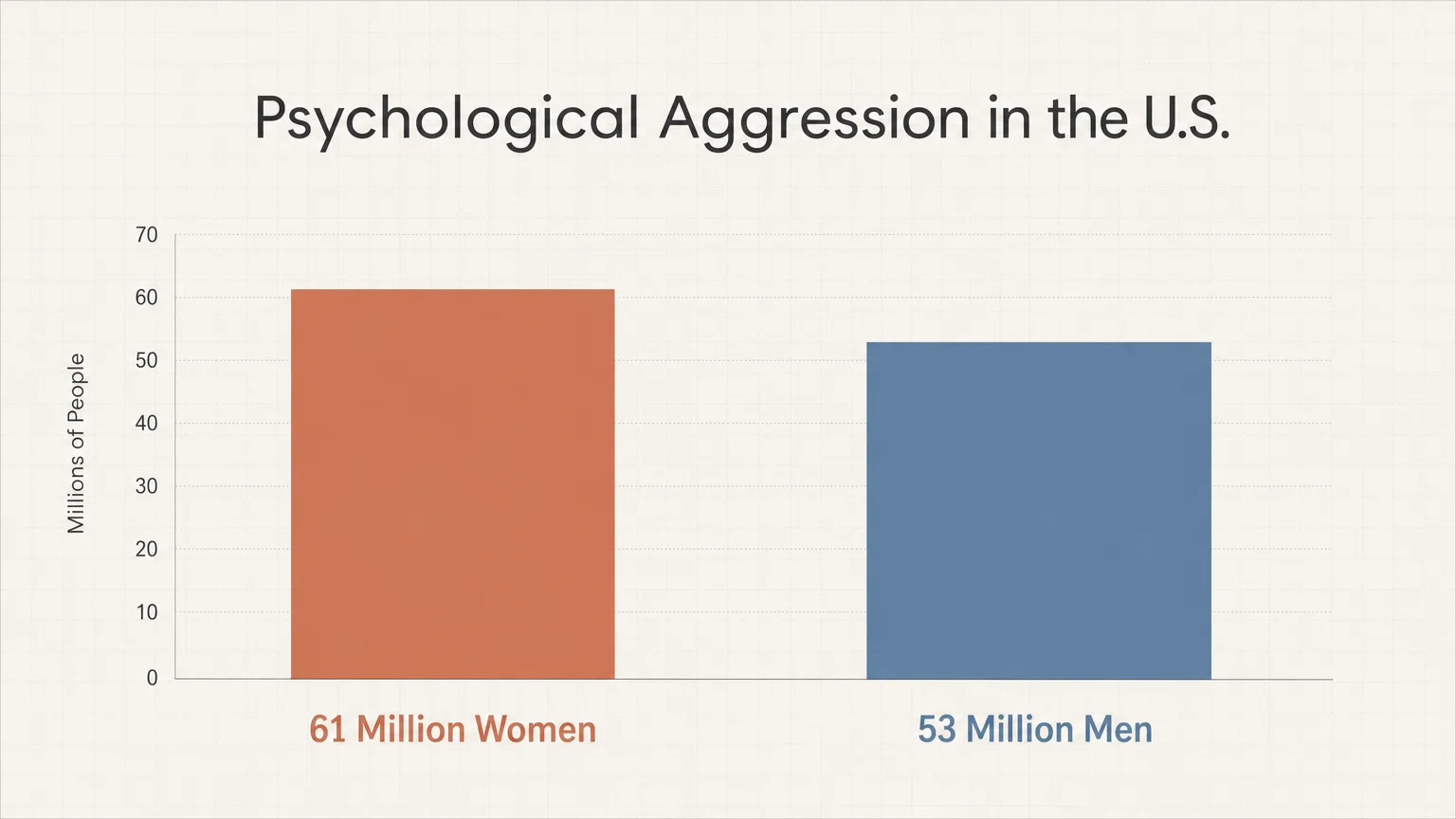
The Hidden Toll of Psychological Aggression
Emotional abuse is far more prevalent than most people realize. According to the Centers for Disease Control and Prevention (2024), over 61 million women and 53 million men in the United States have experienced psychological aggression by an intimate partner in their lifetime. Because emotional manipulation leaves no physical bruises, it often goes undetected by both the victim and their support network.
Psychological manipulation fundamentally alters how you perceive yourself and your environment. Recent psychological frameworks, including research from McGill University (2024/2025), suggest that tactics like gaslighting exploit the brain’s natural learning processes, creating “prediction errors” that systematically break down your confidence in your own reality. You stay in the relationship not because you are weak, but because your cognitive understanding of the situation has been systematically scrambled.

8 Hidden Signs of Emotional Manipulation
1. Gaslighting and Reality Distortion
Gaslighting occurs when a partner repeatedly challenges your memory, perception, or sanity. They deny that certain conversations took place or accuse you of imagining things. You might hear phrases like, “You are making a big deal out of nothing,” or “I never said that; your memory is terrible.” Over time, this forces you to rely on their version of events. You might catch yourself secretly recording conversations, writing down timelines, or taking screenshots just to prove to yourself that you are not losing your mind.
2. Weaponizing Your Vulnerabilities
In a healthy relationship, sharing your fears and insecurities builds intimacy. A manipulator, however, catalogs your vulnerabilities to use against you during conflicts. If you confess a deep fear of abandonment, they may threaten to leave when you disagree with them. If you share a past trauma regarding financial insecurity, they may purposefully mismanage money to keep you anxious and dependent.
“Vulnerability is about sharing our feelings and our experiences with people who have earned the right to hear them. Being vulnerable and open is mutual and an integral part of the trust-building process.” — Brené Brown, PhD
3. The Intermittent Reinforcement Cycle
One of the most powerful psychological hooks in a toxic relationship is intermittent reinforcement. Your partner alternates between intense, overwhelming affection and cold, punishing withdrawal. Psychological research, rooted in B.F. Skinner’s operant conditioning and applied to relationships by trauma researchers like Dutton and Painter, shows that unpredictable rewards create profound trauma bonds. You stay through the bad times because you are biologically conditioned to wait for the next euphoric high of their love and approval—much like the psychological pull of a slot machine.
4. Moving the Goalposts
You bend over backward to meet their demands, but the moment you succeed, the expectations change. If they complain that you work too much, and you cut back your hours to spend more time with them, they suddenly pivot to complaining about your lack of ambition or financial contribution. This tactic ensures you perpetually feel inadequate and keeps you striving for an approval that will never actually arrive.
5. Guilt-Tripping and DARVO
Manipulators are experts at playing the victim. When you address a legitimate grievance, they flip the narrative so that you end up apologizing. Psychologists refer to this specific defensive tactic as DARVO—an acronym coined by Dr. Jennifer Freyd (1997) that stands for Deny, Attack, and Reverse Victim and Offender. If you calmly express that their chronic lateness hurts your feelings, they will deny the behavior, attack your character by calling you “controlling,” and frame themselves as the victim of your “unreasonable demands.”
6. Isolating You Under the Guise of “Care”
Abusers rarely demand that you cut off your friends and family outright, as that would raise immediate red flags. Instead, they plant seeds of doubt. They might claim your best friend secretly disrespects you or that your family is taking advantage of your kindness. By framing this isolation as “protecting the relationship” or “just wanting it to be the two of us,” they systematically sever your external support systems, making you entirely dependent on their perspective.
7. The Silent Treatment as Punishment
Taking a temporary timeout to cool down from an intense argument is a healthy, productive coping strategy. The silent treatment, however, is a punitive display of power. According to the Gottman Institute, stonewalling blocks emotional connection and creates intense physiological distress in the receiving partner. The manipulator withdraws all communication, eye contact, and affection until you cave in and apologize, forcing you to carry the entire emotional weight of the relationship.
8. Feigning Ignorance and Weaponized Incompetence
When confronted about crossing a boundary, a manipulator will often pretend they simply did not understand. They play dumb to avoid accountability. In household or emotional labor, they might perform tasks so poorly that you eventually take over out of frustration. This weaponized incompetence forces you into a parental, caretaking role, exhausting your energy and leaving you too tired to fight back.

Patterns to Watch For
When evaluating your relationship, it helps to understand common misconceptions about emotional abuse. Watch for these distinct patterns that differentiate everyday relationship friction from manipulation:
- The Myth of Intentionality: You might think, “They aren’t doing it on purpose; they just had a hard childhood.” While manipulators often have unhealed trauma, their lack of conscious malice does not negate the harm they cause. Manipulation is about control and self-preservation, regardless of whether it is premeditated.
- The Empathy Trap: Highly empathetic people often fall victim to manipulators because they project their own good intentions onto their partner. You might justify their cruel behavior by focusing on their potential or their past suffering, rather than their current, damaging actions.
- The “Good Times” Illusion: A relationship does not have to be terrible 100 percent of the time to be manipulative. In fact, toxic relationships rely on wonderful, loving moments to confuse you and keep you heavily invested.
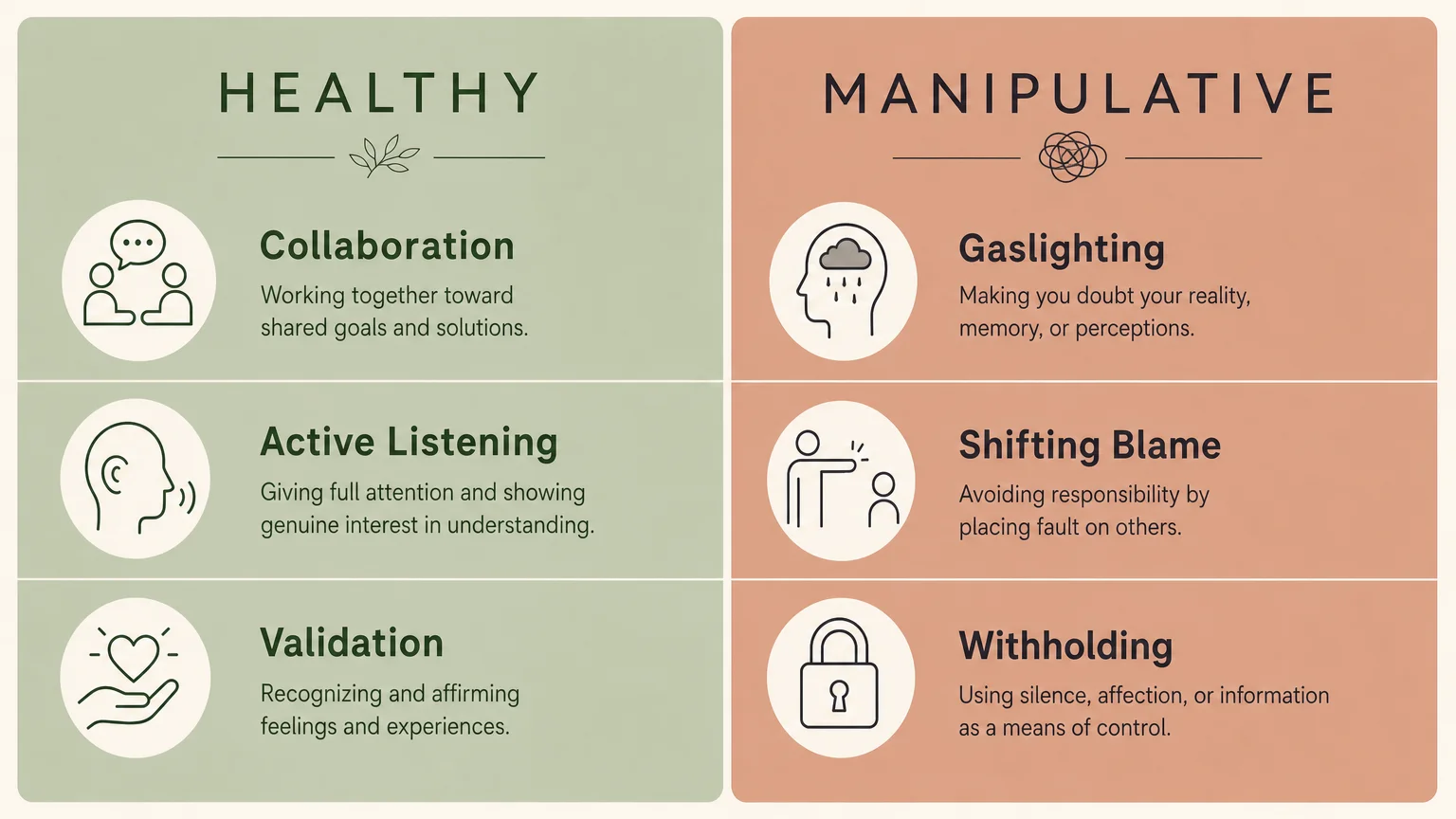
Recognizing Healthy vs. Manipulative Conflict
Every relationship experiences conflict. The difference lies in how that conflict is approached and resolved.
| Aspect of Conflict | Healthy Relationship | Manipulative Relationship |
|---|---|---|
| Focus of the Argument | Resolving the specific issue at hand as a team. | Attacking your character and deflecting blame away from themselves. |
| Accountability | Both partners take responsibility for their part in the miscommunication. | The manipulator never takes fault; your reaction to their behavior is labeled as the problem. |
| Emotional Safety | You feel safe expressing a differing opinion without fear of retaliation. | You walk on eggshells, constantly fearing their unpredictable or explosive reaction. |
| Resolution | The argument ends in compromise, changed behavior, and mutual understanding. | You apologize just to restore the peace, and the toxic behavior repeats shortly after. |

How to Respond to Emotional Manipulation
Reclaiming your emotional autonomy requires deliberate action. Implement these practical strategies to protect your well-being:
- Trust your physical intuition: Notice how your body reacts around your partner. A tight chest, chronic fatigue, or persistent anxiety are somatic signals that your nervous system does not feel safe.
- Set firm, actionable boundaries: Clearly state what you will tolerate and enforce the consequences. Instead of asking them to stop yelling, say, “I will not engage in this conversation while you are raising your voice. I am leaving the room.”
- Stop over-explaining: Manipulators use your explanations as ammunition to twist your words. Use the “gray rock” method by giving neutral, uninteresting responses to emotional provocations. Keep your answers brief and factual.
- Document reality: Keep a private journal of events, conversations, and timelines. When gaslighting occurs, you can refer to your own notes to ground yourself in reality.
- Rebuild your support network: Reconnect with friends, family members, or colleagues you have been isolated from. You need external, objective perspectives to counter the manipulator’s distorted narrative.
When Self-Help Isn’t Enough
While boundaries and communication tools are highly effective in difficult relationships, emotional manipulation often requires professional intervention. Seek help from a licensed therapist or domestic violence advocate if you experience any of the following:
- Fear of physical escalation: If the emotional abuse is accompanied by intimidation, thrown objects, or threats of violence, your physical safety is at risk. Contact the National Domestic Violence Hotline immediately for safety planning.
- Severe mental health decline: If you are experiencing panic attacks, deep depression, or thoughts of self-harm, professional psychiatric and therapeutic support is essential. Organizations like the National Institute of Mental Health (NIMH) or the American Psychological Association (APA) provide resources for finding immediate help.
- Complete loss of self-trust: If gaslighting has entirely eroded your ability to make basic daily decisions without your partner’s input, specialized trauma therapy can help you rebuild your cognitive independence.
- Total isolation: If your partner has successfully cut you off from all financial resources, friends, and family, you will need professional advocacy to safely exit the situation.
Frequently Asked Questions
Can a manipulative person change?
Change requires a high level of self-awareness, accountability, and a genuine desire to dismantle deep-seated defense mechanisms. While possible, it typically requires years of dedicated psychotherapy. Without professional intervention and a strong personal commitment to change, manipulative patterns rarely resolve themselves.
How do I explain to my partner that they are manipulating me?
Often, directly accusing a manipulator results in severe defensiveness, DARVO, and further manipulation. Instead of labeling their behavior, address specific actions and how they affect you. State clearly, “When you deny what I heard you say, I feel disrespected,” rather than, “You are a gaslighter.”
What is the difference between toxicity and manipulation?
Toxicity is a broad term for unhealthy relationship dynamics, which can result from poor communication skills, unhealed trauma, or basic incompatibility. Manipulation is a specific, targeted behavior designed to control your reality, emotions, and actions for the abuser’s benefit.
Taking the Next Step Toward Healing
Healing from emotional manipulation begins the moment you name the behavior for what it is. You hold the power to define your own reality, prioritize your mental health, and demand a relationship built on genuine respect and mutual care. Lean on trusted friends, engage in self-compassion, and take small, daily steps to re-establish your boundaries. You deserve a partnership where your voice is heard, your memories are validated, and your vulnerabilities are protected.
The information in this article is meant for educational purposes and general guidance. It does not replace individual therapy, counseling, or medical treatment. If you or someone you know is in crisis, contact the 988 Suicide & Crisis Lifeline by calling or texting 988.
Last updated: June 2026. Psychology research evolves continuously—verify current findings with professional sources.








Leave a Reply