

Gary Chapman’s “The 5 Love Languages” has dominated relationship advice for decades, promising that decoding your partner’s preferred affection style is the secret to lasting intimacy. However, recent scientific scrutiny reveals a different reality. A 2024 comprehensive review by researchers at the University of Toronto found little empirical evidence that matching love languages actually improves relationship satisfaction. Instead of relying on a rigid categorical framework, psychological research shows that romantic success depends on a broader set of emotional skills. You can build a resilient partnership using evidence-based practices like emotional responsiveness, effective conflict repair, and cultivating a high positive interaction ratio.
What the Research Actually Says About Love Languages
Since 1992, the concept of love languages has saturated popular psychology. The core premise is elegant in its simplicity: people give and receive love in five distinct ways—words of affirmation, quality time, physical touch, acts of service, and receiving gifts. By taking a brief questionnaire, you uncover your primary language. If you and your partner learn to speak each other’s language, relationship friction supposedly dissolves. This intuitive framework propelled the original book to sell over 20 million copies globally. It became a cultural shorthand; dating profiles feature love language preferences, and therapists routinely hear couples cite mismatched languages as the root of their relational distress.
However, clinical psychology requires empirical validation, and recent academic scrutiny paints a far more nuanced picture. A pivotal 2024 comprehensive review conducted by relationship scientists systematically dismantled several core assumptions of the love language framework. Researchers discovered that people do not inherently possess a single, dominant love language. When asked to rate the importance of various affectionate behaviors on a continuous scale—rather than being forced to rank them against one another—individuals consistently rate all five categories highly. Human beings are deeply complex; we crave varied forms of connection depending on our current stressors, life stage, and emotional state.
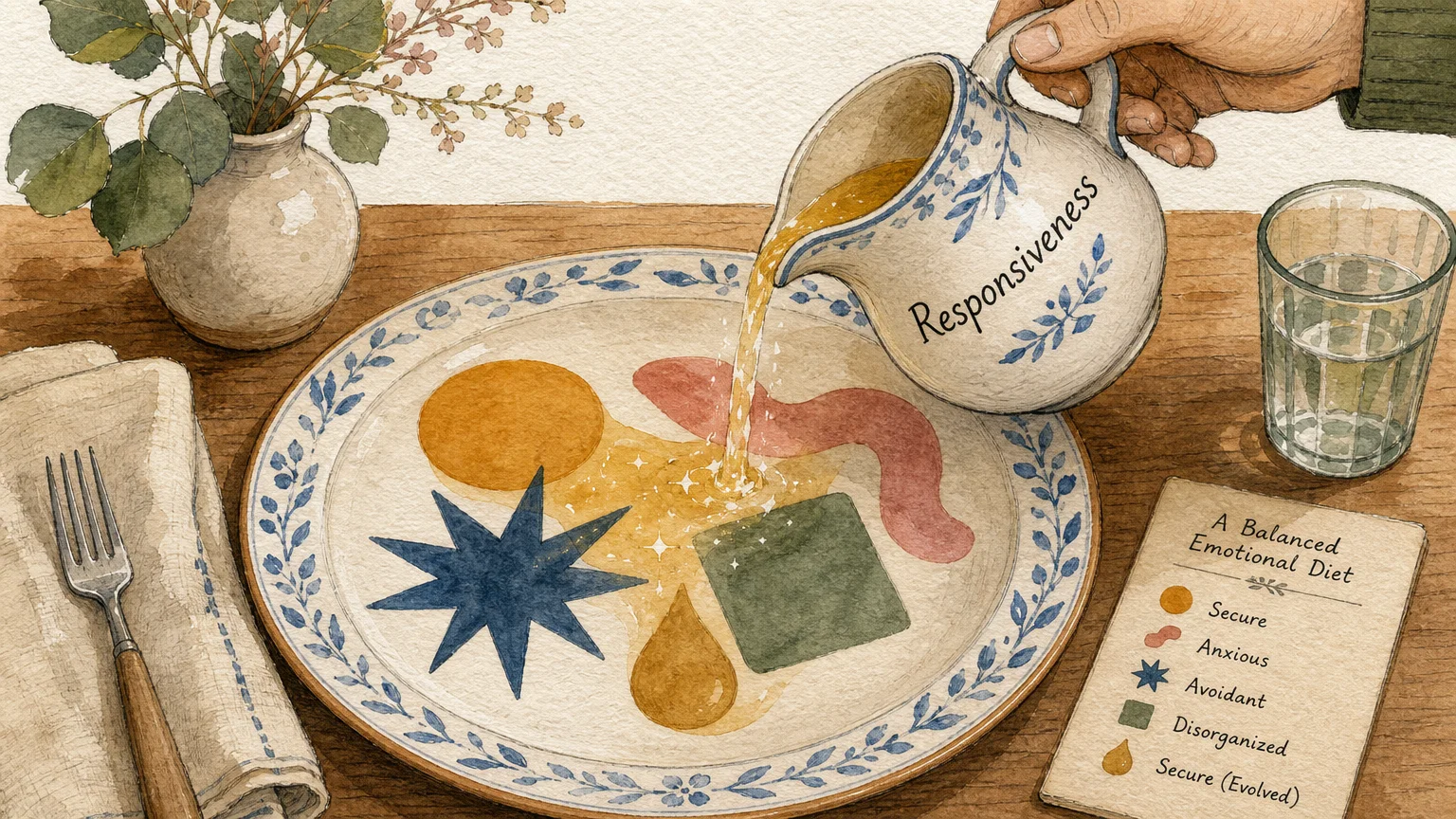
Furthermore, the matching hypothesis—the idea that couples who share the same love language experience greater relationship satisfaction—lacks scientific backing. Multiple studies have demonstrated that partners with identical love language profiles are no happier or more stable than those with entirely different preferences. Instead of viewing affection through a restrictive linguistic metaphor where you must fluently speak a single dialect, researchers suggest visualizing emotional connection as a balanced diet. A healthy, sustainable relationship requires a full spectrum of emotional nutrients. Relying solely on acts of service while neglecting physical touch or words of affirmation leads to an emotionally malnourished partnership.

The Core Ingredient: Emotional Responsiveness
If speaking a specific categorical language is not the defining factor of a successful relationship, what truly bridges the gap between two people? Decades of longitudinal relationship science point to a single, overarching mechanism: emotional responsiveness. Responsiveness is the active, ongoing process of accurately perceiving your partner’s emotional state, validating their internal experience, and offering supportive action that aligns with the immediate context. It is fluid, dynamic, and requires profound psychological presence.
To understand how responsiveness functions in daily life, we must look at the groundbreaking work of The Gottman Institute. Through thousands of hours of observational laboratory research, relationship experts identified that relationships thrive or wither based on how partners handle “bids for connection”. A bid is any attempt you make to gain your partner’s attention, affection, humor, or support. It can be explicit, such as directly asking for a hug after a grueling workday, or it can be incredibly subtle, like sighing heavily while reading an email or pointing out a beautiful bird outside the window.
Every time a bid is made, you have a choice in how you respond. You can turn toward the bid by engaging, validating, or reciprocating. You can turn away by ignoring the attempt and continuing to scroll through your phone. Or, you can turn against the bid with an irritable or defensive remark. The statistics surrounding these micro-interactions are staggering. In long-term, happy relationships, partners turn toward each other’s bids 86 percent of the time. In stark contrast, couples who eventually divorce turn toward bids a mere 33 percent of the time.
“It is the small things done often that make the difference.” — John Gottman, Psychological Researcher
This data reveals that deep emotional connection is not built through grand, sweeping gestures or perfectly executed acts of service orchestrated once a month. It is forged in the mundane micro-moments of daily life. When you consistently turn toward your partner, you are depositing trust and safety into your shared emotional bank account. You signal that they are seen, valued, and prioritized. This ongoing responsiveness creates a buffer of positive sentiment that protects the relationship when inevitable conflicts arise.
The Magic 5:1 Ratio: A Stronger Predictor of Success
While responsiveness builds the foundation of intimacy, conflict remains a universal reality in any long-term partnership. A common misconception is that highly satisfied couples simply do not fight. In truth, the defining characteristic of a resilient relationship is not the absence of disagreement, but the specific emotional climate maintained during those disagreements.
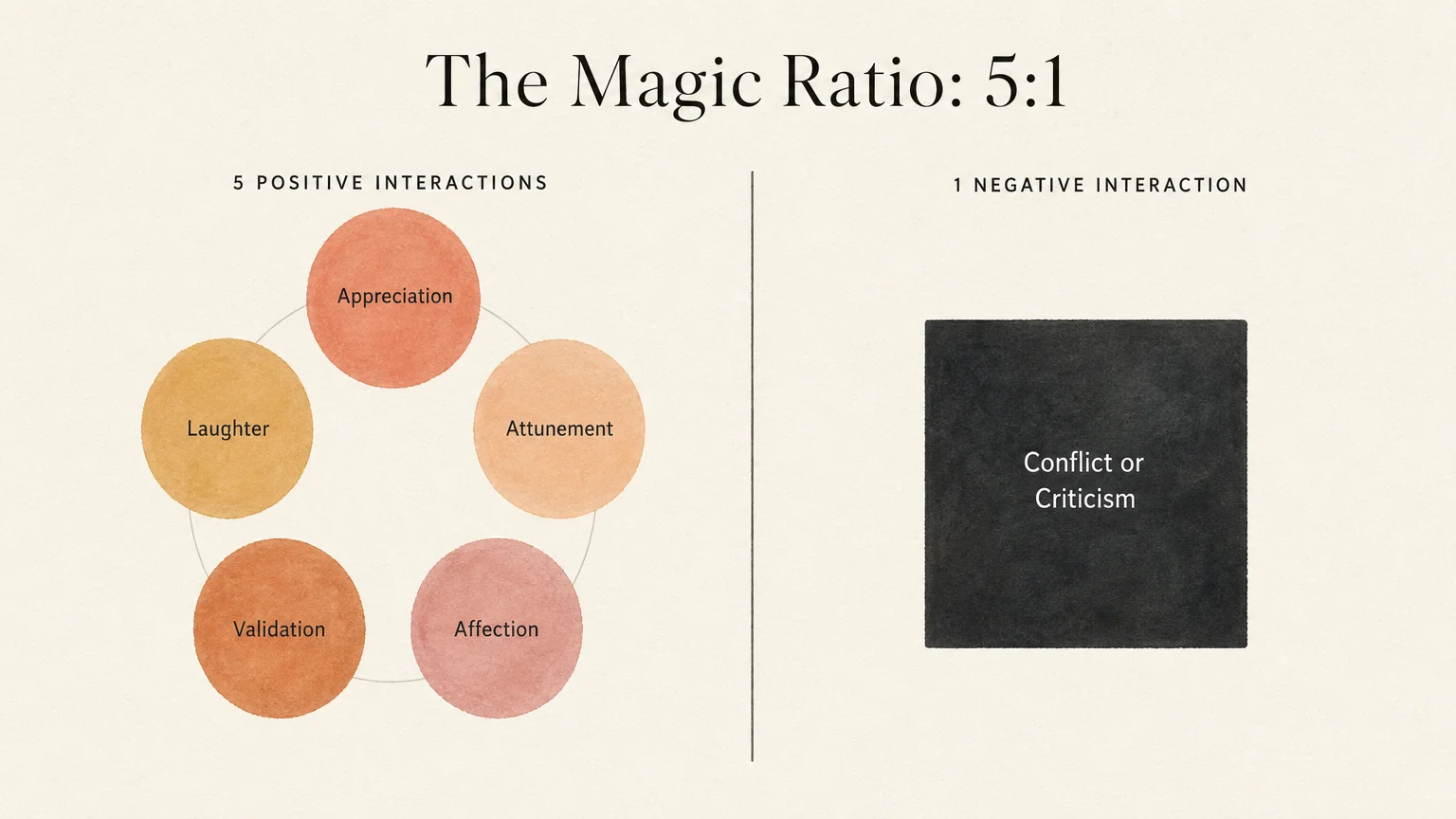
Through extensive physiological and behavioral tracking, researchers identified a robust mathematical predictor of marital stability known as the magic 5:1 ratio. During a conflict discussion, stable and happy couples maintain a ratio of at least five positive or neutral interactions for every one negative interaction. Outside of conflict, during the normal course of daily life, this ratio climbs even higher, often reaching 20 positive interactions to every one negative interaction.
What exactly constitutes a positive interaction during a heated argument? It rarely involves capitulation or agreeing with a point you fundamentally oppose. Instead, positive interactions during conflict look like active listening, maintaining gentle eye contact, using a soft vocal tone, offering a light physical touch to reassure your partner, or deploying shared humor to de-escalate tension. Crucially, it involves the successful use of repair attempts—statements or actions meant to prevent negativity from spiraling out of control. Saying, “Let me try that again,” or “I’m feeling really overwhelmed right now, can we take a break?” are powerful repairs that keep the conflict constructive.
Conversely, negative interactions carry a heavy physiological toll. Behaviors such as eye-rolling, heavy sarcasm, mockery, and defensive counter-attacks rapidly deplete the emotional bank account. These destructive behaviors compromise the relationship system and trigger intense stress responses. When you focus on cultivating the 5:1 ratio, you shift your energy away from perfectly translating a love language and toward fundamentally changing the atmosphere of your partnership.

Translating Love Languages into Evidence-Based Connection Strategies
We do not need to entirely discard the concept of love languages; the framework remains a useful starting point for couples struggling to articulate their needs. Providing a vocabulary for affection is valuable. However, to build lasting closeness, we must translate these static categories into dynamic, evidence-based behaviors that foster genuine emotional responsiveness and increase your positive interaction ratio.
| Love Language Concept | Evidence-Based Equivalent | Practical Application |
|---|---|---|
| Words of Affirmation | Building a Culture of Appreciation | Express gratitude for specific traits and daily actions. Replace generic compliments with targeted appreciation, such as thanking your partner for handling a difficult chore or recognizing their patience. |
| Quality Time | Turning Toward Bids for Connection | Put away devices when your partner initiates conversation. Give them your undivided psychological presence, even if only for five focused minutes during a busy day. |
| Acts of Service | Sharing the Mental Load | Anticipate household and relational needs before being asked. True equitable partnership reduces ambient stress and actively prevents caregiver burnout. |
| Physical Touch | Regulating the Nervous System | Incorporate mindful touch—a lingering hug or a hand on the shoulder—to help regulate your partner’s nervous system and lower cortisol levels during stressful life transitions. |
| Receiving Gifts | Building Detailed Love Maps | Demonstrate that you deeply know your partner’s internal world. Remembering their favorite obscure tea or asking about a specific stressor at work shows profound emotional attunement. |

Patterns to Watch For
When we rely too heavily on simplified pop-psychology frameworks, we risk falling into cognitive traps that harm our relationships. Recognizing and unlearning these patterns is a crucial step in developing genuine emotional maturity. Watch out for these common relational missteps:
- The Defeatist Language Barrier: Many couples weaponize their differing preferences. If one partner prefers physical touch and the other favors acts of service, they may falsely conclude they are fundamentally incompatible. A 2025 global Ipsos survey indicated that 82 percent of partnered individuals report high relationship satisfaction, and this satisfaction relies heavily on mutual effort and adaptability rather than perfect innate alignment.
- The Transactional Trap: Viewing relationships through a rigid linguistic lens often creates a transactional dynamic. Thinking, “I washed her car, so she now owes me physical intimacy,” destroys authentic connection. True emotional responsiveness is freely given, based on empathy for your partner’s current state, not calculated on a spreadsheet of affection exchanges.
- Ignoring Contextual Flexibility: A person’s emotional needs are not fixed; they fluctuate based on external stressors. A partner whose primary preference is typically words of affirmation may actually require urgent acts of service when navigating a career crisis. Clinging to a test result taken years ago prevents you from meeting your partner where they are in the present moment. Love requires active, daily observation.
“The quality of your life ultimately depends on the quality of your relationships.” — Esther Perel, Psychotherapist and Author

When Self-Help Isn’t Enough
While understanding emotional responsiveness and practicing evidence-based connection strategies can radically transform a struggling partnership, self-help has distinct limitations. Reading articles and attempting communication exercises cannot resolve deep-seated relational trauma or destructive behavioral loops. Recognizing when to seek professional guidance is an act of commitment to the relationship.
- Pervasive Toxicity and The Four Horsemen: If your daily interactions are dominated by criticism, defensiveness, contempt, or stonewalling, the physiological arousal associated with these behaviors makes rational conversation nearly impossible. When you or your partner are chronically flooded—experiencing an elevated heart rate during conflict—you cannot access the problem-solving centers of your brain. A licensed couples therapist provides the structured environment necessary to de-escalate these nervous system responses.
- Healing from Betrayal: Infidelity, financial deception, or profound breaches of trust shatter the foundational safety of a relationship. Rebuilding that trust requires a highly specific clinical protocol that guides couples through the painful process of processing trauma and re-establishing intimacy safely.
- Abuse and Coercive Control: Relationship advice regarding conflict resolution, communication styles, and compromise does not apply in dynamics involving emotional abuse, physical violence, or coercive control. Abusive dynamics are not a communication issue; they are an issue of power and exploitation. In these situations, couples therapy is strongly contraindicated. If you feel unsafe, prioritize individual support from a domestic violence advocate.
You can utilize therapist directories from Psychology Today or the American Psychological Association (APA) to find qualified professionals trained in evidence-based couples counseling. For broader mental health context and crisis resources, you can also access the National Institute of Mental Health (NIMH).
Frequently Asked Questions
Are the 5 love languages completely useless?
No, they are not useless. While recent scientific research shows they lack empirical validity as a prescriptive relationship cure, the framework remains a highly effective tool for building self-awareness. It gives partners an accessible vocabulary to discuss how they prefer to receive care, which can jumpstart deeper conversations about emotional needs.
How can I improve my relationship if we express affection differently?
Focus on building a culture of appreciation and increasing your overall emotional responsiveness. Recognize the effort your partner makes to show love, even if it does not perfectly align with your preferred style. Over time, prioritize turning toward their bids for connection and maintaining a high ratio of positive to negative interactions.
What exactly is a bid for connection?
A bid is any attempt your partner makes to get your attention, affection, or support. It can be explicit, like asking for advice, or subtle, like sighing loudly or offering a brief touch. Recognizing and positively responding to these bids is the bedrock of lasting intimacy.
Building a secure, passionate, and enduring relationship requires far more than taking a personality quiz or memorizing a set of conversational scripts. It demands an ongoing willingness to turn toward your partner, to repair the inevitable ruptures that occur, and to cultivate a daily atmosphere of profound appreciation. By shifting your focus away from rigid categories and embracing the dynamic, evidence-based practices of emotional responsiveness, you can create a partnership that not only survives the stress of daily life but actively thrives within it. The path forward is built in the quiet, consistent micro-moments of choosing each other, day after day.
This is educational content based on psychological research and general principles. Individual experiences vary significantly. For personalized guidance, consult a licensed therapist, psychologist, or counselor.
Last updated: June 2026. Psychology research evolves continuously—verify current findings with professional sources.








Leave a Reply