Psychology Diary

The First Step Toward Change Is Awareness

  • Home
  • Relationships
  • Mental Health
  • Expert Tips
  • Life
  • Family
  • Marriage

An Introduction to Mindfulness and Meditation for Seniors

August 31, 2025 · Expert Tips

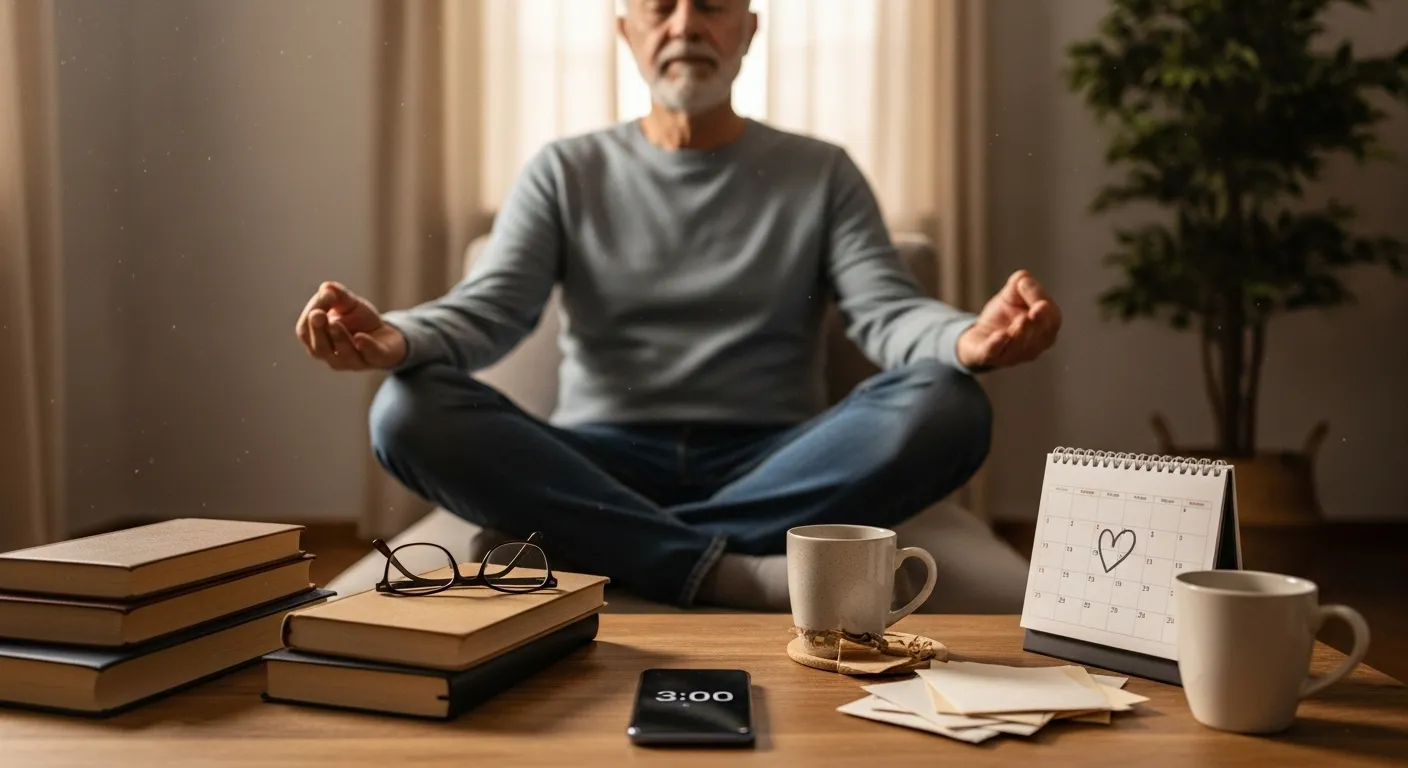
Senior man meditating with timer on phone in living room.

Frequently Asked Questions (FAQs)

How long should a senior meditate each day?

The most important factor is consistency, not duration. It is much better to start with a short, manageable session that you can do every day. We recommend beginning with just 3 to 5 minutes daily. Once that feels like a comfortable and established habit, you can gradually increase the time to 10, 15, or even 20 minutes if you wish. But even a consistent 5-minute practice can yield significant benefits.

Do I need any special equipment?

No, you do not need any special equipment to begin. One of the greatest advantages of mindfulness meditation is its accessibility. All you truly need is a quiet place where you won’t be disturbed for a few minutes and a comfortable place to sit. A simple, straight-backed chair is ideal for most people. There is no need to buy special cushions, clothing, or apps to get started.

Is it okay to use a guided meditation app?

Yes, guided meditation apps or online recordings can be an excellent resource, especially for beginners. They provide structure and can make the practice feel more approachable. When exploring these resources, try to find instructors with credible qualifications in mindfulness or mental health. Be cautious of any app or program that makes unrealistic promises or guarantees specific health outcomes. A good guided meditation should feel like a gentle invitation, not a demanding command.

What if I have mobility issues and can’t sit on the floor?

This is a very common and important question. It is a myth that you must sit on the floor in a cross-legged position to meditate. For most adults, and particularly for seniors with mobility challenges, sitting upright in a supportive chair is the recommended and most effective posture. You can also practice meditation while lying down, though you should be mindful of the tendency to fall asleep. The key is to find a posture that allows you to be both alert and comfortable.


Pages: 1 2 3 4 5 6 7 8 9 10 11

Share this article

Facebook Twitter Pinterest LinkedIn Email

Leave a Reply Cancel reply

Your email address will not be published. Required fields are marked *

Search

Latest Posts

  • Ink and watercolor illustration of a person wrapped in a blanket, looking out a window at a rainy garden. 6 Signs You're Comfortable Being Alone
  • A retired woman happily misting seedlings in a sunlit greenhouse, representing meaningful part-time work in retirement. The Part-Time Jobs Retirees Say Feel Most Meaningful
  • An editorial watercolor illustration of a person looking at a small glowing key in their chest, symbolizing inner emotional intelligence. 9 Signs of Emotional Intelligence You Might Not Notice in Yourself
  • An illustration of a woman looking at a mug while her giant shadow holds a massive magnifying glass over it. 6 Signs You're Being Too Hard on Yourself
  • Two friends laughing together on a wooden porch in warm afternoon light, demonstrating a supportive, genuine relationship. 6 Signs Someone Is a Genuinely Good Influence in Your Life
  • Ink and watercolor illustration of a person walking from a dark, stormy landscape into a bright, sunny field. 9 Traits Psychologists Say Highly Resilient People Share
  • A New Yorker style illustration of a resting person whose shadow carries a heavy, tangled ball of dark thread. 7 Signs You're Emotionally Exhausted, Not Just Tired
  • Ink and watercolor illustration of two people seated in chairs with a golden thread connecting their hands, symbolizing respect. 6 Signs Someone Truly Respects You
  • A warm ink and watercolor illustration of an older woman looking at a gallery wall of framed memories, with one frame left naturally empty. 7 Signs of Normal Forgetfulness vs Something More Serious
  • An editorial ink and watercolor illustration of two profiles, showing speech bouncing off a supportive line like a trampoline. 9 Signs You're a Good Listener, According to Psychologists

Newsletter

Get the latest posts delivered to your inbox.

Related Articles

Earning Respect From Others

Having Trouble Earning Respect From Others? These 7 Simple Behaviors Could Explain It

You talk about yourself way too much Ever notice how people make certain facial expressions…

Read More →
deal with a stubborn daughter-in-law

Psychological Advice on How to Deal With a Stubborn Daughter-in-Law

Set realistic expectations Most likely, you will never be able to change her behavior, and…

Read More →
resolutions

4 Psychology-Based Reasons New Year’s Resolutions Fail

Are these resolutions a bad thing? New Year’s resolutions have always been a big thing,…

Read More →
things you should never tell your grandchildren

6 Things You Should NEVER Tell Your Grandchildren

6. “If you don’t have anything nice to say, don’t say anything at all” This…

Read More →
connect with a deceased loved one

4 Best Ways to Connect With a Deceased Loved One

Celebrate them by picking up a hobby. If you are looking for a more practical…

Read More →
natural remedies for anxiety emotional

8 Natural Remedies to Stop Anxiety

Did anyone say “natural remedies for anxiety”? When it comes to mental health, anxiety is…

Read More →
emotional balckmail

If You Recognize These, You’re Being Emotionally Blackmailed

Can you recognize emotional blackmail for what it is? While emotional blackmail sounds like it…

Read More →
Alpha Male Characteristic

Alpha Male Characteristics: Unveiling the 7 Genuine Traits of True Leadership

They face their inner demons head-on Despite what others might believe, being an alpha male…

Read More →

6 Signs You Have a Narcissistic Mother

6. They gaslight you The manipulative tactic of gaslighting is a common weapon used by…

Read More →

Psychology Diary

The First Step Toward Change Is Awareness

Inedit Agency S.R.L.
Bucharest, Romania

contact@psychologydiary.com

Explore

  • About Us
  • Advertiser Disclosure
  • Contact Us
  • Disclaimer
  • Do not sell my personal information
  • Editorial Policy
  • Frequently Asked Questions
  • Privacy Policy
  • Terms and Conditions
  • Subscribe
  • Unsubscribe

Categories

  • Expert Tips
  • Family
  • Life
  • Marriage
  • Mental Health

© 2026 Psychology Diary. All rights reserved.