Healthy Solitude vs. Unhealthy Isolation
Solitude replenishes your internal resources, whereas isolation steadily drains your psychological reserves. Understanding the difference between these two states is crucial for your emotional health.
Solitude represents a conscious, positive choice to spend time with your own mind. It leaves you feeling restored, grounded, and ready to re-engage with your loved ones.
In contrast, isolation stems from fear, avoidance, shame, or pervasive social exhaustion. You retreat not to cultivate peace, but to shield yourself from emotional demands.
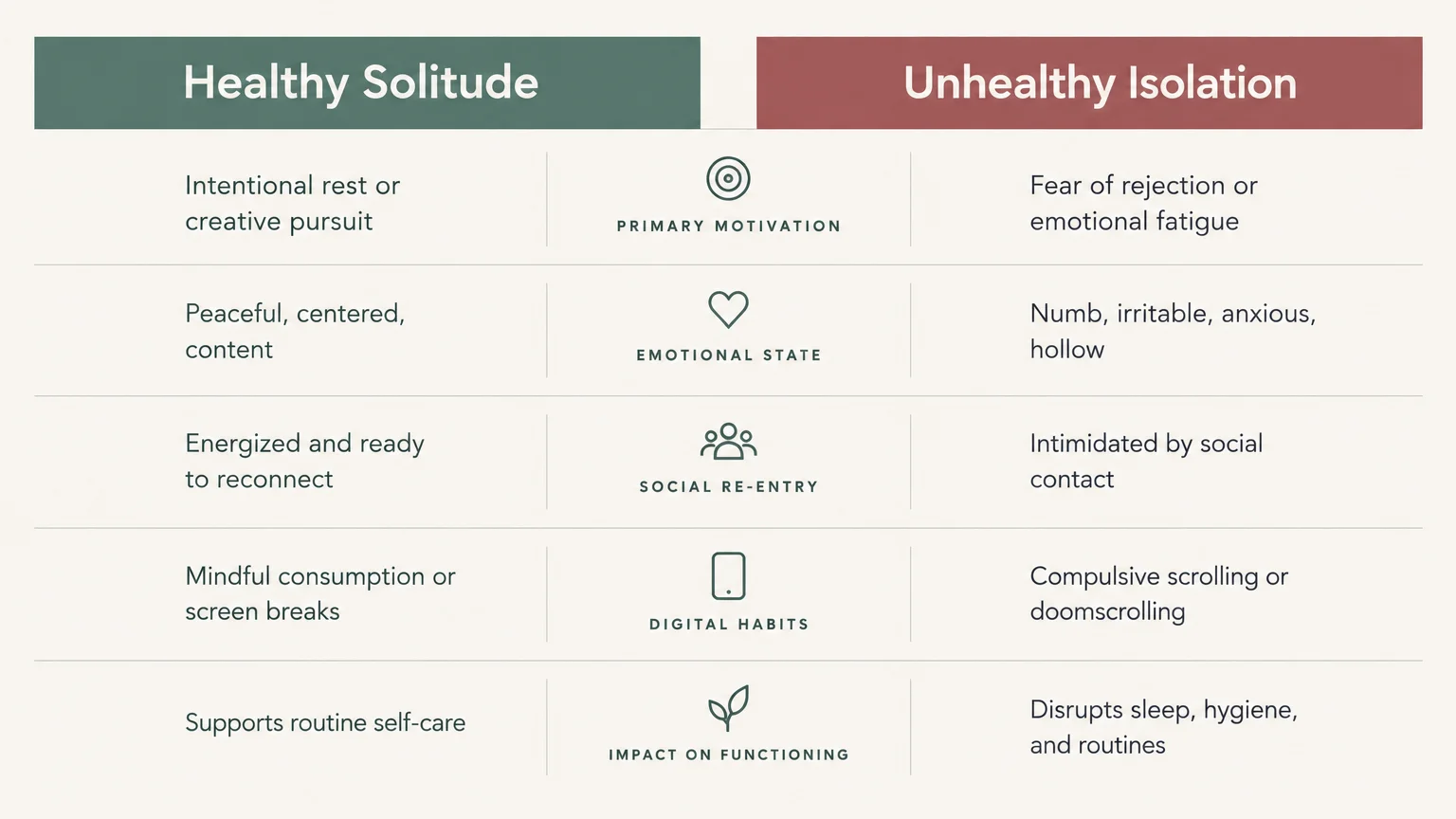
| Dimension | Healthy Solitude | Unhealthy Isolation |
|---|---|---|
| Primary Motivation | Intentional rest, creative pursuit, or self-reflection | Fear of rejection, emotional fatigue, or avoidance |
| Emotional State | Peaceful, centered, and content | Numb, irritable, anxious, or hollow |
| Social Re-entry | Energized and excited to reconnect with friends | Intimidated by social contact and reluctant to leave home |
| Digital Habits | Mindful consumption or intentional screen breaks | Compulsive scrolling, doomscrolling, or parasocial bingeing |
| Impact on Functioning | Supports routine self-care and mental clarity | Disrupts sleep, nutrition, hygiene, and domestic routines |