Psychology Diary

The First Step Toward Change Is Awareness

  • Home
  • Relationships
  • Mental Health
  • Expert Tips
  • Life
  • Family
  • Marriage

The Power of Forgiveness: How Letting Go Can Improve Your Mental Health

August 31, 2025 · Mental Health

Senior woman closing a journal after writing.

Special Considerations for Older Adults and Caregivers

The journey of forgiveness can take on unique dimensions in later life and for those in caregiving roles. Life experience, changing family dynamics, and the specific stressors of these roles all shape the process.

Forgiveness in Later Life

As people age, they often engage in a process of life review, looking back over their experiences, relationships, and choices. This can bring long-dormant hurts and resentments to the surface, sometimes involving family members, spouses, or friends from decades ago. Forgiveness can be a powerful tool for finding peace and closure during this stage of life.

Letting go of old grievances can also be a vital step in combating loneliness, which is a significant health risk for older adults. Holding a grudge can isolate you from family members or old friends who could otherwise be a source of connection and support. Forgiveness, even without reconciliation, can open the door to a more peaceful inner life and a greater willingness to engage with the world.

It’s also important for older adults to remember that changes in mood or emotional state can sometimes have physical roots. Before embarking on a deep psychological journey, it’s wise to check in with a primary care doctor to rule out other factors. Issues like medication side effects, hearing or vision loss, or other health conditions can sometimes manifest as irritability or sadness.

A Note for Caregivers

Caregiving is an incredibly demanding role, often filled with stress, exhaustion, and a complex mix of emotions. In this context, forgiveness often needs to be directed inward and outward.

Self-forgiveness for caregivers is essential. You may feel guilty for moments of impatience, frustration, or for wanting a break. It is crucial to forgive yourself for not being perfect. You are human, and caregiving is one of the most difficult jobs there is. Acknowledging your limits and offering yourself compassion is not a weakness; it is a vital part of preventing burnout.

Forgiving others can also be a challenge. You may feel resentment toward family members who aren’t helping as much as you’d like, or toward the person you are caring for if their illness causes difficult behaviors. Practicing the steps of forgiveness can help release this anger so it doesn’t consume you. This might involve setting firm but kind boundaries. For example, instead of silently fuming at a sibling, you might say, “I am feeling overwhelmed. I need you to take over for me on Saturday from 10 a.m. to 2 p.m. so I can have a break.”

Caregivers must prioritize their own mental wellness to be able to continue providing care. Resources and support groups can be invaluable. The Substance Abuse and Mental Health Services Administration (SAMHSA) offers resources for families and caregivers seeking support.


Pages: 1 2 3 4 5 6 7 8 9 10

Share this article

Facebook Twitter Pinterest LinkedIn Email

Leave a Reply Cancel reply

Your email address will not be published. Required fields are marked *

Search

Latest Posts

  • An unposed photo of a man sitting at a kitchen table looking slightly guarded during a quiet, intimate conversation. 8 Body Language Clusters That Indicate Someone Is Holding Back the Truth
  • An ink and watercolor illustration of a morning coffee cup on a wooden table with a gentle ripple, symbolizing subtle early changes. 7 Subtle Signs of Parkinson's Disease in the Early Stages
  • An editorial illustration of a silhouette standing on a fractured path, with a hand gently unravelling a thread from its shoulder. 8 Hidden Signs of Emotional Manipulation in a Relationship
  • Gouache illustration of a couple walking hand-in-hand through a vibrant landscape of overlapping colorful plants and abstract shapes. The 5 Love Languages Revisited: What Really Keeps Couples Close
  • A watercolor illustration of two people on an uneven seesaw, symbolizing a lopsided, selfish relationship dynamic. 10 Signs Someone May Be More Selfish Than They Realize
  • An editorial ink and watercolor illustration of a lonely figure fading into soft gray washes, symbolizing emotional vulnerability. 10 Warning Signs You May Be in an Emotionally Abusive Relationship
  • A couple sits on opposite ends of a long sofa in a dimly lit living room, staring away from each other with a large physical gap between the 10 Signs You're No Longer Connected to Your Partner
  • Editorial ink and watercolor illustration of a person wearing a suit of mirrors as protective armor, symbolizing defensive ego preservation. 9 Signs You Struggle to Admit Mistakes
  • A conceptual mixed-media collage showing dark, chaotic textures emerging from a clean paper silhouette, symbolizing hidden guilt leaking out 7 Signs Someone May Feel Guilty About Something
  • An editorial illustration of a person sitting at a table with a root system growing from their chair into the floorboards. The Mental Symptoms Many People Ignore Until It's Too Late

Newsletter

Get the latest posts delivered to your inbox.

Related Articles

anxiety

10 Subtle Signs of Anxiety You Shouldn’t Ignore

When you think of anxiety, you probably have an idea of some of its most…

Read More →
how to stop catastrophizing

5 Tips to Help You Stop Catastrophizing

Do you want to know how to stop catastrophizing? This can be a really helpful…

Read More →
crying is good

10 Ways Crying Affects Your Mind and Body

When was the last time you cried? Crying is good because it helps us let…

Read More →
An older woman in a knit sweater sits on a porch at dawn, holding a steaming mug and looking thoughtfully at a misty garden.

The Power of Gratitude: How Seniors Can Use It to Live Happier Lives

Discover how a daily gratitude practice can help seniors improve mental well-being, protect cognitive health,…

Read More →
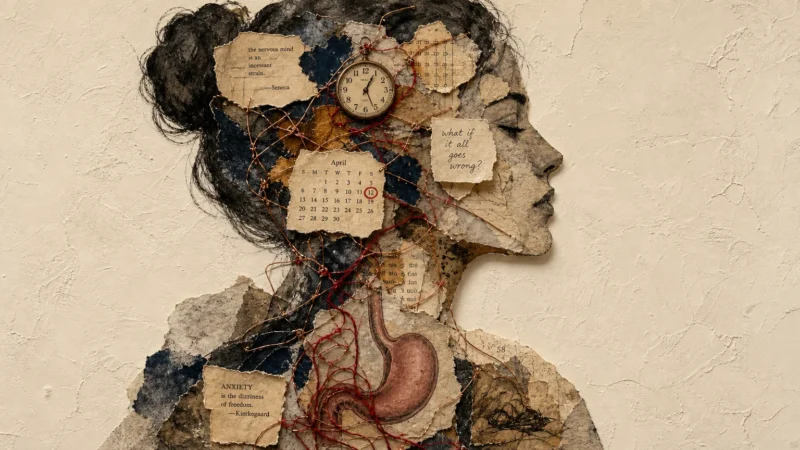
An artistic mixed-media collage silhouette of a person filled with tangled threads, a clock dial, and watercolor shapes on textured paper.

9 Everyday Symptoms That May Be Linked to Anxiety

Discover the hidden, everyday signs of an anxiety disorder—from chronic procrastination to digestive distress—and learn…

Read More →
Bipolar Disorder

Bipolar Disorder and the 6 Vicious Myths Surrounding It

How Much Do You Know About Bipolar Disorder? When it comes to bipolar disorder, there…

Read More →
Schizophrenia

Schizophrenia: 5 Telltale Signs of a Debilitating Disorder

Causes And Symptoms In The Elderly As with many other mental health disorders, there’s no…

Read More →
narcissistic personality disorder

What Causes Narcissistic Personality Disorder? 

Sociocultural background The emphasis on achievement, celebrity, and outside approval in contemporary culture can encourage…

Read More →
mental health

Mental Health Struggles: 7 Usual (and True) Things People Go Through

…Is mental health a priority for you? If not, it should be. According to experts,…

Read More →

Psychology Diary

The First Step Toward Change Is Awareness

Inedit Agency S.R.L.
Bucharest, Romania

contact@psychologydiary.com

Explore

  • About Us
  • Advertiser Disclosure
  • Contact Us
  • Disclaimer
  • Do not sell my personal information
  • Editorial Policy
  • Frequently Asked Questions
  • Privacy Policy
  • Terms and Conditions
  • Subscribe
  • Unsubscribe

Categories

  • Expert Tips
  • Family
  • Life
  • Marriage
  • Mental Health

© 2026 Psychology Diary. All rights reserved.