
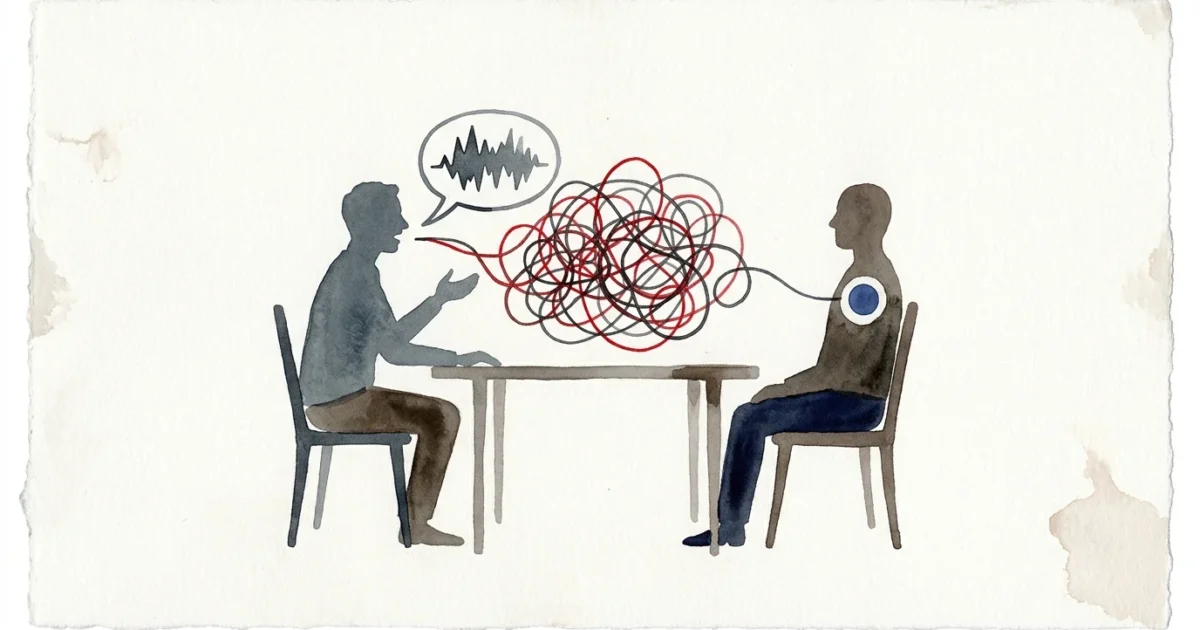
Recognizing low emotional intelligence helps you navigate difficult relationships and protect your mental well-being. When someone lacks self-awareness, conversations quickly turn into exhausting battlegrounds of blame and defensiveness.
While raw intellect opens doors, emotional competence determines how people handle conflict, stress, and connection. Research shows only 36% of people can accurately identify their emotions as they happen.
Learning the primary EQ red flags empowers you to set firm boundaries. Here are the 11 verified signs of low emotional intelligence to watch for in daily interactions.

11 Clear Signs of Low Emotional Intelligence
1. Constant Defensiveness and Inability to Accept Feedback
People with low emotional intelligence interpret constructive feedback as an aggressive personal attack. Instead of evaluating the message, they construct immediate excuses or counterattack the messenger.
This defensive reflex prevents personal growth; they prioritize protecting their ego over developing vital interpersonal skills.
2. Refusing Accountability and Blaming Others
When plans unravel or conflicts ignite, low-EQ individuals reflexively search for an external scapegoat. They struggle to utter a sincere apology or acknowledge their contribution to a problem.
Psychologists note that deflecting blame serves as an unconscious shield against uncomfortable feelings of inadequacy.
3. Frequent Emotional Outbursts and Poor Self-Regulation
Emotional regulation is a cornerstone of psychological maturity. People who lack this capacity experience volatile mood swings and lash out whenever pressure builds.
Because they cannot self-soothe, they discharge their unresolved anxiety and frustration directly onto the people around them.
4. Lack of Empathy and Inability to Validate Feelings
Empathy requires looking past your own perspective to honor someone else’s emotional reality. Low-EQ individuals regularly dismiss other people’s pain as exaggerated, inconvenient, or weak.
According to the American Psychological Association, empathy forms the bedrock of social bonding; without it, emotional intimacy cannot survive.
“When someone really hears you without passing judgment on you, without trying to take responsibility for you, without trying to mold you, it feels damn good.” — Carl Rogers, Ph.D.
5. The Compulsion to Always Be Right
A major indicator among signs of low emotional intelligence is treating every disagreement as a battle to win. These individuals cannot agree to disagree or let minor discrepancies go.
They will exhaustively argue technicalities, completely ignoring how their stubbornness damages the relationship.
6. Difficulty Identifying and Expressing Complex Emotions
People with low emotional intelligence possess a limited emotional vocabulary. They often lump complex emotions like grief, shame, and jealousy under generic labels like “anger” or “stress.”
When someone cannot identify what they feel, they cannot communicate what they need.
7. Dominating Conversations and Interrupting Others
Low-EQ individuals listen to respond rather than to understand. They frequently interrupt, talk over others, and steer every topic back to their personal lives.
This conversational habit reflects a deeper deficit in social attunement and curiosity about other human beings.
8. Inappropriate Humor and Tone Deafness
Failing to read subtle social cues leads people with low EQ to make insensitive jokes during serious moments. They routinely misjudge the emotional climate of a room.
When someone calls out their insensitivity, they typically claim everyone else is “too sensitive.”
9. A History of High-Conflict, Short-Lived Relationships
A trail of turbulent friendships and severed partnerships serves as a visible EQ red flag. Without empathy and repair skills, relationship fractures become permanent.
The Gottman Institute emphasizes that lasting relationships require mutual attunement; lacking this foundation leads to chronic resentment.
“In a good relationship, people are gentle with each other’s vulnerabilities.” — John Gottman, Ph.D.
10. Chronic Victim Mentality
Individuals lacking emotional awareness frequently view themselves as perpetual victims of bad luck or malicious coworkers. They rarely see how their behavior invites friction.
By framing themselves strictly as passive victims, they surrender their agency to change destructive cycles.
11. Complete Blindness to Personal Blind Spots
A notable absence of self awareness signs means the individual genuinely believes they have no emotional flaws. They view everyone else as irrational, fragile, or incompetent.
This lack of insight creates a rigid mindset that actively resists feedback, mentorship, and personal growth.
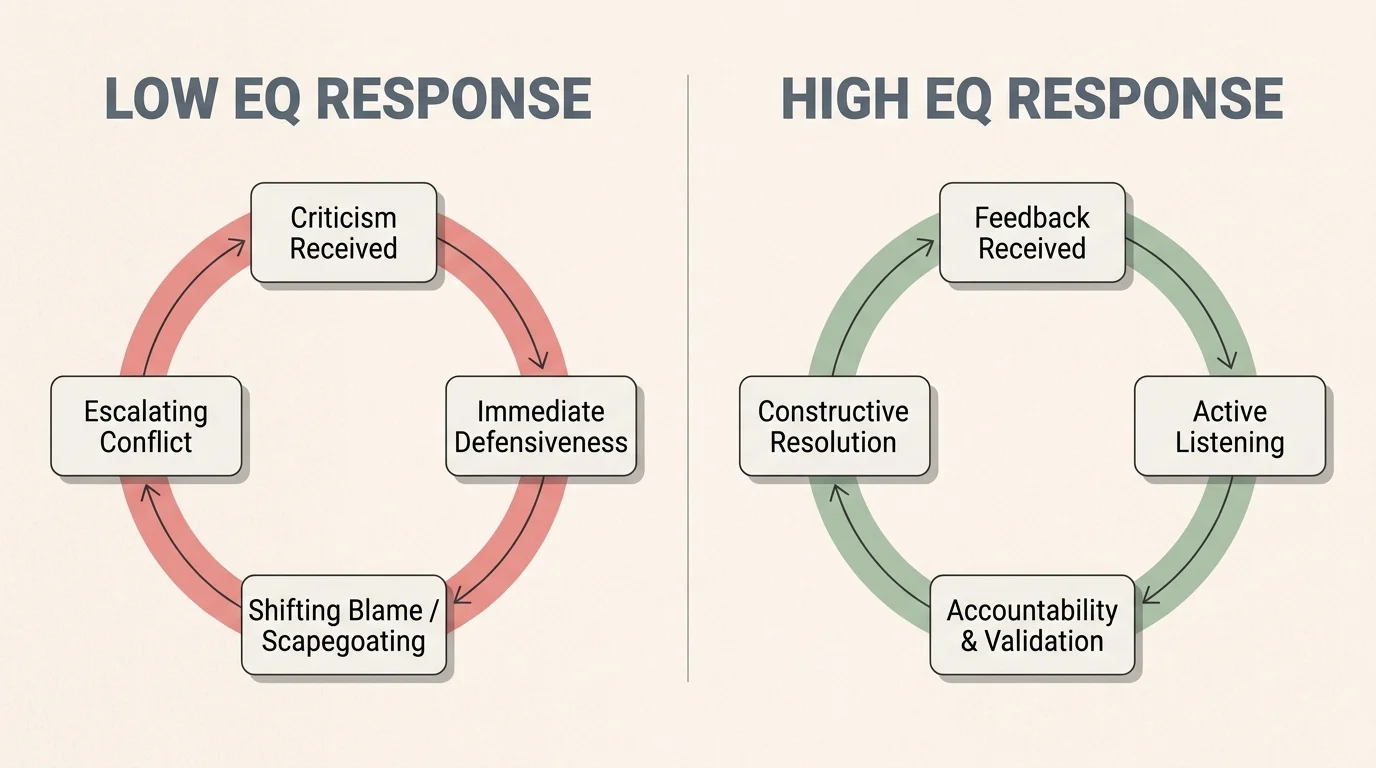
Comparing Low EQ and High EQ Behavioral Responses
Comparing these contrasting responses reveals how emotional intelligence shapes everyday interactions:
| Trigger or Situation | Low EQ Response | High EQ Response |
|---|---|---|
| Receiving Critical Feedback | Gets defensive, blames colleagues, or sulks. | Listens attentively and identifies actionable improvements. |
| A Partner Expresses Sadness | Offers dismissive advice or says, “You’re overreacting.” | Validates the emotion and provides supportive presence. |
| Heated Group Disagreement | Interrupts, raises voice, and demands to be right. | Regulates tone, asks clarifying questions, and seeks common ground. |
| Making an Accidental Mistake | Hides the error or blames external circumstances. | Takes immediate ownership and works toward a solution. |
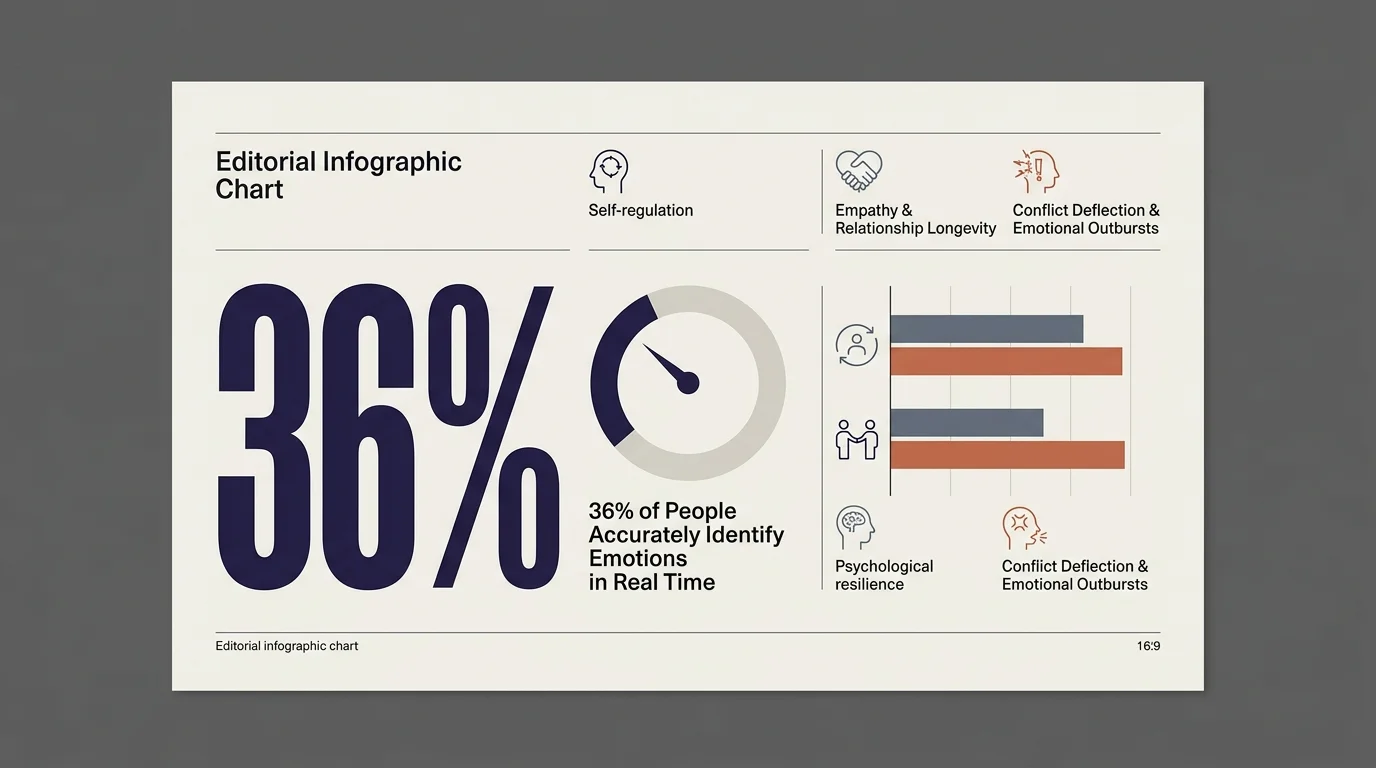
Why Emotional Intelligence Matters: What the Data Shows
Psychologists Peter Salovey and John D. Mayer first defined emotional intelligence in 1990. Daniel Goleman later expanded the framework in 1995 across five core pillars: self-awareness, self-regulation, motivation, empathy, and social skills.
Extensive research demonstrates that emotional competencies dictate life outcomes far more than raw cognitive ability.
Research by TalentSmart testing 34 essential workplace skills identified emotional intelligence as the single strongest predictor of performance, explaining 58% of success across professions.
Their studies also revealed that 90% of top performers score high in emotional intelligence, whereas only 20% of bottom performers exhibit these emotional intelligence traits.
Furthermore, a survey by CareerBuilder found that 71% of employers value EQ over IQ when evaluating candidates. The World Economic Forum similarly ranks emotional intelligence, empathy, and social influence among the most critical skills for the modern workforce.
Myths Worth Debunking About Emotional Intelligence
Myth 1: Low EQ means someone is a bad person. Low emotional intelligence often stems from childhood conditioning, unaddressed trauma, or a lack of emotional modeling, rather than malicious intent.
Myth 2: Emotional intelligence cannot be learned. Unlike fixed cognitive traits, research featured by Harvard Health confirms that adults can cultivate emotional regulation, active listening, and empathy through deliberate practice.
Myth 3: High EQ means you never get angry. Emotionally intelligent people feel anger, frustration, and sadness just like anyone else; the difference lies in how effectively they process and express those feelings.

How to Deal with Low Emotional Intelligence in Others
Interacting with someone who displays EQ red flags requires deliberate boundary management to protect your peace:
- Avoid taking reactions personally: Recognize that their outbursts and defensiveness reflect their internal limitations, not your worth.
- State boundaries clearly: Calmly disengage from conversations when the other person yells, interrupts, or resorts to insults.
- Refuse to play the blame game: Stick strictly to observable facts rather than debating emotional interpretations with defensive individuals.
- Limit emotional vulnerability: Share your deeper feelings primarily with individuals who have demonstrated the capacity for empathy and emotional safety.

Signs It’s Time to Talk to a Therapist
Navigating relationships with low-EQ individuals or trying to improve your own emotional regulation can feel overwhelming. You should consider working with a licensed mental health professional if you experience any of the following:
- You constantly walk on eggshells in your relationship to avoid triggering an explosive reaction.
- You notice repeated patterns of chronic relationship conflict and struggle to regulate your emotional responses under stress.
- You feel persistent exhaustion, anxiety, or self-doubt after interacting with a family member, partner, or manager.
- You want structured support to build healthy boundaries, assertiveness, and emotional granularity.
Therapy resources and support groups are available through organizations like the National Alliance on Mental Illness (NAMI).
Frequently Asked Questions
Can someone with low emotional intelligence change?
Yes. With conscious effort, mindfulness practices, and therapy, individuals can expand their emotional vocabulary, build empathy, and strengthen interpersonal skills.
Is low EQ the same as narcissism?
No. While narcissistic personality traits include low empathy, many people with low EQ simply lack emotional skills and do not possess manipulative or grandiose tendencies.
How do you communicate with someone who lacks emotional awareness?
Use concise, factual statements without accusatory language. Focus on practical solutions rather than analyzing their emotional blind spots during heated moments.
What causes low emotional intelligence?
Low EQ often develops in environments where emotions were ignored, punished, or excessively volatile during formative developmental years.
Moving Forward with Emotional Clarity
Identifying low emotional intelligence is not about judging others; it is about establishing healthy boundaries and cultivating meaningful relationships. By understanding these behavioral patterns, you can interact with compassion while safeguarding your emotional health.
The information in this article is meant for educational purposes and general guidance. It does not replace individual therapy, counseling, or medical treatment. If you or someone you know is in crisis, contact the 988 Suicide & Crisis Lifeline by calling or texting 988.
Last updated: February 2026. Psychology research evolves continuously—verify current findings with professional sources.








Leave a Reply