

An unanswered text message can trigger a sudden emotional spiral when you carry an intense fear of being left. Recognizing abandonment fear helps you separate present relational reality from old emotional wounds.
Many people mistake these deep protective reflexes for simple jealousy, clinginess, or emotional weakness. In truth, specific behaviors linked to abandonment issues stem from a nervous system trying to preserve connection.
Learning to identify these patterns empowers you to reclaim emotional stability and form secure partnerships. These nine common behaviors signal when an unconscious fear of abandonment is driving your relationships.

The Psychological Roots of Abandonment Fear
Abandonment anxiety rarely appears without an underlying cause. It typically originates in childhood disruptions, unpredictable caregiving, or devastating adult relational losses.
According to research highlighted by the American Psychological Association, early attachment disruptions shape adult relationship patterns for decades. Inconsistent emotional availability leaves children uncertain of their standing.
These coping strategies begin as brilliant survival mechanisms. You learn to monitor everyone around you to anticipate withdrawal before it happens.
In adulthood, these protective habits manifest as attachment issues abandonment dynamics. They quietly dictate how you respond to romantic partners, friends, and colleagues.

9 Behaviors That Signal a Fear of Abandonment
Recognizing your relational reflexes provides the clarity needed for change. The following nine behaviors represent common manifestations of unresolved abandonment anxiety.
1. Chronic People-Pleasing and Self-Silencing
You might find yourself agreeing to plans you dislike or hiding your genuine opinions. This reflex stems from an unconscious belief that disagreement inevitably leads to rejection.
People-pleasers often sacrifice their core values to keep peace. You may convince yourself that staying effortless and undemanding makes you impossible to leave.
Over time, constant self-denial breeds quiet resentment. Suppressing your authentic needs also prevents your partner from ever knowing the real you.
2. Hypervigilance to Subtle Emotional Shifts
Do you analyze micro-expressions, shifts in vocal tone, or delayed text messages? Individuals wrestling with fear of abandonment signs scan their environment constantly for perceived threats.
A brief reply like “okay” can feel like an impending emotional catastrophe. Your brain interprets normal emotional fluctuations as proof of waning interest.
This chronic alertness keeps your nervous system in constant fight-or-flight mode. It forces you to react to imagined catastrophes rather than current reality.
3. Premature Relationship Sabotage
Some individuals abruptly pull away at the first hint of genuine emotional closeness. Leaving first gives you a manufactured sense of control over an eventual breakup.
You might pick fights over minor disagreements or suddenly decide a partner is flawed. This defense shields your heart from unexpected emotional devastation.
Premature departure creates a tragic self-fulfilling prophecy. It confirms your core belief that nobody stays, even though your own actions prompted the separation.
4. Compulsive Reassurance-Seeking
Repeatedly asking a partner “Do you still love me?” or “Are we okay?” signals persistent insecurity. Verbal reassurance offers fleeting relief before anxious doubts return.
Research from Psychology Today explains that reassurance-seeking functions like a psychological compulsion. It temporarily dampens relational anxiety without repairing underlying feelings of defectiveness.
When partners tire of offering continuous validation, emotional friction intensifies. Ironically, this dynamic creates the exact distance you were desperately trying to prevent.
5. Rushing Emotional and Physical Intimacy
Signs of fear of being left often manifest as fast-tracking romantic milestones. You might profess deep love within days or demand total commitment immediately.
Accelerating intimacy generates an illusion of permanence. You hope that securing an immediate commitment stops the other person from walking away.
True emotional intimacy requires steady pacing and gradual vulnerability. Skipping foundational connection stages blinds you to critical relational red flags.
6. Tolerating Unacceptable Treatment
Staying in emotionally neglectful or toxic partnerships represents one of the most painful behaviors linked to abandonment issues. Solitude feels far more threatening than mistreatment.
An internal narrative may tell you that poor treatment is better than total emptiness. Consequently, you tolerate broken promises, boundary violations, and emotional unavailability.
Tolerating unacceptable behavior severely erodes your self-respect. It traps you in an exhausting struggle to earn love from someone incapable of providing it.
7. Interpreting Healthy Boundaries as Rejection
When your partner asks for an evening alone or sets a personal boundary, you may feel devastated. You interpret their healthy space as disguised abandonment.
Differentiating between healthy personal independence and emotional withdrawal requires secure attachment. Without this grounding, basic autonomy feels like cold indifference.
According to relationship researchers at The Gottman Institute, honoring partner autonomy fosters resilient long-term intimacy. Treating normal boundaries as betrayal suffocates mutual trust.
8. Controlling Dynamics to Eliminate Uncertainty
Attempting to manage your partner’s schedule, friendships, or habits often masks profound vulnerability. You believe eliminating relational variables keeps you safe from sudden heartbreak.
You may demand constant check-ins or inspect phone activity to ease internal panic. While this feels like protective vigilance, it quickly turns into controlling behavior.
Controlling dynamics destroy mutual respect and emotional safety. They breed resentment and drive healthy partners away.
9. Disproportionate Jealousy and Mistrust
Unchecked suspicion can turn innocent coworkers, acquaintances, and casual friends into dangerous romantic rivals. You assume that your partner will naturally prefer someone else.
This persistent jealousy rarely reflects your partner’s actual conduct. Instead, it mirrors a profound internal belief in your own inadequacy.
Chronic accusations exhaust your partner and corrode relationship goodwill. Over time, groundless mistrust dissolves the foundation needed to sustain lasting intimacy.
“Daring to set boundaries is about having the courage to love ourselves, even when we risk disappointing others.” — Brené Brown, Ph.D., LMSW
Embracing vulnerability allows you to step away from reflexive self-protection. Recognizing your value transforms how you engage with romantic boundaries.
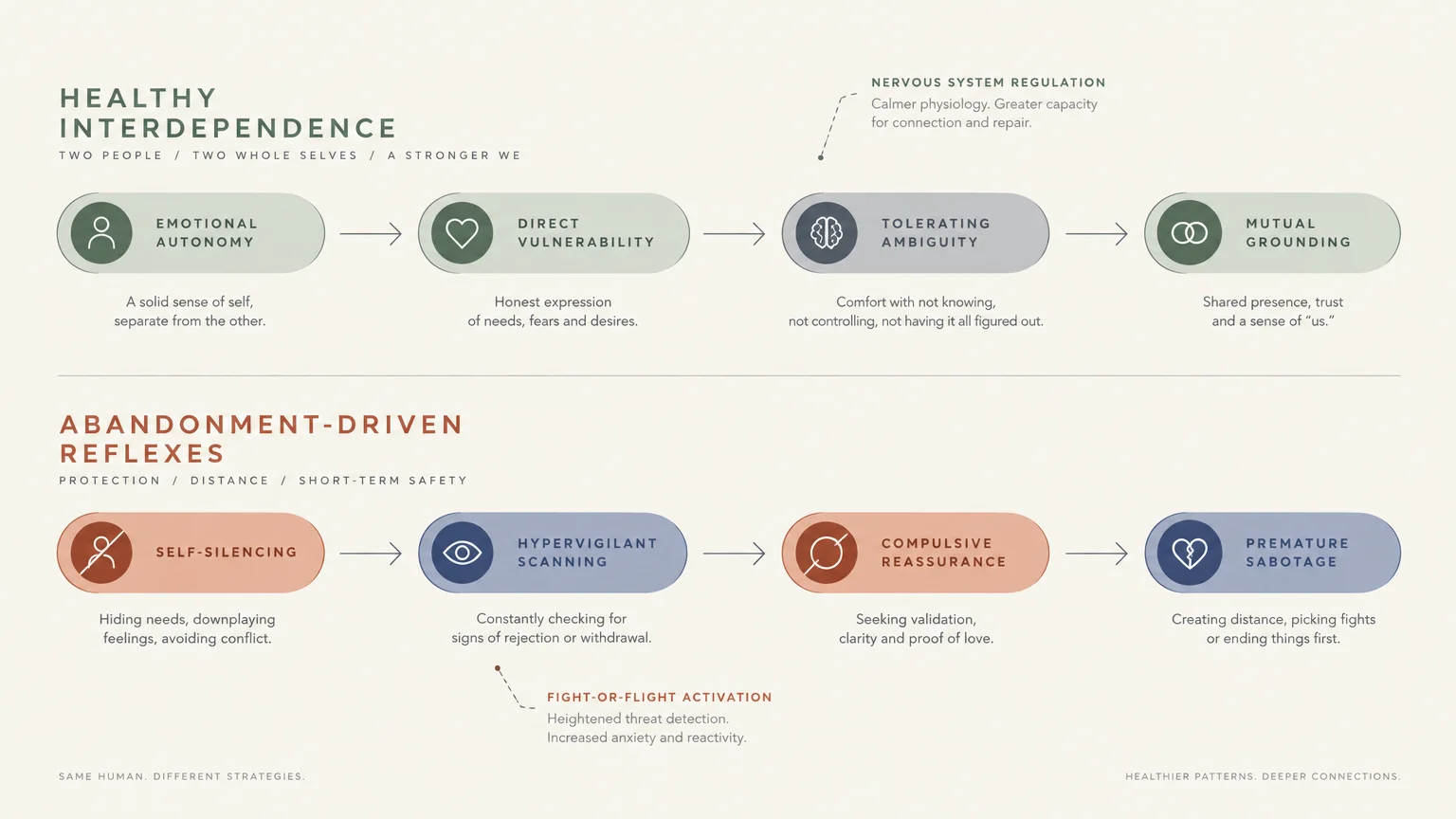
Healthy Connection vs. Abandonment-Driven Behavior
Understanding the contrast between fear-based reactions and secure responses simplifies self-regulation. The table below contrasts common relationship triggers with their corresponding behavioral paths.
| Relationship Trigger | Abandonment-Driven Reaction | Secure, Grounded Response |
|---|---|---|
| Unanswered message for hours | Spiraling into panic, sending multiple frantic texts, or assuming betrayal | Assuming the partner is occupied; refocusing on personal activities |
| Partner requests an evening alone | Feeling wounded, demanding reasons, or accusing them of emotional distance | Respecting their need for recharge; enjoying personal solo time |
| A minor relational disagreement | Apologizing immediately to soothe tension or abruptly threatening a breakup | Staying present, discussing the issue calmly, and seeking mutual compromise |
| Partner spends time with friends | Experiencing intense jealousy, demanding constant check-ins, or sulking | Encouraging outside friendships while maintaining trust in the partnership |
Reviewing these differences highlights how often fear distorts perspective. Choosing secure responses requires conscious effort, but practice reshapes instinctive relational habits.

What Can Go Wrong: Misinterpreting Abandonment Fear
Working through abandonment anxiety requires careful balance and honest self-reflection. Misinterpreting these core emotional patterns can create unexpected setbacks.
One common pitfall involves pathologizing normal human needs for connection and affection. Wanting closeness, regular contact, and genuine reassurance does not mean you have an attachment disorder.
Another mistake is using abandonment issues as an excuse for boundary violations. Weaponizing an attachment label to justify jealousy or invasive monitoring harms your partner and stalls growth.
Finally, some people swing to the opposite extreme of fierce hyper-independence. While refusing all vulnerability protects against heartbreak, it also starves you of meaningful intimacy.

When to Seek Professional Support
While self-awareness offers substantial relief, deep attachment wounds frequently resist solo healing efforts. The nervous system holds trauma that intellectual understanding alone cannot always resolve.
Consider scheduling an appointment with a licensed mental health professional if you experience any of these four scenarios:
- Relationship anxiety triggers debilitating physical panic, severe insomnia, or persistent depressive episodes.
- You repeatedly endure abusive, coercive, or neglectful relationships because living alone feels utterly impossible.
- Fears of rejection prompt impulsive behaviors, substance misuse, or self-harming tendencies.
- You systematically ruin healthy partnerships or find yourself fundamentally unable to trust anyone.
Effective clinical interventions produce lasting changes in attachment security. Modalities like Cognitive Behavioral Therapy (CBT) and Dialectical Behavior Therapy (DBT) strengthen distress tolerance.
Specialists at Cleveland Clinic note that specialized trauma and attachment therapies help retrain nervous system responses to intimacy.
“The curious paradox is that when I accept myself just as I am, then I can change.” — Carl Rogers, Ph.D.

Actionable Steps to Cultivate Relational Security
Healing abandonment fears involves rewiring how you soothe your nervous system during moments of distress. Consistent, practical actions gradually expand your capacity for emotional security.
- Implement a deliberate pause: When emotional panic strikes, wait fifteen minutes before sending a reactive message or demanding answers.
- Interrogate catastrophic assumptions: Separate your feelings from concrete facts by asking what tangible evidence supports your fear.
- Practice somatic self-soothing: Use deep diaphragmatic breathing or grounding exercises to calm your racing heartbeat before communicating.
- Nurture an autonomous life: Cultivate distinct personal hobbies, friendships, and goals that exist entirely independent of your relationship.
- State vulnerability cleanly: Say “I feel anxious right now” rather than resorting to passive-aggressive remarks or cold withdrawal.
Replacing reactive habits with grounding techniques takes time and patience. Every instance of self-soothing teaches your brain that you can survive emotional turbulence independently.
Frequently Asked Questions
These straightforward answers address frequent inquiries about abandonment anxiety and relationship health.
Can fear of abandonment ruin a good relationship?
Yes, unaddressed abandonment fears often sabotage healthy partnerships through hypervigilance, controlling behavior, or constant reassurance-seeking. These behaviors create emotional fatigue in partners, paradoxically causing the rejection you fear.
What causes an acute fear of being left?
Abandonment fears typically stem from early childhood instability, unpredictable caregiving, or emotional neglect. Sudden adult traumas, such as unexpected betrayal or divorce, can also trigger acute abandonment issues.
How do you soothe someone with abandonment anxiety?
Offer clear, consistent communication and predictable emotional responsiveness. Validate their feelings gently while maintaining your own healthy boundaries and encouraging their independent self-soothing.
Can you cure a fear of abandonment completely?
While triggers may still arise occasionally, you can achieve earned secure attachment through therapy and deliberate practice. You will learn to self-soothe effectively rather than reacting with panic.
Healing from an intense fear of abandonment does not mean you will never feel insecure again. It means discovering that your fundamental worth and survival do not depend on someone else staying.
This is educational content based on psychological research and general principles. Individual experiences vary significantly. For personalized guidance, consult a licensed therapist, psychologist, or counselor.
Last updated: February 2026. Psychology research evolves continuously—verify current findings with professional sources.







Leave a Reply