Psychology Diary

The First Step Toward Change Is Awareness

  • Home
  • Relationships
  • Mental Health
  • Expert Tips
  • Life
  • Family
  • Marriage

How to Set Healthy Boundaries with Your Adult Children

August 31, 2025 · Family

Woman sits on porch swing, looking at phone.

What to Do When They Push Back

When you start setting boundaries, you are changing the unspoken rules of the family dance. It is normal for your adult child to react. They might express anger, hurt, or confusion. They may try to guilt you, arguing that “a good mother wouldn’t do this,” or give you the silent treatment. This is the critical moment. Their reaction is not a sign that your boundary is wrong; it’s a sign that it is working. It’s having an impact.

Here’s how to navigate the pushback:

1. Don’t JADE (Justify, Argue, Defend, Explain). When you over-explain your boundary, you open it up for debate. Your boundary is based on your needs, and you do not have to prove its validity. You can state your reason once, clearly and simply. After that, repeated justification just signals that you are unsure of your own decision.

Instead of: “I can’t babysit on Friday because I have my book club, and it’s the only time I see my friends, and my back has been hurting, and I really need some time to myself…”

Try: “I’m not available to babysit on Friday. I’m looking forward to seeing the kids next Tuesday, though.”

2. Empathize with their feeling, but not with the demand. You can validate their emotion without giving in. This shows that you are still connected and that you care about their feelings, even if you are holding firm on your limit.

Script: “I understand that you’re disappointed that I can’t help with the down payment. It makes sense that you feel that way. While my decision stands, I’m here to listen to how you’re feeling about it.”

3. Give it time. Some adult children may react with silence. This can be incredibly painful for a parent. It’s important to distinguish between a temporary cool-down period and a manipulative silent treatment. Give them some space. After a few days or a week, you can send a brief, loving message that re-opens the door for connection without abandoning your boundary.

Script: “Hi, just thinking of you and sending my love. I’m here to talk when you’re ready.” This shows you aren’t punishing them; you’re waiting for them to re-engage on the new, healthier terms.

Remember your reasons. You are doing this to create a sustainable, healthy relationship for the decades to come. The short-term discomfort is an investment in long-term respect and connection.


Pages: 1 2 3 4 5 6 7 8 9 10

Share this article

Facebook Twitter Pinterest LinkedIn Email

Leave a Reply Cancel reply

Your email address will not be published. Required fields are marked *

Search

Latest Posts

  • Ink and watercolor illustration of a person wrapped in a blanket, looking out a window at a rainy garden. 6 Signs You're Comfortable Being Alone
  • A retired woman happily misting seedlings in a sunlit greenhouse, representing meaningful part-time work in retirement. The Part-Time Jobs Retirees Say Feel Most Meaningful
  • An editorial watercolor illustration of a person looking at a small glowing key in their chest, symbolizing inner emotional intelligence. 9 Signs of Emotional Intelligence You Might Not Notice in Yourself
  • An illustration of a woman looking at a mug while her giant shadow holds a massive magnifying glass over it. 6 Signs You're Being Too Hard on Yourself
  • Two friends laughing together on a wooden porch in warm afternoon light, demonstrating a supportive, genuine relationship. 6 Signs Someone Is a Genuinely Good Influence in Your Life
  • Ink and watercolor illustration of a person walking from a dark, stormy landscape into a bright, sunny field. 9 Traits Psychologists Say Highly Resilient People Share
  • A New Yorker style illustration of a resting person whose shadow carries a heavy, tangled ball of dark thread. 7 Signs You're Emotionally Exhausted, Not Just Tired
  • Ink and watercolor illustration of two people seated in chairs with a golden thread connecting their hands, symbolizing respect. 6 Signs Someone Truly Respects You
  • A warm ink and watercolor illustration of an older woman looking at a gallery wall of framed memories, with one frame left naturally empty. 7 Signs of Normal Forgetfulness vs Something More Serious
  • An editorial ink and watercolor illustration of two profiles, showing speech bouncing off a supportive line like a trampoline. 9 Signs You're a Good Listener, According to Psychologists

Newsletter

Get the latest posts delivered to your inbox.

Related Articles

Divorce

Headed Towards a Divorce? Here Are 14 Surprising Factors That Increase Your Risk

Could you be heading toward a divorce? Let’s look at the signs! The reasons people…

Read More →
A grandfather and granddaughter sitting on a wooden dock at sunset, sharing a quiet moment looking into the water.

The Unexpected Health Benefits of Spending Time With Grandchildren

Discover the surprising science-backed health benefits of spending time with grandchildren, from extending your lifespan…

Read More →
deal with a stubborn daughter-in-law, things your daughter-in-law wants you to know

8 Essential Things Your Daughter-in-Law Wants You to Know

Here’s the cold truth: there are some things your daughter-in-law wants you to know, but…

Read More →
narcissistic

9 Signs You Were Raised by Narcissistic Parents

It’s incredibly challenging to grow up with narcissistic parents. They can show up as neglectful,…

Read More →
daughter

What Your Daughter-in-Law Wants You to Know

When you’re saying ‘YES’ to the big question, you’re not only saying it to your…

Read More →
tell your adult children

What Are the 7 Things You Should NEVER Tell Your Adult Children?

Have you ever wondered what are the things you should never tell your adult children?…

Read More →
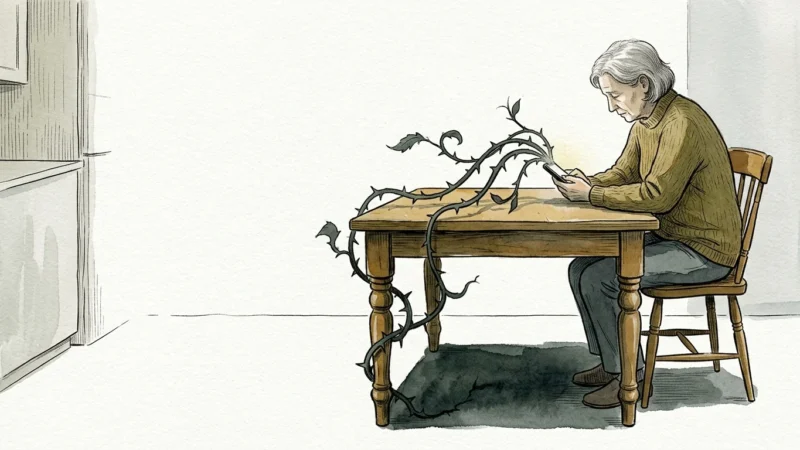
An ink and watercolor illustration of a parent at a table, looking at a phone from which a thorny vine grows.

10 Hidden Signs Your Adult Child Is Toxic

Learn to identify the hidden signs of a toxic adult child, understand the psychological toll,…

Read More →
Signs Of A Toxic Daughter In Law1

11 Signs of a Toxic Daughter-in-Law and How to Deal With Her

Signs of a Toxic Daughter-in-Law Navigating the intricate dynamics within a family can be tough,…

Read More →
toxic grandparent, emotional masochist

7 Shocking Signs You Might Be a Toxic Grandparent

Are you a toxic grandparent? Let’s find out together! A relationship between adult children and…

Read More →

Psychology Diary

The First Step Toward Change Is Awareness

Inedit Agency S.R.L.
Bucharest, Romania

contact@psychologydiary.com

Explore

  • About Us
  • Advertiser Disclosure
  • Contact Us
  • Disclaimer
  • Do not sell my personal information
  • Editorial Policy
  • Frequently Asked Questions
  • Privacy Policy
  • Terms and Conditions
  • Subscribe
  • Unsubscribe

Categories

  • Expert Tips
  • Family
  • Life
  • Marriage
  • Mental Health

© 2026 Psychology Diary. All rights reserved.