

When someone asks what you need right now, your mind might go completely blank. You may instinctively defer to others, leaving your own desires buried beneath silence.
Identifying your inner requirements forms the bedrock of emotional health and authentic connection. Without emotional needs awareness, you risk chronic exhaustion, quiet resentment, and burnout.
Recognizing when you are struggling to name your own needs helps you dismantle automatic self-neglect signs. Spotting these patterns gives you practical tools to reclaim your voice.
The Psychology Behind Need Suppression
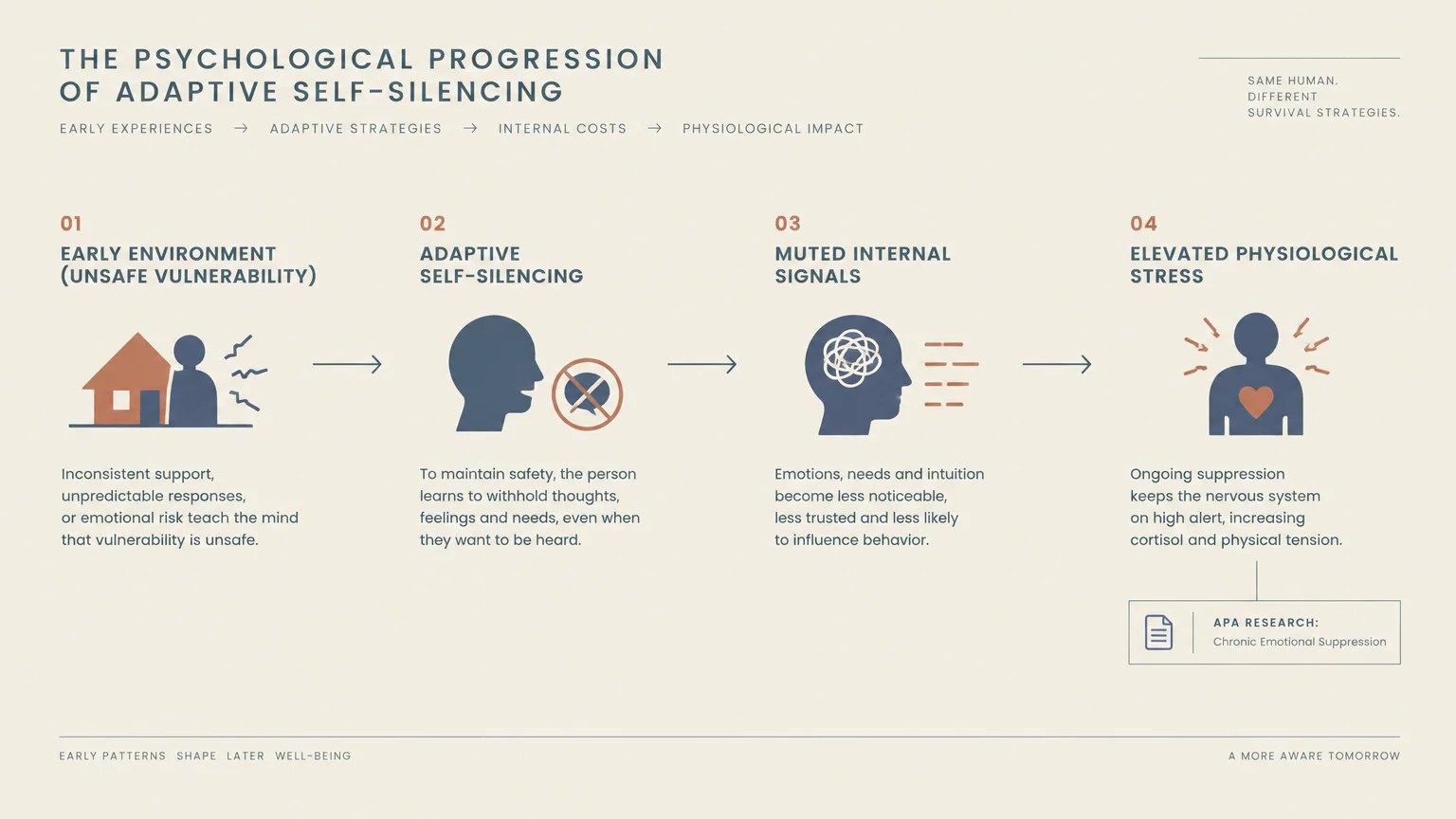
Difficulty expressing needs rarely develops in a vacuum. It often begins in early environments where vulnerability felt unsafe, burdensome, or unwelcome.
When caregivers dismiss emotional distress, children quickly adapt by suppressing their internal signals. Psychologists call this adaptive self-silencing.
Research published by the American Psychological Association shows that chronic emotional suppression elevates physiological stress and impairs interpersonal problem-solving.
Over time, tuning out your internal signals becomes your default operating mode. You survive by predicting everyone else’s feelings while disconnecting from your own.
“The curious paradox is that when I accept myself just as I am, then I can change.” — Carl Rogers, Ph.D.
Accepting that you have legitimate physical and psychological requirements is the first step toward genuine self-attunement.

8 Signs Someone Struggles to Name Their Own Needs
People who ignore their needs do not always realize they are doing it. Here are eight clear signs that signal a disconnect from internal desires.
1. The Reflexive “I Don’t Care” on Daily Choices
You routinely let others pick the restaurant, movie, or weekend plans. While this looks like flexibility, it frequently conceals an absolute disconnection from personal preference.
When someone presses you for an opinion, your mind offers no clear answer. Your brain has muted your desire signals to prevent potential conflict.
2. Somatic Symptoms Precede Emotional Awareness
Your body sounds the alarm long before your conscious mind realizes something is wrong. You might develop tension headaches, stomach knots, or sudden muscle tightness.
The nervous system registers unmet boundaries even when you deny them cognitively. Physical exhaustion becomes the only language your stress can speak.
3. Extreme Independence Disguised as Strength
You pride yourself on handling every crisis, deadline, and personal struggle entirely alone. Asking for assistance feels like an intolerable display of weakness.
This hyper-independence is often a defensive shield against disappointment. If you never ask for support, no one can let you down.
4. Simmering Resentment Toward Loved Ones
You frequently feel unappreciated, irritated, or taken for granted by friends and partners. You wonder why other people fail to notice your silent sacrifices.
According to relationship research from The Gottman Institute, unexpressed expectations create toxic resentment that erodes relational trust over time.
Expecting others to intuitively read your mind guarantees emotional disappointment.
5. Hyper-Attunement to Everyone Else’s Mental State
You enter a room and instantly map the emotional temperature of everyone present. You monitor slight vocal shifts, body language, and facial expressions with vigilant precision.
Focusing outward allows you to avoid confronting your own internal emptiness. Managing external emotions feels far safer than exploring your personal distress.
6. Intense Guilt After Resting or Receiving Care
Taking an afternoon nap or accepting an unprompted favor sparks an immediate wave of shame. You feel an urgent compulsion to justify downtime with productivity.
This discomfort reveals a core belief that your worth depends solely on what you produce or provide for other people.
7. Alexithymia and Emotional Numbness
When asked how an upsetting event made you feel, you might describe events logically rather than emotionally. You analyze the facts while disconnecting from your felt experience.
Clinical resources from Verywell Mind note that alexithymia involves real difficulty identifying and describing emotions; it often leads directly to self-neglect signs.
If you cannot identify what you feel, naming what you need remains impossible.
8. Over-Apologizing for Basic Boundaries
Saying no to an invitation triggers an elaborate performance of apologies and excuses. You feel obligated to provide extensive justifications for setting standard limits.
This reaction stems from a fear that merely having limits makes you an unreasonable or selfish person.
“Daring to set boundaries is about having the courage to love ourselves, even when we risk disappointing others.” — Brené Brown, Ph.D., MSW
Comparing Need Expression Styles
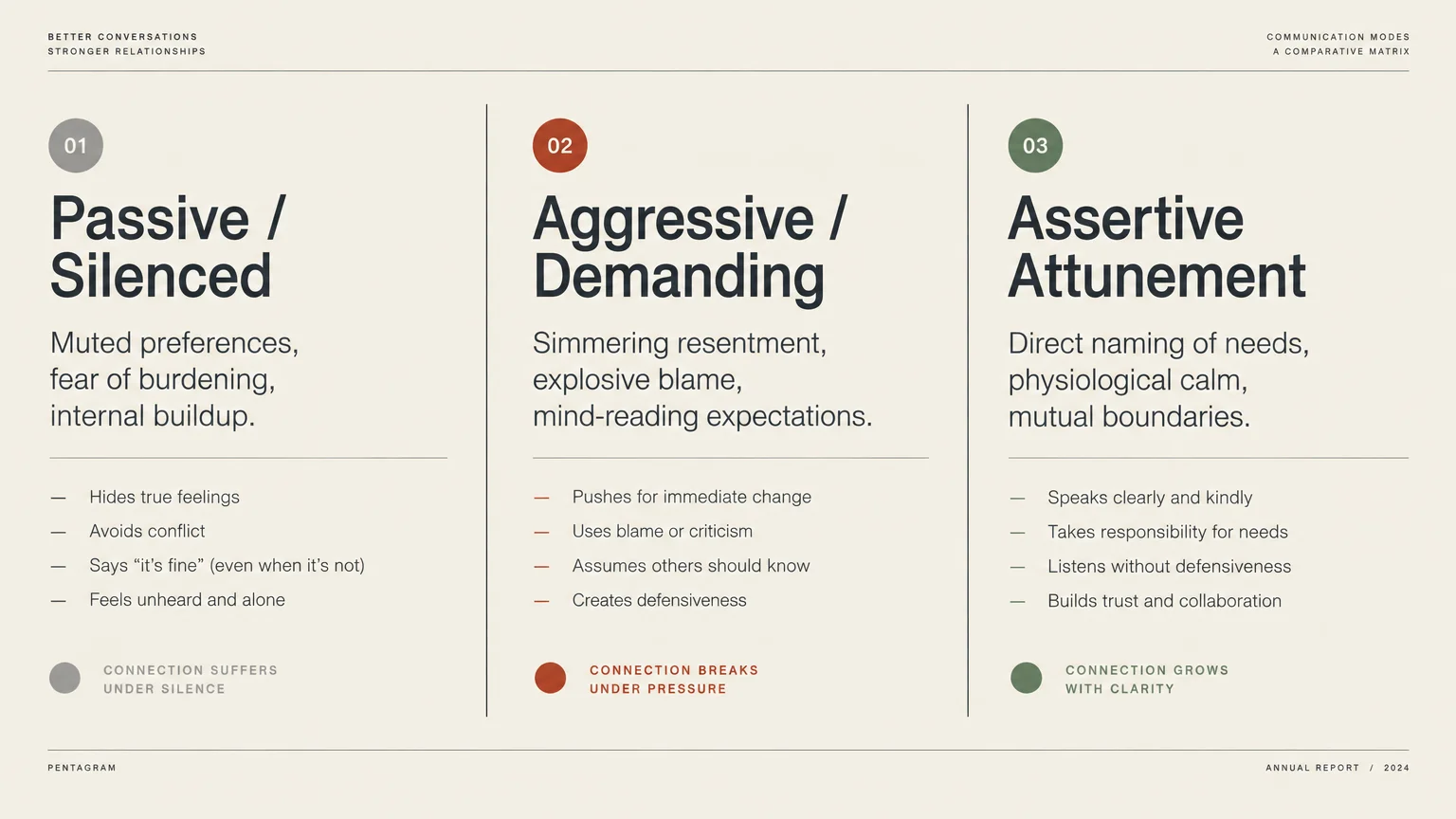
How you handle your requirements dictates how people respond to you. The table below illustrates three common patterns of dealing with personal needs.
| Style | Internal Experience | Observable Behavior | Relational Impact |
|---|---|---|---|
| Suppression | “My needs do not matter and cause inconvenience.” | Reflexive agreement, fawning, emotional withdrawal. | Superficial harmony hiding gradual emotional burnout. |
| Passive-Aggressive | “They should know what I need without my asking.” | Sighing, cold shoulders, subtle sarcasm, snide remarks. | Erosion of trust, confusion, and defensive arguments. |
| Assertive | “My needs matter equally alongside yours.” | Direct, calm requests without unnecessary apologies. | Mutual respect, predictable boundaries, deeper intimacy. |
Transitioning toward assertive communication requires recognizing your instinctive coping mechanisms and consciously replacing them with clear requests.

Myths Worth Debunking
Misconceptions about independence and empathy often keep people locked in silent martyrdom. Examining these false beliefs creates room for healthier habits.
Myth 1: Stating Needs Is Inherently Selfish
Selfishness involves taking from others with disregard for their well-being. Expressing personal requirements simply provides an honest roadmap for how to love and support you effectively.
Clear communication respects both parties by removing guesswork from the relationship.
Myth 2: True Intimacy Means Spontaneous Mind-Reading
Popular culture promotes the fantasy that a soulmate intuitively knows your desires without words. In reality, mature partnership requires vulnerability and explicit communication.
Expecting mind-reading creates predictable disappointment and unfair pressure on your loved ones.
Myth 3: Handling Everything Alone Demonstrates Strength
Unrelenting self-reliance is rarely an index of health; it is often a trauma response. Humans evolved as interdependent beings who require mutual cooperation to thrive.
Allowing others to support you builds durable emotional resilience.

Actionable Steps to Cultivate Emotional Needs Awareness
Unlearning a lifetime of self-neglect takes deliberate, patient practice. Use these actionable strategies to rebuild contact with your inner world.
- Conduct somatic check-ins: Pause three times daily for two minutes. Scan your body from head to toe, noticing physical tension, thirst, hunger, or fatigue.
- Consult an emotion wheel: When you feel overwhelmed, use a visual feelings chart to pinpoint specific emotional states beyond generic terms like “stressed.”
- Practice low-stakes preferences: Choose the coffee order, podcast, or walking path without asking anyone else for input. Build your decision-making confidence incrementally.
- Deploy brief speaking templates: Use simple sentence frames such as: “Right now, I need thirty minutes of quiet,” or “I would love some help folding this laundry.”
- Sit with the discomfort of asking: Expect an adrenaline spike when you first express a desire. Breathe through the sensation rather than retracting your request.
Gradual exposure to naming basic preferences rewires your nervous system to tolerate the vulnerability of being seen.

Signs It’s Time to Talk to a Therapist
Difficulty expressing needs can occasionally indicate deeper attachment wounds or depressive patterns that self-help strategies cannot fully resolve. Consider consulting a licensed mental health professional if you notice the following:
- Chronic burnout and physical collapse: You repeatedly push yourself to exhaustion because you cannot decline requests from work, friends, or family.
- Explosive resentment rupturing relationships: Unexpressed pain regularly boils over into sudden angry outbursts that damage your closest connections.
- Debilitating guilt or panic: Saying no causes severe physical distress, obsessive rumination, or overwhelming fears of abandonment.
- Total emotional disconnection: You feel consistently numb, dissociated, or unable to access authentic happiness across all areas of life.
Evidence-based therapies, including Acceptance and Commitment Therapy (ACT) and Internal Family Systems (IFS), help clients reconstruct a healthy relationship with personal needs.
Insights published by Psychology Today emphasize that therapy provides a structured, non-judgmental space to practice boundary setting without fear of rejection.
Frequently Asked Questions
Why does my mind go blank when someone asks what I need?
Your nervous system interprets the question as a potential risk. If expressing desires was unsafe or discouraged during your upbringing, your brain freezes to protect you from conflict.
Can childhood emotional neglect cause difficulty expressing needs?
Yes. When caregivers overlook a child’s feelings, the child assumes their internal world is unimportant. This creates an adult who reflexively suppresses personal desires.
How does alexithymia differ from simply being quiet?
Being quiet is an outward behavioral preference. Alexithymia is a cognitive challenge where a person cannot identify, differentiate, or describe their internal physiological emotions.
How can I support a partner who struggles to name their needs?
Provide structured, low-pressure choices instead of wide-open inquiries. Ask “Would you prefer takeout or home cooking tonight?” rather than “What do you want to eat?”
Moving Forward With Self-Attunement
Learning to speak your truth is a gradual practice of reclaiming your own humanity. Start small by noticing your physical sensations today, and honor what your body asks of you.
This article provides general educational information about psychology and relationships. It is not a substitute for professional therapy or medical advice. Everyone’s situation is unique—if you’re struggling, please reach out to a licensed mental health professional.
Last updated: February 2026. Psychology research evolves continuously—verify current findings with professional sources.









Thank you for the article, I finally have an idea of why I am the way I am. I was abused as a child, and my feelings never counted for anything. In fact, I would be in trouble for even daring to say how I felt. So after awhile, I quit thinking about it. I just tried to do as much as I could for others, this followed me my whole life. I have never considered therapy before, but I see now how this could help me have a happier life. Thank you again.