

Anyone who has been through or witnessed a shocking event, such as a vehicle accident, a death on the battlefield, or a potentially fatal fall while hiking, is susceptible to post-traumatic stress disorder (PTSD).
A traumatic event will affect about half of American adults at some point in their lives, but not everyone who experiences a traumatic event will develop PTSD. Mental health experts may diagnose you with PTSD if your symptoms last for a month or longer and interfere with your ability to go about your daily activities normally.
You should be aware that PTSD frequently coexists with other mental health disorders. For instance, during the course of their lives, roughly 80% of those with PTSD will also have a co-occurring psychiatric disease.
Here you can find the most common comorbidities for PTSD.
#1 Substance Use Disorder
According to research, approximately 50% of those with PTSD also struggle with substance abuse (SUD).
People with PTSD are more likely than those without it to develop a substance use disorder, often as a coping mechanism, and those who already have a SUD are more likely to have PTSD.
This link is also reported by the Department of Veteran Affairs. PTSD is diagnosed in nearly one-third of veterans seeking medical treatment for SUD, and more than two out of every ten veterans with PTSD also have a SUD.
SUDs, including alcoholism, tobacco use, and opioid abuse, are examples of common SUDs. It’s possible that people with PTSD use alcohol or drugs to try to distract themselves from their trauma and problems.
One of the most striking signs of a substance use disorder is the need to self-medicate with alcohol or drugs. People who struggle with substance abuse frequently have worsening PTSD symptoms.
#2 Depression
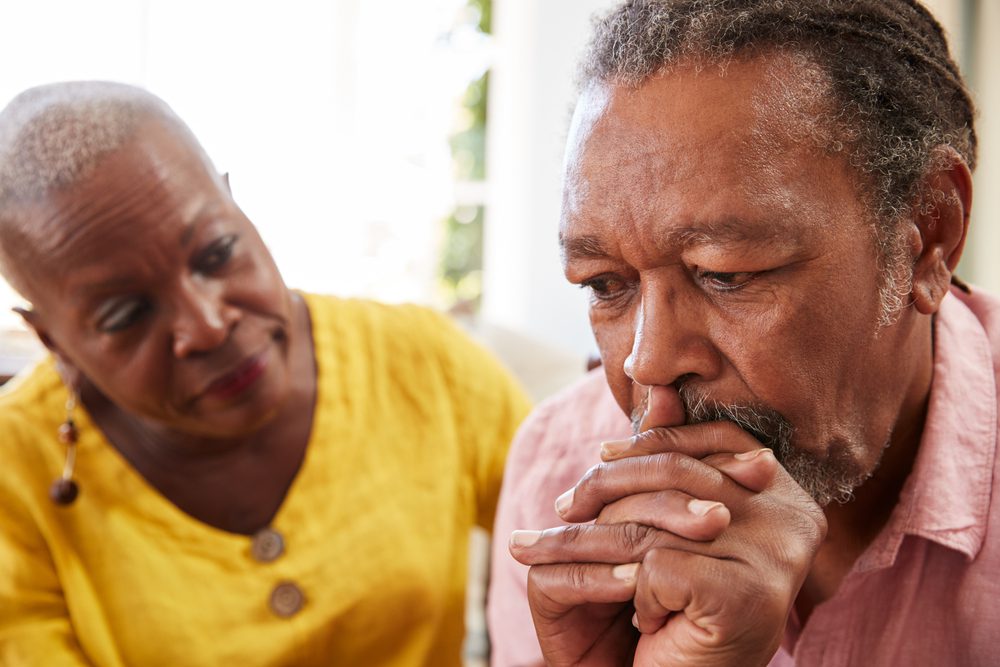
Trauma and depression are frequently related. According to 2013 research, co-occurring depression affects 50% of those with PTSD. Furthermore, major depressive illness is more likely to manifest in patients with PTSD.
Depression is a serious condition that affects many people and is more severe than simply having a bad day. An astonishing 16 million American adults are diagnosed with severe mental illness each year, and one in every six American adults will face depression at some point in their lives.
Clinical depression, or major depressive disorder, severely impairs your capacity to carry out daily tasks. It’s a mood condition that, among other symptoms, manifests as emotions of despair and hopelessness, difficulty sleeping, anxiety, and recurrent ideas of death and suicide.
According to the National Center for PTSD, PTSD and depression may have similar symptoms, making treatment for both conditions possible at the same time. The center lists cognitive-behavioral therapy (CBT) as a successful treatment for both problems since it aids individuals in reorienting previously unfavorable thought and behavior patterns.
#3 Anxiety
PTSD and a number of anxiety disorders are related. For instance, a 2013 study found that generalized anxiety disorder affected nearly 40% of the veteran participants (GAD). In comparison to individuals who did not have co-occurring PTSD, anxiety symptoms were more severe.
Similar to sadness, your body’s fight, flight, or freeze reaction can also cause anxiety to manifest. Anxiety causes your breath and pulse rate to quicken, preparing your body to flee or fight if you encounter a threat.
Anxiety disorders are marked by continuous, increasing levels of anxiety. When this anxiety starts to affect your capacity to function and lead a normal life, much like with PTSD and substance use disorders, it’s time to start seeing a specialist.
You might have social anxiety disorder (SAD), which is characterized by a distinct dread of certain social situations or by a fear of being judged by or offending other people. You might also have generalized anxiety disorder (GAD), which is characterized by recurrent and unexpected panic attacks and a strong fear that they will occur.
One study examined the relationship between GAD’s effects on the veteran community and discovered a connection with PTSD. Forty percent of the 884 veterans who took the survey and had PTSD also had GAD diagnoses. Compared to those who just had GAD without PTSD, these individuals exhibited more severe anxiety disorder symptoms.
#4 Borderline Personality Disorder
One of the signs of borderline personality disorder is a pattern of behavioral changes, moods, self-image, and emotion regulation. You might occasionally act impulsively and exhibit extreme rage and depression if you have BPD. Another possibility is that your anxiety lasts for a few hours, several days, or even longer.
BPD and PTSD may occur together. There are undoubtedly some symptoms common to the two conditions, such as depression, anxiety, and mood swings. According to one study, there is a lot of disagreement over how closely these two illnesses are associated. According to earlier studies, PTSD incidence among BPD patients ranged from 25 to 58 percent. On the other hand, according to other studies, PTSD patients with BPD had rates of BPD that ranged from 10 to 76 percent.
The same analysis reveals that although these two diagnoses are separate, some studies have shown that the symptoms of one disorder may worsen those of the other. For instance, PTSD may make a BPD sufferer’s affective instability worse. It might also act as a catalyst for self-harm in BPD sufferers.
BPD is frequently seen in people who were abused as children. 36% of the 547 people who had both diagnoses had been abused as children. In comparison to women in this same group, 19% of men who had both PTSD and BPD had experienced childhood abuse, compared to 43% of women.

#5 Dissociative Disorders
It is believed that long-term trauma is an underlying cause of dissociative disorders, with dissociation occurring as a coping mechanism that permits people to distance themselves from a trauma that might otherwise be intolerable. There is a very strong connection between trauma and dissociative disorders, and the correlation is significant in both directions.
A person who is dissociating has a breakdown in their ideas, emotions, memories, actions, perceptions, and/or sense of self. Most people have at some point experienced dissociation, which can manifest itself in a variety of ways, such as daydreaming or dozing off while driving and forgetting the last several miles of the roadway.
Dissociation, however, can delay or even obstruct healing from neglect and abuse if it persists after an actual threat has passed. Additionally, there is a relationship between dissociation and PTSD. Additional insights on the relationships between these conditions may come from changes in brain activity.
Dissociative disorders, as opposed to “normal” dissociation, involve dissociation that inhibits a person’s ability to function at work or in their personal or familial lives. Dissociative disorders affect people of all ages, ethnicities, and socioeconomic statuses, and it is estimated that 2% of the population has one.
#6 Neurocognitive Problems
Numerous neurocognitive disorders, or problems with the cognitive function of the brain, coexist with PTSD. This includes neurological conditions (NCD), many of which are brought on by traumatic brain injury (TBI).
A current study analyzes PTSD’s possible effects on memory impairment and the role it can play in advancing dementia if you take a detailed look inside the broad category of NCD alone. Consider some of the connections between PTSD and neurocognitive issues.
A traumatic event, such as a vehicle accident or a fall, might be connected to a TBI, which develops from a hit or jolt (typically to the head). TBIs can range from mild to severe. If you have whiplash, it’s possible that the movement of your brain inside your skull has caused bleeding or bruising between your brain and your skull. Among other symptoms, this occurrence may give you migraines, vertigo, vision problems, memory loss, difficulties focusing, sadness, and fits of rage and anxiety.
You can also check out: Subtle Signs of Dementia: 6 Important Things You Need to Know








Leave a Reply